REVIEW · ROME
Rome Squares and Fountains Tour & River Boat Hop On Hop Off
Book on GetYourGuide →Operated by Tour in the City - Travel Agency Rome - · Bookable on GetYourGuide
Rome is a city that runs on stories. This tour mixes a focused walking route with a 24-hour river boat ticket, so you see the highlights twice—on foot and from the Tiber. If you get a guide like Sabrina Vispi (she shows up in the feedback a lot), expect lively history, clear connections between monuments, and humor that keeps the morning moving.
Two things I really like about this experience are the walk from the Spanish Steps to Ponte Sant’Angelo and the way the river portion gives you breathing room. A possible drawback to plan for: it is a lot of walking and the tour isn’t designed for wheelchair users or guests with mobility impairments, so comfy shoes are non-negotiable.
In This Review
- Key things to know before you go
- A smart combo: walking Rome, then seeing it from the Tiber
- The walking route: Trinità dei Monti to Ponte Sant’Angelo
- Spanish Steps and Trevi Fountain: where myths and engineering meet
- Pantheon and Piazza Navona: the contrast that makes Rome click
- Hidden alleys and gelato break: make the route feel like Rome
- Ponte Sant’Angelo and Castel Sant’Angelo: the finish that opens options
- Tiber River hop-on hop-off: how to use your 24 hours
- Price and value: is $73 a good deal?
- Who this tour suits best (and who should skip it)
- Book it or pass: my practical recommendation
- FAQ
- Where is the meeting point for the walking tour?
- How long is the guided walking tour?
- What is included in the full experience versus the walking-only option?
- What are the Tiber river boat hours and departure frequency?
- How long is the riverboat ticket valid?
- Is gelato tasting included?
- Is this tour wheelchair friendly?
Key things to know before you go
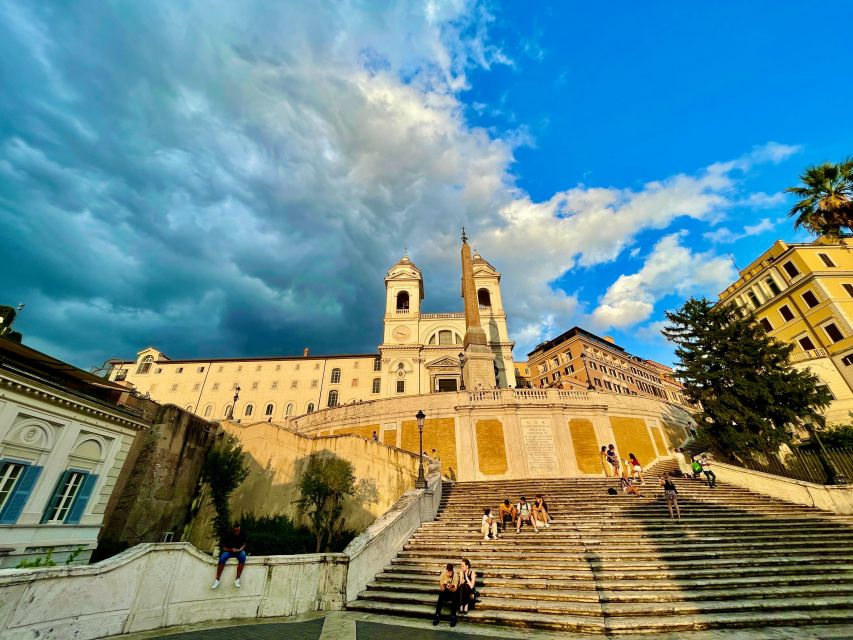
- Start at Trinità dei Monti above the Spanish Steps for a big-picture view before you descend into the center
- The walking core is about 2.5 hours, with an expert guide shaping what you notice at each stop
- Gelato tasting is built in, but it’s worth watching the timing so it doesn’t get swallowed by the route
- The boat runs every 30 minutes from 10:00 to 18:00, so you can match it to your day
- You choose open deck or indoor lounge on the Tiber for comfort in sun or light rain
A smart combo: walking Rome, then seeing it from the Tiber
This is the kind of Rome day that helps you understand the city, not just photograph it. The morning is a guided walk through the classic monuments people line up for, but with a narrative thread that ties them together. Then, if you choose the full experience, you get a hop-on hop-off river ticket that lets you slow down and look at the city from a calmer angle.
The value here is in the pacing. Rome on foot can feel chaotic—streets curve, crowds spike, and you lose context fast. With a licensed guide shaping the route, you get landmarks in the right order, plus the little side-street moments that make Rome feel real instead of staged.
You can also read our reviews of more tours and experiences in Rome.



The walking route: Trinità dei Monti to Ponte Sant’Angelo
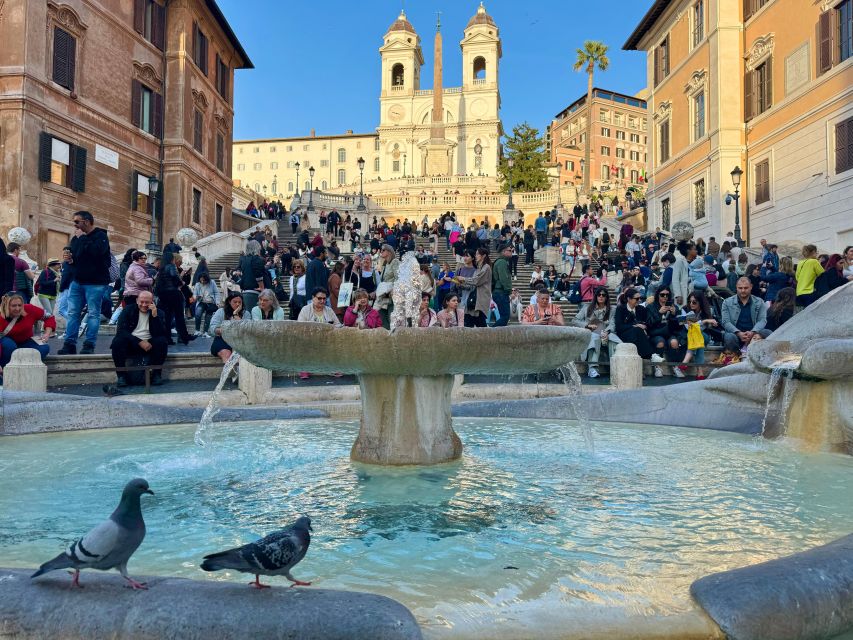
The day begins at Piazza della Trinità dei Monti, right next to the obelisk above the Spanish Steps. I like this start because it gives you a sense of height and layout before you start moving downhill. You’ll get a photo stop and a scenic look over rooftops, which helps everything you see later make sense.
From there, the itinerary drops into the historic center with stops that are both famous and explainable. You’ll move through Piazza di Spagna, then head toward the Trevi area, where the guide’s stories do a lot of the heavy lifting. This is where the tour feels most like a guided walk: the guide isn’t only naming places, they’re pointing out why people cared about them and what details to watch for.
The walking portion finishes near Ponte Sant’Angelo with views back toward the river. That finish point matters, because if you have the river ticket, it’s a natural place to start your hop-on hop-off time. Even if you don’t get on the boat immediately, Ponte Sant’Angelo is a strong spot to pause and take in Castel Sant’Angelo and the Tiber corridor.
Spanish Steps and Trevi Fountain: where myths and engineering meet
The Spanish Steps stop works well for orientation. It’s a quick photo moment and a chance to see how people actually use this space—then you keep moving before the crowds turn the steps into a slow-motion bottleneck. If you enjoy learning how cities are shaped by sightlines and street connections, this is a good warm-up.
Trevi Fountain is next, and this stop is about more than the postcard image. The guide shares local myths and stories tied to the fountain, which is what turns it from a quick stop into a meaningful one. I also like that the tour doesn’t treat Trevi as an isolated object—it places it in a chain of monuments, so you start seeing the city as a connected plan.
Pantheon and Piazza Navona: the contrast that makes Rome click
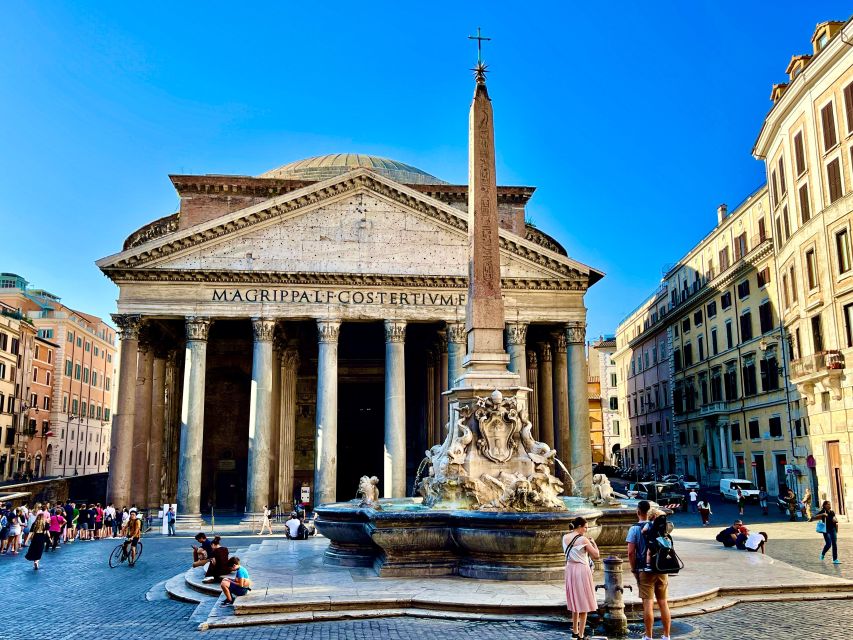
If you want one stop that truly justifies the walking portion, it’s the Pantheon. You’ll see why it’s famous for its ancient engineering and its preservation, and you’ll get enough context to notice the details that most people miss at speed. The guide helps you understand what you’re looking at, so the building feels less like a museum label and more like a functioning piece of architecture.
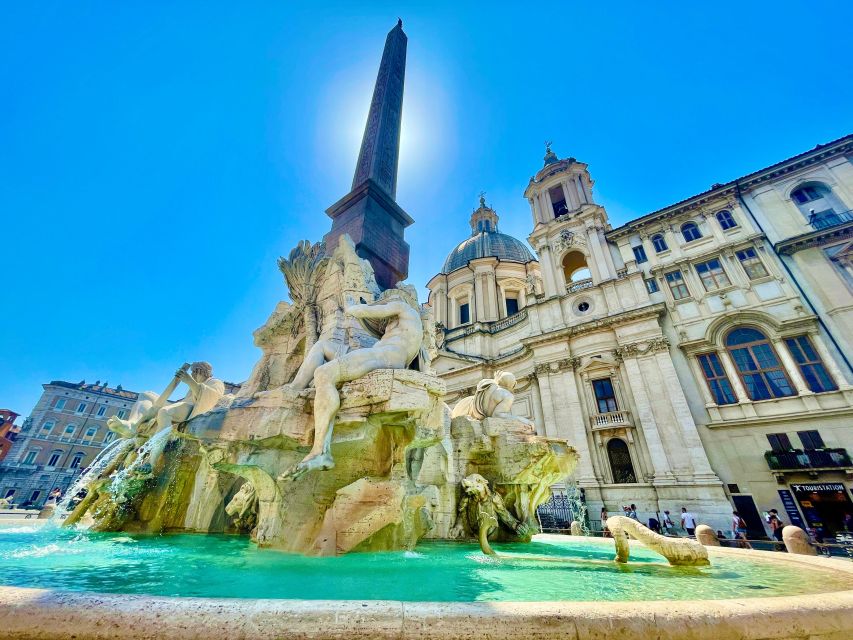
Then you move to Piazza Navona, a wide, elegant baroque stage that feels designed for both strolling and lingering. This is where the guide points out major works and nearby landmarks, including Bernini’s Fountain of the Four Rivers and the church of Sant’Agnese in Agone by Borromini. Piazza Navona can be crowded, but the tour gives you a reason to look longer: the guide slows your attention down just enough to catch the story behind the statues and layout.
Hidden alleys and gelato break: make the route feel like Rome
One of the best parts of this tour is the small shift from big sights to human-scale streets. Between major stops, you’ll spend time in Rome’s hidden alleys, where the city feels lived-in rather than museum-like. Even a short stretch of side streets can change your whole mental map of the center, and that’s a win when you’ll be wandering on your own later.
Gelato tasting is included as part of the experience. I’d treat that as a real moment, not a side quest—take a few minutes, cool down, and reset before you continue. If you have a tight food schedule or dietary needs, keep an eye on when the break happens so you don’t get rushed out of it.



Ponte Sant’Angelo and Castel Sant’Angelo: the finish that opens options
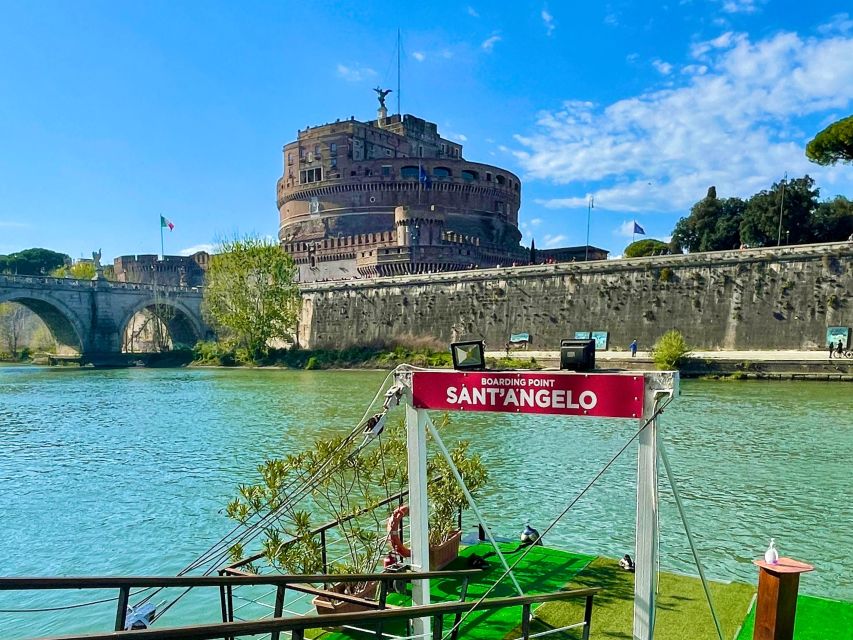
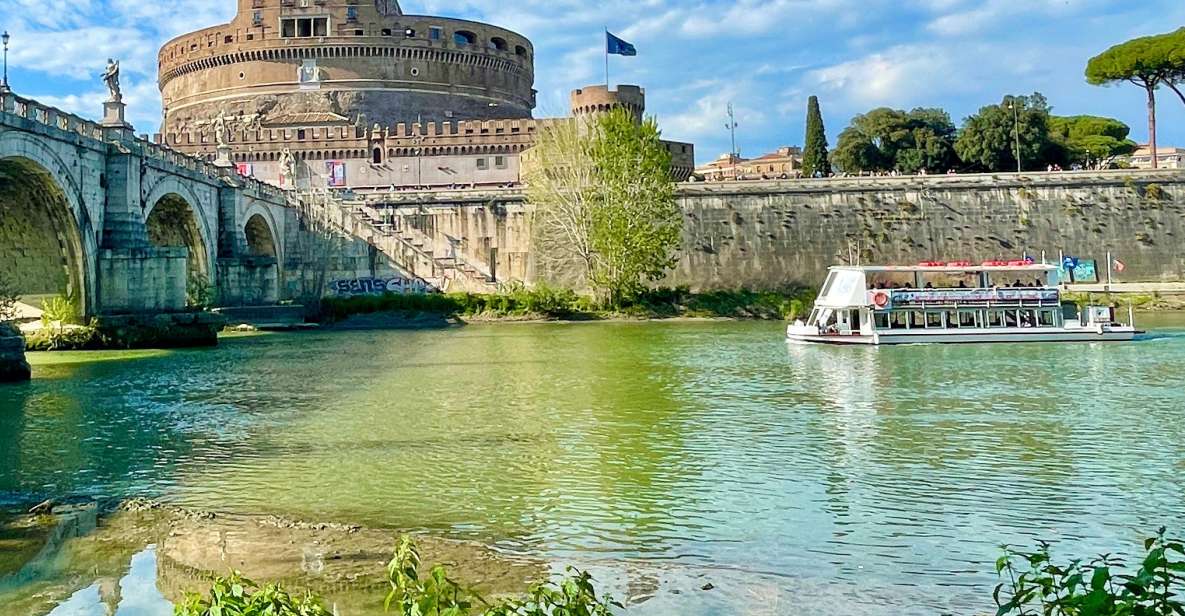
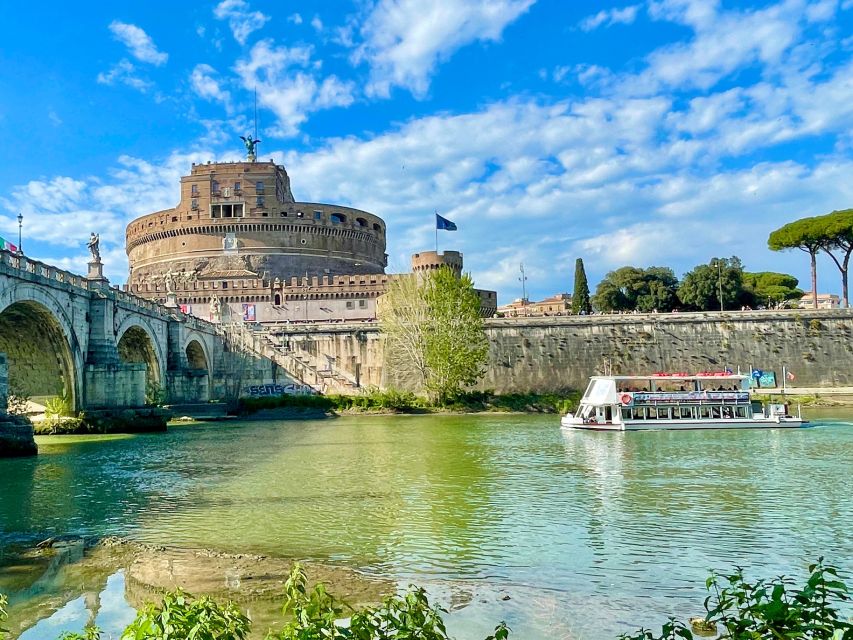
The walk leads you to Ponte Sant’Angelo, with a view of Castel Sant’Angelo and the river. This is a smart finish because it connects land to water right away. The river is where Rome can feel calmer, and the hop-on hop-off structure helps you choose how long you want to linger.
From here, the experience splits depending on your option. If you booked the full package, you can board the boat using your 24-hour ticket. If you chose the walking-only version, you’ll end near the same area but without the river access.
Either way, you’re in a great position to keep exploring, since this part of the city sits at a crossroads of viewpoints and river access.
Tiber River hop-on hop-off: how to use your 24 hours
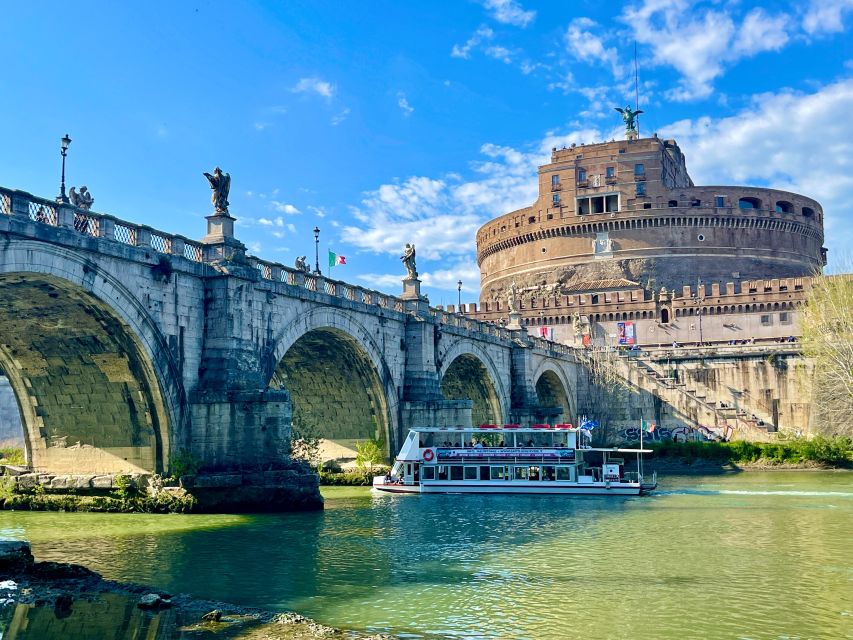
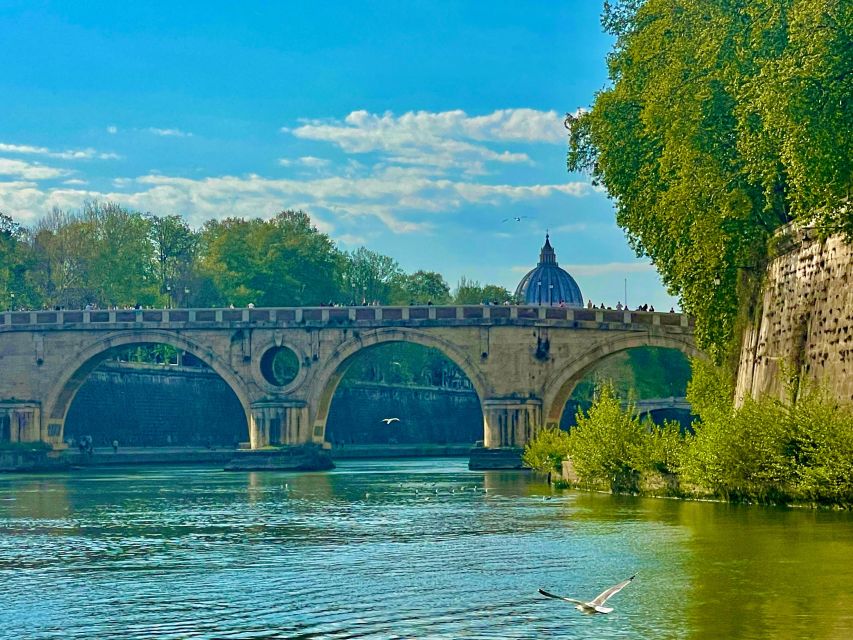
The boat is the easygoing half of the trip. You’ll cruise on the Tiber with multiple central piers and frequent departures, so you’re not stuck waiting hours. The schedule runs daily with boats departing every 30 minutes from 10:00 to 18:00, and your ticket is valid for 24 hours from your first boarding.
You can usually choose your comfort level with an open deck for maximum views or an indoor lounge if the sun is intense or the weather turns. I like this flexibility because Rome can swing from bright to breezy fast, and the river changes light in a hurry.
The hop-on hop-off setup matters because it lets you build your own flow. Start after the walking tour, then use the next day to target the Vatican-side views or float through the stretch toward Trastevere. The route includes stops near the kinds of icons you’d normally plan a separate outing for—think Vatican City vantage points, the river islands like Tiber Island, and classic bridge views such as Ponte Sisto and Ponte Vittorio Emanuele II.
If you’re aiming for the best photos, plan one ride for golden hour. The boat time works best when you treat it like a slow-moving viewpoint, not a transportation chore.
Price and value: is $73 a good deal?
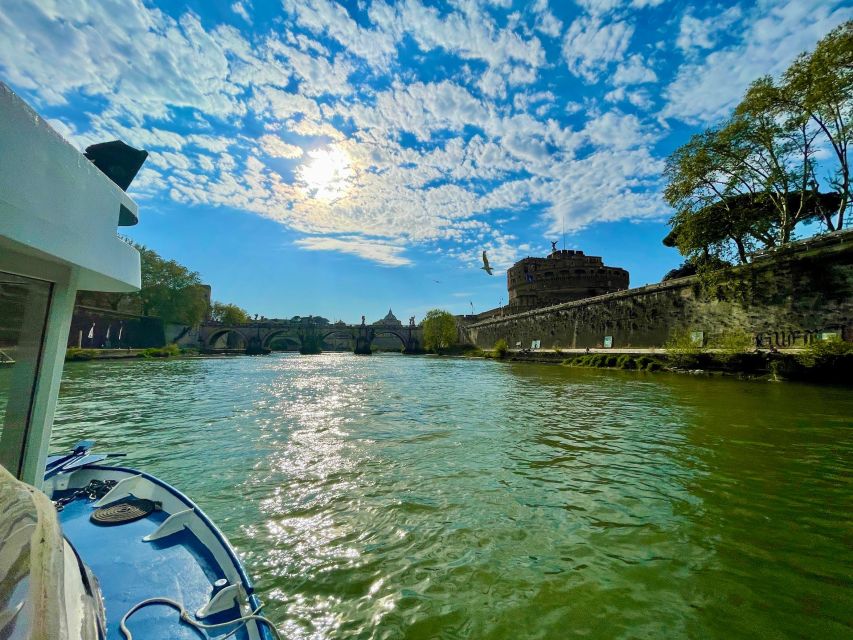
At about $73 per person, this tour can be strong value if you actually use the river ticket the way it’s designed. The walking portion is a licensed guided experience with a set route through major squares and monuments, plus the gelato stop. For many people, the guided context is the real cost saver: you spend less time guessing what you’re looking at and more time enjoying it.
The full experience gets more value if you plan at least one additional boat ride beyond the first one. Your ticket covers 24 hours, which is perfect for a second pass when crowds shift and the light changes.
Where the value can drop is if you treat the boat like a one-and-done ride. In that case, you’re paying for river time you might not fully enjoy. The walk is the star here. The boat is a pleasant add for views and a break from street-level traffic—not a reason by itself to come to Rome.
Who this tour suits best (and who should skip it)
This works best if you want structure. If you like your day planned but not overpacked, the walking route gives you the headlines while the river ticket gives you freedom afterward.
It’s also a good match for history-minded travelers who prefer their facts tied to what they’re seeing. The route hits big architecture and major public spaces—then connects them with side streets—so you don’t end the morning just knowing names.
It’s not a great fit if you have mobility limitations. The information notes it is not suitable for people with mobility impairments and wheelchair users, and the walking demands comfortable shoes. Also, baby strollers aren’t allowed, which can matter for families.
Book it or pass: my practical recommendation
If you want a Rome morning that feels efficient and a river afternoon that feels relaxing, this is an easy yes. The guided walk delivers the major monuments in a logical flow, and the hop-on hop-off boat gives you a second chance to enjoy the city without fighting crowds on foot.
If you’re only interested in one aspect—either the walk or the boat—then your choice should be simpler. The walking-only option is best when you’re confident you’ll cover the river area on your own. If you want a ready-made plan with viewpoints and flexibility, go for the full experience.
FAQ
Where is the meeting point for the walking tour?
Meet your guide next to the obelisk in Piazza Trinità dei Monti, located just above the Spanish Steps. Arrive a few minutes early.
How long is the guided walking tour?
The guided walking tour runs for about 2.5 hours.
What is included in the full experience versus the walking-only option?
The full experience includes the guided walking tour plus a 24-hour hop-on hop-off riverboat ticket. The walking-only option includes the guided walking tour and gelato tasting, but does not include the boat ticket.
What are the Tiber river boat hours and departure frequency?
Boats depart every 30 minutes from 10:00 to 18:00 (with service running daily from late March to early November as stated).
How long is the riverboat ticket valid?
The hop-on hop-off riverboat ticket is valid for 24 hours from your first boarding.
Is gelato tasting included?
Yes, gelato tasting is listed as included in the guided experience.
Is this tour wheelchair friendly?
No. The tour is not suitable for wheelchair users or people with mobility impairments.