REVIEW · ROME
Rome: Big Bus Hop-on, Hop-off Open-Top Sightseeing Tour
Book on Viator →Operated by Big Bus Tours - Rome · Bookable on Viator
Rome moves fast, so this helps. This hop-on hop-off ride is built for squeezing a lot of Rome into limited time, with headphones and recorded narration as your onboard guide. I like that you can get on, listen, and jump off when a sight grabs you, instead of committing to one rigid route. One heads-up: on busy days, you may find major stops adjusted or farther than you hoped.
I also like the value because the VOX digital walking tour comes included with your ticket, giving you a second layer of exploring on foot. You’ll get a real rhythm for the city’s geography: churches, ancient ruins, and the Vatican area in one loop. The tradeoff is that Rome is walk-heavy, and a bus stop can still mean a trek to where you actually want photos.
In This Review
- Key highlights to know before you ride
- What you’re really paying $26.43 for in Rome
- The hop-on hop-off loop: easy to use, but don’t expect zero walking
- Audio through headphones: the guide you can control
- VOX digital walking tour: how it complements the bus ride
- Start at Rome Termini (Stop 1): the easiest launch point
- Basilica Santa Maria Maggiore (Stop 2): a major church stop
- Colosseum (Stop 3): close to the Forum, not always right at the entrance
- Circus Maximus (Stop 4): a wide, airy change of pace
- Piazza Venezia (Stop 5): a key hub for Rome sightseeing
- Vatican Museums (Stop 6): helpful access, but plan for the last steps
- Spanish Steps (Stop 7): hop off, sit down, and get gelato
- Piazza Barberini (Stop 8): a good base for neighborhood exploring
- How long is enough: the loop time vs real sightseeing time
- The 72-hour Night Tour: a bonus, but not hop-on hop-off
- Apps, Wi‑Fi, and the day-of reality with stop closures
- Who this tour is best for
- Should you book this Big Bus hop-on, hop-off Rome tour?
- FAQ
- How long is the bus loop, and can I stay longer at stops?
- What ticket options are available?
- Is the tour offered in English, and do I get headphones?
- Is there a walking tour included?
- Is Wi‑Fi included on the bus, and can I bring luggage?
- What does the 72-hour ticket include at night?
- Can I cancel and get a full refund?
Key highlights to know before you ride

- Recorded audio through included headphones: English is available, with the route explained as you pass major sights.
- Hop on, hop off for 3 to 72 hours: plan your own day and spend longer at the stops that matter most to you.
- VOX digital self-guided walking tour included: adds context after you leave the bus.
- Open-top views plus onboard extras: free Wi‑Fi on board and a real-time bus tracking app.
- Major sights are on the route, but stops can be inconvenient: plan for walking even when the bus gets you close.
What you’re really paying $26.43 for in Rome

For about $26.43 per person, you’re buying flexibility more than speed. The loop runs roughly 1 hour 40 minutes (approx.), but your ticket time controls how much total exploring you can do: 1-day options plus 24, 48, or 72-hour validity depending on what you choose.
Here’s the value logic that makes sense in Rome: the city center is spread out, and traffic makes it hard to jump between big sights efficiently. A hop-on hop-off format lets you treat the bus like a moving map. If you’re doing a first pass at the city, or you just want easier transportation between key areas, it’s a practical spend.
You can also read our reviews of more tours and experiences in Rome.



The hop-on hop-off loop: easy to use, but don’t expect zero walking
The setup is simple. You exchange your voucher for a timed ticket, then you can board at the route’s stops and get off whenever you want. You can also take your time—there’s no requirement to stay on the bus for a single nonstop tour.
That said, Rome is rarely door-to-door. Many stops are positioned by city regulations and road access, so you’ll often walk the final segment. In the practical world of Rome, that means good shoes, patience, and a realistic plan for how long each sight will actually take.
On top of that, buses can’t always guarantee perfectly timed stops at every location. Some days include temporary closures or route adjustments. I’d treat the bus as a guide to the area first, then a shortcut to the specific place second.
Audio through headphones: the guide you can control

This is one of the best parts of the experience. You get recorded audio commentary through provided headphones, and it explains what you’re seeing with a multi-language narration set that includes English.
Why that matters: Rome’s major sights look obvious from the road, but the details are what you’ll remember later. Having the narration while the bus passes the landmarks helps you connect the names to the real view. It also keeps you from feeling lost when the bus turns down unfamiliar streets.
A practical tip: if a headset jack doesn’t work, ask right away. I’ve seen enough reports of dead ports that it’s worth checking early, before you settle in for a long segment of listening. Also, the audio won’t always match your exact sight angle if you’re stopped farther away than expected—so if you care about close visuals, plan to do some short walking after you hop off.
VOX digital walking tour: how it complements the bus ride

The included VOX digital self-guided tour download is the extra layer that turns this from a simple sightseeing ride into a more useful day-by-day experience. Instead of only getting your information from the bus, you can pair the narration with time on foot.
The key is mindset: use the bus to get oriented, then use the VOX content when you’re actually in the spaces you want to explore. That sequencing is what tends to create that I-get-it-now feeling.
And since you’re choosing your own hop-off timing, you can line up the walking tour with whatever you’re most excited about that day.
Start at Rome Termini (Stop 1): the easiest launch point

Your first stop is Rome Termini station, at Via Giovanni Giolitti, 32. Termini is a major rail hub, so this is a smart place to start if you’re staying near transit or want a clear meeting point.
What I like about beginning here is that it’s a good reset. You can hop on, get the overview, and then decide later whether you want to return to certain zones with more time. It also reduces the “where is the bus” stress because Termini is one of the most recognizable anchors in Rome.



Basilica Santa Maria Maggiore (Stop 2): a major church stop
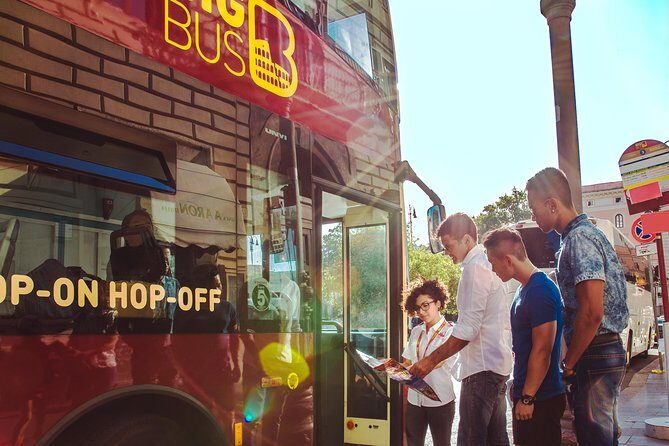
Next up is Papal Basilica of Saint Mary Major (Basilica Santa Maria Maggiore), listed at Piazza dell’Esquilino, 14. Even if you’re not a religious-history expert, it’s a strong early stop because it gives you a very Roman church experience without forcing you straight into the busiest ruin zones.
This is a good place to hop off if you want a break from outdoor heat and crowds. It also helps balance the route: you’ll get your ancient sights later, after you’ve already had a cultural landing spot.
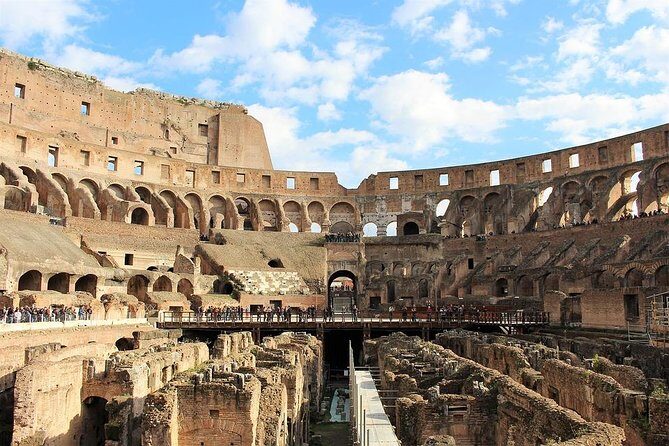
Colosseum (Stop 3): close to the Forum, not always right at the entrance

The Colosseum stop is outside the Roman Forum entrance area, listed as Via di San Gregorio with the bus stop outside the Roman Forum entrance.
This is where you need to be flexible. Some riders report that the Colosseum-area stop can be temporarily closed or skipped, and then you may have a longer walk from the next closest stop. That’s not a dealbreaker if you’re prepared, but it can be rough if you’re traveling with mobility challenges.
How to handle it like a pro:
- If the Colosseum is your top priority, double-check what stops are running as scheduled on the day you ride.
- When you board, it’s fair to ask the driver whether you’ll be stopping at every planned location on your route.
Once you’re there, you’ll be in the right neighborhood to connect the Colosseum with nearby ancient sites. Just remember: the bus gets you close, but Rome makes you finish on foot.
Circus Maximus (Stop 4): a wide, airy change of pace
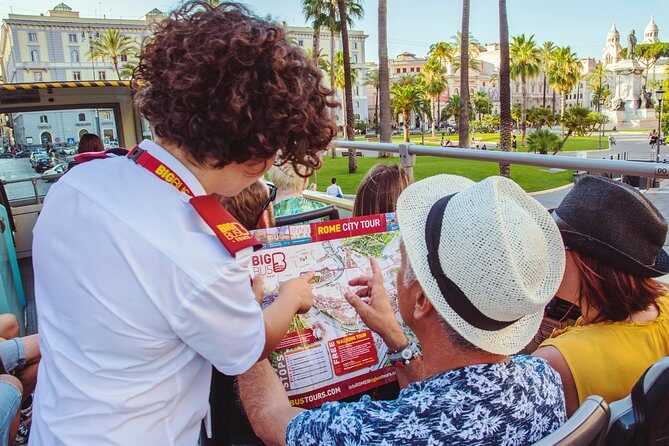
Stop 4 is Circus Maximus, at Piazzale Ugo La Malfa. Compared with the tight corridors around other attractions, Circus Maximus often feels more open just because of its location and scale.
I like this stop as part of a “get your bearings” day. You can step out, look around, and understand why the ancient Romans chose places like this for public spectacle. It’s also a helpful break point before you head back toward the dense historic center.
Piazza Venezia (Stop 5): a key hub for Rome sightseeing
The bus stop at Piazza Venezia is listed at Via di Teatro Marcello. This area is useful because it sits near the historic core. From here, you can build a walking plan toward multiple sights without constantly changing neighborhoods.
Expect plenty of people, because Piazza Venezia is one of those Rome magnets. But that also means it’s easy to navigate. Even if you don’t hop off for a long time, you can usually find quick views and photo angles from nearby streets.
Vatican Museums (Stop 6): helpful access, but plan for the last steps
Your Vatican stop is Vatican Museums, at Lungotevere Tor di Nona 7. This is the right area to aim for the Vatican sights, and the route description also frames the Vatican City history you can explore once you’re off the bus.
The caution: some people find this stop doesn’t put them directly in front of the Vatican in the most obvious way, meaning you still need a real walk to get where you want. If Vatican City is a “must-see,” I’d budget time for wandering streets and walking the final stretch carefully.
Also, if you’re going for the full Vatican experience, don’t treat this as a quick add-on. The bus helps you reach the zone. Your ticket time and walking time are what determine whether you feel rushed.
Spanish Steps (Stop 7): hop off, sit down, and get gelato
Stop 7 is the Spanish Steps, at Via Ludovisi 73. This is one of those sights where the moment you step off the bus, you feel why it’s famous.
This stop works well for a slower rhythm. You can linger near the steps, people-watch, and then take a short stroll for a gelato break, which is exactly the kind of downtime the route encourages.
One more Rome reality check: the Spanish Steps area can be busy, so go early in your ticket window if you want calmer walking.
Piazza Barberini (Stop 8): a good base for neighborhood exploring
The final stop on the route list is Barberini, at Via Barberini 12. It’s a useful landing point because it helps you keep exploring beyond the headline zones.
I like finishing here if you want to extend your day into café streets and side-street wandering. You’ll often be close enough to keep moving without needing a whole new transportation plan.
How long is enough: the loop time vs real sightseeing time
Yes, the bus ride is roughly 1 hour 40 minutes for a full loop. But the real decision is your ticket length: 3, 24, 48, or 72 hours. The longer you pick, the more useful it becomes because you can return to a stop you liked and spend more time without feeling behind schedule.
For a short visit, a 3- or 24-hour option can work if your priorities are only a couple of sights. For a calmer pace, 48 hours starts to feel more realistic. And for 72 hours, you’re positioning yourself for both daytime stops and the added night activity.
The 72-hour Night Tour: a bonus, but not hop-on hop-off
If you choose the 72-hour ticket, it includes a panoramic Night Tour. This is seasonal, tied to spring-to-autumn months, and the timing info you’ll see for the program can vary between April–October and May–October depending on the description you’re looking at.
Important detail: the Night Tour is not hop-on hop-off. So think of it as a planned event rather than a free-form extension of the daytime bus loop.
If you want evening views and you’re already committed to the longer ticket, it can add real value. If you’d rather stay totally flexible, you might prefer a shorter ticket and skip the night component.
Apps, Wi‑Fi, and the day-of reality with stop closures
There’s a real-time bus tracking app, plus free Wi‑Fi on board. In theory, that helps you time your hop-offs and avoid wasting time at a stop.
In practice, I’d treat Wi‑Fi as a nice extra, not a guarantee you can depend on. Some people report Wi‑Fi trouble, so plan to use your own mobile data if you need it.
Also, stop closures happen. Some riders report the Colosseum or Roman Forum stop being closed temporarily without a clear heads-up. The most practical move is to check the route updates through the company service information page before you commit your walking time. And if you’re standing at a stop and buses seem to pass without stopping, it’s worth asking the driver whether that stop is operating normally.
Finally, if your app experience is frustrating, it doesn’t mean you’re stuck. Use the stop “find a stop” style tools if available on the app, and keep your bearings with normal map tools as a backup.
Who this tour is best for
This is a strong fit if:
- You want an easy overview of Rome’s main areas without building multiple transit legs.
- You like guided structure but still want freedom to hop off when a sight pulls you in.
- You’re traveling with kids, family members, or anyone who benefits from audio explanations instead of constant reading.
It’s trickier if:
- You need extremely close stop placement at every major attraction. Even when the stop is near, you may still walk.
- You’re on a strict mobility schedule and can’t handle longer walks if a stop gets adjusted.
Should you book this Big Bus hop-on, hop-off Rome tour?
I’d book it if you want a simple way to cover the big-name zones and you’re okay finishing on foot. The strongest reasons are the headphone narration and the included VOX walking tour, which help you turn bus time into real context. At $26.43 for a time-based ticket, it can be a good deal if you’ll hop off at more than just one stop.
But I wouldn’t rely on it as your only plan for the Colosseum and Vatican areas. Build extra time for walking, check day-of stop updates, and if that’s your priority, ask the driver whether the scheduled stops are running. If you do that, this tour can be a smart backbone for a Rome visit.
FAQ
How long is the bus loop, and can I stay longer at stops?
The tour is about 1 hour 40 minutes for the loop (approx.). Your ticket is valid for a set time window (like 24, 48, or 72 hours), and you can spend as long as you like at stops during that validity period.
What ticket options are available?
You can choose tickets valid for 3, 24, 48, or 72 hours. The exact 1-day style option also depends on what you select at checkout.
Is the tour offered in English, and do I get headphones?
Yes, the tour includes English. You also receive headphones for the recorded audio commentary.
Is there a walking tour included?
Yes. A VOX digital self-guided tour download is included with the ticket options.
Is Wi‑Fi included on the bus, and can I bring luggage?
The tour includes free Wi‑Fi on board. Luggage is not permitted on board for security reasons.
What does the 72-hour ticket include at night?
The 72-hour ticket includes a panoramic Night Tour, which runs only during certain months. This Night Tour is not hop-on, hop-off.
Can I cancel and get a full refund?
Yes. You can cancel for a full refund if you cancel at least 24 hours in advance of the experience start time.