REVIEW · 1-HOUR EXPERIENCES
Rome: Basilica of St John Lateran & Holy Steps 1-Hour Tour
Book on GetYourGuide →Operated by Crucis Tours · Bookable on GetYourGuide
A Holy place in a tight time box.
This 1-hour stop at the Scala Sancta and St John Lateran is built for people who want the big religious meaning without a half-day detour. You start at the Pontifical Sanctuary of the Holy Stairs, where you’re led through the tradition tied to Christ’s condemnation, then you move across to San Giovanni with a guide who connects doctrine to what you actually see in the spaces.
I like two things most. First, I love how the guide handles the symbolism in a way that feels practical, not academic. When guides such as Wen or Tom are leading, you get clear explanations of relics, art, and church details, with a steady pace that keeps the story straight. Second, I like the format: you get the Holy Steps area and the highest-ranking Roman basilica in one concentrated hour.
One consideration: the famous practice of climbing the Holy Steps on your knees is not part of this tour, since it typically takes about 45 minutes. If that is your main goal, plan to do the knee-climbing after the group finishes, since it’s offered freely on-site.
In This Review
- Key highlights you should care about
- First stop: Scala Sancta and the Sanctorium Sancta in 20 minutes
- The chapel details: acheiropoieta and Last Supper wood
- Crossing to St John Lateran: Rome’s top-ranking basilica
- Relics of Saints Peter and Paul, plus the Pillars of the Church
- Holy Doors and 2025: what you can spot now
- Timing, dress code, and what the 1 hour really buys you
- Price and value: is $65 worth it?
- Getting there and staying oriented at the end
- Who should book this tour, and who might skip it
- Should you book Basilica of St John Lateran & Holy Steps?
- FAQ
- How long is the Rome: Basilica of St John Lateran & Holy Steps tour?
- Where do I meet the guide?
- Is the tour wheelchair accessible?
- Is the kneeling tradition on the Holy Steps included?
- What should I wear?
- What languages are available for the guide?
Key highlights you should care about
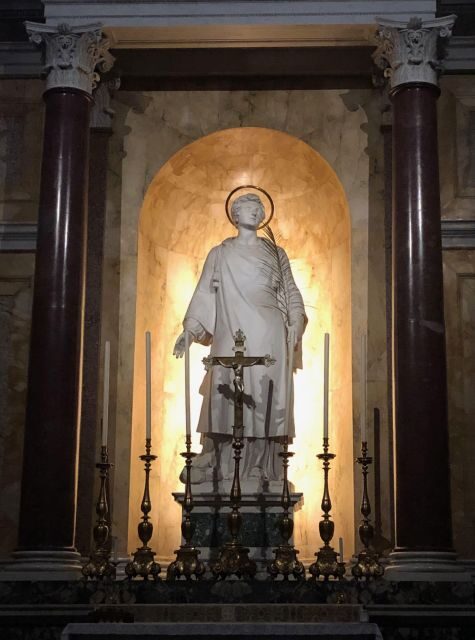
- Scala Sancta first: you visit the Holy Stairs area and climb the ordinary stairs while learning what the chapel represents.
- Sanctorium Sancta peek: you can view the tiny chapel tied to the Holy of Holies and papal tradition.
- Acheiropoieta tradition: the tour includes the story of a miraculous image connected to St Luke and angels.
- Peter and Paul relic veneration: you get a close-up moment with relics tied to the Pillars of the Church.
- Holy Doors context for 2025: you’ll hear how St John Lateran relates to the Holy Doors opened in Jubilee Years.
- Small group feel: limited to 5 participants, so questions are realistic, not rushed.
First stop: Scala Sancta and the Sanctorium Sancta in 20 minutes
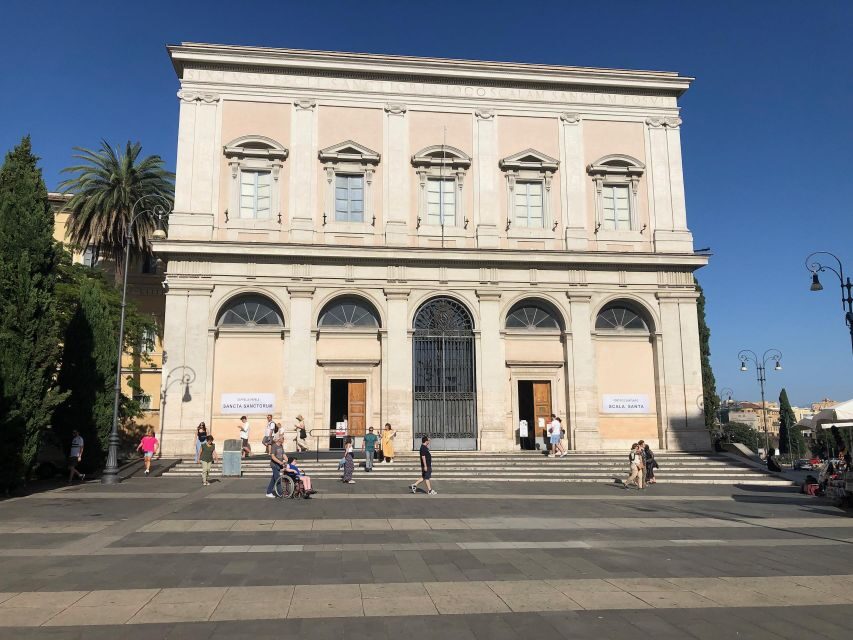
The tour begins where the attention naturally goes in Rome: the Pontifical Sanctuary of the Holy Stairs (Scala Santa). The meeting point is at the bottom of the stairs, to the left of the entrance of the sanctuary, and the operator asks you to use WhatsApp so you can find the group smoothly if anything goes sideways.
Here’s what makes this start different from a quick church glance. You begin with guided context before you start moving, so the Holy Steps don’t feel like a random set of stairs. You spend about 20 minutes at Scala Sancta, which is just long enough to understand what the site is, why people come, and where the most important chapel sits behind the ritual.
You’ll climb the ordinary stairs with the group, not the kneeling version. That matters because the kneeling pilgrimage can take far longer than most tours can fit in. The guide also gives you a chance to look into the chapel area called the Sanctorium Sancta, also referred to as the Holy of Holies, the tiny chapel where (in tradition) only the Pope was previously allowed to enter.
You can also read our reviews of more tours and experiences in Rome

The chapel details: acheiropoieta and Last Supper wood
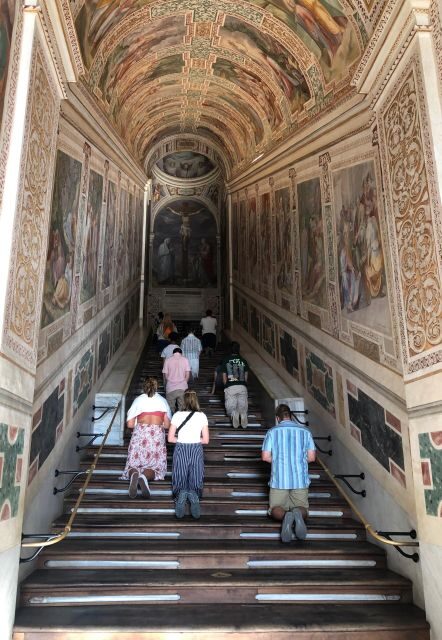
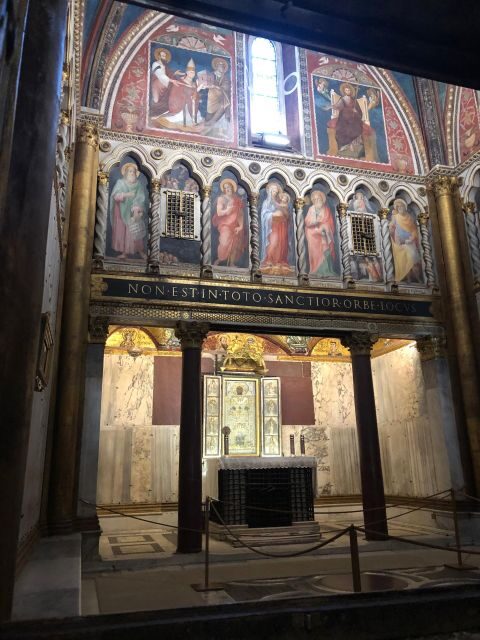
Inside that little chapel space, the tour focuses on three items of meaning you can’t pick up from a postcard. First is the tradition of an acheiropoieta of Christ—an image not made by human hands—said to have been begun by St Luke and finished by angels. Even if you approach from a historical angle, it’s the kind of story that helps explain why pilgrims treat this stop as more than architecture.
Second, you’ll learn about wood connected to the table of the Last Supper. The tour doesn’t ask you to pretend it’s one thing or another. It treats the tradition seriously, then helps you understand why faithful Catholics see it as a living link to the Passion.
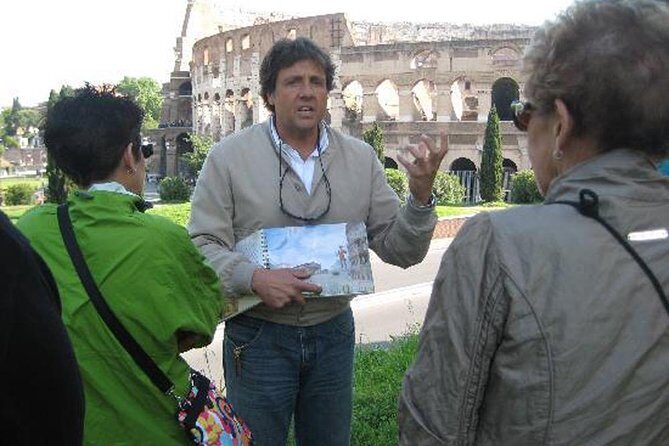
Third, the guide’s job is to translate these details into a way you can remember while you’re still standing there. That’s where having a leader who explains symbolism and connects it to what you see really pays off. In this specific experience, guides including Wen and Tom are often praised for speaking at a pace that doesn’t leave you guessing what matters most.
Practical note: this is a short stop. Don’t expect a long worship service inside the chapel space. Expect a guided look and a chance to orient your own understanding.
Crossing to St John Lateran: Rome’s top-ranking basilica
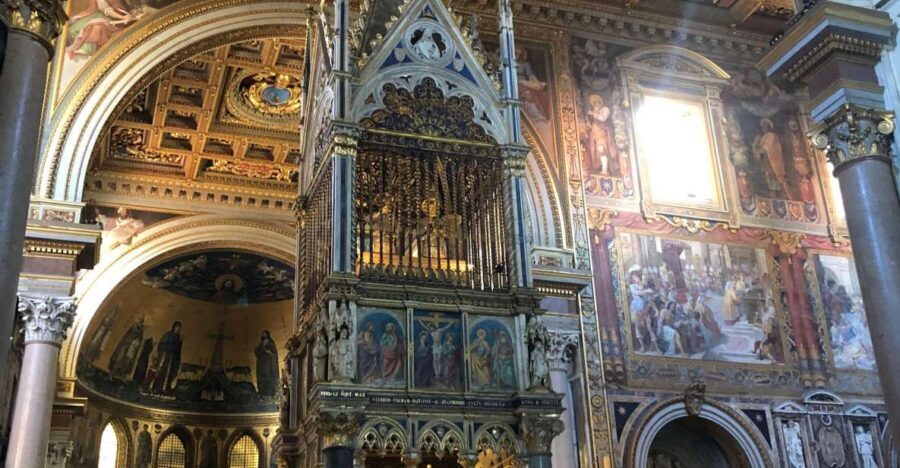
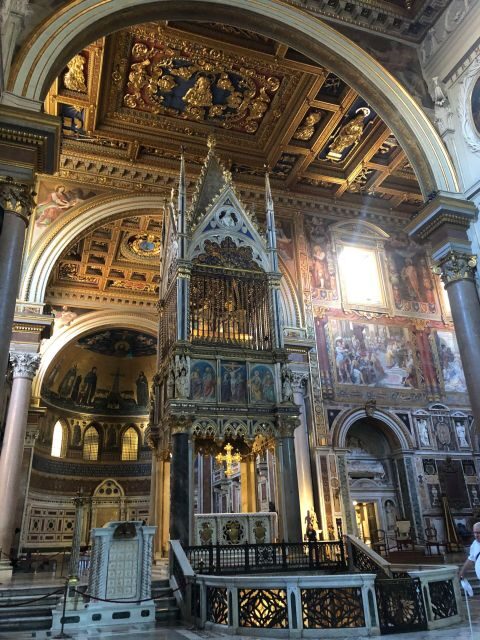
After Scala Sancta, you move across the road to Basilica di San Giovanni in Laterano, commonly called St John Lateran. This is the part that changes the tone from intimate pilgrimage to sweeping cathedral scale, and it takes about 40 minutes.
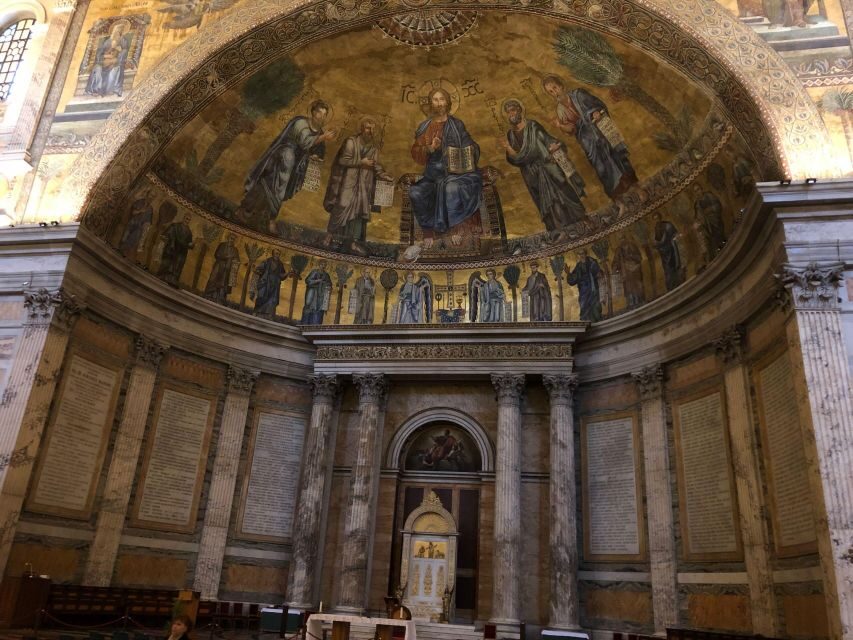
St John Lateran is described as the highest-ranking church in Christendom and the mother church of the world. Even if you’ve seen major sights like St Peter’s, this basilica’s status gives it a different energy. You’re not just visiting a famous building. You’re stepping into the cathedral connected to Rome’s leadership and centuries of church life.
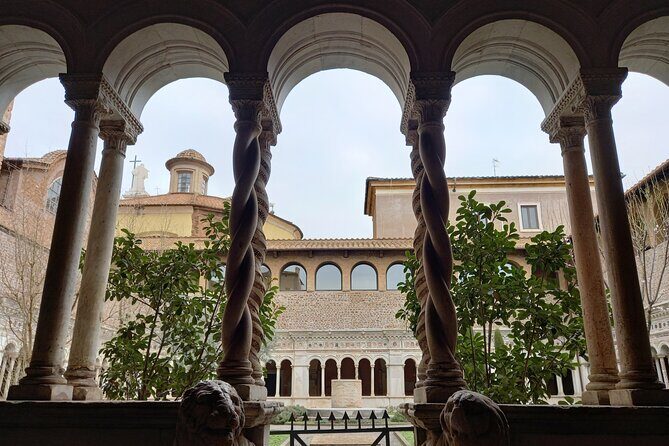
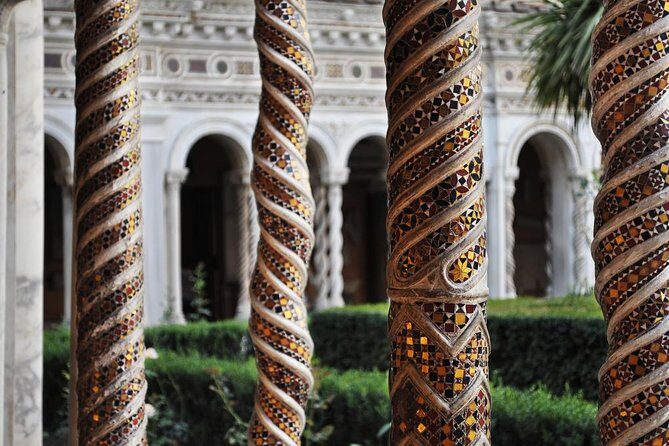
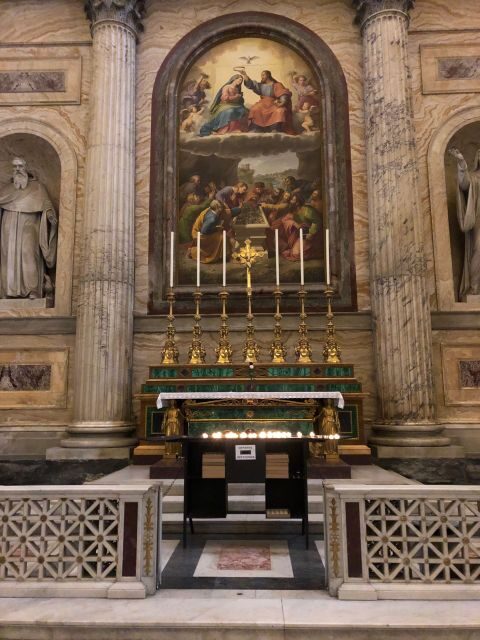
This stop is also built for art-and-meaning readers. The basilica has priceless artwork and mosaic symbolism, and the guide points out what you can actually track with your eyes. That is the difference between standing in a huge space and leaving with a mental map.
And yes, it is a UNESCO World Heritage site. What that means for your visit is simple: the place is important enough that the details were worth preserving. The tour gives you enough time to appreciate that rather than rushing straight through.
Relics of Saints Peter and Paul, plus the Pillars of the Church
The tour includes a moment of veneration connected to two of the biggest names in Christianity: Saints Peter and Paul, presented here as the Pillars of the Church. You’re invited to see and venerate relics associated with them, including skulls mentioned as part of what’s available for veneration.
If you’re not Catholic, this is still worth it, because it helps you understand the language of pilgrimage in Rome. Catholics come not only to look, but to pray in the presence of holy things believed to connect them to the saints. A good guide keeps this respectful and clear, so you’re not left either sidelined or confused.
What I appreciate is that the tour places the relic moment inside the larger story of Lateran’s role. You’re not treated to a random relic photo op. You’re led through why Peter and Paul matter to the church’s identity, then you’re shown the specific reverence tied to this basilica.
Holy Doors and 2025: what you can spot now
One of the tour’s sharper practical points is the Jubilee link. St John Lateran is the site of one of the four Holy Doors, with the next opening expected in 2025.
Even if you’re not visiting during Jubilee Year, this context helps. You start to see the basilica not just as a historic cathedral, but as a stage for a recurring pilgrimage rhythm in Catholic Rome. When you learn that the Holy Door is part of a larger spiritual calendar, the building’s role feels more alive, even between Jubilees.
You can also use this information to plan a future trip. If the Holy Doors matter to you, you now know exactly where to aim next time.






Timing, dress code, and what the 1 hour really buys you
This tour is designed for people with limited time, but it still tries to keep the meaning intact. The total duration is 1 hour, and that’s exactly why the stops are split into about 20 minutes at Scala Sancta and about 40 minutes at St John Lateran.
The pace is “walk, see, understand,” not “sit and listen.” If you’re the type who likes to ask questions, the small group size helps. The experience is limited to 5 participants, and that means your guide can actually slow down for your specific curiosity.
Dress code is straightforward and strict: no shorts and no short skirts. This isn’t about comfort; it’s about getting into the right headspace and following the church’s rules. Plan long pants or a knee-length skirt, and you’ll avoid stress right at the entrance.
Wheelchair access is listed as available, so if mobility is a concern, this tour is built with that in mind. One more operational detail: guide tips are not included, so if you want to tip, set aside some cash or confirm the operator’s preferred method.
Price and value: is $65 worth it?
At $65 per person for a 1-hour guided experience, you’re paying for three things: specialized subject matter, a short timed route, and a guided visit that focuses on what most people miss.
Here’s how that plays out in real life. The tour includes all taxes and fees, and it provides live tour guidance in English or Chinese. You’re also told radio headsets are provided for groups of 7 or more; with the group size limited to 5 here, headsets may not be necessary, but it’s a sign they plan for smoother group control.
So is it value? If your priority is the Holy Steps + Lateran combo without guessing your way through symbolism, the price makes sense. If you’re already a Rome church specialist who loves to roam alone for an hour, you could do it independently. But if you want your time to count—especially with the chapel stories and relic context—this price is more than a ticket. It’s a translation service between faith, art, and what you’re standing in.
Also, free access applies for clerics, so if you qualify, make sure you bring the right documentation.
Getting there and staying oriented at the end
At the end, the tour finishes at Basilica of San Giovanni in Laterano, with time to admire the facade. The location is close to public transport, taxis, and it sits inside Rome’s historic core near the Aurelian city walls that ring the Centro Storico.
One small tip that saves headaches: arrive ready to meet at the correct spot at Scala Santa. The meeting point is very specific—the bottom of the stairs, to the left of the entrance. Using WhatsApp as requested helps keep things calm, especially in a busy city layout where entrances can be confusing.
Who should book this tour, and who might skip it
Book this tour if:
- You want a fast, focused introduction to the Holy Steps and St John Lateran without losing time.
- You care about Catholic tradition and want the meaning explained in plain terms.
- You appreciate a guide who can connect doctrine, relics, and what you see in church spaces.
Consider skipping or pairing with another option if:
- You specifically want the full kneeling ascent as your main devotion. This tour doesn’t include the kneeling practice because it takes around 45 minutes, but you can do it on your own afterward for free.
- You’re seeking a long art history lecture. This is short by design, so it’s more of a guided orientation than a deep course.
Should you book Basilica of St John Lateran & Holy Steps?
Yes, if you want your Rome time to feel spiritually grounded and logically organized. This is one of those rare 1-hour experiences where every minute is supposed to answer a question: what is this place, what do people believe here, and why do relics and symbolism matter?
If the kneeling practice is your top priority, do it after the tour and treat this guided walk as your setup. That way you get both: you understand the meaning during the hour, then you can choose to spend more time in prayer on the steps at your own pace.
FAQ
How long is the Rome: Basilica of St John Lateran & Holy Steps tour?
The tour lasts 1 hour.
Where do I meet the guide?
Meet at the bottom of the stairs to the left of the entrance of the Pontifical Sanctuary of the Holy Stairs (Scala Santa). The operator also asks you to download WhatsApp to stay in touch in real time.
Is the tour wheelchair accessible?
Yes, wheelchair accessibility is listed as available.
Is the kneeling tradition on the Holy Steps included?
No. Climbing the Holy Steps on your knees takes about 45 minutes and is not part of the tour. You can arrange to do the tradition on your own at the end of the visit for free.
What should I wear?
Shorts and short skirts are not allowed, so dress modestly with clothing that covers appropriately.
What languages are available for the guide?
The live guide is offered in English and Chinese.