REVIEW · NAPLES
Naples: The Holy Mile 3-Hour Guided Tour
Book on GetYourGuide →Operated by Catacombe di Napoli · Bookable on GetYourGuide
Your shoes get used on this route. The Holy Mile is a sacred walk in Naples that links St. Gennaro’s tomb to his treasure, moving from street level down into the catacombs and back up into the neighborhood’s life. It’s guided in Italian and English, so the story stays clear as the route changes tone—dark stone to painted walls, then back to the sound of the district.
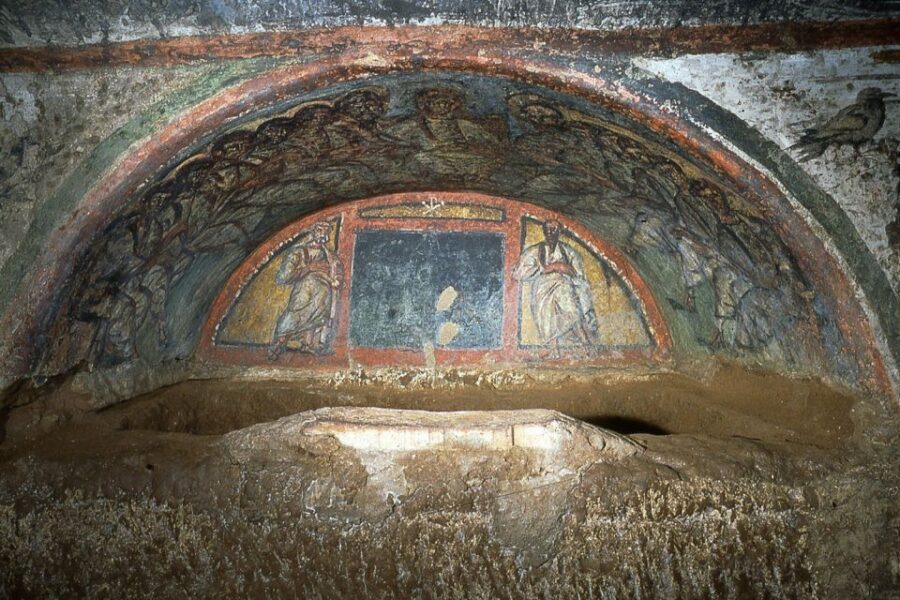
What I love most is the moment you step into the Catacombe di San Gennaro. This underground start doesn’t feel like a quick stop; it feels like the beginning of a different Naples, with real detail in the spaces and the religious art connected to them.
My second favorite part is the people telling the story. Guides such as Fabrizio and Giuseppe focus on both the past and what’s happening now in Rione Sanità, and the explanations land well even when you’re just trying to keep up on foot. The one catch: you’ll be walking for much of the tour, and the route is timed to cover several stops in about three hours.
In This Review
- Key highlights to know before you go
- The Holy Mile: why Naples’ underground route feels like a time machine
- Rione Sanità streets, churches, and the St. Gennaro thread
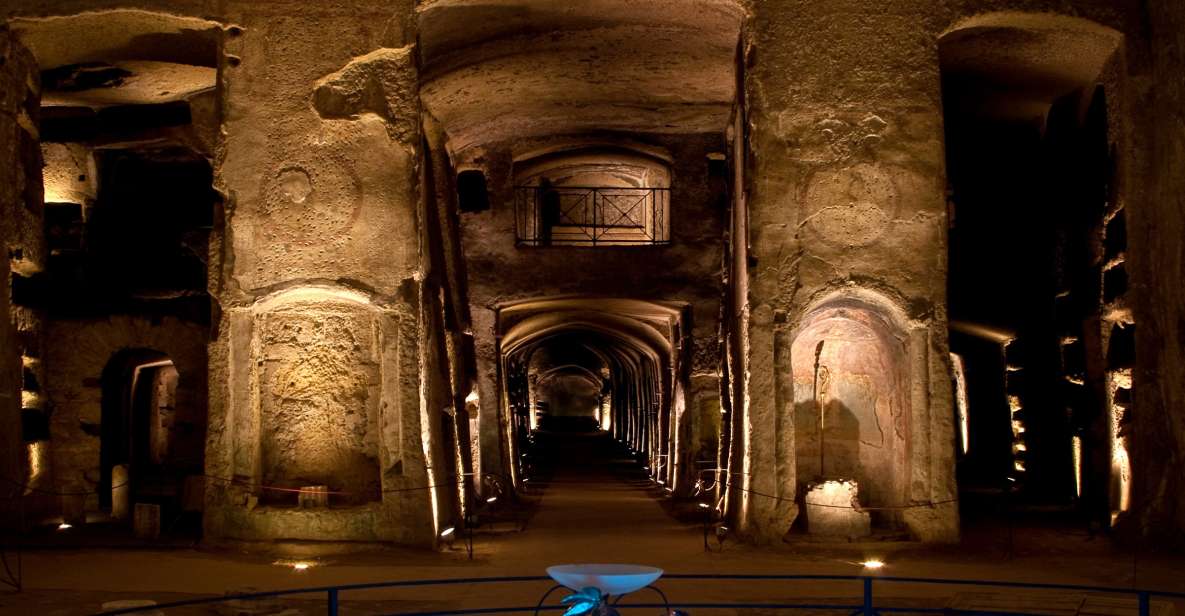
- Catacombe di San Gennaro: start underground and see the art
- Basilica of Santa Maria della Sanità: frescos and mosaics that explain beginnings
- Extra Moenia and Presepe Favoloso: the route expands beyond the main basilicas
- San Felice Palace, Via Vergini, and Piazzetta Crociferi: street-level stops with a reason
- The Sanità district and Palazzo dello Spagnuol: how the story reaches past churches
- Ending at Piazza Cavour: plan an easy next step
- Price and value for a 3-hour guided route at $22
- Timing, pace, and what to do about the walking
- Who should book this Holy Mile tour—and who might not love it
- Should you book the Naples Holy Mile 3-Hour Guided Tour?
Key highlights to know before you go
- Catacombs first: start at Catacombe di San Gennaro and let the route pull you underground.
- Underground basilicas with art: you’ll see important frescos and mosaics, not just plain stone corridors.
- Rione Sanità on foot: the walk passes ancient streets shaped by many cultures and religious figures.
- Community revival angle: the Holy Mile is tied to supporting the revival of Rione Sanità.
- Stops include churches, palaces, and set pieces: from basilicas to palazzi like San Felice and Spagnuol.
The Holy Mile: why Naples’ underground route feels like a time machine
Neapolitans have a way of stacking eras on top of each other. On the Holy Mile, you feel that stacking in your legs and your eyes. You begin at the catacombs connected to St. Gennaro, then move through basilicas and church spaces that carry the visual language of early Christianity—frescos, mosaics, and layered decoration that helps you understand what mattered to people long ago.
This is also a tour with a purpose beyond sightseeing. The route is described as sacred, yes, but it’s also tied to the renewal of Rione Sanità. That matters because you’re not just looking at buildings; you’re seeing a district being kept alive through attention, care, and community projects.
And the tone stays respectful. The best moments aren’t the loud photo ops. They’re the pauses—when your guide points out why certain spaces look the way they do, and how the religious story connects to art and to place.
You can also read our reviews of more tours and experiences in Naples.

Rione Sanità streets, churches, and the St. Gennaro thread
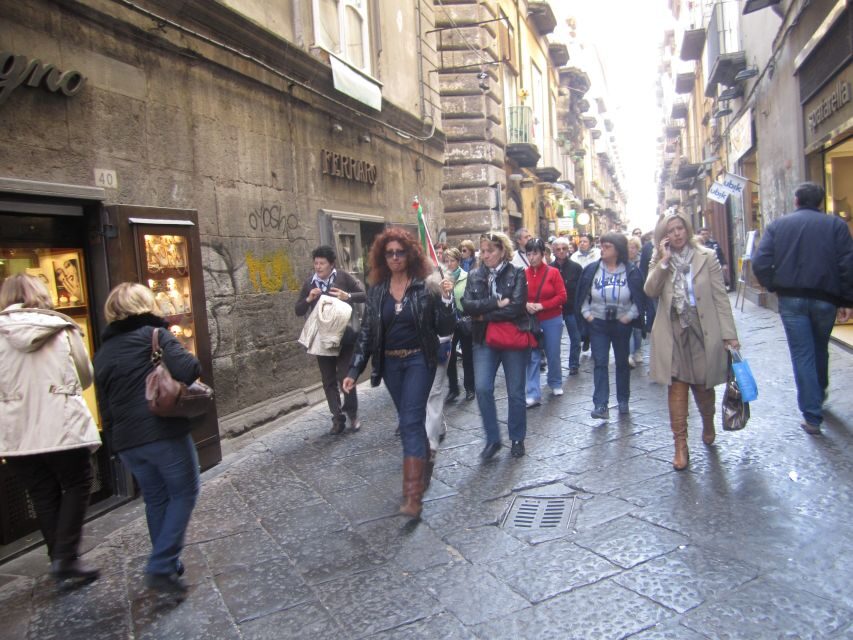
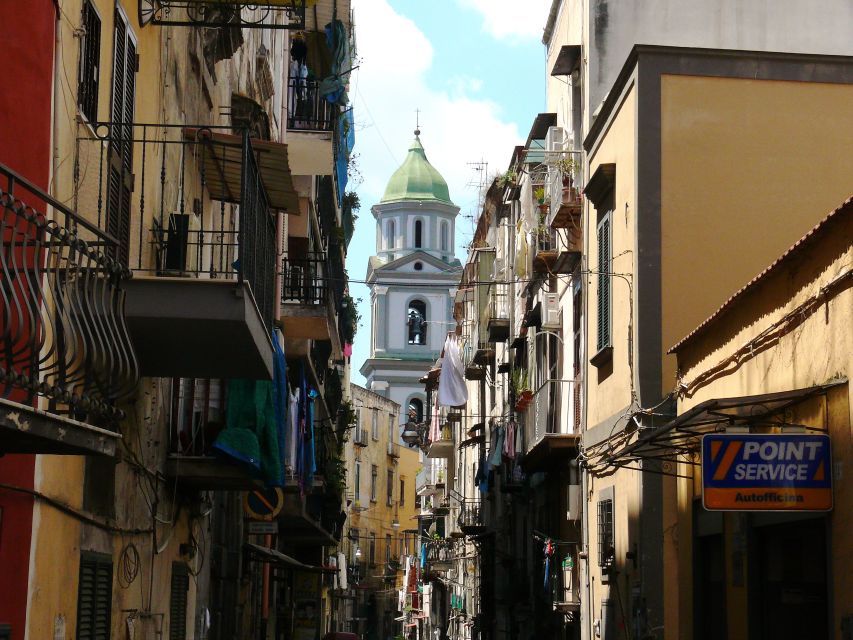
After the underground start, the tour shifts to the neighborhood itself. Rione Sanità is presented as one of Naples’ most ancient districts, and you get the sense that it has absorbed different cultural influences over centuries. You’ll walk past streets with memories tied to popes, kings, and cardinals—details that give the district a sense of continuity rather than randomness.
I like that this tour doesn’t treat Naples as a museum you rush through. It treats the neighborhood as something active, with residents, churches, and institutions that still shape the area’s identity. You’ll also hear the route framed as a move from St. Gennaro’s tomb toward what’s described as his treasure. Even if you only know a little about the saint, the guided path helps you understand why the “Holy Mile” became a named experience in the first place.
Because the walk is part of the story, the route ends up doing something subtle: it trains you to look at streets like they have chapters. You stop seeing buildings as scenery and start seeing them as references—religious, political, and social.
Catacombe di San Gennaro: start underground and see the art
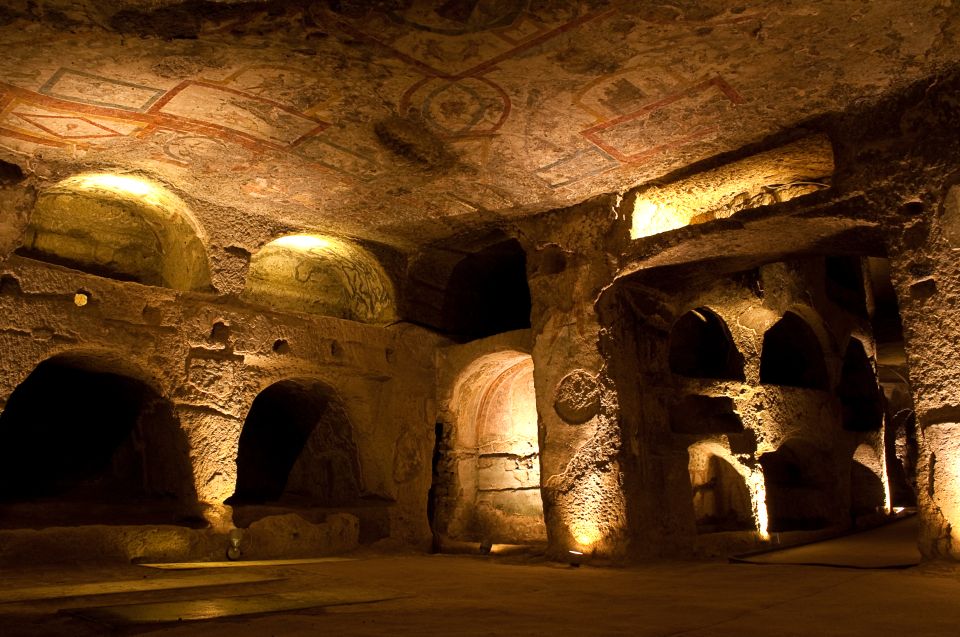
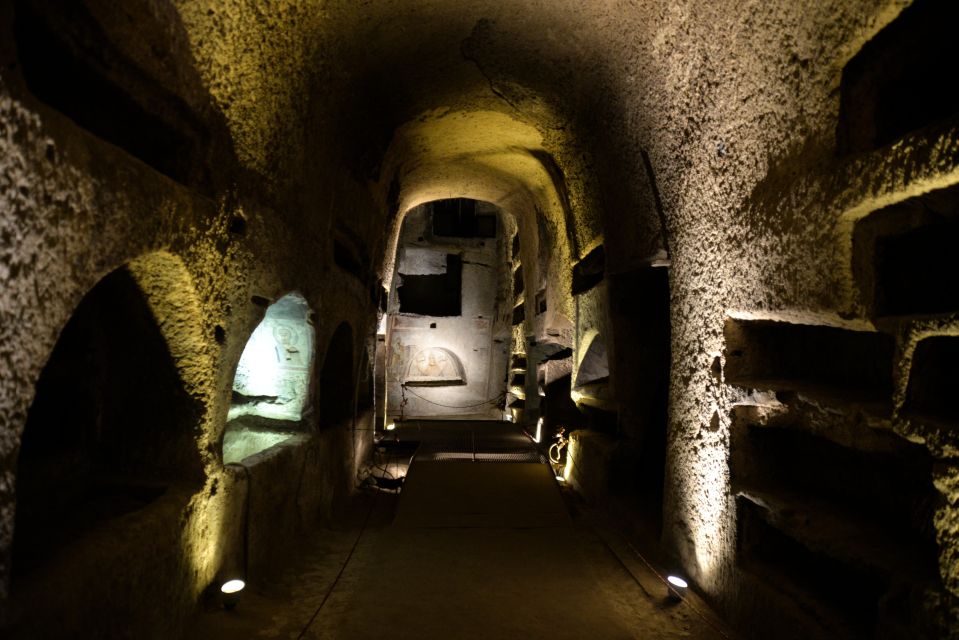
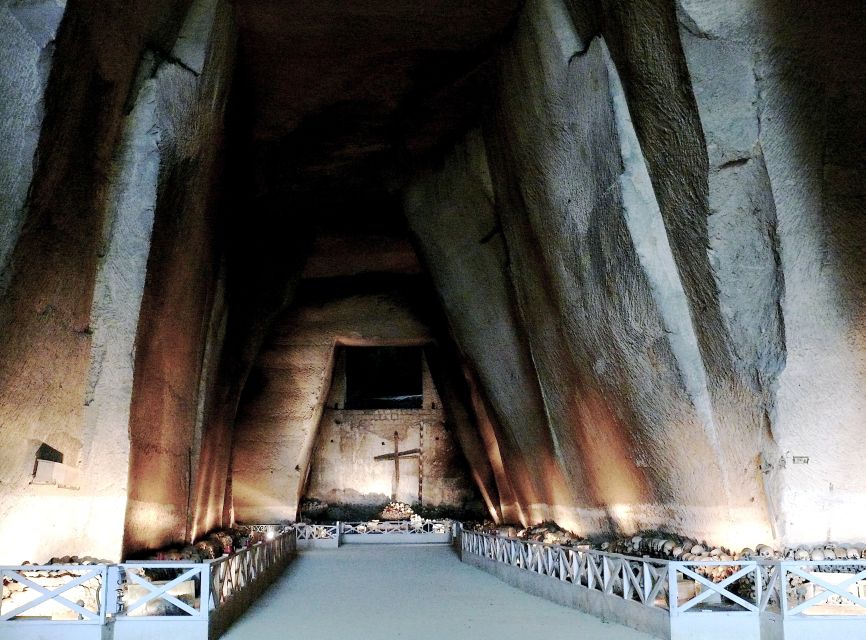
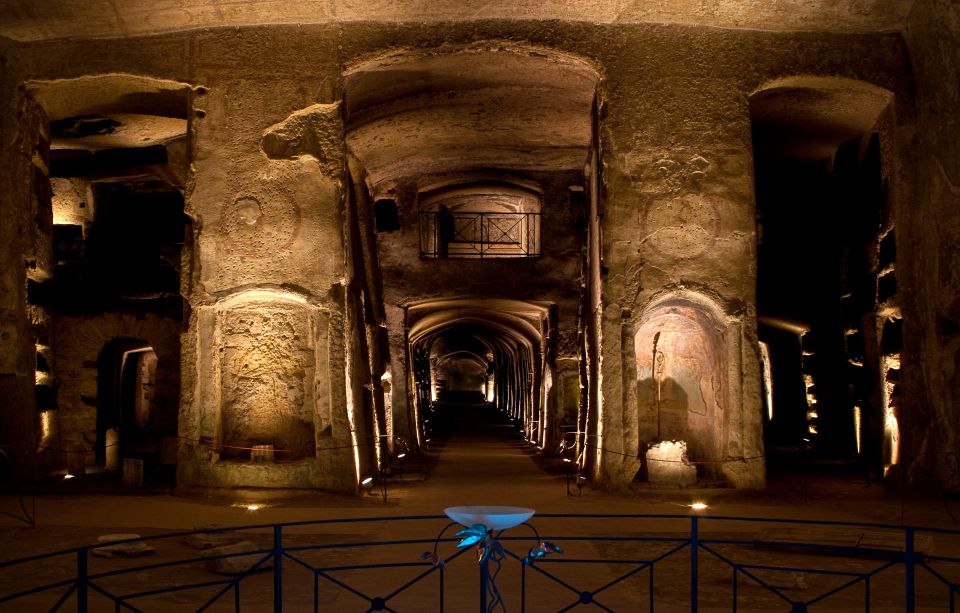
The tour begins at Catacombe di San Gennaro, and that’s the right choice. Going underground first sets expectations early: this is not a “quick peek” activity. You’re guided through the catacombs (about 50 minutes) with time built into the experience so you can take in the space and the visual details.
The catacombs are often called the star of this tour, and that’s not just hype. The underground environment helps you understand why people traveled through these spaces in the first place. The storytelling is designed to connect the architecture and decorative program to the religious meaning of the route, so it doesn’t feel like a standalone attraction.
One practical note: expect stairs and slow walking where you might need to stop. A review highlight I took seriously was the advice to be prepared for a fair amount of walking. If you’re the type who hates moving from one site to the next, this part alone is your test.
Basilica of Santa Maria della Sanità: frescos and mosaics that explain beginnings
After the catacombs, the route heads into the Basilica of Santa Maria della Sanità. You’ll get a guided visit (around 40 minutes), then there’s a break (about 15 minutes) built into the schedule so you can reset.
This is where the tour leans hard into art and symbolism. You’ll see important frescos and mosaics, and you’ll get explanations that tie decoration to early Christian development. One standout point from guide-focused feedback is how clearly some guides connect the basilica’s decorative beginnings to proto-Christianity. If you’ve ever stared at a painted wall in Italy wondering why it’s arranged the way it is, this stop gives you tools to read it.
The basilica also acts like a bridge between the underground and the neighborhood walk. You’re not just switching locations—you’re switching contexts. The stone and the art now feel closer to everyday sacred space, even though you’re still in the “deep Naples” zone.
Extra Moenia and Presepe Favoloso: the route expands beyond the main basilicas
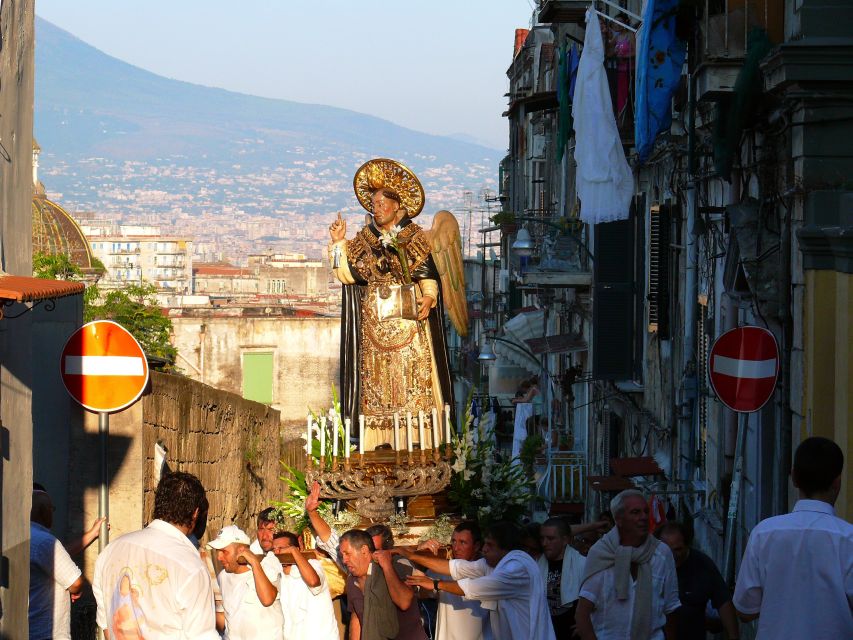
Between the larger church stops, the Holy Mile route includes additional sights connected to St. Gennaro and the sacred journey concept. Among the named stops are the San Gennaro extra Moenia Basilica and Presepe Favoloso.
Here’s why these fit the overall experience. The tour is about more than one building. It’s about following a thread. By the time you reach the neighborhood streets and palazzi, the religious theme feels less like background and more like an actual route with logic: tomb, sacred spaces, then outward into the district.
The Presepe element is especially useful if you like variety in your tours. It changes the feel from architecture and corridor-like movement to a more focused set piece that helps break up the walking rhythm without breaking the theme.


San Felice Palace, Via Vergini, and Piazzetta Crociferi: street-level stops with a reason
As you leave the biggest interiors behind, the tour shifts to shorter walks—small but meaningful stops you can’t really replicate on your own without guidance. You’ll move toward Palazzo San Felice, then through streets that include stops such as Via Vergini, 19 and Piazzetta Crociferi, 4.
These short segments matter because they turn the district into a “readable” place. You’re not just passing by facades. The guide uses these pauses to connect what you see—architectural details and location cues—to the religious and cultural story of Rione Sanità.
If you tend to wander when you travel, this is where you’ll appreciate the structure. Three hours is long enough to make the story coherent, but short enough that you’ll feel the pace. The street-level stops keep you from losing the thread when you’re surrounded by the lived-in texture of Naples.
And yes, this is still walking. These are not far distances like a day trip, but they add up, especially after the catacombs.
The Sanità district and Palazzo dello Spagnuol: how the story reaches past churches
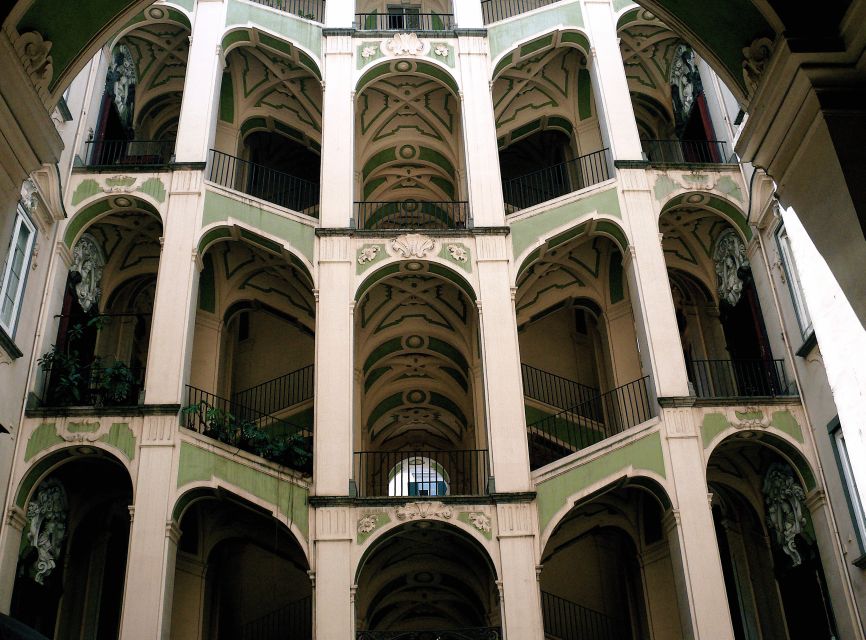
The Holy Mile doesn’t keep you only in sanctuaries. It also includes time for the Sanità district itself, and it references historic palazzi such as Palazzo dello Spagnuol.
This is where the tour becomes more than “religion as a subject.” It becomes religion as a shaping force for how districts grow, how buildings relate to each other, and how the same neighborhood can hold power and devotion side by side.
I found this angle valuable because it helps you understand why the tour frames itself as supporting the revival of Rione Sanità. When a route brings attention to a district, it can strengthen local efforts, and it can make the area’s story harder to ignore. In other words: you’re not just learning; you’re participating in a project by showing up and paying attention.
Ending at Piazza Cavour: plan an easy next step
The tour ends at Piazza Cavour, near the area of the Archaeological Museum. That finish location is practical. It gives you a clear point to regroup, orient yourself, and continue your day without needing to backtrack.
If you’re pairing this with other Naples plans, think about what you want after your underground and church-heavy morning/afternoon. Piazza Cavour feels like a sensible pivot point: you’ve learned the sacred route, and now you’re in a more straightforward zone to move on.
Price and value for a 3-hour guided route at $22
At $22 per person, this tour is priced for accessibility, not exclusivity. The big value point is that the price doesn’t just buy the guide—it also includes entry tickets for stops 1–7 and the guided visits at those locations.
So you’re paying for multiple experiences stacked together:
- A guided catacomb visit
- Guided church time in the main basilica stop
- Entry included for the listed tour stops
- A guided neighborhood walk that helps you understand what you’re seeing
If you were to try to assemble parts of this on your own, the “connection tissue” would be hard to replicate. The walk only makes sense when someone explains why the route matters. And in places like the catacombs, that guidance is the difference between seeing and understanding.
A fair warning: since there’s no hotel pickup, your real cost is time spent getting to the starting point at Catacombe di San Gennaro. Plan to reach it on your own.
Timing, pace, and what to do about the walking
This is a 3-hour tour, and it feels like it. The structure includes a long enough catacombs segment, a basilica visit with a break, then multiple walking stretches that connect palazzi and neighborhood corners.
The biggest consideration is simple: you’ll be walking for a while. One of the clearest pieces of advice from the experience feedback is to wear comfortable shoes and be ready for time on your feet. If you’re doing this on a day you’re also planning lots of stairs or a long ferry ride, build in recovery time.
Language-wise, the guide operates in Italian and English. That’s helpful if you prefer the explanation in your own language or if your group has mixed preferences.
If you want the best experience, arrive rested enough to pay attention. The Holy Mile works when you’re listening, not when you’re just trying to get through it.
Who should book this Holy Mile tour—and who might not love it
Book this if you:
- Want to see Naples from a different angle than the usual postcard routes
- Like guided interpretation of religious art, not just “look at the building”
- Enjoy neighborhoods where the street itself feels part of the story
- Appreciate experiences tied to a real local revival project
Skip it (or think carefully) if you:
- Want a low-walking sightseeing plan
- Dislike tours where you move between multiple stops in a short time
- Prefer to control every minute on your own without a fixed route
One more “fit” detail: this tour is ideal for couples, friends, and small groups who enjoy learning together. The route moves through underground and above-ground spaces, so having a guide who can keep the story coherent makes the pace feel purposeful.
Should you book the Naples Holy Mile 3-Hour Guided Tour?
If you’re curious about Naples beyond the usual surface highlights, this is a strong choice. The catacombs start you off in a world of stone and symbolism, and the basilica stop helps you connect the decorations to early Christian beginnings. Then the neighborhood walk brings you back to Rione Sanità with an explanation of why the district matters now, not just long ago.
I’d book it if you’re comfortable walking and you like tours where the guide actually teaches you how to look. I wouldn’t book it if you need a mostly seated experience or you’re hoping to do minimal walking.
If your day includes Piazza Cavour anyway, this route can also slot in neatly, ending right in the right part of town to keep moving.