REVIEW · POMPEI CAMPANIA
Pompei: Audio guide of the archeological site
Book on GetYourGuide →Operated by Echo Audioguides · Bookable on GetYourGuide
Pompeii can feel like a maze. That is exactly why I like this audio guide: it gives you a clear, story-led way to walk the site, without racing. You get an in-depth narration that brings daily life in Roman Pompeii back to your feet, thanks to the way the city was preserved under volcanic ash.
Two things I really appreciate are the compelling narration and the included map. The story format helps you connect what you see with why it mattered—markets, villas, temples, bathhouses, and even intimate household frescoes.
One drawback to plan for: this is not a full hosted tour. You still need the Pompeii entrance ticket, and you should bring your own earphones since they are not included.
In This Review
- Key highlights worth your time
- Why an audio guide for Pompeii beats winging it
- What you get for $5 per person (and what you still have to arrange)
- Offline listening: how to use the audio file without stress
- The walk itself: markets, villas, temples, baths, frescoes
- Street life and markets
- Villas and domestic space
- Temples and public meaning
- Bathhouses and everyday bodies
- Household frescoes: the intimate details
- Using the map and photos so you stay oriented
- Pacing your 50 minutes for maximum payoff
- Authenticity matters: why narration can be more useful than signage
- Language and host support: Italian and English options
- Cost reality check: cheap doesn’t mean careless
- Who this Pompeii audio guide suits best
- Should you book this Pompeii audio guide?
- FAQ
- How long is the Pompeii audio guide experience?
- Does this include the Pompeii entrance ticket?
- Are earphones included?
- Can I listen offline?
- What languages are available?
- What do I receive after booking?
- Is there free cancellation?
- Can I reserve now and pay later?
- How much does it cost?
Key highlights worth your time

- Compelling narration that turns stone streets into real routines and choices
- Historical authenticity focused on architecture and everyday life, not just big facts
- Convenience and flexibility thanks to an offline audio file you can replay
- A map to follow a path, so you waste less time guessing where to go
- Language options (Italian and English) with a host/greeter support channel
Why an audio guide for Pompeii beats winging it
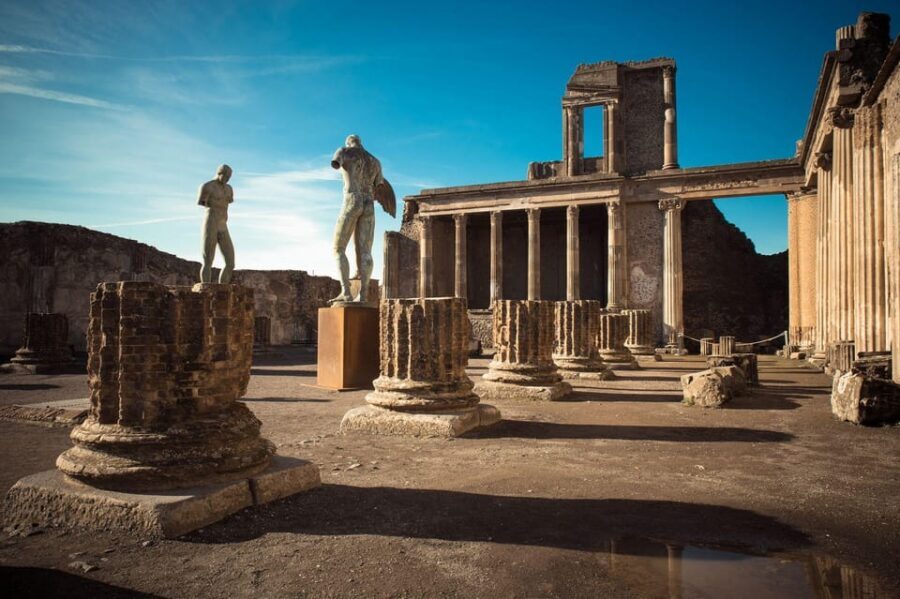
Pompeii has a way of swallowing your attention. One moment you are looking at a wall of faded paint; the next you are trying to remember where the forum was. This audio guide helps you keep your bearings without forcing you into a strict schedule.
The pitch here is simple: you spend about 50 minutes listening as you move through the site’s key themes. That time is enough to create a storyline—how people lived, worked, prayed, bathed, and decorated their homes—without draining your energy.
I also like that it is built for flexibility. You can pause, restart, and keep going at your own pace. That matters at Pompeii, where good walking shoes and a steady rhythm beat sprinting from stop to stop.
You can also read our reviews of more guided tours in Pompei Campania



What you get for $5 per person (and what you still have to arrange)
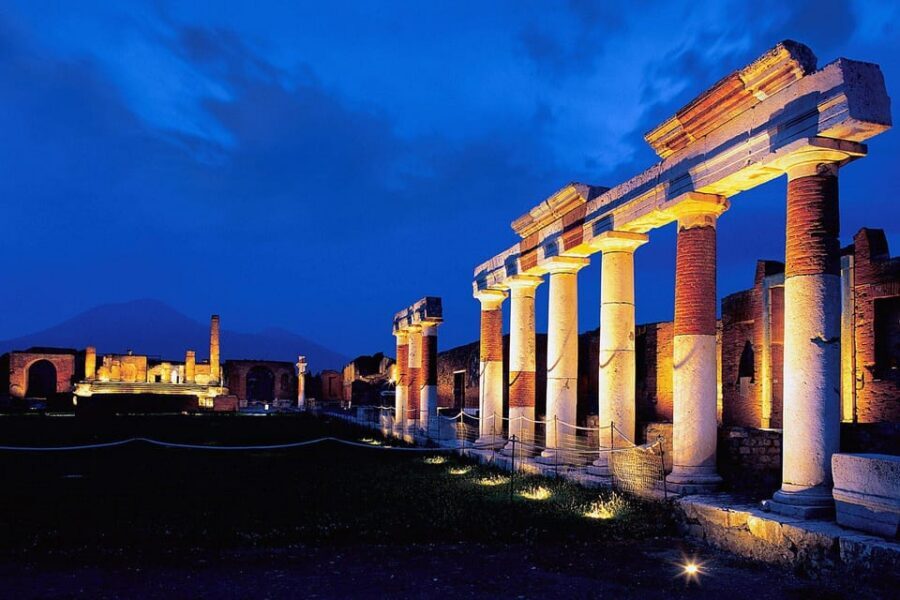
At $5 per person, this is priced like a budget add-on. The value comes from the digital format: you get a downloadable audio file link plus supporting materials, rather than paying for a full guided group.
Here is what is included:
- Map
- Digital file
- Photo
- Documentation
- Photo and documentation alongside the digital package
And here is what is not included:
- Entrance ticket to the archaeological site
- Earphones
That last part is worth thinking about. If you forget earphones, you lose the core benefit. I recommend bringing wired or wireless headphones you already trust, then you are set.
Also, because the entrance ticket is separate, your total day cost will depend on how you handle entry. Still, even with the ticket added, this audio option can be a strong value if you want learning and structure without paying for a live guide.
Offline listening: how to use the audio file without stress

The key practical advantage is access. After you book, you receive a link to the audio file for unlimited access, and it is designed for offline listening. That means you can download before you start walking and then focus on the ruins instead of your phone signal.
In real life, that is huge at Pompeii. Coverage can be spotty, and you do not want to burn battery while you are trying to read maps and follow directions.
I suggest doing a quick prep step before you head in:
- Download the audio file over Wi-Fi first
- Pack earphones that fit well for walking
- Keep your map and documentation in one place so you do not dig around mid-route
If you like to revisit your favorite spots later, offline access makes that easy. You can re-listen while you are still absorbing the layout, or at home to confirm what you just saw.
The walk itself: markets, villas, temples, baths, frescoes
This audio guide is organized around Pompeii’s big human themes. Instead of treating ruins like random objects, it connects the architecture and artwork to real daily routines.
Street life and markets
The narration takes you into Pompeii’s shopping and public-life world—how markets worked and what daily transactions likely looked like. Even if you are not a hardcore Roman history person, listening while you look makes those spaces feel functional. You stop thinking, I am looking at ruins, and start thinking, people used this.
You can also read our reviews of more tours and experiences in Pompei Campania




Villas and domestic space
You also get a focus on villas and homes. This is where the guide can be most satisfying, because you can see differences in how people lived. You get to consider privacy, decoration, and the small clues embedded in household layouts and details.
Temples and public meaning
Pompeii was not only about work and eating. Temples reflect civic and religious priorities, and the audio framing helps you interpret what you are seeing. You do not have to memorize dates to understand that places like these mattered to community life.
Bathhouses and everyday bodies
One of the most compelling categories in the guide is the grand bathhouses. Baths are a big part of Roman culture, and hearing the purpose behind the design helps you read the complex layout without getting lost.
Household frescoes: the intimate details
The guide also leans into intimate household frescoes. This is a small thing that changes the whole experience. Looking at a painting in a house after listening to what homes were like makes the art feel less like decoration and more like a form of identity and storytelling.
Using the map and photos so you stay oriented
I love that this package includes a map. At Pompeii, orientation is half the battle. Even when you are excited, you can lose time when you are trying to match what you see with what you planned.
The map is meant to help you follow a path through the themes the audio covers. One review specifically praised that there is a map to follow the route, and that practical support is exactly what I would want here.
The photo and documentation components also help you link your listening to visuals. Even if you only glance at them, it makes your on-site walking more confident. You get fewer moments where you are staring and guessing.
Pacing your 50 minutes for maximum payoff
The experience is built around about 50 minutes of listening. That is a sweet spot for Pompeii. It gives you a structured “session” while still leaving room for your own wandering.
Here is a way to pace it that usually feels right:
- Plan for a short warm-up walk before the audio takes over
- Listen straight through once, even if you miss some details
- Then do a slower loop and stop for the scenes that felt most real
If you rush, you will miss the payoff. The guide works best when you let the narration lead your eyes, not when you treat it like background noise.
If you are the type who likes to read everything, this guide still helps because it does the linking for you. And if you are not a reader, it still works because the narration does the heavy lifting.
Authenticity matters: why narration can be more useful than signage
Pompeii has plenty of labels, but labels alone often do not explain what you are actually looking at. What this audio guide does well is connect structure to life—how spaces were used and why that design mattered.
That is the part I would not skip. A good Roman ruin experience is not only seeing old stone. It is understanding how the place functioned for real people. The guide’s focus on architecture plus daily routines helps you interpret the site in a way that feels grounded, not abstract.
Also, the fact that it is historically focused is part of the practical value. When the narration is solid, you are less likely to misinterpret what you see and more likely to leave with a clear mental model of Pompeii.
Language and host support: Italian and English options
The guide is available in Italian and English, and there is host or greeter support that matches those languages. That means you can choose the narration style you’ll actually understand while walking.
If you are traveling with someone who prefers a different language, it can also be simpler. You can match your experience to the language that helps you process details without strain.
One more practical point: audio is easiest when you can follow quickly. You do not want to be pausing every sentence. Picking your strongest language reduces that friction.
Cost reality check: cheap doesn’t mean careless
At $5 per person, this is a low-cost way to add meaning to Pompeii. But “cheap” can create the wrong expectations if you assume it includes everything.
Make sure you are aligned with what you are booking:
- You are paying for an audio guide experience and the digital package
- You are not paying for the entrance ticket
- You are not paying for earphones
If you come prepared, this pricing makes sense. You spend little on the learning layer, then you spend your money where it counts for access: the ticket and transport to the site.
And if you want a live guide, or a fully hosted tour, then this might feel incomplete. This format is for self-paced walking with strong narration, not a talk-and-move group experience.
Who this Pompeii audio guide suits best
This experience is a great fit if you:
- Want Pompeii to feel organized, not random
- Prefer flexible pacing over rigid group schedules
- Like learning through narration rather than reading signage
- Travel on a budget but still want a real interpretive layer
It can also work well for first-timers. Pompeii is large enough that first visits can become a blur. A story-led guide helps you remember what you saw.
If you only have time for a quick stop and you are not interested in listening, you may not get the full value. The guide is designed to take you through a themed route in roughly 50 minutes, so plan to stay present.
Should you book this Pompeii audio guide?
Book it if you want a low-cost, reliable way to understand Pompeii while you walk. The compelling narration, the map, and the offline-ready audio file are exactly what make the experience feel worth the money.
Skip it (or at least adjust expectations) if you want a full hosted tour experience. This is a self-guided audio package, and it does not include the entrance ticket or earphones.
If you are a practical traveler who likes structure but hates rigid schedules, this is a smart way to handle Pompeii. You get learning you can replay, and you get to walk at your own pace—without guessing what to look for next.
FAQ
How long is the Pompeii audio guide experience?
The audio guide is designed for about 50 minutes of listening while you explore the archaeological site.
Does this include the Pompeii entrance ticket?
No. The entrance ticket to the archaeological site is not included.
Are earphones included?
No. Earphones are not included, so you’ll want to bring your own.
Can I listen offline?
Yes. You receive a link to the audio file for unlimited access, including offline use.
What languages are available?
The audio guide is available in Italian and English.
What do I receive after booking?
You get a digital file (audio link) plus a map, photo, and documentation.
Is there free cancellation?
Yes. You can cancel up to 24 hours in advance for a full refund.
Can I reserve now and pay later?
Yes. There is a reserve now & pay later option.
How much does it cost?
The price is listed as $5 per person.