REVIEW · CITY TOURS
Welcome to the Eternal City: Rome Orientation Walking Tour
Book on Viator →Operated by Crazy4Rome Private Tours · Bookable on Viator
If Rome feels like a blur, this helps. This 3-hour Rome orientation walking tour is built for getting your bearings fast, with a licensed local guide explaining what you’re looking at as you move across central landmarks. I especially like how it links the Spanish Steps area to the Pantheon and then down to Piazza Navona, so the city starts to connect in your head instead of staying a list of photos.
What I also like is the pacing and focus that comes with being private (up to 10 people), so your guide can answer questions and tailor small moments to your group. One thing to plan around: you’ll be walking a lot of Rome’s stone streets, so wear shoes you trust—especially if the weather turns.
In This Review
- Key takeaways before you go
- First-Time Bearings: Why This Rome Orientation Walk Works
- From Piazza di Spagna to Spanish Square: Getting Oriented at the Spanish Steps
- Fontana della Barcaccia: Baroque Drama You Can Walk Up To
- Trevi Fountain: The Famous Stop That’s More Than a Photo
- Temple of Hadrian at Piazza di Pietra: A Roman Stop With a Brain
- Pantheon: How to Make Your Time Count Inside
- Piazza Navona and the Fountain of the Four Rivers: Finishing With Real Baroque Energy
- Private Guide Value: Licensed Local Talent Changes Everything
- Tickets, Timing, and What to Bring for a Smooth Walk
- Cost Check: What $440.82 per Group Really Buys You
- Who This Tour Fits Best (and Who Might Want Something Else)
- Should You Book the Eternal City: Rome Orientation Walking Tour?
- FAQ
- How long is the Rome orientation walking tour?
- Is this tour private or shared with other groups?
- Is the tour offered in English?
- Are admission tickets included for the sights on the route?
- Where does the tour start and end?
- Is bottled water included?
- What happens if weather is bad?
Key takeaways before you go
- A private orientation that covers major hits in 3 hours so you don’t waste your first day
- Licensed guide-led context that makes famous sights easier to remember
- Included admission tickets for the big stops (no extra “buy this first” stress)
- A route that builds a mental map from the Spanish Steps to the Pantheon to Piazza Navona
- Pantheon handling that can save time inside thanks to guide know-how
- Guides who add flavor beyond monuments (like side streets and food suggestions)
First-Time Bearings: Why This Rome Orientation Walk Works
Rome has a way of overwhelming you. Too many ruins, too many churches, too many “wait, where am I?” moments. This tour is designed to shrink that chaos. You start near the Spanish Steps and finish around Piazza Navona, tracing a line through some of the city’s most recognized spaces while your guide gives you the story behind each stop.
I like that it’s not only about pointing at the obvious. A good orientation walk helps you understand what you’re seeing—and why that spot matters—so later, when you wander on your own, Rome doesn’t feel random. The guide’s job here is basically to translate the city in real time: where to look, what to notice, and how different periods of Rome overlap on the same streets.
This is also why the private format matters. When you’re with only your group, the guide can slow down if you’re taking photos, speed up if everyone’s hungry to move, and answer the questions that pop up naturally—especially on your first day.
You can also read our reviews of more walking tours in Rome


From Piazza di Spagna to Spanish Square: Getting Oriented at the Spanish Steps
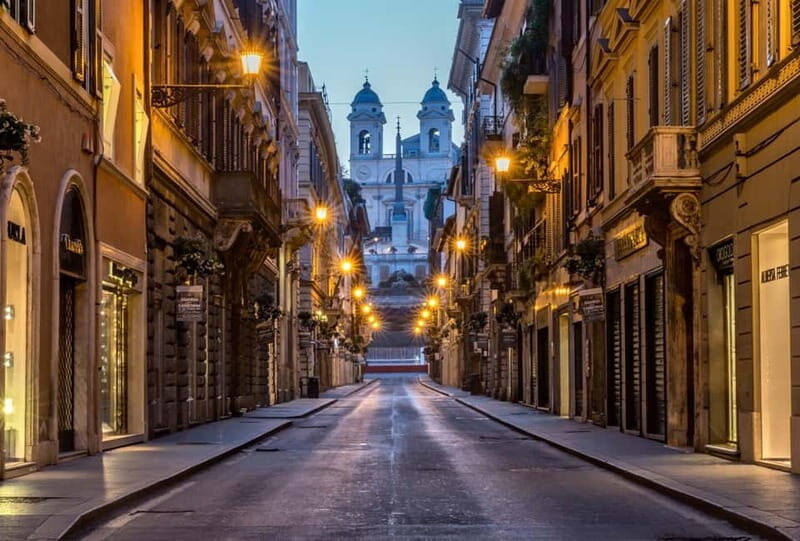
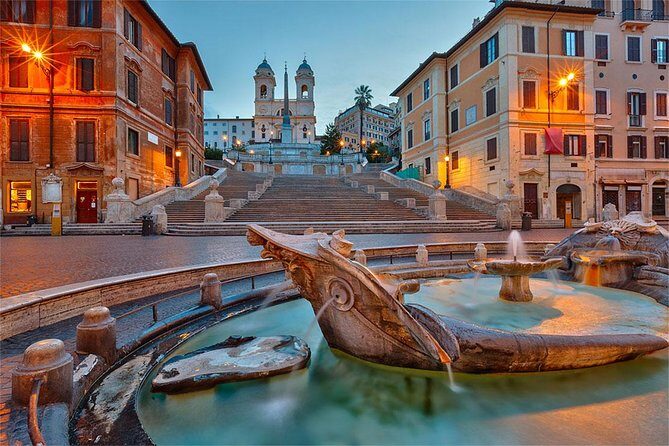
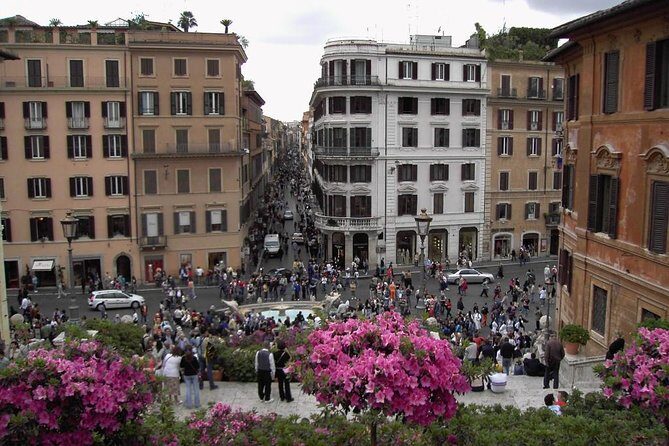
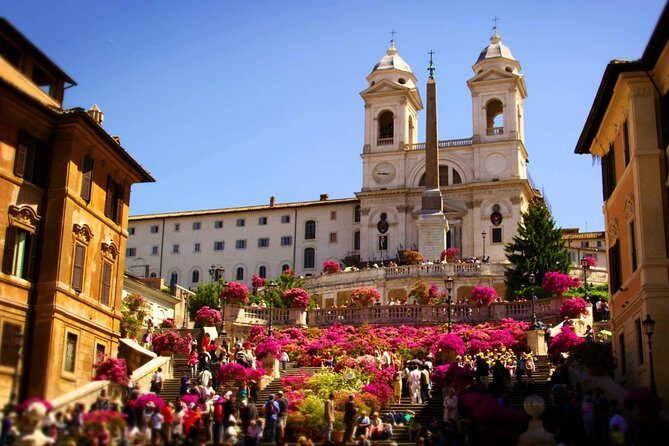
Your walk begins at Piazza di Spagna, 23, right by the famous Spanish Steps area. The first big photo moment is the Spanish Steps themselves: steps dating from 1723, climbing a steep slope between Piazza di Spagna (lower) and Piazza Trinita dei Monti (upper), with the Trinità dei Monti church dominating the top.
Two practical reasons this stop works well early:
- It gives you height and direction. The steps create a natural vertical landmark. Even if you don’t know Rome yet, you quickly understand where “up” and “down” are in the central area.
- It’s a hub, not a dead end. From here, you can imagine how streets branch out—so later, you’ll navigate with more confidence.
Right below the steps, you’ll also spend time at Spanish Square. It’s famous for two things you can actually spot in the area: the Palazzo di Spagna, which is associated with the Spanish Embassy to the Holy See, and the Column of the Immaculate Conception (a visual anchor that helps you orient yourself in the square).
If you’re the type who likes to understand what you’re standing in front of, this segment pays off. You’re not just taking in views; you’re learning what the local landmarks are connected to.
Fontana della Barcaccia: Baroque Drama You Can Walk Up To
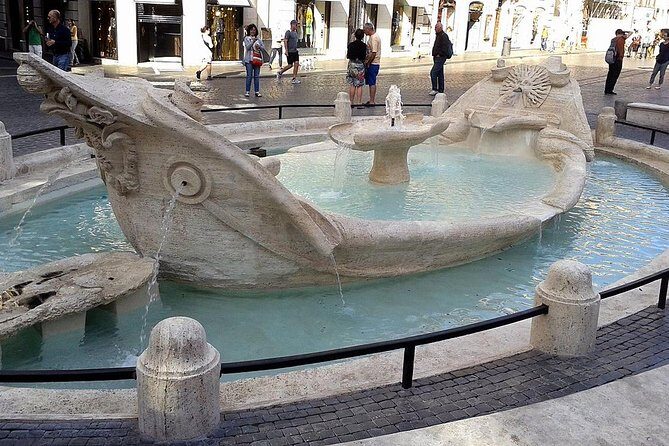
Next comes the Fontana della Barcaccia, located at the foot of the Spanish Steps in Piazza di Spagna. This one’s easy to remember once you see it, because it’s shaped like a half-sunken ship with water spilling over the sides into a small basin.
This fountain is a great “breather” stop in the tour. You can look at it from multiple angles, and it’s also a moment where the guide can explain how Baroque art often aimed for motion and emotion—less like a calm monument, more like a scene.
Practical note: even though your time here is about 20 minutes total for the fountain area segments across the early portion of the walk, you’ll still want to take a few minutes just to slow down. Rome can feel like speed dating with monuments. This pause helps you enjoy it instead of rushing past it.
Trevi Fountain: The Famous Stop That’s More Than a Photo
Then you’ll move to Fontana di Trevi, the big one. It’s widely known, but you’ll get a better experience when you understand its function and placement.
The Trevi Fountain is described as the largest and most famous fountain in Rome, with about 20 meters wide and 30 meters high. It also ties directly to Rome’s water story: it marks the endpoint of three road junctions that lead to Acqua Vergine (the aqueduct system that supplied water for ancient Rome).
That context changes how you look at it. You’re no longer just seeing the fountain as a centerpiece for selfies. You’re seeing it as part of an older infrastructure and a city built around water.
The tour schedules this stop for about 20 minutes, which is usually long enough to:
- get a solid look from the main view,
- notice details on the structure,
- and reposition if you want photos without feeling like you’re trapped in one spot.
Temple of Hadrian at Piazza di Pietra: A Roman Stop With a Brain
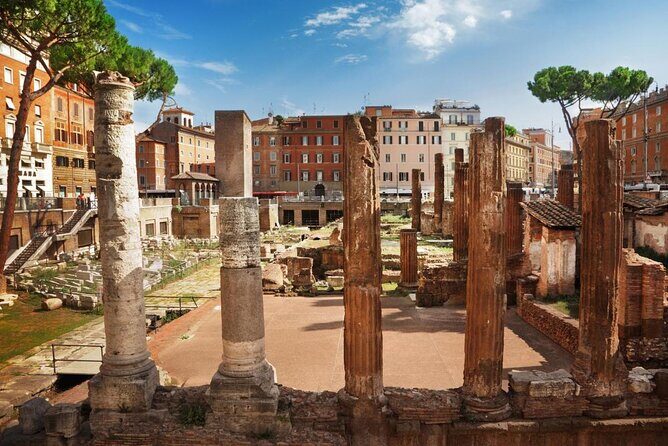
A less frantic moment follows at Piazza di Pietra, where you’ll see the Temple of Hadrian. This is the kind of stop that makes an orientation tour feel smarter, because it pulls you away from only the top three “must see” icons.
This rectangular temple was designed in a peripteral style, with fifteen columns along the longer sides and eight columns along the shorter sides. If you’re into visual symmetry, the column layout is exactly the kind of detail you can spot quickly. It’s also worth knowing that reliefs connected to provinces of the empire exist in the Capitoline Museums (so if you later visit those museums, you’ll recognize the line of thinking).
Time here is about 20 minutes, and that’s enough. You don’t need a long lecture to enjoy it. Look for the repeating rhythm of columns and the way the building frames the square.
Potential drawback: if you’re the type who only wants “big wow” locations, you might wish more time at the Trevi or Pantheon. But as an orientation stop, this one helps you learn that Rome isn’t only fountains and ceilings—it also has architecture you can read.
You can also read our reviews of more city tours in Rome



Pantheon: How to Make Your Time Count Inside
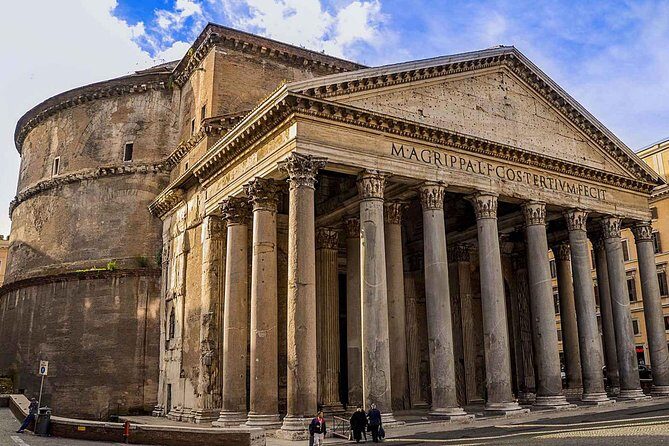
The tour’s centerpiece is the Pantheon, and it’s timed for about 30 minutes. The Pantheon is a Roman temple believed to have been dedicated to all the gods, and the name connects back to the Latin Pantheum from the Greek word Pantheion, meaning temple of all the gods.
This stop is special for two reasons:
- It’s one of Rome’s most complete architectural statements. The outside is impressive, but the inside is what makes people pause.
- You get guidance that helps you see faster. People say the guide helps you get inside quickly and knows exactly what to focus on.
Important detail from the tour setup: if you want to see the Pantheon from the inside, the tour can be customized. If interior access is a priority for you, mention it early so the guide can align your route and timing.
Practical advice: dress for comfort and go in with a quick plan. When you step inside, your first job is to look up and take in the dome and opening. Your second job is to listen to the guide’s explanation and pick one or two features to remember. When the tour moves on, you’ll carry those details with you instead of feeling like you just “visited a place.”
Piazza Navona and the Fountain of the Four Rivers: Finishing With Real Baroque Energy
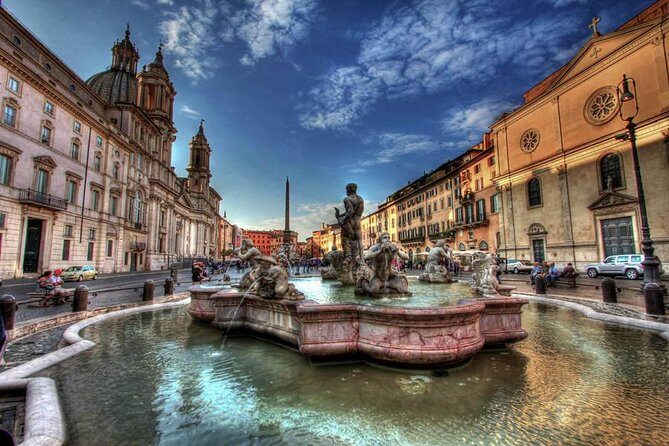
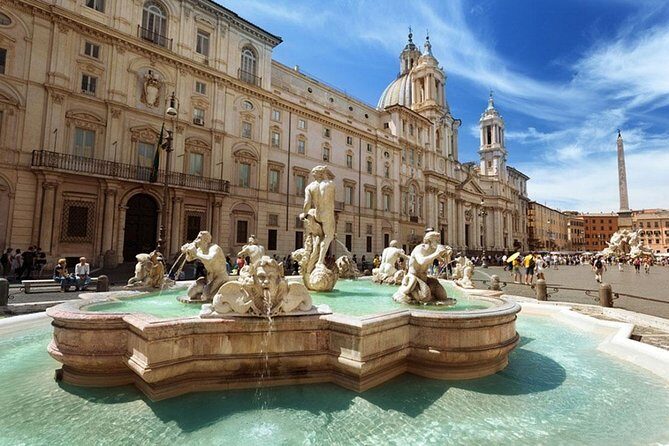
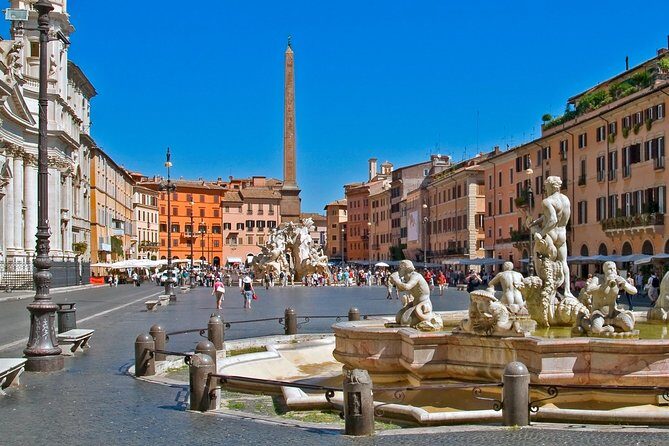
You wrap up at Piazza Navona, and it’s an excellent ending point. The square is known as one of the most spectacular parts of Baroque Rome, built on the remains of Domitian’s Stadium—dating to 86 AD—where athletics competitions and horse racing took place. The shape of the square mirrors the old stadium’s perimeter.
So even though it feels like a “today” piazza, you’re standing in a space with a built-in memory of the ancient city. That makes it a strong final stop: your Rome picture becomes layered, not flat.
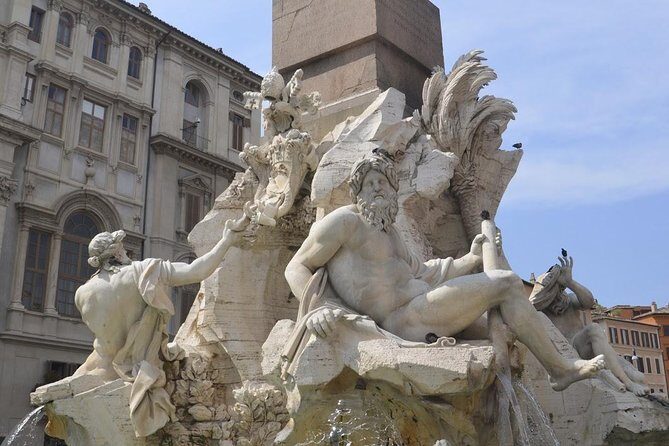
Then comes the Fountain of the Four Rivers, also called the Four Rivers Fountain. It was designed in 1651 by Gian Lorenzo Bernini for Pope Innocent X, and the fountain faces the church of Sant’Agnese in Agone, with the pope’s family palace (Palazzo Pamphili) also nearby.
This is the final visual “wow,” and it’s the kind of fountain that rewards looking closely:
- the allegorical figures,
- the theatrical composition,
- and the way Bernini’s style turns a structure into a story.
Your time here is around 15–20 minutes depending on how the guide sequences the last moments. It’s enough to enjoy the fountain, but not enough to stare for an hour. For best results, go in with curiosity rather than needing everything fully understood. Your guide will help you aim your attention.
Private Guide Value: Licensed Local Talent Changes Everything
The official promise is a private guide service with a licensed local guide for 3 hours, and the reviews you’ll read about this tour echo that it works.
The names that stand out from past guide experiences include:
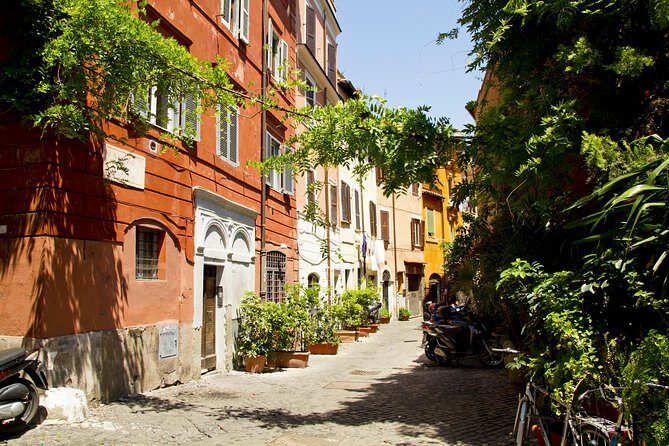
- Rafaela, described as wonderful and knowledgeable, with a knack for showing quiet residential streets that feel peaceful and charming,
- Sara, praised for being interesting, funny, and informative, and for getting groups inside the Pantheon quickly,
- Yevgen, noted for being friendly, accommodating, and enthusiastic about kids’ questions,
- Raphaëlle, who adapts to your pace,
- and Francesco/Emanuele pop up in related Crazy4Rome experiences as attentive and responsive with plans.
Why that matters to your trip: the difference between a generic sightseeing walk and a real orientation is whether the guide can explain and adapt. When a guide adds calmer side streets and points you toward a favorite gelato or an authentic tiramisu spot, your tour stops being a checklist and becomes a start to living in the city.
If you want that extra layer, ask your guide a simple question early: What neighborhood should we wander after this? Then you’ve turned an orientation tour into a launchpad.
Tickets, Timing, and What to Bring for a Smooth Walk
This tour runs about 3 hours and is offered in English. You’ll also get a mobile ticket, and the plan includes admission tickets for the key stops on the route.
What’s not included:
- bottled water
- private transportation
That affects how you should pack:
- Bring water from a shop or café along the way. Rome afternoons can get warm, and you’ll appreciate it mid-walk.
- Wear comfortable walking shoes.
- If you’re sensitive to crowds, plan to take slower photos near the most famous spots (Trevi and Pantheon) rather than trying to “win” the rush.
Weather matters here. The experience requires good weather, and if it’s canceled due to poor conditions, you’ll be offered a different date or a full refund. So check forecasts the day before and on the morning of.
Meeting point is Piazza di Spagna, 23, 00187 Roma RM, and the tour ends at V. del Governo Vecchio, 80, 00186 Roma RM. The end location is practical because it’s still in the central core—you’re not stranded on the edge of town after the walk.
Cost Check: What $440.82 per Group Really Buys You
The price is $440.82 per group (up to 10 people). On paper, that can look steep. In practice, it can be fair—because you’re paying for:
- a licensed local guide,
- a route that covers multiple major icons,
- and included admission tickets.
Think of it as paying for a guide’s time plus the convenience of entry arrangements. If you’re traveling as a couple, the cost per person is usually higher than joining a large group tour—but you also get the private attention and the flexibility that helps you enjoy Rome instead of racing through it.
This is where the private setup becomes the value move:
- You can ask questions without the constant interruption of a big group.
- You can move at a pace that fits your legs and your attention span.
- Your guide can steer you toward the kinds of moments that make Rome feel human, like a calmer street or a quick local food stop.
Who This Tour Fits Best (and Who Might Want Something Else)
This is a strong fit if:
- it’s your first time in Rome and you want a clean orientation route,
- you want a guide to connect the dots between places like the Spanish Steps, Trevi, and the Pantheon,
- you prefer private attention over a crowded group experience.
It also works well for families. One guide experience specifically mentioned accommodating smaller kids by entertaining their questions with enthusiasm.
You might consider another type of tour if:
- you already know Rome well and you’re mainly chasing niche sites,
- or you want a longer, slower day with fewer stops and more time inside museums (this is built for orientation, not deep museum time).
Should You Book the Eternal City: Rome Orientation Walking Tour?
I’d book it if you want your first day in Rome to feel organized, not frantic. The route is logically built—Spanish Steps, then Trevi, then the Pantheon, then Piazza Navona—and the guide time helps you understand what you’re seeing while you’re still fresh.
Pick this tour especially if you care about:
- included admissions and not having to figure out logistics on the fly,
- private pacing for your group,
- and learning from a guide who can point out quieter, less chaotic moments and practical food suggestions.
If you hate walking or you’re only interested in one monument, then it might feel like too many stops. But for most people landing in Rome and wanting clarity fast, this is a smart starting move.
FAQ
How long is the Rome orientation walking tour?
It lasts about 3 hours.
Is this tour private or shared with other groups?
It’s private. Only your group participates.
Is the tour offered in English?
Yes, it’s offered in English.
Are admission tickets included for the sights on the route?
Yes. Admission tickets are included for the stops listed on the experience.
Where does the tour start and end?
It starts at Piazza di Spagna, 23, 00187 Roma RM, Italy, and ends at V. del Governo Vecchio, 80, 00186 Roma RM, Italy.
Is bottled water included?
No, bottled water is not included.
What happens if weather is bad?
The experience requires good weather. If it’s canceled due to poor weather, you’ll be offered a different date or a full refund.