REVIEW · PRIVATE
Rome: Campo de’ Fiori, Trastevere and Jewish Ghetto Private Tour
Book on Viator →Operated by Eyes of Rome · Bookable on Viator
Rome has side streets worth slowing down for. This private walk strings together Campo de’ Fiori, the Roman Jewish Ghetto, and Trastevere into one smart loop, with a Blue Badge guide to put buildings and street names in context. I like that it’s not just stop-and-stare; you get history you can use, plus time to ask questions instead of racing ahead.
One thing to keep in mind: you’ll be on your feet for about 3 hours, so comfy shoes matter. Also, if there’s a Jubilee-related closure or restoration, a monument or section could be unavailable, so watch for any messages before you go.
In This Review
- Key highlights to know before you book
- Campo de’ Fiori and Giordano Bruno: where the day starts (and changes)
- Into the Roman Ghetto via Via del Portico d’Ottavia
- Ponte Sisto: a bridge you cross with better eyes
- Trastevere streets to Piazza Trilussa: built for wandering (with purpose)
- Santa Maria in Trastevere: oldest foundations, big mosaics
- The fountain in Piazza Santa Maria in Trastevere
- What makes the tour feel special: private Blue Badge guiding
- Money talk: is $260.46 per person good value here?
- Timing and seasonal reality (Jubilee closures can happen)
- Who this tour fits best (and who should consider something else)
- Should you book this Rome Private Tour?
- FAQ
- How long is the Rome: Campo de’ Fiori, Trastevere and Jewish Ghetto Private Tour?
- Is this tour private?
- Do you offer pickup from my hotel?
- What neighborhoods does the tour cover?
- Where does the tour start and end?
- Is admission included for the sights?
- Does the tour run in the morning and afternoon?
- What if monuments are closed during the Jubilee?
- Can children join this tour?
- What is the cancellation policy?
Key highlights to know before you book
- Meet at Giordano Bruno’s statue and start in the heart of Campo de’ Fiori’s market vibe
- Roman Jewish Ghetto focus on real street life: kosher food shops, medieval lanes, and Renaissance architecture
- Portico/bridge sightlines that help you orient as you cross Ponte Sisto toward Trastevere
- Trastevere ends near Piazza Trilussa, a lively local square beside the river
- Santa Maria in Trastevere visit includes the mosaics and a fountain said to be among Rome’s oldest
- Private group with Blue Badge guiding means you can go at your pace and ask questions
Campo de’ Fiori and Giordano Bruno: where the day starts (and changes)
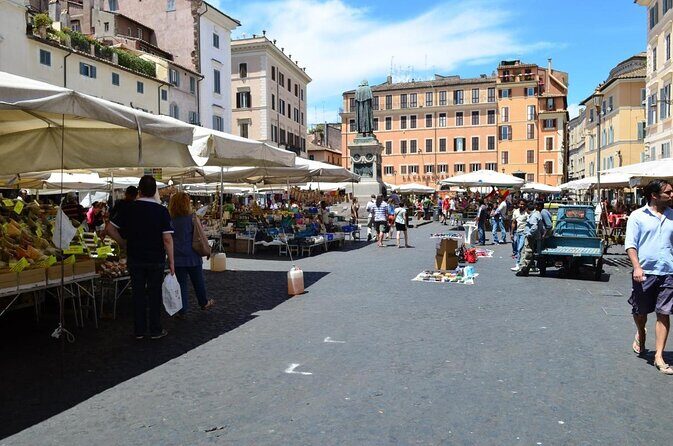
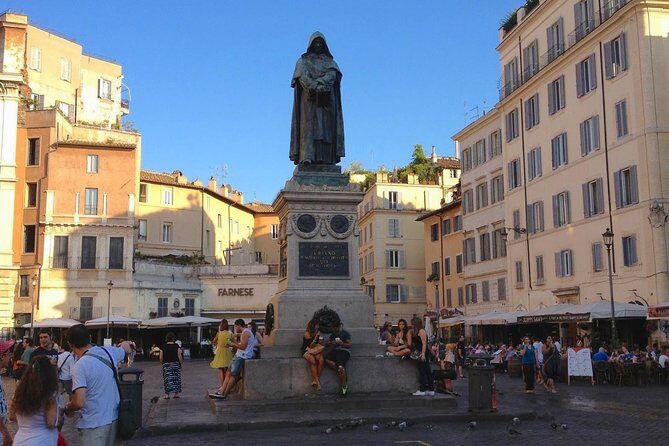
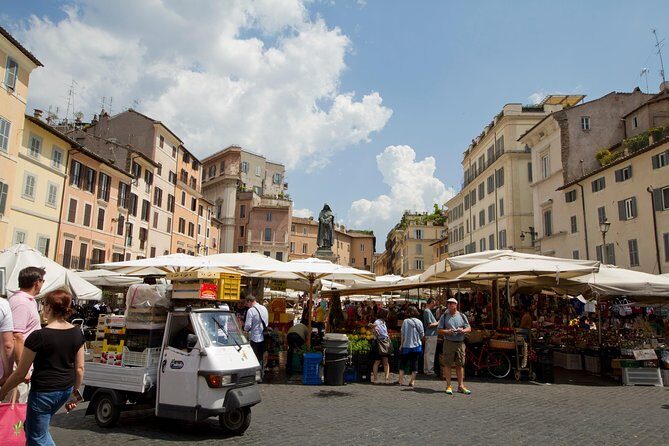
Your tour kicks off at Campo de’ Fiori, at the Monumento a Giordano Bruno. This is the kind of meeting point that feels theatrical but also makes sense once you’re there: the square is anchored by the statue of Giordano Bruno. The statue was created by Ettore Ferrari and erected in 1889.
Campo de’ Fiori works on two levels. By day, it’s known for its colorful street market energy. By evening, it shifts into something more social—cafés, pubs, and bars spill onto the square’s life. This is where I think the guide earns their fee. You’re not just told facts. You get the street-level stories and practical suggestions that help you decide where to go next for aperitivo or dinner.
The tour includes this stop for about 30 minutes, and there’s no paid entry ticket noted here—just the market square and its surroundings.
You can also read our reviews of more private tours in Rome



Into the Roman Ghetto via Via del Portico d’Ottavia
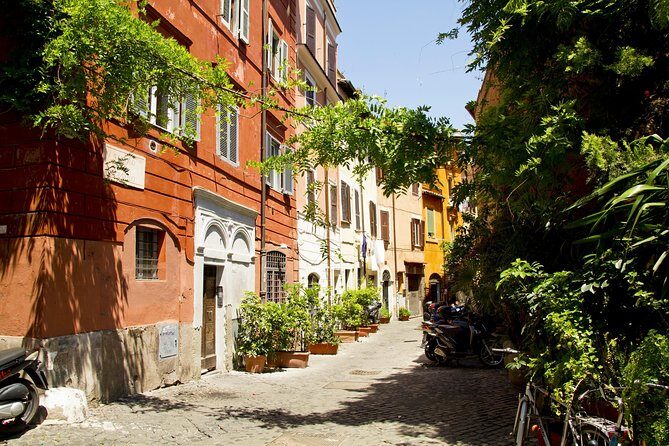
Next you head toward the Roman Jewish quarter, accessed from Via del Portico d’Ottavia. If you like places where past and present overlap, this is it. The guide points out the street’s mixture of medieval homes and today’s Jewish-themed storefronts—kosher food shops and restaurants serving Jewish specialties.
The best part is how the area is treated in the tour: not as a museum zone, but as a real neighborhood. You see architectural layers that range from medieval through Renaissance, and you get help connecting it all to the wider story of Rome—historically and culturally.
This section is also about 30 minutes, with admission noted as free. One neat extra the route references is the Porticus Octavia (Octavian Portico): an ancient portico built in 168 BC by Gnaeus Octavius to commemorate a naval victory over Perseus of Macedonia. Even if you’re not an archaeology nerd, it helps to know why the corridor exists and what Rome was celebrating in that era.
The route also ties in a late Renaissance fountain stop in Piazza Mattei. It’s built between 1580 and 1588 by architect Giacomo della Porta, with sculpture by Taddeo Landini. This is the kind of detail that makes your walk feel guided rather than scripted.
Ponte Sisto: a bridge you cross with better eyes
Then comes a key “turn your brain on” moment: crossing Ponte Sisto. This bridge connects Rome’s historic center to Trastevere, and the route treats it as more than a crossing point.
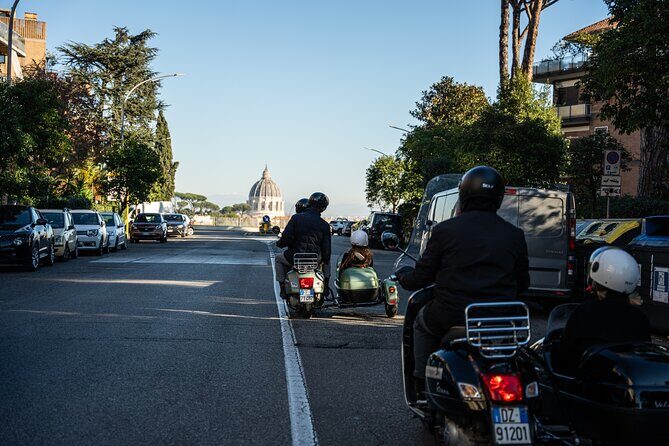
I love bridges in Rome for photos, but this one also helps you understand the city’s layout. The bridge offers a view that frames St. Peter’s Church and the Rome skyline from a different angle than the usual viewpoints. When you know what you’re looking at, the photo stops being random and becomes useful.
It’s a short stop in the walking flow, but it matters. You’re changing neighborhoods, and the guide helps you do it with orientation rather than confusion.
Trastevere streets to Piazza Trilussa: built for wandering (with purpose)
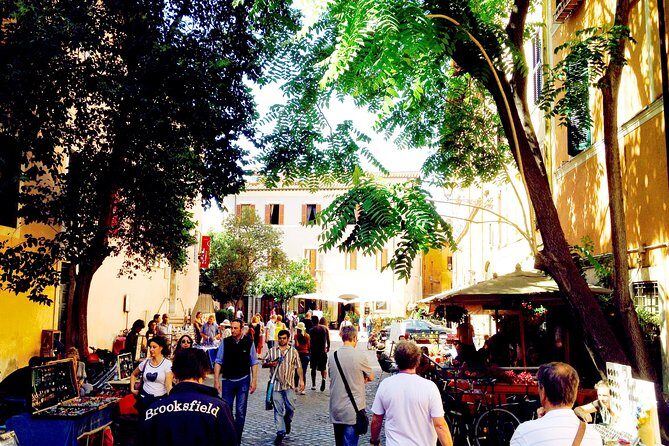
From Ponte Sisto you roll into Trastevere—curving alleys, lively piazzas, and lots of bars and restaurants tucked into side streets. Trastevere is famous for its atmosphere, but what makes this tour section work is that you’re not just passing through. You’re given a sense of how the streets feel in daily life.
This portion runs about 1 hour. The tour emphasizes that Trastevere is a great place to end a day of walking, grab something to eat, and keep the momentum going without forcing yourself into a strict itinerary.
A specific highlight is Piazza Trilussa, near the bridge. It’s known for its lively energy, especially at night, and it includes a monument to the poet Trilussa. If you like finishing a tour with a square that still feels local (not just tourist-bright), this is a solid target.
Santa Maria in Trastevere: oldest foundations, big mosaics
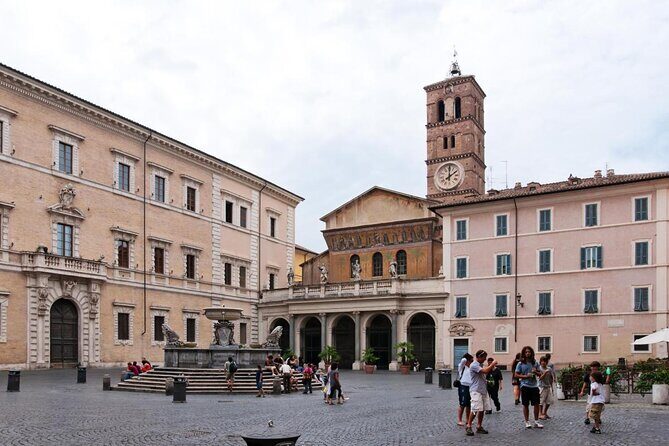
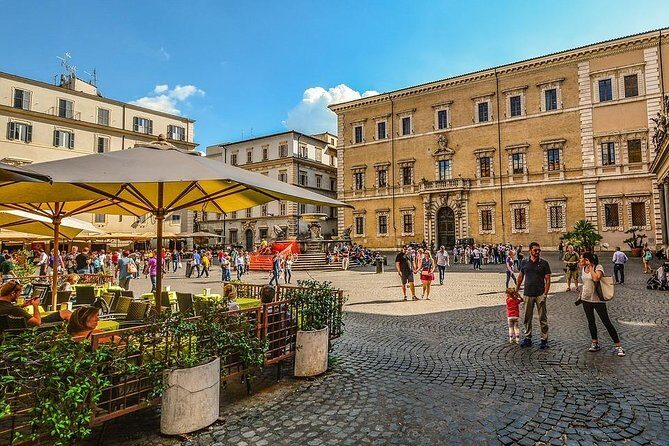
After Trastevere, you move toward the area of Santa Maria in Trastevere. The name of the square ties directly to the basilica. The basilica is linked to its commissioning in the third century by Pope Callisto I, and the square itself is referenced as part of the tour’s flow.
You’ll spend about 10 minutes at Piazza di Santa Maria in Trastevere, then shift to the basilica for about 20 minutes. This is one of those churches that rewards a quick guided visit. You’re not stuck with just generalities. You get specifics about what’s where and what time period you’re looking at.
Here are the key structural points the route highlights:
- The basilica is one of the oldest churches of Rome.
- The basic floor plan and wall structure date to the 340s.
- Much of the structure dates to 1140–1143.
- The first sanctuary was built in 221 and 227 by Pope Callixtus I, and later completed by Pope Julius I.
- Important mosaics come from the late 13th century by Pietro Cavallini.
Even if you only know how to pronounce the name, this stop still works. It turns a church facade into a timeline you can recognize.



The fountain in Piazza Santa Maria in Trastevere
In the same square area, the tour references a fountain that’s believed to be among the oldest in Rome, with sources placing origins as far back as the 8th century. The current fountain work is attributed to Donato Bramante, with later additions by Gian Lorenzo Bernini and Carlo Fontana.
This matters because fountains in Rome aren’t just decoration—they’re landmarks. When you know the names attached to them, you start noticing details everywhere else.
What makes the tour feel special: private Blue Badge guiding

This is a private walking tour, meaning it’s only your group. That sounds obvious on paper, but in practice it changes the whole experience. You can ask follow-up questions without the guide trying to herd multiple groups. You also get more control over pacing, which is huge in Rome where side streets and small squares can steal your attention fast.
The guide uses Blue Badge expertise. That means you’re getting someone trained to lead in historic areas with clear interpretation.
The quality of guiding shows up in real ways in past experiences with guides like Elisa and Marta. One guest highlighted Elisa’s enthusiasm and strong historical knowledge. Another praised Marta as engaging and informative, describing the feeling of being with a friend. Those aren’t minor points. On a walk like this—history packed into markets, lanes, bridges, and a church—how the guide explains matters just as much as what you see.
The tour also offers morning or afternoon timing, so you can match the vibe. Campo de’ Fiori feels different depending on the hour, and Trastevere’s energy tends to land differently when the light changes.
Money talk: is $260.46 per person good value here?
The price is $260.46 per person for an approximately 3-hour private tour. That’s not “cheap,” but it’s also not trying to sell you a bus ride and a quick photo line.
This tour’s value comes from three things you can’t easily replace on your own:
- A guide who connects street scenes to specific facts (like the Bruno statue details, Portico d’Ottavia, and the basilica’s timeline).
- A focused route across three neighborhoods that would take a lot longer to assemble and interpret if you’re flying blind.
- Optional convenience: pickup is offered, and there’s an upgrade for a one-way hotel transfer if you want a less stressful start or finish.
There’s also mention of group discounts and a mobile ticket, which can help if you’re booking as part of a small group.
Here’s my honest take: if you want Rome’s big sights only, this might feel too small-scale. But if you want to understand the city by walking its neighborhoods and hearing how they fit together, a well-led private 3-hour route can feel like a very efficient investment.
Timing and seasonal reality (Jubilee closures can happen)
One practical note is worth your attention: during the Jubilee, some monuments may be under restoration or closed due to extraordinary celebrations. The tour says you should pay attention to any messages they send regarding potential changes.
So how do you handle that? Don’t plan this tour as your only shot at a specific monument. Use it as a neighborhood orientation tool with strong context—and expect the guide to adapt if something is closed. That’s usually where private guiding shines.
And for the walking itself: because the tour is about three hours on streets and in squares, you’ll want shoes that can handle cobblestones and the kind of uneven ground Rome loves to throw at you.
Who this tour fits best (and who should consider something else)
I think this tour is best for:
- People who like street-level Rome instead of only big museum stops
- Anyone who wants a guide to explain why a place matters, not just what it looks like
- Food-minded visitors who want honest guidance on where to grab aperitivo or a traditional dinner after Campo de’ Fiori
- Small groups who enjoy asking questions and going at a human pace
It may be less ideal if:
- You want a long, ticketed museum day where you sit for long stretches
- You prefer fewer stops and more time at one major site
This walk hits a middle ground: history and culture, but within a route you can actually finish without feeling like your legs are negotiating for rights.
Should you book this Rome Private Tour?
If you like Rome for the parts between the big landmarks, I’d book it. The route makes a smart loop: start at Campo de’ Fiori with Giordano Bruno and market life, move into the Roman Jewish quarter with medieval lanes and Renaissance touchpoints, cross Ponte Sisto for skyline orientation, then spend time in Trastevere and around Santa Maria in Trastevere’s mosaics.
I’d choose it especially if you value private pacing and want a guide who can turn questions into answers on the spot. And if the Jubilee is underway when you visit, just stay flexible and watch for any message about site access.
FAQ
How long is the Rome: Campo de’ Fiori, Trastevere and Jewish Ghetto Private Tour?
The tour is about 3 hours.
Is this tour private?
Yes. It’s a private tour/activity, and only your group will participate.
Do you offer pickup from my hotel?
Pickup is offered. There is also an option to upgrade with a one-way transfer from or to your hotel.
What neighborhoods does the tour cover?
It covers Campo de’ Fiori, the Roman Jewish Ghetto area, and Trastevere, with stops around Piazza Trilussa and Santa Maria in Trastevere.
Where does the tour start and end?
It starts at Monumento a Giordano Bruno, Campo de’ Fiori, and ends at Piazza Trilussa in Trastevere.
Is admission included for the sights?
The stops listed show admission ticket as free, and the tour includes a private walking guide.
Does the tour run in the morning and afternoon?
Yes, you can choose either a morning or afternoon tour time.
What if monuments are closed during the Jubilee?
Some monuments may be under restoration or closed due to extraordinary celebrations. You should pay attention to messages sent by the operator about possible changes.
Can children join this tour?
Every reservation that includes minors under 18 must be accompanied by at least one adult. Unaccompanied minors cannot be accepted.
What is the cancellation policy?
You can cancel for free up to 24 hours in advance of the experience start time for a full refund. If you cancel less than 24 hours before, the amount paid is not refunded.