REVIEW · POMPEI CAMPANIA
Pompeii: Entry Ticket with Book
Book on GetYourGuide →Operated by Tempio Travel Pompei Tickets · Bookable on GetYourGuide
Pompeii can feel huge fast. This ticket helps you step into the ruins with skip-the-line entry and a guide book + map so you can explore on your own schedule. I love the freedom to wander at your pace, and I love having written context right in your hands instead of trying to figure things out on the fly. The one catch: Pompeii is big, and some areas or houses may not be fully open, so you’ll want a simple plan before you go.
You’ll walk in, follow your booklet’s map, and make your own route through Roman streets and the best-known parts of the site. You can also include nearby highlights like the Shrine of Our Lady of Pompei and the bell tower, depending on how your day unfolds. If you hate planning even a little, the site layout can feel confusing at first—so give yourself time to get oriented.
In This Review
- Key things I’d pin to your fridge before you go
- Pompeii With Skip-the-Line Entry, Built for Self-Guided Walking
- What’s Actually Included: Ticket, Guide Book, and a Map
- Starting Your Day: Meeting Point and How to Get Oriented Fast
- Building Your One-Day Route: A Simple Plan That Works
- Roman Streets, Houses, Shops, Cafes, and Amphitheaters
- What to look for as you walk
- Millennia-old houses and the rooms inside
- Temples, shops, and everyday city spaces
- The amphitheater experience
- Temples and Key Public Spaces: Where the City Becomes Real
- Shrine of Our Lady of Pompei and the Bell Tower
- Price and Value: Is $39.86 Worth It?
- Who This Self-Guided Pompeii Entry With Book Is Best For
- A Few Smart Tips to Make Your Day Smoother
- Should You Book This Pompeii Entry Ticket With Book?
- FAQ
- What’s included with the Pompeii entry ticket and book?
- Is there a guided tour or audioguide included?
- How does skip-the-line entry work?
- How long is the ticket valid?
- What time should I arrive at the meeting point?
- What languages are available for the host or greeter?
- Can I cancel, and is there a refund?
Key things I’d pin to your fridge before you go
- Skip-the-line via a separate entrance: You bypass the long wait and get moving sooner.
- A guide book built for self-guided walking: Clear info as you explore, not at the end of the day.
- A map of the ruins: Helps you stitch together locations without guessing.
- You control the pace: Spend longer where you get curious, skip what’s less interesting.
- Plan for a big site: It’s easy to run out of daylight if you don’t choose priorities.
Pompeii With Skip-the-Line Entry, Built for Self-Guided Walking
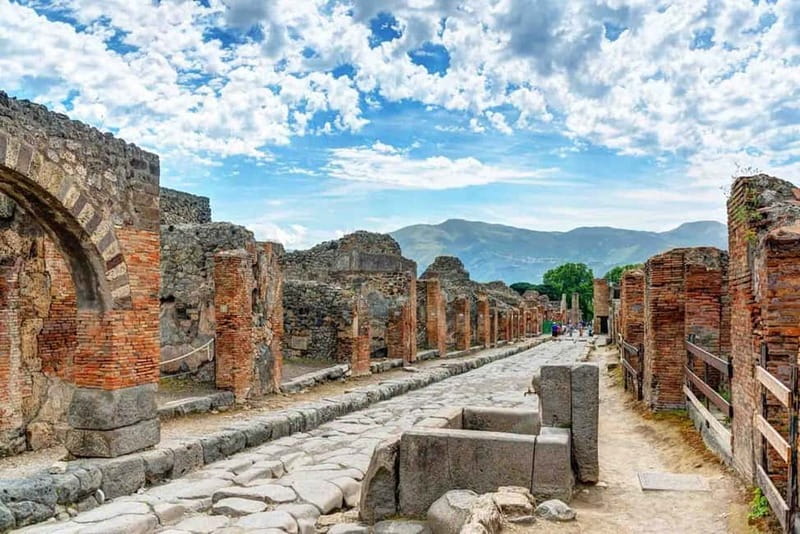
The big win here is simple: you don’t waste your day standing in line. With skip-the-line entry through a separate entrance, you can turn that time into more time in the streets, courtyards, and public spaces that made Pompeii famous.
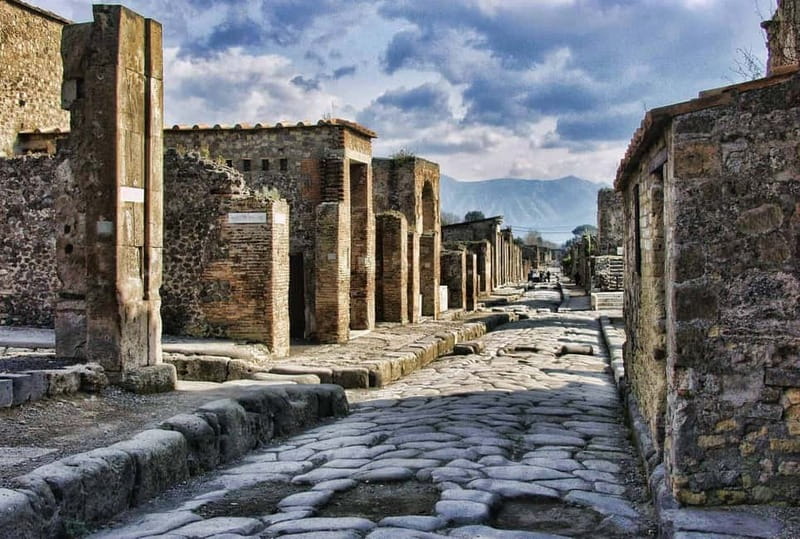
Pompeii is the kind of place that punishes rushing. You’ll see outlines in the paving, wall paintings in fragments, and the layout of neighborhoods that only makes sense when you pause and look. This setup helps because you’re not forced into a rigid group schedule.
There’s also a staff presence at the start. The host or greeter can work in several languages (Italian, English, Spanish, German, French, Russian, Polish, Dutch), and they’ll help you get pointed in the right direction at the meeting point.
You can also read our reviews of more tours and experiences in Pompei Campania.



What’s Actually Included: Ticket, Guide Book, and a Map

You get three things that matter for a one-day visit:
- Pompeii entry ticket
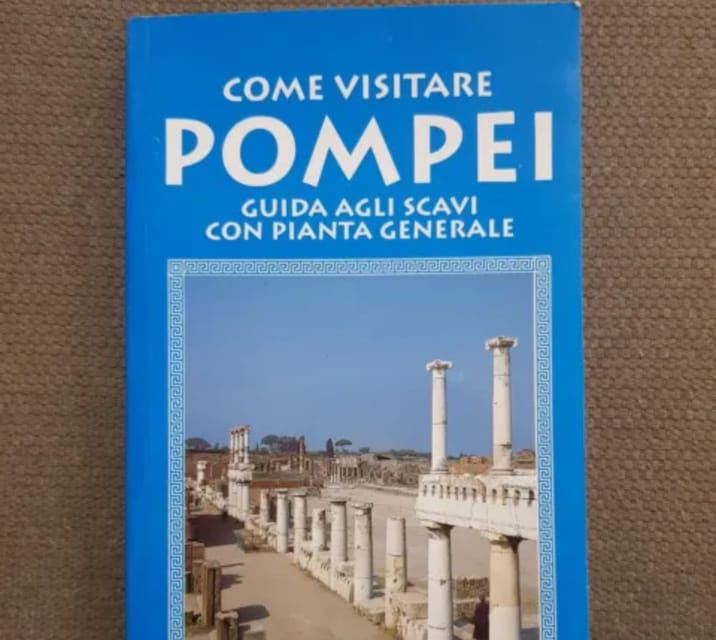
- A guide book with information for the site
- A map of the ruins
No audioguide, and this is not a guided tour in the classic sense. That’s important because it changes how you’ll experience Pompeii. You’re choosing your route, and the booklet is there to give you context while you walk.
I like this because it avoids the common problem of audio tours: you spend more time listening than looking. With a book in your hands, you can stop when you spot something interesting, read a small section, and keep moving.
Also, the map isn’t just decorative. It’s meant to help you navigate the archaeological site and connect major areas. One practical note: a few visitors find the map workable but not perfect, especially if building names or street labels don’t match exactly what you see in front of you. So use the map as a guide, then confirm with what you’re standing next to.
Starting Your Day: Meeting Point and How to Get Oriented Fast
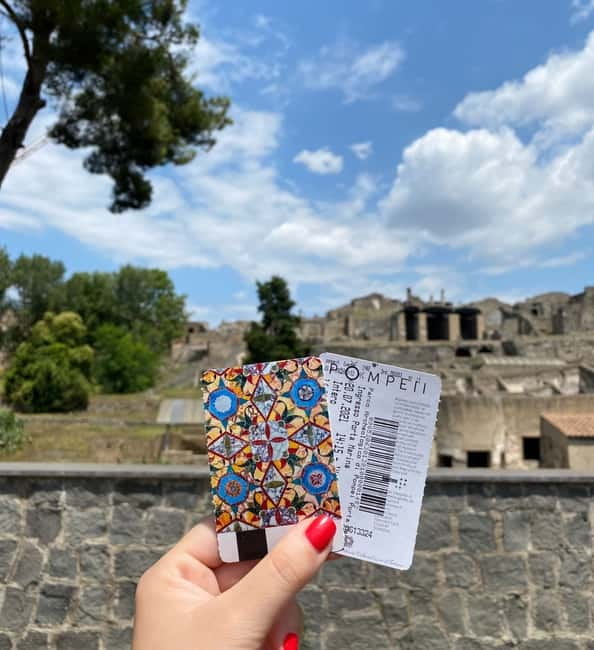
Your voucher time matters. Come to the meeting point 10 minutes before the time on your voucher. That short buffer is more than “nice to have.” It’s what gives you a calm start, time to find the correct counter, and time to open the guide book before you’re in the crowds.
Once you enter, resist the urge to sprint toward the most famous spot first. I recommend doing a quick orientation pass:
- Open the guide book
- Check the map for the broad route you want to follow
- Pick one main area to aim for next, so you don’t wander aimlessly
Pompeii’s street grid can trick you. One area can look close until you realize how much the terrain and pathways slow you down. A small plan saves energy and keeps your day from feeling random.
Building Your One-Day Route: A Simple Plan That Works
You’re valid for 1 day, and starting times depend on availability. That means you should think about your priorities before you lock in a time slot. If you come later, you might lose light and end up making choices you didn’t mean to make.
Here’s a practical approach that works well with a book-and-map format:
- Decide on your must-see neighborhoods or buildings (pick a few, not everything).
- Connect them in a loop so you’re not backtracking.
- Leave room for detours, because Pompeii rewards detours.
A key consideration: not all houses or sections may be open during your visit. Some areas can be closed for preservation or logistics, so you might not see every room you hoped for. If that happens, having a shortlist of alternative stops keeps disappointment low.
Roman Streets, Houses, Shops, Cafes, and Amphitheaters
This is where Pompeii really clicks. Walking the ancient streets is one of those experiences that feels physical, not just visual. You’re not staring at distant ruins—you’re moving through spaces that once had foot traffic every day.






What to look for as you walk
In a self-guided visit, your “job” is to notice patterns. The guide book helps you do that by giving you context where your eye naturally lands, like:
- How residential areas were set up
- What different storefronts and public spaces would have meant for daily life
- How the city’s layout connects neighborhoods and gathering points
Millennia-old houses and the rooms inside
One of the best parts of having the guide book is that it turns a house from a static ruin into a story. You’ll be able to step into millennia-old spaces like houses and other structures and make sense of what you’re seeing as you go.
Just don’t assume every room will be accessible. If a section is closed, don’t waste time forcing it. Move to the next stop and use the book to keep momentum.
Temples, shops, and everyday city spaces
Pompeii isn’t only about big monuments. You can walk through spaces that feel like lived-in city life—temples, shops, and cafes among them. The appeal is that it shows layers: Roman civic pride, private home life, and commercial routines all in one footprint.
This is also why pacing matters. If you rush, you miss the smaller clues that make it feel real.
The amphitheater experience
Pompeii’s amphitheater helps you understand the “public life” side of town. Even if you’ve seen amphitheaters elsewhere, Pompeii’s scale and the preserved layout make it feel immediate. When you stand inside, you get a better sense of how crowds would have moved and how the city staged events.
If you’re the type who loves architecture and crowd spaces, prioritize the public sites earlier in the day. That way you’re not rushing to check one last box before closing time.
Temples and Key Public Spaces: Where the City Becomes Real
After you’ve wandered through residential streets and smaller commercial areas, you start to feel the shift: Pompeii becomes more formal. Temples and major public spaces pull you out of the “neighborhood” mindset and into the city’s big identity.
This is where your guide book’s explanations pay off. Roman sites can be confusing if you’re only looking at stone. With the booklet open, you’re better able to connect what you see—raised areas, columns or remnants of structure, and how spaces were likely arranged—to what the place was used for.
If you like structure, pick one major public area as your anchor. Then use everything around it as context. This prevents the day from turning into a checklist.
Shrine of Our Lady of Pompei and the Bell Tower
Not everyone thinks to plan for this part, but it can be a nice change of pace. Pompeii isn’t only ancient Roman layers. You can also visit the Shrine of Our Lady of Pompei and the bell tower as part of your day.
This works well if you want a breath between dense ruins. The shrine area gives you a different tempo, and it makes your visit feel connected to modern life in the region, not sealed off in the past.
If time is tight, I’d treat it as your optional flex stop. Use it if you have energy left and if your route timing naturally carries you that way.
Price and Value: Is $39.86 Worth It?
At $39.86 per person, you’re paying for three practical things: priority entry, a guide book, and a usable map. The value depends on how you like to travel.
If you hate lines, this is the part that justifies the cost. Waiting in Pompeii can eat up a big chunk of your day, and this ticket helps you bypass that. More time inside means you actually see Pompeii instead of just thinking about seeing it.
The guide book also adds real value. You’re not just buying access—you’re buying direction. A paper guide is often better for Pompeii’s layout than relying on memory or a phone app you might open and close constantly.
Where the value can drop is if you show up with no plan and spend your day scrambling. That’s not a problem with the ticket—it’s a problem of how big the site is. If you’re willing to do a small prep pass in the guide book before you start walking, this booking feels like a smart buy.
Who This Self-Guided Pompeii Entry With Book Is Best For
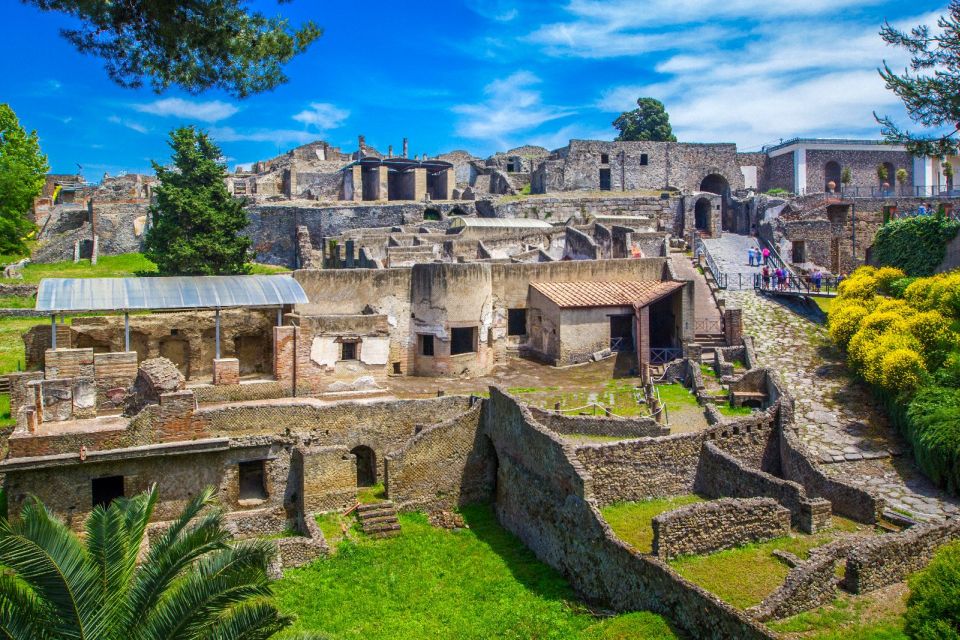
This fits best if you:
- Want independence and control over your pace
- Like reading while you walk
- Are happy to design a simple route for a large site
- Prefer a skip-the-line start over waiting with everyone else
It’s also a good choice for families or small groups who don’t want to stick with one tour pace. Since there’s no guided tour included, you can pause as often as you want.
If you strongly prefer an all-in-one guided explanation from start to finish, you might find this format less satisfying, since it’s built around a guide book rather than a live guide leading you from stop to stop.
A Few Smart Tips to Make Your Day Smoother
These are the habits that keep a self-guided Pompeii visit from feeling chaotic:
- Start early enough to leave breathing room for navigation.
- Use the map to choose a direction, then navigate by what you see, not only street labels.
- Have a short list of priorities so closed houses or restricted areas don’t derail you.
- Don’t try to do everything. Pick your highlights, then fill in gaps with curiosity.
Also, if you can, do a quick look at the site layout the night before. Pompeii can feel less straightforward than you expect once you’re on foot, so even a 10-minute prep can make you feel grounded.
Should You Book This Pompeii Entry Ticket With Book?
I’d book it if you want more time in Pompeii and less time waiting around. The combination of skip-the-line entry, a guide book, and a map is a good match for travelers who enjoy exploring without being boxed into a group schedule.
I wouldn’t book it as enthusiastically if you expect a guided tour experience with extensive live narration. This is self-guided, and the value comes from what you do with the booklet once you’re inside.
If you’re on the fence, here’s the quick test: if you’re the kind of person who likes to read a little while you walk, this ticket will feel like money well spent. If you hate planning at all, you may feel the stress of Pompeii’s size.
FAQ
What’s included with the Pompeii entry ticket and book?
You get the Pompeii entry ticket, a guide book with information about the site, and a map of the ruins.
Is there a guided tour or audioguide included?
No. A guided tour and an audioguide are not included.
How does skip-the-line entry work?
You enter through a separate entrance to avoid long lines.
How long is the ticket valid?
The ticket is valid for 1 day. Check availability to see starting times.
What time should I arrive at the meeting point?
Come to the meeting point 10 minutes before the time indicated on your voucher.
What languages are available for the host or greeter?
The host or greeter supports Italian, English, Spanish, German, French, Russian, Polish, and Dutch.
Can I cancel, and is there a refund?
Yes. Free cancellation is available up to 24 hours in advance for a full refund.