REVIEW · ROME
Rome: Angels and Demons, the illuminati path
Book on GetYourGuide →Operated by Happy walks · Bookable on GetYourGuide
Follow the symbols in Rome.
This short, 2-hour Rome walk is built around the places people associate with Dan Brown’s Angels and Demons, with a guide tying the sights to religion, power, and symbolism you’ll recognize once you know the story. I like that it’s not just a checklist; it’s a route that keeps asking you to look twice at familiar landmarks.
Two things I like a lot: the stop-by-stop storytelling is designed to connect Dan Brown’s world to real Roman art and church history, so you’re not just hearing book quotes in a loud voice. I also like the human touch: guides such as Felice are described as calm and patient, even when someone in the group is young and has lots of questions.
One consideration: the tour is tight and moving, and pacing can be brisk. I’d plan for a meeting-point-first experience at the Obelisco at Piazza San Pietro, because there have been real issues reported when nobody shows up right on time, plus at least one report said the tour finished early.
In This Review
- Key things to know before you go
- Entering St. Peter’s Square: the story sets the rules
- Castel Sant’Angelo: fortress views and why it works in the plot
- Piazza Navona and the Four Rivers Fountain: baroque theater at street level
- The Pantheon: Roman engineering plus legends you can see
- Santa Maria della Vittoria and Bernini’s Ecstasy: ending the emotional beat
- Price and logistics for a short Illuminati path walk
- The guide quality factor: why it can make or break your day
- Who this tour suits best (and who should skip)
- Should you book this Angels and Demons Illuminati Path tour?
- FAQ
- How long is the Angels and Demons Illuminati path tour?
- What’s included in the price?
- Where do I meet the guide?
- What sights are part of the route?
- Is the tour in English and/or Italian?
- Is it suitable for wheelchair users?
Key things to know before you go
- Small group (up to 10) keeps questions possible, not just a lecture you have to survive.
- St. Peter’s Square as the opener sets the tone with the Basilica area and Bernini’s famous design.
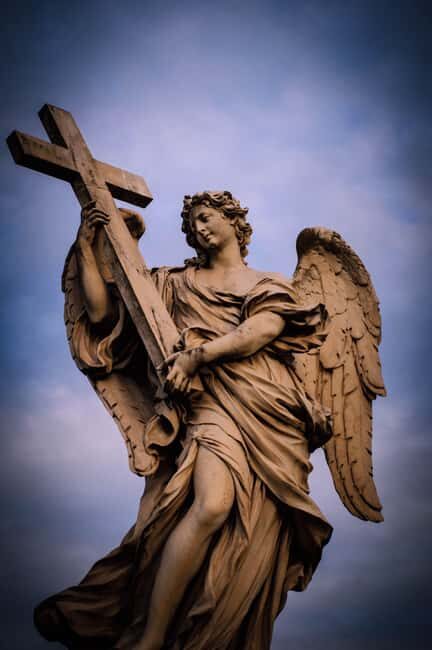
- Castel Sant’Angelo is handled with both views and plot-style context, not only photos.
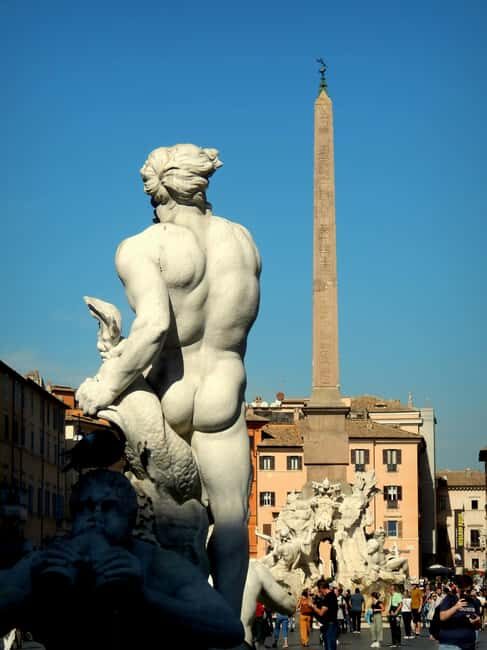
- Piazza Navona + Four Rivers Fountain gives you big baroque energy in a compact stop.
- Pantheon focus centers on the building’s legends and what you can notice inside.
- Santa Maria della Vittoria ends the story arc around Bernini’s Ecstasy of Saint Teresa.
Entering St. Peter’s Square: the story sets the rules
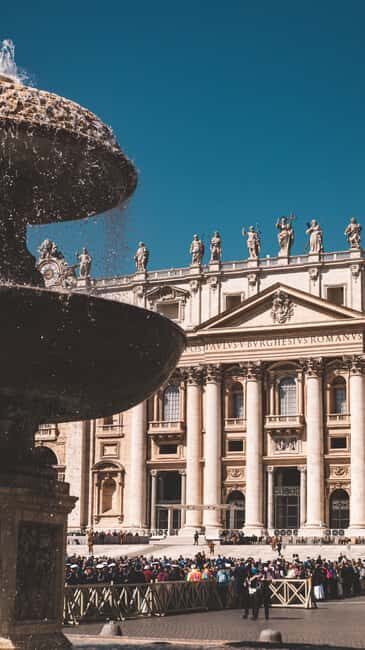
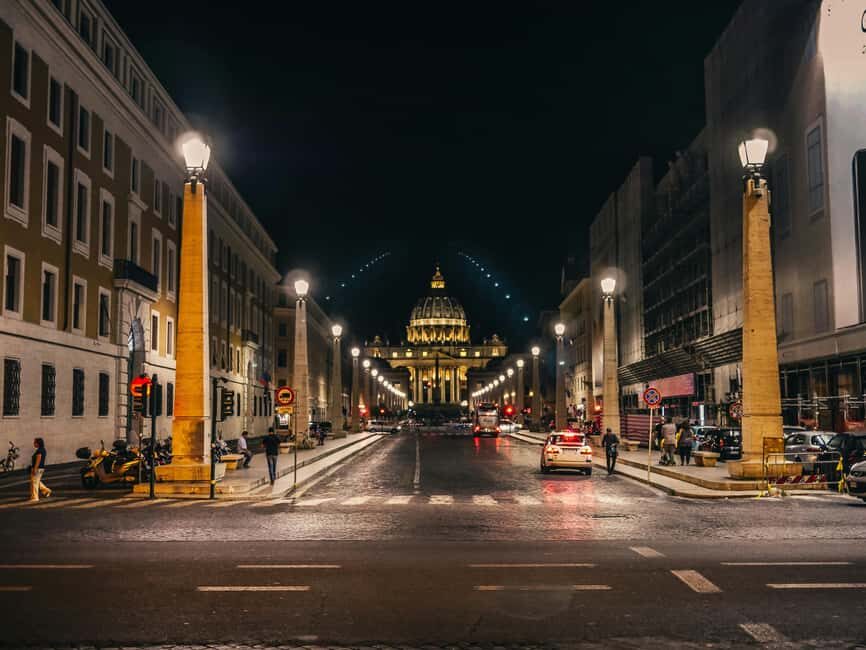
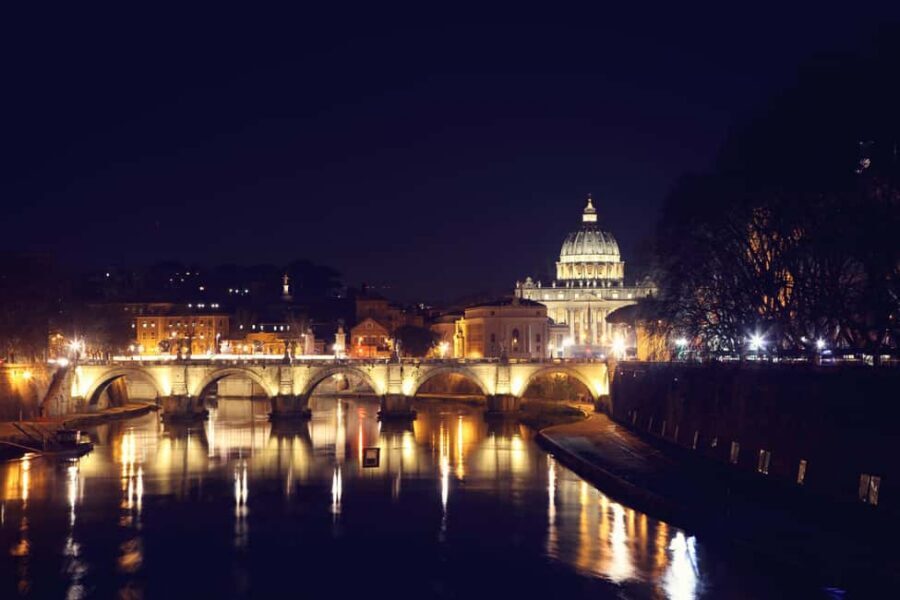
The tour starts in the Piazza San Pietro area, in front of the Obelisco—a practical anchor point because this is one of the easiest spots in Vatican City to recognize. From here, you get the “big stage” feeling first. St. Peter’s Square is meant to overwhelm you a little. The guide’s job is to help you read it instead of just staring at it.
You’ll stand around the Basilica of St. Peter and the square designed by Bernini, and you’ll get guidance on why this area matters so much—religiously, artistically, and in the world of Angels and Demons. Even if you’re not a hardcore symbolism hunter, this stop is a good warm-up. It helps you understand the tour’s approach: look at the architecture, learn what the Church says the space is for, then connect that to why a novelist would choose it.
If you’re short on time in Rome, this “start with the loudest landmark” method works. You can’t miss it, and it gives your brain a framework for the rest of the walk.
You can also read our reviews of more tours and experiences in Rome.



Castel Sant’Angelo: fortress views and why it works in the plot
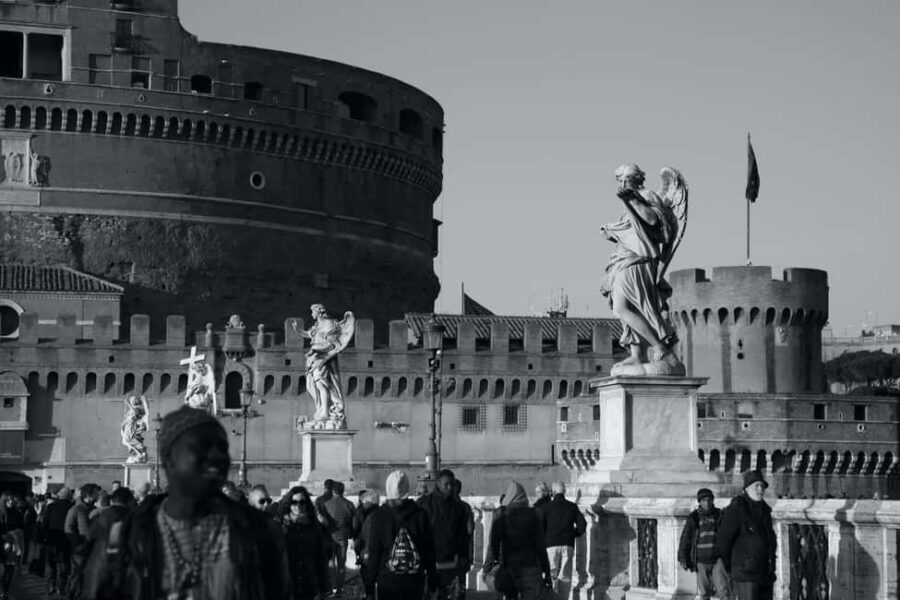
Next up is Castel Sant’Angelo, timed for a photo stop and a guided visit. This is one of those places where Rome looks like Rome: the Tiber River, heavy stone, and that sense of walls having opinions.
For the Angels and Demons angle, Castel Sant’Angelo is used as a symbol of refuge and power. The tour framing matters here. You’re not just seeing a castle; you’re hearing how it became an obvious choice for a story about secret movement and high-stakes escape routes. You’ll also get a sense of how the site controls sightlines over the river corridor.
Practical tip: Castel Sant’Angelo is a quick stop in a short tour. If you want a longer view from your own angle, arrive with the mindset that you’ll do the “guide view” today and take extra photos later on your own.
Piazza Navona and the Four Rivers Fountain: baroque theater at street level
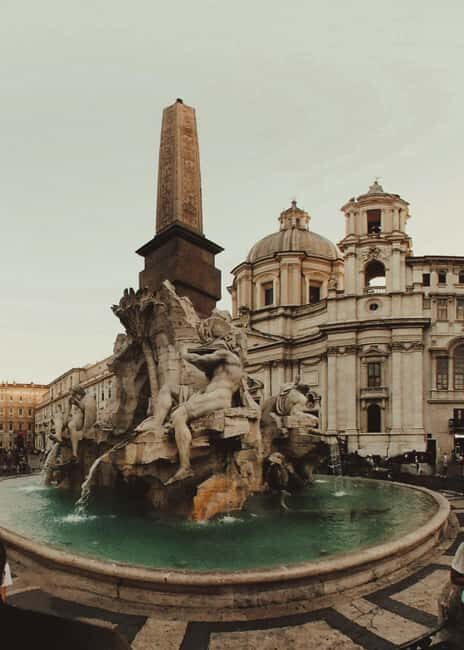
Then you hit Piazza Navona, one of Rome’s most recognizable squares, and the tour uses it smartly: it’s quick, but it points you to what to actually look at.
Piazza Navona isn’t a quiet plaza. It’s a space built to be lived in—surrounded by buildings, filled with street life, and dominated by the Fountain of the Four Rivers by Gian Lorenzo Bernini. The fountain is where the tour’s story tone clicks hardest. You get details and curiosities about why it shows up the way it does in the narrative mood, and you’re encouraged to look at the fountain as a crafted message, not just water art.
If you’ve only seen Rome photos, Piazza Navona is a reality check in the best way. The scale feels more human than big museum rooms. It’s also an easy place to pause, compare angles for photos, and just enjoy watching people do their thing.
Downside to consider: the fountain is visually loud. If your guide’s pacing is fast, you might feel you’re skimming. For this stop, I’d let yourself pick one thing to focus on (a figure, a river motif, the overall composition) instead of trying to absorb everything at once.
The Pantheon: Roman engineering plus legends you can see
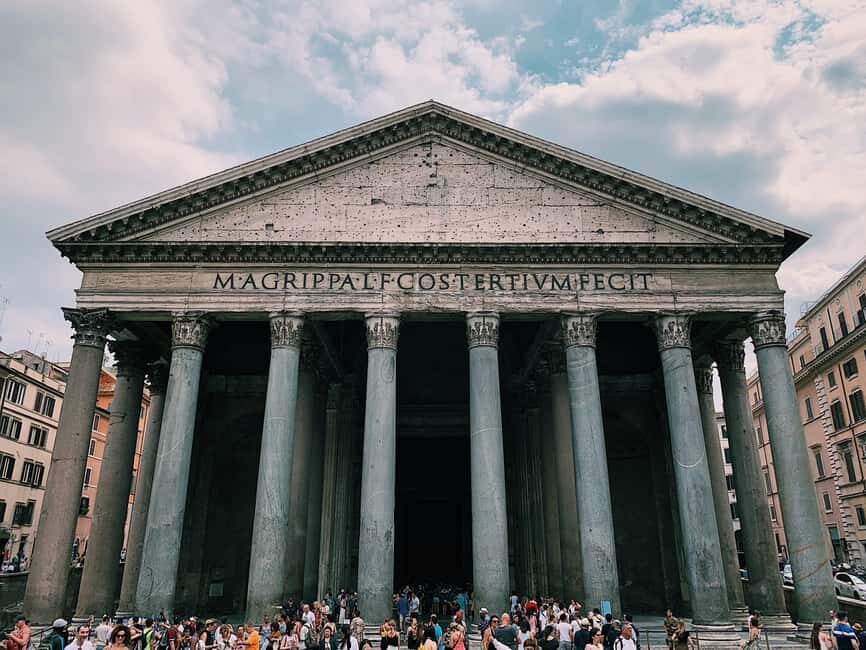
After the square energy, you reach the Pantheon, a monument that still works as a wow moment because it’s built to. This tour treats it as both an architectural achievement and a story location.
You’ll spend time outside, take photos, and then get guidance on what’s significant, including references to Agrippa’s temple and the building’s associated legends. The goal here is to give you a “readable monument.” You’ll notice the dome shape, the massive sense of structure, and how the interior space creates that feeling you only get from older Rome.
Here’s a key value point: the Pantheon isn’t just a backdrop for a famous scene. It’s a reason Rome became Rome. If you understand even a little about how it’s put together, you’ll appreciate the way later artists and writers used Rome as shorthand for power, mystery, and endurance.
One practical note: the tour listing says exterior visit, but the tour description also says you’ll explore the Pantheon’s interior. Since those details can affect what you physically do on the day, I’d treat the safest plan as: expect guided viewing with potential interior time, but don’t assume you’ll have museum-level time inside.
Santa Maria della Vittoria and Bernini’s Ecstasy: ending the emotional beat
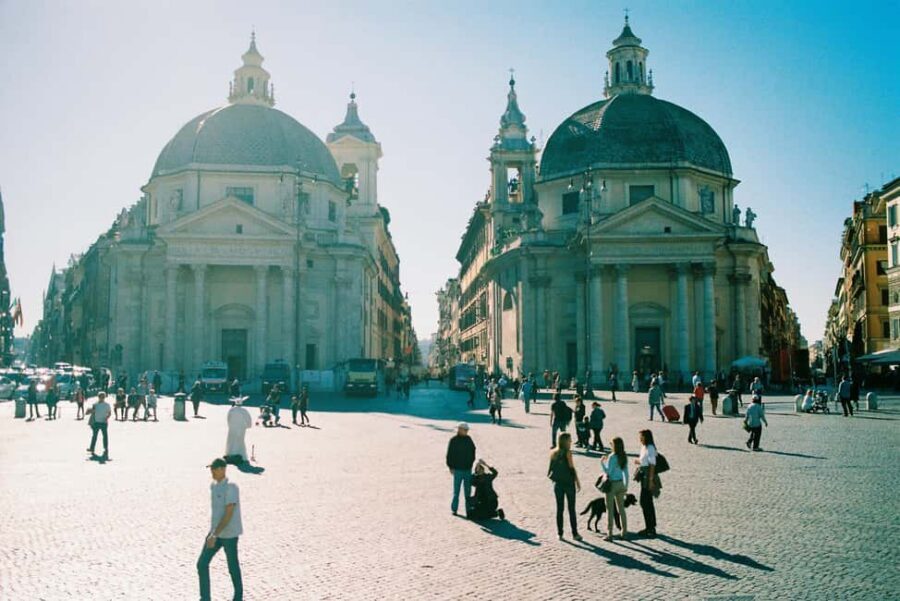
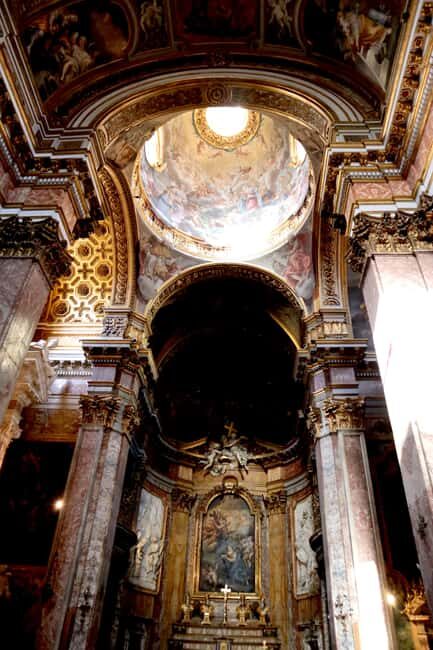
The final major stop is Santa Maria della Vittoria, a baroque church that fits the final act mood of Angels and Demons. This is where the tour shifts from “look at power and movement” to “look at emotion, devotion, and art used as persuasion.”
You’ll see the church’s famous Ecstasy of Saint Teresa by Bernini. The guide’s job here is to explain why this artwork hits so hard visually and spiritually—why it became one of those pieces people keep referencing when they want to talk about belief, intensity, and theatrical faith.
This last stop is also the easiest place to judge whether the tour’s tone matches your tastes. If you like art that tries to pull a reaction out of you, you’ll enjoy the ending. If you came mainly for the plot puzzles, you may wish the guide had spent a bit more time on the earlier locations.



Price and logistics for a short Illuminati path walk
At $66 per person for 2 hours, you’re paying for three things: access to a guide, focused timing across multiple major sights, and a story format that turns Rome into a connected map rather than separate photo stops.
Is it good value? For the right traveler, yes. You’re not paying for transport, and you’re not buying a meal. The experience is basically: small group + guided interpretation at several top landmarks. If you’re comfortable walking a fair bit and you enjoy learning while you go, this price makes sense.
If you’d rather wander slowly, stop often, and spend long periods just watching people, then the short format could feel like speed-walking with a narrator. The tour ends in the Repubblica area, which is handy because it puts you near more central sightseeing after the tour.
Practical logistics you’ll want to plan around:
- No transport included, so you’ll likely use your own metro/walking strategy to reach Piazza San Pietro.
- No food included, so eat before you go or plan a quick stop after.
- The group is limited to 10 participants, which is great for questions, but it also means you should arrive on time so the guide can keep the rhythm.
The guide quality factor: why it can make or break your day
From the way this tour is described, the guide is the product. The route is famous, but the “Angels and Demons” angle depends on how well the guide connects the setting to real context without getting lost.
I especially like that the tour can cater to different group needs. One standout example from the available feedback is Felice, described as calm, patient, and responsive to lots of questions, including adapting explanations for a 10-year-old. That’s not a small detail. In a two-hour story walk, attention and pacing matter.
Here’s the consideration: language confidence and timing can vary by guide and by day. If you need strong English (or Italian) for story details, I’d book with a clear expectation and ask upfront what level of language the guide will use during the tour.
And if you’re the type who hates missing the start, show up early at the Obelisco at Piazza San Pietro and give yourself a buffer.
Who this tour suits best (and who should skip)
This tour fits you if:
- You’re a Dan Brown fan and want your Rome sightseeing to connect to that specific storyline.
- You like short, high-impact walks where the guide explains what you’re looking at.
- You want a small-group setting where you can ask questions without feeling cut off.
It may not fit you if:
- You want lots of indoor time at every stop (the tour is listed as exterior visit, and the format is short).
- You hate brisk pacing and prefer slow wandering with long breaks.
- You need wheelchair access. The tour is noted as not suitable for wheelchair users.
Should you book this Angels and Demons Illuminati Path tour?
I’d book it if you want a tight, story-driven route through Rome’s most iconic sites, especially if you value art-and-symbol explanations over pure free-time sightseeing. The big strengths are the compact selection of landmarks and the chance to get real context from guides who can handle questions—like the calm, patient style attributed to Felice.
Skip it if you want a long, unhurried day, or if you’re expecting a heavy focus on the plot at every step. This is a walking format, so you’ll want to arrive ready to look closely, ask questions early, and enjoy the connections between Church spaces, Roman art, and the themes Dan Brown popularized.
FAQ
How long is the Angels and Demons Illuminati path tour?
It lasts 2 hours.
What’s included in the price?
You get a bottle of water and an exterior visit.
Where do I meet the guide?
You meet in front of the Obelisco in Piazza San Pietro.
What sights are part of the route?
The tour includes St. Peter’s Square, Castel Sant’Angelo, Piazza Navona (including the Fountain of the Four Rivers), the Pantheon, and Santa Maria della Vittoria (including Bernini’s Ecstasy of Saint Teresa). It finishes at Repubblica.
Is the tour in English and/or Italian?
Yes, the live guide is available in English and Italian.
Is it suitable for wheelchair users?
No. It’s not suitable for wheelchair users.
If you want, tell me your travel dates and your tolerance for walking. I can help you decide whether this 2-hour format matches your Rome pace.