REVIEW · PRIVATE
Private Tour of Underground Rome
Book on Viator →Operated by VIVICOS INTERNATIONAL TRAVEL SRL · Bookable on Viator
Underground Rome feels like a secret you can actually visit. This private walking tour takes you below the city’s most famous piazzas and fountain area, where you’ll see ancient ruins, a bone crypt, and waterworks remains tied to Roman life. It’s a private, licensed-guide experience designed to help you see Rome without the usual crush.
I especially love the mix of stops: first the athletic spectacle under Piazza Navona at Stadio di Domiziano, then the jaw-drop emotional impact of the Capuchin Crypt in Santa Maria della Concezione, and finally the quieter puzzle of Vicus Caprarius beneath Trevi. I also like how the guide role matters here. Names like Francesco, Mattia, and Diego have come up with these tours for a reason: they’re good at keeping the story clear and answering real questions, including for families.
One possible drawback: the Capuchin Crypt and underground spaces are not for everyone’s comfort level, and you do have to follow a dress code for churches (no shorts, no sleeveless tops; knees and shoulders covered). Also, Vicus Caprarius entrance fees are paid on site, so you’ll want a little extra cash or card ready.
In This Review
- Key Highlights You’ll Feel During the Tour
- Why This Underground Rome Route Beats the Usual “Aboveground” Walk
- Entering Stadio di Domiziano Under Piazza Navona
- The Capuchin Crypt of Bones: A Visit That Stays With You
- Vicus Caprarius Under Trevi Fountain: Rome’s City of Water
- How the Private Licensed Guide Makes This Tour Worth It
- Price and Value: What $430.52 Gets You (and What It Doesn’t)
- Meeting at Piazza Navona and Ending at Museo e Cripta dei Cappuccini
- Dress Code and Physical Comfort: Read This Before You Go
- Who This Tour Fits Best (and Who Might Want Another Option)
- Should You Book This Private Tour of Underground Rome?
- FAQ
- How long is the Private Tour of Underground Rome?
- Is this a private tour, or will I join other people?
- What’s included in the price?
- Do I pay for Vicus Caprarius during the tour?
- Where do I meet the guide, and where does the tour end?
- What dress code should I follow?
- Can I get a refund if I cancel?
Key Highlights You’ll Feel During the Tour
- Stadio di Domiziano under Piazza Navona: Rome’s early permanent athletics venue, built for Domitian’s Capitoline Games
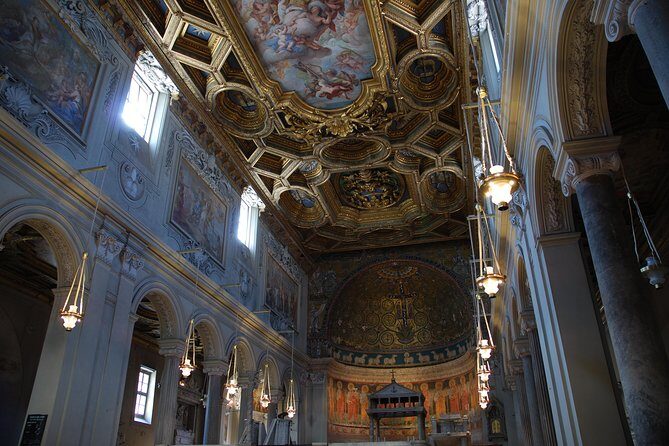
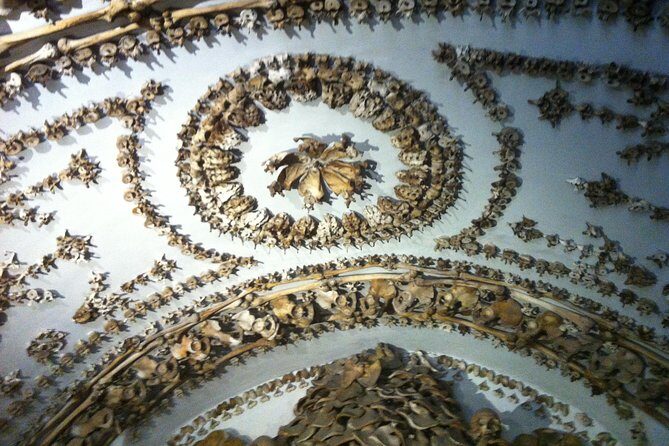
- Capuchin Crypt of Bones: real human bones arranged into themed rooms inside Santa Maria della Concezione
- Vicus Caprarius beneath Trevi: remnants of an early Roman aqueduct under the fountain area
- Private licensed guide for 3 hours: you get focused attention and time to ask questions
- Weather-proof planning: the tour runs in all weather, so bring the right layers
Why This Underground Rome Route Beats the Usual “Aboveground” Walk
Rome above ground is full of icons. This tour gives you a different kind of wow. Instead of only looking at famous surfaces, you get to stand in the spaces where different eras overlapped—sports, funerary culture, and water engineering—often within a short walking loop.
What makes it work is the pacing. You’re not sprinting from sight to sight. It’s a 3-hour private experience that pairs big visual moments (like bone rooms) with the kind of underground archaeology that rewards curiosity. And because it’s private, you’re not getting swallowed by a bus-group timeline.
Also, it’s a good reality check on Rome itself. The city’s famous highlights sit on layers. When you learn how those layers connect—stadium spaces, church basements, and water channels—you start seeing the “why” behind the map.
You can also read our reviews of more private tours in Rome



Entering Stadio di Domiziano Under Piazza Navona
Your underground story starts under Piazza Navona, at the Stadio di Domiziano area. This is the Stadium of Domitian, described as Rome’s first permanent competitive athletics venue. It was erected for Domitian’s celebration of the Capitoline Games—meaning this wasn’t just casual space for events. It was built to mark a big cultural moment, with athletes and competition as part of the spectacle.
Even if you’re not a sports-history person, this stop clicks because of placement. You’re standing in an underground environment associated with a major public celebration, right where so many people now enjoy the open-air square above. That contrast helps you understand how quickly city life changes while structures keep echoing underneath.
What I like about this stop for your planning:
- It’s your first anchor. Once you grasp the idea of ancient Rome under the modern city, the next two stops make more emotional and historical sense.
- It’s built for walking and looking, not rushing. You’re given about 1 hour here.
A small consideration: the tour includes the Domitian Stadium entrance fee, but you still want to arrive with your head in “slow look” mode. If you’re expecting a fast photo-op sprint, you’ll miss the value.
The Capuchin Crypt of Bones: A Visit That Stays With You
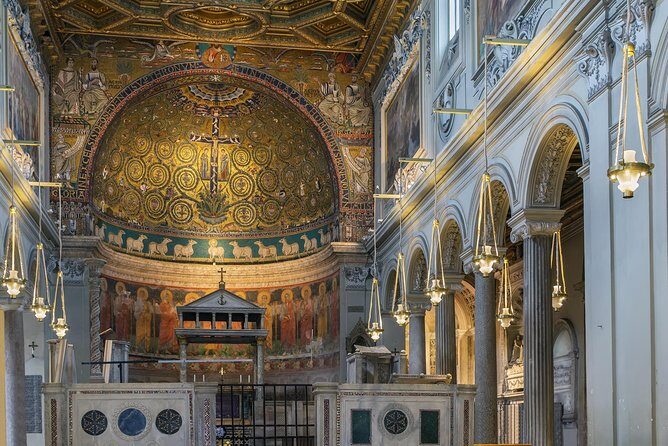
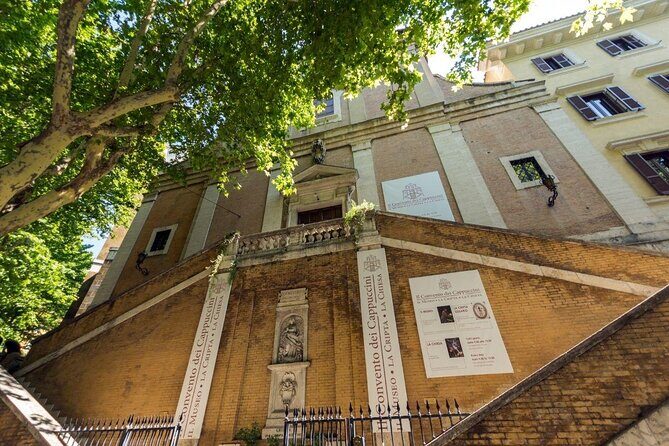
Next comes Santa Maria della Concezione dei Cappuccini, home to the Capuchin Crypt. Yes, it’s the famous Crypt of Bones. But what you’ll remember isn’t just that it exists—it’s how it’s made and organized.
This crypt is composed of real human bones of the Capuchin friars. The spaces are built from bones arranged by type: you can see rooms connected to different parts like legs and arms. The rooms aren’t designed like a random museum display; they’re set up to create a mood, with the bone material turning the entire interior into a striking visual system.
Is it a little scary? That’s honest. Some people get quiet here, others feel a jolt of fascination. Either reaction is normal. If you’re traveling with kids, this is the kind of place where a guide’s tone really matters—because you want a balance of respect, explanation, and a way to keep it from becoming overwhelming.
This is also one of the best stops for connecting “facts” to feelings. You’re dealing with mortality, religion, and craft—how a community turned remains into a statement. Even if the idea makes you uneasy, the visit has meaning, and the guide’s stories help you keep perspective.
Practical note: this stop is included and admission is free as part of the tour’s arrangement, so you’re not doubling your costs mid-day. Also, it falls under church rules for dress, so plan accordingly.
Vicus Caprarius Under Trevi Fountain: Rome’s City of Water
The final major stop focuses on water, and it’s under the area of Trevi Fountain: Vicus Caprarius, often called the City of Water. This one is shorter—about 30 minutes—and it’s more about discovery than spectacle.
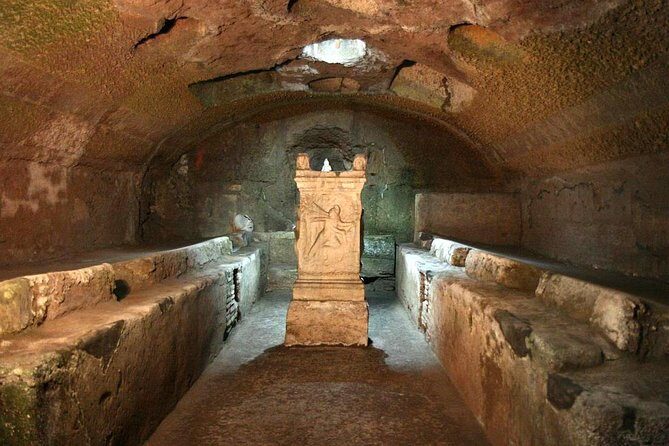
Here, you can look at remains of the first Roman aqueduct. That’s the key detail. You’re seeing a physical trace of how the city functioned—water brought in, used, and moved through urban spaces long before modern plumbing ever existed.
This is a great pairing with the Capuchin Crypt, believe it or not. Bone rooms are about what people were; the aqueduct remains are about how the city worked. Together, they give you a broader Rome: not only monuments and myths, but infrastructure and lived daily life.
One important planning point: Vicus Caprarius entrance fees are not included and you pay on site. So keep that in mind while budgeting. It’s also a good reason to keep your day organized—don’t assume every site is fully covered.
How the Private Licensed Guide Makes This Tour Worth It
This isn’t a self-guided walk. A private licensed guide does the heavy lifting: connecting each underground space to a bigger story, answering questions as they come up, and adjusting pacing to your group.
The guides linked to this experience—Francesco, Mattia, and Diego—are repeatedly praised for engagement. One standout theme is how they bring the material down to your level, including for kids, without turning it into a lecture. If you’ve ever had a Rome tour where you understand the facts but still feel lost, this is the opposite. The goal is clarity.
Here’s what you get in practical terms:
- You can ask follow-up questions when something clicks—or when it doesn’t.
- You’ll get guided meaning, not just descriptions of what something is.
- You’ll likely move through underground spaces with less stress, because you’re not guessing what to look for.
It’s also a smart value move if you’re traveling as a couple or small family. You pay for privacy, but you’re not paying for wasted time.



Price and Value: What $430.52 Gets You (and What It Doesn’t)
At $430.52 per person, this is not a cheap Rome add-on. The value comes from what’s included: a private licensed guide for 3 hours, plus entrance fees to the Capuchin Crypt and Domitian Stadium.
So you’re paying for three things at once:
- Expertise and attention (private guide time)
- Time saved and logistics simplified (entrances handled for two of the three stops)
- A specific underground itinerary that you won’t replicate easily on your own without planning
What you should expect not to be covered:
- Vicus Caprarius entrance fees are paid on site
- No hotel pickup or drop-off
- No transportation to or from the sights
If you’re comparing this against DIY underground plans, the cost makes more sense when you count your own time and stress. Underground sites are easy to misunderstand. A guide helps you spend your energy on the experience, not on figuring out what you’re looking at.
A real-world budgeting tip: carry a bit extra for on-site entrance and keep some flexibility for the day’s walking pace.
Meeting at Piazza Navona and Ending at Museo e Cripta dei Cappuccini
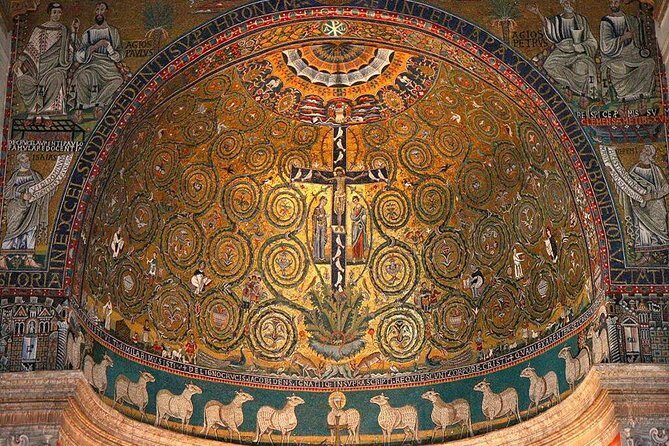
The tour begins at Piazza Navona (00186 Roma RM). It ends at Museo e Cripta dei Cappuccini, Via Vittorio Veneto 27, 00187 Roma RM.
That end location matters. After the last underground stop, you’ll be near the Museo e Cripta dei Cappuccini area, so it’s easy to continue your day around that corridor rather than needing an immediate long cross-city trip. If you like to keep your afternoons simple, this helps.
Also, the meeting point is near public transportation, which you’ll appreciate in Rome where parking is a gamble and timetables matter.
Dress Code and Physical Comfort: Read This Before You Go
This tour operates in all weather conditions, so dress for the day you get. Underground areas can feel cooler, and you’ll still be walking outside between sites.
For places of worship and selected museums, you must follow the dress code:
- No shorts
- No sleeveless tops
- Knees and shoulders must be covered for both men and women
If you show up in summer outfits, plan a quick fix. A light layer over your shoulders and something that covers your knees can save your day from being turned away at the door.
Physical fitness is listed as moderate. That usually means you should be comfortable walking and moving through underground or semi-underground areas without expecting a fully flat, step-free route.
Who This Tour Fits Best (and Who Might Want Another Option)
This private underground Rome tour is a strong match if you:
- Want a quieter, story-led way to experience Rome under the surface
- Like archaeology and urban layers—sports venues, religious spaces, and water infrastructure
- Prefer privacy so questions don’t have to wait
- Are traveling with kids who can handle a few serious moments (with the right guide tone)
It might be less ideal if:
- You know the Capuchin Crypt is too intense for you. It uses real bones and is described as a place that can feel scary.
- You’re hoping for a fully aboveground “great views” day. This is about underground spaces and interpretation, not panoramic sightseeing.
If you’re on the fence, the decision often comes down to your comfort with the crypt. Everything else is manageable with preparation—especially the dress code.
Should You Book This Private Tour of Underground Rome?
If you’re choosing between the standard Rome itinerary and something more off the map, I’d book this—especially when you want a private guide and a focused set of underground stops that connect into one coherent story.
I’d say yes when:
- You value guided meaning over random wandering
- You’re curious about how Rome functioned, not only how it looked
- You want two included sites and a guided underground walk that’s structured rather than chaotic
I’d think twice if:
- You’re strict about avoiding bone-related or “scary” environments
- You strongly dislike dress-code constraints
- You don’t want to pay any on-site fees (Vicus Caprarius entrance is not included)
Overall, this is the kind of tour where you’ll go home with images you can’t forget—and a better understanding of what’s under the Roman postcard.
FAQ
How long is the Private Tour of Underground Rome?
The tour lasts about 3 hours.
Is this a private tour, or will I join other people?
It’s private. Only your group participates.
What’s included in the price?
You get a private licensed guide for 3 hours, entrance fees to the Capuchin Crypt, and entrance fees to Domitian Stadium.
Do I pay for Vicus Caprarius during the tour?
Yes. Entrance fees for Vicus Caprarius are not included and you pay on site.
Where do I meet the guide, and where does the tour end?
You start at Piazza Navona, 00186 Roma RM, Italy. The tour ends at Museo e Cripta dei Cappuccini, Via Vittorio Veneto, 27, 00187 Roma RM, Italy.
What dress code should I follow?
For places of worship and selected museums, you must cover your knees and shoulders. No shorts or sleeveless tops are allowed, and you may be refused entry if you don’t comply.
Can I get a refund if I cancel?
You can cancel up to 3 days in advance for a full refund. If you cancel less than 3 full days before the experience’s start time, you won’t be refunded.