REVIEW · HISTORICAL TOURS
Rome by Day, Beauty and History Unique Photo Tour and Workshop
Book on Viator →Operated by RomePhotoFuntours Giulio D'Ercole · Bookable on Viator
Rome clicks into focus fast. This 4-hour walk with professional photographer Giulio D’Ercole is built for real photo practice, not museum lectures. I love that it’s smartphone-friendly, with coaching on exposure, camera settings, and composition as you shoot. I also love the full-attention feel of a very small group, so questions don’t get lost. One drawback: you must follow the dress rules for churches and some museums, or you can be refused entry.
It’s also one of the few Rome tours where the plan isn’t just where to stand, but how to tell the story with your frame. Giulio’s approach blends photography tips with clear historical context, and even non-photographing partners can tag along without feeling like dead weight.
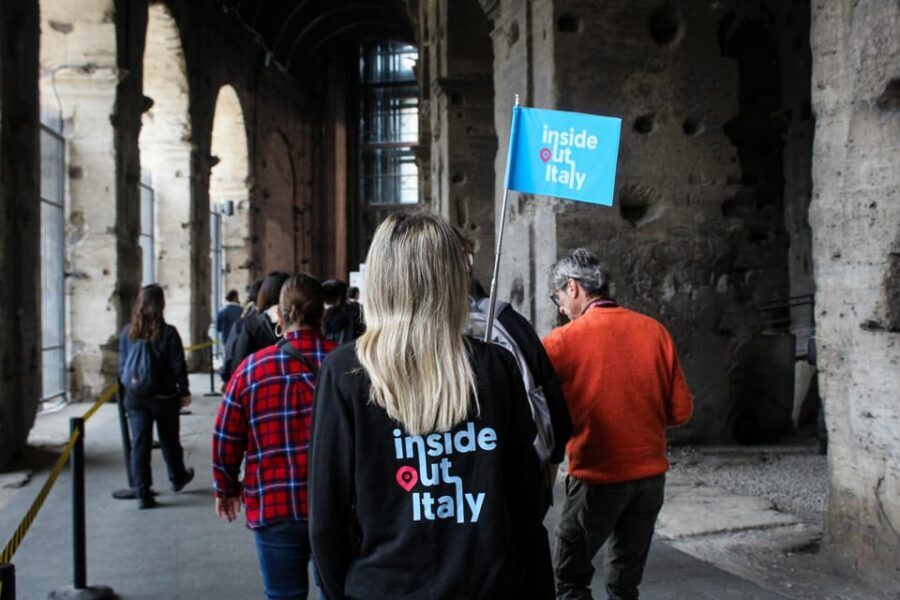
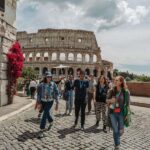
Before you go, know what you’re signing up for: lots of walking, quick stop-and-shoot sessions, and a route that moves from the Vatican area toward the Roman Forum zone and ends near the Colosseum. If that pace works for you, you’ll come away with better photos and a better read on what you’re seeing.
In This Review
- Key things that make this tour worth your time
- Why Giulio’s Rome photo walk feels practical (not gimmicky)
- What you’re paying for: 4 hours of “how to shoot” coaching
- Starting at Ponte Sant’Angelo, ending near the Colosseum
- Smartphone-friendly photography coaching that actually changes your results
- Stop-by-stop: what you’ll shoot and why each place is a photo lesson
- St. Peter’s Square: columns, guards, fountains, and the basilica facade
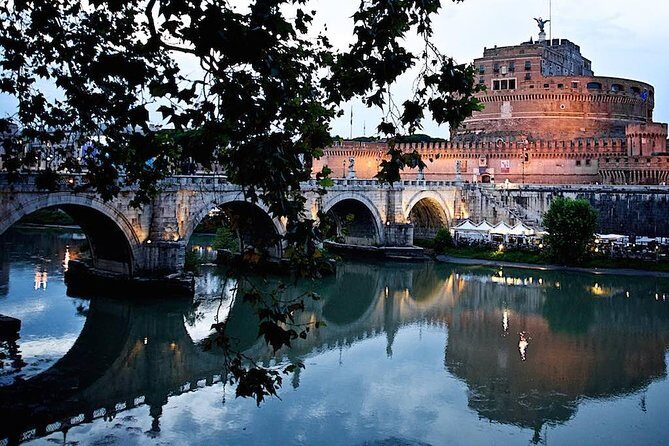
- Castel Sant’Angelo and the Bridge of Angels: fortress angles and river viewpoints
- Piazza Navona: fountains and people you can frame
- The Pantheon square: outside angles, people, and that perfect facade
- Chiesa di Sant’Ignazio di Loyola: baroque details that beg for close focus
- Complex of the Victorian Ala Brasini: monument, sculptures, skyline views
- Piazza del Campidoglio: Michelangelo’s square and the Marco Aurelio statue
- Mercati di Traiano – Museo dei Fori Imperiali: Trajan’s markets, column, and ruins framing
- Teatro di Marcello: ancient theater and fast shooting practice
- Antico Quartiere Ebraico: corners, small alleys, and typical shops
- Campo de’ Fiori: market energy and alley wandering
- The little things to bring (so you’re not fighting your setup)
- Group size, attention, and who this tour suits best
- A quick note on museum tickets you might want to add later
- Should you book Rome by Day, Beauty and History Unique Photo Tour and Workshop?
- FAQ
- Do I need a DSLR camera?
- How long is the tour?
- How many people are in the group?
- Where does the tour start and end?
- Is there an admission ticket included?
- What’s the dress code?
Key things that make this tour worth your time
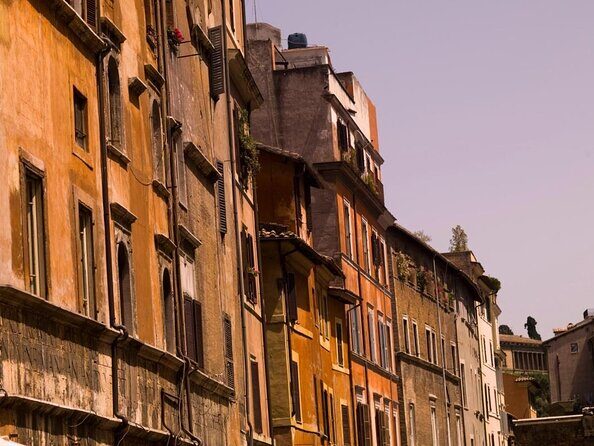
- Smartphone welcome, no DSLR needed for iPhone and Android shooters
- Hands-on photo coaching focused on exposure, camera settings, and composition
- Max 4 travelers so you get actual guidance, not a group chat vibe
- A nonstop Rome hit list from St. Peter’s Square to Campo de’ Fiori
- Non-photographers are accommodated so couples and families can do it together
- Dress code matters for places of worship and selected museums
Why Giulio’s Rome photo walk feels practical (not gimmicky)
If you’ve ever taken photos in Rome and thought, I like the place, but my pictures don’t really show it—you’re the exact person this tour is for. The big idea is simple: you’re not learning photography in theory. You’re learning it while you’re standing in front of the real subject.
Giulio’s style is friendly and patient, and he adjusts to your level. That means you can be brand-new to your camera app or more experienced and still get useful direction. The goal is for you to leave with images you’re proud to keep, not just a bunch of tourist snapshots.
You can also read our reviews of more historical tours in Rome

What you’re paying for: 4 hours of “how to shoot” coaching
At $215.69 per person, this isn’t a bargain-basement Rome walk. You pay for two things that are hard to replicate on your own: one-on-one style attention (even in a group) and a teaching focus that turns famous sights into photo assignments.
You also get a professional photographer guide, and the tour includes admission for St. Peter’s Square. Other stops list admission as free, and most of the experience is time on the street, working through what to shoot and how to shoot it.
If you try to do this by yourself, you can absolutely visit the same places. What’s harder to DIY is learning how to set exposure for bright stone, how to frame crowds without making everything a blur, and how to translate a historic building into a photo with a strong composition.
Starting at Ponte Sant’Angelo, ending near the Colosseum
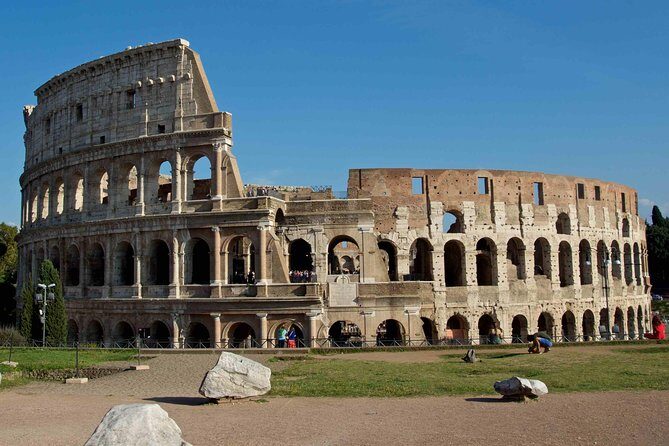
The tour meets at Ponte Sant’Angelo (St. Angelo Bridge) and ends at Piazza del Colosseo near the subway stop on Line A. That matters, because you’re not crisscrossing Rome aimlessly. The route is built as a photo path, moving from big monuments to tighter streets and back toward major ruins.
Also, you’re done in about 4 hours. That’s a real win in Rome, where long days can flatten your energy and your concentration. This format keeps you focused: short sessions, quick feedback, and lots of chances to try again.
Smartphone-friendly photography coaching that actually changes your results
This is where the tour earns its keep. You don’t need a DSLR. Giulio explicitly welcomes iPhone and Android photographers and works with what you’re holding.
The coaching is centered on the things that make photos look intentional:
- Exposure and camera settings ideas you can apply right away
- Composition guidance so your photos stop looking like random documentation
- Visual storytelling tips, so your shots show Rome as a scene, not just a postcard
If you’ve got basic photography skills, you’ll still benefit. You can tighten your framing, improve how you handle bright highlights on pale buildings, and get better with timing for people in motion. If you’re new, you’ll get a clear starting point without drowning in technical jargon.
Stop-by-stop: what you’ll shoot and why each place is a photo lesson
This itinerary is packed, but it’s packed with purpose. Each stop is timed, so you practice choosing your angles fast and refining your photo while you’re there.
You can also read our reviews of more photography tours in Rome
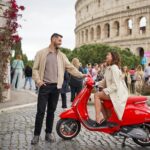
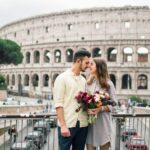
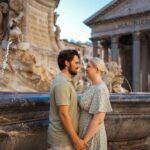
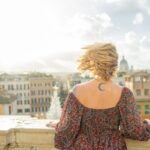
St. Peter’s Square: columns, guards, fountains, and the basilica facade
You spend about 20 minutes here, working a variety of shots—the porticos, the fountains, sculptures, Swiss guards, and the basilica facade. This is a classic Rome challenge: huge architecture plus changing crowds plus tricky light.
What I like about doing it with guidance is that you don’t just aim for the postcard view. You learn how to frame repeated shapes (columns), how to use symmetry without making your image stiff, and how to include people so the scene feels alive instead of empty.
Dress code warning: St. Peter’s area is a place of worship. Cover your knees and shoulders. If you don’t, entry can be refused.
Castel Sant’Angelo and the Bridge of Angels: fortress angles and river viewpoints
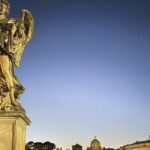
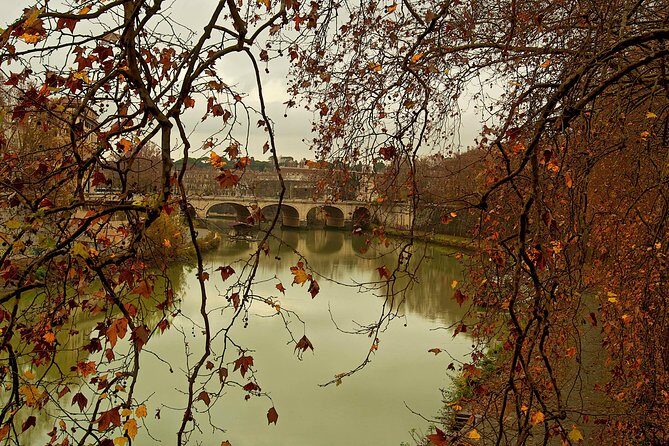
You get around 15 minutes for Castel Sant’Angelo plus shots of the bridge of angels. Then you also look for views from the river shores.
This is a great spot to practice layering. You’ve got a fortress, a bridge, and a background city feel. You’ll likely experiment with tighter framing versus wider context shots—because the best photos here aren’t always the biggest monuments. Sometimes it’s the shape and rhythm that make the image work.
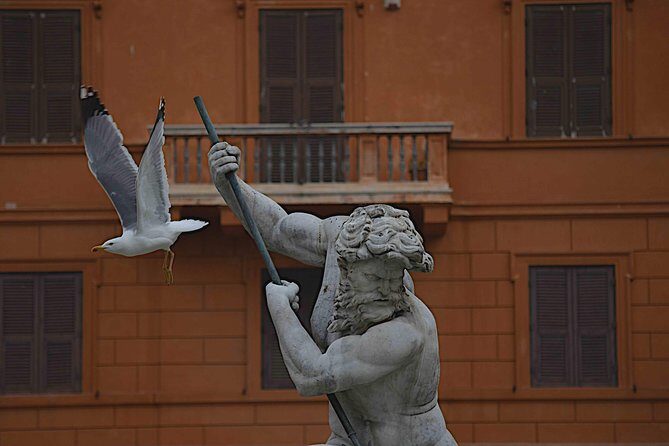
Piazza Navona: fountains and people you can frame
At about 20 minutes, Piazza Navona becomes your practice ground for lively street photography. The fountains and churches are the obvious targets, but the real opportunity is people—pose, walk through frame, gather, react.
With Giulio’s coaching, you can treat it like a mini photo workshop: take one safe wide shot, then shift to details and human moments. If you only photograph the buildings, you’ll miss the social vibe. If you only chase people, you’ll forget the architecture that makes the scene feel Roman.
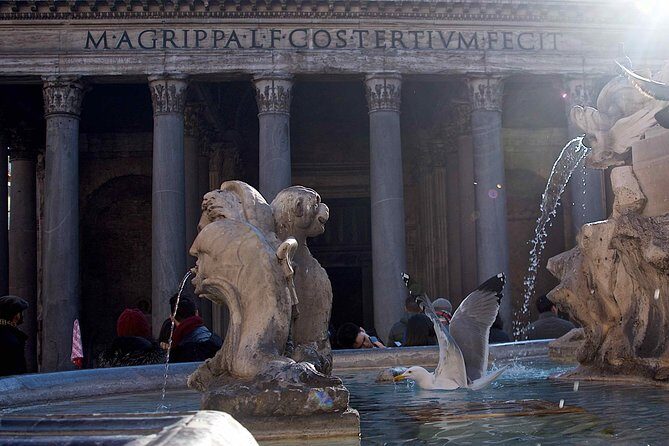
The Pantheon square: outside angles, people, and that perfect facade
Another 20 minutes goes to the Pantheon area—square views, fountain, people, and the Pantheon from outside. This is ideal for composition lessons because the facade rewards correct framing and straight lines.
This is also a spot where your timing matters. You can capture empty-feeling grandeur, or you can shoot with people so the scale makes sense. Either approach can look great. The trick is choosing intentionally, not accidentally.
Chiesa di Sant’Ignazio di Loyola: baroque details that beg for close focus
You get about 15 minutes for the church, focusing on sculptures, frescos, and baroque art.
This is where smartphone shooters can shine. You can zoom or move closer and hunt for texture, contrast, and small narrative details. You’re practicing the move from “big monument” photography to “surface story” photography.
And yes—dress code again. Cover up, or you may get turned away.
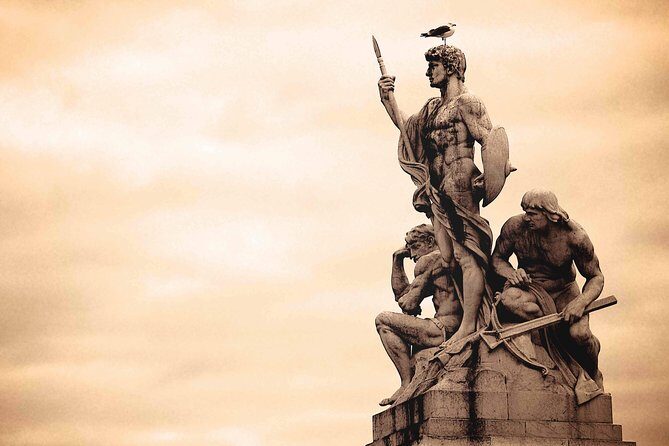
Complex of the Victorian Ala Brasini: monument, sculptures, skyline views
Around 20 minutes are set aside for the Complex of the Victorian Ala Brasini. You’ll shoot the monument, different sculptures, and get Rome skyline views.
Even if your first instinct is to chase the tallest or widest view, this stop is also about experimenting. Try a few compositions: high-angle city view, medium shot with sculptures, and a tighter detail that still hints at the setting.
Piazza del Campidoglio: Michelangelo’s square and the Marco Aurelio statue
You spend about 20 minutes here. Think Michelangelo’s square layout, the Marco Aurelio statue, building facades, and that view over Rome.
This is a geometry-driven place. If you like architecture photography, you’ll enjoy practicing how to align your lines. It’s also an excellent test of how you balance grandeur and human scale. Include the buildings for context, then decide if you want the people to be part of the story or just movement around your main subject.
Mercati di Traiano – Museo dei Fori Imperiali: Trajan’s markets, column, and ruins framing
About 20 minutes here covers ancient ruins, the Roman forums area, Trajan markets, Trajan’s column, and wide views.
Ruins are a great way to learn framing because they naturally create depth and repetition. You’ll likely work on foreground-to-background composition, where the stone texture leads the eye toward the bigger structure.
This is also the part of the route where your feet might start negotiating with your brain. The upside: the subject matter stays strong even when you’re tired, and the ruins are photogenic from multiple angles.
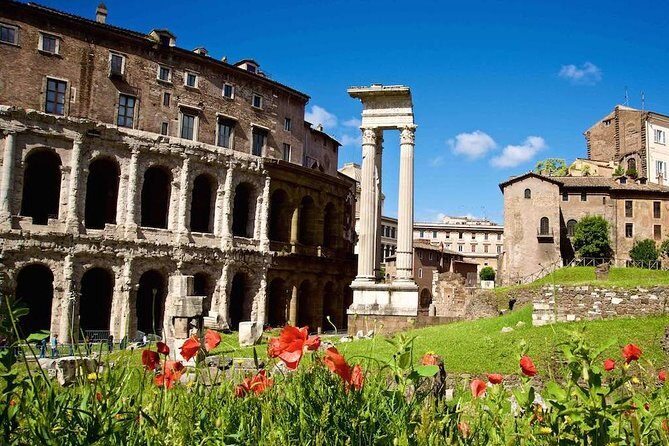
Teatro di Marcello: ancient theater and fast shooting practice
You get about 10 minutes for Teatro di Marcello. Short stop, big payoff.
With limited time, this is where the tour’s coaching shows. You learn how to pick a strong angle quickly: one that shows the curve, one that shows the scale, and one that includes enough context to read as ancient Rome, not just old stone.
Antico Quartiere Ebraico: corners, small alleys, and typical shops
About 20 minutes is set aside for the Jewish Quarter area. The focus is on characteristic corners, small alleys, and typical shops.
This stop slows the pace of your subject matter. Instead of grand architecture, you’re looking for texture, rhythm, signage, doorways, and the little visual cues that make a neighborhood feel lived-in.
It’s also a good time to practice storytelling photos: a street scene where you can almost feel the place, not just prove you visited.
Campo de’ Fiori: market energy and alley wandering
Another 20 minutes brings you to Campo de’ Fiori. You’ll shoot a typical Roman market and nearby alleys.
This is where people become your “moving foreground.” You’ll want to combine a couple of shot types: one or two wider scenes to show the market setup, plus tighter frames that show activity—hands, food displays, faces at the edge of your frame.
If you take only one approach, your photos can feel repetitive. Mixing wide and detail creates variety, and variety is what makes an album enjoyable later.
The little things to bring (so you’re not fighting your setup)
Dress code is the big one. For places of worship and selected museums, no shorts or sleeveless tops usually allowed. Knees and shoulders must be covered for both men and women. You risk refused entry if you ignore this.
Then bring practical photo gear:
- Your smartphone (charged) is enough
- Comfortable walking shoes (you’ll move a lot across Rome)
- A way to keep cool and hydrated, because Rome weather can change fast
If you don’t have a camera at all, Giulio offers Nikon gear plus tripods for 50 euros per kit, payable in cash. That’s a real option if you’re traveling light, but plan for the cost and the cash.
Group size, attention, and who this tour suits best
This tour caps at maximum 4 travelers. That small number is a big deal. It means Giulio can adjust coaching for different people in the same group, rather than blasting the same instructions to everyone and hoping it sticks.
It’s also flexible for couples. Non-photographing spouses, partners, and children can be accommodated. So if your travel partner isn’t into photography, they won’t be stuck waiting off to the side for an hour.
This is a strong fit for:
- Smartphone photographers who want to stop guessing with settings
- Solo travelers who like guidance and a clear route
- Couples who want one shared activity with different interests
- People who enjoy history but don’t want a straight lecture
It might not be ideal if you want a relaxed sit-down tour with long museum time. This is shoot-and-walk style, with quick photo lessons at major stops.
A quick note on museum tickets you might want to add later
The tour itself lists admission for most stops as free, and includes an admission ticket for St. Peter’s Square. If you want to add specific museum or archaeological visits during the tour—like the Roman Forums and Colosseum or the Borghese Museum—you’d need to book separately and availability can’t be guaranteed without checking.
So treat this tour as your route + photo workshop first. If you want extra inside time, plan it as an add-on.
Should you book Rome by Day, Beauty and History Unique Photo Tour and Workshop?
Book it if you want Rome photos that look made, not found. The combination of smartphone-friendly instruction, hands-on coaching, and a very small group makes it a smart value for anyone serious about photography—even if your skills are beginner level.
Skip it (or reconsider) if you dread walking, hate dress-code requirements, or you’re only interested in a casual sightseeing stroll. The stops are short and the pace is active, and entry rules at places of worship are non-negotiable.
If you match the vibe—curious, willing to try, and ready to learn while you shoot—this tour is one of the quickest ways to turn your time in Rome into an album you’ll actually want to show people.
FAQ
Do I need a DSLR camera?
No. The tour is designed for iPhone and Android smartphone photographers. If you have no camera, Giulio can rent Nikon gear and tripods for 50 euros per kit, payable in cash.
How long is the tour?
It runs about 4 hours.
How many people are in the group?
The maximum group size is 4 travelers.
Where does the tour start and end?
It starts at St. Angelo Bridge (Ponte Sant’Angelo) and ends at Piazza del Colosseo near the subway stop on Line A.
Is there an admission ticket included?
Admission is listed as free for most stops, and an admission ticket is included for St. Peter’s Square. Other optional museum or archaeological additions would require booking separately.
What’s the dress code?
For places of worship and selected museums, you must cover knees and shoulders. Shorts and sleeveless tops are usually not allowed, and you may be refused entry if you do not comply.