REVIEW · COLOSSEUM TOURS
Colosseum Entry with digital audioguide and arena option
Book on GetYourGuide →Operated by Inside Out Italy · Bookable on GetYourGuide
One ticket. Three big Roman stops.
This Colosseum experience is built for self-paced exploring with an app-based audioguide, so you can move at your speed while still getting the stories behind gladiators, animal fights, mock sea battles, executions, and the arena engineering. I love the scheduled entry flow that helps you start on time, and I love that the visit ties the Colosseum to the Roman Forum and Palatine Hill so the whole “why it mattered” picture clicks.
The main drawback is practical: the experience leans on your phone and headphones. If your battery gets low, or if the app’s GPS doesn’t trigger perfectly, you’ll need to pause and manually select content, and earphones are not included.
In This Review
- Key takeaways before you go
- Meeting at the Arch of Constantine: the part you don’t want to mess up
- Entering the Colosseum: what your ticket actually gets you
- Using the digital audioguide app inside the amphitheater
- Why the Colosseum hits harder when you connect it to the Forum
- Palatine Hill and the SUPER Sites: where Rome turns vertical
- The arena floor option: worth it or just a nice-to-have?
- Price and value: why this costs $41 (and what you’re paying for)
- Timing it right for a 2.5-hour visit
- What to bring (and what to avoid) so you don’t lose entry time
- Should you book this Colosseum audio experience?
- FAQ
- What’s the meeting point for this Colosseum entry?
- Do I need to bring ID?
- Is the arena floor included in the ticket price?
- Are earphones included?
- What languages does the audioguide offer?
- What are the seasonal closing times?
- Can I cancel for a refund?
Key takeaways before you go
- Time-based entry helps you get in smoothly at your slot rather than wandering in the crowd.
- Phone audioguide tells the Colosseum story while you walk, but you should plan for battery life.
- Roman Forum + Palatine Hill access keeps you from treating the Colosseum like a one-stop photo stop.
- Optional arena floor can be worth it if you really want that “down on the arena” angle.
- A set meeting point at the Arch of Constantine makes it easier to find your way fast.
Meeting at the Arch of Constantine: the part you don’t want to mess up

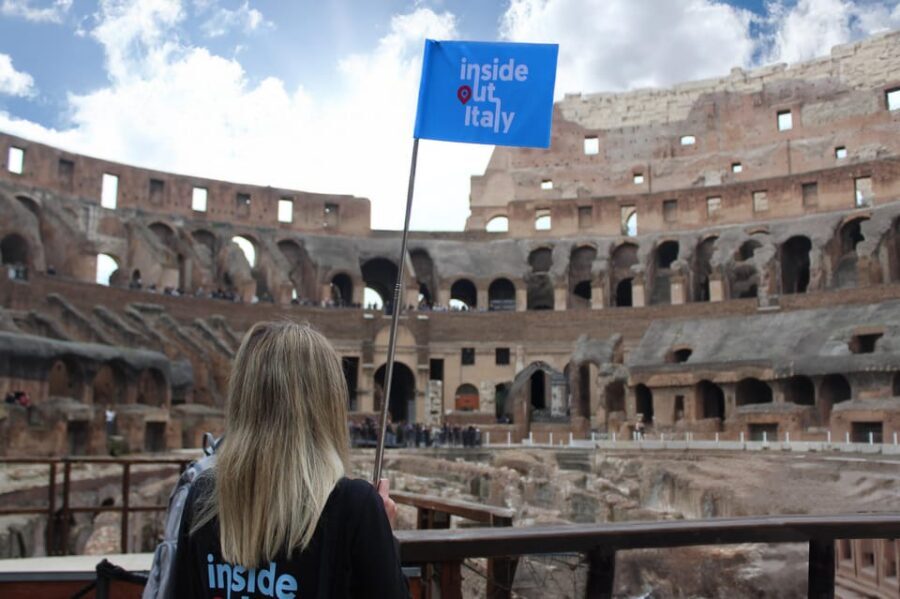
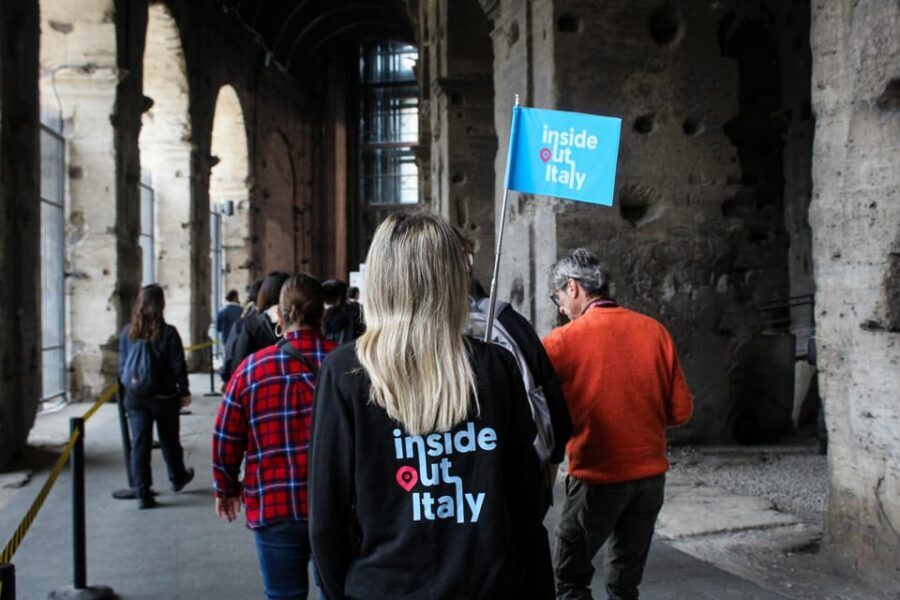
Your host meets you between the Arch of Constantine and the Colosseum, on the side facing the Colosseum. They’ll be holding a blue flag that reads Inside Out Italy, so you’re not hunting for a tiny sign in a busy plaza.
Plan to arrive 30 minutes before your start time. Late arrival can mean you’re refused entry and you lose your tour cost, so give yourself extra walking time—Roma has a way of making “nearby” feel longer than it sounds on a map.
If you’re relying on mobile directions, you’re in good company. Recent visitors have noted WhatsApp-style instructions from hosts such as Joseph, and communications described with hosts like Martina and Tawhid—so it’s smart to have your phone charged before you even step outside.
You can also read our reviews of more tours and experiences in Rome.



Entering the Colosseum: what your ticket actually gets you
The core value here is simple: a Colosseum entry ticket that’s timed and paired with site access for a smooth start. You’ll enter the Colosseum complex and get a chance to stand in the center area early enough to get your bearings, not just bounce from one photo spot to the next.
A key detail: you can choose the arena floor option, and the arena access is only included if you select that option. If you’re picturing underground areas or basement-style spaces, don’t assume they’re included—some people expected more and found it wasn’t part of what they received.
Also, this is not a “rollercoaster tour with a guide shouting facts.” You’ll have host assistance to get you in and oriented, then you’ll go self-guided with the app. That’s great if you like quiet focus, but it’s less great if you want a live guide to answer questions on the spot.
Using the digital audioguide app inside the amphitheater

This is where the experience becomes more than a ticket. Before you go, download your audioguide to your phone so you’re not stuck buffering at the entrance while everyone else is moving.
Once you arrive, you’ll plug your headphones into your smartphone and follow the app. The audio is designed to build a story as you move through the Colosseum complex, with themes like gladiators, wild animal fights, mock sea battles, and executions—plus the engineering required to create a massive amphitheater in the Roman world.
One practical note: the app isn’t magic GPS that always triggers on the exact spot you want. Some users reported that GPS didn’t consistently activate the right sections, and others pointed out that the guide isn’t truly step-by-step. My advice: treat the app like a smart companion, not a strict itinerary, and be ready to manually choose sections if the map logic hesitates.
Battery is the other big factor. If you’re using mobile data off and relying on your screen brightness plus audio, your phone can drain faster than you expect—so bring a power bank if you have one. Also, earphones are not provided, so pack your own (or bring wired headphones you trust).
Why the Colosseum hits harder when you connect it to the Forum

A common mistake in Rome is turning the Colosseum into a standalone stop—big building, great photos, then back to the next landmark. Here, you keep the momentum by continuing into the Roman Forum right after the amphitheater experience.
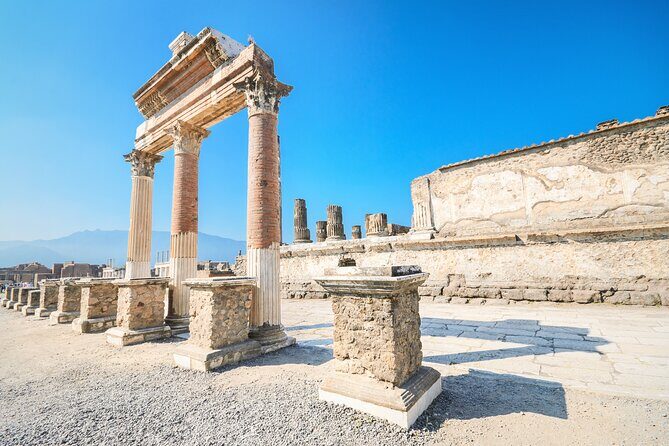
In the Forum, the audio narration shifts from entertainment to civic power. You’ll learn about it as the beating heart of Ancient Rome—once packed with temples, marketplaces, and serious civic buildings. That context matters because the Colosseum wasn’t just a spectacle factory; it was part of how imperial Rome projected authority.
You don’t need to rush through the Forum if you want it to make sense. The best use of your time is to slow down at key sight lines and let the app connect what you’re seeing to what it stood for. If you’re someone who likes to read stone details (and you don’t mind walking), this part will feel especially satisfying.
Palatine Hill and the SUPER Sites: where Rome turns vertical

After the Forum, you head to Palatine Hill. It’s one of the most important viewpoints in the whole city, and it’s literally built into the story: Palatine is considered the highest of the seven hills Rome sits on, so you feel the scale even if you don’t memorize every fact.
This stop works best if you’re comfortable with “understanding by place.” The audio frames Palatine as the center of Rome’s earlier history—where power, residence, and legend overlap. If you want the view, you’ll usually get it by naturally drifting between viewpoints as you listen.
You’ll also have access to the program’s SUPER Sites spread through the Roman Forum and Palatine Hill area. The exact list you should expect includes:
- Santa Maria Antiqua
- Domus Tiberiana (exhibition rooms)
- Palatine Museum
- Aula Isiaca and Loggia Mattei
- House of Augustus (closed on Monday)
- House of Livia (closed on Tuesday)
Here’s how to think about closures without stressing: the Houses of Augustus and Livia may be closed depending on the day. If one is closed, you’ll still have plenty of nearby sites to keep your time full, but you should mentally plan for that possibility.



The arena floor option: worth it or just a nice-to-have?
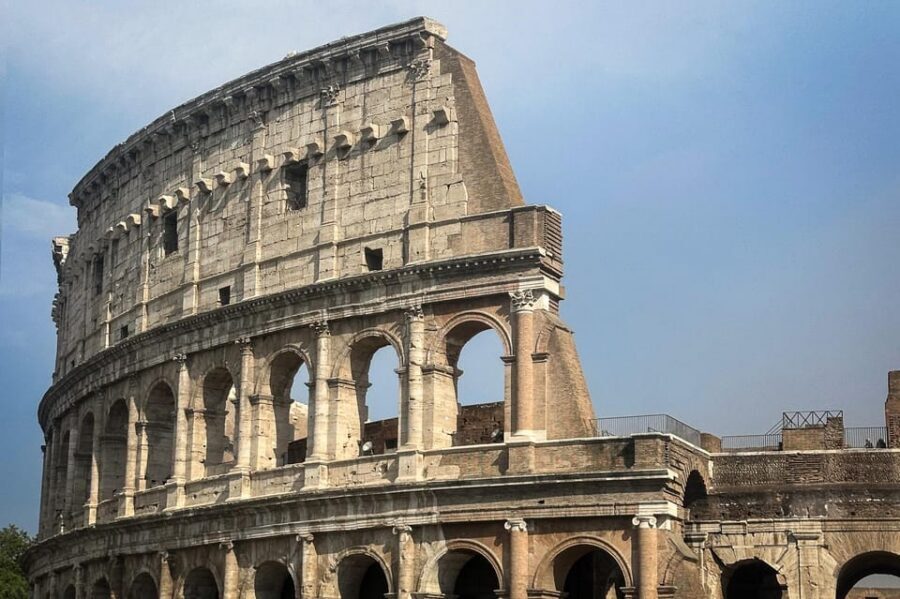
If you’re choosing between standard entry and the arena floor option, ask yourself what you want from the Colosseum.
Arena access is most valuable if you want to understand the performance space from the inside—where gladiators and animals would have started their “show” and where the crowd energy would have hit. It’s also a good pick if you’re the type who gets more out of scale and sight lines than from reading descriptions alone.
That said, the arena add-on doesn’t automatically mean every extra area people imagine. Some visitors have felt the arena option wasn’t as much value as they hoped, especially if what they wanted was more than the on-floor access. If you love photos and you like to stand where history happened, it’s a strong choice; if you mostly want the story and the Forum/Palatine context, standard entry may be enough.
Price and value: why this costs $41 (and what you’re paying for)

The headline price is $41 per person, and it’s helpful to break down what’s really included.
Inside your total, you’re covering the archaeological entry fee and booking services. For adults, the stated site entrance portion is €18 for standard entry, or €24 for the Arena option, plus a €2 booking fee. The rest of what you pay is for the actual experience services: meeting point support, office support, and the app-based audioguide.
So is it “good value”? In my book, yes—especially compared to the chaos of buying tickets on your own in the heat of the moment. You’re buying organization: a timed slot, a host who helps you find the right meeting point, and an app that turns three major areas into a connected route. If your phone dies halfway through, that value drops fast, which is why your battery plan is part of the cost-benefit equation.
If you’re traveling as a small group or a couple, the self-guided format also tends to feel fair. You can pause when you want without waiting for someone else to catch up to a live guide’s pace.
Timing it right for a 2.5-hour visit
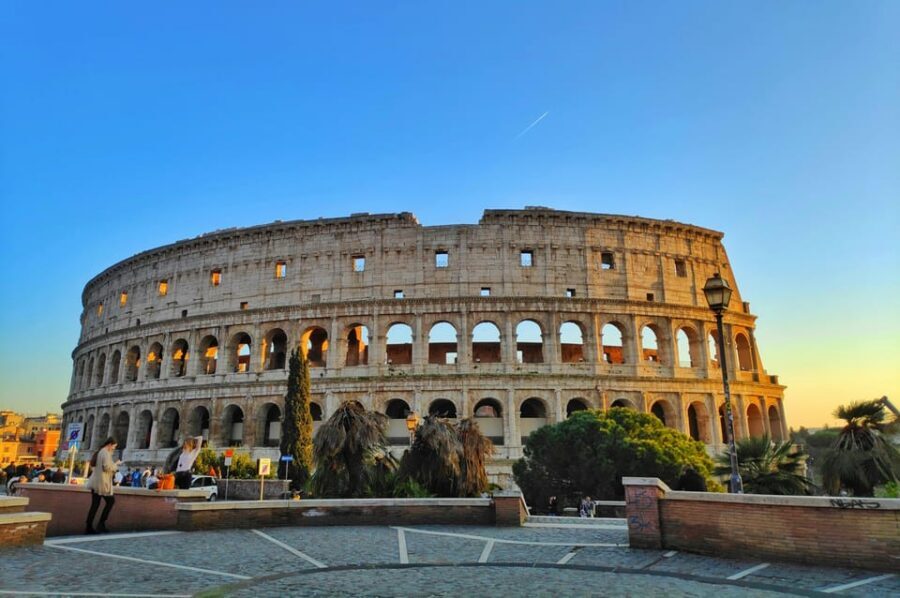
You’ll have about 2.5 hours for the whole experience. That’s long enough to see the Colosseum, move into the Roman Forum, and reach Palatine Hill—but not long enough to treat everything like a slow museum.
Seasonal closing times matter. The sites close at different hours depending on daylight:
- March 30 to September 30: close 7:15 PM, last entry 6:15 PM
- October 1 to October 25: close 6:30 PM, last entry 5:30 PM
- October 26 to February 28: close 4:30 PM, last entry 3:30 PM
When you plan your arrival, aim to be at the meeting point early and start moving. Early slots can help you deal with crowds, and they give you breathing room for the audio to land without rushing.
Also remember: once you choose to move on, there isn’t a “second chance” entry pattern. Build your route mentally: Colosseum first, then Forum, then Palatine.
What to bring (and what to avoid) so you don’t lose entry time

You’ll need passport or ID card, and ID is mandatory. Security can refuse entrance if you show up without the right ID, and no entrance is guaranteed in that case.
You also must use the exact full names provided at booking. If there’s a mismatch, security may deny access and no refund is provided. Name changes are not permitted, so double-check spelling early.
What to bring:
- Passport or ID
- Your own earphones
- A charged phone (and ideally a power bank)
- Headphones that work well with your phone
What not to bring:
- Luggage or large bags
And since this visit is not suitable for people with mobility impairments or wheelchair users, plan on navigating uneven stone and stair-heavy areas.
Should you book this Colosseum audio experience?
Book it if you want a smooth, scheduled entry and a route that links the Colosseum to the Roman Forum and Palatine Hill, with stories delivered through a phone app. It’s a great fit if you like moving at your own pace, and if you’re comfortable managing the app yourself instead of relying on a live guide.
Skip it—or at least think twice—if you’re nervous about phone battery, you don’t want to use headphones, or you were hoping for lots of staff-led narration and Q&A. This experience shines when you’re ready to guide yourself with the app and spend your energy on the sites, not on logistics.
FAQ
What’s the meeting point for this Colosseum entry?
Meet at the Arch of Constantine between the arch and the Colosseum, on the side facing the Colosseum. The host will be holding a blue flag that reads Inside Out Italy.
Do I need to bring ID?
Yes. Passport or an ID card is mandatory, and entry may not be guaranteed without it.
Is the arena floor included in the ticket price?
Arena floor access is included only if you select the arena option.
Are earphones included?
No. Earphones are not included, so you should bring your own.
What languages does the audioguide offer?
The app-based audioguide is available in English, Italian, Spanish, French, German, Chinese, Portuguese, and Polish.
What are the seasonal closing times?
Closing and last entry times vary by season: March 30 to Sept 30 close 7:15 PM (last entry 6:15 PM); Oct 1 to Oct 25 close 6:30 PM (last entry 5:30 PM); Oct 26 to Feb 28 close 4:30 PM (last entry 3:30 PM).
Can I cancel for a refund?
Yes, you can cancel up to 4 days in advance for a full refund.