REVIEW · COOKING CLASSES
Rome Small Group Pasta Making Class with Wine and Italian Chef
Book on Viator →Operated by Insideat · Bookable on Viator
Fresh pasta starts with a spritz. This small-group pasta class in Prati keeps things practical: you mix, knead, shape, and eat what you make, all close to the Vatican Museums. I like that every person works at their own station, not just watches.
I also like the flow: aperitivo, hands-on fettuccine, then a simple sauce and a sit-down meal in an air-conditioned restaurant or out on the terrace. You get the fun of cooking without the messy cleanup afterward.
One drawback to consider: it’s only about 2 hours, so it won’t replace a full, week-long cooking course. If you want deep troubleshooting or lots of repeats, you may want the private upgrade.
In This Review
- Key highlights worth your time
- Pasta Near the Vatican: Prati’s Smart Starting Point
- The 2-Hour Rhythm: From Dough to Fresh Fettuccine
- Aperitivo First: Spritz, Chips, and a Roman-Style Welcome
- Your Meal: Tomato-Basil Fettuccine and Drink Included
- Small Group Setup: Why Max 14 Changes Everything
- Chef Energy and Teaching Style (Including Daniele and Carlo)
- Private Upgrade: When You Want One-to-One Coaching
- Dietary Needs and Alcohol Rules That Actually Affect Your Plan
- Value Check: Is $64.12 Worth It?
- What to Bring (And What to Do) for Better Results
- Where It Fits in Your Rome Day
- Should You Book This Rome Pasta Class?
- FAQ
- How long is the Rome pasta making class?
- Where does the class meet in Rome?
- Is the class offered in English?
- What pasta will I learn to make?
- What food and drinks are included?
- Is the restaurant air-conditioned?
- Is there a gluten-free option?
- Can vegetarians and lactose-intolerant guests join?
- Is alcohol included for everyone?
Key highlights worth your time
- Prati location by the Vatican makes it an easy match with a museum day or an early evening stroll
- Your own workstation means you actually make the dough and shape the noodles
- Fresh fettuccine from scratch with a Roman-style approach you can recreate at home
- Aperitivo + a second drink option (wine/beer/soft drink) keeps the vibe relaxed while you cook
- Small class size (max 14) helps the chef keep an eye on your technique
- Experienced Italian chefs like Daniele, Carlo, or Canelo bring teaching energy and real kitchen talk
Pasta Near the Vatican: Prati’s Smart Starting Point
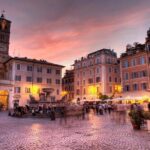
This class lands in Rome’s Prati neighborhood, near the Vatican Museums. That matters because you’re not spending your time commuting across town just to take a cooking break. The meeting point is at PummaRe’Via Andrea Doria, 41m, 00192 Roma RM, and the experience ends back there.
Expect the timing to feel like a planned evening stop rather than a random activity. It runs about 2 hours, so you can pair it with a museum visit, dinner nearby, or even a late-afternoon walk through the area.
And since the restaurant is air-conditioned, you’re not stuck cooking in full summer heat or in a sweaty shoulder-season rush.
You can also read our reviews of more cooking classes in Rome
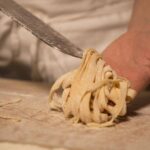
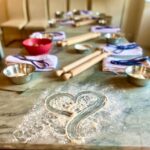
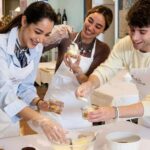
The 2-Hour Rhythm: From Dough to Fresh Fettuccine
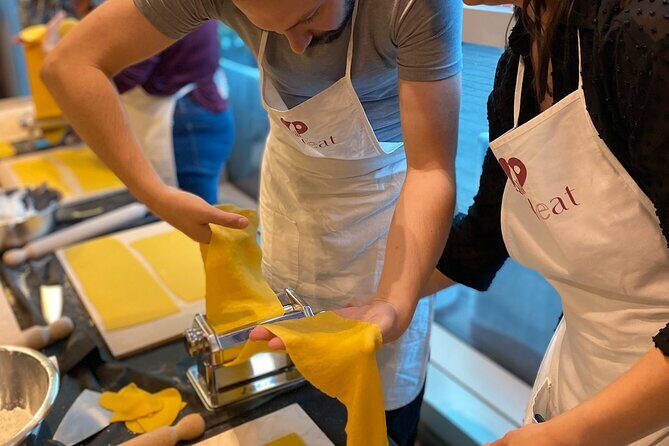
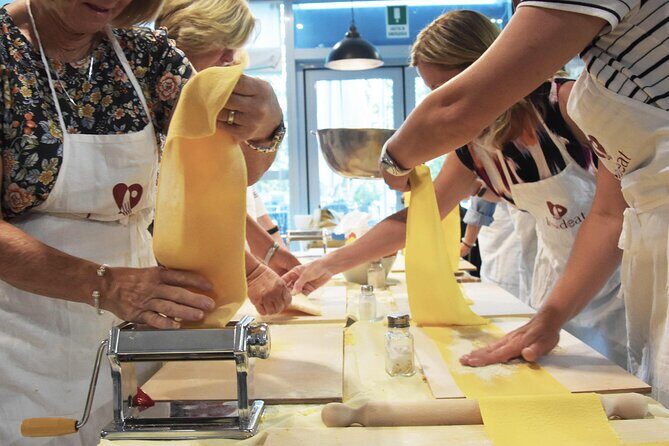
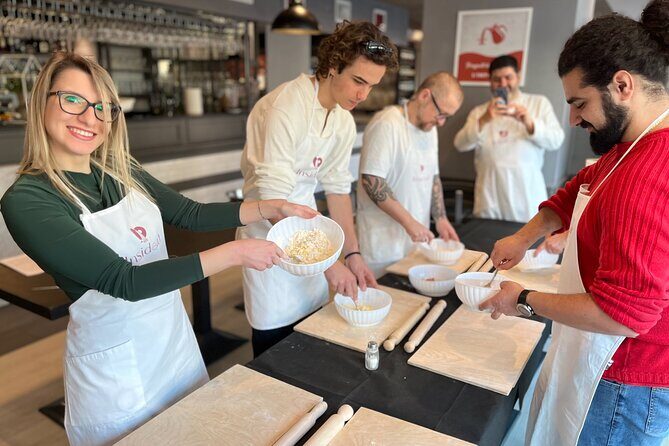
The core of this experience is the hands-on lesson to make fresh fettuccine from scratch. You’ll start at your station with basic ingredients, then move through the steps that actually teach the technique: mixing, kneading, and shaping the dough by hand.
This is the part I think is most valuable for you, especially if you don’t cook much at home. You don’t need fancy gear to get started. The lesson focuses on what matters: texture, consistency, and how the dough behaves as you work it.
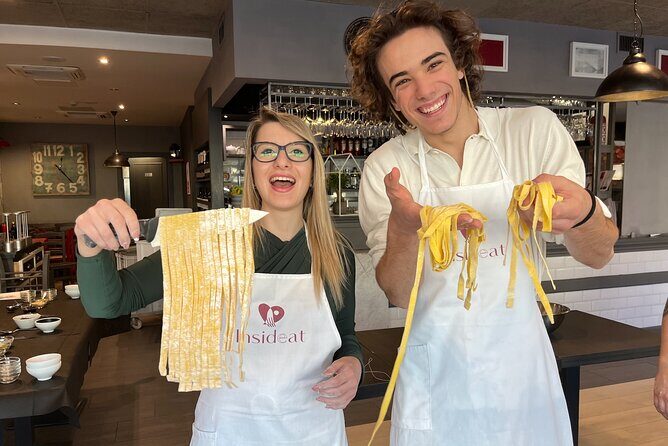
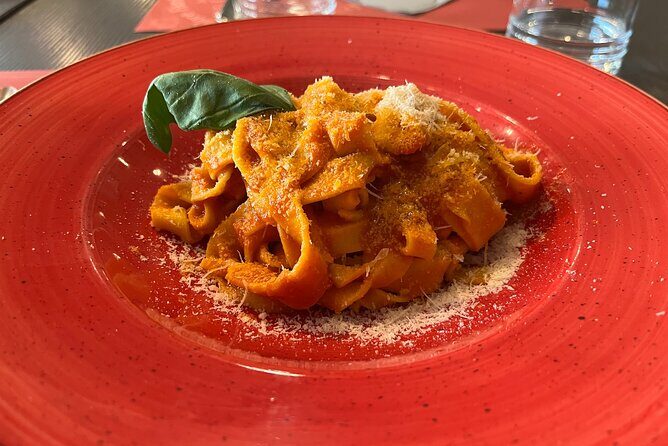
Once your fettuccine is ready, the chef helps connect your work to the final result. The pasta is finished with a freshly made sauce so you taste what the technique produces, not just what it looks like.
A small but important detail: expect your first attempt to be a little imperfect. One person noted their noodles came out slightly wider than intended. That’s normal—and part of the learning curve when you’re doing it by hand.
Aperitivo First: Spritz, Chips, and a Roman-Style Welcome
Before the dough ever touches your hands, the experience kicks off with a classic Roman-feeling welcome. You’ll get a Spritz paired with homemade chips dusted with Pecorino Romano and black pepper.
This is a clever setup. It gives you a break from walking and sightseeing, and it puts you in a food mindset before the cooking starts. Also, the snack is simple and flavorful, so it doesn’t distract from the rest of the class.
Then the meal part continues the rhythm: you’ll eat what you made, and you’ll have drink included at the table.
Your Meal: Tomato-Basil Fettuccine and Drink Included
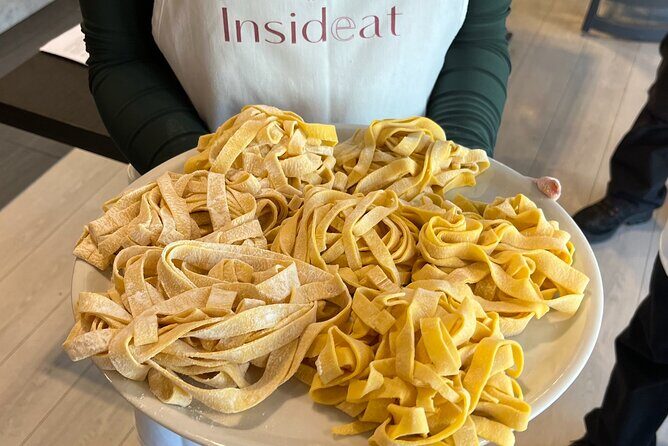
The sample menu is straightforward and very Italian in spirit:
- Freshly made fettuccine with fresh tomato and basil sauce
- A starter of handmade chips and a typical Roman cheese welcome
- A welcome drink (the Italian Welcome Drink / spritz is part of it)
- And a meal beverage (wine, beer, or soft drink) plus water
You’ll also get a second drink of your choice. So this isn’t just a cooking class where you taste a tiny portion and go. It’s designed as a full little meal.
One practical thing: you prepare the pasta, then you eat it—no dishes to wash. That sounds minor until you’re the one who has to clean up after group cooking in a hot kitchen. Here, the payoff is the food and the lesson, not the cleanup.
Small Group Setup: Why Max 14 Changes Everything
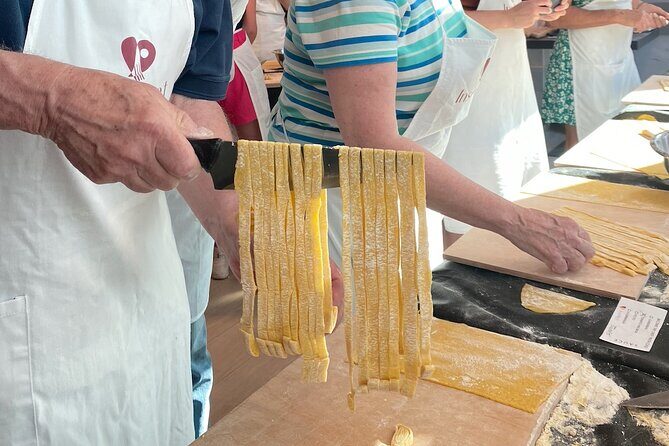
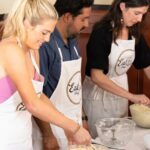
The group size is capped at 14 people, which makes the class feel personal. Instead of one chef lecturing over a crowd, you get hands-on help at your station.
Each person gets their own workstation and tools. That’s the difference between a “watch-and-try” demo and actual skill-building. It also means you’re not stuck waiting your turn while your dough sits around losing momentum.
If you like learning by doing, this format fits you. And if you’re traveling with people who learn differently (some want to talk, some want to move), the social table time helps balance both.
You can also read our reviews of more wine tours in Rome
Chef Energy and Teaching Style (Including Daniele and Carlo)
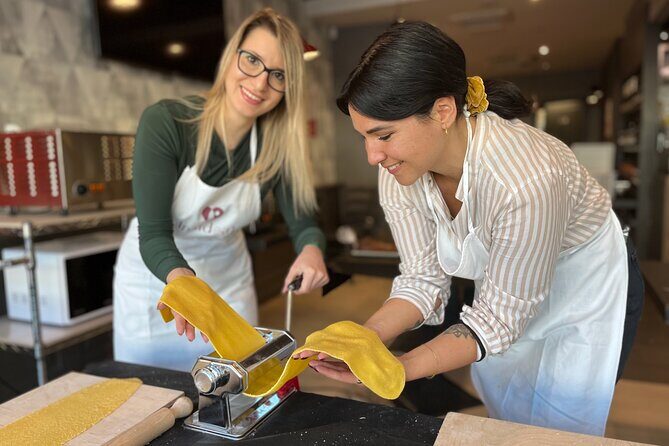
The chefs running these classes bring personality. You might meet someone like Daniele, or hear the guiding energy of Carlo or Canelo—and the common thread is teaching with encouragement.
What I like about this style is that it doesn’t treat pasta-making like a sacred ritual you can only perform perfectly. It treats it like a skill you can learn quickly, with tips and small corrections while you’re still working.
That matters because the biggest barrier for many people is fear of doing it wrong. When the instructor’s approach is friendly and a bit funny, you stay relaxed. You cook better when you’re not stressed.
Private Upgrade: When You Want One-to-One Coaching
If you upgrade to a private class, you get a one-to-one lesson from your chef. That’s a great option if:
- you’re picky about technique,
- you want a gluten-free plan explained in more detail,
- or you simply want more time repeating steps until it clicks.
Since the standard class is about one hour hands-on inside a total 2-hour experience, the private route gives you more repetition and more direct attention. It’s also a good choice if you’re coming for the skill, not just the fun.
Dietary Needs and Alcohol Rules That Actually Affect Your Plan
This class is designed to accommodate different eating needs. Vegetarian, pescatarian, and lactose-intolerant guests are welcomed, and gluten-free options are available on request—just make sure you tell the provider in advance.
Also note the alcohol rule: alcohol beverages are only allowed for 18+. If anyone in your group is under 18, you’ll still have non-alcohol drink options since soft drinks are part of the included meal beverage set.
If you’re sensitive about dietary labels, I’d treat your “in advance” message as essential. The data doesn’t spell out how the kitchen prevents cross-contact, so the safest move is to communicate early and clearly.
Value Check: Is $64.12 Worth It?
At $64.12 per person, this isn’t a bargain class, but it also isn’t overpriced for what you get. You’re paying for:
- small-group instruction (max 14),
- hands-on fresh pasta making,
- ingredients and an actual meal you eat,
- welcome aperitivo,
- one meal drink + water (wine/beer/soft drink),
- aprons and utensils,
- and an exclusive cookbook with recipes to make at home.
The hidden value is the skill transfer. If you’ll actually cook pasta at home again, this price starts to look like a short cooking workshop, not just dinner. The cookbook helps you repeat the steps without guessing.
Timing also matters. This activity is commonly booked about 40 days in advance on average. If you want specific dates around Vatican Museums peak days, I’d plan early so you don’t end up with limited time slots.
What to Bring (And What to Do) for Better Results
The experience provides aprons and utensils, so you don’t need to pack cooking tools. But you can make the class smoother with a few small choices.
Wear something comfortable you don’t mind getting a little flour on. Fresh dough is part of the deal. Tie back long hair if you have it.
When the chef explains shaping and texture, ask questions as you go. The lesson is hands-on for a reason—waiting until the end is when momentum is gone.
Finally, take the cookbook seriously. It’s included for a reason: you’ll want a simple reference after you’re back home and your kitchen setup is different from Rome.
Where It Fits in Your Rome Day
Because it’s near the Vatican, this works well when you want one “real Roman” food moment without adding travel friction. If you’re doing a museum day, plan this as:
- an early evening reset after you’ve walked a lot, or
- a meal-centered alternative to a restaurant dinner where you want something interactive.
It also suits solo travelers who want a structured activity with conversation built in. The class includes a social table moment where you can talk with your chef about cuisine and local tips for exploring Rome.
Should You Book This Rome Pasta Class?
Book it if you want a true hands-on pasta lesson you can repeat later. It’s ideal for couples, friend groups, and anyone who likes learning by doing with a chef who explains the technique.
Skip or consider the private upgrade if you’re the type who needs lots of time to nail details, or if you’re bringing dietary requirements and want extra guidance. Also, if you’re only in Rome for a very tight window, remember this is about 2 hours, so it won’t satisfy a full-day cooking fantasy.
For most people, though, this is a strong value: fresh pasta, real meal, included drinks, a cookbook to take home, and a location that saves you time. If you’re craving an authentic Rome food experience that isn’t a long ordeal, this is a smart pick.
FAQ
How long is the Rome pasta making class?
It runs for about 2 hours approximately, with 1 hour of hands-on pasta making.
Where does the class meet in Rome?
The meeting point is PummaRe’Via Andrea Doria, 41m, 00192 Roma RM, Italy, and it ends back at the meeting point.
Is the class offered in English?
Yes, the class is offered in English.
What pasta will I learn to make?
You’ll learn how to make fresh fettuccine from scratch.
What food and drinks are included?
You’ll get a welcome aperitif, the pasta you prepare and eat, and 1 drink with the meal plus water. You also have a second drink of your choice included.
Is the restaurant air-conditioned?
Yes, the restaurant is air-conditioned.
Is there a gluten-free option?
Yes, gluten-free options are available on request. Inform the provider in advance.
Can vegetarians and lactose-intolerant guests join?
Yes. The experience is suitable for vegetarians, pescatarians, and lactose-intolerant guests.
Is alcohol included for everyone?
Alcohol beverages are included in the drink choices, but alcohol is only allowed for 18+. Children must be accompanied by an adult.