REVIEW · OSTIA ANTICA TOURS
Daily life in Ostia Antica (private tour)
Book on Viator →Operated by Visit Ostia Antica · Bookable on Viator
Ancient streets with real atmosphere. This private Ostia Antica tour turns scattered ruins into a clear picture of daily life in ancient Rome, with a guide who helps you read the site (not just walk past it). I especially like how the tour focuses on the port-city rhythm—public baths, shops, theater spaces—and how the guide’s explanations bring specific areas to life, including mosaics you can actually interpret. One thing to think about: it’s an outdoor archaeological site, so if the weather turns rough, your plans may get adjusted.
You get about 3 hours at Parco Archeologico di Ostia Antica, and the pacing is flexible enough to suit the ages and interests in your group. It’s also a true private tour, so you can ask questions and slow down when something catches your eye—like Neptune’s bath area or the marketplace surroundings.
In This Review
- Key Points at a Glance
- Why Ostia Antica Feels Like a Real Port City
- Entering With a Guide: What Changes When Someone Explains the Ruins
- Stop-by-Stop at Parco Archeologico di Ostia Antica (3 Hours)
- Necropolis: Understanding the City Beyond Its Streets
- Terme di Nettuno: Baths Where Daily Life Actually Happened
- The Theater: Leisure and Public Gathering
- Piazzale delle Corporazioni: Work, Shipping, and Guild Identity
- Terme del Foro: Another Bath Complex, Another City Function
- Capitolium: Civic and Religious Power in Stone
- Tabernae: Shops That Show How People Lived
- Mosaics: How to Look Without Getting Lost
- Pricing and Value for a Private 3-Hour Tour
- Getting There and Making the Walk Comfortable
- Who Should Book This Ostia Antica Private Tour
- Should You Book This Private Ostia Antica Tour
- FAQ
- How long is the Ostia Antica private tour?
- Is admission included?
- Is this a private tour or a group tour?
- What language is the tour offered in?
- Where does the tour start and end?
- Is it easy to reach using public transportation?
- Can service animals join the tour?
- Do I need good weather for the tour to run?
- What if the minimum number of travelers is not met?
- How far in advance should I book?
- What’s your cancellation cutoff?
Key Points at a Glance
- Private group only: your group tours together, with the guide adapting the pace.
- Daily-life focus: public and private spaces come with context, so you understand what you’re seeing.
- Mosaics with meaning: guides point out patterns and details in bathhouse and marketplace mosaics.
- A calmer alternative to the big names: it often feels less crowded than places like Pompeii or central Rome.
- Only one main site: Parco Archeologico di Ostia Antica is covered in about 3 hours, admission included.
Why Ostia Antica Feels Like a Real Port City
Rome is loud—Ostia Antica is different. Here you can stand in the middle of a once-thriving port city and understand how people actually moved through life: work in shops, social time in baths, and leisure in public spaces. The best part is that the ruins aren’t treated like random stones. With a good guide, they become clues.
I like that the tour is built for reading the place. You’re not just ticking off highlights like a checklist; you’re learning how different zones connect—where ordinary people ate, shopped, prayed, worked, and relaxed. It’s the sort of “day-in-the-life” understanding that makes you look longer than you planned.
Ostia Antica also has a useful advantage for many schedules: it’s a solid day out that can fit well if you’re near Fiumicino. If you want an archaeological experience without dragging all the way into the busiest Roman sites, this is a smart move.
You can also read our reviews of more private tours in Rome



Entering With a Guide: What Changes When Someone Explains the Ruins
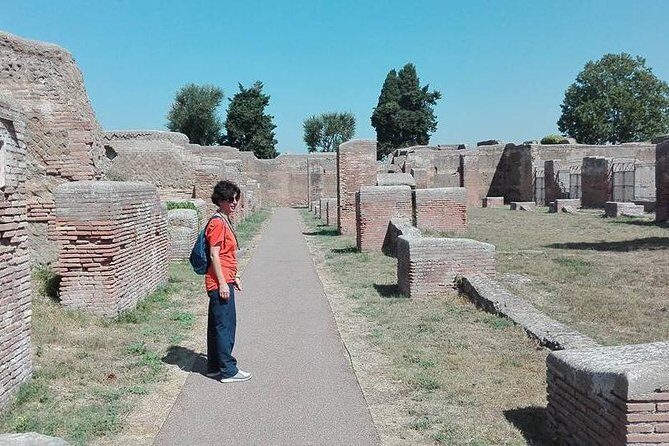
A site this big can feel like it’s speaking a different language. The difference on this tour is that your guide helps you translate what you see—what each area was for, how buildings functioned, and why certain art and layouts mattered. That’s exactly the kind of support that keeps your visit from turning into quick photos and walking.
The guides associated with this experience are repeatedly praised for passion and clear communication. Names you may hear include Paola, Maria, and Maria Rita, and at least one guide is described as a trained archaeologist. In practice, that usually means you get not only facts, but explanations that stay grounded in how people lived.
Because it’s private, you can also calibrate. If your group includes kids, you can move faster through complex areas and spend more time on the spots that hold attention. If you’re the history-only person in your group, you can ask for extra detail without disrupting anyone else.
Stop-by-Stop at Parco Archeologico di Ostia Antica (3 Hours)
This tour is anchored in one place: Parco Archeologico di Ostia Antica. In about 3 hours, you cover a sequence that gives you a sense of the city’s life cycle—from memorial spaces to civic buildings and everyday commerce.
Necropolis: Understanding the City Beyond Its Streets
You start with the necropolis area. Even without getting lost in dates and names, funerary spaces tell you a lot about culture—what people valued, how memory worked, and how communities organized life and death. A guide’s job here is to help you notice structural clues, so the ruins feel intentional rather than confusing.
If you tend to skip this kind of area, don’t. It quietly sets the tone for the whole visit. You’ll come to the public zones with a fuller sense that this city was built for more than just entertainment and business.
Terme di Nettuno: Baths Where Daily Life Actually Happened
Next up are the Terme di Nettuno, the bath complex. Baths weren’t only about hygiene; they were social hubs, with space for conversation, relaxation, and routine. With the guide at your side, you can connect the layout to how people likely used the rooms.
This is also where mosaics start to matter. Some of the most striking visuals people point out are the mosaic floors and decorative designs in bath-related areas. If you want a takeaway you’ll remember later, focus on how patterns shift by room. Your guide can help you spot craftsmanship details and explain what the design choices may have signaled.
Practical note: bath areas can involve uneven stone paths. Wear shoes you can trust for a long walk on archaeological terrain.






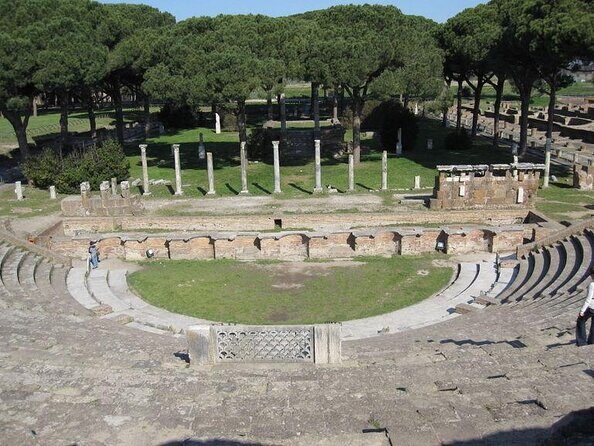
The Theater: Leisure and Public Gathering
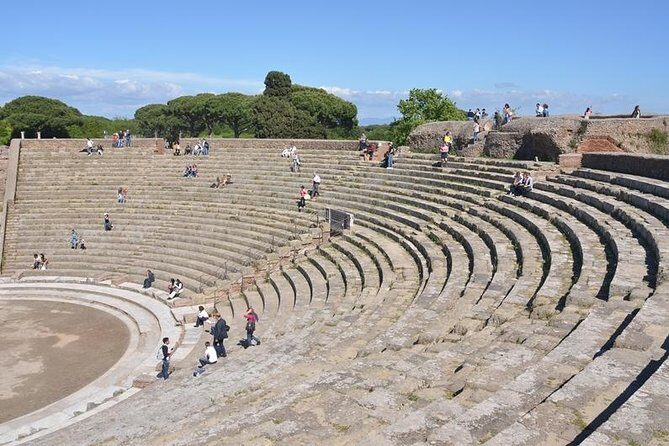
From baths you move toward the theater area. Theaters were a key part of Roman public life, and the ruins here help you picture entertainment as a daily option, not a special occasion you only heard about.
A guide can make the difference between seeing seating remnants and understanding how the theater fit into the city’s social rhythm. Even if you’re not a theater buff, you’ll probably appreciate it more once you connect it to community time.
Piazzale delle Corporazioni: Work, Shipping, and Guild Identity
Then you reach the Piazzale delle Corporazioni, a major highlight for anyone who likes the “how commerce worked” angle. This space is closely tied to professional groups and the city’s economic engine as a port.
One detail that stands out from the experience: mosaic tile work in marketplace stall areas includes labels with words and images for different professional groups. Some of those groups relate to specialized shipping and marine commerce. That’s a powerful moment because it turns ancient business into something you can read—almost like walking through a city directory.
If you’re the type who loves practical history (who did what, where, and why), you’ll likely enjoy this section the most.
Terme del Foro: Another Bath Complex, Another City Function
Next are the Terme del Foro. This gives you a second look at bath culture, and it’s valuable because it helps you compare how spaces might differ by neighborhood or civic focus. Even if the overall idea of baths is familiar, the specifics of rooms and decorative choices can make it feel new.
Again, keep your eyes open for mosaic floors and decorative elements. Guides are praised for pointing out symbolism and craftsmanship, which is exactly what helps you stop treating mosaics like pretty flooring.
Capitolium: Civic and Religious Power in Stone
You’ll then move toward the Capitolium area. This is the kind of stop where your brain starts assembling the city’s power structure: public building types, religious focus, and civic identity. Ruins here work best when you can connect them to the city’s hierarchy and public life.
A guide helps you interpret architectural remains so you understand what kind of place it was, not just that it once existed. If you’ve ever found the Roman Forum overwhelming, this is a helpful alternative pace: you’re seeing civic meaning without the same chaos.
Tabernae: Shops That Show How People Lived
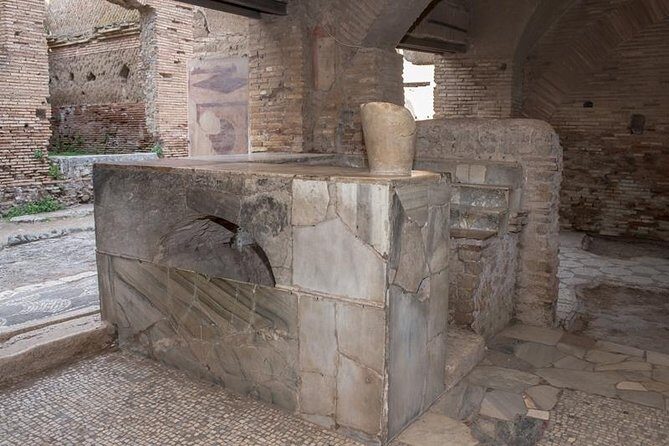
Finally, the Tabernae—shopfront spaces—bring you back to ordinary life. These areas help you imagine the street-level experience: commerce, daily buying and selling, and the practical energy of a port city where goods moved through fast.
If you like “real life” history, don’t rush the Tabernae zone. Take a minute to picture how often people would have passed these storefronts. With the guide explaining how the spaces functioned, you’ll start seeing the city as a system rather than a set of monuments.
Mosaics: How to Look Without Getting Lost
Mosaics are the star in many people’s memories from Ostia Antica. Some of the most commonly cited impressions include black-and-white designs in bathhouses and more colorful patterns in other public spaces. That contrast matters. It suggests different artistic goals depending on the setting.
When a guide points out symbolism and craftsmanship, you get a better sense of what you’re actually looking at: design choices, skill level, and how floors could communicate status or identity. Instead of staring at pretty patterns, you learn to read the “why” behind them.
My advice: don’t try to photograph everything. Pick one mosaic area and let the guide’s explanation steer your attention. If you do that, you’ll remember it later in a way that generic sightseeing pictures won’t.
Pricing and Value for a Private 3-Hour Tour

The price is listed at $187.06 per person, for about 3 hours, with an admission ticket included. For a private tour, that can be a reasonable value—especially if you’re splitting cost among a small group and you care about getting real interpretation rather than just access to the site.
The value improves because you’re not only paying for entry. You’re paying for translation: someone helps you connect ruins to how people lived, and they can adjust the route based on the group’s ages and interests. For many visitors, that’s what makes the difference between feeling like you “saw Ostia Antica” and feeling like you actually understood it.
Also consider timing. This experience is commonly booked around 45 days in advance. If you have a tight travel window, don’t wait too long to secure a guide-friendly slot.
Getting There and Making the Walk Comfortable
You meet at 00119 Ostia Antica RM, Italy, and the activity ends back at the meeting point. The start location is described as near public transportation, which is a big deal when you’re trying to avoid last-minute transit stress.
Bring sensible expectations. You’re on outdoor ruins, and the ground can be uneven. Even if you’re fit, you’ll feel it more than a museum floor. Comfortable shoes matter more than you think.
Weather is also part of the deal. The experience requires good weather, so plan for an alternative date if conditions aren’t right. If your Rome trip includes multiple outdoor plans, it helps to keep your schedule flexible on at least one morning.
Who Should Book This Ostia Antica Private Tour
This is a strong choice if you fit one of these profiles:
- You want ancient Rome without the crush of the biggest sites.
- You prefer daily life topics—how people lived, worked, and met friends.
- You like art and architecture, but you also want them tied to meaning, not just visuals.
- You’re traveling with mixed ages and want an itinerary adjusted to your group’s pace.
- You want a calmer morning or afternoon that’s easier to plan than a full-day Rome itinerary.
It’s also a good match for people who learn best with conversation. Because it’s private, you can ask questions when something clicks—or when it doesn’t.
Service animals are allowed, and most people can participate. If you have specific mobility needs, you’ll want to think about the walking involved in any archaeological visit.
Should You Book This Private Ostia Antica Tour
If you want a straightforward Roman day that feels more personal than the typical big-sight circuit, I’d say yes. The main reason is simple: a guide turns Ostia Antica into a story you can follow. With stops that include bath complexes, civic areas, and shopfront spaces, you’ll leave with a clearer picture of how a port city functioned.
Book it especially if you care about mosaics and everyday life—those are the elements the experience highlights in a way that sticks. Skip it only if you’re hoping for a “fast” walk with minimal explanation, or if you hate outdoor walking in archaeological terrain. In that case, a more indoor-focused option might fit better.
FAQ
How long is the Ostia Antica private tour?
The tour runs for about 3 hours.
Is admission included?
Yes. Admission tickets are included in the experience.
Is this a private tour or a group tour?
It is a private tour/activity, so only your group participates.
What language is the tour offered in?
The tour is offered in English.
Where does the tour start and end?
It starts at 00119 Ostia Antica RM, Italy and ends back at the meeting point.
Is it easy to reach using public transportation?
The meeting point is described as near public transportation.
Can service animals join the tour?
Yes. Service animals are allowed.
Do I need good weather for the tour to run?
Yes. The experience requires good weather, and if it’s canceled due to poor weather, you’ll be offered another date or a full refund.
What if the minimum number of travelers is not met?
If the tour is canceled because the minimum isn’t met, you’ll be offered a different date/experience or a full refund.
How far in advance should I book?
On average, it’s booked about 45 days in advance.
What’s your cancellation cutoff?
Free cancellation is available up to 24 hours in advance for a full refund.