REVIEW · WALKING TOURS
Rome Jubilee Walking Tour of Churches, Bridges & Legends
Book on Viator →Bookable on Viator
One route changes how you see Rome. This 2-hour evening walk strings together churches, bridges, and street stories that help Vatican City feel real before you ever step inside. You’ll move at a comfortable pace, hearing how pilgrims actually navigated this part of town. I also like that the tour focuses on meaning, not just postcard views, thanks to guides such as Alina and Kasia.
What I loved most is how the guide connects big-name art to everyday religious life, like the ceiling at Sant’Ignazio di Loyola and major works in Santa Maria Sopra Minerva. I also like the practical way you’re taught to read the route—Hadrian’s presence, angel statues on the bridge, and why Piazza Pia matters to the walk toward St. Peter’s.
One thing to consider: you’ll cross the major bridge area once (not repeatedly), so if you’re chasing lots of bridge views, this won’t be a full bridge-hopping tour. Also, the Pantheon and St. Peter’s Basilica are outside-only here, so you’d need separate entry plans if you want inside.
In This Review
- Key Things to Know Before You Go
- Why This 5pm Pilgrimage Walk Makes Vatican City Make Sense
- Piazza di Pietra to Temple of Hadrian: Your First Step Into Rome’s Layers
- Sant’Ignazio di Loyola: Baroque Ceiling Drama, Explained Simply
- Basilica of Saint Mary of Minerva: Artwork You Can Actually Name
- Pantheon From the Outside: Why It’s Worth the Name-Check
- Piazza Navona and the Church of Sant’Agnese: From Arena to Baroque Stage
- Via dei Coronari: Pilgrims, Past Rivals, and One Street With Two Meanings
- Ponte Sant’Angelo and Castel Sant’Angelo: Angels on the Way to Power
- Piazza Pia to St. Peter’s Square: Finishing the Walk With Choices
- Price and Value for a 2-Hour, Up-to-15-Person Evening Tour
- Who This Tour Fits Best (and Who Might Want Something Else)
- Tips to Make the Most of the Walking Pace and Evening Timing
- Should You Book This Rome Jubilee Churches, Bridges & Legends Tour?
- FAQ
- How long is the Rome Jubilee Walking Tour of Churches, Bridges & Legends?
- What is the price per person?
- What time does the tour start, and where does it end?
- Is entry included for the Pantheon and St. Peter’s Basilica?
- How large is the group?
- Is the tour offered in English?
- What should I wear if I plan to visit St. Peter’s Basilica or the Sistine Chapel before or after the tour?
- Can I get a full refund if I cancel?
Key Things to Know Before You Go
- 5:00 pm start makes this a smart choice when daytime crowds and heat are annoying
- Maximum 15 people keeps the pace human and the questions possible
- Mostly ticket-free stops with outside views at the Pantheon and St. Peter’s Basilica
- Pilgrim route storytelling connects Hadrian, the Tiber, and the approach to St. Peter’s Square
- Church art with context helps you spot what to look for, not just where to stand
Why This 5pm Pilgrimage Walk Makes Vatican City Make Sense
This is the kind of tour that turns the Vatican area from a list of landmarks into one continuous story. You’ll start with ancient Rome, then step into Baroque church art, then trace the path pilgrims took over bridges and streets. It’s a fast way to get your bearings without spending the whole day in lines.
The timing is a big plus. A 5:00 pm start fits well with dinner plans, and it can feel more comfortable than hot afternoon exploring. You also get that sweet spot where the streets feel less like a rush hour and more like a night stroll with purpose.
You’re also in a small group—up to 15 travelers—so the guide can adjust the pace. In my experience, that matters on a walking route like this, where you want time to actually look up at façades and ceiling details.
You can also read our reviews of more walking tours in Rome

Piazza di Pietra to Temple of Hadrian: Your First Step Into Rome’s Layers
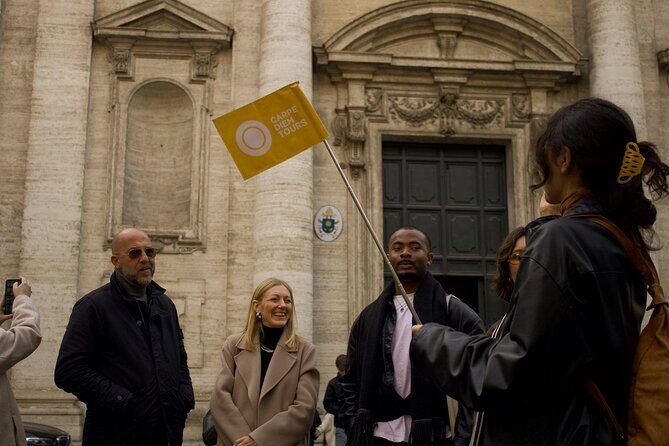
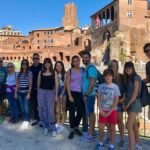
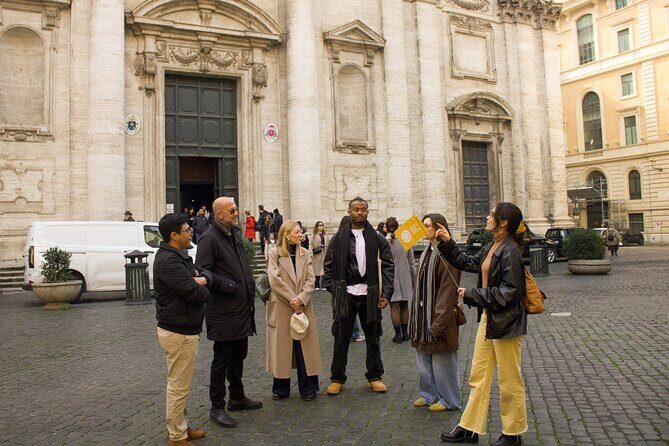
You begin in Piazza di Pietra, a calm square with a satisfying first lesson: Rome doesn’t start at the Vatican. The view toward the Temple of Hadrian sets the tone fast. Those columns aren’t just pretty—your guide frames them as a sign of ancient power and architectural confidence.
You’ll spend about 15 minutes here, and that’s enough time to reset your brain. I like this opening because it stops the tour from feeling like random church stops. Instead, you learn to notice connections: Rome’s “holy” geography sits on top of older Roman history.
If you tend to rush through squares, slow down on this one. The value is in seeing how the ancient city still peeks through every later era.
Sant’Ignazio di Loyola: Baroque Ceiling Drama, Explained Simply
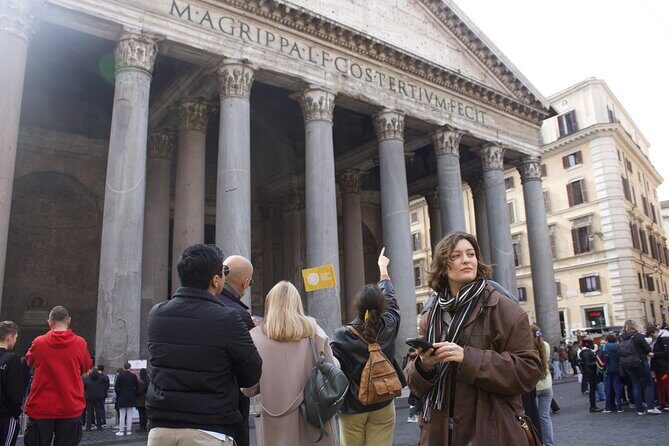
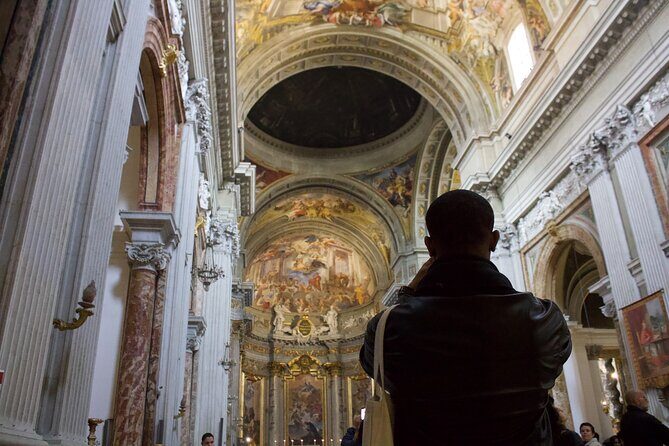
Next comes Chiesa di Sant’Ignazio di Loyola, a Baroque church that’s famous for its ceiling and ornate interior. Baroque art can look like decoration until you know what it’s doing. Here, the guide gives you the meaning behind the details, so you’re not just staring upward wondering why it’s so busy.
This stop is about 15 minutes, and it works because the goal isn’t to “finish” the church. It’s to train your eyes: learn what stands out, why it matters, and how religious art communicated faith in the 1600s.
One practical tip: if you like art, arrive with the mindset of reading it. Let your guide point out what to focus on, then take a minute to look without listening. That short silence does wonders.
Basilica of Saint Mary of Minerva: Artwork You Can Actually Name
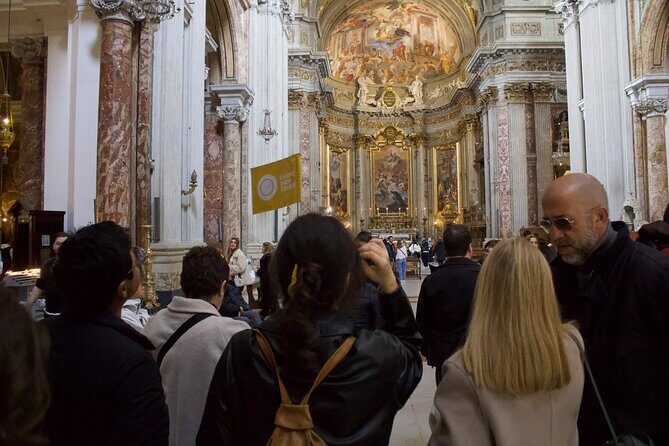
From Baroque ceiling drama, you move to Basilica of Saint Mary of Minerva (Santa Maria Sopra Minerva). This is one of those places where the setting feels peaceful, but the art inside carries serious weight.
You’ll learn to recognize key highlights, including Michaelangelo’s Christ the Redeemer and the tomb of Saint Catherine of Siena. Having those names in your head changes the visit. You’re no longer looking at a church; you’re looking for specific works and stories.
This stop is also about value for people who don’t want museum-style tours. You get focused attention on art and history without needing to plan a long inside visit. If you like religious art but hate feeling lost, this is a good match.
Pantheon From the Outside: Why It’s Worth the Name-Check
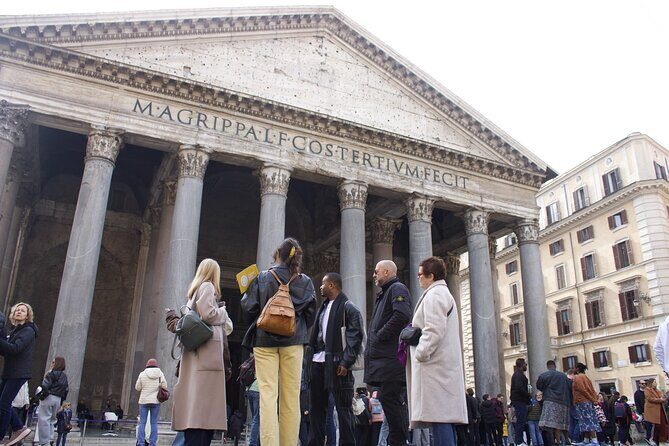
At some point, the tour shifts to the big classic: the Pantheon. You’ll view it from outside rather than going in, since entry isn’t included. That said, it’s still worth it because the Pantheon is one of the clearest examples of ancient Roman engineering and ambition.
The dome and the portico are so iconic that your guide can help you see them as more than a “photo spot.” You’ll get a quick framework for what makes the building work and why it survived when so much else didn’t.
If you’re hoping for a full inside Pantheon experience, plan that as a separate add-on. This tour keeps you moving and focused on pilgrimage context rather than ticketed museum time.






Piazza Navona and the Church of Sant’Agnese: From Arena to Baroque Stage
Then you stroll into Piazza Navona, once an ancient Roman stadium and now a grand stage for fountains and Baroque beauty. Your guide connects the shape of the space to its older purpose, so the square stops feeling random.
You’ll also see Church of Sant’Agnese in Agone, designed by Borromini and Bernini. That matters because these names aren’t just history trivia. The tour helps you understand how their influence shows up in the way the church looks and how it commands the square.
This stop is around 15 minutes. It’s a good use of time: you get both the urban design lesson and the art lesson without turning it into a long detour.
Via dei Coronari: Pilgrims, Past Rivals, and One Street With Two Meanings
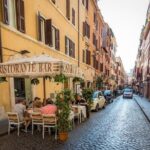
Next is Via dei Coronari, a narrow cobblestone street with Renaissance-era buildings and views that feel made for slow walking. Here the tour leans into the pilgrimage angle: you hear about pilgrims who gathered here on their way toward Saint Peter’s Basilica.
Then comes the less-than-holy side. Your guide points out that the street also attracted establishments that didn’t exactly match the spiritual mission. That contrast makes the story feel more human—Rome wasn’t only churches and prayers. It was people, business, and survival moving alongside faith.
This stop lasts about 15 minutes. I like it because it gives you “texture.” You’re not only seeing monuments—you’re seeing the route as a real street people used.
Ponte Sant’Angelo and Castel Sant’Angelo: Angels on the Way to Power
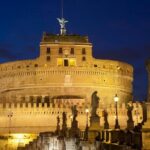
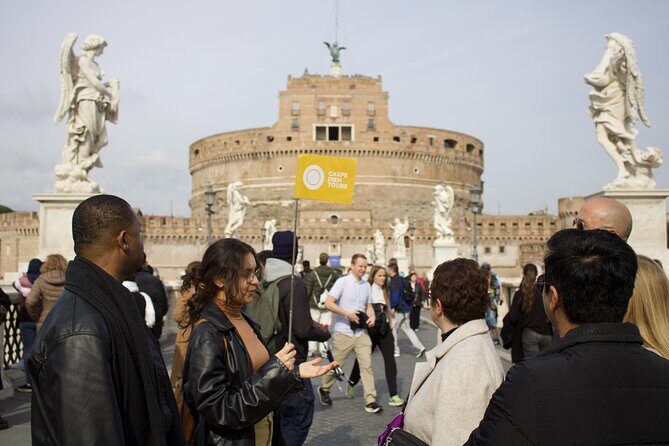
Crossing the Ponte Sant’Angelo is the key bridge moment. You’ll see angels along the bridge and get views over the Tiber and Castel Sant’Angelo. The guide also frames the bridge as part of the old movement of power: it served as an entrance to Emperor Hadrian’s mausoleum and later became a main route for pilgrims heading to St. Peter’s Basilica.
This is also where the pace stays smart. You’re outside, walking, and taking in viewpoints without feeling like you’re stuck staring at statues for 30 minutes. If you enjoyed the idea of multiple bridges, you’ll notice the tour’s approach is more focused than expansive. There’s one major crossing, and it’s used for story, views, and orientation.
Once across, you spend time near Castel Sant’Angelo. You’ll hear how it shifted roles over time: fortress, papal residence, even a prison. Today it’s a museum with a cylindrical structure and Roman views over the city.
Piazza Pia to St. Peter’s Square: Finishing the Walk With Choices
The ending stretch brings you into the pilgrimage’s last visible steps. At Piazza Pia, you’ll take in the scene as a key meeting point for visitors heading toward Saint Peter’s Basilica. Your guide explains why it was seen as a symbol that the journey was nearly complete.
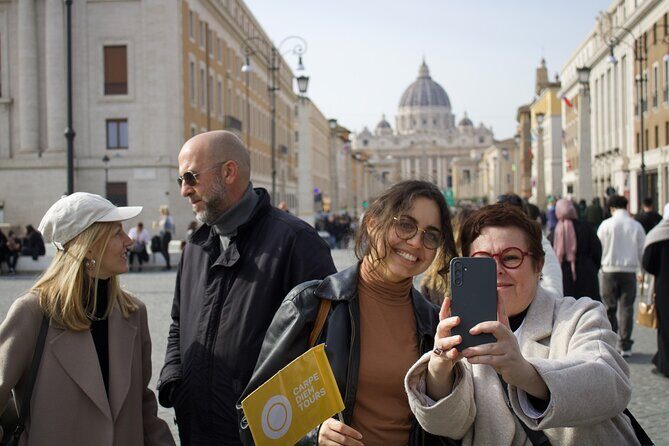
Then you stand in Saint Peter’s Square, with its grand Bernini-designed colonnades leading up toward the majestic façade of St. Peter’s Basilica. Your guide points out that St. Peter’s sits over the tomb of Saint Peter himself—one reason this area feels different from every other square in Rome.
As the tour ends at Piazza Pia next to Castel Sant’Angelo, you’re set up to continue on your own. The Basilica is view-only during the tour (entry isn’t included), but the orientation you get makes a later visit easier. Even if you don’t go inside, you’ll understand where to look and why it all lines up.
Price and Value for a 2-Hour, Up-to-15-Person Evening Tour
At $120.14 per person for about 2 hours, this isn’t a bargain tour. It is, though, fairly priced for what you get: a guided walking route that packs in major church art, a bridge crossing with historical meaning, and an approach toward St. Peter’s Square—all in one evening.
You’re also not paying extra for entrances at the stops included in the walk. Most sites along the way are view points or places where the focus is on looking and learning rather than buying tickets on the spot. The big exceptions are the Pantheon and St. Peter’s Basilica, which are outside-only here.
Group size also affects value. With a maximum of 15 travelers, you’re more likely to feel guided instead of herded. And there’s a private tour option if you want to pay more for a calmer, more tailored pace.
Best use of your money: book this early in your Rome trip. It gives you context for the next churches and monuments you’ll see, including any ticketed stops you plan afterward.
Who This Tour Fits Best (and Who Might Want Something Else)
This works well for first-timers who want a story-driven orientation to the Vatican neighborhood. It’s also a smart pick if you’ve been to Rome before but want a clearer understanding of the pilgrimage route and how ancient Rome feeds into later religious meaning.
It also suits budget-minded travelers who want a small group experience at a mid-range price. You get multiple major landmarks connected by walking, so you’re not paying to shuffle between far apart areas.
If you mainly want inside access—like spending a long time inside the Pantheon or St. Peter’s Basilica—this might feel incomplete. Since entry to those is not included, you’ll need a separate plan for the inside visits you care about most.
Tips to Make the Most of the Walking Pace and Evening Timing
This route is designed to be walked, with about 15 minutes per stop and a total runtime of around 2 hours. That means you’ll want comfortable shoes and patience for cobblestones on Via dei Coronari. Keep your phone charged too—there’s a mobile ticket, and meeting and end points are in the same broader zone.
Dress matters if you plan to visit St. Peter’s Basilica or the Sistine Chapel before or after the tour. The guidance is modest dress, covering knees and shoulders. Even if you’re only doing exterior viewing during this walk, you don’t want to be caught unprepared if you decide to go inside later.
Finally, treat your guide’s job as your shortcut. Instead of trying to memorize everything, pick two or three highlights your guide points out—like the ceiling at Sant’Ignazio or Michaelangelo’s Christ the Redeemer—and build from there. You’ll remember more, and the city will start to feel less overwhelming.
Should You Book This Rome Jubilee Churches, Bridges & Legends Tour?
Book it if you want a small-group, story-first way to understand the Vatican area. The route connects ancient Rome, Baroque church art, and pilgrim travel patterns into one evening walk. It’s also an easy add to your schedule because it ends near Castel Sant’Angelo, where you can keep wandering at your own pace.
Skip it or pair it with other plans if your top priority is inside entry at the Pantheon or St. Peter’s Basilica. This tour sets you up for those choices, but it doesn’t replace them.
For value, I’d call this a strong pick when you’re planning your first or second days in Rome and you want the “why” behind the “wow.”
FAQ
How long is the Rome Jubilee Walking Tour of Churches, Bridges & Legends?
It’s about 2 hours long.
What is the price per person?
The price is $120.14 per person.
What time does the tour start, and where does it end?
It starts at 5:00 pm. The tour meets at P.za di Pietra, 45, 00186 Roma RM, Italy, and ends at Piazza Pia, 00193 Roma RM, Italy.
Is entry included for the Pantheon and St. Peter’s Basilica?
No. Entry to the Pantheon and St. Peter’s Basilica isn’t included, and you’ll view them from outside.
How large is the group?
The tour has a maximum of 15 travelers.
Is the tour offered in English?
Yes, it’s offered in English.
What should I wear if I plan to visit St. Peter’s Basilica or the Sistine Chapel before or after the tour?
You should dress modestly, with knees and shoulders covered.
Can I get a full refund if I cancel?
Yes. Free cancellation is available up to 24 hours in advance for a full refund. If you cancel less than 24 hours before the start time, the amount paid won’t be refunded.