REVIEW · CITY TOURS
Rome City, Pantheon, and Trevi Fountain Walking Tour
Book on Viator →Operated by Republic Experiences · Bookable on Viator
Rome clicks into place fast. This 2-hour walking tour strings together major sights and lesser-seen corners, with a 15-person cap that keeps the pace friendly and the questions coming. You’ll get the big names like Trevi and the Pantheon, plus stops that help you understand why Rome looks the way it does.
I love the mix of famous landmarks with visual surprises. Galleria Sciarra is a great example: an elegant 19th-century space covered in art nouveau frescoes and paintings. I also like the ending at Piazza Navona, where you can finish your walk and slide right into dinner plans without crossing half the city.
One thing to plan for: Pantheon entry isn’t included, so you’ll need to handle access on your own. It’s also a walking tour, so if foot pain is part of your day, you may want to choose something with less time on your feet.
In This Review
- Key points before you go
- Starting at Piazza d’Aracoeli: the perfect warm-up for first-time Rome
- Piazza Venezia and the ancient forums: seeing Rome in layers
- Galleria Sciarra: a painted detour most people miss
- Trevi Fountain: how to see it without feeling like a stampede
- Chiesa di Sant’Ignazio di Loyola: the Baroque dome trick
- Pantheon: the one ticket you’ll need to plan for
- Piazza Navona finish: turn the tour into dinner and a slow wander
- Walking pace, comfort, and who this tour fits
- Price and value: what $24.20 buys you in Rome
- How the best guides shape the experience
- Should you book this Rome City, Pantheon, and Trevi Fountain walk?
- FAQ
- How long is the walking tour?
- What does the tour cost?
- How many people are on the tour?
- Is the Pantheon ticket included?
- Where does the tour start and end?
- What language is the tour offered in?
- Is admission free for all stops?
- Is the tour suitable for everyone?
- Can I use a mobile ticket?
- What is the cancellation policy?
Key points before you go
- Small group (max 15) keeps it personal, and you can actually hear your guide.
- Trevi Fountain with lighting helps you see why this landmark pulls people in.
- Galleria Sciarra is the kind of beautiful detour most people walk past.
- Sant’Ignazio di Loyola’s artificial dome is a Baroque trick worth training your eyes for.
- Pantheon access is separate, so factor in that extra step.
- Tour ends at Piazza Navona, handy for a drink and dinner right away.
Starting at Piazza d’Aracoeli: the perfect warm-up for first-time Rome
You meet near Piazza d’Aracoeli (Via di S. Venanzio 8). It’s a smart start point because it puts you in the thick of the city center without immediately throwing you into museum-mode. If Rome already feels like a maze, this tour gives you a map made of real streets and landmarks.
Expect a guided walk with plenty of context. Guides tend to keep things clear and human, not like a lecture you regret buying. You’ll also hear practical advice about what to notice as you go, including what’s worth a closer look later.
You can also read our reviews of more walking tours in Rome


Piazza Venezia and the ancient forums: seeing Rome in layers
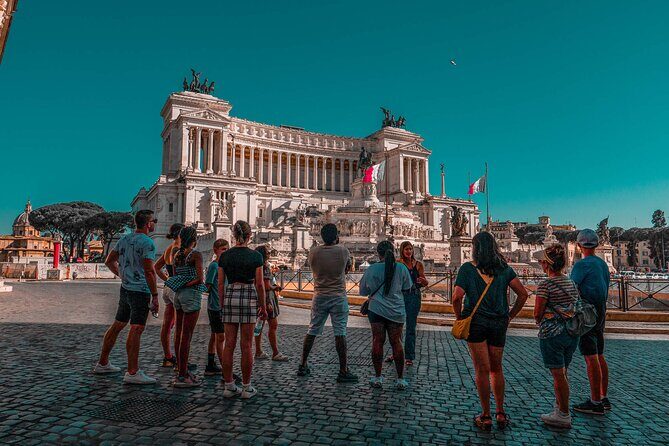
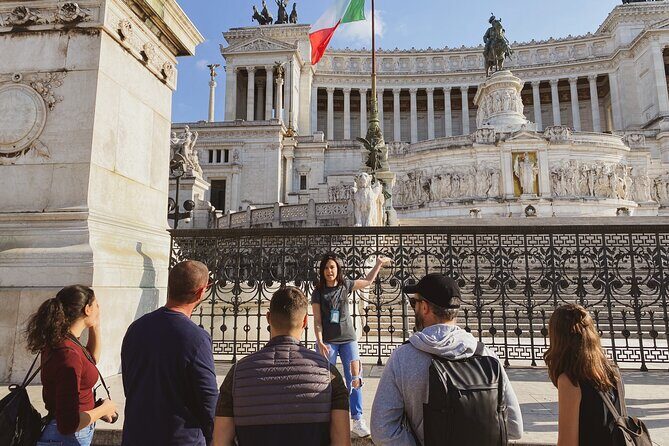
Your first main stop is Piazza Venezia and the ancient city around it. This area is famous for being important in multiple eras, and that’s the point. You’ll connect ancient Rome (imperial forums and grand political spaces) to later periods, including how the same ground gained new meaning over time.
What makes this stretch work is how the guide frames the buildings and squares. Instead of just naming places, they point out how power shaped the city layout. It’s a fast way to get your bearings, especially if you’ve already seen a couple of big sights like the Colosseum or Vatican sites and want more context for what comes next.
Galleria Sciarra: a painted detour most people miss
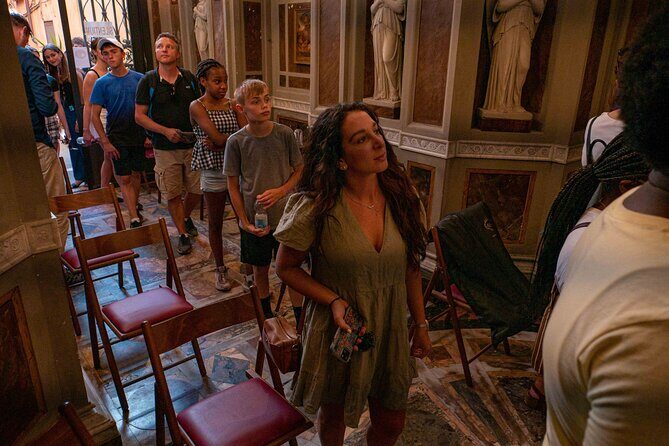
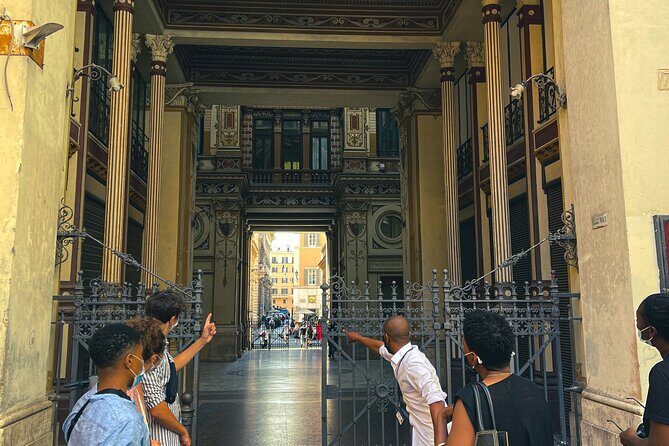
Then you get a break from the big open squares with a stop at Galleria Sciarra. This is one of those spots where you slow down automatically, because the space feels decorated just for you. It’s a 19th-century building filled with art nouveau frescoes and paintings, so you’re not just walking—you’re looking up.
This is also a nice pace reset. After Piazza Venezia, it’s refreshing to move into a calmer corner where details matter. If you like photography, you’ll want to take a moment here, because the ceiling artwork and visual rhythm are hard to recreate later from memory.
Trevi Fountain: how to see it without feeling like a stampede
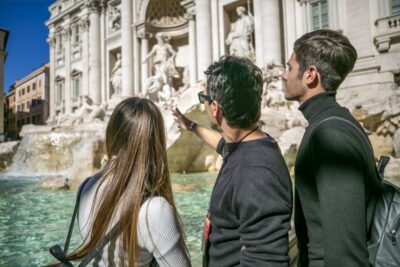
Next up is Trevi Fountain, the one your Instagram has already ruined a little for you. Still, standing there makes sense—this fountain is famous for a reason. The guide helps you focus on the sculpture and the drama of the design, and you’ll visit as it’s lit up, bringing that “magic” feel to life.
Here’s the practical takeaway: don’t treat Trevi like just a photo stop. Use the time to read what you’re looking at—grouping, motion, and the overall theatrical layout. A good guide also helps you understand why this particular fountain became the symbol it is today.
Chiesa di Sant’Ignazio di Loyola: the Baroque dome trick
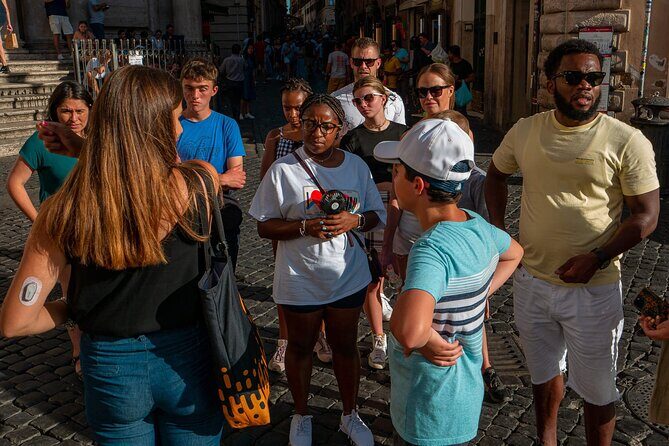
From Trevi, the tour shifts to religious art and architecture with Chiesa di Sant’Ignazio di Loyola. This church is known for its Baroque style and for an artificial dome that plays games with your perception.
This stop is worth your attention even if you’re not a church person. Baroque design is basically visual storytelling. Your guide points out the illusion and helps you see how the church directs your eyes and emotions. It’s the kind of architectural magic that sticks in your head longer than a list of facts.
You can also read our reviews of more city tours in Rome




Pantheon: the one ticket you’ll need to plan for
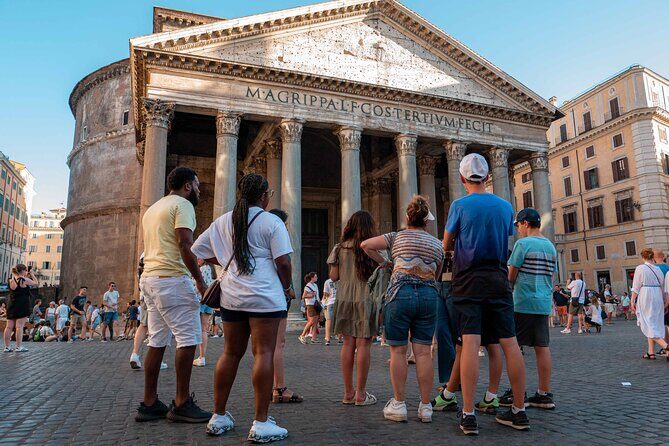
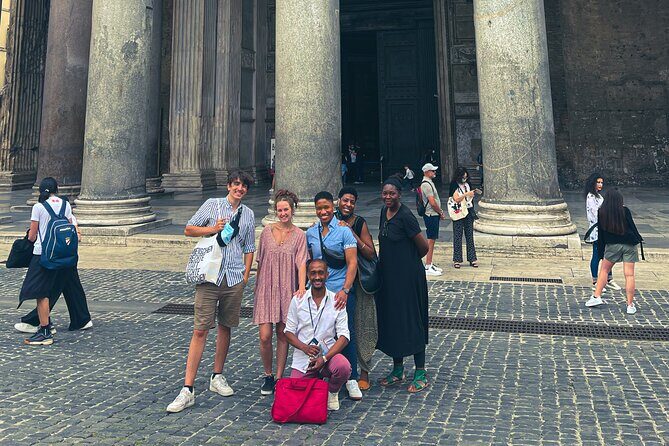
The tour’s big classic finish is the Pantheon. You’ll learn what makes this ancient structure so well preserved and how it works as a church today. Even if you’ve seen photos before, the inside hits differently in person—because scale and light do the heavy lifting.
Important: Pantheon access isn’t included. So plan for the extra step of getting in. If you’re trying to keep your day efficient, I’d treat Pantheon entry as the one logistics item you should prep for in advance, so the rest of the tour stays smooth.
What to focus on while you’re there: look at how the space is built to control light and how the design elements guide your attention. A strong guide helps you notice details you’d likely miss on your own—especially the way ancient engineering still feels modern in how it handles the interior experience.
Piazza Navona finish: turn the tour into dinner and a slow wander
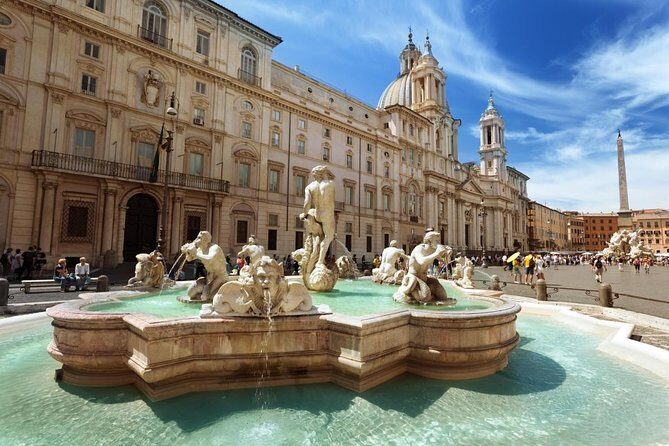
The walk ends at Piazza Navona. This is one of Rome’s best-looking squares, and it earns the attention. You’ll see three fountains and the Baroque church of Sant’Agnese in Agone, with plenty of street energy around you.
This finish is smart because you’re not stuck solving dinner from scratch. The guide can point you toward good local places for food and drinks, and that makes the whole experience feel complete. If you want a rooftop view later or a gelato stop that’s not just the most obvious one, this is the right moment to ask.
Walking pace, comfort, and who this tour fits
This is a roughly 2-hour walking tour. That usually means steady walking, a handful of stops, and time to stand, listen, and look. It’s not a long hike, but it’s still city walking on real pavement.
If you have foot injuries, it’s not recommended. That’s not a moral judgment—just a practical one. If your mobility is limited, the walking length can turn your “culture time” into “pain time,” and Rome is too good for that.
If you’re generally able to walk, it’s ideal for:
- first-time visitors who want orientation fast
- people who already saw Vatican/Colosseum and want a second-layer Rome view
- anyone who likes architecture and wants help noticing the details
Price and value: what $24.20 buys you in Rome
At $24.20 per person, this tour is priced like a real-value city primer. The big reason: it hits the major icons you came for—Trevi and the Pantheon—then adds context through stops like Piazza Venezia, Galleria Sciarra, and Sant’Ignazio di Loyola.
Also, most of the listed stops have free admission. The Pantheon is the exception, with access not included. So you’re mostly paying for guided time, smart routing, and the ability to understand what you’re seeing instead of just passing by it.
The small group cap matters here too. When the group stays around 15 people, you get a tour that feels like it belongs to you, not like you’re part of a loud moving lecture hall.
How the best guides shape the experience
One of the most consistent strengths of this tour is guide quality. People like Domenica, Anna, Dan, Sharon, and Pollina have been praised for making the walk feel relaxed, fun, and easy to follow. Guides also tend to stop long enough to explain what you’re looking at, then keep moving without rushing you out the door.
A common theme is that the tour doesn’t just recite dates. It teaches you how to look. That’s why the day feels useful even if you only have a couple of hours available.
Should you book this Rome City, Pantheon, and Trevi Fountain walk?
I think you should book it if you want a fast, well-paced introduction that connects big landmarks to the city around them. The small group limit makes it a strong pick for first-timers and for anyone who wants more than a checklist.
Skip it or choose another option if you:
- can’t do moderate walking
- want only self-guided time and hate paying for guided interpretation
- don’t want to deal with the Pantheon entry step on your own
If you do book it, my advice is simple: wear shoes that survive Rome, plan your Pantheon ticket access ahead, and come ready to look up. Rome rewards the people who slow down for a few minutes, and this tour gives you those minutes on purpose.
FAQ
How long is the walking tour?
It runs about 2 hours.
What does the tour cost?
The price is $24.20 per person.
How many people are on the tour?
The maximum group size is 15.
Is the Pantheon ticket included?
No. Pantheon access is not included.
Where does the tour start and end?
It starts at Piazza d’Aracoeli (Via di S. Venanzio, 8, 00186 Roma RM) and ends at Piazza Navona (00186 Roma RM).
What language is the tour offered in?
The tour is offered in English.
Is admission free for all stops?
Most stops list admission as free. Pantheon admission is the one noted as not included.
Is the tour suitable for everyone?
Most travelers can participate. It is not recommended for travellers with foot injuries.
Can I use a mobile ticket?
Yes, it includes a mobile ticket.
What is the cancellation policy?
You can cancel for a full refund if you cancel at least 24 hours in advance. If you cancel less than 24 hours before the start time, the amount paid is not refunded.