REVIEW · CITY TOURS
Private Rome City Walking Tour
Book on Viator →Operated by Carpe Diem Tours · Bookable on Viator
Rome feels best on foot.
This private 2-hour walk is built to help you see the musts in the heart of Rome without rushing, and it also gives you a personalized pace that works for your group. I especially like how it strings together piazzas, churches, and iconic landmarks (no heavy-ticket stops) with a simple rhythm: short photo moments, then just enough time to absorb what’s in front of you. One possible drawback: a couple of the most famous sights (like Trevi Fountain and Piazza Navona) can be very crowded, so you’ll want patience and good timing.
I also like that you’re not just “passing by.” The tour includes a real sequence—Monumento a Vittorio Emanuele II, Trevi Fountain, Chiesa di Sant’Ignazio di Loyola, the Pantheon area, Trajan’s Column, and ending in Piazza Navona—so you get continuity instead of random sightseeing. In one review, the guide Dalila stood out for her history-and-architecture explanations and for sharing a personal list of restaurant and bar ideas, including places that feel a bit off the usual track. Still, with only about two hours, you won’t linger like you would on a long independent day.
What makes this one feel worth it is the mix of free-to-enter stops and a private setting. For the price, you’re paying for an English guide plus a focused route that ends in a great dinner zone. If you want total freedom to roam for long stretches, this style may feel a little structured—but if you want a strong first-evening plan, it’s a solid fit.
In This Review
- Key things to know before you go
- Getting Oriented Fast on a Private Rome City Walk
- From Piazza d’Aracoeli to the Vittorio Emanuele II Monument
- Trevi Fountain Timing: Baroque Wonder with Real-Life Crowd Strategy
- Sant’Ignazio di Loyola: A Church Stop That Breaks the Loud Cycle
- Pantheon Area on Foot: What to Notice While Passing Through
- Trajan’s Column and the Outer Forum Feeling
- Piazza Navona Finish: Baroque Fountains and Dinner Setup
- Price, Time, and What You’re Really Paying For
- Should You Book This Private Rome Walking Tour?
- FAQ
- How long is the Private Rome City Walking Tour?
- Where does the tour start and end?
- Is the tour private?
- What languages is the tour offered in?
- Do the stops require paid admissions?
- Do I need a paper ticket?
- What is the cancellation policy?
Key things to know before you go
- Private tour with only your group, so the pace and stops can match how you like to walk
- Free admission stops built into the route, so you can focus on the sights instead of ticket logistics
- A practical start-to-finish loop: Piazza d’Aracoeli area to Piazza Navona, with easy landmarks throughout
- Time boxed but relaxed, with generous chunks at Trevi (about 30 minutes) and Piazza Navona (about 20 minutes)
- An ending that sets up dinner, plus your guide can point you to bars and restaurants nearby
- English mobile ticket included, so you’re not juggling paper confirmations
Getting Oriented Fast on a Private Rome City Walk
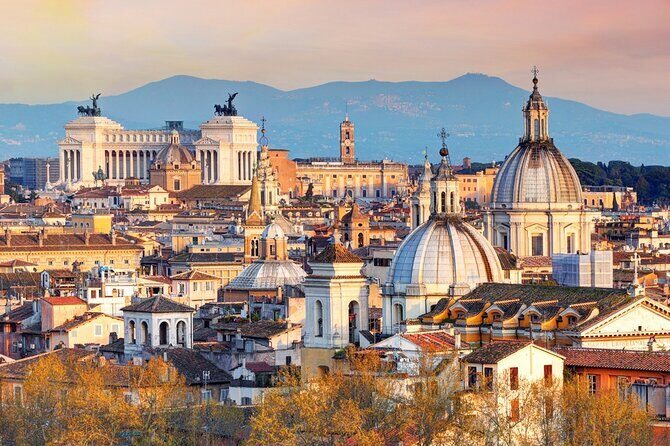
If Rome is your first stop on a trip, this kind of tour is a smart move. You get a compact route that hits major viewpoints and major stories, and you do it with a guide who can explain what you’re actually seeing. With a duration of about 2 hours, it’s not trying to replace days of exploring—it helps you build a mental map fast.
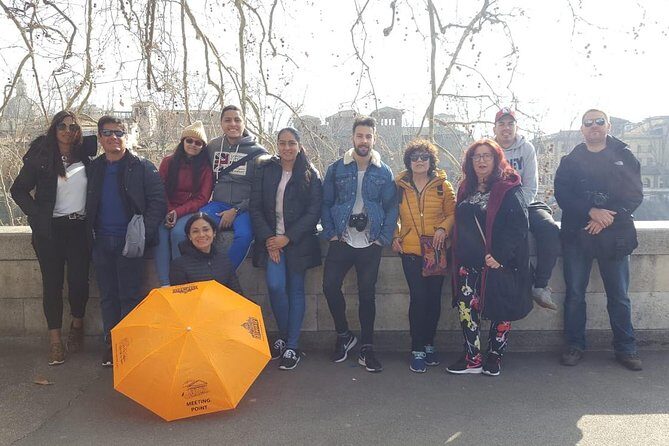
This tour is private, meaning it’s only your group out there with the guide. That matters more than people think. In a city like Rome, you’ll either spend time squeezing into crowds or enjoying the moment. A private format helps you keep things calmer, especially at churches and smaller passages between big landmarks.
One more thing I like: the route includes multiple types of stops. You’re not only doing outdoor “look and go.” You also get a church stop, plus time in squares that are designed for lingering—then you finish in a dinner-friendly zone. In a review, the guide Dalila also shared a personal list of places to eat and drink, including ideas that go beyond the obvious tourist menus. If you’re trying to nail your first meal in Rome, that kind of local direction is practical value.
You can also read our reviews of more walking tours in Rome


From Piazza d’Aracoeli to the Vittorio Emanuele II Monument
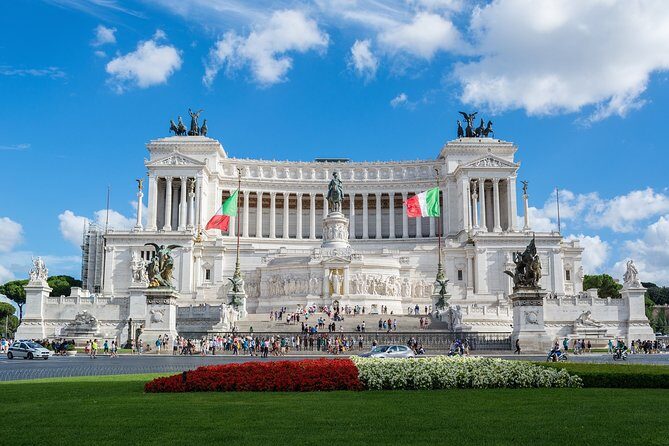
Your walking route begins near Piazza d’Aracoeli (starting at Via di S. Venanzio, 8). From there, you head toward the Monumento a Vittorio Emanuele II—Rome’s tallest building, towering over the skyline. The point of this stop isn’t subtle. It’s a big, visual opener that immediately signals you’re in the thick of Italy’s national story, not just neighborhood sightseeing.
You’ll spend about 10 minutes here, and since admission is free, you can focus on the viewing and the explanation rather than planning around a ticket. The monument was built to commemorate the Unification of Italy and Vittorio Emanuele, so your guide can give you a clear line from what you see (the scale) to why it exists (the political and historical purpose).
Practical note: since this is a tall structure, you’ll likely do more “look and take in” than deep exploring. If you like to spend time on details, you may find 10 minutes a bit quick—but as a prelude to the rest of the walk, it works. It gets you upright, oriented, and ready for the more intimate feeling of the older streets and squares that follow.
Trevi Fountain Timing: Baroque Wonder with Real-Life Crowd Strategy
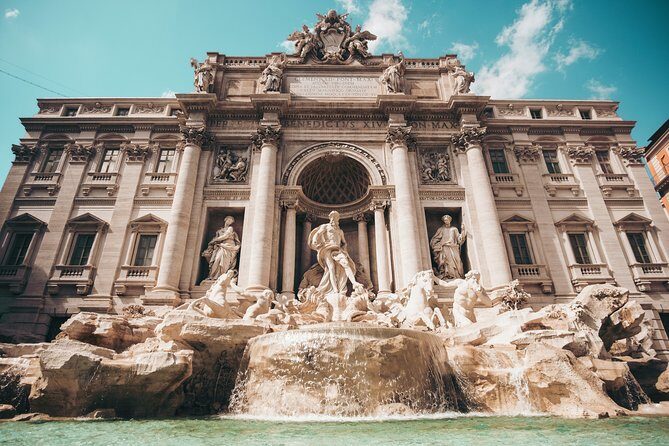
Trevi Fountain is the stop most people picture when they think of Rome. Here, you get about 30 minutes, and admission is free. That length is perfect for what you want to do in real life: take photos, throw coins, and still have time to move around instead of being stuck in one spot.
The fountain is described as a pinnacle of Baroque architecture. That matters because you’ll want your eyes on more than one angle. Look at the overall composition, then shift your attention to the sculptural details your guide points out. A guided approach helps because without context, you can end up just thinking, I’ve seen pictures of this already.
Crowds are the catch. Even with a guide and a private group, Trevi is a magnet. Your best tool is timing and patience—use the full half hour, and don’t burn your time on one photo spot. In one review, the tour was praised as a great first evening activity, and a big part of that came from the guide’s attention to what to do next. After Trevi, you’ll be ready for the more calm rhythm of the rest of the route.
Also, if you like sweet breaks, you’ll get a mention of your guide’s favorite gelato spot as part of the Trevi time. That’s the kind of small, practical tip that can save you from wandering around hunting for a place when you’re already tired.
Sant’Ignazio di Loyola: A Church Stop That Breaks the Loud Cycle
After the big-ticket image stops, you’ll reach Chiesa di Sant’Ignazio di Loyola. It’s a Roman Catholic titular church, and it’s dedicated to Ignatius of Loyola—the founder of the Society of Jesus. It also has a deaconry rank, and it sits at Campus Martius in Rome.
You’ll spend about 10 minutes here, and again, admission is free. Don’t expect a long stop. Instead, think of this as a reset. The value is in learning what you’re looking at while the rest of the route keeps moving. A guided church stop can be surprisingly useful when you’re trying to understand Rome beyond the postcards.
Because this is a church tied to a specific religious order, it gives you a different lens than the monuments and fountains. If you enjoy architecture that has a story attached—why it exists, who it honors, what role it played—this is a solid pause.
One consideration: if you’re the type who wants quiet time for sketching, longer reading, or slow browsing, 10 minutes may feel short. But as part of a 2-hour city loop, it’s a good balance: you get context without falling behind schedule.
Pantheon Area on Foot: What to Notice While Passing Through
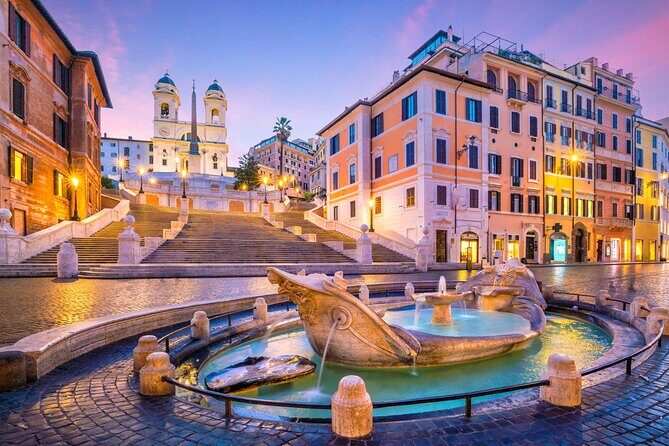
Next up is the Pantheon area. This isn’t framed as a long interior visit in the schedule, but it is central to the “wow, where did this come from?” feeling. The Pantheon appears from nowhere along rustic, cobbled alleyways, and it’s described as originally a temple, now a church.
The scale is the headline: built by Emperor Hadrian nearly 2000 years ago, and it remains the largest unreinforced concrete dome in the world. Those facts are exactly the kind of anchors that make a quick stop feel meaningful. Even if you don’t go deep, you can still look up and connect the building you’re seeing to the engineering reality behind it.
The plan is about 20 minutes total here, split between passing by and exploring the surrounding square. That time is enough to do the classic Rome thing: pause, look around the open space, then step back to take it all in from a different angle.
Drawback to keep in mind: because you’re spending time around the square, the experience will be affected by what’s happening in that space at that time of day. Your best bet is to use your guide’s timing and stand in places that let you see the structure clearly without pushing into people.
You can also read our reviews of more city tours in Rome



Trajan’s Column and the Outer Forum Feeling
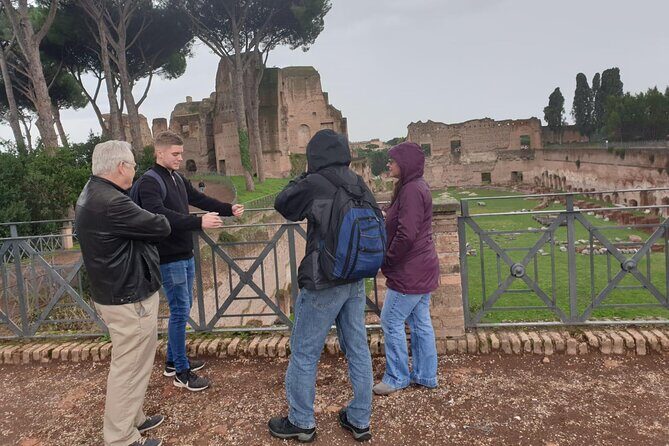
Trajan’s Column is next, with about 10 minutes on the schedule and free admission. The stop is described as exploring the outer forum and discovering the mighty Trajan.
Even with a brief stop, a column like this works well on foot because it gives you a single dominant object to focus on. A guide can help you read the moment: why it’s there, what “outer forum” suggests about its setting, and how it fits into the wider Roman landscape you’ve been walking through.
The value here is contrast. After the sculptural drama of Trevi and the deep personal focus of a church, you shift back to civic Rome—public memory built into stone.
If you’re hoping for lots of extra walking through the ruins, 10 minutes might feel minimal. But if your priority is a guided highlight that keeps the whole day organized, this stop hits the mark. It supports the route’s main goal: cover major anchors of Rome’s story without turning your night into a marathon.
Piazza Navona Finish: Baroque Fountains and Dinner Setup
You finish in Piazza Navona, one of Rome’s best-known squares. You’ll spend about 20 minutes there before the tour ends. Expect three magnificent fountains and the classic Baroque church of Sant’Agnese in Agone in the square’s orbit.
This is a smart ending point. By the time you arrive, you’re usually ready to slow down and people-watch, and Piazza Navona is designed for that. It’s also lined with restaurants, so you get from sightseeing to dining with almost no effort.
One of the strongest pieces of praise for this tour was the dinner recommendation. In a review, the guide gave a phenomenal recommendation and it turned into one of the best meals of the trip. That lines up with what this ending is good for: your guide isn’t just taking you to a pretty spot; they’re helping you choose where to eat nearby so you don’t lose momentum.
Practical tip: use your 20 minutes to find your bearings first, then decide where you want to sit for dinner. If you’re hungry, don’t overthink it—pick a place, then spend the rest of the evening enjoying Rome instead of searching.
Price, Time, and What You’re Really Paying For
At $120.15 per person for about 2 hours, you’re not buying a “skip-the-line” ticket or a museum entry. You’re buying something more human: an English-speaking guide, a private walking route, and time in a set of landmarks where admission is free across the stops listed.
So how do you judge value? Ask what you’re likely to do without the tour. If you’d spend your first evening trying to figure out what order to see things in, you’d burn time and still miss context. Here, the route gives you a sensible flow—from Piazza d’Aracoeli area toward major icons and then straight into Piazza Navona—so you can stay present instead of navigating your own plan.
Also, the tour includes a mobile ticket and group discounts. Mobile ticket convenience is underrated in Rome because it reduces friction when you’re moving fast between crowded points. And the private format means you’re less likely to feel like you’re being herded.
Who gets the most out of this?
- First-time visitors who want a strong Rome foundation fast
- Couples and small groups who prefer a calm pace
- People who want architecture and history explained in plain terms while walking
- Anyone who cares about choosing a good first dinner spot
Who might not love it? If you only want to linger and go slow all evening, a 2-hour highlight tour will feel too tight. But if you want to see the core sights and then keep your night going, it’s a good match.
Should You Book This Private Rome Walking Tour?
Yes, if your goal is a great first-evening plan that gets you oriented and sets you up for a smart dinner. The stop sequence hits major anchors—Vittorio Emanuele II Monument, Trevi Fountain, Chiesa di Sant’Ignazio di Loyola, the Pantheon area, Trajan’s Column, and Piazza Navona—so you end with a feeling of completion, not scattered highlights.
I’d especially recommend it if you like having an informed guide steer the experience. A review singled out Dalila for her strong explanations and for sharing personal restaurant and bar ideas, including recommendations that led to an outstanding meal. That kind of practical guidance is exactly what makes a walking tour worth paying for.
Book it if you want to walk, look, learn a bit, and keep your evening easy. If you’re chasing a super long, slow, “spend hours here” day, you may want a different style of Rome sightseeing. For a tight, friendly, and well-paced night, this one is a winner.
FAQ
How long is the Private Rome City Walking Tour?
The tour lasts about 2 hours.
Where does the tour start and end?
It starts at Piazza d’Aracoeli (Via di S. Venanzio, 8, 00186 Roma RM, Italy) and ends at Piazza Navona (00186 Roma RM, Italy).
Is the tour private?
Yes. It is a private tour/activity, and only your group participates.
What languages is the tour offered in?
It is offered in English.
Do the stops require paid admissions?
Admission is listed as free for each of the stops included.
Do I need a paper ticket?
No. It includes a mobile ticket.
What is the cancellation policy?
Free cancellation is available. You can cancel up to 24 hours in advance for a full refund.