REVIEW · POMPEI CAMPANIA
Pompeii No-line Entrance Tickets with audioguide
Book on GetYourGuide →Operated by italypasstours srl · Bookable on GetYourGuide
No-line Pompeii feels like a cheat code.
This ticket gets you into one of Italy’s most famous ruins using skip-the-ticket-line entry plus an audioguide, so you can move at your own pace through streets and buildings frozen in 79 AD. You’ll follow the city’s story from Roman daily life to the eruption of Vesuvius, using audio that’s built for ruins you can’t always read from the ground.
I especially like the audioguide format. It helps you understand what you’re looking at as you walk past the forum, theaters, the Temple of Apollo, the thermal baths, and standout homes like the House of the Vettii.
The one drawback: this specific ticket option has a track record of check-in trouble for some people, like delays with vouchers or trouble locating the provider’s spot in Pompeii. If your plans run tight, you’ll want a backup plan and a little extra time at the start.
In This Review
- Key Things I’d Pay Attention To Before You Go
- Pompeii Without the Queue: What This Ticket Actually Gets You
- Audioguide Logic: How to Make Sense of Ancient Pompeii
- Start Smart: Temple of Apollo and the Forum-Theater Walk
- Thermal Baths: How Daily Life Shows Up in Stone
- House of the Vettii and Pompeii’s Floor-Level Beauty
- The “Mummies” and the Vesuvius Story You Can’t Un-know
- Timing, Heat, and the One-Clock Rule
- Price vs. Value: Is $34 a Fair Deal for Pompeii?
- Ticket Collection Reality Check: Avoid the Common Friction Points
- Who This Works Best For (and Who Might Want Something Else)
- Should You Book This No-Line Pompeii Ticket?
- FAQ
- What’s included with the Pompeii no-line ticket and audioguide?
- Does this ticket let me skip the entrance line?
- How long is the ticket valid?
- Where do I pick up the ticket when I arrive?
- What stops or sights can I expect to see?
- What’s the last admission time?
- Are pets allowed in Pompeii with this ticket?
- Is luggage or a large bag allowed?
- Is it wheelchair accessible?
- Can I cancel for a refund?
Key Things I’d Pay Attention To Before You Go
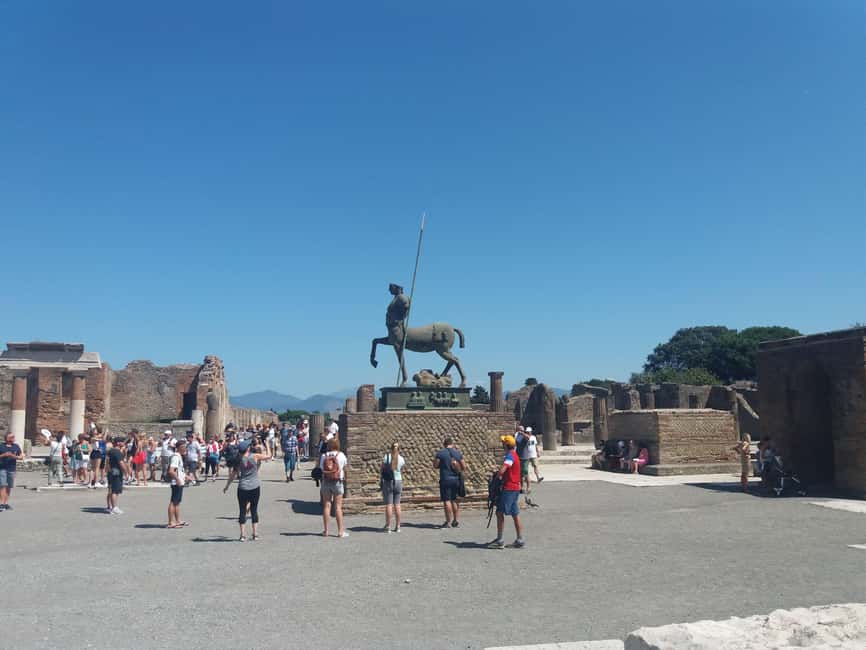
- Skip-the-line entry saves time at a high-demand site
- Audioguide is your on-the-ground teacher through houses, baths, and public spaces
- Must-see stops include Temple of Apollo, thermal baths, and the House of the Vettii
- The Vesuvius story is part of the route, including the famous plastered “mummies”
- Plan for check-in: some people have had voucher or location hiccups
Pompeii Without the Queue: What This Ticket Actually Gets You

Pompeii is one of those places where the ruins are the whole point, but the entrance line can chew up your day. This ticket is designed to cut that wait. Instead of spending your energy standing still, you get to start walking and listening right away.
You’re buying a mix of convenience and context. The entrance ticket gets you into the archaeological area, and the audioguide helps translate what would otherwise look like piles of stone and wall stubs. It’s a smart choice if you like structure but you don’t want to be dragged along by a group schedule.
Because it’s self-guided, you control the pace. That’s great for lingering over details like fresco fragments or mosaic floors. It’s also on you to keep moving when the heat rises.
You can also read our reviews of more tours and experiences in Pompei Campania.



Audioguide Logic: How to Make Sense of Ancient Pompeii
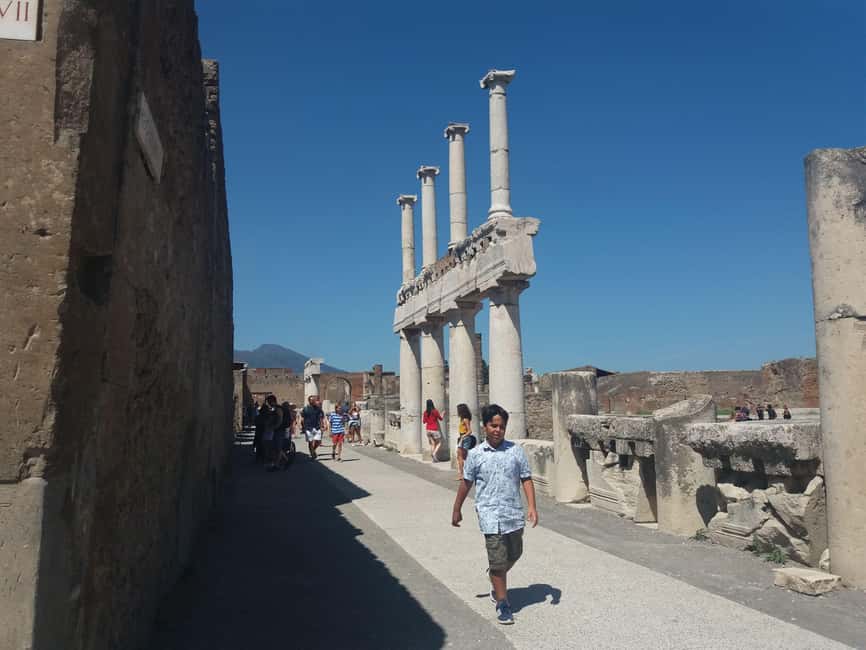
When you arrive at Pompeii, it can feel overwhelming. There’s a lot to see, and many signs explain only part of the picture. The audioguide is meant to fill in the gaps as you walk, linking spaces in a way that makes the city feel like a real place, not a museum map.
The audio route focuses on the big daily-life anchors: public areas (like the forum and theaters), religious architecture (like the Temple of Apollo), and residential life (like the House of the Vettii). That structure matters. It prevents you from wandering randomly and missing the themes that make Pompeii click—faith, entertainment, work, and home life all in one compact footprint.
You’ll also hear the tragedy behind the site. Pompeii was buried under thick ash and pumice after the catastrophic eruption of Mount Vesuvius in 79 AD. The audioguide approach helps you connect that event to what’s preserved, including the famous fossilized bodies people call the mummies.
Tip that pays off: listen before you step into a major space. Don’t wait until you’re halfway past it. You’ll understand what you’re looking at faster, and you’ll miss fewer details.
Start Smart: Temple of Apollo and the Forum-Theater Walk
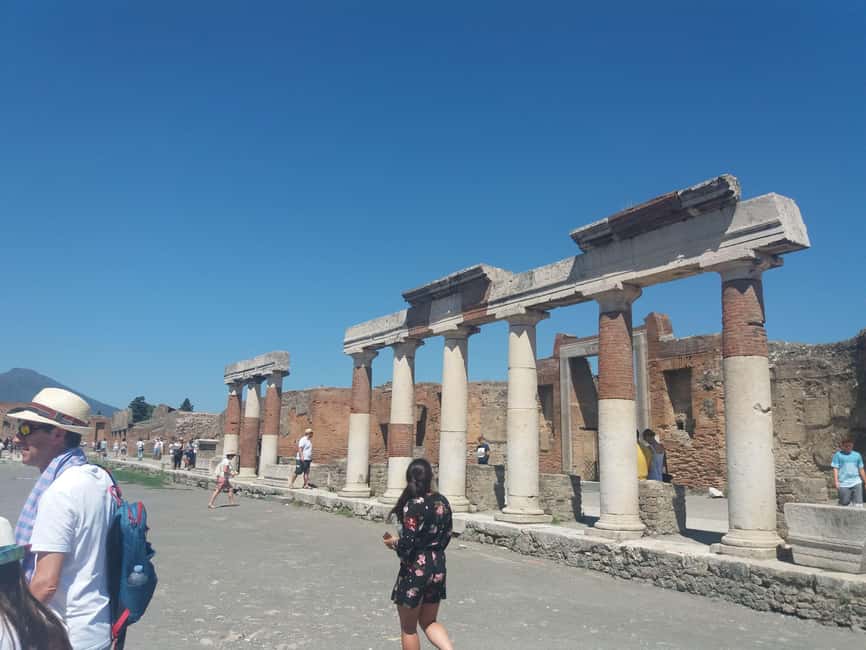
A good first move is to aim for the religious and civic core. The audioguide highlights places like the Temple of Apollo, plus the public hub areas such as the forum and theaters. This is where Pompeii shows its identity: who gathered, what they celebrated, and what mattered enough to build in stone.
The Temple of Apollo is one of those stops where the scale surprises you. Even with damage and excavation gaps, you can still read the intention of the building and its role in the city’s religious life. If you want Pompeii to feel like a living culture instead of an outdoor ruin, start here and keep the story going as you move into public spaces.
Then connect it to the forum and theaters. Pompeii’s theaters weren’t only for performances; they were social gravity. The forum was where people met, traded, discussed, and spent time as part of daily rhythm. Seeing these areas early helps you understand why later residential houses feel so personal by comparison.
Drawback to note: Pompeii is an archaeological site with uneven ground. Even with the audio guiding you, your feet still have to do the work. If you’re tempted to rush to “hit everything,” slow down before the fatigue makes you skip the best details.
Thermal Baths: How Daily Life Shows Up in Stone
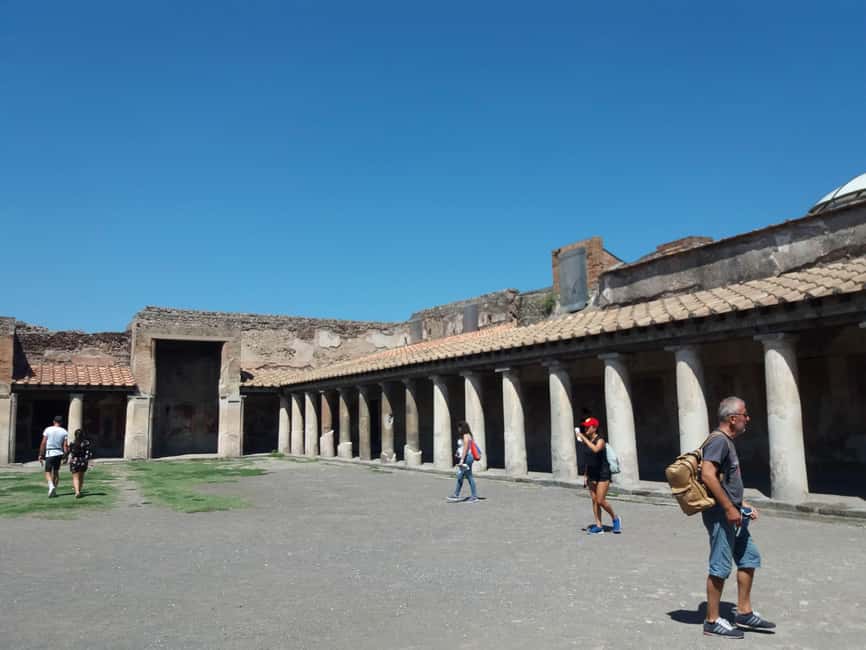
If you only view Pompeii as tragedy, you’ll miss half the point. The thermal baths are a reminder that people here cared about routine, comfort, and cleanliness. The audioguide points you toward this part of daily life, and it’s a strong stop because baths aren’t abstract. They’re built for how people moved, talked, and spent time.
Bath complexes also show you how Roman culture was practical and social. Even when you can’t reconstruct every room in your head, you can still sense the flow: changing areas, bathing spaces, and places where conversation likely happened. The audio helps you map those functions onto what you see.
One more reason baths are valuable: they make the city’s sophistication tangible. Frescoes and mosaics grab attention, but baths explain the design thinking behind everyday living. You understand better once you’ve seen a building type that wasn’t made for elites only.
Heat check: baths can be a great break from direct sun because the ruins create shadows and structural rhythms. Still, you’ll be walking and standing, so plan on water and sun protection.
House of the Vettii and Pompeii’s Floor-Level Beauty
The House of the Vettii is one of the highlights you should plan to reach. Why? Because homes in Pompeii don’t just show rooms—they show taste. The audioguide draws attention to famous features like splendid mosaics, and that’s where the city stops feeling purely educational and starts feeling visual.
What makes a Pompeii house special is how close it brings you to daily life. You’re not looking at a recreated model in a climate-controlled room. You’re standing near spaces that were actually used, with decoration preserved enough to spark real questions: Who lived here? What did they value? How did families move through their own social world?
The House of the Vettii also works well mid-visit. By then, you’ve built the city context from public spaces and civic buildings. Coming into a home feels like stepping from the town center into private life.
Practical note: houses often require walking across uneven thresholds and around excavation edges. Wear comfortable shoes, and take your time. You’ll enjoy the mosaics and fresco areas more if you aren’t constantly watching your footing.





The “Mummies” and the Vesuvius Story You Can’t Un-know
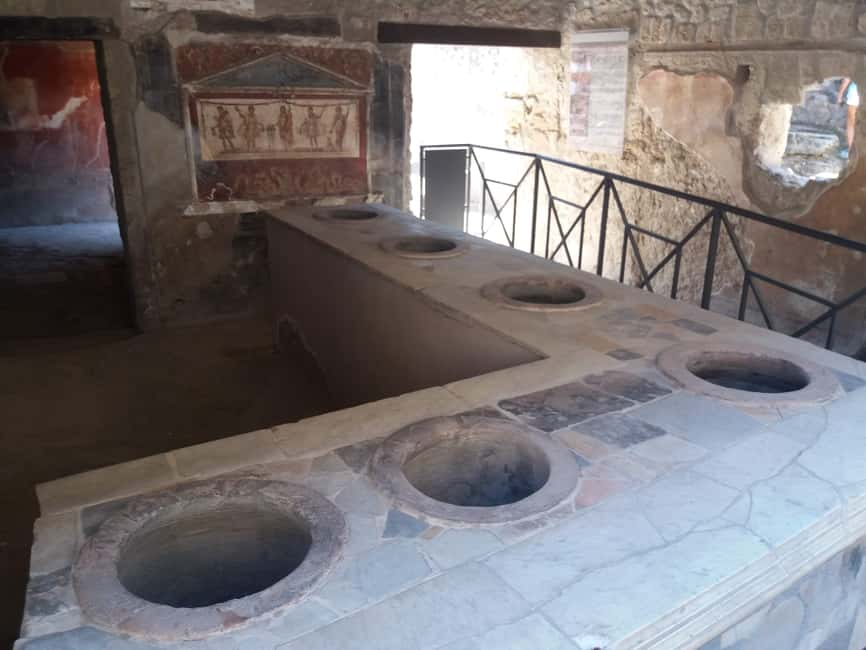
Pompeii’s horror is famous, but it’s still worth understanding clearly. The site’s story is tied to the eruption of Mount Vesuvius in 79 AD, which buried the city under ash and pumice. Pompeii’s preservation is part of the tragedy, because it captures what people did in their final moments.
The audioguide includes the section most people remember: the famous “mummies,” meaning human bodies fossilized by ash. You’re not just learning the event; you’re confronting what it means when disaster hits a real community.
This stop is emotionally heavy, so pace yourself. Don’t rush through it because you’re trying to reach the next highlight. Give yourself a moment to read the scene and let your brain connect history to human fear and escape.
Also, keep your expectations realistic. Even with audio help, you’ll be outside in an active archaeological landscape. Conditions change, and there may be crowds. The audioguide helps you focus on meaning rather than just seeing an exhibit.
Timing, Heat, and the One-Clock Rule
This ticket is valid for 1 day, but you choose a starting time when booking based on availability. That matters in practice because Pompeii can be busy, and late starts usually mean you’ll spend the afternoon in a fatigue spiral.
You also need to know the closing flow. The last admission is one hour before closing time. Plan your route with that in mind. If you save the farthest sights for the end, you risk feeling rushed right when you want to slow down.
The summer factor is real. Pompeii can get very hot, and the ground doesn’t give you much mercy. Bring a hat and water. Build small recovery breaks into your day instead of treating every stop as a sprint.
If you’re the type who likes early mornings, this is a good candidate. Earlier hours usually mean cooler walking and fewer people trying to take the same photo from the same angle.
Price vs. Value: Is $34 a Fair Deal for Pompeii?
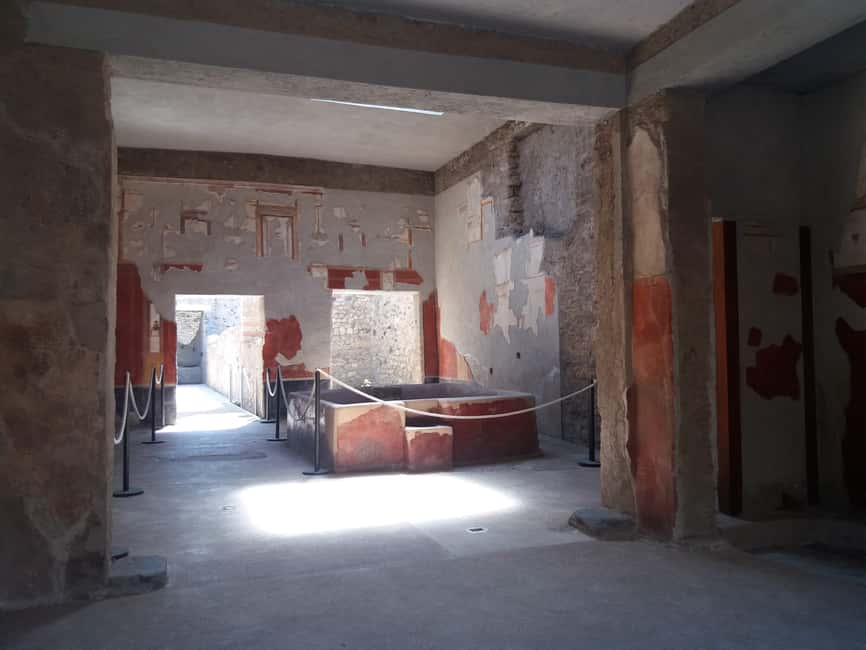
At $34 per person, this is positioned as a way to combine two things: entrance access and an audioguide. For many visitors, that’s the sweet spot. You get a head start with skip-the-ticket-line entry, and you don’t have to line up for a guided group.
Is it good value? It’s good value if you’ll actually use the audioguide and if you want independence. The ruins are walkable as a self-guided circuit, and the audio saves you from needing constant reading. You’ll get more out of the day when you’re not guessing what each building function was.
If you’re the type who prefers a live guide to answer questions on the spot, this might feel light. This experience doesn’t include a guided tour, so your learning is mostly driven by the audioguide and your own curiosity.
Also factor in the reality of check-in. If voucher timing or ticket collection doesn’t go smoothly, you may lose the convenience you paid for. That’s not about the site itself—it’s about how this particular ticket is delivered on the ground.
Ticket Collection Reality Check: Avoid the Common Friction Points
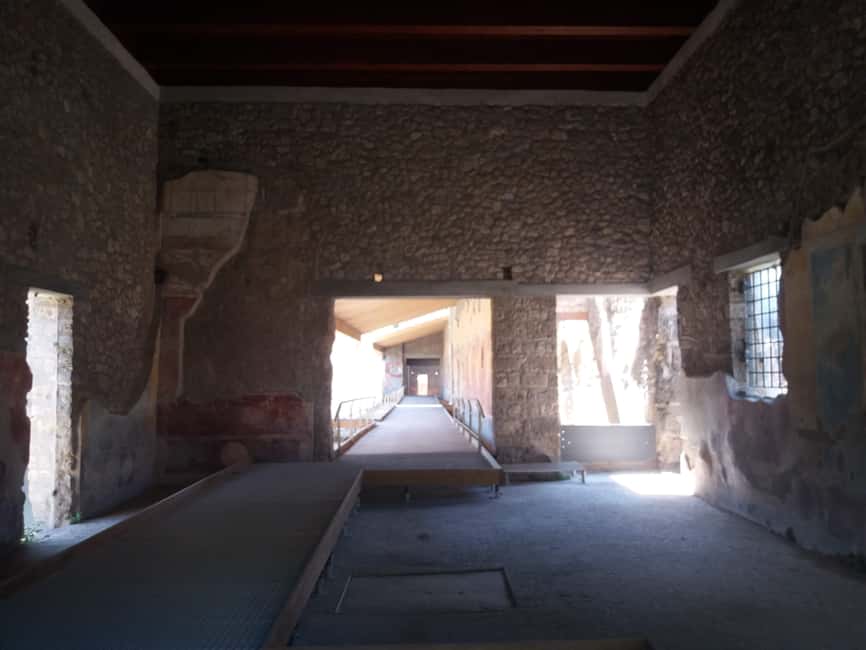
The start is simple on paper: show your voucher at the reception and collect your ticket. That’s the moment where smooth planning matters.
A few issues have popped up for some people, including delays with sending the voucher and difficulty locating the company office in Pompeii. If you run into confusion, lean on the site reception staff and inspectors on the ground. One of the recurring outcomes from messy situations is that helpful staff can get you sorted and moving.
Here’s how to protect yourself:
- Keep your voucher ready on your phone, and if possible, also have a printed copy
- Arrive early enough to handle slow check-in without panic
- If you can’t find anyone connected to the provider, ask the reception staff directly where you should pick up your ticket
Because the overall rating for this option is low, I’d treat it as a deal with strings attached. Not a deal-breaker, just a reason to plan with a little margin.
Who This Works Best For (and Who Might Want Something Else)
This is best for travelers who want Pompeii on their schedule. If you enjoy walking, reading rooms with your own pace, and learning through audio, you’ll probably be happy with this format.
It also suits history and art lovers who want to see recognizable highlights like the Temple of Apollo, thermal baths, and the House of the Vettii without spending extra time on lines. The audioguide route is a good way to make sure you don’t miss the core themes.
Suitability notes are mixed. The activity says it’s wheelchair accessible, but it also states it’s not suitable for people with mobility impairments, and it’s not suitable for visually impaired people. If accessibility affects your decision, you should confirm details with the operator before you book so you aren’t stuck on arrival.
If you’re traveling with kids who need constant interaction or you prefer a real-time Q&A guide, you might find this self-guided approach less satisfying.
Should You Book This No-Line Pompeii Ticket?
I’d book it if you want a self-guided day, you’ll actually use the audioguide, and you can give yourself a little buffer for pickup. The combination of skip-the-ticket-line entry and a built-in explanation trail makes it a practical way to see Pompeii’s big anchors without feeling like you’re stuck in a slow queue.
I would hesitate if your schedule is razor-thin or if you hate anything voucher-related. With the reported check-in problems, you’ll be happier if you arrive early, keep your confirmation accessible, and don’t rely on last-minute tech miracles.
FAQ
What’s included with the Pompeii no-line ticket and audioguide?
Your ticket includes an entrance ticket to Pompeii and an audioguide. Food, drinks, and hotel pickup are not included.
Does this ticket let me skip the entrance line?
Yes. The experience is designed to skip the ticket line.
How long is the ticket valid?
The ticket is valid for 1 day. You’ll need to check availability to see starting times.
Where do I pick up the ticket when I arrive?
Show your voucher at the reception and collect your ticket at the meeting point.
What stops or sights can I expect to see?
The highlights include the Temple of Apollo, thermal baths, the House of the Vettii, the forum and theaters, and the famous “mummies” (bodies fossilized by ash). The audioguide is part of how you learn about these.
What’s the last admission time?
Last admission is one hour before closing time.
Are pets allowed in Pompeii with this ticket?
No. Pets are not allowed.
Is luggage or a large bag allowed?
No. Luggage or large bags are not allowed.
Is it wheelchair accessible?
The activity says it is wheelchair accessible, but it also notes it is not suitable for people with mobility impairments. It’s worth checking what that means for your exact needs before you go.
Can I cancel for a refund?
Yes. You can cancel up to 24 hours in advance for a full refund.