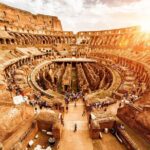
REVIEW · COLOSSEUM TOURS
Colosseum Guided tour & access to Roman Forum Palatine Hill
Book on Viator →Operated by Taj Colosseum Tours · Bookable on Viator
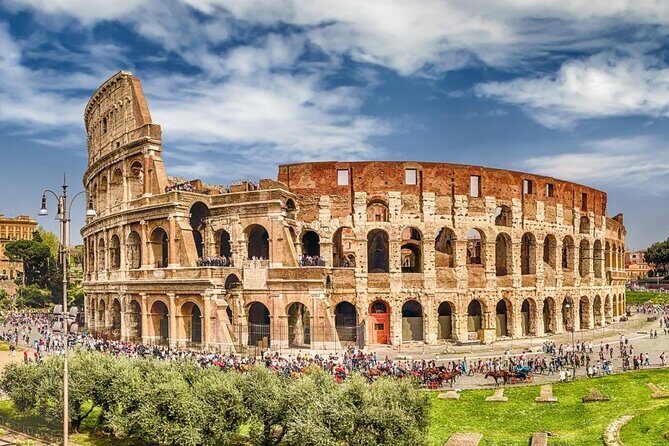
The Colosseum story starts before you even enter. This guided experience helps you make sense of what you’re looking at, with a historian focusing on the gladiators, the politics, and the engineering tricks that made Rome’s show business possible. Then you’re set free to explore the Roman Forum and Palatine Hill at your own pace, with prebooked admission that reduces hassle at the ticket counters.
I love how the Colosseum talk connects the building to real ancient life, not just wow-factor views. I also like the split format: guided time where questions matter, then self-guided time where you can linger over details you care about.
One thing to consider: the start can be a little tricky if you’re trying to spot your guide quickly, and entry timing into the Colosseum can affect when you actually start.
In This Review
- Key things that make this tour work
- Entering The Colosseum Without Ticket-Counter Headaches
- A Colosseum Guided Tour With Historian Focus (Not Just Photo Spots)
- What to watch for while you’re there
- The Timing Reality: How 2 Hours 10 Minutes Feels on the Ground
- Roman Forum and the Via Sacra: Where Public Life Lived
- Self-guided time can be a blessing or a trap
- Palatine Hill: The Romulus Story and Big Overlook Views
- Price and Value: What $118.95 Buys You in Rome
- Meeting Point, Names on the Voucher, and Real-World Entry Rules
- Who This Tour Fits Best (And Who Might Want Something Else)
- Should You Book This Colosseum + Roman Forum + Palatine Hill Tour?
- FAQ
- How long is the tour?
- Is the Roman Forum and Palatine Hill guided?
- What is included in the price?
- What do I need to bring for entry?
- Where does the tour start and end?
- Can I cancel and get a refund?
Key things that make this tour work
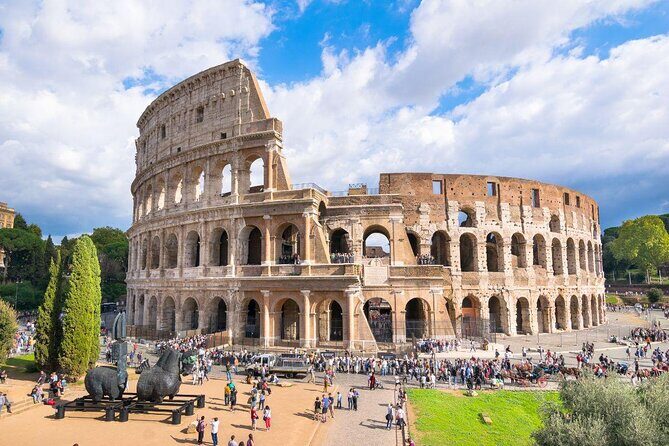
- Prebooked Colosseum admission + reservation fee included: you’re not relying on last-minute ticket lines
- Historian-led focus on what happened in and around the arena, plus political context
- Naval-battle engineering on dry land: a standout explanation that changes how you picture the site
- Self-guided Roman Forum and Palatine Hill time: you control your pace for 30 minutes at each
- Small group limit of 24: easier for an English-speaking guide to manage the group
Entering The Colosseum Without Ticket-Counter Headaches
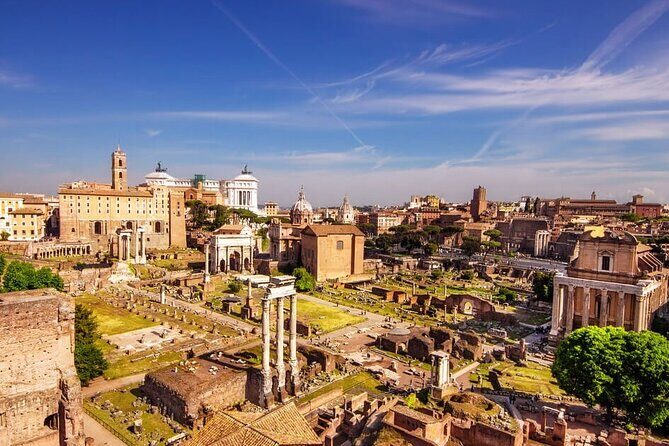
This tour’s biggest practical win is the prebooked ticket setup for the Colosseum. You’re paying for a Colosseum entrance ticket and a reservation fee, and that usually means you spend less time stuck at the counters trying to sort out timing. In Rome, when you’re dealing with a high-demand site, anything that cuts friction matters.
The tour runs about 2 hours 10 minutes total. That’s not long, but it’s long enough to hear the key stories from a historian and still get meaningful time in two surrounding areas. You’ll start at Largo Gaetana Agnesi and finish near the Roman Forum area at Via Delaa Salaria vecchia, which is handy if you want to keep walking afterward.
One detail I consider non-negotiable: the names on your voucher have to match the passport or ID you bring. If your full names aren’t correct before you arrive, entry can be denied. This isn’t a “nice to have” item; it’s the difference between walking in and standing outside.
You can also read our reviews of more guided tours in Rome



A Colosseum Guided Tour With Historian Focus (Not Just Photo Spots)
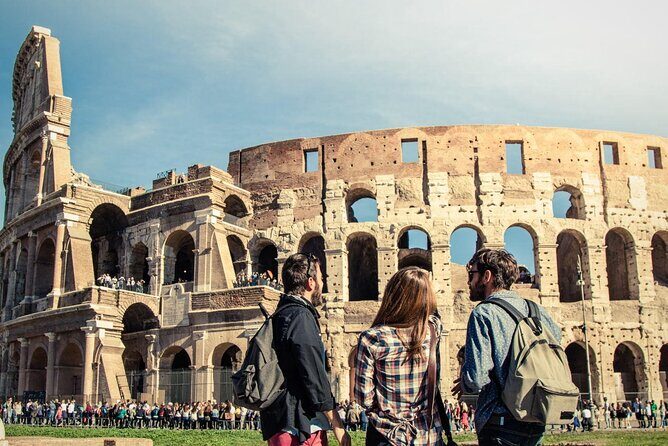
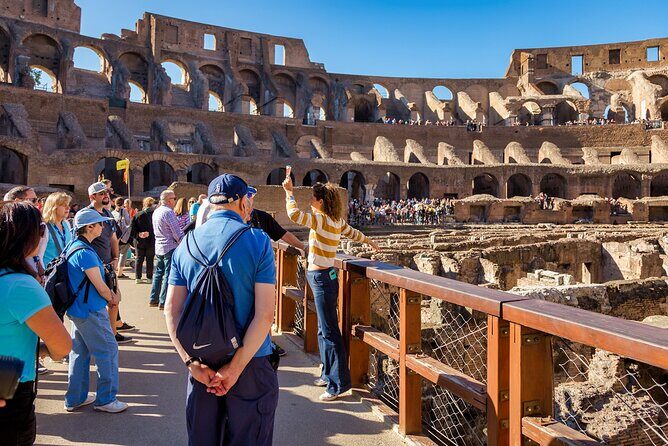
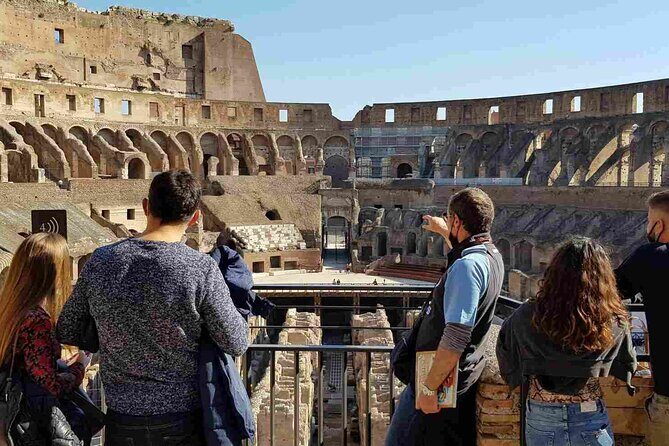
Your guided portion centers on the Colosseum itself, scheduled for about 1 hour 10 minutes. This is where the historian guide earns their keep. Instead of treating the Colosseum like a single big monument, you get a structured look at the show, the crowd, and the power games around it.
I like that the guide explains the fights in both a physical and political sense. The Colosseum wasn’t only about entertainment. It was also about messaging—who had control, who paid for spectacle, and how public events reinforced authority. That lens makes the stone architecture feel less like a museum display and more like a machine built for influence.
You’ll also hear the kind of corrections that change how you view popular portrayals. The tour specifically points out that Gladiator doesn’t get everything right. That’s valuable because it nudges you away from movie memory and back toward how Romans actually staged spectacle.
And then there’s the engineering story. You’ll hear about ancient feats that allowed the Romans to reenact naval battles on dry land. That one detail matters because it reframes the Colosseum from a static arena into a system that could be transformed. If you’ve only ever pictured sand and swords, this explanation gives you a fuller mental model of how Romans made the impossible feel real.
What to watch for while you’re there
You won’t just be listening. As you walk and look, keep an eye out for how the structure supports the stories you’re hearing—levels, openings, and the way the arena would have been staged for different kinds of events. The guide’s job is to connect those features to the bigger picture, but you’ll get more out of it if you actively look while they talk.
The Timing Reality: How 2 Hours 10 Minutes Feels on the Ground
This is a compact tour. The total time works out roughly like this:
- Colosseum guided time: about 1 hour 10 minutes
- Palatine Hill: about 30 minutes, self-guided
- Roman Forum: about 30 minutes, self-guided
That pacing is smart if you want the highlights without committing to a half-day plan. But it also means you should arrive ready to move. You won’t have endless time to wander off your planned route.
One more practical note: Colosseum entry is time-based. If your timeslot is running late, your experience schedule may shift. In situations like that, your guide may make smart use of the waiting time rather than leaving everyone idle. Don’t plan tight connections right after the end of the tour unless you’ve built in buffer time.
Roman Forum and the Via Sacra: Where Public Life Lived
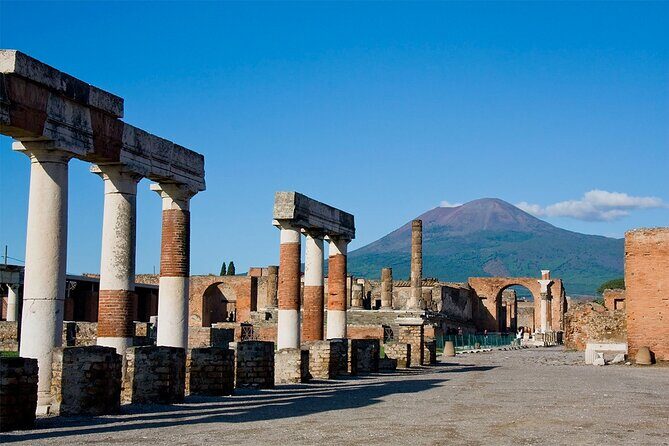
After the Colosseum, you get about 30 minutes in the Roman Forum area, and that section is self-guided. The Roman Forum is where the tour’s focus on Rome’s “how they ran the world” angle starts to click.
You’re centered on the heart of Ancient Rome: commerce, politics, military parades, and religious events. This is also tied to the Via Sacra, known as the Sacred Way, which is the road that shaped how people moved through power and ceremony. If the Colosseum explains the spectacle, the Forum shows the machinery behind the spectacle.
The tour’s framing is helpful: you learn to see the Forum as a lived-in center of events, not just a place where ruins happen to exist. Vestal Virgins, political rallies, and ceremonies all show up in the context you’ll be walking through. With self-guided time, you can slow down for the details that grab you and skip the ones that don’t.



Self-guided time can be a blessing or a trap
Self-guided means you’re not constantly herded. It’s also on you to decide where to focus with your limited 30 minutes. If you want maximum value, pick a few priorities before you start—like the general lines of the Sacred Way or the spaces tied to religious ceremony. Then walk with purpose instead of aimless wandering.
Palatine Hill: The Romulus Story and Big Overlook Views
Palatine Hill gets about 30 minutes, and it’s also self-guided. This is the myth-and-view part of the day. The tour connects Palatine Hill to the legend that Romulus chose the spot to found Rome in 753 BC, and it also brings in the tragic story of Remus.
Even if you’re more interested in archaeology than legend, this stop still works because Palatine is where you can feel why the location mattered. You’re offered perspective over the Roman landscape, and that helps you understand how geography shaped Roman power.
The drawback? Thirty minutes goes fast on a hill site with lots to look at. Self-guided time is great for people who enjoy wandering and decoding ruins. It’s less great for anyone who wants a lot of guided explanation here. If you’re the type who asks lots of questions, you’ll likely wish the guide stayed with you longer once you move on from the Colosseum.
Price and Value: What $118.95 Buys You in Rome
At $118.95 per person, this tour isn’t the cheapest way to see the Colosseum and the Forum area. But it is priced for convenience and structure.
Here’s what you’re effectively paying for:
- A Colosseum entrance ticket (listed as valued at €18)
- A Colosseum reservation fee (listed as valued at €2)
- The rest of the cost covers services that help you time the visit and get historical guidance at the key moment
That matters because Colosseum access and timing can be stressful. Prebooked entry helps you show up with a plan. And the historian-led portion is where the money makes sense: it turns the Colosseum into a story you can follow instead of a pile of stone you scan.
For me, the best value angle is the mix. You get guided time for the hardest-to-understand stop, then self-guided time where you can adapt. If you try to do all three completely solo, you might spend more time figuring things out on the spot—time you don’t have, since the total tour duration stays around 2 hours 10 minutes.
Also keep in mind what’s not included: coffee and/or tea. If you want a stop for a drink, plan it around your schedule rather than expecting it to be part of the tour.
Meeting Point, Names on the Voucher, and Real-World Entry Rules
Start at Largo Gaetana Agnesi. That’s a normal Rome meeting area for this kind of tour, and the listing notes you’re near public transportation. Ending near the Roman Forum at Via Delaa Salaria vecchia helps you transition right into further exploring without needing extra directions.
The big “don’t skip this” item is the identity matching rule:
- Provide the full names of all travelers when booking.
- Bring a valid passport or ID that matches the names on your booking.
- If your voucher doesn’t have all full names, or if ID doesn’t match, entry can be denied.
This is one of those rules that feels bureaucratic until you’re standing there, stressed, trying to fix it. Double-check your documents before you travel so you can treat this as a smooth, exciting day instead of a paperwork puzzle.
And one more reality check: finding the correct guide can take a moment if the group has no clear marker. When you arrive early, scan your immediate area, keep an eye on the group’s starting point, and don’t assume the guide will be obvious from far away.
Who This Tour Fits Best (And Who Might Want Something Else)
I think this works best for you if:
- You want a Colosseum historian explanation rather than a basic walkthrough
- You like a tight plan and don’t want to spend half a day managing entry and routes
- You enjoy self-guided time for the Roman Forum and Palatine Hill, where you can choose what to linger on
It might feel less ideal if:
- You need constant guidance at every stop. Palatine and the Forum are self-guided, so you’ll be doing more reading and choosing on your own during those segments.
- You get anxious about timing windows. Colosseum entry is scheduled, and real-life delays can affect how the day feels.
Because the tour is offered in English and capped at 24 travelers, it’s also a good size for hearing your guide. If you prefer huge crowds, this won’t be your vibe. If you want something manageable, it fits.
Should You Book This Colosseum + Roman Forum + Palatine Hill Tour?
I’d book this if you want the best of both worlds: a historian-led start at the Colosseum and then free hands at Palatine Hill and the Roman Forum. The format respects your attention span. It also gives you the kind of context that makes the ruins easier to read.
I’d think twice only if you strongly prefer full guidance at every single stop or if you’re the type who can’t tolerate any start-time uncertainty. With time-based entry, you should expect that the day may not run like a perfect clock.
If you’re organized about names and documents and you’re happy mixing guided stories with self-paced wandering, this is a solid value way to hit three top Rome sites in about 2 hours 10 minutes.
FAQ
How long is the tour?
It runs for about 2 hours 10 minutes. The Colosseum portion is about 1 hour 10 minutes, followed by about 30 minutes each for Palatine Hill and the Roman Forum.
Is the Roman Forum and Palatine Hill guided?
No. The Colosseum is guided, and both Palatine Hill and the Roman Forum are self-guided during their allocated time.
What is included in the price?
The price includes Colosseum entrance ticket and a Colosseum reservation fee, plus admission to Roman Forum and Palatine Hill (self-guided).
What do I need to bring for entry?
You need a valid passport or ID that matches the full names provided at booking. You must also have a voucher with all travelers’ full names, or entry may be denied.
Where does the tour start and end?
The tour starts at Largo Gaetana Agnesi and ends at the Roman Forum area, with the end noted near Via Delaa Salaria vecchia.
Can I cancel and get a refund?
Yes. You can cancel up to 7 days in advance for a full refund. If you cancel less than 7 full days before the start time, the amount paid is not refunded.