REVIEW · POMPEI CAMPANIA
Pompeii: Guided Tour & Skip the Line Ticket
Book on GetYourGuide →Operated by Enjoy Pompeii · Bookable on GetYourGuide
Pompeii feels unreal, in the best way. This guided, skip-the-line visit helps you cut through the usual waiting and gets you into the Forum, baths, and standout houses without wasting precious hours. I love that the tour sticks to the big, story-rich stops, and I especially like how the guide ties what you see to the day Vesuvius erupted in 79 AD.
One thing to plan for: it’s a walking tour in an outdoor archaeological site, and it’s not a good fit if you have motion sickness or mobility limits.
I also like that this isn’t just facts on repeat. The guides (including Giulia, Gennaro, and Sasà) steer the experience with clear explanations, myth and religion context, and lots of direct answers, so you’re not left guessing what you’re looking at. You’ll also get moments built for photos, and even photo help, if your guide is up for it.
Still, the big drawback is simple: 2 hours goes fast, so if you want to linger in one house or one corner of the Forum, you’ll need to come back later on your own.
Key highlights at a glance
- Skip-the-line entry via a separate entrance so you get to Pompeii sooner
- A small-group feel, with English or Italian live guide
- Focused stops including the Forum, House of the Tragic Poet, House of the Golden Cupids, and Stabian Bath
- A guide who connects buildings to the people and beliefs behind them
- A route that’s structured enough to feel complete in about 2–2.25 hours
In This Review
- Skip-The-Line Entry That Actually Saves Time
- Who Guides You, And Why It Changes Everything
- The Pompeii “Frozen in Time” Moment: What You’re Really Seeing
- First Stop Energy: Starting at Ristorante Bar Sgambati
- Navigating Pompeii in About 2 Hours (and Not Getting Lost)
- The Forum: Where Roman Public Life Gets Real
- House of the Tragic Poet: Private Space With Public Meaning
- House of the Golden Cupids: Art, Taste, and Daily Life
- Stabian Bath: Daily Routine in Stone
- Finishing Strong: How the Route Leaves You Wanting More
- Price and Value: Is $60 a Smart Spend?
- What to Bring (And What to Skip)
- Who This Tour Fits Best
- Should You Book This Pompeii Skip-the-Line Tour?
- FAQ
- How long is the guided tour?
- Does the ticket include skip-the-line entry?
- Where does the tour start?
- What sites are included in the tour?
- What languages are available for the live guide?
- Is this tour suitable for wheelchair users?
Skip-The-Line Entry That Actually Saves Time
Pompeii is one of those places where the “getting in” part can quietly eat your day. This tour solves that with a skip-the-line ticket plus access through a separate entrance, so you spend more time walking and less time hovering near checkpoints.
That matters because the site is huge, and your best photos and best moments happen when you’re moving at a steady pace. With skip-the-line entry, you start the tour with momentum instead of frustration.
Also, the ticket is paired with a 2-hour guided tour, so you’re not just paying for entry. You’re paying for someone to point your eyes at the right details and give you a usable story while you’re there.
Who Guides You, And Why It Changes Everything
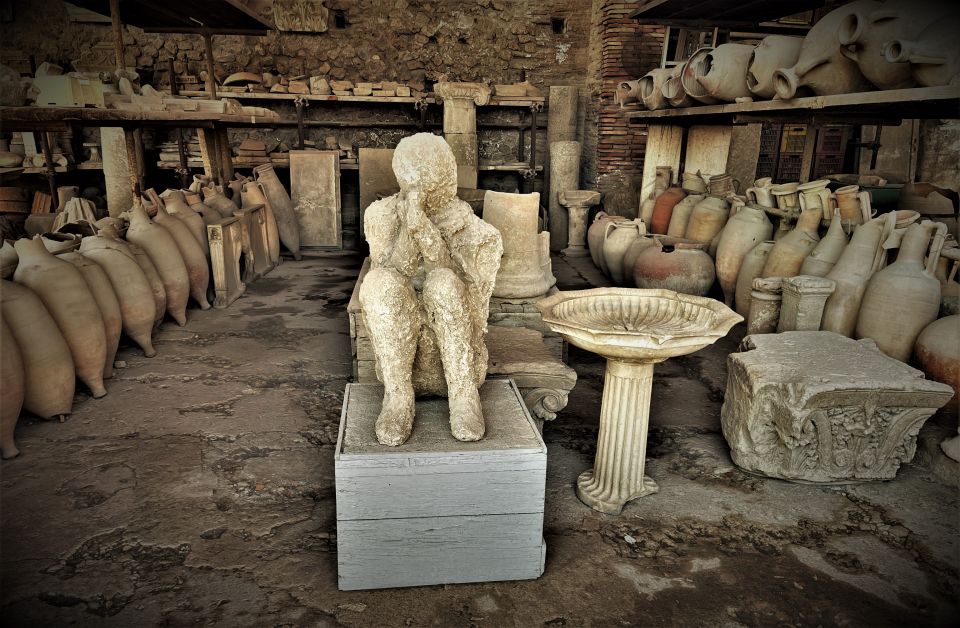
The difference between a self-guided ticket and a guided visit is not “extra information.” It’s speed plus understanding.
The guides for this experience—like Giulia—tend to bring the site to life with clear explanations of Roman life, mythology, religion, and how everyday people would have lived in the town that was preserved after the eruption. Another guide, Gennaro, is described as both cheerful and highly skilled at explaining the beauty of Pompeii with real enthusiasm. Sasà also made meeting simple and helped kids feel excited rather than bored.
What you should take from that: the best part of the guide isn’t just what they know—it’s how they translate it into what you can see. When you’re standing in front of something like a forum space or a bath area, you want the meaning, not just a date.
You can also read our reviews of more tours and experiences in Pompei Campania.



The Pompeii “Frozen in Time” Moment: What You’re Really Seeing
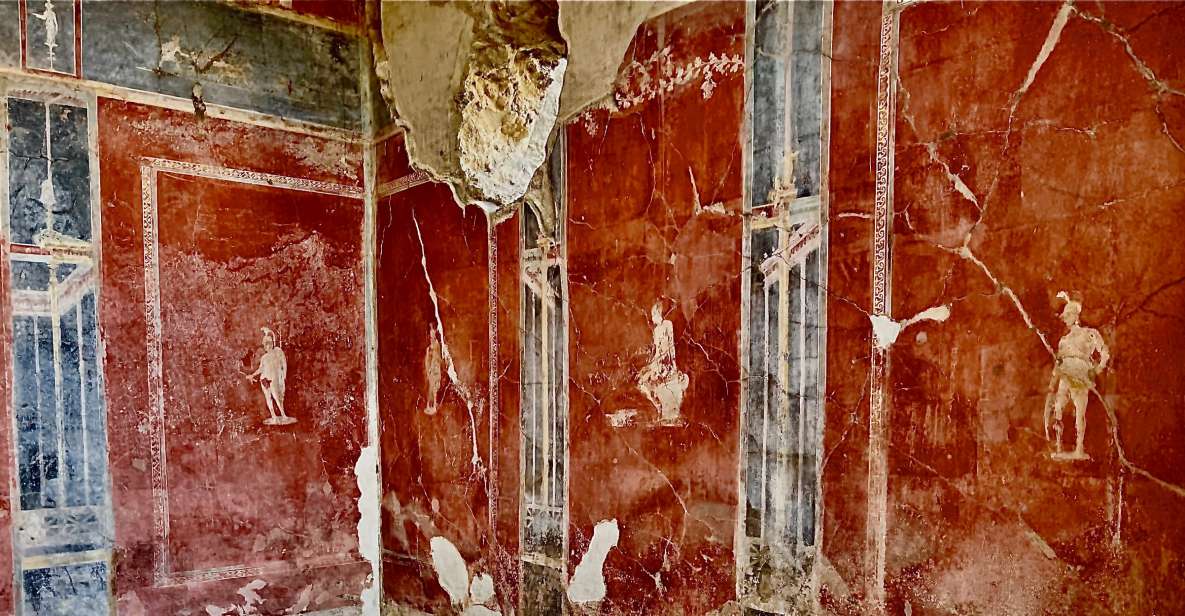
Pompeii’s magic is also its horror. In 79 AD, when Mount Vesuvius erupted, the volcanic ash effectively sealed the city in a way that lets you walk through streets and buildings that would otherwise have vanished.
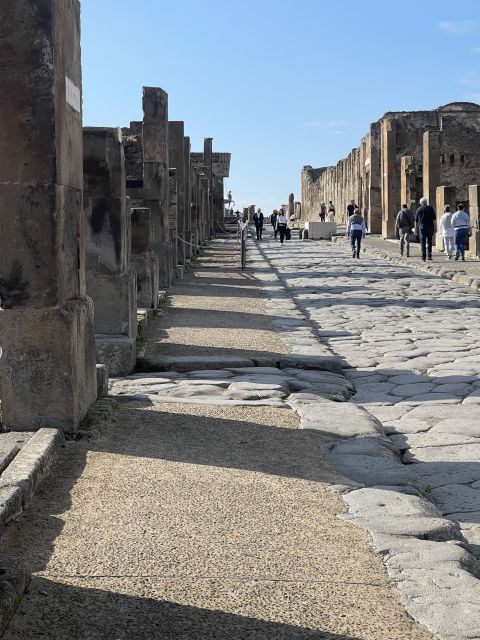
On this tour, you get to experience that preserved normality in a structured way. You’ll walk the ancient streets, take in Roman architecture, and get an explanation of what life was like before the eruption.
Here’s the practical takeaway: seeing Pompeii isn’t only about big sights. It’s about learning how a city worked—public life in the Forum, private life in homes, and daily routines in places like baths.
First Stop Energy: Starting at Ristorante Bar Sgambati
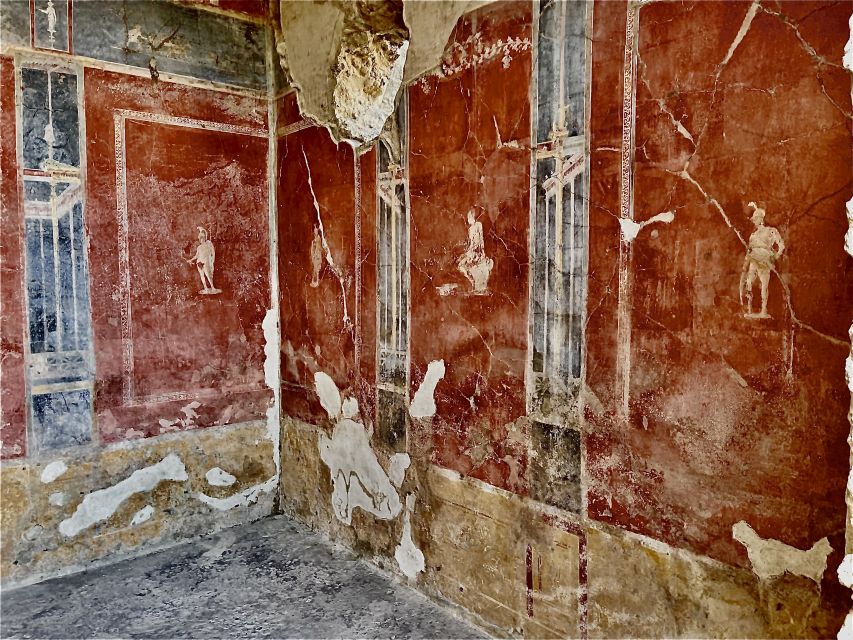
The tour starts at Ristorante Bar Sgambati. That’s helpful for two reasons.
First, it’s a clear human meeting point instead of an abstract landmark. Second, guides are set up to connect with you easily—some guides will reach out personally ahead of time to help you find them, and the tour is described as easy to locate from the train area.
If you’re the kind of traveler who worries about missing meet-ups, this matters. It reduces that “figuring it out” anxiety before you ever reach Pompeii.
Navigating Pompeii in About 2 Hours (and Not Getting Lost)
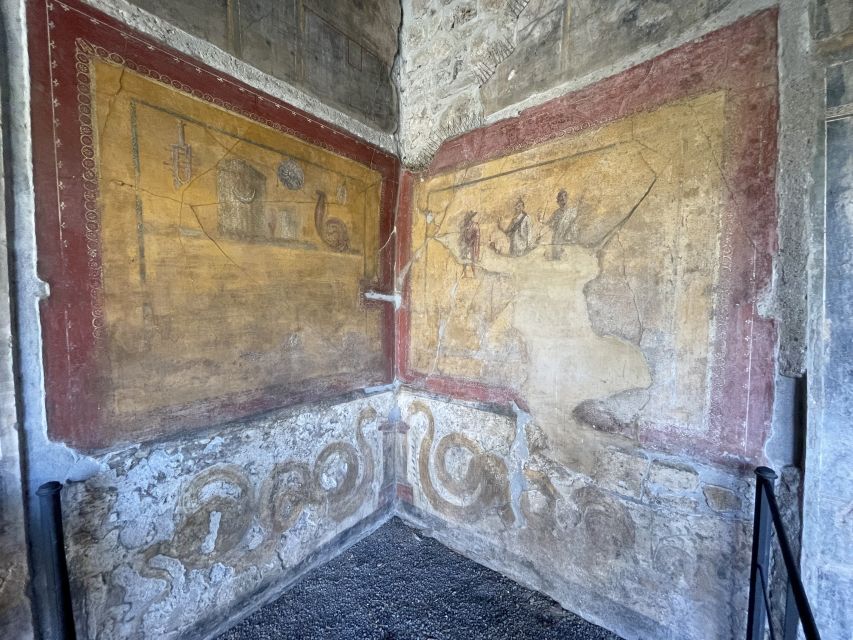
Pompeii rewards slow wandering, but your guided experience is intentionally time-smart.
You’re looking at a tour length of about 2 hours, with a guided walk time listed around 2.25 hours. That typically means you’ll move along a route that hits the most meaningful highlights without pretending you can see everything.
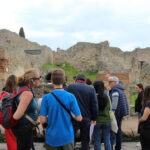
This is where a small-group setup helps. It keeps the pace manageable and gives your guide space to answer questions instead of shouting over a crowd.
If you’re traveling with mixed interests—one person who loves architecture and another who just wants the story—you’ll likely appreciate that the route covers both.
The Forum: Where Roman Public Life Gets Real
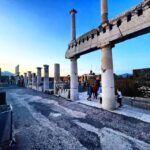
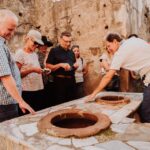
You’ll visit the Forum, Pompeii’s public gathering place. This is one of the biggest “click” moments of the tour because the Forum isn’t just a ruin—it’s the mental model for Roman civic life.
Expect your guide to explain what this space meant and how it shaped daily routines: the kind of community activity that happened there, the civic vibe, and how the town functioned as a society. Standing in the Forum is also where you start to notice how Roman design supports public movement and visibility.
Practical tip: keep your eyes up as well as down. In a place like Pompeii, the details around the edges often tell you more than the center does.




House of the Tragic Poet: Private Space With Public Meaning
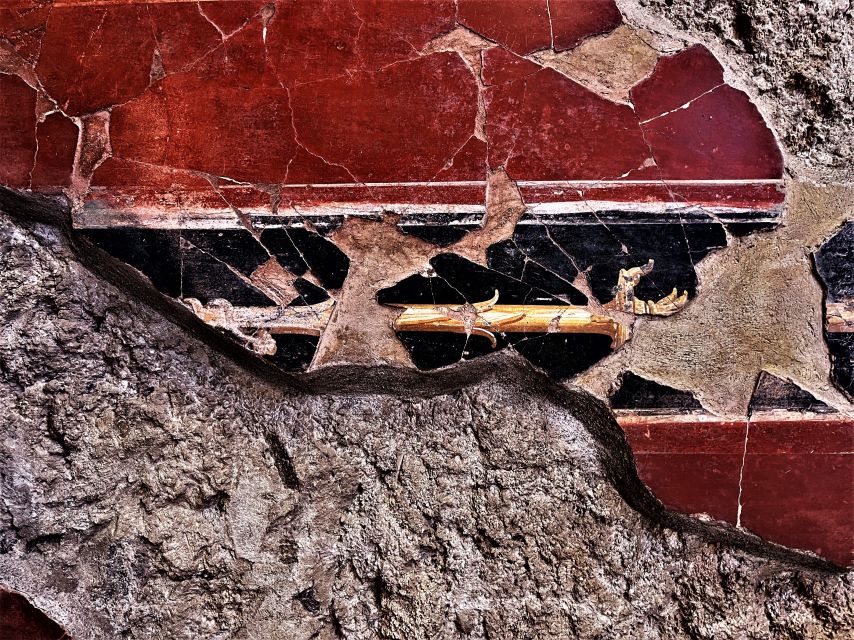
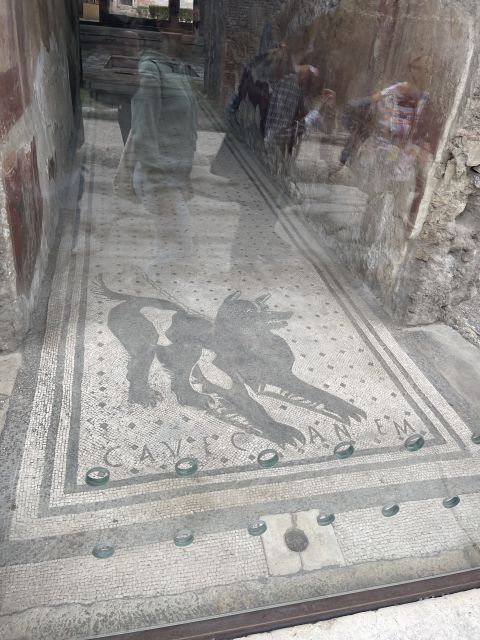
Next, you’ll visit the House of the Tragic Poet. A house visit does two jobs at once: it shows you home life and it shows you the choices wealth and taste influenced.
You’ll likely spend time looking at room layout and the atmosphere created by how these homes were built and used. And because this tour is guided, you’re not just learning architectural terms—you’re learning why the spaces mattered.
The value here is that it balances the Forum. Public Pompeii shows you how Romans gathered; the houses show you how they lived.
House of the Golden Cupids: Art, Taste, and Daily Life
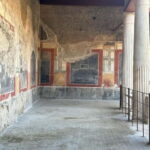
The House of the Golden Cupids is another home stop, and it’s a great reminder that Pompeii wasn’t only made of civic stone. It was also full of art, decoration, and personal identity.
On a guided tour, this kind of stop becomes more than a pretty place. Your guide can connect what you’re seeing to Roman culture—what people liked, what they displayed, and how those visuals signaled social values.
If you enjoy photo-friendly details, this is the kind of location that often works well. One of the experiences described is that guides may take you to photogenic spots and even help with a photo while you’re there.
Stabian Bath: Daily Routine in Stone
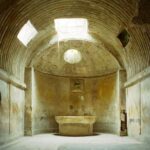
Then you’ll head to the Stabian Bath. Baths were a big deal in Roman life, and this stop helps you understand Pompeii as a living schedule, not just a snapshot.
Even in ruin form, bath areas communicate routine: movement between spaces, the idea of cleansing and socializing, and the way the built environment supported that daily habit.
What I like about including a bath stop on a highlight route is that it changes the emotional feel of the walk. A house and a bath both feel intimate. The Forum feels public. Together, they give you a fuller picture of how people passed time.
Finishing Strong: How the Route Leaves You Wanting More
A guided Pompeii visit can feel either rushed or complete depending on how it’s structured. Here, the tour is described as starting promptly and ending on time, and in one case it even started a bit early once everyone was ready, finishing punctually.
That “tight timing” is good. It keeps the tour from dragging, but it also means you finish with energy—not exhaustion.
After the tour, you’ll likely have a clearer idea of what you want to revisit. You’ll know what the Forum meant, what a home tells you about status and tastes, and how baths fit into everyday life.
Price and Value: Is $60 a Smart Spend?
At $60 per person for a tour that includes skip-the-line entry plus a 2-hour live guided visit, the value is all about what you get for your time.
If you’re comparing this to buying an entry ticket and figuring everything out alone, the decision comes down to two things:
1) Time saved. Skip-the-line access isn’t just convenience. It keeps your day from slipping away while you wait.
2) Interpretation. Pompeii is famous, but ruins can blur together fast. A good guide helps you separate what’s important from what’s merely visible.
If you’re only going to Pompeii once, this tour model usually pays off. You get a coherent route, explanation while you’re standing in front of the sites, and a sense of the city as a system.
If you’re the type who wants to roam slowly for half a day and read every inscription, you might prefer more unstructured time. But for most visitors, the guided + skip-the-line mix is the practical sweet spot.
What to Bring (And What to Skip)
You’ll be happier with the right basics:
- Comfortable shoes
- Comfortable clothes
- Weather-appropriate clothing
- Passport or ID card (a copy is accepted)
Skip-the-line helps, but your comfort still depends on what you wear. Pompeii is an outdoor site, and you’ll be walking through ancient streets and between major features.
Also, if you have motion sickness or a pre-existing medical condition that might be affected by lots of walking and being outdoors, this tour is not listed as suitable.
Who This Tour Fits Best
This experience works especially well if you want:
- A high-efficiency route through Pompeii highlights
- A live guide explaining Roman life, beliefs, and how the eruption preserved the city
- A small group pace where questions don’t get ignored
- A guided visit that also supports photo stops with some help along the way
It may not be your best choice if you need wheelchair accessibility, have motion sickness concerns, or have medical limitations that make walking and an outdoor ruin setting difficult.
Should You Book This Pompeii Skip-the-Line Tour?
Book it if you want Pompeii to feel understandable fast. The combination of skip-the-line entry, a live guide, and a route that hits the Forum plus key houses and the Stabian Bath is a smart way to make your time count.
Don’t book it if you’re determined to spend a long day wandering with zero schedule. This tour is built to cover highlights in around 2 hours, so you’ll likely want extra self-guided time later if you’re the linger-and-linger type.
FAQ
How long is the guided tour?
The guided experience is listed as 2 hours.
Does the ticket include skip-the-line entry?
Yes. Your ticket includes skip-the-line entry, accessed through a separate entrance.
Where does the tour start?
The tour starts at Ristorante Bar Sgambati.
What sites are included in the tour?
You’ll visit Pompeii highlights including the Forum, House of the Tragic Poet, House of the Golden Cupids, Stabian Bath, and more.
What languages are available for the live guide?
The live tour guide is available in English and Italian.
Is this tour suitable for wheelchair users?
No. It is not suitable for wheelchair users, and it’s also not listed as suitable for people with pre-existing medical conditions or motion sickness.