REVIEW · MUSEUMS
Vatican Museums Sistine Chapel tour with Access to St. Peters
Book on Viator →Operated by Bonjorno Tours · Bookable on Viator
Three hours, and the Vatican feels infinite. This tour is built for getting you to the big rooms fast, with guaranteed fast-track entry and an English guide who gives context while the crowd pushes you along. You also get time at St. Peter’s with access to the Square, so the day doesn’t end when the museums do.
I like that it starts with the right focus: Vatican Museums first, guided by a professional art historian, then the Raphael Rooms, and finally the Sistine Chapel and St. Peter’s. Two things I really appreciate are the straightforward route through the must-sees and the use of an audio system so you can follow the guide without craning your neck.
One heads-up: the Vatican runs on crowd math. Even with fast-track entry, the pace can feel rushed, and the Sistine/Basilica timing may not match what you’d want if you like slow, lingering viewing.
In This Review
- Key highlights you should care about
- Why fast-track at the Vatican is worth your money
- Vatican Museums with an art historian: the 90-minute focus
- Raphael Rooms (Stanze di Raffaello): quick access to the big ceiling of Rome
- St. Peter’s Square access: Basilica time at your own pace
- Sistine Chapel timing: the Michelangelo payoff with limited minutes
- Pace, headsets, and the crowd reality (the stuff that affects your enjoyment)
- Should you book this Vatican Museums + St. Peter’s tour?
- FAQ
- How long is the tour?
- What’s included in the tour?
- Is there a guided tour inside St. Peter’s Basilica?
- Does this tour include climbing the dome?
- What do I need to bring to enter the Vatican?
- What if St. Peter’s Basilica closes last minute?
- Can I cancel for free?
Key highlights you should care about
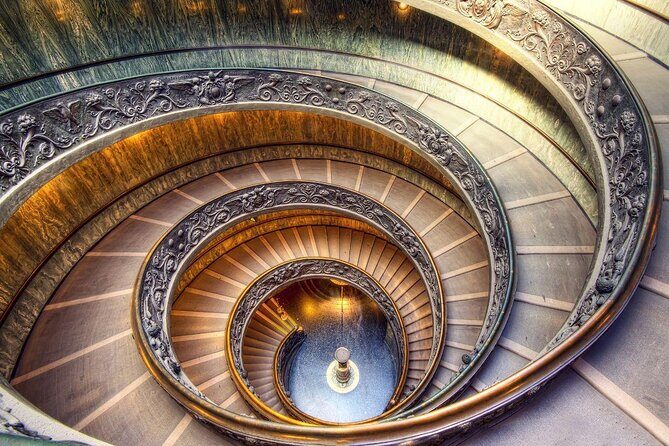
- Guaranteed fast-track entry means less time waiting at security and ticket lines.
- Art-historian style guidance in the Vatican Museums helps you understand what you’re seeing.
- Raphael Rooms (Stanze di Raffaello) are included as a dedicated stop, not a quick glance.
- Sistine Chapel plus St. Peter’s Square access keeps your day from feeling cut in half.
- Small-group limits (max 20, and Top VIP max 12) make it easier to stay together.
- Audio headsets can be a lifesaver in loud, crowded rooms.
Why fast-track at the Vatican is worth your money
At the Vatican, time goes two directions: forward into art, and sideways into lines. Even with skip-the-line tickets, security and ticket scanning can still take up to 30 minutes, so the real win is reducing the waiting you have control over.
This tour is designed to go straight to the highlights, which matters if it’s your first Vatican visit. The Vatican Museums are enormous, and without a plan you can end up chasing your own tail through corridors. With a guide steering you, you’re more likely to hit the rooms that actually make first-time visitors gasp—Raphael’s painted rooms and Michelangelo’s ceiling, plus the most famous bits in St. Peter’s.
The other practical advantage is group logistics. You meet at Viale Vaticano 100 and end at St. Peter’s Square, and the tour is structured so you don’t need to figure out how to move between sites while everyone is funneling through the same security bottleneck. Just don’t do the common mistake of walking up to the Vatican Museums entrance on your own—this tour specifically asks you not to go in without the guide.
One more thing I’d plan around: the Vatican is strict about clothing. You’ll need shoulders and knees covered to enter Vatican spaces, so wear something that works before you ever get to the checkpoint.
You can also read our reviews of more museum experiences in Rome



Vatican Museums with an art historian: the 90-minute focus
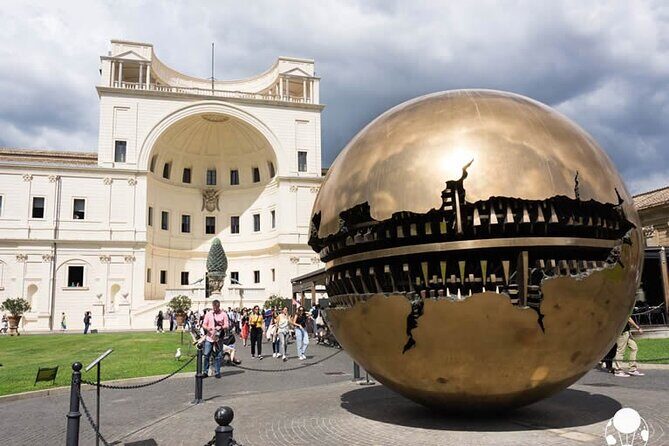
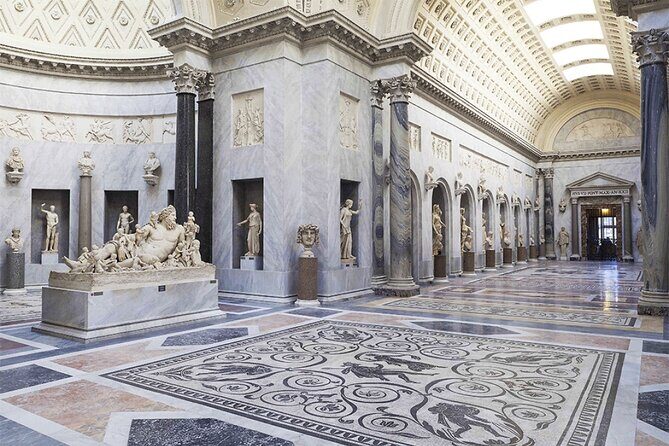
Your first major block is about 1 hour 30 minutes in the Vatican Museums, and it’s not meant to be a full survey of everything. Instead, it’s a highlights approach, guided by a professional art historian (the kind of guide who explains what you’re looking at without turning the room into a lecture hall).
In a short time, the biggest value is learning how to read what you see. When the guide points out key details and connects artworks to the bigger story of the Vatican, the museums stop feeling like “lots of rooms” and start feeling like a narrative. That’s especially helpful if you’re not a lifelong art-book person. You still get the emotional impact of the masterpieces, but you also understand why they were made and why people keep returning.
Now for reality: this is still a museum inside one of the busiest sites on earth. Some visitors feel the route is packed and fast, and that you don’t get a lot of breathing room for lingering. If you’re the type who likes slow looking—walking a bit, taking photos, and then stopping again—this portion may feel like it’s moving ahead of your comfort level.
What helps is the audio setup. Reviews often mention the ear pieces/headsets as a plus, since they keep you oriented when you’re inside crowded galleries. If you’re sensitive to sound issues, test your headset connection early when you receive it, and don’t assume it’s clear until you’ve heard it working at normal volume.
Raphael Rooms (Stanze di Raffaello): quick access to the big ceiling of Rome
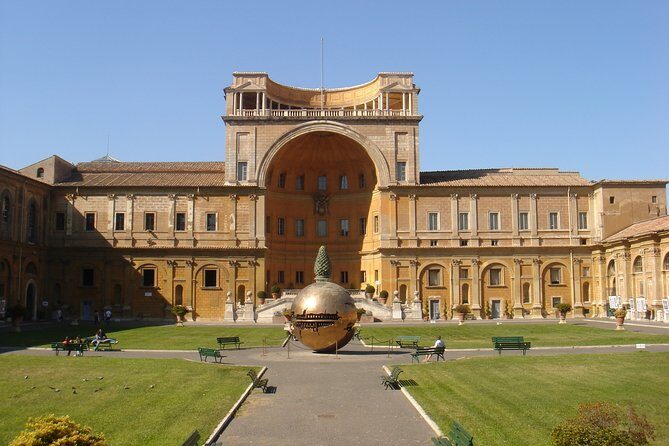
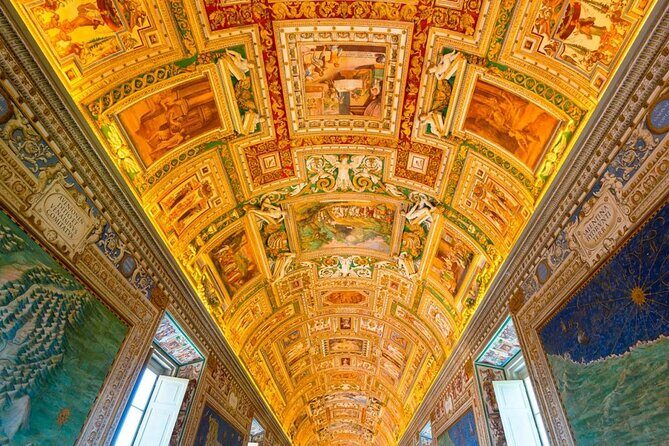
Next you’ll head to the Raphael Rooms (Stanze di Raffaello), a dedicated stop of about 30 minutes with a guide. This is the kind of itinerary choice I like: Raphael’s rooms can take over a whole day if you go in unplanned, but here you get a guided route aimed at the standout paintings and the relationships between them.
Thirty minutes sounds short, but it works if your guide is good at steering your eyes. The Rooms of Raphael are layered with scenes and symbolism, and you don’t want to be stuck trying to decode them while you’re standing shoulder-to-shoulder with everyone else. A guide keeps the visit coherent: you see the main themes, you get the context, and you leave with a sense of what Raphael was doing—not just what he painted.
One more note for planning: sometimes Vatican crowd management can restrict access to certain areas. There’s also specific mention that St. Peter’s can close last minute for private services, with a reroute to other rooms of the Vatican (including the Raphael Rooms). So keep expectations flexible, and treat the tour as a smart route through a system that sometimes changes how it works on the day.
If your guide is the kind of storyteller people rave about—names like Elizabeth and Maria-Theresa have been praised in past groups—this stop can feel like the part of the tour you remember for the art and the explanations.
St. Peter’s Square access: Basilica time at your own pace
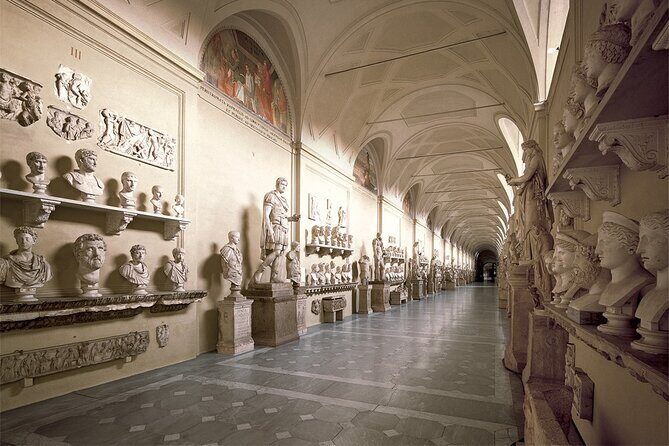
After the Vatican Museums, you get to St. Peter’s Square and then the Basilica area with self-paced time. The tour gives you an introduction to St. Peter’s, but it’s not a guided walk through every chapel and aisle.
This is a good setup if you want a mix: explanation when you need it, freedom when you want it. You can then prioritize what grabs you. The tour is designed around a few headline sights inside St. Peter’s, including the bronze baldachin (in New St. Peter’s), the Throne of St. Peter, and Michelangelo’s Pietà.
Also, the tour doesn’t include climbing the dome, so you’re not signing up for the stairs-and-wind part of the experience. If dome views are your goal, you’ll want a separate plan.
One thing to be ready for: St. Peter’s can be affected by last-minute scheduling. The tour notes that the Basilica may close for private services, and in that case the guide will provide a guided alternative focused on the Raphael Rooms. That’s not a guarantee of what you’ll see, but it’s an important contingency to know before you go.
Finally, keep in mind that during restoration periods (the tour mentions the Jubilee), major areas may be under work. In past experiences, the Pietà and altar have been reported as covered due to restoration, which can make St. Peter’s feel slightly less punchy than you’d expect. If you’re emotionally attached to one specific artwork, it’s smart to know that Vatican restorations can change what’s visible.
Sistine Chapel timing: the Michelangelo payoff with limited minutes
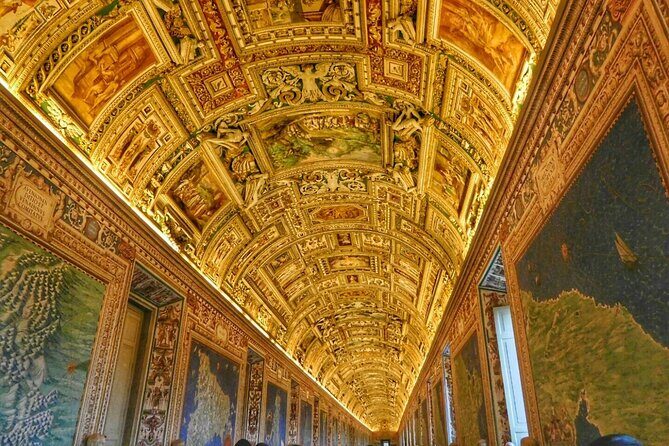
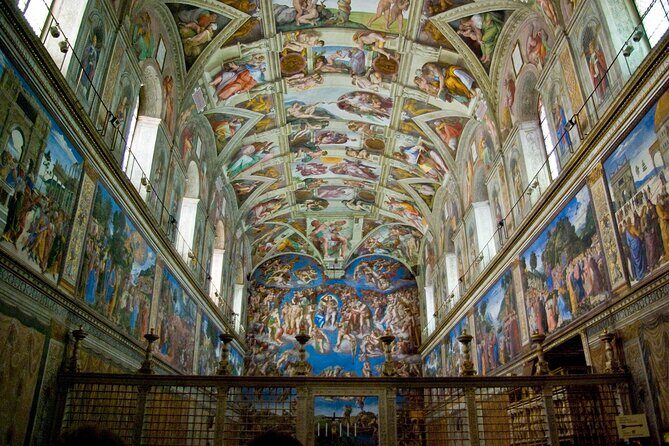
The last big indoor moment is the Sistine Chapel, with about 30 minutes included. This is the place everyone talks about for a reason: Michelangelo’s ceiling is hard to believe you’re actually seeing in person, even if you’ve studied photos for years.
The structure here matters. You’ll be inside the chapel as part of a guided flow, and the guide’s job is to help you understand what’s where and what you’re looking at—without eating your entire time in explanations. That’s a delicate balance, and reviews show that when the tour moves quickly, it can feel like there’s not enough time to sit with the ceiling as long as you want.
Crowds can also play a role in how satisfying that 30 minutes feels. The Sistine Chapel experience is powerful, but it’s also a tightly managed space with people stopping, turning, and trying to photograph without blocking others. If you’re the type who wants to take your time and really scan the fresco scenes, you may feel a little exhausted by the time you reach the chapel because the earlier museum portion can run long.
Still, there’s a practical upside: by the time you enter, you already have context for the Chapel’s place in the Vatican story. You’re not walking in cold. You understand the significance, and you can focus on the art instead of trying to figure out what you’re seeing while everyone is moving.
If you tend to get overwhelmed by sound or devices, pay attention to how clear your headset is. Some people reported difficulties hearing their guide properly due to equipment or accent, so treat the audio portion as something you’ll need to verify early.




Pace, headsets, and the crowd reality (the stuff that affects your enjoyment)
This tour has a clear philosophy: cover the highlights in a limited time window. That philosophy creates the biggest tension in the experience—some people love the efficiency, while others feel the route is pushed hard.
Several reviews mention moments where the pace feels fast, especially through the museums. On hot days, that can be a bigger deal than you’d think. One practical travel tip: wear comfortable shoes and plan for walking and steps. St. Peter’s and the museums are not gentle, and if you’re tired, you won’t enjoy even the best art as much.
Audio headsets are a big part of keeping the experience workable in the crowd. The tour includes audio, and reviews often praise the concept and equipment. At the same time, some people reported headset issues—wrong volume, poor clarity, or problems swapping devices in St. Peter’s—which cost time and stress in the sun. To protect your day:
- Confirm your headset works right away.
- Keep it within reach during transfers.
- Don’t wait until you’re frustrated to ask for help.
Group size also impacts pace. You’re capped at max 20, with Top VIP max 12. Smaller groups usually feel easier to manage, especially in crowded spaces where it’s hard to hear and harder to keep track of the route.
If you hate crowds, this tour might feel like a lot. If you’d rather accept the crowd pressure in exchange for speed and context, this is exactly the kind of structured day that makes sense.
Should you book this Vatican Museums + St. Peter’s tour?
I’d book this if you want a smart first-time Vatican plan that prioritizes the highest-impact rooms and saves you from waiting around. The value is strongest when you’re:
- short on time (you’ve got a few hours and want the big names),
- a first-timer who benefits from context, and
- willing to accept that it’s a busy, managed experience.
I might skip it or pick a different style of visit if you:
- want lots of quiet, unhurried viewing time in the museums,
- get stressed by crowds and fast movement,
- are very dependent on clear audio and don’t want to risk headset quirks.
If your goal is to see the Vatican’s headline masterpieces and then still enjoy St. Peter’s without turning your day into endless wandering, this tour’s route is built for that.
FAQ
How long is the tour?
It’s listed at about 3 hours (approx.).
What’s included in the tour?
You get Vatican Museums and Sistine Chapel, plus a guided tour of the Raphael Rooms, skip-the-line tickets, and access to St. Peter’s (with an introduction from the guide). The Basilica visit is free for this stop.
Is there a guided tour inside St. Peter’s Basilica?
You get an introduction to St. Peter’s Basilica, but the plan is self-paced inside the Basilica. The guided tour inside the Basilica is not included.
Does this tour include climbing the dome?
No. This tour does not include climbing the dome.
What do I need to bring to enter the Vatican?
You’ll need to bring a copy of your passport, ID, or driving license for Vatican entry. Also, you must dress appropriately with shoulders and knees covered.
What if St. Peter’s Basilica closes last minute?
The tour notes that St. Peter’s Basilica can close last minute for private services. In that situation, your guide will provide a guided alternative focused on the Raphael Rooms.
Can I cancel for free?
Yes, you can cancel for a full refund up to 24 hours in advance of the start time.