REVIEW · ROME
Rome: Saint Paul Outside the Walls Tour
Book on GetYourGuide →Operated by Mykhailo Hevko · Bookable on GetYourGuide
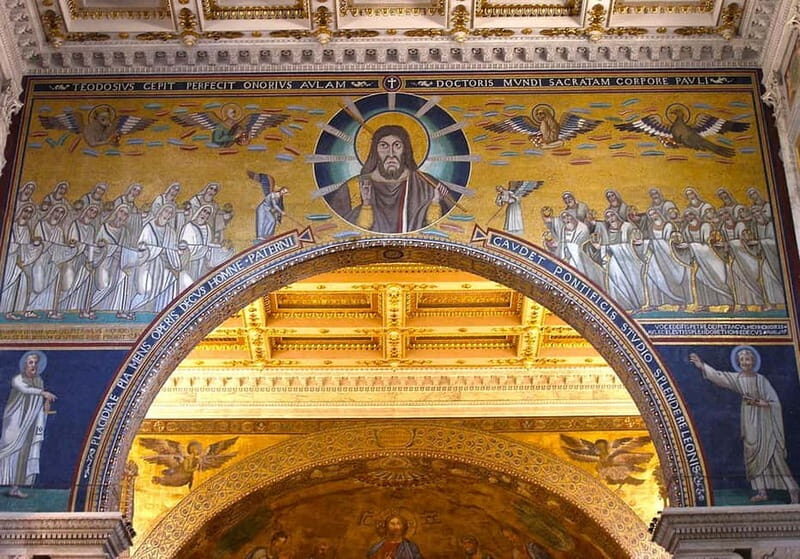
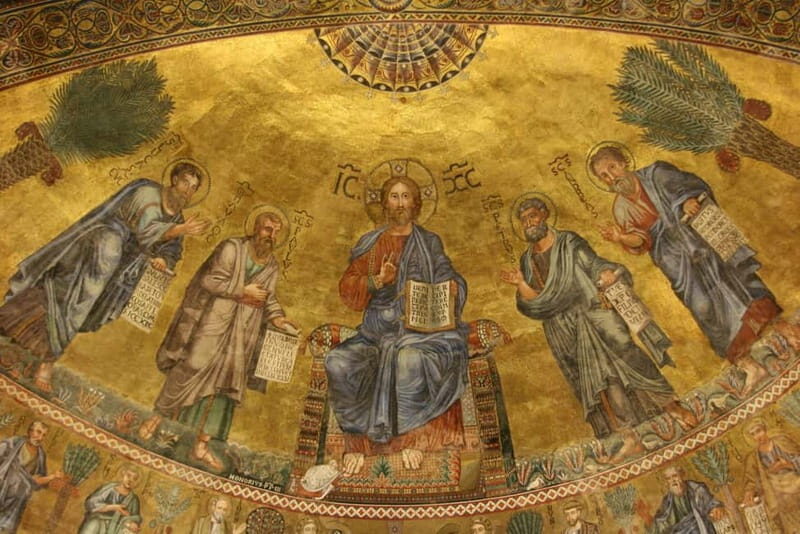
This church tells stories in gold. San Paolo Fuori le Mura (St. Paul Outside the Walls) is one of Rome’s four major Papal Basilicas, and the big moment is entering via the Holy Door opened for the Jubilee Year. I love the way the guide turns the art into a map of what you’re seeing, especially the golden mosaics and the long line of papal medallions from Saint Peter onward.
One trade-off: the core tour is only 0.5 to 1 hour, so if you want extra time to linger in every corner, you’ll likely need the optional cloister visit (for an additional entrance fee).
In This Review
- Key Things You’ll Notice on This Tour
- San Paolo Fuori le Mura: The Jubilee Holy Door Moment
- Meeting at Parco Schuster: Simple Start, Clear Expectations
- Inside the Basilica: How the Guide Reads the Room with You
- Saint Paul’s Tomb: Where the Faith Meets the Floor Plan
- The Popes in Medallions: A Built-In Timeline for Visual People
- Optional Cloister and Benedictine Abbey: Quiet Time for Medieval Art
- Dress Code and What Not to Bring: Keep It Simple
- Small Group Size: Why 6 People Changes the Whole Visit
- Languages: English, Italian, and Ukrainian Explanations
- Price Value: What You’re Actually Paying For
- Who Should Book This Tour
- Should You Book Saint Paul Outside the Walls?
- FAQ
- How long is the Rome Saint Paul Outside the Walls tour?
- What does the tour include?
- Is the cloister visit included?
- What languages are available?
- Where do I meet the guide?
- Is the tour wheelchair accessible?
- What should I wear?
- What items are not allowed?
- How big is the group?
- How do cancellation and payment work?
Key Things You’ll Notice on This Tour
- Holy Door entry for Jubilee Year: a rare, meaningful way to cross into the basilica.
- Golden mosaics + a triumphal arch: you’ll understand the “why,” not just the “what.”
- Medallions of Popes from Saint Peter to today: a clear visual timeline as you walk.
- Saint Paul’s tomb location: you’ll know exactly where pilgrims come to pray and reflect.
- Optional cloister add-on: medieval art in a quieter pace, if you want it.
- Mykhailo Hevko’s Q&A-friendly style: friendly, thorough explanations in English, Italian, and Ukrainian.
San Paolo Fuori le Mura: The Jubilee Holy Door Moment
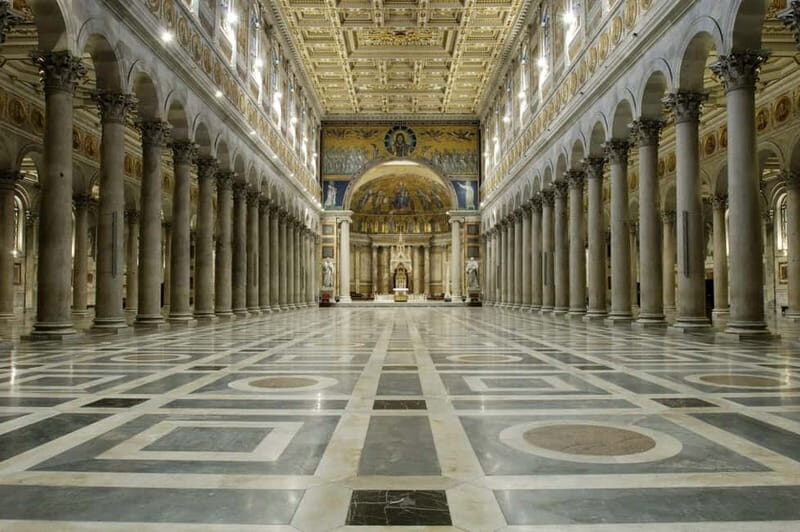
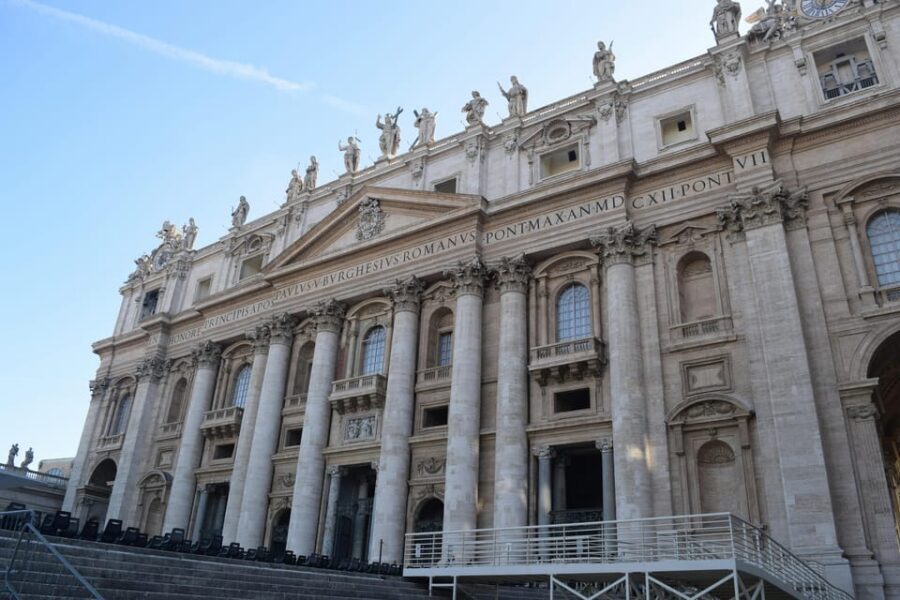
San Paolo Fuori le Mura isn’t just another church stop. The experience centers on entering through the Holy Doors of the Jubilee Year, which makes the visit feel like more than sightseeing. You walk in with a built-in storyline: grace and renewal, shown right at the threshold.
What I like about this approach is how it shapes your attention. Instead of rushing to “the highlights,” you’re guided to read the basilica in sequence—architecture first, then symbols, then the people connected to it.
It also helps that the setting makes sense historically. The basilica was built over the burial site of Saint Paul the Apostle, then rebuilt after a devastating 19th-century fire. That rebirth thread matters once you start noticing the scale and the careful visual language inside.
You can also read our reviews of more tours and experiences in Rome.
Meeting at Parco Schuster: Simple Start, Clear Expectations
This tour starts in a practical way: you meet in Parco Schuster, near the basilica. The plan is to arrive 10–15 minutes early, and the provider will send instructions so you can recognize the guide.
A small group format makes this easier. With a limit of 6 participants, you’re not getting shoved into a crowd line where nobody can hear. You can actually ask a question, get an answer, and keep your place without sprinting.
Plan for a short, focused visit. The duration is listed as from 0.5 to 1 hour, and it may run longer if you choose the cloister addition. That means the guide’s timing matters—so show up on time and you’ll get more value per minute.
Inside the Basilica: How the Guide Reads the Room with You
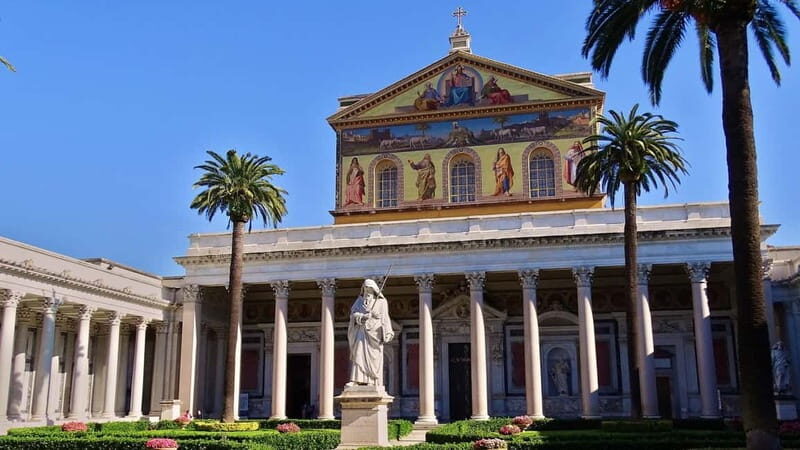
Once you’re inside, the tour becomes a “what you’re looking at” lesson—without turning it into a lecture. The basilica’s interior is described as vast and serene, and the guide uses that calm to help you slow down at the right spots.
You’ll focus on a few visual anchors:
- Golden mosaics that reflect major themes and sacred storytelling.
- The imposing triumphal arch, where symbolism tends to land hardest.
- A long line of medallions depicting Popes from Saint Peter to the present day.
Here’s the practical value: mosaics and icons can be overwhelming if you see them as only decoration. This kind of guided flow helps you spot patterns—what’s repeated, what changes over time, and what each element is trying to communicate.
The tone also seems to matter a lot. The guide, Mykhailo Hevko, is described as enthusiastic about questions and thorough in explanations. That’s a good combo for a place where you might wonder things like what a certain symbol means or why a certain area looks the way it does.
Saint Paul’s Tomb: Where the Faith Meets the Floor Plan
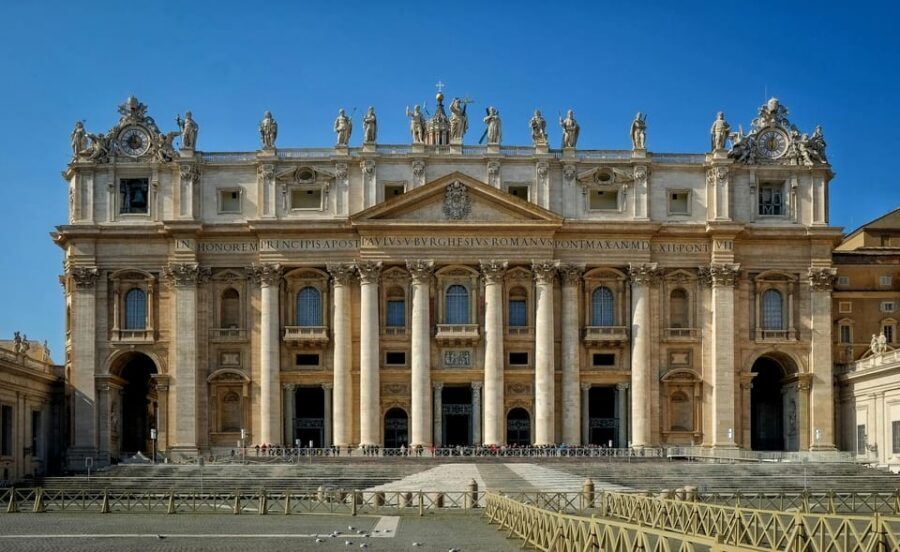
One of the most important stops is straightforward: you’ll see the tomb of Saint Paul beneath the main altar. Pilgrims come to pray and reflect there, and part of the tour’s purpose is making the location obvious and meaningful rather than just “a spot you pass.”
This is where the basilica stops being an art museum and becomes a place with a job to do. You’ll understand how the basilica’s structure ties back to the burial site, and why rebuilding after the fire didn’t erase the spiritual center—it reinforced it.
I also like that the tour doesn’t try to force a mood. If you want a quiet moment, you’ll have one. If you want to ask questions, you can.
The Popes in Medallions: A Built-In Timeline for Visual People
The papal medallions can feel like a lot at first. There are many figures, and if you’re not given a way to read them, your eyes may glaze over.
That’s exactly where a good guide earns their keep. You’ll be shown how to see the line from Saint Peter through to the present day, which turns a wall of faces into a timeline you can follow.
It’s a surprisingly effective storytelling tool. It also gives your visit structure: you’re not just standing in one big room. You’re moving through a sequence of meaning.
Optional Cloister and Benedictine Abbey: Quiet Time for Medieval Art
There’s an optional add-on if you want more than the main church. You can visit the cloister and the Benedictine Abbey, but it’s not included in the standard tour price. The additional entrance fee is listed as 4€.
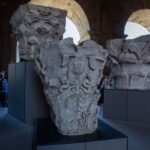
This optional stop can be worth it if you like slower pacing and smaller details. Cloisters tend to feel like a breather after the grand interior space, and the tour description frames it as a peaceful oasis with medieval art.
The trade-off is time. Since the standard experience is 0.5 to 1 hour, adding this means you’ll need extra room in your schedule. If you’re trying to pack five things into a two-hour window, you might skip it and just focus on the basilica.
Dress Code and What Not to Bring: Keep It Simple
This is a sacred space, so you’ll need to dress accordingly. Shoulders and knees must be covered for the tour.
It’s not just etiquette—it affects comfort too. Long sleeves or a light layer can help you avoid last-minute stress, especially on warmer days.
Also note what’s not allowed:
- Weapons or sharp objects
- Short skirts
- Alcohol and drugs
- Glass objects
These rules are easy to follow if you keep your bag light and skip anything questionable. If you plan to bring water, liquids in glass bottles are the risky part.
Small Group Size: Why 6 People Changes the Whole Visit
Limited to 6 participants, this tour is designed for attention. In big groups, you often get a rushed “look there, then there” experience. Here, the guide can slow down for your questions and your pace.
That matters in a basilica, where people naturally linger in front of mosaics, arches, or the tomb. A smaller group makes those pauses possible without turning the visit into a traffic jam.
This format also seems to work well for mobility needs. One highlight from the available feedback notes that Mykhailo gave special consideration to a mother-in-law with mobility issues. That doesn’t mean the tour becomes fully hands-off, but it does suggest the guide is willing to adapt in real time.
Languages: English, Italian, and Ukrainian Explanations
You can join the tour in English, Italian, or Ukrainian, and you’ll have a live guide—not a recorded audio track.
This is a big value point for places like this. Sacred art gets easier when someone can explain terms and stories in a way that matches your language. You’ll be able to ask follow-ups and get answers, not just hear a single script.
And because questions are welcomed, the explanations can fit what you care about: art, symbolism, architecture, or the spiritual role of the basilica.
Price Value: What You’re Actually Paying For
The price is $28.47 per person for a guided visit lasting 0.5 to 1 hour (plus optional cloister time). On paper, that’s not “cheap,” but the value comes from three things you don’t always get at this price point:
- A small group experience that supports questions
- Entry that centers on the Jubilee Holy Door moment
- A guide who connects the basilica’s history, art, and spiritual significance into a readable flow
Then there’s the optional part. If you do the cloister and Benedictine Abbey, you’ll pay 4€ extra for entrance. That keeps the main tour focused and lets you decide how much time you want to spend.
So the deal isn’t just the ticket. It’s the guidance that helps you “see” the basilica instead of merely walking through it.
Who Should Book This Tour
This one fits best if you:
- Want a focused visit with an expert guide
- Prefer small groups over big crowds
- Like connecting art and symbolism to real places (not just reading labels)
- Care about the spiritual center of the basilica, especially Saint Paul’s tomb
It’s also a good option for visitors who feel a little lost inside large churches. The tour gives your eyes a plan.
If you’re the type who wants to roam freely with no guidance, you might feel constrained by the time limit. In that case, the optional cloister add-on could help, but the main core visit still won’t be a long, self-guided wander.
Should You Book Saint Paul Outside the Walls?
Yes—if you want a guided path through a major basilica with a meaningful Jubilee entry. The Holy Door moment plus guided attention to mosaics, arches, papal medallions, and Saint Paul’s tomb makes the visit feel structured and rewarding.
Skip it only if you have a very flexible “I just want to wander” plan and you dislike dress-code requirements. Otherwise, the small-group format and Mykhailo Hevko’s question-friendly style make it a strong value for your time in Rome.
FAQ
How long is the Rome Saint Paul Outside the Walls tour?
The duration is listed as from 0.5 to 1 hour, and it may be longer if you add a visit to the cloister.
What does the tour include?
It includes the St. Paul Outside the Walls guided tour.
Is the cloister visit included?
No. The visit to the cloister and Benedictine Abbey is optional and has an additional entrance fee of 4€.
What languages are available?
The tour guide offers live tours in Italian, English, and Ukrainian.
Where do I meet the guide?
You meet near the basilica in Parco Schuster park. You should arrive 10–15 minutes before the tour, and you’ll be sent indications on how to recognize the guide.
Is the tour wheelchair accessible?
Yes, it is wheelchair accessible.
What should I wear?
Dress appropriately for a sacred place: shoulders and knees must be covered.
What items are not allowed?
Weapons or sharp objects, short skirts, alcohol and drugs, and glass objects are not allowed.
How big is the group?
It’s a small group limited to 6 participants.
How do cancellation and payment work?
Free cancellation is available up to 24 hours in advance for a full refund, and there’s a reserve now & pay later option.