REVIEW · POMPEI CAMPANIA
Pompei: Cooking class fresh pasta
Book on GetYourGuide →Operated by Giardini Balestrieri 132 · Bookable on GetYourGuide
Aprons on. Hands floury.
This Pompeii cooking experience happens just a short ride from the excavations, but it feels far from the crowds thanks to the Pompeian countryside garden setting and sweeping views toward Vesuvius and the Lattari mountains.
I like how Sabrina the Cesarina (with Rosalba) turns cooking into a real family-style moment, not a scripted demo. You’ll roll up your sleeves, make fresh pasta, then sit down to the meal you cooked, using ingredients from their own garden when possible.
One thing to consider: there’s a minimum of two people to book, so solo travelers need a partner or to check availability for a shared spot.
In This Review
- Key highlights you’ll care about
- The Pompeii cooking class that feels like Sunday dinner
- Meet Sabrina at Giardini Balestrieri (and find the right sign)
- The garden start: bruschetta, seasonal vegetables, and real countryside views
- Rolling, shaping, and learning fresh pasta like you mean it
- What this is good for (and what to bring mentally)
- Homemade Campania dessert: sweet, practical, and often very lemony
- Wine and water with your meal (including Gragnano wine)
- Timing: how a 3-hour class fits with Pompeii plans
- Price and value: what $91.76 really buys you
- Who should book this class (and who might not love it)
- Should you book? My honest take
- FAQ
- How long is the Pompeii cooking class?
- Who teaches the class, and what language is it in?
- What’s included in the meal?
- Do I need to bring anything?
- Is transfer included?
- Where do I meet the group?
- Is this experience available for solo travelers?
Key highlights you’ll care about
- A few minutes from Pompeii sites: quick hop from the excavations and sanctuary, then you’re in a garden kitchen
- Cesarina-led traditions: Sabrina shares local habits, recipes, and hospitality in English
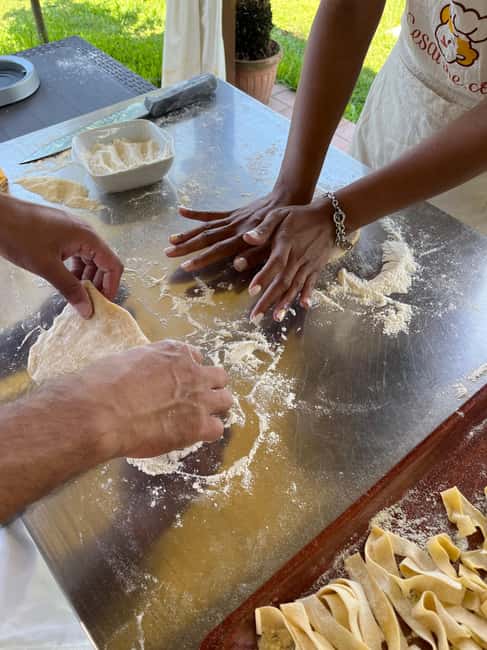
- Fresh pasta hands-on: you won’t just watch; you’ll shape and work the dough
- Garden-grown feel: the bruschetta and dessert lean on seasonal, home-grown ingredients
- A full, sit-down menu: bruschetta, fresh pasta, homemade dessert, plus water and Gragnano wine
- Ends back where you started: it’s a closed-loop experience from the meeting sign
The Pompeii cooking class that feels like Sunday dinner
If you want Pompeii without the pressure of seeing every stone in 10 minutes, this class gives you a different kind of Pompeii memory: food, family rhythm, and countryside calm. The setting is close enough to Pompeii that you can still do the excavations the same day, but the atmosphere is built around a home garden and a kitchen routine that feels local and lived-in.
What makes it special is the balance. You get hands-on work (especially with pasta), but you also get to slow down and eat what you made. It’s not a rush-through experience. The “typical Campania” focus matters too: Campania cooking isn’t just pizza by default. It’s desserts, Sunday dishes, and flavors that show up in everyday family meals.
And yes, you’ll hear the welcome message loud and clear the moment you arrive: get ready for your apron. This is the kind of activity that makes you look down at your hands and smile.
You can also read our reviews of more tours and experiences in Pompei Campania.

Meet Sabrina at Giardini Balestrieri (and find the right sign)
Your start point is easy: you’ll find a sign that says Balestrieri Gardens (Giardini Balestrieri 132). That matters because this experience runs in a tight 3-hour window, and it’s designed as a round-trip from the meeting point. When the class ends, you return to where you started.
Your host is Sabrina, and she introduces herself as a Cesarina—the Italian tradition of local home cooks who preserve recipes and share hospitality the genuine way. The activity is guided in English, which is a real plus in this area where tours can be multilingual and you lose nuance if you’re not confident.
You’ll also spend time with the group in a familiar home-like setting. One detail that shows up again and again is warmth: Sabrina and her friend Rosalba are described as patient and welcoming, the kind of people who make a non-chef feel capable with flour on their apron.
The garden start: bruschetta, seasonal vegetables, and real countryside views
Before pasta becomes the main event, you’ll begin with a meal you can taste immediately: bruschetta with seasonal vegetables. This is the kind of starter that sets expectations. It’s not fancy for show; it’s built around local produce and simple assembly. You’ll get a sense of how Campania balances freshness with comfort.
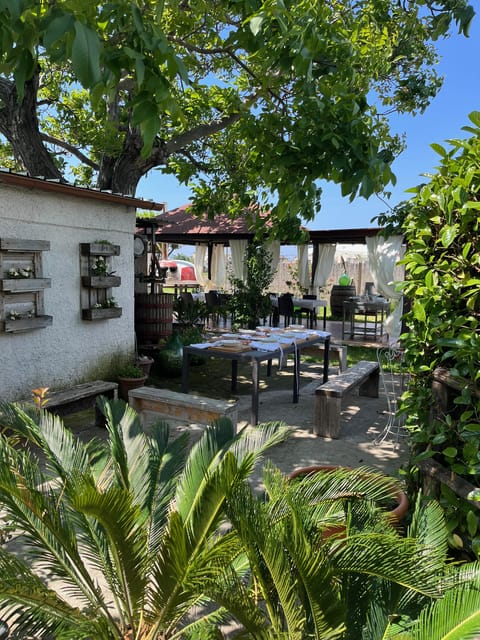
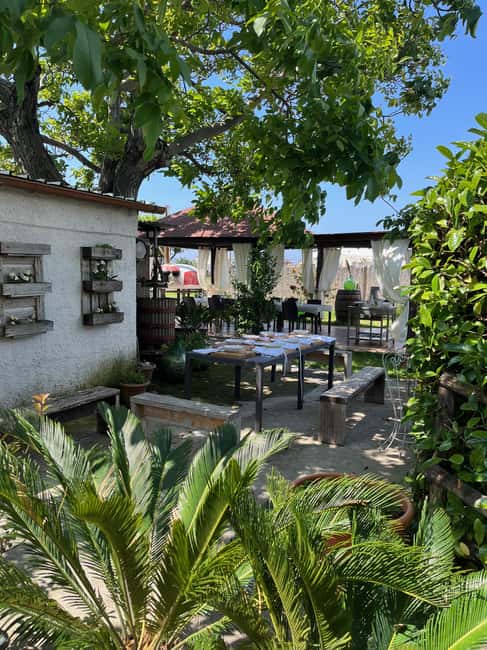
Then there’s the setting itself. The garden is in the Pompeian countryside and offers a view toward Vesuvius and the Lattari mountains. It’s not just background scenery. It changes your pace. You step out of the city-energy feeling and into a slower rhythm where the biggest sound in the kitchen is usually someone laughing at a dough moment.
Practically, this is one of the best parts of the class if you’re tired from museum walking. You get food, you get fresh air, and you still stay close enough to Pompeii to plan a proper archaeological afternoon or morning after.
Rolling, shaping, and learning fresh pasta like you mean it
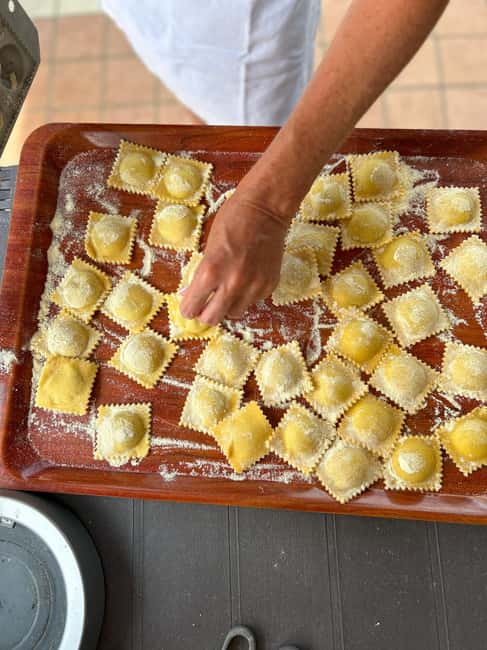
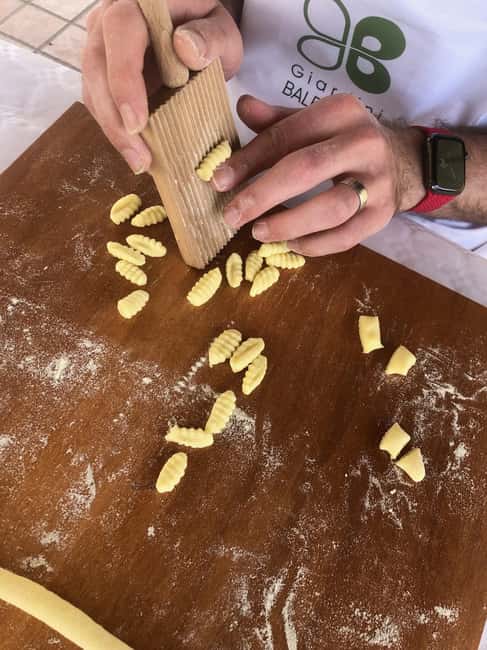
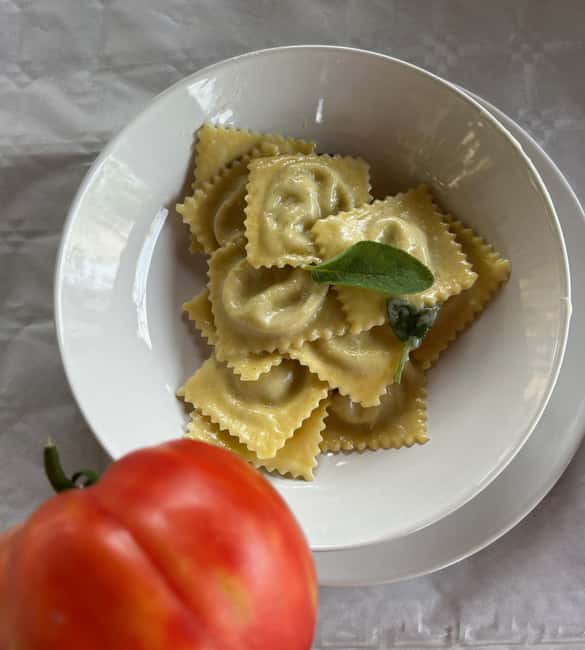
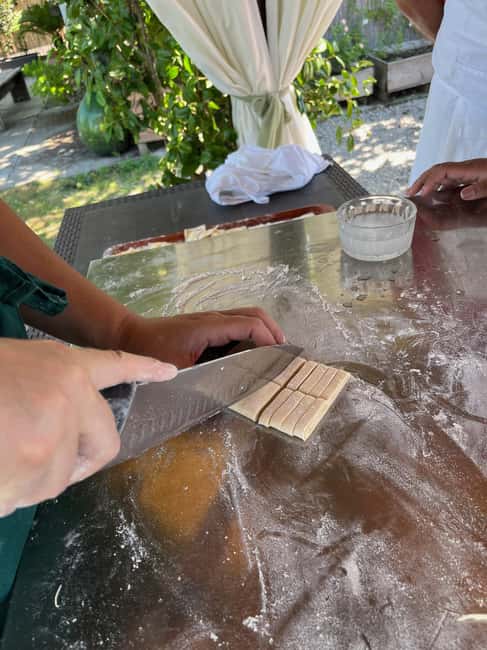
The core of the experience is making fresh pasta together. You’ll put your hands to the work—rolling, shaping, and learning the process step by step. It’s geared toward beginners, not expert pasta makers, and that’s a big deal. Pasta is one of those tasks that can feel intimidating from a distance. In this format, it becomes doable because you’re taught in the kitchen, not told about in theory.
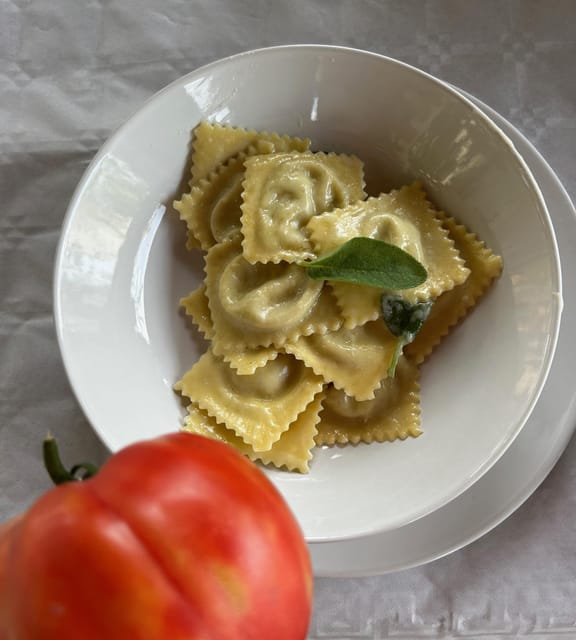
In past sessions, the handmade pasta focus has included making ravioli, which gives you an idea of the style of pasta you might be working with during your visit. Even if you don’t make ravioli, the skill set is similar: dough handling, portioning, and sealing or shaping.
You’ll also likely hear small local “why” behind the technique—how Campania-style cooking fits family life and Sunday meals, not just recipes on paper. That’s what turns a cooking class into a cultural moment. You’re not studying gastronomy; you’re participating in a tradition.
What this is good for (and what to bring mentally)
If you’re the type who learns better by doing, you’ll love this. If you’re the type who gets stressed by mess, plan to relax. Flour happens. It’s part of the fun.
Also: don’t schedule this as your only meal and then wonder why you’re hungry later. You’ll eat what you make, but after pasta, dessert, and wine (for those who want it), you’ll be properly set.



Homemade Campania dessert: sweet, practical, and often very lemony
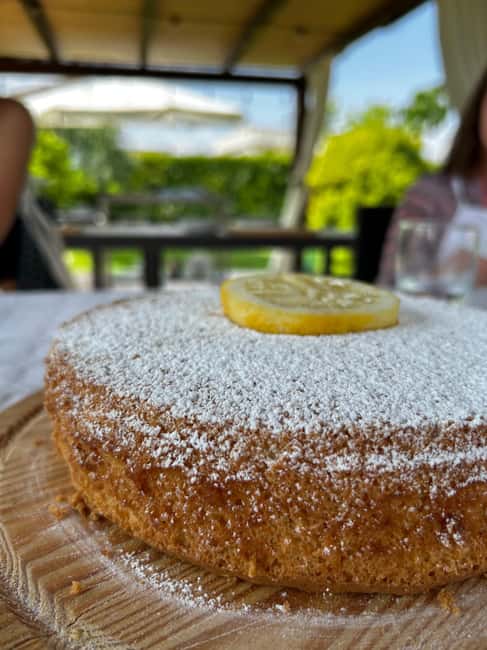
Dessert is included, and it’s described as a typical Campania sweet. One past example from the experience is caprese lemon cake, and that’s a great clue for the style you’re likely to encounter: homey, fruit-forward, and built for sharing.
The best part of this section isn’t just the final taste. It’s that dessert often uses mostly homegrown or garden-leaning ingredients. When a class tells you to expect products from the garden, dessert is where that idea really shows. You can taste the difference between something mass-produced and something that’s connected to the place it comes from.
In other words, the dessert isn’t just a sugary finish. It’s a way to understand the Campania approach to sweet flavors—less showy, more familiar and comforting.
Wine and water with your meal (including Gragnano wine)
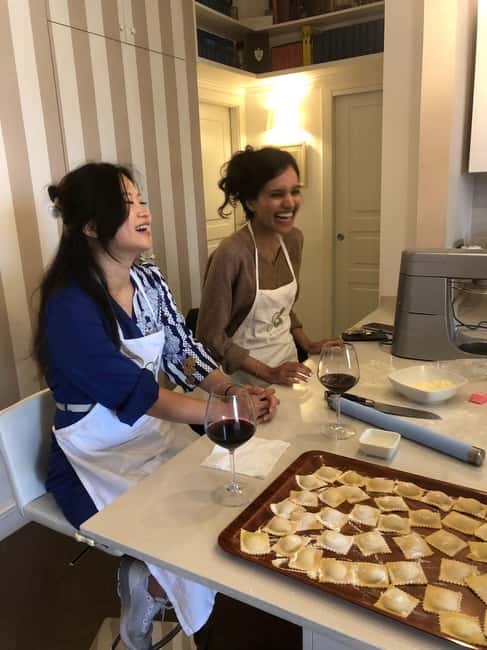
Your menu includes water and Gragnano wine along with the food. That means you’re not just leaving with a recipe card; you’re also leaving with the full experience of a shared meal.
If you drink wine, this is a nice local pairing because it matches the region’s identity. If you don’t, you still get water and a complete meal. Either way, plan to linger at the table after cooking, because the point isn’t speed. It’s to eat in a way that feels like a Sunday pause.
One more practical point: because wine is included, it’s smart to avoid planning anything that requires your full attention right after—unless you’re certain you’ll skip the wine.
Timing: how a 3-hour class fits with Pompeii plans
The experience runs about 3 hours. Exact starting times vary, so check availability for the slot that matches your day. This is long enough to learn pasta and eat comfortably, but short enough that you can still squeeze in Pompeii before or after.
Because the location is described as a few minutes from the excavations and sanctuary (and still in the countryside), I like it as a mid-day break. Do Pompeii early, then come here to reset with a garden meal. Or do the cooking first if you want to start your day with something hands-on and relaxing.
Either way, remember this is not an on-and-off tour. It ends back at the meeting point, so plan a day that doesn’t depend on last-minute changes.
Price and value: what $91.76 really buys you
At $91.76 per person, the cost can look like a premium on the surface. But this class is not just paying for cooking instruction. You’re paying for:
- the full meal (bruschetta, fresh pasta, homemade dessert)
- included drinks (water and Gragnano wine)
- a hosted experience led by Sabrina, a Cesarina
- the hands-on time in their home kitchen and garden setting
When you compare it to a typical “stand and watch” class, the value here improves fast. You’re actively making pasta and eating it. That’s a different level of service than a short tasting or demo where you leave hungry.
Also, the setting matters. You’re getting the countryside garden atmosphere with views toward Vesuvius and the Lattari mountains, while still staying close to Pompeii. That combination is hard to find in one package.
If you’re coming to Pompeii and want a meal you didn’t just buy, this price becomes easier to justify.
Who should book this class (and who might not love it)
This works especially well if you:
- want an authentic, local-host experience rather than a checklist tour
- like learning by doing (pasta-making with guidance)
- want a break from the excavations while staying in Campania
- enjoy family-style hospitality and shared meals
It may not be the best fit if:
- you’re a solo traveler and prefer not to meet minimums (this one requires two people)
- you want a fast, high-energy tour with constant movement (this is calmer and kitchen-focused)
- you’re extremely short on time and can’t spare a full 3 hours
If you’re flexible and want something that feels like real life in the region, you’ll probably feel happy you booked.
Should you book? My honest take
If you’re trying to choose between another museum hour and a food experience, I’d lean toward booking this—especially if you care about how locals actually eat. The best reason is simple: you’ll cook and then eat what you made, in a garden kitchen run by Sabrina and supported by Rosalba.
Book it if you want Pompeii memories that aren’t only about ruins. You’ll still be close enough to do the excavations, but you’ll end your day with something hands-on and satisfying.
FAQ
How long is the Pompeii cooking class?
It lasts about 3 hours. Check availability to see the starting times for your preferred day.
Who teaches the class, and what language is it in?
Sabrina leads the experience. Instruction is in English.
What’s included in the meal?
You’ll have bruschetta with seasonal vegetables, fresh pasta, and a homemade dessert. Water and Gragnano wine are also included.
Do I need to bring anything?
The activity emphasizes getting ready for your apron, and you’ll be cooking during the class. Anything else beyond that isn’t listed.
Is transfer included?
No. Transfer is not included, but you can request one.
Where do I meet the group?
You’ll meet at a sign that says Balestrieri Gardens.
Is this experience available for solo travelers?
There is a minimum experience for two people, so solo booking isn’t available on its own based on the given info.