REVIEW · ROME
Rome: Julius Caesar & the Emperors’ Nighttime Stories Tour
Book on GetYourGuide →Operated by Storytelling Rome Tours & Walks · Bookable on GetYourGuide
Rome at night feels like a secret. This 2.5-hour storytelling walk threads Julius Caesar’s assassination into the rise of Rome’s early emperors, all while the city calms down after dark. The result is a paced, character-driven tour that makes big names feel human and messy, not statue-flat.
I especially love the way the guide links famous events to the exact urban spots tied to them, instead of treating history like a lecture. I also like the mix of well-known emperors with lesser-known figures such as Marcus Agrippa, plus stories that go beyond the usual highlights. One possible drawback: the tour does not include food or drinks, so plan a snack stop before or after.
You start at the Torre del Papito near Largo di Torre Argentina, then you’ll work through central Rome and end at Piazza del Popolo. It runs in the evening for a reason: Rome looks great lit up, and it’s cooler and quieter than daytime. The tour is in English and is wheelchair accessible.
In This Review
- Key highlights to know before you go
- Why this Caesar-and-Emperors tour works after dark
- Meeting at Torre del Papito: Largo di Torre Argentina at night
- The assassination story told at the murder site
- Marcus Agrippa and the early power web around Augustus
- Hadrian and Marcus Aurelius: why they’re still revered
- Julia of Augustus: riches to rags and staying true to beliefs
- A performance-style guide: what makes the stories stick
- The Nero finale and the walk out to Piazza del Popolo
- Who should book this tour (and who should skip it)
- Quick practical tips for your evening
- Should you book the Rome Julius Caesar & Emperors Nighttime Stories Tour?
- FAQ
- Where does the tour meet?
- How long is the Rome Julius Caesar & the Emperors Nighttime Stories Tour?
- What language is the tour guide?
- What’s the ending point of the tour?
- Is food and drinks included?
- Is the tour wheelchair accessible?
- Is free cancellation available?
Key highlights to know before you go
- Julius Caesar plus the emperors, connected in one continuous story line
- Caesar’s assassination told right at the spot tied to the murder
- Six ancient Roman characters bring the cast to life, including Marcus Agrippa and Julia
- A cooler, calmer city-center stroll at night, with Rome’s lights turning the streets cinematic
- A big Nero finale that lands the evening with maximum drama and momentum
Why this Caesar-and-Emperors tour works after dark
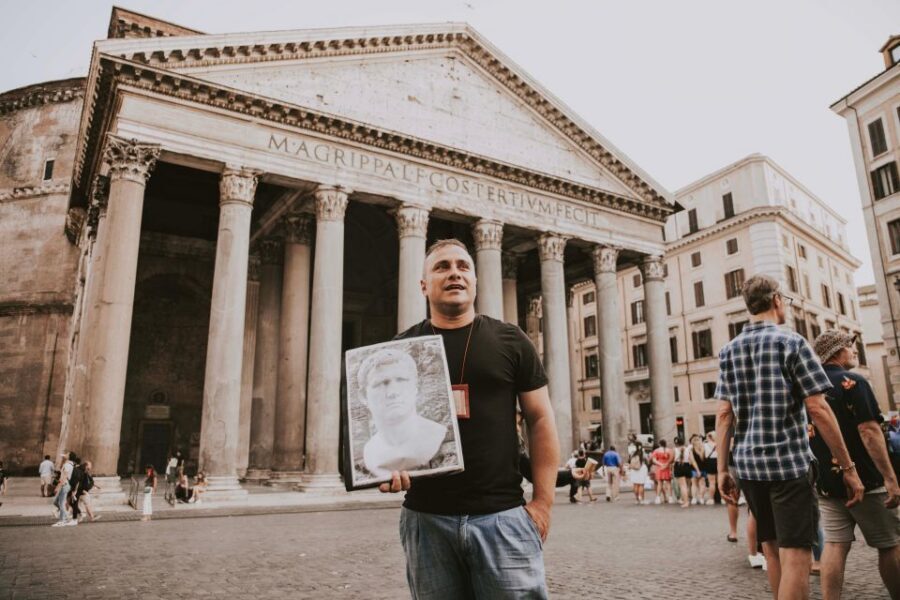
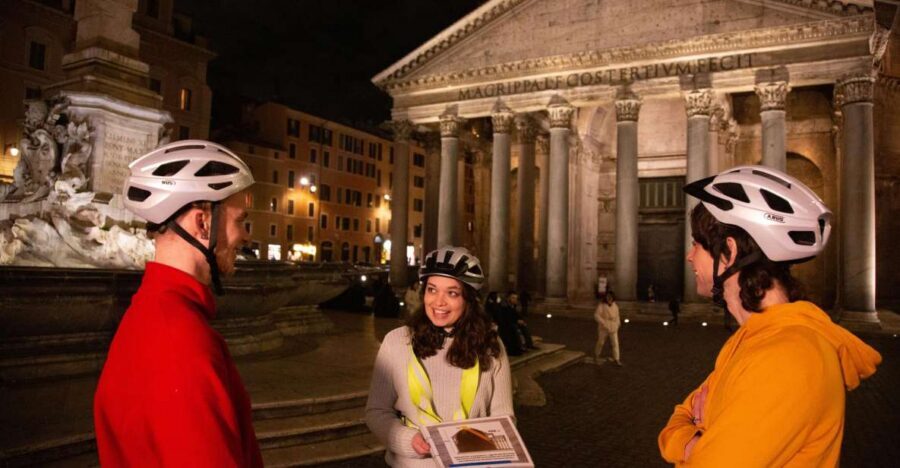
Daytime Rome can be loud and hot. This tour schedules the stories for evening, so you get a cooler walk and a quieter feel as you move through the center of the city. Rome’s monuments look different at night too, with lighting that helps you “read” the street layout while the story runs.
What makes the experience special is the storytelling format. Instead of facts delivered on repeat, you get a sequence of characters, motivations, betrayals, and loyalty—stitched to the places you pass. That style helps the names stick, even if you’re not a Roman-history buff.
The evening pace also changes how you perceive the drama. Caesar’s assassination doesn’t feel like trivia when the guide frames it as a sudden rupture in real life, and then keeps going into the unstable aftermath.
You can also read our reviews of more tours and experiences in Rome.



Meeting at Torre del Papito: Largo di Torre Argentina at night
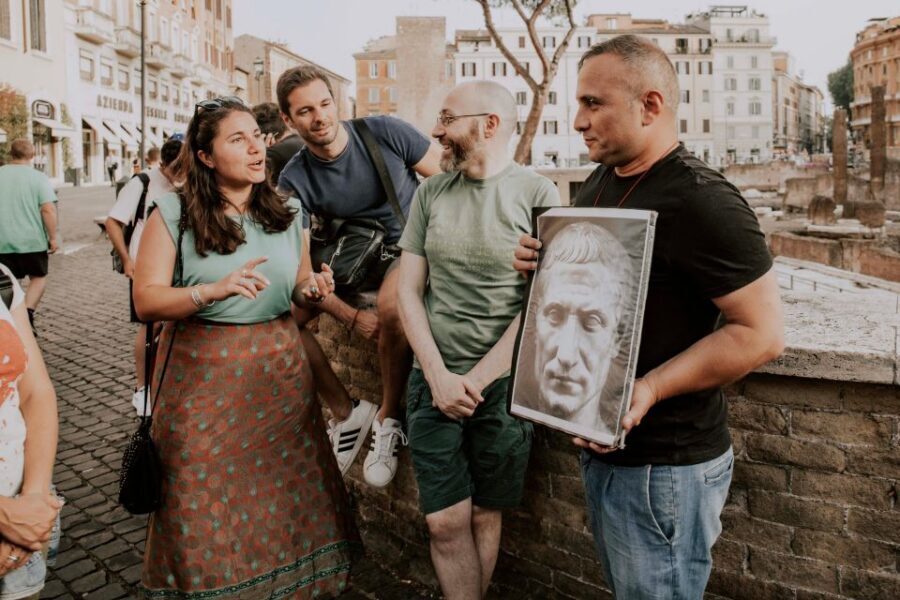
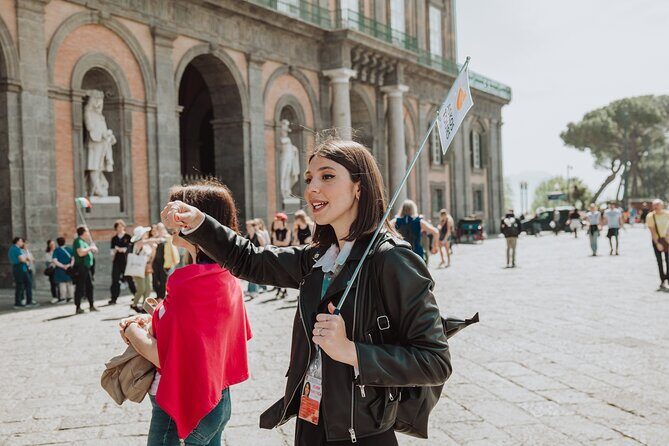
The tour begins at Torre del Papito, which sits adjacent to Largo di Torre Argentina. It’s easy to identify because it’s described as the only brick tower you can see there, and the guide meets by the tower holding a sign for the tour title.
This matters because your first minutes set the tone. When you start at a recognizable marker like this, you can focus on the story instead of spending time scanning street corners. It also helps you picture the setting the guide is talking about, since you’re anchored to one visible landmark from the start.
Largo di Torre Argentina is the kind of place that rewards night timing. You’re in the city center, but away from the daytime rush, so the group can hear the guide clearly while you’re still close to the core sights.
The assassination story told at the murder site
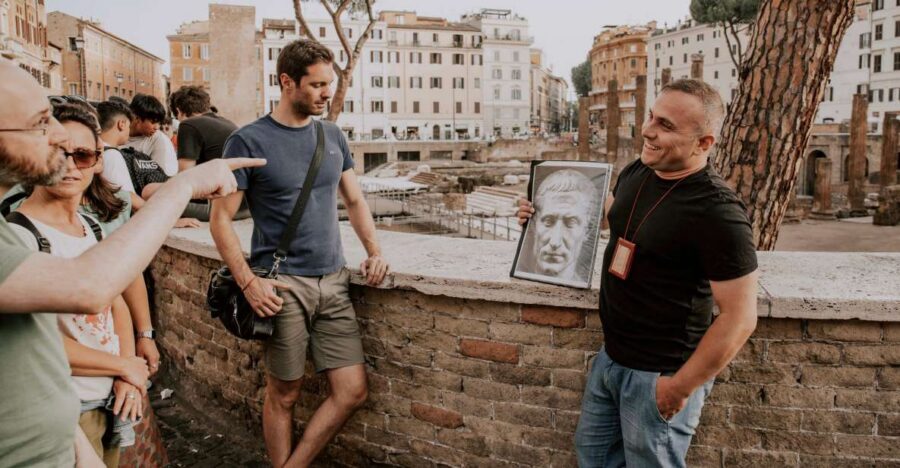
The centerpiece is Julius Caesar’s assassination, told right at the spot tied to his murder. This isn’t presented as a distant myth or a headline fact. The guide uses the location to make the event feel immediate, with the kind of cause-and-effect that leads straight into the next chapter of Roman power.
If you want to understand why the emperors mattered, this is the starting point. Caesar’s death is not just tragedy—it’s the break that opens the door for the early imperial era. The tour uses that hinge moment to transition into how loyalty, ambition, and survival play out across the next generations of rulers.
A nice touch is that the storytelling stays anchored to people, not just dates. You hear about relationships, loyalty, and the political stakes that made certain choices feel inevitable at the time.
Marcus Agrippa and the early power web around Augustus
After Caesar, the tour widens the lens. You’ll hear about early emperors, including Augustus and later figures such as Hadrian and Marcus Aurelius, but the story doesn’t only revolve around crowns and battles. Lesser-known characters get real space—especially Marcus Agrippa.
Agrippa’s role is framed around loyalty and friendship, particularly his connection to Augustus. That detail helps you see empire-building as a team sport, not a solo act by one ruler. It also makes the political world feel more layered, because you get the sense that alliances mattered just as much as official titles.
This is one of the tour’s best “value for your time” angles. Many Rome walks can’t resist turning everything into a parade of the most famous names. Here, the guide balances big hitters with characters you might not know yet, which keeps the narrative from feeling repetitive.
Hadrian and Marcus Aurelius: why they’re still revered
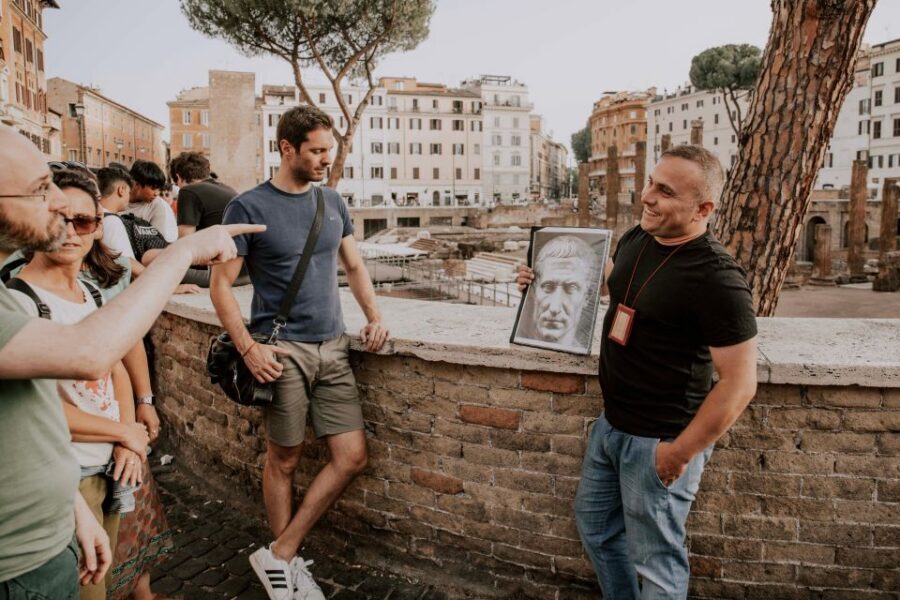
As the evening moves along, the tour brings in emperors such as Hadrian and Marcus Aurelius—both described as emperors people revere to this day. The way they’re handled is less about memorizing a list of accomplishments and more about understanding how their reputations formed.
You come away with a clearer sense of why certain emperors still echo through time. The guide ties those reputations to choices and personality traits, so the names start to feel like real people shaped by the pressures of ruling Rome.
The reverence theme works best at night, when the pace is slower and the city feels almost theatrical. You’re not rushing between stops, and you’re hearing the emperors as characters who used power to navigate Rome’s constant instability.



Julia of Augustus: riches to rags and staying true to beliefs
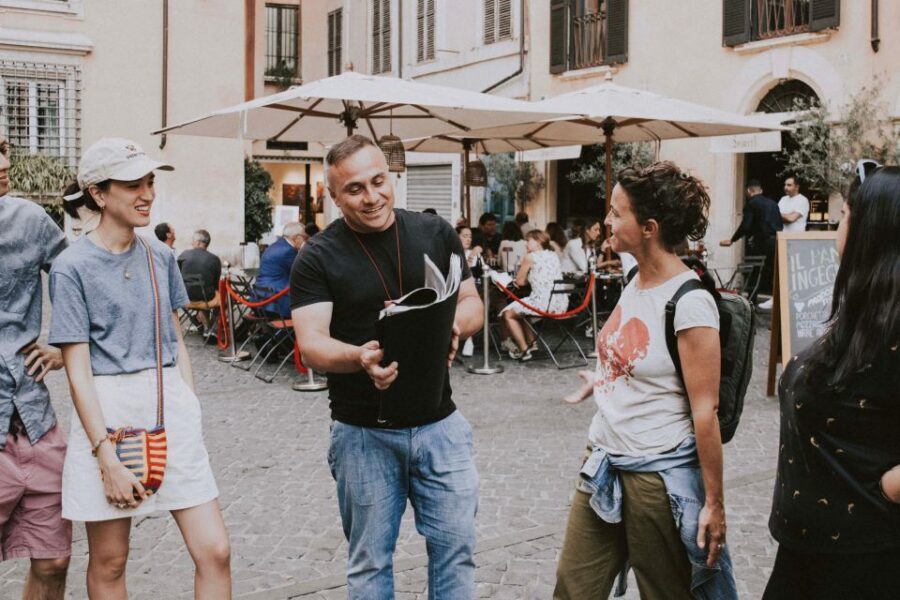
One of the most memorable threads is the story of Julia, the daughter of Emperor Augustus. Her arc is described as moving from riches to rags while she tries to stay true to her beliefs.
That kind of character-based storytelling is exactly why a walking nighttime format fits this subject. You’re not just hearing about imperial history—you’re tracking how it affected specific individuals, including someone positioned close to the center of power but still vulnerable to its consequences.
If you care about Rome as more than architecture, this is the section that widens your mental map. It shifts the focus from rulers as icons to people living with real constraints, judgment, and fallout.
A performance-style guide: what makes the stories stick
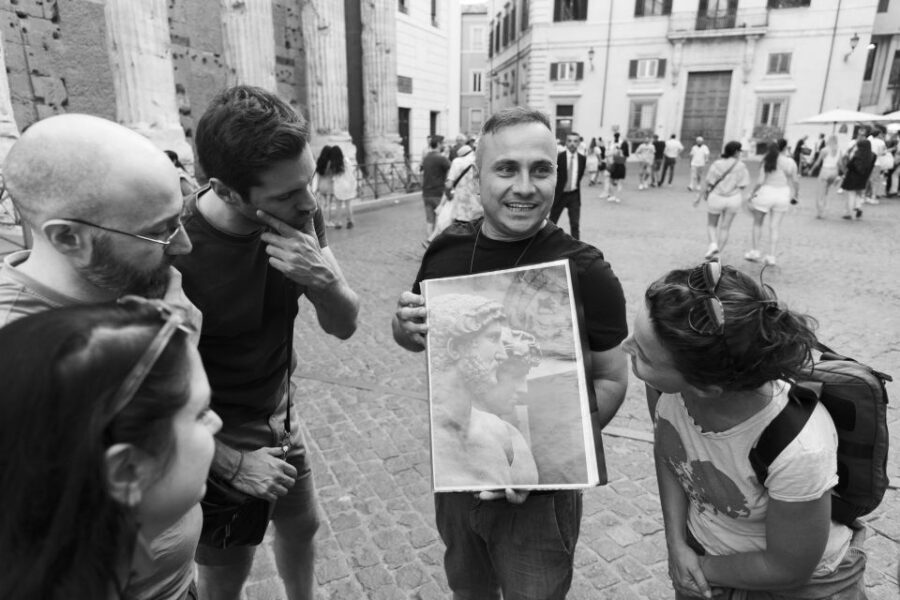
A recurring point in the tour’s reputation is the guide’s delivery. Massimo is highlighted again and again as an engaging storyteller who brings the material to life, with energy, humor, and strong research behind the scenes.
That approach matters for two reasons. First, it keeps the tour from turning into canned narration. Second, it makes the names and events easier to remember after the walk, so you can recognize references later when you’re reading plaques or visiting other sites.
More than once, the feedback emphasizes that the stories feel fresh and adaptable rather than memorized. That means you’re more likely to get a tour that reacts to your group and keeps momentum as questions come up.
The Nero finale and the walk out to Piazza del Popolo
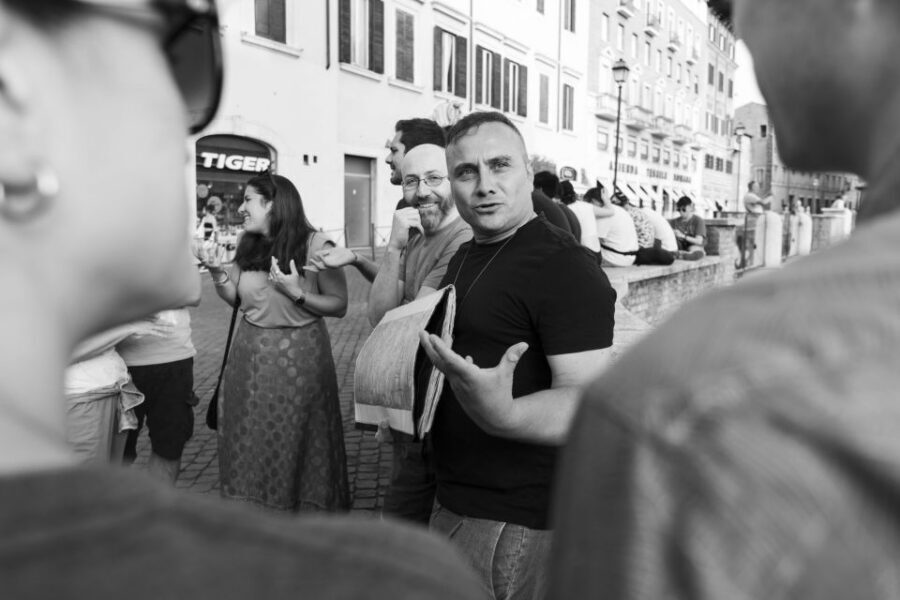
The evening builds to its finale with Emperor Nero. The tour frames Nero’s story as the dramatic end point of the night, and it’s described as hard to believe it’s true—so expect big turns, scandal, and consequences.
Ending at Piazza del Popolo gives the whole experience a clean landing. By the time you reach the square, you’ve walked through multiple chapters of Roman power, and the story feels complete rather than abruptly cut off.
Practically, this timing also helps your night. A 2.5-hour tour ending in a central public square is an easier pivot point for dinner plans than a far-flung pickup-and-drop location.
Who should book this tour (and who should skip it)
I’d book this if you want Rome history as storytelling, with Caesar’s assassination and early emperors tied to real places you can stand in front of. It’s also a strong pick if you’re curious about the human sides of power: loyalty, friendship, ambition, and the fallout when rules bend.
You’ll also like it if you want a guided experience that makes it easier to connect museum exhibits and inscriptions to real people. The tour’s character focus is built for recall, not just entertainment.
Consider skipping if you prefer traditional museum-style explanations with minimal theatrics, or if you’re only interested in one monument and nothing else. This is a night walk built around narrative flow, not a stop-by-stop architecture checklist.
Quick practical tips for your evening
Wear comfortable shoes and plan for an evening walk through central Rome. The tour is described as cooler at night than daytime, but “cooler” doesn’t mean “no layers,” especially if the breeze picks up around open squares.
Since there’s no food or drinks included, eat beforehand or keep snacks on your radar afterward. Also, bring your patience for crowds around central landmarks, since this is Rome and it’s always moving somewhere nearby.
Should you book the Rome Julius Caesar & Emperors Nighttime Stories Tour?
Yes, if you want an engaging night tour that connects Caesar to the first wave of emperors through a cast of characters you may not know. The big wins are the Caesar assassination at the linked spot, the balanced mix of famous and lesser-known figures like Marcus Agrippa, and a guide style that keeps the story flowing.
I’d call it great value for anyone who wants a memorable first introduction to the early imperial era without drowning in dates. Just remember the simplest rule: go with comfortable walking shoes, come hungry enough for dinner after, and let the story do its work.
FAQ
Where does the tour meet?
The tour meets at the Torre del Papito, adjacent to Largo di Torre Argentina. The guide is by the tower holding a sign with the tour title.
How long is the Rome Julius Caesar & the Emperors Nighttime Stories Tour?
The duration is 2.5 hours.
What language is the tour guide?
The tour is conducted in English.
What’s the ending point of the tour?
The tour finishes at Piazza del Popolo.
Is food and drinks included?
No. Food and drinks are not included.
Is the tour wheelchair accessible?
Yes, the tour is wheelchair accessible.
Is free cancellation available?
Free cancellation is available up to 24 hours in advance for a full refund.