REVIEW · EVENING EXPERIENCES
Rome: Ghosts, Legends, and Haunted History Night Tour
Book on GetYourGuide →Operated by Landmarks and Laughs · Bookable on GetYourGuide
Rome has a darker bedtime story. This 80-minute walk mixes real 16th- and 17th-century crimes with ghostly legends, and Beatrice Cenci and Giulia Tofana are the kind of stories that make Rome feel brand new. The route is designed as an easy after-dinner stroll, but the drawback is simple: it’s not suitable for people with heart problems, and you’ll be on your feet at night.
What keeps it from feeling like a spooky script is the guide. Often you’ll be with Mike, and he’s known for turning the neighborhood into a living context, with humor that keeps the tone creepy but not heavy.
You start near Via del Banco di Santo Spirito and work your way toward Campo de’ Fiori, with stops that include Castel Sant’Angelo, Via Giulia, Via Monserrato, and Palazzo Farnese. I also like that the tour includes live guidance and sometimes special access to certain areas when permitted.
In This Review
- Key things you’ll notice on this Haunted History Night Tour
- Starting at Via del Banco di Santo Spirito: the walk begins in the right mood
- Castel Sant’Angelo and the ghost story of Beatrice Cenci
- Via Giulia: one of Rome’s prettiest streets with a nasty side
- The Church of Death on Via Giulia: why people built a whole system for the dead
- Via Monserrato: disappearances, whispers, and the feeling that something’s missing
- Palazzo Farnese: Renaissance beauty and a rumor that turns your stomach
- Campo de’ Fiori: Bruno’s flames and Rome’s public memory of punishment
- The “after-dinner easy walk” timing: what 80 minutes really feels like
- Price and value: why $19 can work surprisingly well here
- Who this haunted history night tour is best for
- A practical way to make the stories stick
- Should you book this Haunted History Night Tour?
- FAQ
- How long is the Rome Ghosts, Legends, and Haunted History Night Tour?
- How much does the tour cost?
- Where do I meet for the tour?
- Where does the tour end?
- What language is the tour in?
- What should I wear or bring for the night walk?
- Is this tour suitable for wheelchair users or people with heart problems?
- Is anything beyond a standard guided walk included?
Key things you’ll notice on this Haunted History Night Tour
- Beatrice Cenci’s tragic legend is tied to Castel Sant’Angelo’s shadowy bridge area
- Giulia Tofana’s poisoner story comes to life as you walk along Via Giulia
- The Church of Death on Via Giulia and its crypt connection add real-world context to the haunting vibe
- Via Monserrato’s disappearances bring an unsettling, case-file feeling to lesser-known streets
- Giordano Bruno’s fiery end and his bronze presence loom over the Campo de’ Fiori area
- Palazzo Farnese’s dark rumor about a walled-up spirit adds horror to a Renaissance façade
Starting at Via del Banco di Santo Spirito: the walk begins in the right mood
You’ll meet at Via del Banco di Santo Spirito 25, at a barbershop with a big BARBIERE sign. The location matters because it puts you right in the fabric of the city, not at a postcard viewpoint. From there, the tour moves at night, with a story rhythm that fits the streets.
This is built as an 80-minute easy walk. That doesn’t mean you’ll do a full “sit and listen” tour. You’ll still cover real distance, so comfortable shoes are not optional. The payoff is you get the dark side of Rome without needing a day-long commitment.
You can also read our reviews of more historical tours in Rome



Castel Sant’Angelo and the ghost story of Beatrice Cenci
The tour kicks off at Castel Sant’Angelo, and that’s a smart choice. It’s dramatic by default, and it also anchors the first big narrative: Beatrice Cenci. In legend, her ghost wanders the bridge area, holding her severed head—an image Rome never fully forgets.
The guide uses her story to set up a pattern for the rest of the night: abuse of power, public spectacle, and how the city turned tragedy into memory. You hear about her abusive father, her act of defiance, and her ultimate execution that shocked 16th-century Rome. Even if you’re not a “macabre” person, it hits because it’s not just horror—it’s human conflict made visible.
One practical note: Castel Sant’Angelo is open-air in parts, and night can feel colder than you expect. Bring a light jacket so the cold doesn’t ruin your attention span.
Via Giulia: one of Rome’s prettiest streets with a nasty side
Next comes Via Giulia, one of Rome’s most beautiful streets. That contrast is part of the effect. You’re walking a place people associate with elegance, while you’re hearing about something far uglier: a 17th-century poisoner named Giulia Tofana.
You’ll learn how Tofana was tied to deadly poison, and how her name connects to the idea that women used poison to escape unhappy marriages—with deadly results. It’s a grim story, but it’s also a clear example of how violence and desperation can hide inside ordinary life.
The tone on Via Giulia works because the guide keeps the story grounded. Instead of just listing crimes, the tour connects the legends to what you’re actually seeing: street layout, building presence, and why certain stories stuck around.
The Church of Death on Via Giulia: why people built a whole system for the dead
One of the most memorable stops on this walk is the Church of Death on Via Giulia. The key idea is what you learn about the confraternity behind it—an organization dedicated to burying unclaimed bodies. That turns the haunting feeling into something real and specific.
You also hear about the unsettling crypt below. It’s the kind of detail that makes the supernatural talk feel less like fantasy and more like a reflection of how people handled death before modern comfort. Even if you’re skeptical about ghosts, you can’t ignore the practicality of what the buildings represent.
If you care about darker architectural history, this is a big reason to pick this tour over a generic “boo at every corner” walk.
Via Monserrato: disappearances, whispers, and the feeling that something’s missing
After the heavier stop at the Church of Death, the tour shifts into Via Monserrato. This street is quieter, and that quiet is what makes the stories land.
Here, you hear about mysterious disappearances tied to the area—unsolved crimes and eerie apparitions. The effect is subtle but strong. You stop thinking of Rome as a museum of big landmarks and start treating it like a lived-in city where not every story has a neat ending.
This is also where the guide’s storytelling style matters. If you want a tour that keeps your attention through changing alley atmospheres and street corners, this is one of the main chapters that earns it.
You can also read our reviews of more evening experiences in Rome





Palazzo Farnese: Renaissance beauty and a rumor that turns your stomach
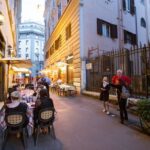
The next big visual moment is Palazzo Farnese. It’s imposing in daylight; at night it can feel like a stage set. And the tour uses that façade for something nasty: rumors that it houses the spirit of a woman walled up alive centuries ago.
The point here isn’t whether you can prove the rumor. The value is how the tour teaches you to read the city’s surfaces. Rome is full of stunning façades, and this stop forces you to ask what was happening behind the scenes—politics, power, and punishment.
If you like your horror grounded in actual locations with real architectural presence, this part delivers.
Campo de’ Fiori: Bruno’s flames and Rome’s public memory of punishment
You end up in the Campo de’ Fiori area, and the emotional temperature of the walk changes. This is the kind of square where Rome’s history feels public, not hidden.
Here, you hear about Giordano Bruno, burned at the stake in 1600 for heretical beliefs. His bronze statue becomes a kind of shadow figure over the square, a constant reminder that ideas—and people—can pay a brutal price.
Rome’s relationship with execution sites is different from what you might expect. The city doesn’t just remember; it builds, walks around, and lives beside the memory. That’s why this stop works so well after the earlier stories. By now, you’ve seen how the tour blends tragedy, legend, and place—then it brings you to a square where punishment wasn’t private.
The “after-dinner easy walk” timing: what 80 minutes really feels like
Eighty minutes is long enough to tell real stories, but short enough that you’re not stuck in a marathon. That matters in Rome, where plans can get messy fast.
This tour is a night walk, so plan for the small discomforts:
- Wear comfortable shoes that work on uneven pavement.
- Bring a light jacket for the chilly night air.
- Expect it to feel like a guided stroll rather than a quick bus tour.
Also, it’s not suitable for wheelchair users, and it’s not meant for people with heart problems. If either of those applies, you should skip it and look for a different format.
Price and value: why $19 can work surprisingly well here
At $19 per person, this tour is one of the more budget-friendly ways to get a themed night experience. The value comes from a few specific things—not just the “haunted” label.
First, you get a live English guide for the full 80 minutes. Second, the tour includes special access to certain areas when permitted, which is the kind of extra you often pay more for on other night walks. Third, the storytelling approach matters. Multiple comments highlight that the guide doesn’t just read off a script and that the pace feels right, with humor that keeps the mood lively.
The best part for money is that the tour focuses on streets you can’t easily piece together on your own at night. You’re not just seeing famous names—you’re getting a connected set of stories tied to those exact locations.
Who this haunted history night tour is best for
I think this tour is ideal if you want Rome at night to feel like a story, not a checklist. It’s a good fit for:
- couples and small groups who like walking together and talking through history
- people who love dark legends but still want actual historical anchors
- anyone who prefers guided storytelling over museum-style lectures
It may not be ideal if you want a strictly factual academic lecture with no supernatural framing. This is a guided blend of historical tragedy and ghostly legend, and the spooky tone is part of the deal.
A practical way to make the stories stick
If you want to enjoy it more, do this mental trick before the first stop: pick one thread and follow it. You might track:
- Beatrice Cenci’s story of public punishment
- Giulia Tofana’s connection to poisons and escape
- Bruno’s ideas getting crushed by authority
- Palazzo Farnese’s creepy “beauty with a secret” vibe
When you focus on one thread, the tour’s turns between streets start to feel like a deliberate narrative, not random spooky stops.
Should you book this Haunted History Night Tour?
If you’re excited by true crime energy, ghost legends tied to real buildings, and a guided walk that stays fun, this one is worth your time. The guide style—especially Mike’s animated storytelling—seems to be the big reason it works so well, and the $19 price makes it easy to justify for an 80-minute evening plan.
Skip it if you need a fully accessible route or you have heart issues. Also, if you hate spooky themes, the wording alone will probably put you off.
If your goal is simple: see lesser-known Rome streets at night and leave with stories you’ll repeat later—book it.
FAQ
How long is the Rome Ghosts, Legends, and Haunted History Night Tour?
It lasts 80 minutes.
How much does the tour cost?
The price is $19 per person.
Where do I meet for the tour?
Meet at Via del Banco di Santo Spirito 25, at the barbershop with a big sign that says BARBIERE.
Where does the tour end?
The tour ends at Campo de’ Fiori.
What language is the tour in?
The live tour guide speaks English.
What should I wear or bring for the night walk?
Wear comfortable walking shoes and bring a light jacket, since it can get chilly at night.
Is this tour suitable for wheelchair users or people with heart problems?
No. It is not suitable for wheelchair users and not suitable for people with heart problems.
Is anything beyond a standard guided walk included?
Yes. The tour includes a live guide, and there can be special access to certain areas when permitted.