REVIEW · CITY TOURS
Haunted Rome: Eternal City Night Walking Tour
Book on Viator →Operated by Republic Experiences · Bookable on Viator
Rome at night has a chill to it. This tour threads Rome’s darker side through real streets in the centro storico, from Campo de’ Fiori all the way to Castel Sant’Angelo. I like how it keeps the focus on specific places you can actually stand in and look at, and I really like the way guides make the stories easy to follow and easy to hear (many guides earn top marks for clarity). One possible drawback: it’s often more dark history than true ghost-horror, and the pace can run under the advertised two hours depending on the group.
What makes it a smart value in Rome is timing. You get an evening stroll that helps you dodge daytime crush and heat, while still seeing major sights like Ponte Sant’Angelo and Via Giulia-area streets. Also, with a small cap of 20 travelers, it feels more like a guided walk with room to ask questions than a rushed parade.
If you’re lucky with your guide, it can be genuinely entertaining. Reviews mention guides like Antonio, Simon, Sarah, Ana, Domenica, Maham, Diletta, Vanessa, Ben, Clara, and Bruce, and several people praised their humor, pacing, and how well they kept the group together. One note: a street-noise comment popped up for one tour, so if you’re sensitive to volume, you may want to come ready to lean in when you stop.
In This Review
- Key Things to Know Before You Go
- Why This Night Walk Beats Daytime Rome
- Starting at Campo de’ Fiori: Where the Night Gets Strange
- Piazza Farnese: Lavish Parties and the Price of Power
- Madonelles, Via del Mascherone, and Vicolo dei Venti
- Ponte Sisto: Rome’s Old Bridge and Its Uncomfortable Stories
- A Fountain You Shouldn’t Test: Fontana del Mascherone
- Chiesa di Santa Maria dell’Orazione e Morte: When a Church Shows Its Proof
- Via di Monserrato and the Haunted Apartment Block Angle
- Chiesa di Santa Maria in Monserrato degli Spagnoli: Scandals with Spanish Flair
- Via Giulia: When Cosmetics Could Kill
- Via dell’Arco dei Banchi and Mastro Titta: The Executioner’s Footprint
- Castel Sant’Angelo: From Bodies on Display to Angels
- Price, Group Size, and the Real Meaning of a Small Tour
- Who Should Book Haunted Rome (and Who Might Want to Skip)
- Should You Book This Tour?
- FAQ
- Where does the tour start?
- Where does the tour end?
- How long is the walking tour?
- Is the tour offered in English?
- How big is the group?
- Do I need to buy tickets for the stops?
- What happens if the weather is poor?
- What is the cancellation policy?
Key Things to Know Before You Go
- Real stops, real streets: You walk through famous areas tied to executions, crime-stopping legends, and grim reminders.
- Small-group feel: Up to 20 people makes it easier to hear the guide and stay together.
- Evening timing helps: Night reduces crowding and heat during the walk.
- Not a jump-scare ghost show: Expect darker history and spooky lore more than theatrical scares.
- Clear storytelling can make or break it: Many guides are praised for volume and clarity, but street noise can still be an issue.
- Good value for the price: Under $20 for a guided route through multiple landmark areas.
Why This Night Walk Beats Daytime Rome
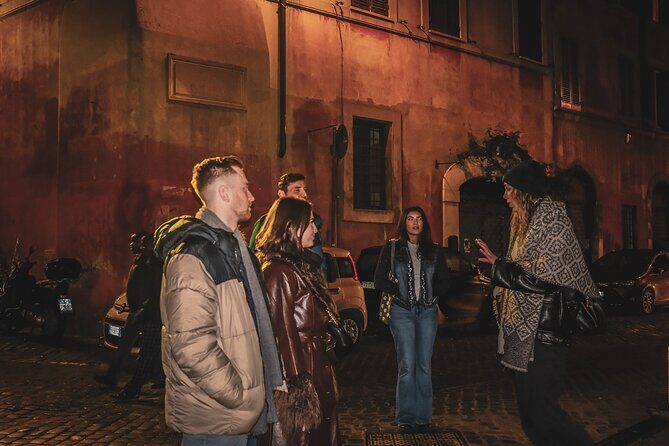
Rome in daylight is stunning, but it can also be loud, hot, and crowded. Doing this walk at night gives you a calmer rhythm. You can pay attention to details instead of weaving through tour groups every few minutes.
The tour also has a built-in way to make the city feel personal. You’re not just passing landmarks—you’re hearing why people once feared these exact spots. That turns the walk into a story you can picture, not a list of monuments.
One more practical plus: you’re paying for a guided route that connects several areas of the historic center. For $17.97, that’s the main value—organized time with a guide, not just sightseeing on your own.
You can also read our reviews of more walking tours in Rome

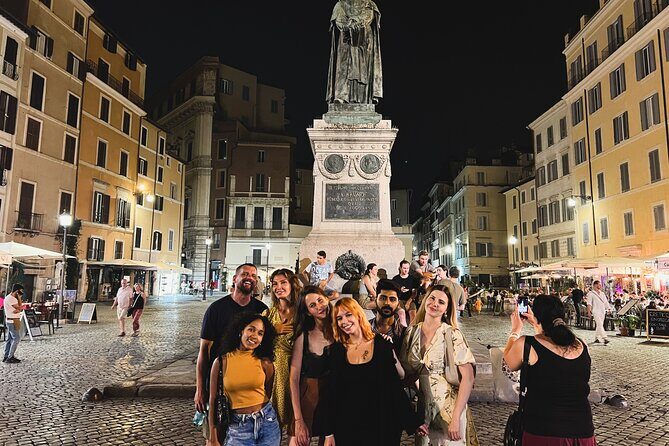
Starting at Campo de’ Fiori: Where the Night Gets Strange
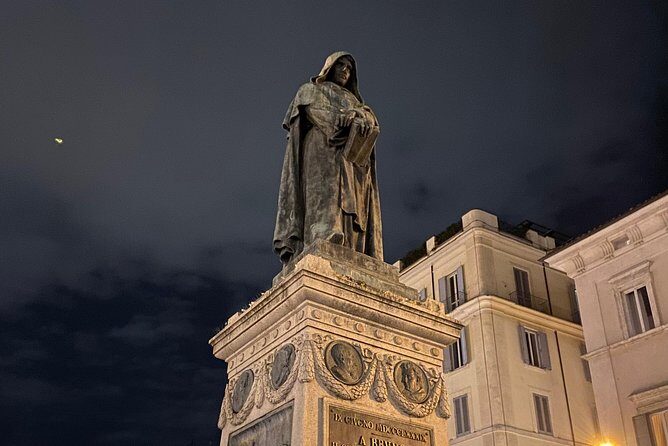
Campo de’ Fiori is famous in modern Rome for bars and restaurants. But it’s also a square with a serious past, and that contrast is part of the fun. You begin here because it sets the tone fast: the city’s entertainment side and its darker side share the same stones.
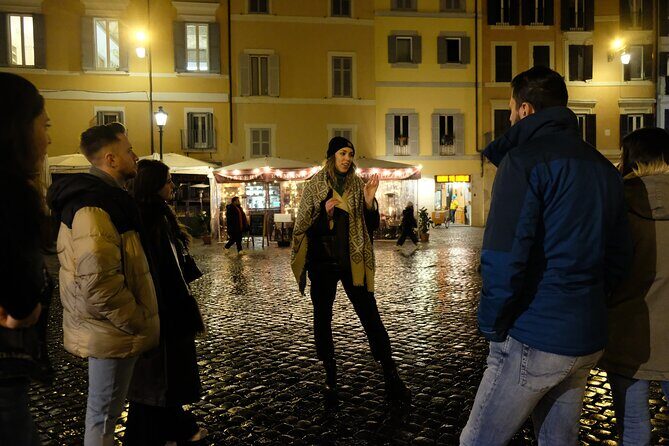
This is a good first stop for orientation too. You’ll get your bearings in the centro storico right away, and you’ll understand how the guide links stories to places. That matters because later you’ll be hearing about bridges, churches, and side streets that can look similar if you’re wandering solo.
One thing I like about starting here: it’s an easy mental shift. You’re already in the mood for Roman life—then the guide turns the key toward what happened on the ground where people now sip drinks.
Piazza Farnese: Lavish Parties and the Price of Power
Next comes Piazza Farnese. In the stories, it’s described as a place where wealthy elites once hosted lavish gatherings. But Rome has a way of charging interest on privilege, and this stop leans into that idea.
Even if you’re not a history nerd, this kind of stop works because it teaches you how to look. You start noticing the social layering behind a neighborhood—who had power, who paid for it, and how architecture can outlast people.
It’s also brief, which is helpful in a walking tour. You get the key idea without the pacing dragging.
Madonelles, Via del Mascherone, and Vicolo dei Venti
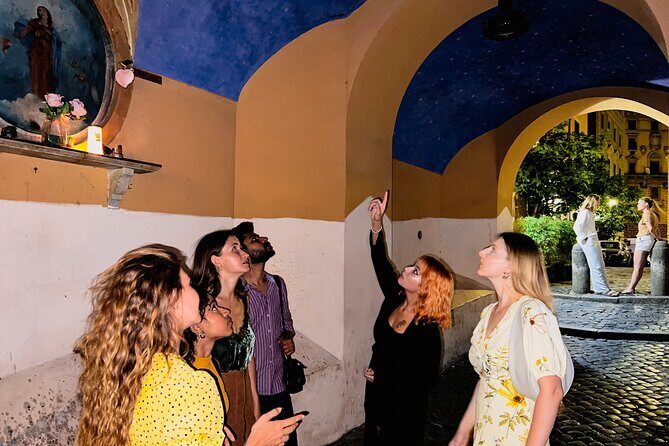
Then the tour moves onto Via del Mascherone and Vicolo dei Venti—small lanes where Rome feels intimate. This section centers on madonelles, the “little madonnas” you might spot in Rome’s walls.
Here’s the practical value: these aren’t just decorative religious images. They’re tied to the idea of crime-stopping protection. When you learn what they’re for, you start seeing them differently during the rest of your trip, even outside the tour route.
If you like street-level Rome—small streets, wall details, and local legends—this is where the walk feels most Rome and least like a generic tour.
Ponte Sisto: Rome’s Old Bridge and Its Uncomfortable Stories
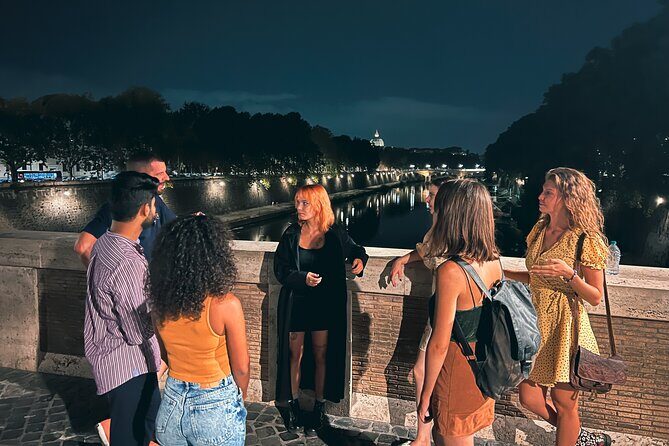
Ponte Sisto is next. The key theme here is the bridge’s long past and the grim mix of accidents, power struggles, theft, and suspicious deaths tied to it.
Bridges are underrated in Rome. They’re perfect “story engines” because water + crossings + crowds + movement create opportunities for trouble. Listening to how Ponte Sisto was once part of that chain makes the walk feel more grounded than purely supernatural.
If you’re the type who enjoys a bit of creep with a reason, this stop delivers. It’s scary in a human way, not a movie way.
You can also read our reviews of more city tours in Rome


A Fountain You Shouldn’t Test: Fontana del Mascherone
After the bridge, you reach Fontana del Mascherone. The tour’s message is straightforward: don’t drink from this fountain. That alone would make the stop memorable, but it also connects to the idea of “deadliest” lore wrapped into everyday city life.
This is the kind of detail that’s worth remembering even after the tour ends. Rome has water fountains everywhere, and learning which ones come with warnings helps you keep your eyes open.
Also, it’s a nice rhythm change. You’re not only hearing about executions and churches—you’re also seeing street-level icons that people used long ago.
Chiesa di Santa Maria dell’Orazione e Morte: When a Church Shows Its Proof
This stop is heavy. Chiesa di Santa Maria dell’Orazione e Morte is tied to the reminder that death is always close at hand, and it’s decorated in human remains.
You don’t need to be religious to feel the weight of this place. The impact comes from confronting the physical reality behind the story. Rome isn’t hiding its past; it’s building it into spaces you can visit.
Practical note: you’ll likely want a calm, slow moment here. If your group is chatty, it can help to pause and let the guide finish without rushing.
Via di Monserrato and the Haunted Apartment Block Angle
Via di Monserrato is where the tour leans harder into “haunted” wording. The stories frame an apartment block as one of the most haunted spots in Rome.
Even if you don’t buy every rumor, this stop is useful because it teaches you how Rome’s legends stick around. Buildings become characters in stories—especially in older neighborhoods where generations overlap.
This also gives you a break from the bigger showpiece sights. Side streets and older walls are often where the guide’s best “you had to be here” feeling comes from.
Chiesa di Santa Maria in Monserrato degli Spagnoli: Scandals with Spanish Flair
Next is the Spanish church: Chiesa di Santa Maria in Monserrato degli Spagnoli. The focus here is on scandalous stories, described as dramatic enough to feel like a TV saga.
This stop is a good example of what makes the tour fun. You’re learning history with personality. Instead of dry dates, you’re hearing how events shaped reputations, power, and the way people talked afterward.
If you’ve ever felt like Rome history sounds like it’s only about emperors, this helps balance the picture with human drama.
Via Giulia: When Cosmetics Could Kill
Via Giulia is a standout section because it ties the grim story theme to a surprising topic. The tour links an iconic building on the route to a former beauty shop and the idea that cosmetics could kill.
This is clever storytelling, and it gives you a reason to care beyond “spooky.” It connects crime, poison, and everyday routines—things people once did because they wanted to look a certain way.
If you like true-crime energy (without turning it into horror), this stop hits the sweet spot.
Via dell’Arco dei Banchi and Mastro Titta: The Executioner’s Footprint
Then the route turns to Via dell’Arco dei Banchi, where a house on an otherwise quiet street becomes linked with Rome’s infamous executioner, Mastro Titta.
This is where you’ll start to feel how the guide builds a theme. The city becomes a map of consequences: what happened, who was involved, and how justice played out in public spaces.
It’s also a reminder that Rome’s “quiet streets” used to be active stages for the city’s harshest realities. Once you hear the story, the street starts to feel different under your feet.
Castel Sant’Angelo: From Bodies on Display to Angels
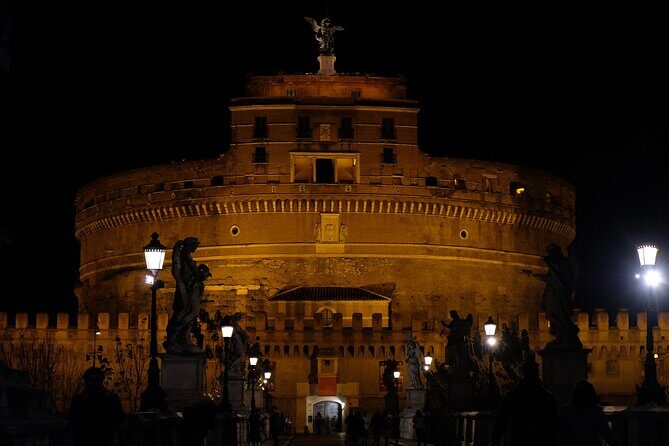
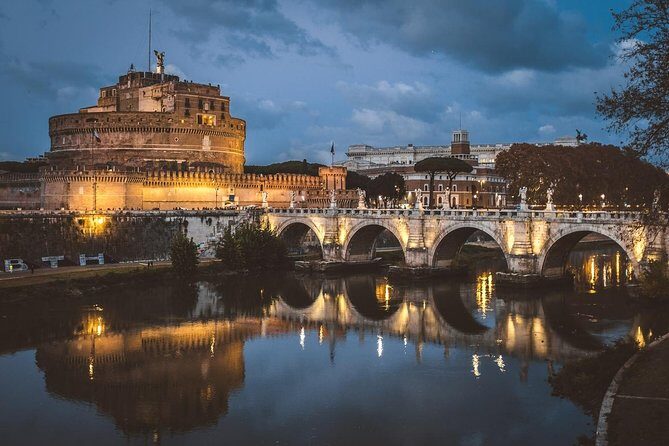
The tour finishes at Castel Sant’Angelo, and the ending is strong. The bridge approach and castle setting make the final chapter feel cinematic.
In the stories, this complex used to expose bodies of executed people as warnings. Today, the mood shifts. Angels and the Cenci family story take over, giving you a different kind of chill—one tied to tragedy and family fate rather than just public punishment.
Ending here also works practically. Castel Sant’Angelo sits near major transit and is an easy place to transition to your next stop, whether you’re heading for dinner or continuing on foot.
Price, Group Size, and the Real Meaning of a Small Tour
This tour costs $17.97 per person and runs about 2 hours. In practice, pacing can vary—one review noted finishing early, and another said it ran under two hours. So I’d plan with some flexibility rather than expecting an exact stopwatch.
The group size cap of 20 travelers matters more than you might think. Smaller groups are easier to keep together in Rome’s narrow lanes, and they’re also easier for the guide to address questions. Several reviews praised guides for managing noise levels, keeping people from drifting, and speaking clearly enough for everyone to hear.
Also worth noting: it’s in English, and you use a mobile ticket. That’s helpful if you prefer to spend less time fiddling with paper and more time looking at the city.
Who Should Book Haunted Rome (and Who Might Want to Skip)
This is a great pick if you want night views of central Rome plus a guided story thread. I think it works well for people who enjoy crime stories, legend lore, and history that feels like it has teeth.
It’s also a good match for first-timers doing their first evening walk, because it gives you a way to connect landmarks across the historic center. If you like guides with humor and clear storytelling, you’re likely to enjoy it—reviews specifically highlight entertaining, engaging hosts like Simon, Sarah, Ana, Domenica, Diletta, and Ben.
Should you skip it? If you want a theatrical ghost show with major scares, this probably won’t meet that expectation. Many people describe it as more dark history than ghost-horror.
Should You Book This Tour?
If you’re curious about the stories that live underneath Rome’s surface, I’d book it. For under $20, you’re paying for an efficient guided route across major areas of the centro storico, with a night schedule that helps with comfort.
I’d especially book it if you want to see Rome’s famous sights while learning why they matter—Campo de’ Fiori’s grim ground story, the legends of madonelles, Ponte Sisto’s uneasy past, and the bone-decorated church stop.
Just go in knowing it’s spooky-history rather than a straight-up haunted attraction. If that sounds like your kind of Rome at night, this tour is a smart use of time.
FAQ
Where does the tour start?
The tour starts at Piazza Campo de’ Fiori (P.za Campo de’ Fiori, 00186 Roma RM, Italy).
Where does the tour end?
The tour ends at Castel Sant’Angelo (Lungotevere Castello, 50, 00193 Roma RM, Italy).
How long is the walking tour?
The duration is approximately 2 hours.
Is the tour offered in English?
Yes, it is offered in English.
How big is the group?
The tour has a maximum of 20 travelers.
Do I need to buy tickets for the stops?
The listed stops show admission ticket free, so you should not expect additional paid entry at each location.
What happens if the weather is poor?
This experience requires good weather. If it’s canceled due to poor weather, you’ll be offered a different date or a full refund.
What is the cancellation policy?
You can cancel for a full refund up to 24 hours in advance. If you cancel less than 24 hours before the experience’s start time, the amount you paid is not refunded.