REVIEW · NAPLES
Walking Tour of Naples with Traditional Music
Book on Viator →Operated by APSIS Tour Napoli · Bookable on Viator
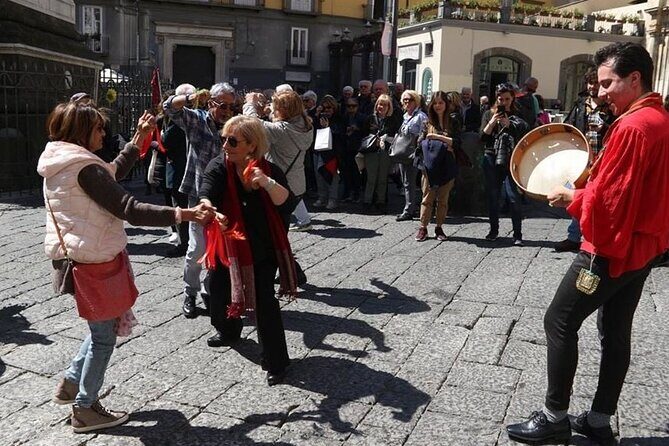
Music turns Naples into a stage. This 2-hour-and-a-bit walk blends traditional music with on-the-street storytelling, so the history doesn’t feel like a lecture. You’ll hear the Neapolitan sound of tammorra-style rhythms and popular songs, tied directly to the places you’re seeing, with performers who treat the walk like a living show.
I especially love the way the route is planned around squares and church corners that most people pass without really noticing. You also get music-and-acting stops built into the walk, so you’re learning and watching at the same time. One possible drawback: it’s weather-dependent and you’re moving through old streets, so plan on steady walking and bring comfortable shoes.
In This Review
- Key highlights you should know before you go
- A late-afternoon Naples walk with traditional music
- The route from Greek Walls to Piazza del Gesù Nuovo
- Piazza Bellini: starting with Naples’ origin point
- Greco-Roman city grid: Via dei Tribunali and Spaccanapoli
- Santa Maria Maggiore alla Pietrasanta: bell tower and church stories
- Complesso Museale ad Arco: pezzentelle souls and the cult of the unseen
- Piazza San Gaetano: the ancient agora in today’s Naples
- Duomo di Napoli: San Gennaro and why the cathedral matters
- Via San Biagio dei Librai: shop life between buildings
- Via San Gregorio Armeno: the way of the shepherds
- Piazza San Domenico Maggiore and the center of today
- Santa Chiara: Angevin church layers and the momentum of the walk
- Piazza del Gesù Nuovo: Baroque finishes and a strong ending
- Music and acting: why this tour feels different
- Price and value: is $83.08 worth it
- Tips to make the most of it (and avoid common hassles)
- Who should book this Naples walk
- Should you book this walking tour?
- FAQ
- How long is the walking tour?
- What is the price per person?
- Where does the tour start and end?
- What time does the tour run?
- Is the tour in English?
- Is coffee or tea included?
- How many people are in a group?
- Are entrance fees included for the stops?
- Is it canceled if the weather is bad?
- Can I cancel and get a refund?
Key highlights you should know before you go

- Traditional songs tied to specific streets instead of random background music
- Max 10 people, so the pacing feels human
- A route through Greco-Roman layouts and Baroque Naples in one outing
- Churches with strong local cults and legends (think San Gennaro and the souls at Arco)
- A show format with acting and singing, not just a standard guide talk
A late-afternoon Naples walk with traditional music
This tour works best if you like your sightseeing with a soundtrack. It runs in the late afternoon (Mon–Fri within the 3:00 PM to 7:00 PM window), and the small size helps keep everything flowing. With a max of 10 people, you’re not getting dragged along in a crowd, and you’re more likely to hear what’s being said and sung.
The format is part walking tour, part street performance. You get explanations at key points, plus musical interventions that connect directly to each location. The result feels more like moving through stories than ticking boxes.
Practical perks matter too. Your ticket is mobile, you’ll have coffee and/or tea included, and you’ll be near public transportation. And yes, service animals are allowed, and the tour is set up so most people can participate.
You can also read our reviews of more walking tours in Naples



The route from Greek Walls to Piazza del Gesù Nuovo
The walk starts at Greek Walls, Piazza Bellini (80138 Napoli), and ends at Piazza del Gesù Nuovo (80134 Napoli). That matters because the order of the sights follows how Naples grew: from older city structure, to church-centered neighborhoods, and then toward the Baroque heart.
The whole outing is about 2 hours 15 minutes, so it’s not a marathon. Still, it’s long enough that you’ll want to be comfortable with city walking. Old Naples streets can be uneven, and you’ll be on foot the whole time—so treat it like a proper walk, not a casual stroll.
Piazza Bellini: starting with Naples’ origin point
You begin at Piazza Bellini, one of the best places to set context. It’s a grounding stop that gives you a sense of where Naples’ identity takes shape. The tour uses the piazza as a starting line, so later streets and churches make more sense.
If you love “how the city was planned” history, this first stop helps. Instead of jumping straight into ornate details, you get an orientation moment. It’s a great way to get your bearings fast, especially if it’s your first time in Naples.
Greco-Roman city grid: Via dei Tribunali and Spaccanapoli
Next you head to Via Dei Tribunali, described as the major decumanus—the kind of street line you’d expect from a Greco-Roman urban layout. This is where the tour starts doing something smart: it connects city planning to what you’re seeing on the ground. The street becomes more than a corridor of shops; it becomes evidence of how Naples was organized.
A short hop brings you to Spaccanapoli, often called the lower decumanus. You’ll feel the contrast between the ancient street logic and the dense everyday life built on top of it. It’s one of those Naples moments where you can almost see layers stacking: structure, buildings, then voices and music moving through.
Santa Maria Maggiore alla Pietrasanta: bell tower and church stories
The tour shifts from city-grid thinking to architectural and religious meaning at the Basilica di Santa Maria Maggiore alla Pietrasanta. You’ll spend time on what the church and its bell tower represent, and how stories attach to stone over centuries.
Even if you’re not a “church person,” this stop can work because the tour keeps it human. It isn’t just pointing at features—it explains why particular places gained attention and how local belief shaped what people built and maintained.

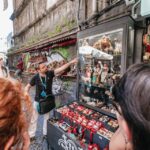

Complesso Museale ad Arco: pezzentelle souls and the cult of the unseen
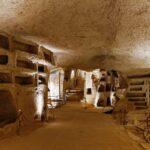
Then comes one of the tour’s most distinctive stops: Complesso Museale Santa Maria delle Anime del Purgatorio ad Arco. This is tied to the cult and legend connected to pezzentelle souls, a theme that’s both eerie and fascinating in the Naples way.
What I like here is the balance between atmosphere and clarity. You’re not left guessing what you’re looking at. Instead, the tour gives you a framework for why this place developed a reputation and how religious ideas can influence public space—down to the way people remember certain corners of the city.
Piazza San Gaetano: the ancient agora in today’s Naples
Piazza San Gaetano is the kind of square that changes mood depending on the time of day. In this walk, it’s treated as the agora of the ancient city, meaning it’s tied to civic life and gathering.
This is a useful stop because it connects the religious focus of churches to something broader: everyday social life. A square like this is where stories spread, news moved, and communities formed. When the tour links the present piazza to ancient roles, you get a “then and now” feeling without it turning into a history lecture.
Duomo di Napoli: San Gennaro and why the cathedral matters
At the Duomo di Napoli, you’ll focus on the cathedral and the cult of San Gennaro. This is the moment where Naples’ religious identity becomes concrete. Even if you don’t already know the tradition, the tour gives you the context to understand why this saint and the Duomo occupy such a powerful place in local life.
This stop is also a good example of how the tour’s structure works. It’s not randomly selecting pretty churches. It’s choosing places where belief and identity shaped the city’s rhythm.
Via San Biagio dei Librai: shop life between buildings
Next is Via San Biagio Dei Librai, a street with a history that sits right in the details—between buildings and shops. If you like Naples for its everyday texture, this segment can feel like a breath of realism.
I like that the tour doesn’t only chase monuments. Streets like this show how city life is organized around commerce, craftsmanship, and neighborhood continuity. You get the sense that Naples isn’t frozen in time; it’s still lived in.
Via San Gregorio Armeno: the way of the shepherds
Via San Gregorio Armeno is where the tour leans into a very specific Naples identity: the way of the shepherds, plus a Baroque church presence. This area is known for the way tradition stays visible in everyday commerce, and the tour helps you read what you’re seeing.
This stop works well if you enjoy cultural habits—how a theme turns into a street character. Instead of treating the street like a backdrop for photos, the tour explains the link between what people sell, what people celebrate, and how that becomes part of the city’s story.
Piazza San Domenico Maggiore and the center of today
Piazza San Domenico Maggiore is framed as the center of the city today. That phrase matters because it helps you understand why a piazza becomes a gravitational point: people meet, events happen, and the city’s daily motion picks a center.
Spending time here also gives you a reset before the final church-and-square sequence. If you’ve been paying attention to the street logic earlier, this stop helps you see how the city’s focal points have shifted over time.
Santa Chiara: Angevin church layers and the momentum of the walk
At the Complesso Monumentale di Santa Chiara, the tour highlights the history of the Angevin church. This is one of those sites where the details can feel like they’re made for slow looking—but the tour keeps it moving, with enough context to make you want to linger on your own after.
I find this kind of stop valuable because it gives you a thread. You’re learning a label (Angevin) and a historical layer, then connecting it to the architecture you’ll see. It’s the difference between seeing a building and understanding why it’s part of the Naples story.
Piazza del Gesù Nuovo: Baroque finishes and a strong ending
The tour closes in Piazza del Gesù Nuovo, focused on Piazza del Gesù and the Baroque church presence. Ending here is a smart move: by the time you reach the Baroque emphasis, you’ve already walked through older city planning, church cults, and neighborhood life.
This last stretch is where the show energy often feels most satisfying. After hearing songs and explanations across the walk, you’re primed to notice how Baroque design creates drama, movement, and emphasis. It’s a fitting wrap-up for a tour that treats Naples like a stage.
Music and acting: why this tour feels different
The standout theme is that it’s not only sightseeing; it’s performance. The mix of descriptions, theatrical anecdotes, and singing is the core recipe. In past runs, performers and guides have included people such as Antonella Esposito, and guide teams like Enzo and Salvatore have been praised for bringing passion to the storytelling.
What that means for you: you’re less likely to zone out. The show format keeps your attention on transitions between places. Instead of you walking past sites while your mind drifts, you’re listening for the connection between the next street corner and the next musical cue.
Also, the music isn’t just a soundtrack. It’s used as a way to mark cultural identity. Tammorra and popular songs show up as part of the Naples rhythm, so the city feels like it has a voice, not just walls.
Price and value: is $83.08 worth it
At $83.08 per person for about 2 hours 15 minutes, you’re paying for more than a guide. You’re paying for a guided route that includes entertainment elements (acting and singing), plus coffee and/or tea. The small group size also supports value because it helps keep the experience personal and audible.
If you’re only looking for a quick highlights walk, you might compare this to cheaper walking tours. But if you want a day to feel more like local culture—sound, story, and place—this price can make sense. Naples is full of churches and squares; what you’re buying here is a way to read them through performance.
Tips to make the most of it (and avoid common hassles)
Bring comfortable shoes. The itinerary takes you through compact streets and church areas where you’ll be walking steadily. A hat and water can help too, especially in warmer weather, since the tour depends on good weather.
Arrive a few minutes early at Piazza Bellini. The start point is Greek Walls, and being on time helps the group settle before the first explanations and musical energy begin. If you’re asking questions, don’t wait until the end—early curiosity pays off because the tour builds connections across stops.
Finally, treat the music as part of the learning. If you listen the same way you would at a local neighborhood show, you’ll understand the references faster.
Who should book this Naples walk
This is a great match if you:
- like your history tied to culture, not just dates
- enjoy performances (acting and singing) as part of your sightseeing
- want a small-group afternoon plan that feels special without being overcomplicated
It might be less ideal if you:
- hate walking for over two hours
- have limited mobility and feel the uneven old-street terrain will be a problem
- expect a quiet, strictly informational tour with no performance elements
Should you book this walking tour?
I think you should book if you want Naples to feel alive in your head, not only on camera. The combination of church-centered stories, street history, and traditional music gives you a more rounded picture than a basic route alone. The small group size and coffee/tea inclusion are practical bonuses.
If you’re unsure, use this simple filter: do you enjoy cultural performance woven into sightseeing? If the answer is yes, this is a strong pick for a first-time or repeat Naples visit where you want something that feels locally flavored.
FAQ
How long is the walking tour?
The walking tour lasts about 2 hours 15 minutes.
What is the price per person?
The price is $83.08 per person.
Where does the tour start and end?
It starts at Greek Walls, Piazza Bellini, 80138 Napoli and ends at Piazza del Gesù Nuovo, 80134 Napoli.
What time does the tour run?
It is offered Monday through Friday, in the 3:00 PM to 7:00 PM window.
Is the tour in English?
Yes, the tour is offered in English.
Is coffee or tea included?
Yes. Coffee and/or tea are included.
How many people are in a group?
The tour has a maximum of 10 travelers.
Are entrance fees included for the stops?
The stops listed have free admission tickets.
Is it canceled if the weather is bad?
The tour requires good weather. If it’s canceled due to poor weather, you’ll be offered a different date or a full refund.
Can I cancel and get a refund?
You can cancel up to 24 hours in advance for a full refund.