REVIEW · NAPLES
Skip the Line Half Day Private Tour of Herculaneum Highlights with Local Guide
Book on Viator →Operated by Tours of Pompeii with Lello & Co. · Bookable on Viator
Herculaneum teaches by showing, not by telling. In about two hours, you get a guided route through one of Italy’s most haunting archaeological sites, where everyday Roman life was frozen in place after Vesuvius erupted in AD 79. The biggest win here is skip-the-line entry and a guide who helps you connect the dots fast—especially if you’d otherwise feel like you’re looking at ruins with no map.
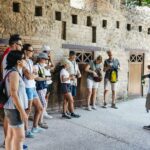
I love the way the guides bring the site to life. Guides such as Lello and Rossana are praised for being fun and detail-focused, and that matters because Herculaneum can be hard to interpret on your own. I also love what the preservation lets you notice: original doors, shop furniture, and the thermal baths, the kind of specifics you remember long after you leave.
One possible drawback: the time is tight. You’ll hit major highlights, not every corner of the excavations. Also, since there’s no hotel pickup, you’ll want to be comfortable meeting at Ercolano Scavi and making your own way there.
In This Review
- Key highlights at a glance
- Why Herculaneum feels different from Pompeii
- Skip-the-line entry: what it means for your day
- Hour one: a Pompeii primer that makes Herculaneum click
- Parco Acheologico di Ercolano: the highlights worth your time
- The preservation story: mud sealed the ordinary
- Private tour pacing: good for families, couples, and curious soloists
- Getting there and moving around without stress
- Value check: does $182.70 make sense?
- Who should book this Herculaneum highlight tour
- Should you book it
- FAQ
- How long is the tour?
- Is this a private tour?
- What’s included in the price?
- Are tickets included?
- Where does the tour start and end?
- Is hotel pickup included?
- Is it hard to physically?
- Is it good for families and kids?
- Can I cancel for free?
Key highlights at a glance
- Skip-the-line admission tickets so you spend your time inside, not waiting outside
- A private format that lets your group set the pace and focus
- Pompeii context first, so Herculaneum’s differences make sense
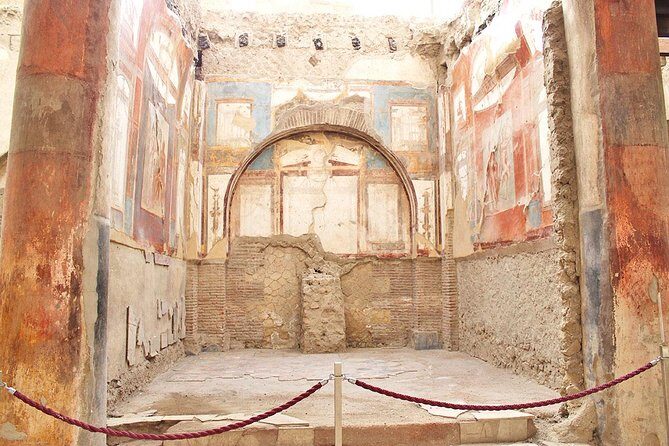
- Parco Acheologico di Ercolano highlights like houses, shops, and the thermal baths
- Guides who connect everyday life to what you see (with standout personalities like Lello and Rossana)
Why Herculaneum feels different from Pompeii
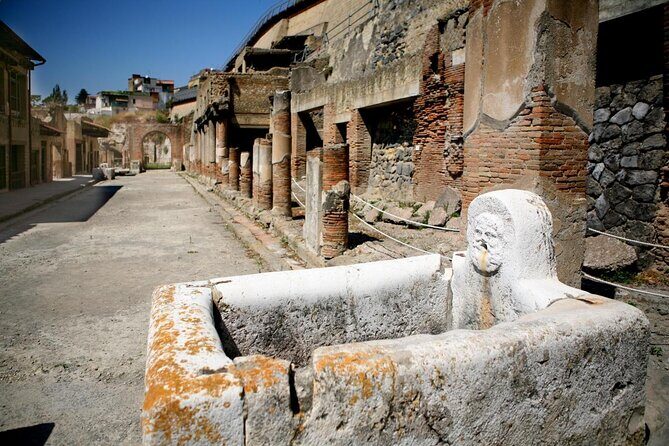
Herculaneum is famous because it’s unusually readable. Yes, it’s still tragic and atmospheric, but it’s also practical to understand. You’re not just staring at stones—you’re seeing clues about how people lived: where they worked, how they moved through rooms, and what daily routines looked like.
The guide is the main reason this works as a tour and not just a ticket. With the right explanation, you start noticing patterns: how space is organized, why certain objects survived, and why the eruption affected the two cities so differently. Without that, you can end up walking through sections of the park and thinking, I guess this was a house, but what exactly happened here?
This is where the tour’s focus on “highlights” is smart. In a short half-day window, you get the most legible parts of the site rather than trying to master an entire archaeological park solo.
You can also read our reviews of more guided tours in Naples


Skip-the-line entry: what it means for your day
In Naples-area archaeology, time can evaporate fast. Even when ruins are the priority, waiting in line or losing track of timed entry can throw off your whole schedule.
This tour includes guaranteed skip-the-long-lines admission. That means you can plan your day around seeing, not around logistics. It’s especially valuable if you’re on a tight itinerary or you’re combining this with other stops in the region.
One more practical detail: since the experience is private and your group is the only group with the guide, you’re not fighting other people for the same photo angle or the same five minutes of interpretation. You can ask questions, move on when you want, and keep momentum.
Hour one: a Pompeii primer that makes Herculaneum click
The tour starts with a guided introduction that sets up the big contrast between Pompeii and Herculaneum after the AD 79 eruption. You’ll be guided through the key idea right away: Pompeii was buried under ash and lapilli, while Herculaneum was covered by a huge mass of mud and volcanic debris.
That difference is not trivia. It’s the reason Herculaneum preserves certain things that Pompeii often doesn’t. Ash and lapilli tend to cover but also destroy more fragile materials. The heavier, mud-like fallout at Herculaneum created a different kind of sealing effect—one that helped preserve perishable items. The result is that you can look at the remnants of daily life with much more clarity.
Even if you’ve heard about Vesuvius already, a good guide makes you see it in a new way: the eruption wasn’t just a disaster—it was a chemistry and physics event that determined what survived for archaeologists to find.
If you’re visiting for the first time, this primer also gives you an immediate frame. You’re not walking into Herculaneum with a blank mental screen. You’ll start comparing what you see to what you’ve just learned about Pompeii’s fate.
Parco Acheologico di Ercolano: the highlights worth your time
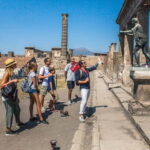
The second part of your tour happens inside Parco Acheologico di Ercolano, where the excavations are the star of the show. This is where the “highlights in a few hours” promise actually matters, because the park is large and easy to get lost in.
Here’s what you can expect to focus on with a guide:
- Roman houses and household details: You’ll spend time in sections that let you picture how rooms were arranged and how families likely used them.
- Shopfront clues: Herculaneum has some of the best evidence for commercial space, including details tied to how shops were laid out.
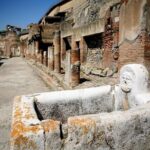
- Original doors and shop furniture: One reason Herculaneum feels so personal is that you can encounter objects that are closer to what the Romans actually touched.
- The thermal baths: This is a major highlight for good reason. If you want to understand Roman leisure and routine, the baths are one of the clearest places to start.
The guide’s job isn’t just to point at walls. It’s to help you translate the space into real life. When someone explains what you’re looking at, you’ll likely notice things you would have missed alone—like how transitions between rooms suggest how people walked, or how preserved fittings hint at what daily work looked like.
Also, a private guide can adjust for your group’s pace. If you have kids, there’s room to slow down for questions and reset before everyone gets restless.
The preservation story: mud sealed the ordinary
Here’s the big “aha” that makes Herculaneum special: the site wasn’t preserved because it was protected by magic. It was preserved because the eruption deposited material that behaved differently.
As you hear the Pompeii vs. Herculaneum comparison, you’ll start to understand why Herculaneum feels so close. The mud and volcanic debris acted like a heavy cover. That helped protect more fragile materials, including things like wood remnants and other perishable traces that archaeologists can interpret long after the fact.
That’s why it’s not just architecture here. It’s human-scale evidence. You might notice features tied to everyday routines: doorways, shop fittings, and the kind of material detail that turns a ruin into a place with memory.
This is also why a guide with an art-history lens (the tour includes a professional art historian guide in addition to a local guide) can be useful. You’re not only learning facts about the eruption—you’re learning how to read the surviving details as cultural artifacts, not just objects.
You can also read our reviews of more private tours in Naples






Private tour pacing: good for families, couples, and curious soloists
A private tour sounds like a luxury, but in practice it’s about control. You control the walking pace, you can spend extra time on one set of rooms, and you’re not stuck in a rigid group rhythm.
The guide’s style can make a big difference. In particular, Lello has been described as accommodating and engaging, including adapting when a child got antsy. That kind of flexibility matters on sites like this, where the attention span swings can be real.
You’re also more likely to get your specific questions answered. If you want to understand how Romans lived, why a certain area mattered, or how the preservation changed what you see, a private guide can focus your time where it counts.
If your group includes different ages—say, a parent who wants context and a teen who wants concrete details—private pacing helps everyone feel like the tour is built for them, not just delivered to them.
Getting there and moving around without stress
This is a meeting-point tour. It starts at Ercolano Scavi (80056 Ercolano) and ends back at the meeting point. Hotel pickup and drop-off aren’t included, so you’ll need to plan your own way to the site.
It’s also listed as near public transportation, which is helpful if you’re staying in Naples without a car. Still, I recommend building in a little buffer for walking from transport stops to the meeting point.
Physical demands are described as moderate. That usually means you’ll be doing walking and standing in outdoor archaeological terrain. If anyone in your group has mobility concerns, you’ll want to factor in time for breaks and careful footing.
The payoff is that the tour is short. You get a focused experience without turning your day into a marathon.
Value check: does $182.70 make sense?
At $182.70 per person, this isn’t a bargain-basement ticket. But it can be good value when you zoom out and price in the right things:
- Private guide time for a focused route (not a large group tour).
- Professional art historian guidance alongside a local guide.
- Guaranteed skip-the-line admission, which saves time and reduces friction.
- Short duration (about two hours), so you’re paying for interpretation rather than spending half your day in transit or waiting.
If you’re comparing against DIY entry, the cost can feel high. But think about what you’d miss without a guide: the eruption contrast, why certain artifacts survived, and what the thermal baths and household spaces meant to everyday Romans.
Where this price feels most justified is when you care about understanding the site, not just ticking it off. It’s also a smart option for groups who don’t want to spend vacation time decoding ruins one sign at a time.
Who should book this Herculaneum highlight tour
Book this if:
- You want Herculaneum highlights in a manageable time window.
- You’re willing to pay for a guide who explains what you’re seeing, not just where it is.
- You value skip-the-line entry and a private pace.
- You’re visiting Pompeii/Herculaneum for the first time and want the eruption story connected clearly.
Skip it (or consider a different format) if:
- You want a long, open-ended exploration with lots of time to roam every excavation area.
- You hate logistics and you’d rather have hotel pickup included.
Should you book it
I’d book it if your priority is clarity and efficiency. The mix of skip-the-line entry, private pacing, and guide-led interpretation makes this a strong choice for people who don’t want to “guess” their way through Herculaneum.
If you’ve got a tight schedule, want the thermal baths experience, and care about understanding why Herculaneum looks the way it does after Vesuvius, this is a practical, worthwhile way to do it.
FAQ
How long is the tour?
It runs for about 2 hours.
Is this a private tour?
Yes. It’s a private tour/activity, and only your group participates.
What’s included in the price?
You get a local guide plus a professional art historian guide, admission tickets, and guaranteed skip-the-line entry.
Are tickets included?
Yes. Admission tickets are included for the tour stops.
Where does the tour start and end?
It starts at Ercolano Scavi, 80056 Ercolano and ends back at the meeting point.
Is hotel pickup included?
No. Hotel pickup and drop-off are not included.
Is it hard to physically?
It’s listed as suitable for travelers with a moderate physical fitness level.
Is it good for families and kids?
Children must be accompanied by an adult.
Can I cancel for free?
Yes. You can cancel for a full refund up to 24 hours in advance of the experience’s start time.