REVIEW · COLOSSEUM TOURS
Colosseum & Ancient Rome Guided Walking Tour
Book on Viator →Operated by Rome Walkers · Bookable on Viator
Rome feels real here, fast.
This guided walk strings together three heavyweight sites—the Colosseum, Palatine Hill, and the Roman Forum—in one smooth couple of hours so you can make sense of what you’re seeing instead of just staring at stones. I like that the admission tickets and fees are included, so you’re not doing math in your head while lines form. I also like the small-group feel (max 25) plus headsets, which really help in crowded, noisy spaces.
One possible drawback: you’ll do a good bit of walking on uneven ground, including stairs and inclines, and the Colosseum can be extremely busy. Also, guide styles can vary; if you’re sensitive to accents or speech volume, use the headsets and try to stay close.
In This Review
- Key highlights worth your time
- Colosseum: the arena where Rome put on a show
- What to watch out for at the Colosseum
- Palatine Hill: where the legend and the emperors meet
- The trade-off on Palatine Hill
- Roman Forum: the business and politics of ancient Rome
- The Forum’s pacing reality
- How the guide format makes a difference (and saves your sanity)
- Quick note on guide strengths
- Price and logistics: where the $65.33 really goes
- A heads-up on entry names
- What to bring for the cobbles, stairs, and summer heat
- Who should book this guided Colosseum–Forum combo
- Should you book the Colosseum & Ancient Rome guided walking tour?
- FAQ
- How long is the Colosseum & Ancient Rome guided walking tour?
- Which stops are included in the tour?
- Is admission included in the price?
- Does the tour include food or drinks?
- Is the tour in English?
- How large is the group?
- Where do I meet the tour, and where does it end?
- Do I need to bring ID?
- Are headsets provided?
- What should I wear or bring?
Key highlights worth your time
- Tickets + reservation fees included so entry is handled for you
- Headsets make crowded commentary much easier to follow
- Small group size (max 25) helps you stay together and ask questions
- Colosseum focus with stories of emperors, games, and the arena world
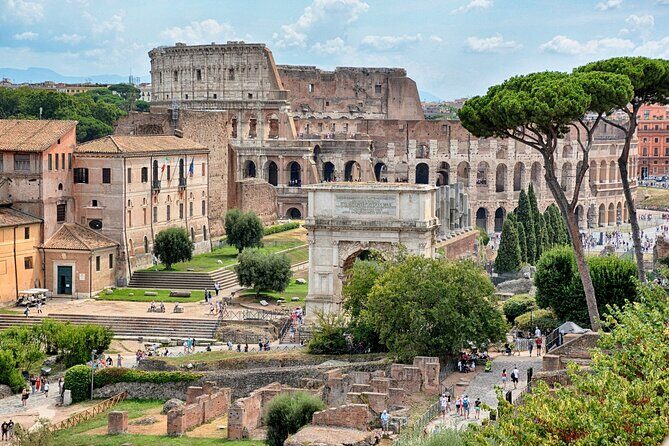
- One ticket, three sites: imperial origins on Palatine Hill, power center at the Forum
Colosseum: the arena where Rome put on a show
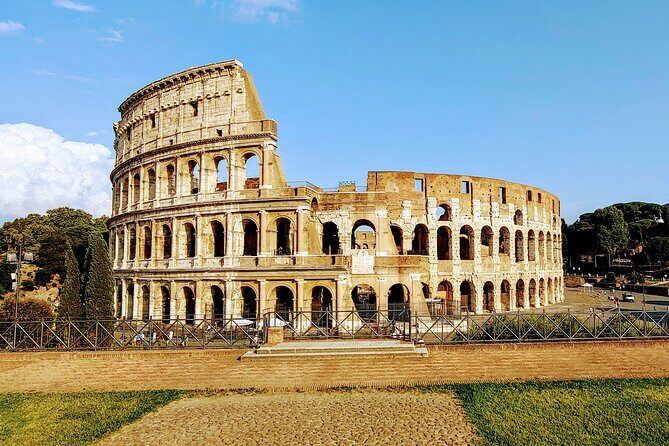
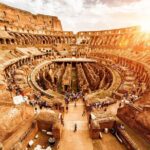
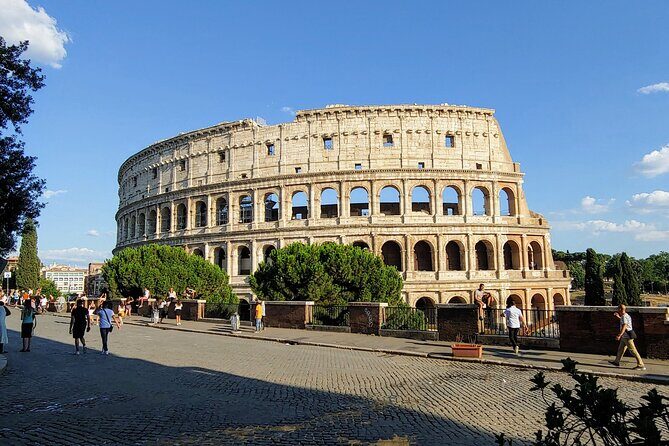
The Colosseum is famous for a reason, but it’s also easy to lose the plot if you don’t have a guide. You’ll walk through the Flavian Amphitheatre’s big ideas: how emperors used spectacle to project power, how crowds got entertainment for free, and how the scale was so massive it required industrial-level building resources.
Built under Emperor Vespasian between 72 and 80 AD, the Colosseum was not a modest project. The materials were serious—more than one million tons including travertine, marble, and cement. Your guide connects that building effort to the goal: impress the people and underline that Rome’s rulers had the reach (and money) to stage events on an empire-sized stage.
Then comes the human side, the part you feel in your gut. Over almost five centuries, gladiators, animals, and convicts fought in the arena. Even if you’ve seen photos, hearing the timeline and the purpose behind the games makes it more than a postcard. The inauguration games held by Titus in 80 AD lasted 100 days, a reminder that this wasn’t a one-off event—it was a system.
A practical tip that makes the experience better: in peak season, the Colosseum can be gridlocked. The guided approach helps you move as a group and get the most out of the time you’re inside, rather than wandering and missing key viewpoints. One guide-focused detail I really value here is crowd strategy—getting you positioned for good views and photos without turning the whole visit into a hunt.
If you’re looking for a moment that feels especially memorable, some guides provide access that can include a Colosseum floor area (when available and timed with entry). Even if you don’t know what you’re looking at, it helps to stand where the action once happened, even if only in imagination.
You can also read our reviews of more walking tours in Rome


What to watch out for at the Colosseum
It’s crowded. It’s loud. And it’s hot. Plan to keep moving at a guide-led pace, and don’t expect long free-roaming time inside the arena itself. Your visit here is about one hour, so it’s best for getting clarity and context, not for lingering for hours.
Palatine Hill: where the legend and the emperors meet
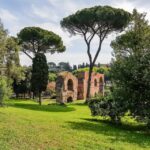
After the arena, the mood shifts. Palatine Hill is where you go to understand the starting point story of Rome—its myths, its power, and why this spot was chosen early on.
You’ll hear the legend that Rome was first established in 753 BC by Romulus, and that Palatine Hill was the place he picked. Archaeology adds another layer: traces of Bronze Age settlements were found here, supporting the idea that this area wasn’t just a mythic name—it was a real, early human hub.
One of the most useful things you’ll learn is why the hill mattered. The high ground helped early settlers deal with threats and practical problems. Your guide explains how ancient peoples often chose elevated sites near rivers for control and safety, and Palatine’s central position among the seven hills made it strategically attractive.
Then the focus turns to what remains today: the imperial palaces and the sense that this was home territory for kings and rulers. Palatine Hill is where you find the kind of royal footprint that makes the Colosseum story click. The same empire that staged mass entertainment also lived in controlled, elevated comfort—this hill was the early and ongoing symbol of authority.
The trade-off on Palatine Hill
Your time here is about 45 minutes. That’s perfect for an overview, but it’s not enough to read every stone label slowly or wander beyond the core paths. Think of it as the “origin and status” chapter of the day.
Roman Forum: the business and politics of ancient Rome
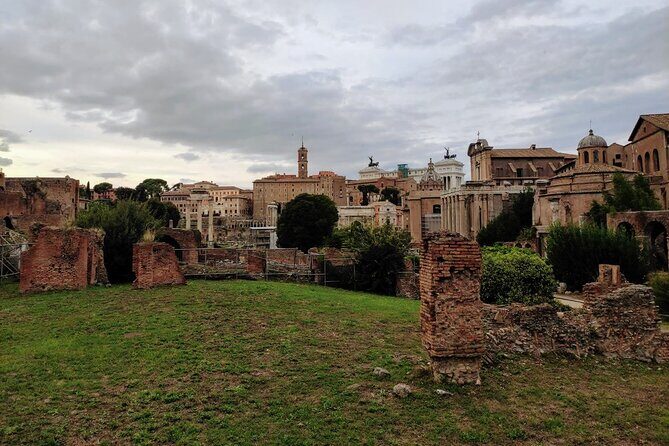
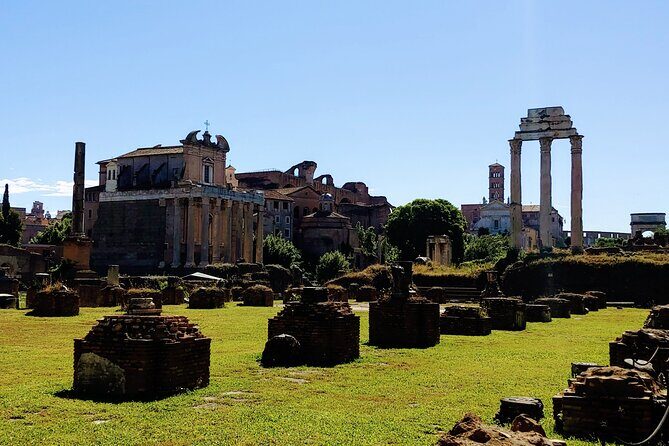
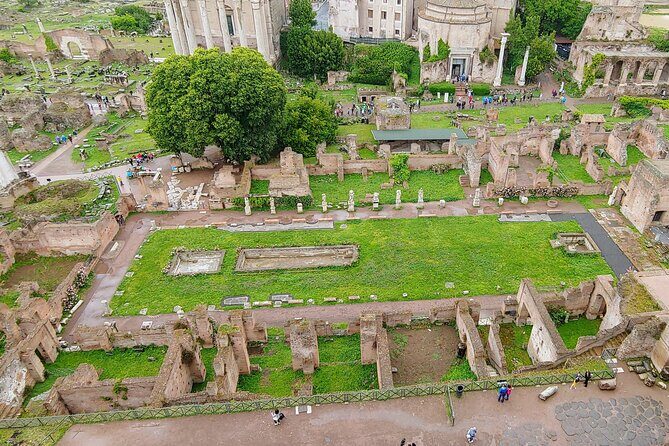
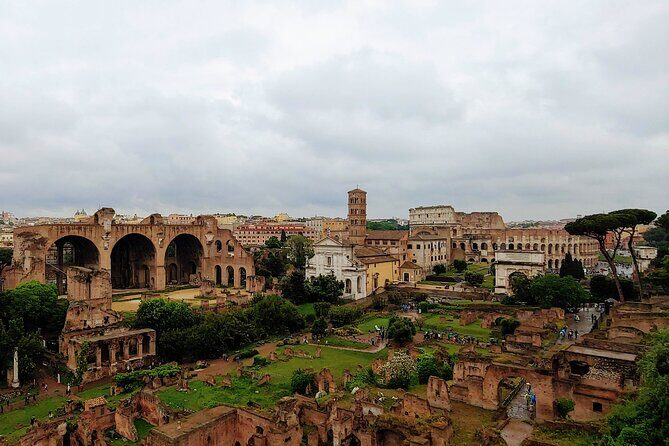
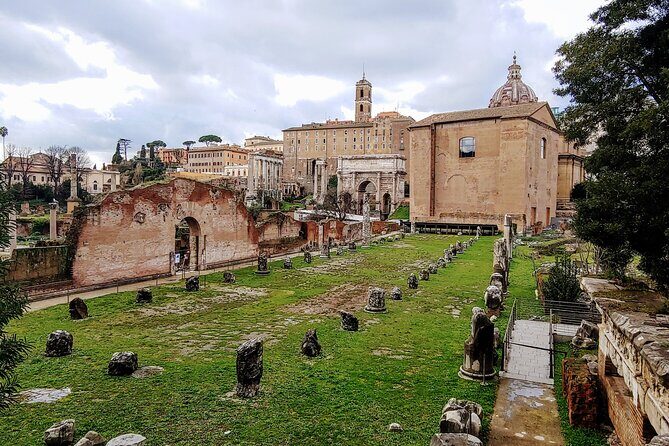
Next comes the Roman Forum, the outdoor heart where Rome’s civic life played out. If the Colosseum is about spectacle, the Forum is about systems—government, law, and the daily engine of power.
You’ll get the big picture quickly: the Forum was a plaza where people gathered to handle political and civil life. Around it stood temples, basilicas, and the palaces of power. In other words, this wasn’t just scenery. It was where decisions got made and disputes got processed.
Your guide points out major types of buildings that shaped Rome’s governance: the house of the Senate, temples, and basilicas. Even though you’re seeing ruins, the value is in how you learn to “read” the space. The Forum helps you understand why Rome mattered beyond one emperor or one arena day.
One of my favorite ways to look at the Forum is like this: standing there, you can feel that the Romans weren’t only building monuments. They were building routines—public discussion, commerce, and justice in shared spaces. That’s why the Forum still feels relevant. You don’t need to agree with ancient politics to recognize the basic human patterns.
You can also read our reviews of more guided tours in Rome




The Forum’s pacing reality
You’ll spend about 45 minutes here. That time is great for orientation and key highlights. If you want to go deeper on your own afterward, this is one of those locations where you’ll likely want extra time after the tour ends.
How the guide format makes a difference (and saves your sanity)
This tour is built for people who want structure in a place that can overwhelm you. The group size is capped at 25 travelers, which is the sweet spot where the guide can keep an eye on everyone without turning it into a cattle-line sprint.
The biggest practical upgrade is the headsets. When you’re inside the Colosseum area or moving through the Forum, sound bounces and people talk over each other. Headsets cut through that and help you catch the key story beats instead of missing them.
I also like the way guides often bring the material to life with tools and presentation styles. For example, guides have used picture-based books to make sections of the Colosseum easier to understand, and other guides have leaned into storytelling and humor to keep teenagers and multi-generation groups engaged. You’re not just hearing facts; you’re learning how to connect them.
One more detail that matters: your itinerary includes admission tickets and fees for all three stops. That’s not glamorous, but it removes a big chunk of stress. In Rome’s biggest sites, time lost to ticket confusion is time you never get back.
Quick note on guide strengths
From past experiences with this kind of tour style, I’d treat the guide as a major part of the value. The experience can feel excellent when the guide speaks clearly and stops at the right moments to explain what you’re actually standing in front of. If you’ve had trouble with accent clarity before, keep the headset on and stay close to the guide so you get the best audio.
Price and logistics: where the $65.33 really goes
At $65.33 per person, this is a mid-priced way to get into three of Rome’s most demanding sites without spending your energy figuring out entry times and logistics on the fly.
The key value is that the tour includes Colosseum tickets and fees—listed as a value of €18 for entry plus a €2 reservation fee. The remaining cost covers the rest of what you’re buying: the guide, headset rental, and the service that keeps the whole route moving through major checkpoints.
Also, the duration is about 2 hours 45 minutes. That matters because Rome’s top attractions are busiest at predictable hours, and your time window is often the limiting factor. A guided plan helps you compress a lot of meaning into a single visit.
A couple of practical notes that affect your day:
- Food and drinks are not included. Plan a snack or gelato stop after, not during the tour.
- You’ll want to budget time for the walk-up and the transitions between sites since the meeting point and end point are different.
You start at L.go Gaetana Agnesi, 5, 00184 Roma and the tour ends in the Roman Forum area at 00186 Rome. If you’re mapping out your afternoon, think of this as finishing near the Forum so you can continue exploring nearby.
A heads-up on entry names
This tour requires your name on the ticket/voucher to match your passport or ID. Before you go, make sure you booked with the full names exactly as shown on your ID. It’s a small thing that can ruin a day if it’s wrong.
What to bring for the cobbles, stairs, and summer heat
This is not a sit-and-smile tour. It includes walking on cobbled pavements, plus steps and inclines. You’ll feel it in your legs, even if you consider yourself fit.
I’d bring:
- Comfortable walking shoes (not just decent sandals)
- Water (especially in hot weather)
- Your phone camera for quick shots, but don’t spend the whole tour photographing
One plus: some guides actively manage comfort in heat—taking shade breaks when possible and keeping the group together so nobody gets left behind in a crowd.
Who should book this guided Colosseum–Forum combo
Book this if you want:
- A structured tour that covers three major sites in one go
- A guide-led explanation that turns ruins into story and context
- A calmer experience than going site-to-site on your own in Rome’s biggest crowds
It’s also a strong pick for mixed-age groups because guides often use humor and clear explanations to keep everyone engaged. If you travel with teenagers, this format tends to work well because the day has momentum and built-in “why this matters” moments.
If you’re the type who loves slow museum-style wandering, you might prefer adding personal time after the tour ends, especially around the Forum.
Should you book the Colosseum & Ancient Rome guided walking tour?
I think you should book it if your goal is to understand what you’re seeing without wasting hours on logistics. Tickets included, headsets provided, and a route that links the Colosseum’s spectacle to Palatine’s origins and the Forum’s power structures is a smart use of limited time in Rome.
Skip it only if you know you strongly prefer self-paced wandering, or if you dislike guided audio formats and would rather read quietly on your own. For most first-timers—and plenty of repeat visitors who want a clearer narrative—this is a solid way to get value fast.
FAQ
How long is the Colosseum & Ancient Rome guided walking tour?
It runs for about 2 hours 45 minutes.
Which stops are included in the tour?
You visit the Colosseum, Palatine Hill, and the Roman Forum.
Is admission included in the price?
Yes. Tickets and fees for the Colosseum, Palatine Hill, and Roman Forum are included.
Does the tour include food or drinks?
No. Food and drinks are not included.
Is the tour in English?
Yes, it’s offered in English.
How large is the group?
This tour has a maximum of 25 travelers.
Where do I meet the tour, and where does it end?
Meet at L.go Gaetana Agnesi, 5, 00184 Roma. The tour ends at the Roman Forum area.
Do I need to bring ID?
Yes. Each traveler must present a valid passport or ID document that matches the name provided during booking.
Are headsets provided?
Yes. Headsets are included to help you hear the guide.
What should I wear or bring?
Wear comfortable shoes because there’s lots of walking on cobblestones, plus steps and inclines. Bring water, especially in warm weather.