REVIEW · GUIDED
Rome: San Clemente Underground and Basilica Guided Tour
Book on GetYourGuide →Operated by EcoArt Travel · Bookable on GetYourGuide
Rome has a staircase into 2,000 years. I love how San Clemente turns history into something you can physically walk through, and I also love the way the guide brings the gold mosaics aboveground into focus before you start going down. The one thing to think about: you’ll climb and descend stairs on your own, and it’s not wheelchair-friendly or suitable for mobility limits.
This is one of the quieter, less-performative ways to understand Rome’s famous building habit: later eras keep going up, while older ones get buried, forgotten, then rediscovered. On the right day, with a strong English-speaking guide like Luca, Alberto, or Gina, the place feels almost like a story you can trace by eye and sound. (Small-group pacing is a plus, but if your audio is off or multiple groups overlap, you may strain to hear.)
If you want the Colosseum-style big-ticket moment, this is different. It’s a compact, intense “layers of the city” tour that rewards patience, good shoes, and an interest in how religions and neighborhoods changed over centuries.
In This Review
- Key things worth knowing before you go
- San Clemente’s layers: why this tour makes Rome click
- First stop: the 12th-century Basilica di San Clemente al Laterano (with gold mosaics)
- The photo stop segment and timing: plan for quick looking
- Going down to level one: the forgotten 4th-century basilica
- The Mithraic temple at the deepest level: Rome’s older religion survives
- How the site was discovered: flooding, a priest, and 1860 chaos
- Roman homes and preserved remains: the neighborhood underneath the church
- The guide makes the difference: Luca, Alberto, Gina, Ursus, and more
- Rules, dress, and stairs: what you need to plan for
- Meeting point tips at Via di S. Giovanni in Laterano
- Value check: $70 for 1.5 hours, and why it can be worth it
- Who should book this tour
- Should you book it? My practical call
- FAQ
- How long is the San Clemente Underground and Basilica guided tour?
- What is included in the $70 price?
- Is it allowed to bring a camera or take photos inside?
- Are there any dress code rules?
- Is the tour suitable for wheelchair users or mobility impairments?
- Where do I meet for the tour?
Key things worth knowing before you go
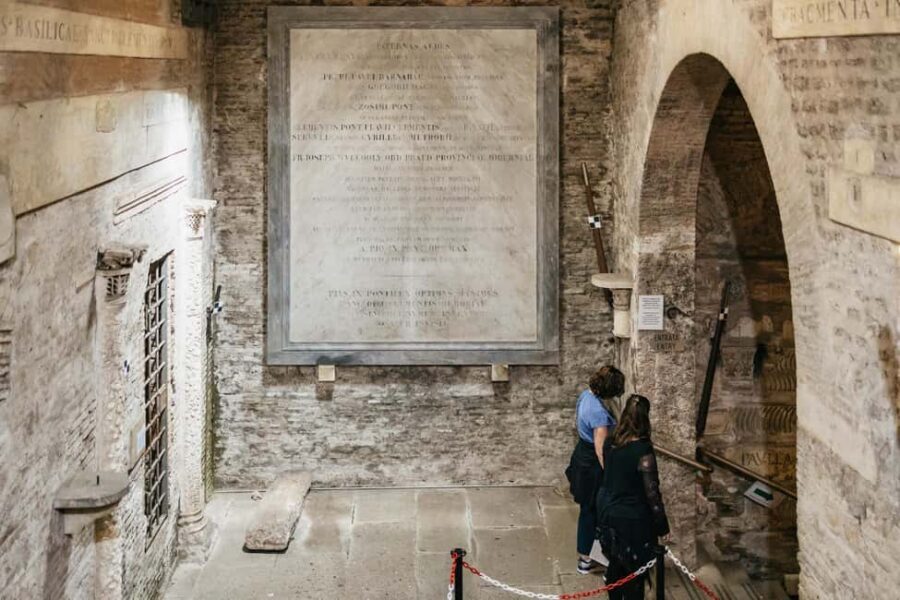
- Three underground levels you can actually see, not just read about
- Golden mosaics in the basilica above, then ruins below it
- A Mithraic temple survives at the deepest level, with an altar you’ll be pointed to
- You’ll learn how the site was uncovered in 1860 after flooding
- Expect stairs, uneven ground, and cooler temperatures underground
- No cameras inside, so plan to take notes instead of photos
San Clemente’s layers: why this tour makes Rome click
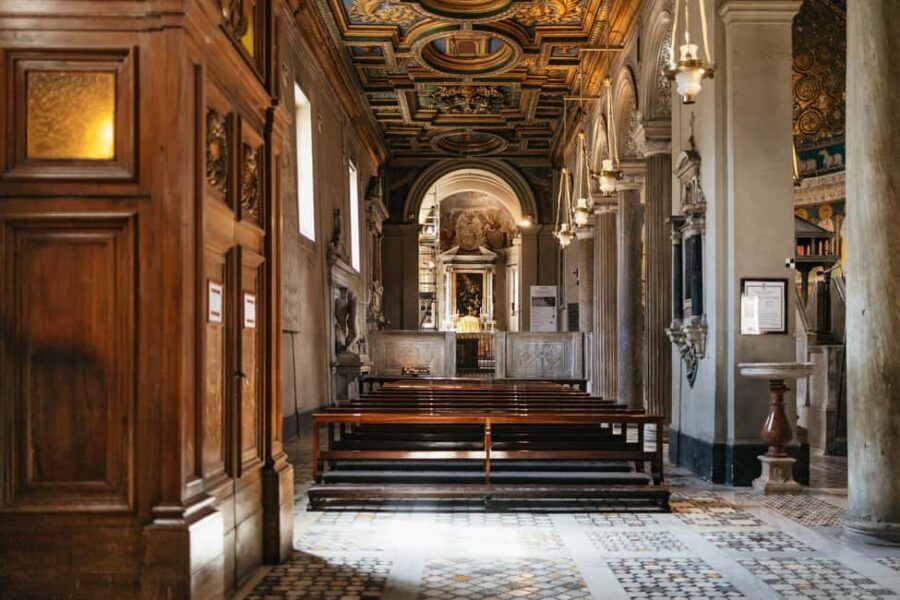
San Clemente al Laterano is one of those Rome sites where the “where” matters as much as the “what.” A 12th-century basilica sits on top, but the building is really a time machine: older churches, pagan spaces, and domestic areas are stacked beneath it like a built-in history lesson.
That stacking is the point. Rome didn’t swap cultures overnight; it layered them. You’ll start with what’s visible and “official,” then go down into what was hidden—so your brain can connect architectural details to real life: worship, work, and even the mess created by water and floods during later development.
You can also read our reviews of more guided tours in Rome



First stop: the 12th-century Basilica di San Clemente al Laterano (with gold mosaics)
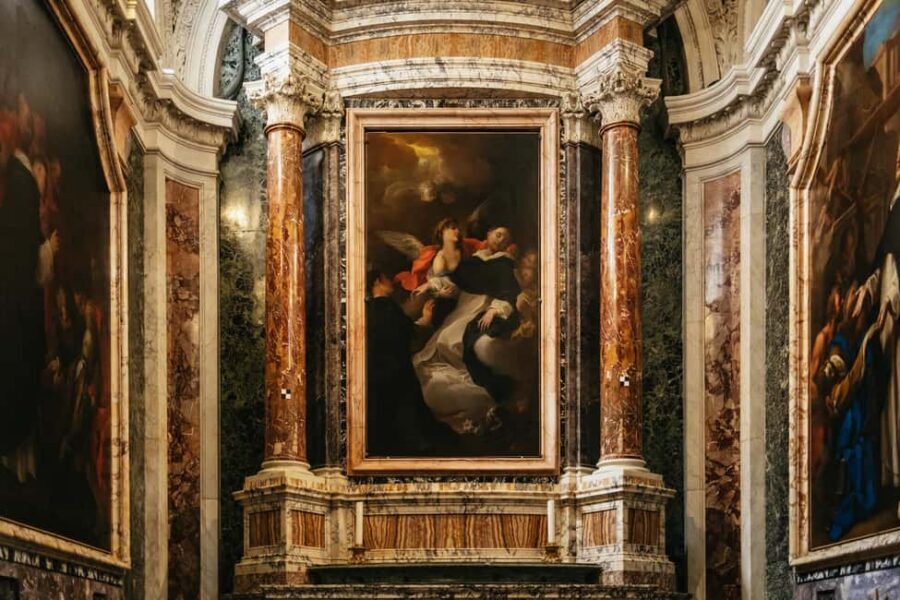
The tour begins at Via di S. Giovanni in Laterano, 126, right by the basilica. Your first hour focuses on the basilica above: a 12th-century church with mosaics that catch the light in a way you don’t get from a quick stop on your own.
This part matters because it gives you a reference point. Without it, the underground levels can feel like random ruins. With it, you start noticing how art, decoration, and religious space relate to the eras underneath.
The photo stop segment and timing: plan for quick looking
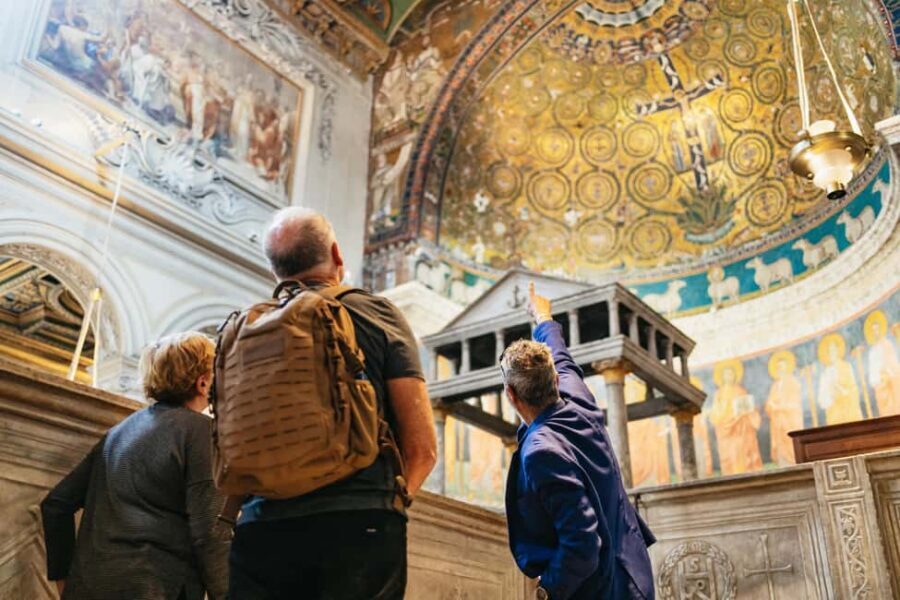
There’s a photo stop after the guided portion. It’s not a long wander, so you’ll want to be ready: comfortable shoes on, water handled, and your questions saved for when the guide can answer them.
Also, remember the rules: no photography inside the church areas during the tour. If you’re the kind of person who depends on phone pics, you’ll have a better experience if you switch to short notes—sketch what you see, jot where the Mithraic remains are, and mark any mosaic details you want to look up later.
Going down to level one: the forgotten 4th-century basilica
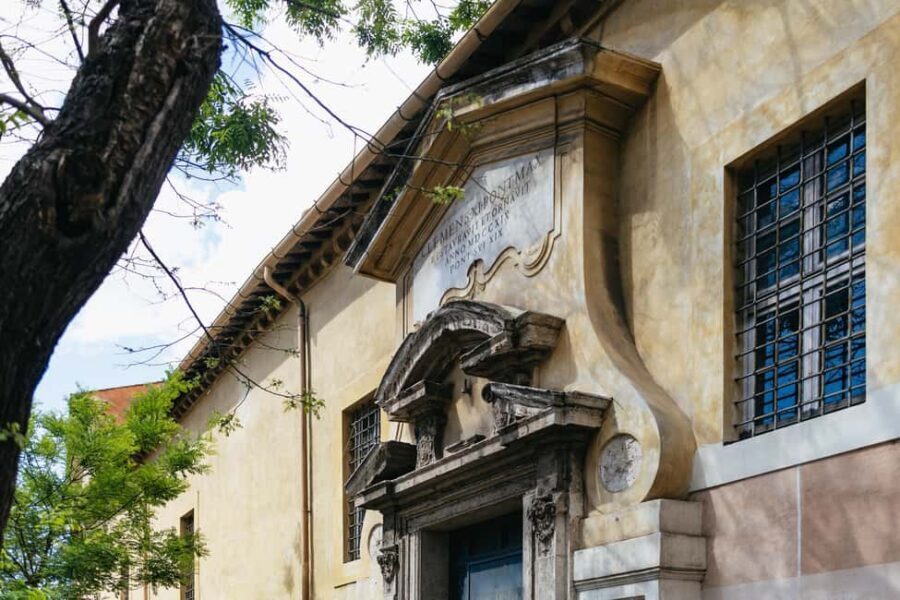
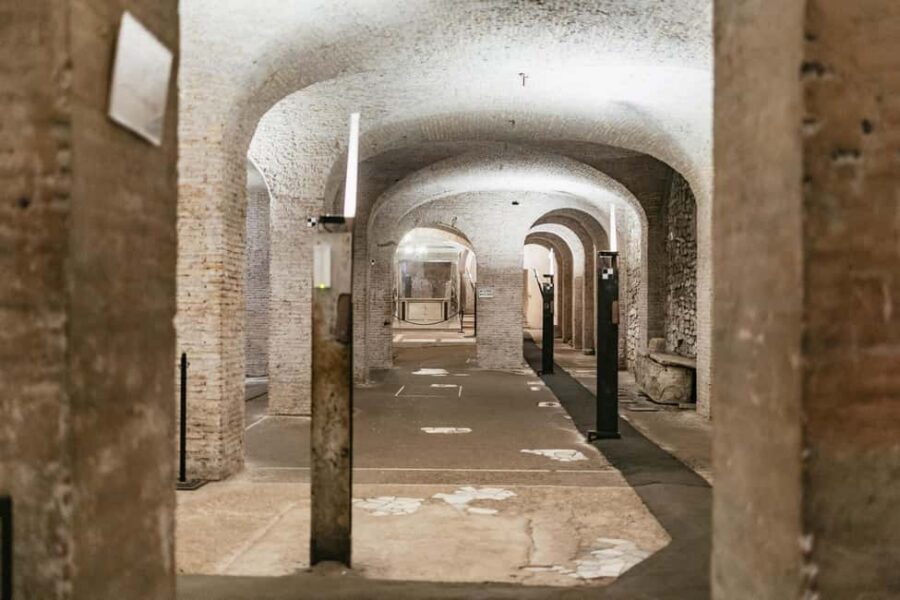
After the first look, you’ll start descending through the site’s underground levels. The first stop is a 4th-century basilica that was long forgotten after the construction of the 12th-century church above it.
This level is where the tour starts teaching you how to read the building. You’ll be shown remains that don’t just look old; they show how an earlier version of Christianity was organized, how the space was used, and what it meant to reuse—or replace—holy ground as Rome’s population and power shifted.
The Mithraic temple at the deepest level: Rome’s older religion survives
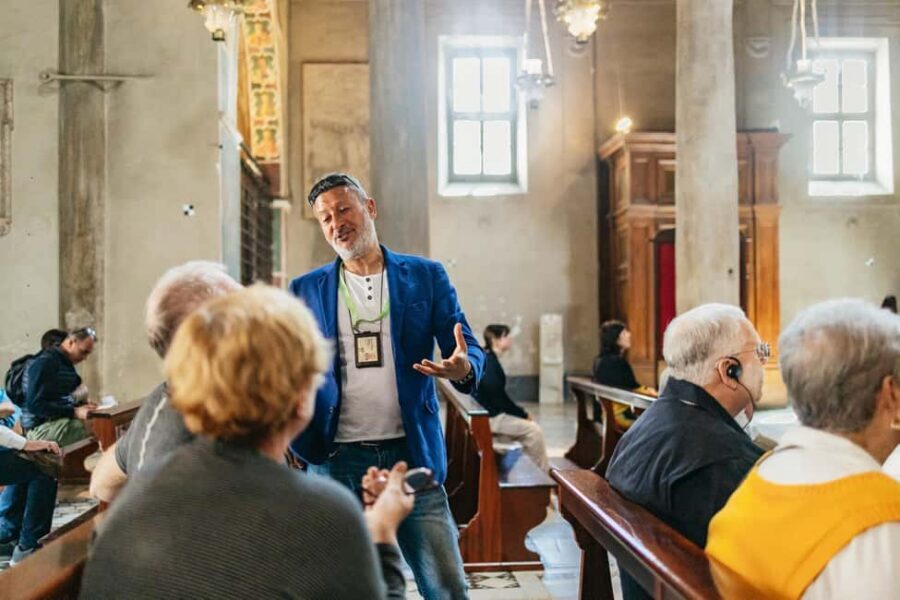
One of the most talked-about moments is the move from Christian layers into a pagan Mithraic temple at the lowest level. You’ll get to see what remains of the space, including an altar, and the guide will connect it to the wider idea of religious change in Roman cities.
This is exactly the kind of contrast that makes the tour feel worth the effort. Rome is not one story; it’s many. Watching a Mithraic installation sit below later Christian structures helps you understand how people reused sacred spaces without always fully abandoning old traditions.



How the site was discovered: flooding, a priest, and 1860 chaos
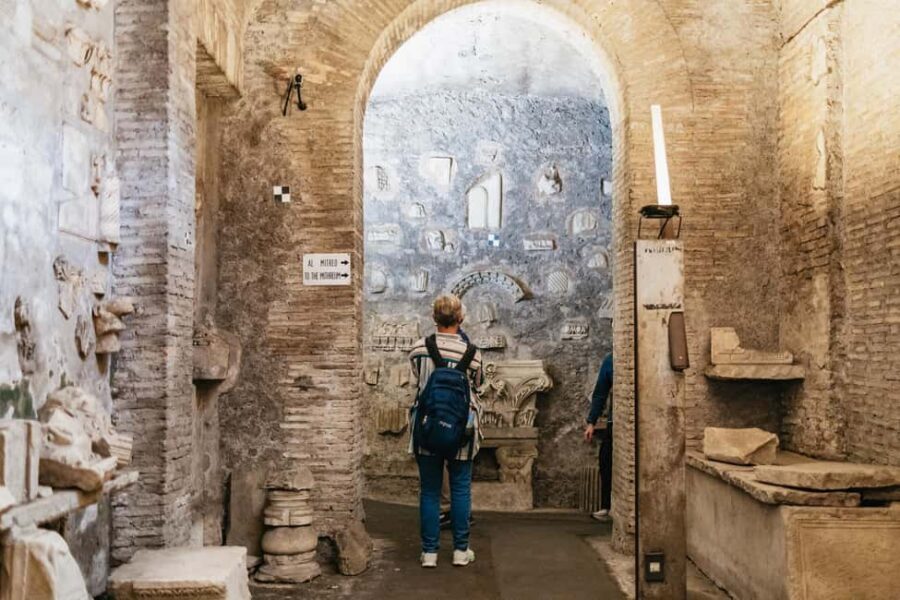
The underground layers didn’t show up on a neat schedule. You’ll learn that in 1860, flooding led an Irish Dominican Roman Catholic priest and archaeologist to uncover the levels beneath. The story doesn’t stop with the flood itself, either: the tour explains that an underground spring was part of the problem that caused the chaos and exposed what was buried.
I like this part because it turns a museum-like visit into something human. It reminds you that excavations are rarely clean. They’re caused by real events—water, construction, and accidents—that push the past back into view.
Roman homes and preserved remains: the neighborhood underneath the church
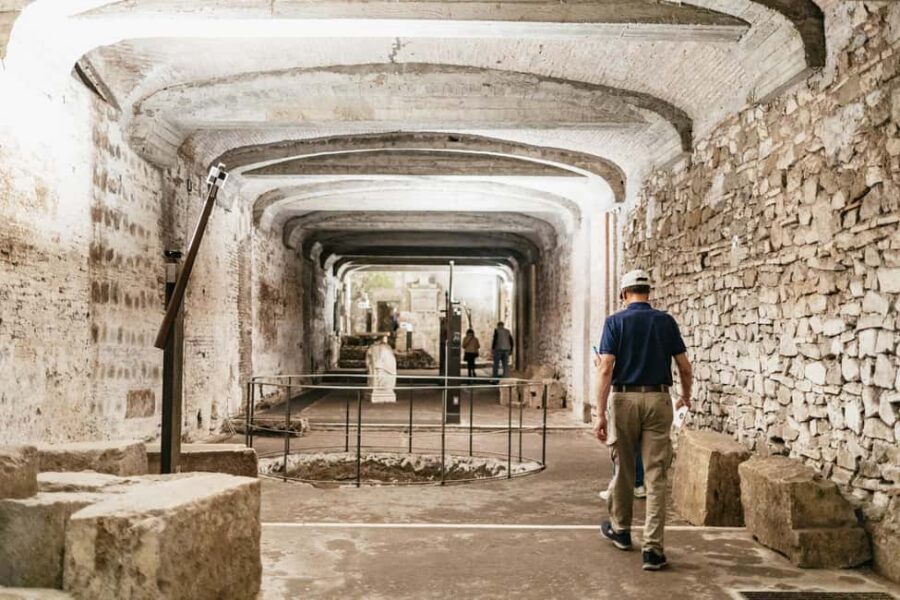
Lower levels include the remains of ancient Roman homes that were painstakingly excavated and preserved. This is the section that often surprises people who thought they’d just see church ruins.
Homes add another layer to the story: it shows you that this was not only a place of worship. It was a lived-in area where daily life continued until later eras covered it up. When you can see domestic traces next to sacred spaces, Rome stops being a postcard and becomes a city with a pulse—then and now.
The guide makes the difference: Luca, Alberto, Gina, Ursus, and more
What makes this tour consistently strong is the guiding style. Many past departures highlight English that’s easy to follow and explanations that connect complicated shifts in time to what you can see in front of you. Names that show up include Luca, Alberto, Ursus, Gina, Sara, Priscilla, and Ricardo.
Here’s the practical takeaway: if the guide is explaining the “why” behind the “what,” you’ll get more from each level. Without that, you might walk through stairs and walls that look cool but don’t fully connect. With a good guide, you’ll learn what each layer is telling you.
Rules, dress, and stairs: what you need to plan for
This tour is hands-on in the strictest sense: you’ll move through uneven, underground spaces. Bring comfortable shoes. Wear layers, because the underground levels can be cooler than outside.
Inside the church, there’s a dress code requiring that your shoulders and knees are covered. And for comfort and safety: you must be able to climb and descend stairs on your own. The tour is not suitable for wheelchair users or people with mobility impairments.
Also note the restrictions that can catch people off guard: no cameras, no video recording, and no photography inside. If you’re traveling with a backpack or big bag, plan around it since luggage or large bags aren’t allowed.
Meeting point tips at Via di S. Giovanni in Laterano
Meet near San Clemente Basilica at the corner at Via di S. Giovanni in Laterano, 126. The meeting point is an outdoor spot, not inside a shop or office.
The nearest metro stop is Line B: Colosseo. If you arrive early, take a minute to look for where the group lines up. One common issue is confusion when the meeting address doesn’t clearly translate into what you see on the street.
Value check: $70 for 1.5 hours, and why it can be worth it
At $70 per person for about 1.5 hours, you’re paying for more than entry. The price includes the entrance fee and a live English-speaking guide, plus skipping the ticket line.
Is it good value? For me, it depends on how you like to travel. If you prefer guided interpretation—especially for places where levels overlap and you’re trying to understand what you’re seeing—this is a smart spend. If you’re purely a wanderer who wants to read slowly on your own, you may not feel the same value.
But consider this: you’re getting multiple underground levels, a guided explanation of the 1860 discovery story, and the Mithraic temple moment, all in a timed walk. That kind of structured context is hard to replicate when you’re trying to piece it together alone.
Who should book this tour
Book it if you:
- want a Rome experience focused on layers and archaeology, not only major monuments
- enjoy guided storytelling that connects religions, art, and daily life
- are comfortable with stairs and cool underground conditions
Skip it (or choose something easier) if you:
- have mobility limits that make stair climbing difficult
- rely on photos inside churches and can’t manage without your camera
- hate tours where hearing can be tricky in tight, shared spaces
Should you book it? My practical call
Yes, I’d book this tour if you’re curious about how Rome keeps rewriting itself over the centuries. San Clemente is one of the few places where you can see Christian and pre-Christian layers in the same walking route, and a strong guide turns that into a clear narrative instead of a confusing maze.
If you go, prepare for stairs, plan outfits for the shoulders-and-knees rule, and leave your camera behind for the inside sections. Do that, and you’ll walk away feeling like you finally understood what Rome’s “layer cake” really means.
FAQ
How long is the San Clemente Underground and Basilica guided tour?
The tour lasts about 1.5 hours.
What is included in the $70 price?
It includes the entrance fee to San Clemente Basilica and a live English-speaking tour guide, plus skip-the-ticket-line entry.
Is it allowed to bring a camera or take photos inside?
No. Cameras and photography inside are not allowed, and video recording is also not allowed.
Are there any dress code rules?
Yes. You need shoulders and knees covered inside the church.
Is the tour suitable for wheelchair users or mobility impairments?
No. It is not suitable for people with mobility impairments or for wheelchair users.
Where do I meet for the tour?
Meet near San Clemente Basilica at the corner on Via di S. Giovanni in Laterano, 126 (an outdoor location, not an office). The nearest metro stop is Line B: Colosseo.