Rome clicks faster with a local beside you. This private 3-hour Rome tour pairs major orientation stops like the Pantheon and Colosseum with off-the-road neighborhood detours around Trastevere and Piazza Navona. I especially like the guide pace—you get one included drink or snack plus time for photos without herding into a crowd. One possible drawback: it’s mostly sights from the outside, and the Vespa version adds the need to feel OK on a scooter.
The tour really lives or dies on the guide. People have had standout experiences with guides like Simona/Simone, Daniele, Nico, John, Eleonora, Frank, and Stefan, and you can see why: you’re not just hearing facts, you’re getting practical local pointers for what to do next.
Start points are different depending on your style. For the walking tour, you meet at Piazza di Sant’Apollinare; for the Vespa tour, you meet at Via in Selci near the Cavour Metro Station. Either way, you’ll finish back in the central Rome area, and you’ll keep moving.
In This Review
- Key highlights worth paying attention to
- Walking or Vespa: how you’ll actually move through Rome
- Meeting in the right spot: Piazza di Sant’Apollinare vs Via in Selci
- Trastevere warm-up for real neighborhood Rome
- Piazza Navona and Campo de’ Fiori: squares made for lingering
- Pantheon from the outside: architecture you can spot fast
- Isola Tiberina and Piazza della Rotonda: quieter angles that make sense later
- Spanish Steps in real life: views, crowds, and pacing
- Colosseum orientation: getting the shape, not just the snapshot
- The included drink or snack stop (and why it’s not a small perk)
- Price and value for a 3-hour private guide
- Common hiccups to plan for
- Who should book this private Rome tour
- Should you book this private Rome tour?
- FAQ
- How long is the private Rome tour?
- Where do I meet the guide for the walking option?
- Where do I meet the guide for the Vespa option?
- Is this tour private or a group tour?
- Are entrance tickets included for places like the Pantheon and Colosseum?
- What’s included besides the guide?
- What language is the tour offered in?
- What’s the cancellation policy?
Key highlights worth paying attention to
- Two tour styles (walking or Vespa): Vespa covers more ground, while walking builds in a drink/snack break.
- Big landmarks, correct context: Pantheon and Colosseum are used for orientation, not as a rushed checklist.
- Trastevere sets the tone early: bohemian streets, local shops, and classic trattorias in a neighborhood with working-class roots.
- Outside views only: the value is in seeing the city’s layout and stories from street level, not entering sites.
- A guide who can steer the route: the plan can flex based on what you’ve already seen and what you want more of.
- Private means less waiting: it’s just you and your local guide, so the pace can actually fit your day.
Walking or Vespa: how you’ll actually move through Rome
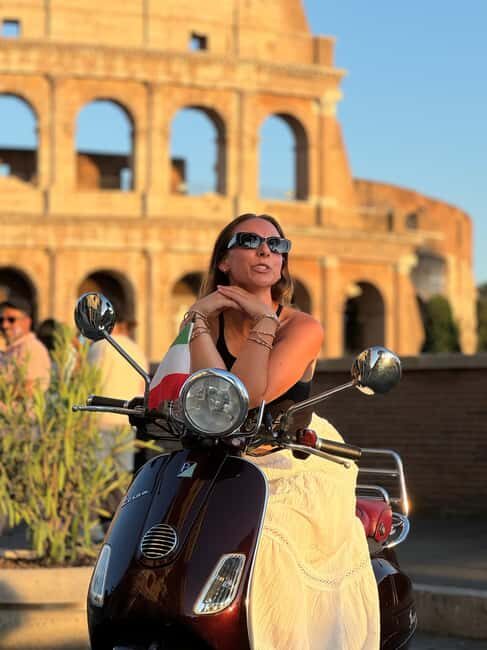
This is a true private format, so you pick the way you want to experience Rome: on foot, or on a Vespa-style scooter. Both options aim to mix the famous sights with lesser-known corners, but they do it differently.
On the walking tour, expect a slower, more pause-friendly route. The walk is designed for stops and small breaks, including an included drink or snack somewhere along the way. You also get more chances to look closely at street details—doorways, small churches, and the way neighborhoods change block by block.
On the Vespa tour, you cover more distance in the same amount of time. That matters in Rome, where getting from one “must-see” to the next can eat up hours if you’re doing it alone. You’ll still see key landmarks from the outside, but you’ll spend less time stuck between them.
You can also read our reviews of more private tours in Rome


Meeting in the right spot: Piazza di Sant’Apollinare vs Via in Selci
The tour starts in different places depending on whether you chose walking or Vespa, so don’t wing it.
- Walking tour meeting point: Piazza Sant’Apollinaire, 46, 00186 Roma RM, Italy.
- Vespa tour meeting point: Via in Selci near the Cavour Metro Station.
Both meeting areas are described as being near public transportation, which is helpful because Rome transit can be easier than parking. Since there’s no hotel pickup, you’ll want to plan your arrival a bit early and give yourself a buffer for navigating on foot.
You’ll finish in central Rome. That’s a small detail, but it affects the rest of your day: you’re not dragged out to a far edge of the city.
Trastevere warm-up for real neighborhood Rome
Most versions start with a first stop in Trastevere, and that choice is smart. Instead of starting at a monument and then trudging outward, you begin where locals actually hang out—streets with a bohemian feel, traditional and innovative trattorias, craft breweries, and shops.
Trastevere also has the right vibe for “first-timer orientation” because it’s not just pretty. It has secular roots in a working-class past, which makes it feel like a living neighborhood rather than a theme park. For your brain, it’s a great way to reset: you stop thinking of Rome as only museums and start seeing it as streets, food, and neighborhoods.
If you want a tour that helps you understand how districts connect, Trastevere is the perfect opening act.
Piazza Navona and Campo de’ Fiori: squares made for lingering
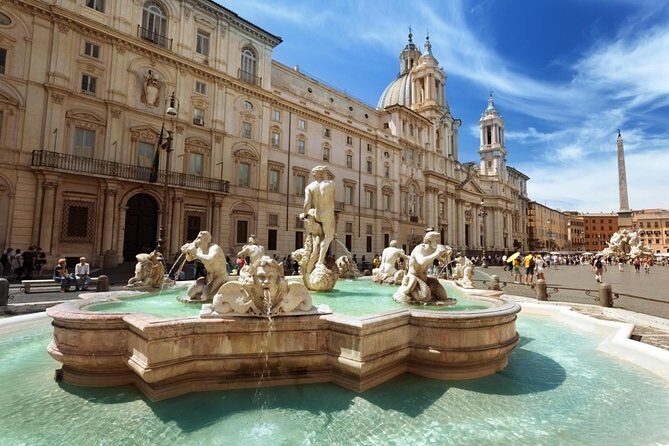
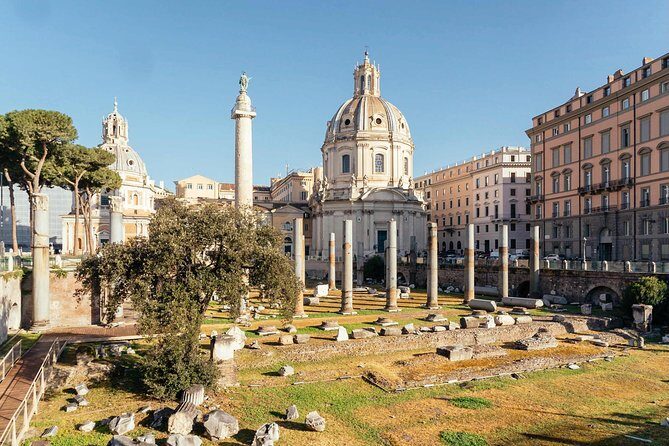
After Trastevere, you’ll spend time at Piazza Navona, one of Rome’s most memorable squares. The big draw here is not just the famous fountain area, but the overall sense of the place—lively geometry, historic buildings, and plenty of chances to pause.
Piazza Navona works well on a private tour because you can linger longer without feeling like you’re slowing down a group. It also gives you a visual anchor for your map of central Rome.
From there, the route often continues toward Campo de’ Fiori. It’s a rectangular square just south of Piazza Navona, at the border between rione Parione and rione Regola. The name literally translates to field of flowers. Practically, it’s a good spot for understanding how squares sit next to each other in Rome’s dense layout.
A small caveat: squares can be busy at peak hours. You can’t erase that, but you can time your photos and people-watching better when you have a guide managing the flow.
Pantheon from the outside: architecture you can spot fast
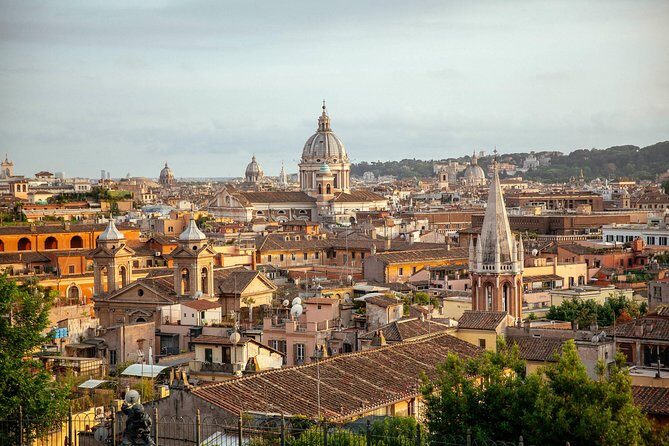
One of the tour’s main orientation points is the Pantheon, and you’ll see it as the Romans would have recognized it: a monumental presence that reshapes the surrounding streets.
The key point for your expectations: you’ll be looking from the outside. The tour description is clear that it doesn’t include entrance tickets to landmarks. So this isn’t a Pantheon interior visit. It’s a chance to get your bearings and learn what you’re actually looking at when you walk by later.
Still, even from outside, the Pantheon is a fast “aha.” The structure is so distinctive that a guide can help you read it—how it fits into Roman engineering and why it’s still considered groundbreaking.
If you’re the kind of person who later wants to spend real time inside big sites, this tour is a great warm-up. You’ll know where to look and what questions to ask when you do purchase tickets.






Isola Tiberina and Piazza della Rotonda: quieter angles that make sense later
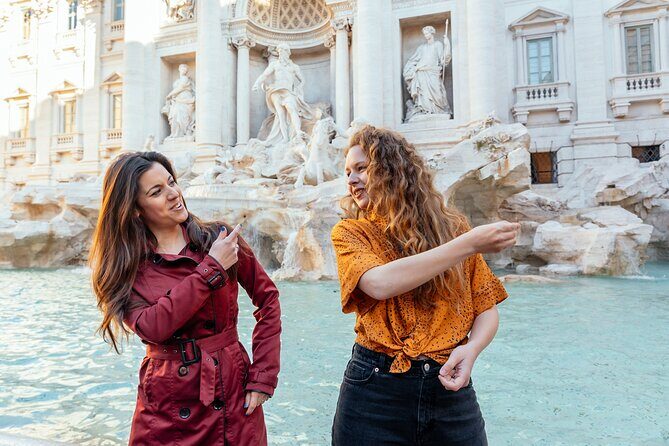
The route may include Isola Tiberina, a small island in the Tiber River. Even just seeing it as part of your walk helps you understand how rivers, bridges, and districts shape Rome’s movement. It’s the kind of sight that’s easy to miss when you’re only chasing the most obvious postcards.
You may also pass through or stop near Piazza della Rotonda. This puts you right in the Pantheon area at street level, which is useful if you want the tour to feel like it teaches you where things are rather than only what they are.
And then there’s Palazzo Madama, another name that shows up in the described route. It’s a reminder that Rome isn’t only ancient ruins. It’s also how later powers used, adapted, and built around older spaces. On a private tour, you can stop at the “in-between” points—places you’d normally walk past without noticing.
Spanish Steps in real life: views, crowds, and pacing

The Spanish Steps are included as a stop. They’re iconic for a reason: the slope between Piazza di Spagna at the base and Piazza Trinità dei Monti at the top creates a clear line of sight and a built-in photo moment.
On a private tour, the value isn’t only the view. It’s the pacing around it—choosing the best moment to look, and understanding the connections between the steps and the surrounding streets so you’re not just climbing for the picture and leaving.
As with other famous areas, crowds can happen. The good news is that a guide can help you spend quality time where you’re standing, instead of rushing through a checklist.
Colosseum orientation: getting the shape, not just the snapshot
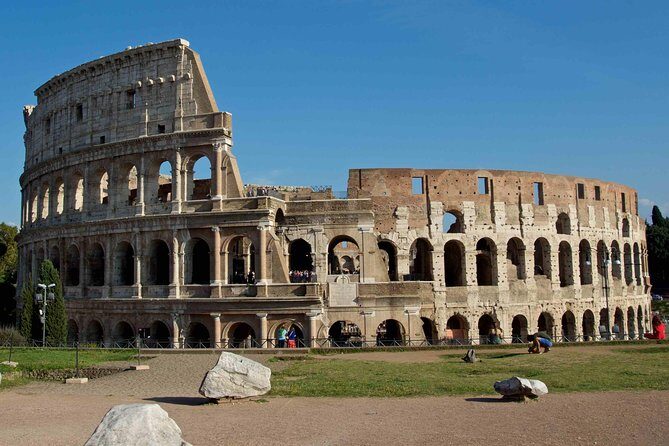
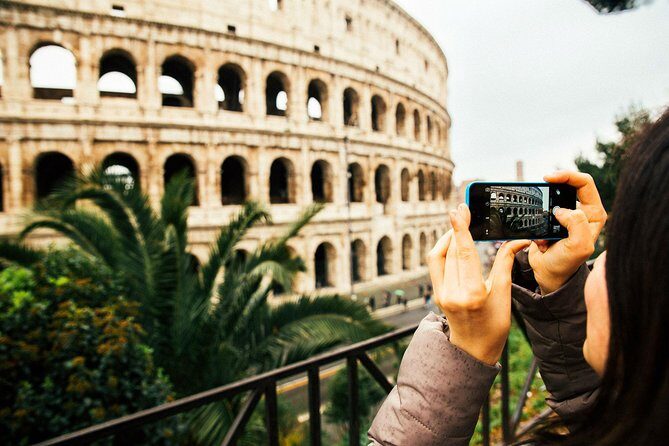
The tour includes the Colosseum as an orientation stop. Again, this is outside-only, so think of it as learning the site’s size and placement in your mental map, not touring the interior.
Seeing the Colosseum from outside on a guided route matters because Rome is full of layers. You’ll understand its relationship to the Roman Forum area and why it sits where it does, which makes later self-guided visits much easier.
Even if you’ve seen photos, the Colosseum is one of those structures that changes your sense of scale once you’re near it. A local guide can also point out the surrounding streets and how to move through the area without wasting time.
The included drink or snack stop (and why it’s not a small perk)
This tour includes one local drink or snack. It sounds like a throw-in, but it changes the tour in a practical way.
First, it prevents the usual Rome problem: walking yourself into a grumpy burnout. Second, it gives you a moment to slow down and process what you just learned. Third, it’s often where your guide can point you toward a next meal plan, gelato spot, or a practical transport idea for the rest of your day.
On the walking option, that break helps you pace yourself through dense streets. On the Vespa option, it gives you a chance to step off the scooter and experience the neighborhood on foot for a minute.
Price and value for a 3-hour private guide
At $318.19 per person for about 3 hours, this is not a budget tour. But “value” here is about what you buy: time saved, a private guide, and a route that helps you understand Rome’s layout fast.
You get:
- a local private guide (not a mixed group),
- outside-only orientation at major landmarks,
- stops through neighborhoods like Trastevere and lively squares like Piazza Navona,
- and one included drink/snack.
The big reason the price can feel fair: the tour is designed to be a high-impact primer. If you’re doing big sites later with purchased tickets, this helps you return with better context.
The big reason the price can feel tough: if you were hoping for interior access at famous landmarks, the tour explicitly doesn’t include entrance tickets. This is a street-level orientation and storytelling experience, not a museum entry ticket bundle.
Also note that it’s often booked about 43 days in advance, which suggests it’s popular and can sell out around busy travel weeks. If you like having options, booking earlier can help you lock in a time window.
Common hiccups to plan for
Rome tours are human-scale events, and hiccups can happen. One negative experience described a guide arriving late and the schedule shifting midstream. The practical lesson: keep your phone available, and rely on the app-based communication if that’s what your confirmation uses.
Also, double-check which meeting point matches your chosen option. Piazza Sant’Apollinaire is for walking; Via in Selci near Cavour is for Vespa. Showing up at the wrong one is easy to do in Rome, and it wastes daylight.
If something truly goes wrong, the provider’s response includes an escalation path. They asked for the booking ID and to contact [email protected] for follow-up.
Who should book this private Rome tour
This is a strong fit if:
- it’s your first or second day in Rome and you want a fast sense of geography,
- you already plan ticketed visits later and want an orientation warm-up,
- you prefer a private pace over group schedules,
- you want food-and-neighborhood time, not just stone monuments.
It’s also a good fit for families and groups who want flexibility. In past experiences, guides have adjusted pace for children and teenagers, and they’ve taken the time to explain without making it feel like a lecture.
If you want to spend every moment inside famous buildings, you might feel under-satisfied here, since the tour focuses on seeing landmark exteriors.
Should you book this private Rome tour?
Book it if you want Rome that feels local and navigable, not just photographed. The combination of neighborhood streets (hello, Trastevere), major orientation points (Pantheon and Colosseum), and a built-in drink/snack break is a practical formula for a first visit.
Skip it if your #1 goal is museum-style entries and you don’t want outside-only views. In that case, you’d be happier with a ticket-focused tour that includes indoor access.
If you do book, your best move is to think of this as your Rome map lesson. You’ll walk away knowing where things sit, why they matter, and how to plan the rest of your day with less guesswork.
FAQ
How long is the private Rome tour?
It’s approximately 3 hours.
Where do I meet the guide for the walking option?
You meet at Piazza Sant’Apollinaire, 46, 00186 Roma RM, Italy.
Where do I meet the guide for the Vespa option?
You meet at Via in Selci near the Cavour Metro Station.
Is this tour private or a group tour?
It’s a private tour, so it’s just you and your local guide.
Are entrance tickets included for places like the Pantheon and Colosseum?
No. Entrance tickets are not included, and you’ll visit the landmarks from the outside.
What’s included besides the guide?
You’ll get one local drink or snack included.
What language is the tour offered in?
It’s offered in English, with a private local multilingual guide.
What’s the cancellation policy?
You can cancel for a full refund up to 24 hours before the experience starts (based on local time). If you cancel within 24 hours, there’s no refund.