REVIEW · WALKING TOURS
Ancient Rome at Twilight Walking Tour
Book on Viator →Operated by E & D Guided Tours · Bookable on Viator
Rome looks different after sunset. This Ancient Rome at Twilight walk strings together the city’s most famous landmarks after the worst heat and daytime crowds fade, with photo stops that let the ruins feel dramatic instead of crowded. Expect a small-group pace, spooky side-stories, and a payoff finish with the Colosseum lit up at night.
I especially like the cooler walking conditions and the way the route focuses on the ancient center from Capitoline Hill all the way to Piazza del Colosseo. I also like the small group size (max 15), which makes it easier to ask questions and keep up without feeling like you’re being dragged along.
One thing to consider: it’s a walking tour with some darker stairs and uneven streets, and if the group gets split by construction or meeting-point confusion, you’ll want to arrive early. Also, at least one past guest noted that there weren’t headsets, so if you’re sensitive to sound in a crowd, pick a spot close to the guide.
In This Review
- Key things to know before you go
- Why twilight changes Ancient Rome
- Starting at Piazza Venezia and the Altare della Patria vibe
- Capitoline Hill night views toward the Roman Forum
- Via dei Fori Imperiali: Mussolini’s boulevard meets ancient streets
- Monti (Rione Monti): Julius Caesar’s neighborhood energy
- Scalinata dei Borgia: the dark staircase story stop
- Torre dei Borgia: the locals’ Colosseum-at-night photo spot
- Piazza del Colosseo: finishing with the lit-up Colosseum
- Pace and group size: why it feels more relaxed
- Price and value: what $37.49 buys you
- Practical tips: rain, construction, and Jubilee restoration
- Should you book this Ancient Rome at Twilight walking tour?
- FAQ
- How long is the Ancient Rome at Twilight walking tour?
- Is the tour offered in English, and what group size should I expect?
- Where do I meet the tour, and where does it end?
- What is included in the tour price?
- Do I need to buy admission tickets for the sights?
- What if the weather is bad or monuments are under restoration during the Jubilee?
Key things to know before you go
- Twilight timing helps you beat midday heat and major crowd peaks while the monuments look their best.
- Small group (up to 15) makes questions feel normal, not rushed.
- Multiple Colosseum photo moments from different viewpoints, including a local-gathering spot.
- Dark-story stops (Borgia-related) add variety beyond standard Roman fact-telling.
- Route into Monti gives you more than postcard Rome, with lived-in streets and history layered together.
- Weather matters and there can be construction or restoration impacts during the Jubilee period.
Why twilight changes Ancient Rome
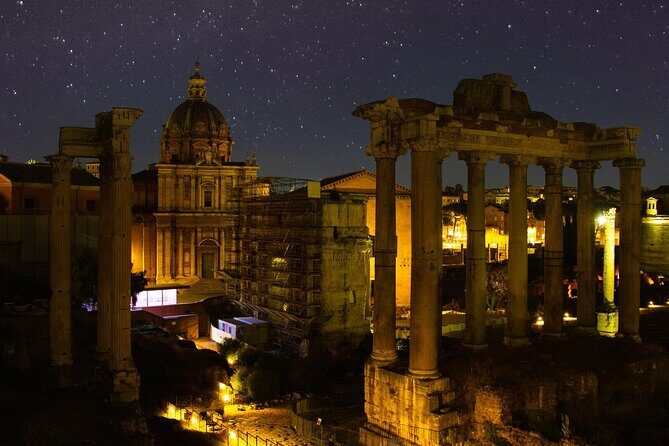
Midday Rome is loud, hot, and crowded. This tour chooses the opposite: a twilight start that keeps your feet moving while the city cools down and the light turns monuments cinematic. The result is practical and emotional. Practically, it’s easier to walk longer without melting. Emotionally, the ruins feel less like a checklist and more like a story you’re walking through.
You also get something that’s hard to reproduce alone: a guided sequence. Even if you know the basics, the order here helps you connect the dots between power (Capitoline Hill), daily life and politics (Forum and imperial zones), and the spectacle end point (Colosseum).
And yes, you’ll take photos. But it’s not just for looks. Seeing the Colosseum after dark from a dedicated overlook is a reminder of scale—how huge it feels when the light is controlled and the background is darker.
You can also read our reviews of more walking tours in Rome

Starting at Piazza Venezia and the Altare della Patria vibe
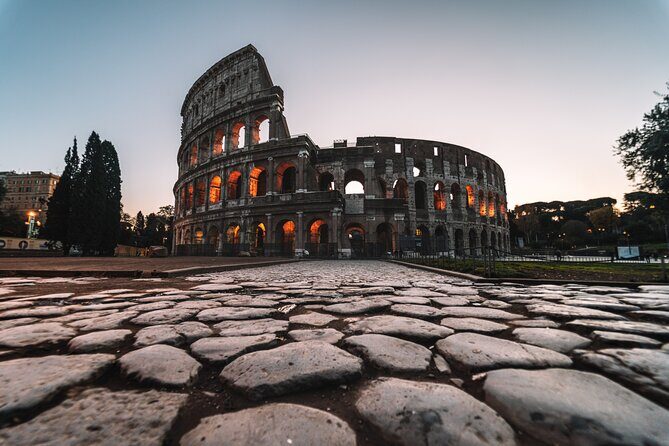
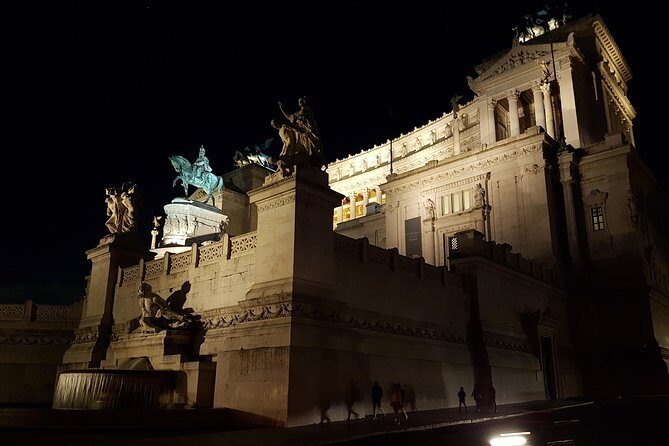
Your walk begins at Piazza Venezia in front of the Altare della Patria, the big marble monument dedicated to Victor Emanuel II. This start matters because it plants you at a major civic focal point. Before you even hit the ancient lanes, you get a sense of how Rome has kept reshaping itself over centuries—modern power sits just a short walk from ancient stone.
From here, you’re not just heading to ruins blindly. You’re positioning yourself. Starting in a central, easy-to-find square helps you relax into the tour, and it sets up the nighttime route into the historic core.
If you’re the type who likes orientation, arriving a few minutes early helps. Piazza Venezia can be busy, and the clearer you are on where you’ll meet, the less stress you’ll have before the walk begins.
Capitoline Hill night views toward the Roman Forum
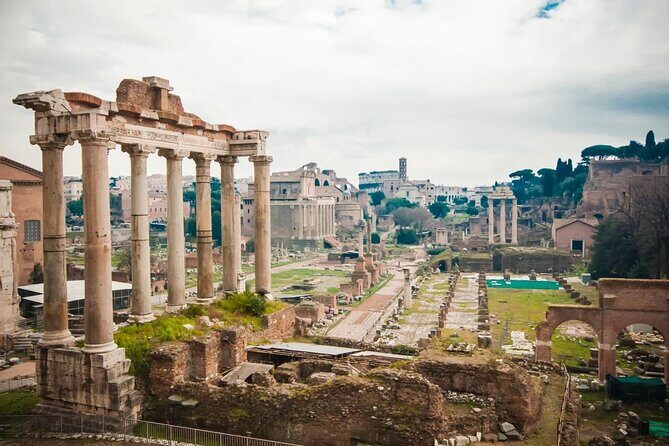
Next you head toward Piazza del Campidoglio and up to the top of Capitoline Hill. This is a classic Rome move for good reason: height gives you context. From there, you can look out toward the Roman Forum at night, when the spaces feel wider and more mysterious than they do under bright daytime light.
This stop is short, but it’s a smart use of time. It helps you understand what you’re about to walk through. Instead of learning each ruin as an isolated object, you’re seeing how the area connects spatially—like sections of a city within a city.
One practical tip: if it’s raining, expect slick pavement around viewpoints. Wear shoes you trust. Twilight Rome is beautiful, but it’s still Rome—stone and steps don’t turn into plush carpeting just because the sun is going down.
Via dei Fori Imperiali: Mussolini’s boulevard meets ancient streets
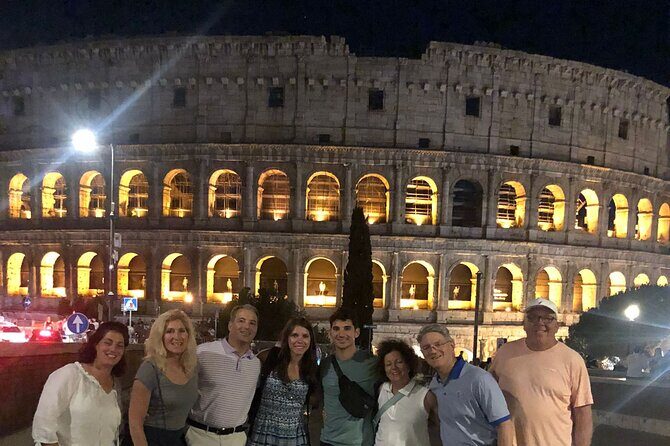
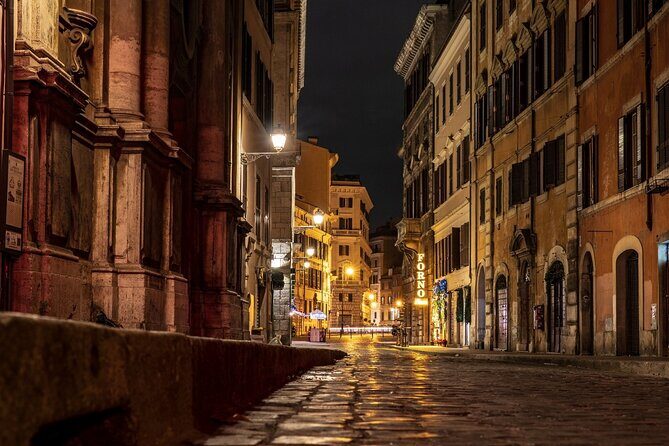
You then cross along Via dei Fori Imperiali, the boulevard built by Mussolini, to enter the Monti area. This part is more than a transfer street. It’s a reminder that Rome’s “ancient” core is surrounded by layers of later planning, politics, and redevelopment.
Walking this section is useful for two reasons:
1) It links the Forum zone into a neighborhood feel.
2) It gives you that long straight visual line that makes the scale of the imperial area easier to grasp.
And it sets the mood. The closer you get to Monti, the more the tour shifts from big monumental set pieces into smaller streets where history feels closer to everyday life.
Monti (Rione Monti): Julius Caesar’s neighborhood energy
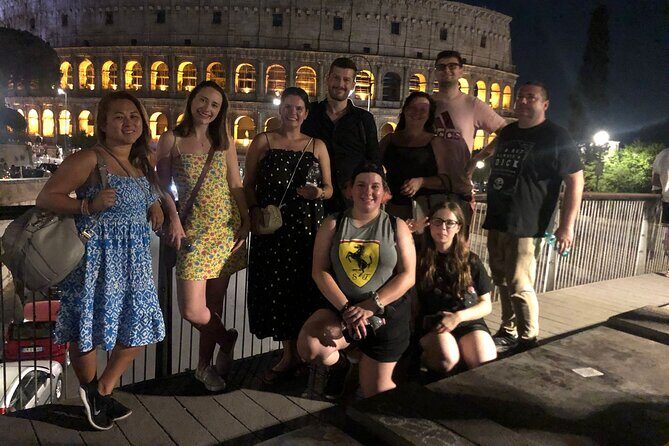
Then you follow your guide into Monti, the Rione Monti area. This is where the tour turns from landmarks to street-level atmosphere. Monti has a reputation for being one of Rome’s more lively and, at times, sketchy-feeling zones at night. The key is staying aware and sticking with the group rather than wandering off.
This stop is tied to one of the best-known “anchor stories” in the ancient city: Julius Caesar. Even if you’re not a deep-in-the-weeds Roman scholar, connecting Caesar to the streets helps the name stop being a slogan and starts being a place.
A small-group format helps here. You’re moving at a pace where you can actually process what you’re seeing—without losing your place behind a bigger crowd.






Scalinata dei Borgia: the dark staircase story stop
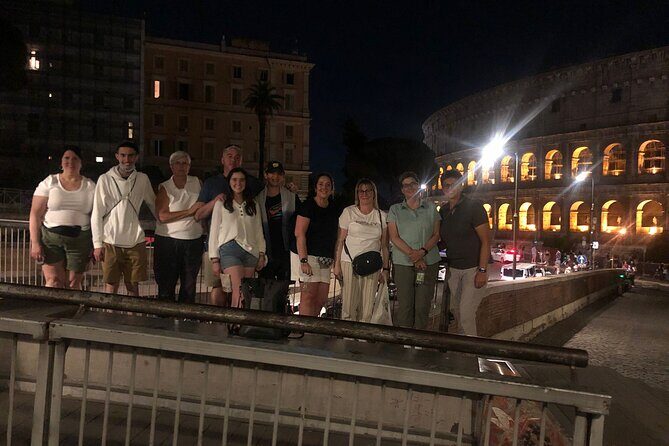
One of the more memorable segments is the climb to Scalinata dei Borgia, a dark and spooky staircase leading to the courtyard of the former residence of Pope Borgia and his mistress. This is where the tour leans into atmosphere. You’re not only looking at stone—you’re listening for the human drama that made certain locations infamous.
Why this works at twilight: night light and shadow turn a courtyard and staircase into part stage, part mystery. Even if you’re skeptical about spooky storytelling, it’s a good break from repeating the same kind of explanation you hear at major sites all day.
The main consideration is physical comfort. Stairs and narrow paths mean you’ll want steady footing, especially if rain is involved.
Torre dei Borgia: the locals’ Colosseum-at-night photo spot
From there, you move to Torre dei Borgia, another stop built around a “wait, look at that” moment. The tour takes you to a secret-feeling place where locals gather to admire the Colosseum by night.
This is one of the highest-value pieces for photographers and anyone who simply wants a better angle. Big attractions can be crowded; overlooks can be rushed. This is designed to give you a calmer moment and a clearer frame.
If you’re trying to time shots, don’t treat this as a 30-second stop. Give yourself a couple minutes to settle: check the background, find a stable footing, and only then start photographing. You’ll get better results than if you charge straight in.
Guides often tailor this part to the group’s pace. Past experiences have highlighted guides such as Jason, Mario, Fabio, and Ali for keeping the walk lively and the explanations easy to follow, with time for questions and photos.
Piazza del Colosseo: finishing with the lit-up Colosseum
The tour ends at Piazza del Colosseo with the awe-inspiring view of the Colosseum by night. This finish matters because it’s the payoff: after you’ve walked through the ancient core and the nearby neighborhoods, the Colosseum lands with more weight.
You also finish in the right place to keep exploring. After the tour, you’ll already be oriented around one of the city’s most central nighttime landmarks, which makes it easier to choose your next step—whether you want a slow wander, a quick snack stop, or a museum detour if it’s open.
Plan for a gentle letdown, too. When the tour ends, you’ll likely want to stay longer to take in the space. That’s normal. Twilight Rome can make you pause more than usual.
Pace and group size: why it feels more relaxed
This walk runs about 1.5 to 2 hours and is capped at a maximum of 15 travelers. That small size changes the experience. You’re not swallowed by a crowd, and your guide can slow down when someone asks a question.
It’s also a tour designed for English speakers. A mobile ticket is provided, and you receive your guide’s name and number to make communication easier. That extra bit of clarity helps a lot in Rome, where streets can be confusing even for people with good maps.
One past guest specifically called out the fun, upbeat delivery from guides like Bryan, Lara, Rebecca, Laura, and Louise. Another theme was that the pace stayed comfortable—enough movement to keep you engaged, but not so fast that you lose the story.
Price and value: what $37.49 buys you
At $37.49 per person, this tour is priced like a “smart first night” option. You’re paying for more than walking: you’re buying an organized route, a nighttime sequence of viewpoints, and a guide to connect what you’re seeing to why it mattered.
Here’s what makes it feel like value:
- Many key stops have admission ticket free listed in the schedule, so you aren’t sinking money into paid entries just to connect the dots.
- You get multiple photo-oriented moments aimed at Colosseum visibility rather than one quick view.
- The small group cap gives you a better chance at real interaction, not just passive listening.
Also, the tour has a 4.8 rating from 276 reviews with about 95% recommending it based on the provided summary. That doesn’t replace your own judgment, but it does suggest the core formula works.
If you’re deciding between a self-guided walk and this tour, choose the tour if you want interpretation and order. Choose DIY if you prefer wandering without structure and you already know the Roman Forum well.
Practical tips: rain, construction, and Jubilee restoration
Twilight is weather-sensitive. This experience requires good weather, and if it’s canceled due to poor weather, you’ll be offered a different date or a full refund. If it’s raining, bring a light layer you can move in. One past guest even mentioned having rain throughout yet still enjoying it—so the tour can work in less-than-perfect conditions.
Construction is another reality. At least one past review flagged hard-to-hear commentary and meeting-point trouble due to construction and difficulty finding the start using map directions. To reduce risk:
- Arrive early.
- Keep your phone ready.
- Use the guide info you receive (name and number) if you get stuck.
Finally, during the Jubilee, some monuments may be under restoration. That could mean small route adjustments or changes in what you see up close. The tour notes that you may receive messages about these potential changes, so don’t ignore updates after booking.
Should you book this Ancient Rome at Twilight walking tour?
If you want a first-night-friendly intro to ancient Rome, this is a strong pick. The twilight timing is the big advantage: it’s cooler, calmer, and the monuments look better lit. The route also blends major landmarks with Monti streets, so you don’t just march past stones—you get a sense of place.
Book it if you:
- Prefer a small-group pace.
- Like photo stops and timed viewpoints.
- Want the story threaded through several areas, from Capitoline Hill toward the Colosseum.
Skip it or plan differently if you:
- Have trouble with stair-heavy routes or uneven streets.
- Need clear audio at a distance, especially since headsets were not provided per one complaint.
- Are unlucky with construction and map accuracy; in that case, arrive early and rely on the guide’s contact info.
Overall, for the combination of nighttime views, the short-but-packed route, and guides who keep things engaging (including names like Mario, Jason, Ali, Lara, and Rebecca appearing in past feedback), this tour is an easy yes for many Rome visitors who want their ancient sites without the midday squeeze.
FAQ
How long is the Ancient Rome at Twilight walking tour?
It runs about 1 hour 30 minutes to 2 hours.
Is the tour offered in English, and what group size should I expect?
Yes, it’s offered in English. It also has a maximum of 15 travelers, which keeps the pace more relaxed.
Where do I meet the tour, and where does it end?
You start at the Monument to Victor Emmanuel II in Piazza Venezia and you end at Piazza del Colosseo, in front of the Colosseum.
What is included in the tour price?
The price includes the walking tour itself, along with great views and photo opportunities and an upbeat guide who explains the sites. You’ll also receive the guide’s name and number for easier communication.
Do I need to buy admission tickets for the sights?
The stops listed in the schedule show admission ticket free.
What if the weather is bad or monuments are under restoration during the Jubilee?
This experience requires good weather. If it’s canceled due to poor weather, you’ll be offered a different date or a full refund. During the Jubilee, some monuments may be under restoration, and you may receive messages about potential changes. Service animals are allowed, and the tour is near public transportation.