REVIEW · CITY TOURS
Walking Tour Of Colosseum, Forum and City Highlights including Trevi Fountain
Book on Viator →Operated by Walking Tours of Italy · Bookable on Viator
A day like this makes Rome feel possible. In one half-day you hit the big-name sights plus the quieter, story-rich angles that make the city click. You start with reserved Colosseum entry, then walk the Roman Forum with expert narration and plenty of time to ask questions.
I love how the pacing is designed to save your time—front-door pickup helps, and the reserved tickets mean you can start exploring fast instead of waiting. I also like the mix of monuments and streets: Trevi Fountain for the Baroque moment, then Piazza Navona with Bernini’s Fountain of the Four Rivers, and finally the Pantheon in Piazza della Rotonda.
One consideration: this is a nonstop tour format for about four hours, so you’ll do a fair amount of walking and you’ll want comfortable shoes. If you’re hoping for lots of long, separate break time, plan for some standing-and-strolling moments between stops.
In This Review
- Key highlights to know before you go
- Why this Colosseum, Forum, and Trevi Fountain route works
- Price and value: what you’re paying for (and what you’re not)
- The smooth start: pickup, meeting point, and your ID
- Entering the Colosseum with reserved tickets
- Roman Forum walking: Arch of Constantine, Temple of Julius Caesar, and more
- Il Vittoriano and the Quirinal Palace area: Rome after Rome
- Trevi Fountain in the Baroque spotlight
- Piazza Navona and Bernini’s Fountain of the Four Rivers
- The Pantheon in Piazza della Rotonda: your final wow
- What it feels like: a private half-day built for first-timers
- Who should book this tour?
- Practical tips to get more out of your 4 hours
- Should you book this walking tour?
- FAQ
- Is this a private tour?
- How long is the walking tour?
- Does the tour include entry tickets for the Colosseum and Roman Forum?
- Are there any other paid attractions on the route?
- Where does the tour start and where does it end?
- What do I need to bring for entry?
- Is it possible to get a refund if I cancel?
Key highlights to know before you go
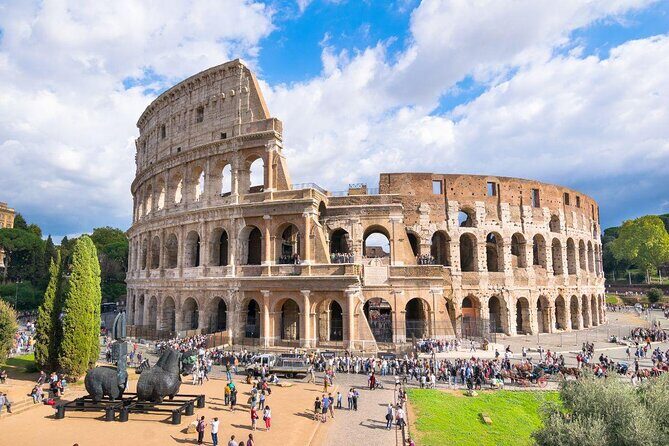
- Reserved Colosseum + Roman Forum tickets so you can start exploring with less queue time
- Expert commentary with question time, which helps you understand what you’re actually looking at
- Private, your-group-only format with personalized attention throughout the walk
- Trevi Fountain, Pantheon, and Piazza Navona in a tight route that avoids aimless wandering
- Il Vittoriano (the Wedding Cake) and Quirinal Palace area for a quick look at Rome beyond the ancient core
- A mobile ticket for easier on-the-day entry
Why this Colosseum, Forum, and Trevi Fountain route works
Rome has two speeds: the part that looks like postcards, and the part that takes a minute to understand. This tour is built for first-time visitors who want both, without spending the whole day in transit or trapped in lines.
You’ll start at Via dei Fori Imperiali and cover the heart of Ancient Rome early, when the sights feel most immediate and the crowds can be more manageable. Then you pivot into the Baroque Rome highlights—Trevi Fountain and Piazza Navona—before landing at the Pantheon, one of the most influential buildings in the whole city.
This route also gives you a real sense of how Rome layers time. You’re looking at an imperial amphitheatre, then ceremonial and political spaces in the Forum, then 19th-century symbolism at Il Vittoriano, and finally the grand religious-architectural classics like the Pantheon.
You can also read our reviews of more walking tours in Rome

Price and value: what you’re paying for (and what you’re not)
At $371.18 per person for about four hours, this is not a bargain-bin tour. But the value is mostly practical, not fancy.
Here’s where the cost earns its keep:
- Reserved entry for the Colosseum and Roman Forum is included, which can reduce the biggest time-sink on a Rome first day.
- You get an expert guide for the whole experience—helpful when you want context fast, especially at the Colosseum and Forum where details matter.
- You also get front-door hotel pickup, so you don’t burn vacation hours figuring out transport or moving across town.
The other attractions are listed as free-admission stops (Trevi Fountain, Piazza Navona, Pantheon). That means you’re not paying extra ticket fees every time you turn a corner—your main paid portion is the historic ticketed sites that are hardest to access smoothly.
One more factor: it’s a private tour, and the experience is designed for just your group. If you’re traveling with friends or family, private format can feel more cost-efficient than you’d expect—because the guide adapts pace and explanations to your questions.
The smooth start: pickup, meeting point, and your ID
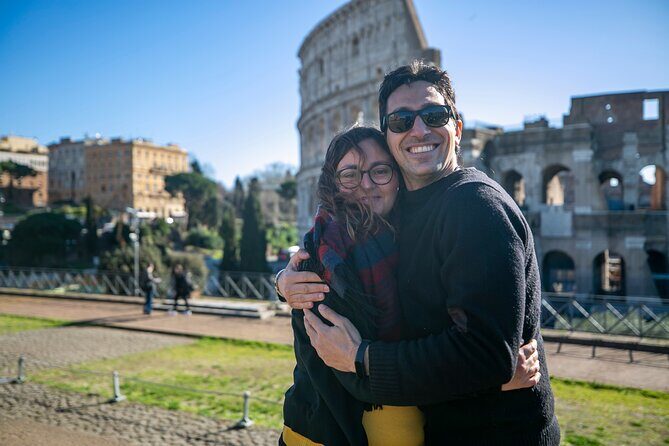
You’ll meet at Via dei Fori Imperiali, Roma RM, Italy, and the tour ends back at that same meeting point. The meeting area is described as near public transportation, which matters if you’re not using the pickup option.
The tour also includes front-door hotel pickup, which is a big deal in Rome. It reduces stress and means you start the day in motion instead of planning your first transfer.
Two practical notes you should take seriously:
- You’ll have a mobile ticket.
- Each person must present a valid ID document matching the name used for booking for successful entry to the Colosseum and Roman Forum.
If you’re traveling with more than one passport or you changed your travel name in any booking details, double-check before you go.
Entering the Colosseum with reserved tickets
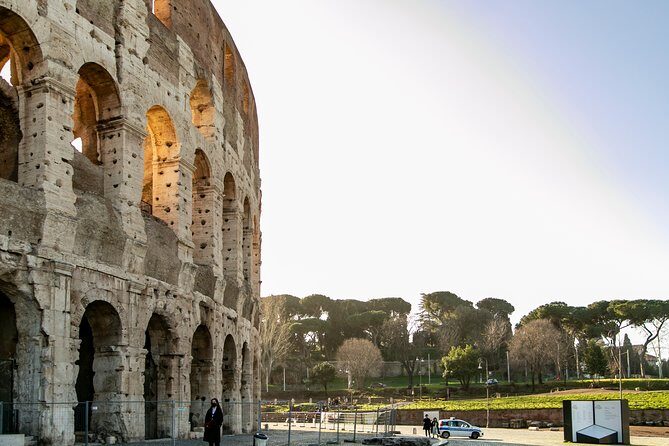
The Colosseum is the obvious draw, but what makes this stop work is that it’s the first major visit and it’s built around reserved tickets. That means you can begin exploring without wasting time in long queues.
Once inside, you’ll get expert commentary focused on what the structure represents: why and how it was built, and what those famous spectacles were like in practice. The guide’s job here isn’t to recite facts at you—it’s to help you read the building while you’re standing in it.
If you’ve ever walked the Colosseum grounds and felt like you were looking at walls without a map, this is where guided storytelling pays off. Even if you only catch part of the explanation, the key ideas stick: the scale, the design purpose, and how the space would have functioned during events.
This is also the part of the day where being able to ask questions matters most. The Colosseum can feel overwhelming. Having someone explain the big picture while you’re there helps you avoid the common first-day confusion.
Roman Forum walking: Arch of Constantine, Temple of Julius Caesar, and more
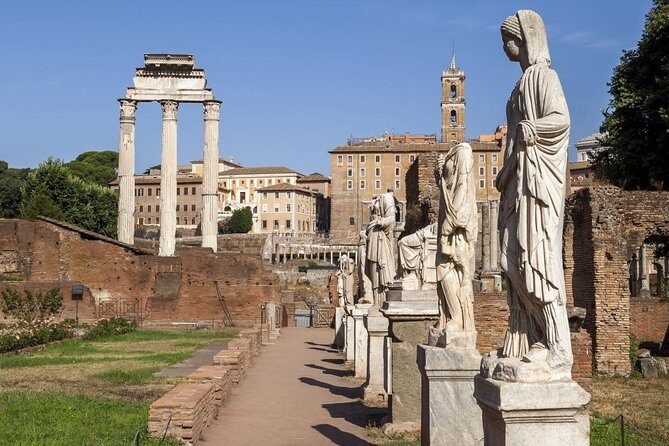
After the Colosseum, you head to the Arch of Constantine nearby and then walk into the Roman Forum. This shift is smart because it keeps momentum while also changing your perspective—from an arena built for crowds to civic and religious spaces built for power.
Your Forum time is framed around the Forum as the central square and hub of Ancient Roman life. You’ll see key ruins and landmarks that connect politics, religion, and daily public meaning—places that weren’t just important, but functional.
Expect the walk to cover sites such as:
- Temple of Julius Caesar, on the cremation site
- Arch of Titus
- House of the Vestal Virgins
- Senate House
- Basilica of Maxentius
- Plus additional ruins in the surrounding area
One thing I like about this approach: instead of treating each ruin like a separate “photo stop,” the guide ties them into how the Forum worked as a system. That’s what turns scattered stone into a readable landscape.
Admission to this part is also included, and the time spent is about an hour—enough to get perspective without turning the day into a marathon.
You can also read our reviews of more city tours in Rome



Il Vittoriano and the Quirinal Palace area: Rome after Rome
The next moments add a different flavor to your route: Il Vittoriano and the Quirinal Palace area.
Il Vittoriano was built in 1885 to honor King Victor Emmanuel II, and locals often call it the Wedding Cake. It’s a very 19th-century Roman statement, made mostly of marble and big symbolism. Even if you don’t care about national monuments, it helps you understand that Rome isn’t only ruins and fountains—it keeps rewriting itself.
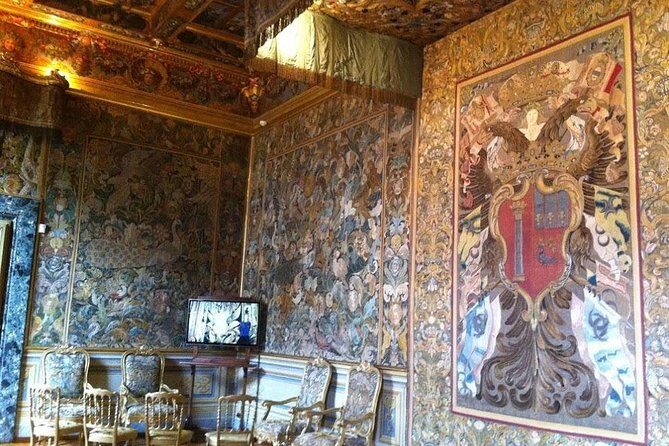
Not far from there is the Quirinal Palace, the official residence of the current Italian President. You won’t be touring interiors here in the information you have, but seeing the setting gives you a clearer sense of how government and ceremony occupy space in the modern city.
These stops are short, but they do a useful job. They prevent your half-day from feeling like a straight line from ancient to ancient.
Trevi Fountain in the Baroque spotlight
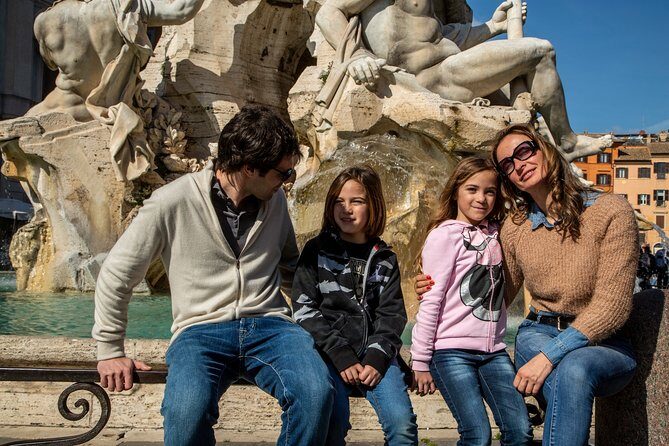
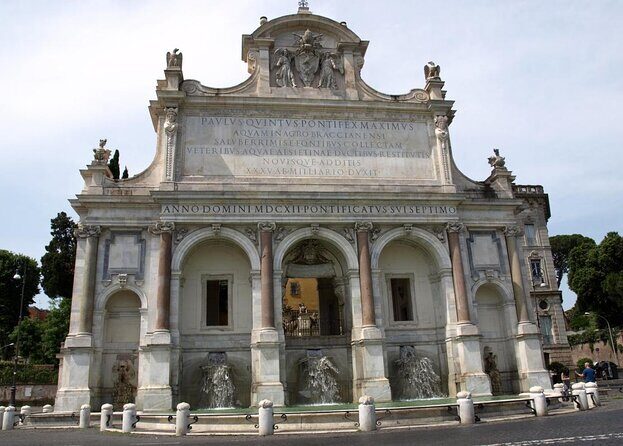
Then comes Fontana di Trevi. You’ll spend about 30 minutes, and admission is free.
Trevi Fountain is famous for a reason. It’s Baroque theater in stone and water—designed to make an impression from a distance and reward you when you get close enough to notice details.
With only half an hour, you’ll want to use the time smartly:
- Take in the whole view first so you understand the fountain’s design as one composition.
- Then, do a second pass for details like the sculptural elements and the way the water flows through the scene.
This is one of those places where the guide’s presence matters less for tickets and more for timing and pacing. You’re not stuck wandering while you wonder where to focus.
Piazza Navona and Bernini’s Fountain of the Four Rivers
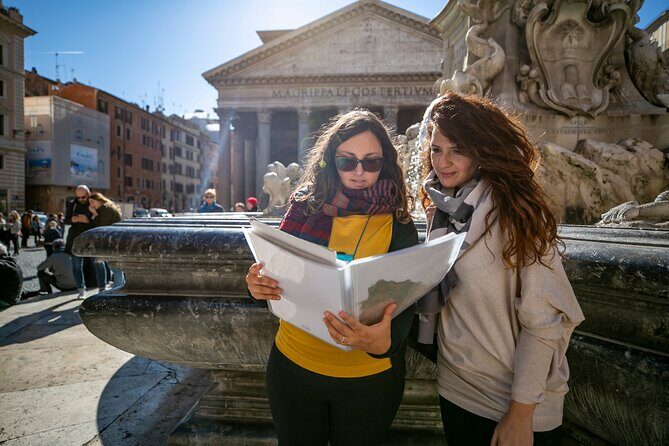
From Trevi, the tour continues toward Piazza Navona, with a route that includes walking near the Spanish Steps area. After that, you’ll reach Piazza Navona where you can see Bernini’s Fountain of the Four Rivers.
You’ll have about 30 minutes here, and admission is free. Piazza Navona is a great end-of-arc stop because it feels lively and layered. The square is surrounded by buildings that give you that classic Rome street-café geometry, and the fountain provides a focal point that’s easy to understand quickly.
The Fountain of the Four Rivers is the kind of artwork that feels dramatic even when you don’t know the full story behind every figure. Seeing it with context from an expert guide helps you notice things you’d otherwise miss—like the way the fountain’s symbolism plays out in the composition.
This is also the moment where a tour’s tone becomes memorable. On at least one high-rated experience, the guide added extra time around the area and the final landing at Piazza Navona with the Fountain of the Four Rivers was a standout, described as amazing.
The Pantheon in Piazza della Rotonda: your final wow
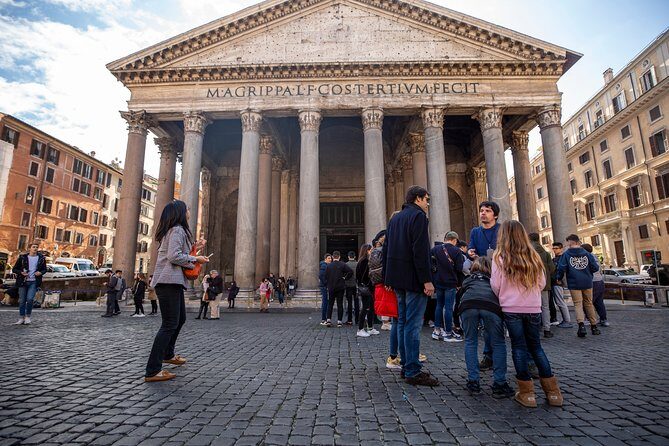
You’ll finish with the Pantheon, located in Piazza della Rotonda. Expect about 30 minutes, and admission is free as described.
The Pantheon is one of those buildings where the outside and inside both hit you. Even if you’ve seen photos, being there in person usually changes your reaction. The building’s scale and proportion feel different when you’re under it.
Since time is limited, think of your Pantheon visit as two stages:
1) Look around long enough to understand what you’re seeing—the structure and the space around it.
2) Then narrow your attention to key details so your memory has something specific to hold onto.
This stop is a great closer because it ties the day together. You started in Rome’s arena world, moved through civic ruins, shifted into modern-era symbolism, hit Baroque spectacle at Trevi, then landed in one of Rome’s most enduring architectural statements.
What it feels like: a private half-day built for first-timers
Because it’s private and your group-only, the tour style tends to feel less like a conveyor belt and more like a guided walk with a plan. You also get space for questions, which I find makes the Colosseum and Forum much easier to enjoy.
In one of the best-rated experiences connected to this tour, the guide, Thomason, was praised not just for archaeological depth at the Colosseum, but also for adding church time that many people didn’t expect. That kind of flexible, human touch can make a huge difference on a short day—if the timing works, you often get a more personal route than you’d get on a rigid group bus tour.
Just remember: since your day is set up for multiple big stops, the main value is efficiency with explanation. You won’t have hours at each place, but you’ll come away with a mental map that helps you enjoy what you choose to do afterward.
Who should book this tour?
I think this tour fits best if you:
- Are in Rome for a short time and want a high-impact introduction
- Want reserved access to the Colosseum and Forum so you spend less time stuck waiting
- Like learning while walking, not reading for hours on your own
- Prefer a private format over large groups
It’s also good if you want classic Rome highlights—Trevi Fountain, Piazza Navona, Pantheon—without needing to stitch together separate tickets and guides.
If you’re the kind of visitor who loves sitting still for long periods, you may find the half-day pace a bit busy. But for most people, the time-boxing is exactly the point.
Practical tips to get more out of your 4 hours
A few things will make this day feel smoother:
- Wear comfortable shoes. The stops are close, but Rome is still Rome—uneven pavement adds up.
- Bring an ID card or document that matches the booking name for Colosseum and Roman Forum entry.
- If your phone battery is shaky, consider a power bank. A mobile ticket is convenient, but you don’t want to scramble.
- Have one question ready before you enter the Colosseum. Something like what you’re supposed to notice first helps you anchor the visit.
- For Trevi and Piazza Navona, plan your photos fast. Get the overview first, then spend the rest of the time looking for details.
Should you book this walking tour?
I’d book it if you want the best first-day combo: reserved ticket efficiency plus expert guidance across the Colosseum and Roman Forum, then clean hits of Trevi Fountain, Piazza Navona, and the Pantheon without turning your day into logistics.
I wouldn’t book it if you’re trying to avoid walking, or if you want a slow, free-form exploration with no structured transitions. This is a half-day plan designed to cover a lot and explain what you’re seeing while you’re there.
If you’re a first-time visitor aiming to get your bearings fast and still feel like you understood what mattered, this tour makes a strong case.
FAQ
Is this a private tour?
Yes. It’s a private tour/activity, and only your group participates.
How long is the walking tour?
It’s listed as about 4 hours (approx.).
Does the tour include entry tickets for the Colosseum and Roman Forum?
Yes. Admission tickets are included for the Colosseum and Foro Romano (Roman Forum).
Are there any other paid attractions on the route?
The tour includes free-admission stops at Trevi Fountain, Piazza Navona, and the Pantheon as described.
Where does the tour start and where does it end?
The tour starts at Via dei Fori Imperiali, Roma RM, Italy and ends back at the same meeting point.
What do I need to bring for entry?
You must bring a valid ID card or document that matches the name provided at booking for entry to the Colosseum and Roman Forum.
Is it possible to get a refund if I cancel?
No. This experience is non-refundable and cannot be changed for any reason.