REVIEW · 3-HOUR EXPERIENCES
Rome: Via Crucis Pilgrim 3-Hour Walking Tour
Book on GetYourGuide →Operated by Crucis Tours · Bookable on GetYourGuide
Rome gets personal on this Via Crucis walk. This 3-hour pilgrimage threads Passion relics said to have come to Rome after Christianity was legalized, with Holy Door sites tied to the 2025 Holy Year. I especially love the reverent, guide-led pace that keeps the day feeling like prayer.
I also love that you’re not just looking at churches—you’re given the “why.” Icons and artifacts are explained in a way that connects Scripture, early persecution, and Catholic devotion, with time for reflection. The catch is that it’s not suitable for everyone: it involves walking and at least one stop isn’t wheelchair-accessible, and Santa Maria Maggiore’s scale can make the start feel a bit confusing.
If you’re the kind of traveler who wants Rome to mean something, this is a powerful way to see the city through the Passion story.
In This Review
- Key highlights you’ll care about
- The starting point: Santa Maria Maggiore and the 2025 Holy Door mood
- Passion relics: why Rome’s Catholic artifacts pull you in
- Santa Prassede: mosaics and early-Christian symbolism that rewards attention
- Church of Saint Alphonsus Maria de Liguori: a calmer stop with big devotional context
- Scala Sancta (Holy Stairs): the devotion you can feel in your knees
- St John Lateran: the oldest major basilica stop and the relics you remember
- Basilica of the Holy Cross in Jerusalem: the homily finish near the Aurelian Wall
- Pace, group size, and what to wear (yes, the clothing rule matters)
- Is it worth $107.62 for a 3-hour relic-focused walk?
- Who should book this Via Crucis Pilgrim Tour?
- Should you book this Via Crucis Pilgrim Tour?
- FAQ
- How long is the Rome Via Crucis Pilgrim tour?
- Where does the tour start?
- Where does the tour end?
- How big is the group?
- Do you get radio headsets?
- Is the tour wheelchair accessible?
- What clothing is required?
- What religious sites and relics will be included?
- Is the Scala Sancta knee-climbing tradition part of the itinerary?
- Is there a homily at the end?
Key highlights you’ll care about
- Passion relics in the spotlight: the One True Cross, Holy Nails, Thorns from the Crown, the Title of the Cross, and the pillar used in the flogging.
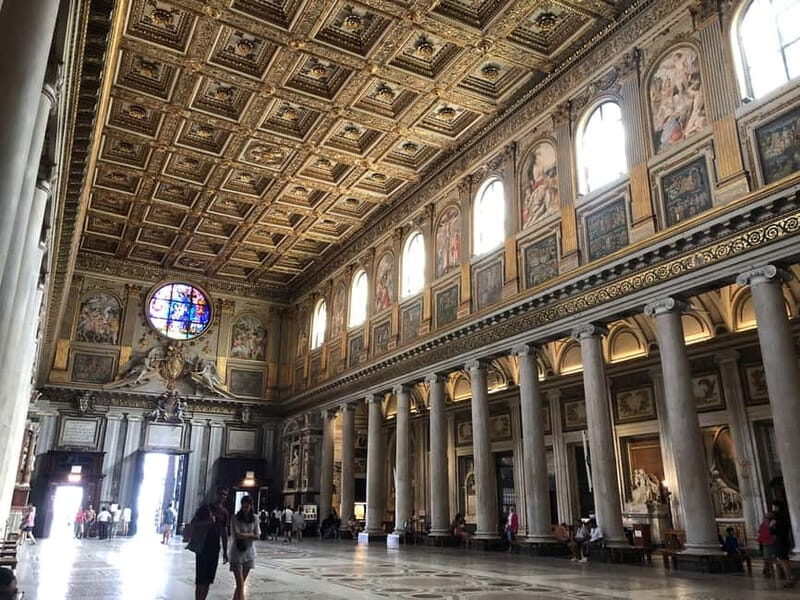
- Two major-basilica visits: Santa Maria Maggiore and St John Lateran, plus other big-name Catholic sites.
- Holy Stairs (Scala Sancta): a stop that centers on tradition, Scripture, and the physical weight of devotion.
- A small group format: limited to 5 participants, with an emphasis on listening, not rushing.
- A faith-forward finish: the tour ends at the Basilica of the Holy Cross in Jerusalem with a homily available on request.
The starting point: Santa Maria Maggiore and the 2025 Holy Door mood
Your walk begins at Santa Maria Maggiore (Basilica Papale di St Mary Major), at the fountain in front of the main entrance. A simple but useful detail: the front of the basilica faces Piazza Santa Maria Maggiore, not Via Cavour, so give yourself a few extra minutes to get oriented.
This opening stop matters because it sets the tone for the whole pilgrimage. Santa Maria Maggiore is one of Rome’s four Major Basilicas, and it’s also connected with Holy Door celebrations planned for 2025. When a place is that tied to the Jubilee, it changes how you experience it—you notice the “why” behind the art, the relics, and even the way people move through the space.
Inside, you’ll be able to venerate original wood from the Crib of the Nativity. That’s not a quick photo moment; the point is veneration—slowing down enough to treat the relic as something more than a story.
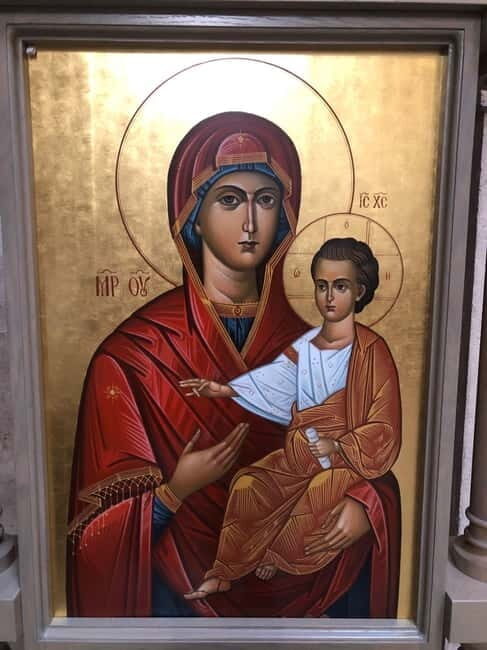
You’ll also stand just a few feet away from an important icon traditionally associated with St Luke the Evangelist: Salus Populi Romani (a title meaning help/salvation of the people of Rome). Even if you’re not a theology person, you’ll likely feel the difference between seeing an icon and standing near one that’s deeply connected to a living tradition.
You can also read our reviews of more walking tours in Rome

Passion relics: why Rome’s Catholic artifacts pull you in
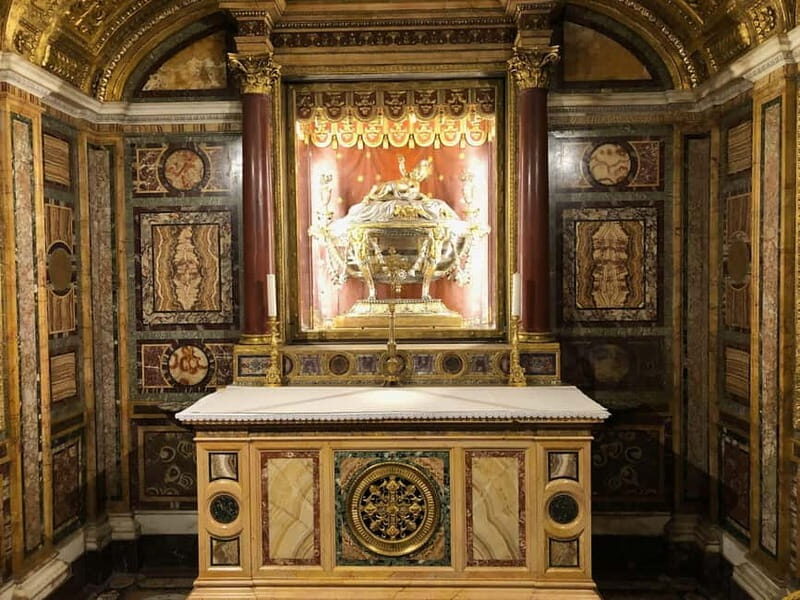
This tour’s center of gravity is the Passion story—how the final days of Jesus are remembered, explained, and physically present in Rome. The relic focus is specific: parts of the One True Cross, Holy Nails, Thorns from the Crown of Thorns, the Title of the Cross placed above His head, and the pillar linked with the flogging.
That list can sound like trivia until you hear it connected to the Way of the Cross. The tour frames the route as following the sequence that leads from condemnation toward execution, and that makes the relics feel like signposts rather than collectibles. The day’s structure helps you hold the Passion story in your head in order—condemnation, suffering, and the weight of what comes next.
You’ll also get context about the early Church—founded by St Peter in a hostile pagan world—so the pilgrimage doesn’t float above history. It lands back where it belongs: in a Rome that had to fight for space, belief, and survival.
If you’re someone who likes to understand symbolism, you’ll probably enjoy how the guide connects objects to the art language inside the basilicas—mosaics, papal tombs, and the visual theology that teaches through images.
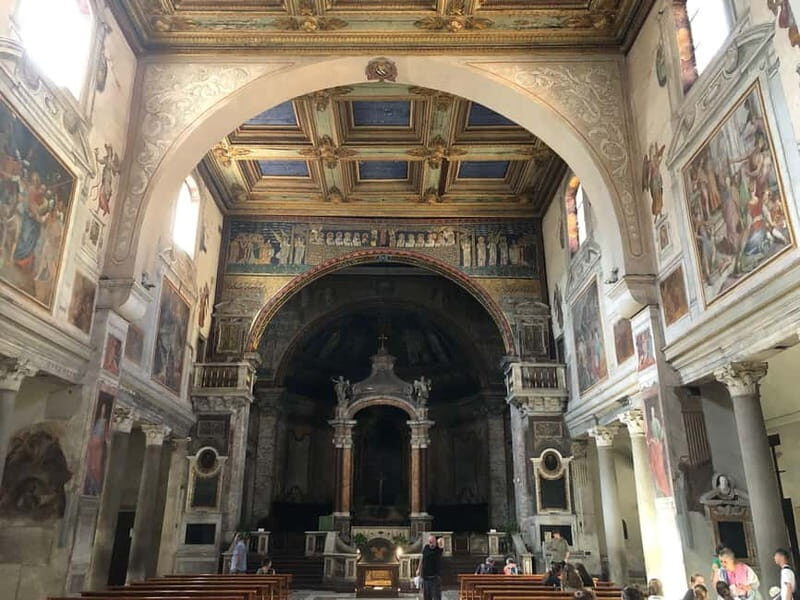
Santa Prassede: mosaics and early-Christian symbolism that rewards attention
After Santa Maria Maggiore, you head to Santa Prassede, a stop that’s short but meaningful. Here, the tour points you toward hidden treasures and the kinds of religious storytelling that mosaics do extremely well.
In churches like this, you’ll often see how symbolism works at a glance: colors, repeated motifs, and architectural “lessons” that guide how you pray. With a guide explaining what you’re looking at, you’re not just passing time in another ornate room—you’re learning how these spaces trained the faithful to see doctrine.
One practical benefit of a smaller group is that you can actually stand close, listen, and look without feeling like you’re constantly squeezing around strangers. Santa Prassede is where that advantage starts to pay off.
Church of Saint Alphonsus Maria de Liguori: a calmer stop with big devotional context
Next is the Church of Saint Alphonsus Maria de Liguori. On paper it’s just another church stop, but in this kind of pilgrimage route it often works like a reset.
The Via Crucis is emotionally heavy by design. After relic-focused stops and mosaic storytelling, a calmer church visit helps you absorb instead of sprint. You’ll likely appreciate this pacing if you prefer a pilgrimage style over a sightseeing sprint.
This is also a good moment to slow your mind down, because the next part of the route centers on one of the most intense devotions connected to the Passion: Scala Sancta, the Holy Stairs.
Scala Sancta (Holy Stairs): the devotion you can feel in your knees
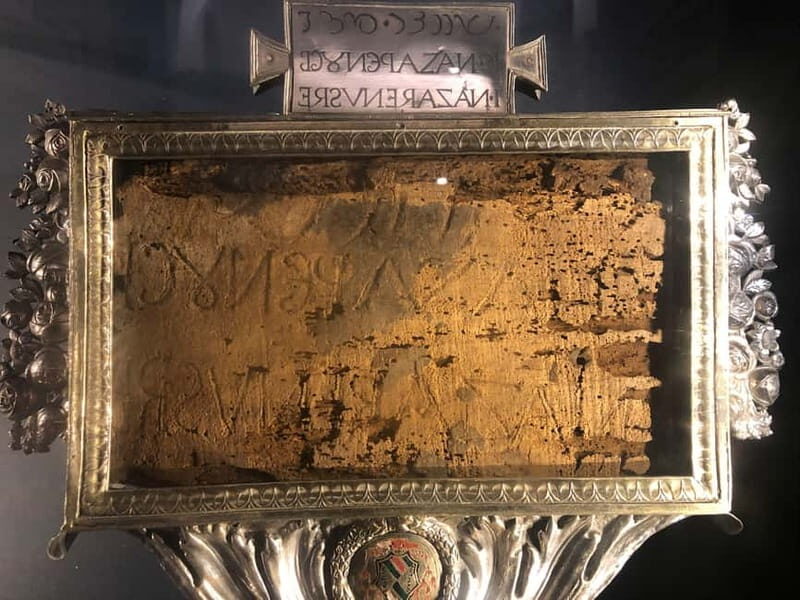
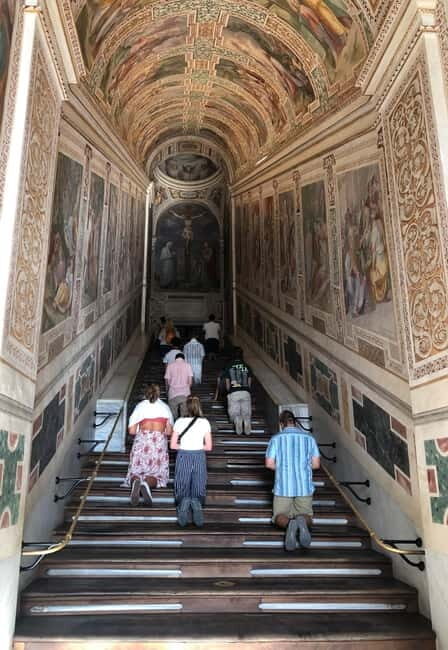
Scala Sancta is the signature emotional peak of the tour. It’s not a “look at it and move on” stop. It asks you to think about Jesus being led to Pontius Pilate’s praetorium and condemned.
The route ties directly to a tradition still followed today: people climb the same steps on their knees as a form of penance. But there’s an important practical note: doing so takes around 45 minutes, and it isn’t part of the tour’s standard itinerary. If that’s something you want to do, plan it separately.
Scala Sancta is also described as the location of the Holy of Holies inner sanctum, traditionally accessed by no one but the Pope. That’s not something you’re likely to “tour” in the usual way as a normal visitor; the point is that the site is presented as uniquely sacred and historically reserved.
The guide also connects Scala Sancta with a holy icon said to have been begun by St Luke and completed by angels. Even if you’ve never heard that tradition before, you’ll likely feel why people treat this stop with such seriousness—it’s devotion wrapped in place.
Given the tone here, it’s worth noting the tour’s overall style: the guide should make room for prayer and reflection. Many people specifically praise how the guide is careful about letting the group pause instead of talking nonstop through sacred spaces.
You can also read our reviews of more tours and experiences in Rome


St John Lateran: the oldest major basilica stop and the relics you remember
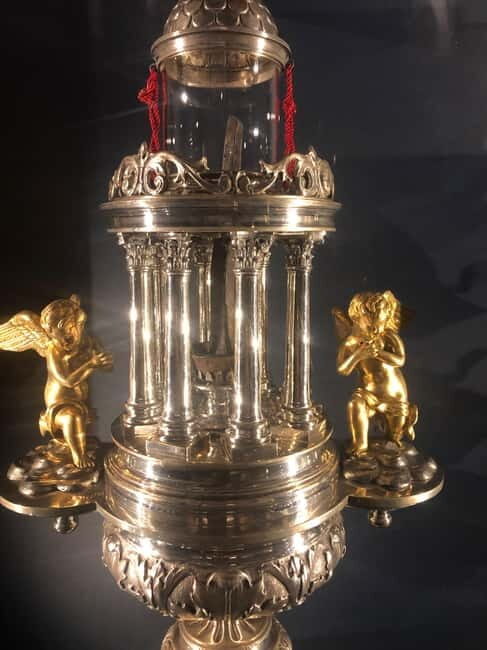
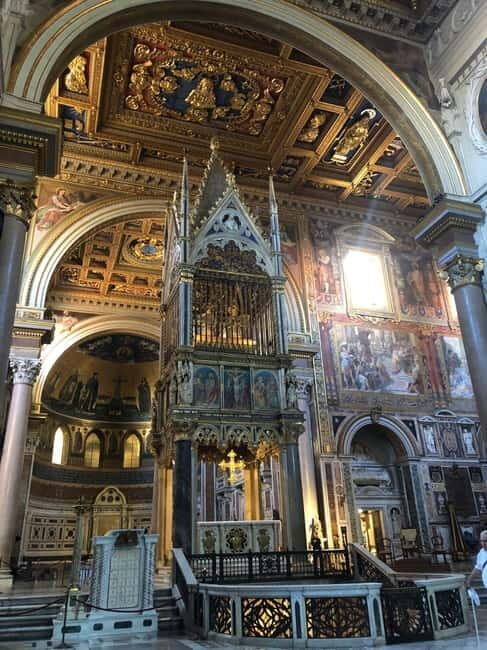
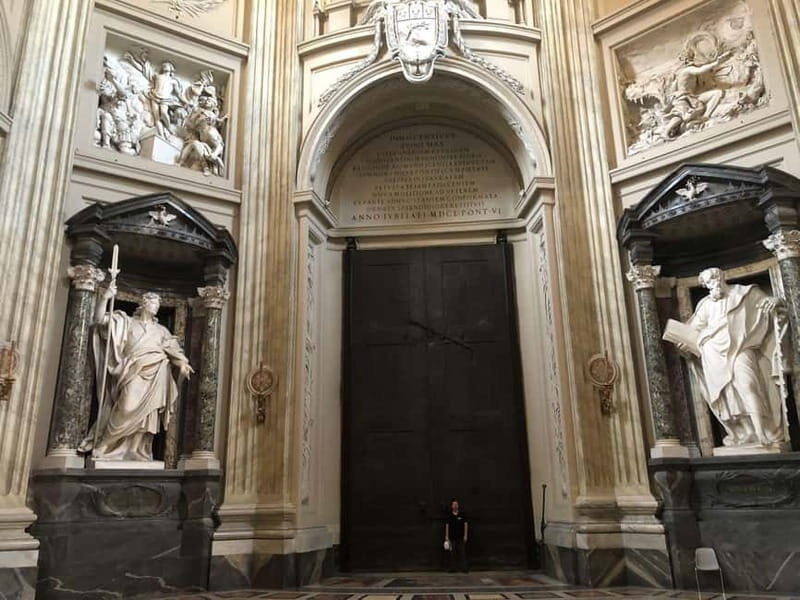
The penultimate stop is Basilica di San Giovanni in Laterano (St John Lateran), the cathedral of Rome and called Mother Church of the World. This is one of the most important churches in Catholic Rome, and it functions in the pilgrimage like a “vault of meaning” at the midpoint.
The tour spotlights relics and symbols that are easy to forget if you’re only visiting for architecture. You’ll hear about the skulls of Saints Peter and Paul, the Pillars of the Church, and the Holy Sponge that doused Him while He hung from the Cross.
This is the kind of moment where a guide matters. Without explanation, you might see details. With explanation, you understand why those details matter to believers. That’s how you leave with your memory rearranged—in a good way—so the Passion story doesn’t end at the last church you visited.
Lateran is also a strong contrast to Scala Sancta. Scala Sancta is about physical penance; Lateran is about papal authority, apostolic roots, and the Church’s continuity. Together, they give you both the human suffering and the institutional endurance sides of the same faith story.
Basilica of the Holy Cross in Jerusalem: the homily finish near the Aurelian Wall
The tour ends at the Basilica of the Holy Cross in Jerusalem (Santa Croce). You’ll get a guided visit and, on request, a homily.
This ending is meaningful because it shifts the tone from history and relics toward reflection and response. A homily isn’t just a talk—it’s the closing bridge between what you saw and what you’re meant to carry home.
The basilica is located near the edge of the ancient Aurelian Wall that encloses Rome’s historic center. That setting can make the final moments feel more grounded, especially if you’ve been concentrating hard on symbolic history for the past few hours.
Logistically, it’s roughly a 10-minute walk from the nearest metro station, which makes it easier to connect your next step after the tour without feeling stranded.
Pace, group size, and what to wear (yes, the clothing rule matters)
This is a 3-hour walking tour of about 2–3 km, so it’s not a long hike. Still, it’s church-heavy time, and you’ll spend a fair amount of it standing, moving between spaces, and pausing for veneration and prayer.
The group is limited to 5 participants. That small size is a major part of why many people find the tour so personal and why the guide can manage the pace. Even if headsets aren’t needed for such a small group, the tour notes that radio headsets are used for groups of 7 or more, which suggests sound management is part of their method.
Dress matters. Shorts and short skirts aren’t allowed. Rome in spring or summer can be warm, but plan to dress modestly so you don’t get turned away at a sensitive moment.
Mobility note: one location is not wheelchair-accessible, and the tour overall is not suitable for wheelchair users or people with mobility impairments. If you’re unsure, think hard about whether you can handle church steps, uneven surfaces, and standing time.
Is it worth $107.62 for a 3-hour relic-focused walk?
At $107.62 per person, this isn’t the cheapest way to see churches in Rome. The value comes from what’s included and how it’s used: a devout Catholic guide, radio headsets when needed, and all taxes and fees. The tour also includes a homily on request, which can turn the visit from informational into spiritually participatory.
Most importantly, you’re paying for more than access to famous churches—you’re paying for guided connection. People consistently highlight how the guide brings Catholic history, Scripture, and art symbolism together, and how that combination helps the relics and icons make sense instead of feeling random.
For non-Catholics, this price still may feel high if you expect a generic “Church tour.” But if you want a structured pilgrimage approach—especially with time for prayer and reflection—this price starts to look more reasonable.
Who should book this Via Crucis Pilgrim Tour?
Book it if you want Rome through the lens of the Passion of Christ and traditional Catholic devotion. It’s a strong fit for practicing Catholics, families seeking faith-centered travel, and anyone who feels more satisfied when a city visit has a clear story arc.
You’ll likely enjoy it if you like:
- understanding symbolism in mosaics and icons
- learning why specific relics are revered
- a guided pace that includes time for prayer
If you’re mainly after classic Rome sightseeing—Colosseum selfies, quick museum hits, and landmark checkmarks—this may feel too focused and too devotional for your tastes. And if you need wheelchair accessibility, it’s not the right choice.
Should you book this Via Crucis Pilgrim Tour?
I’d recommend it if you want a pilgrimage-style Rome experience with structure, reverence, and a small group. The best reason to book is the way the tour connects physical locations, Passion relics, and the meaning behind them—especially at Scala Sancta and the two major-basilica stops.
Skip it if your priority is casual sightseeing over structured faith content, or if mobility limits make church stepping and standing hard for you. Also be prepared for the modest dress requirement and for the fact that such a large basilica area can be tricky at the start unless you arrive early and follow the meeting point carefully.
If those boxes fit, this can be one of the most memorable, faith-focused walks you’ll do in Rome.
FAQ
How long is the Rome Via Crucis Pilgrim tour?
It lasts about 3 hours. The route is a walking tour of roughly 2–3 km.
Where does the tour start?
The meeting point is at the fountain in front of the main entrance to Santa Maria Maggiore (Basilica of St Mary Major). The basilica front faces Piazza Santa Maria Maggiore.
Where does the tour end?
The tour ends at the Basilica of the Holy Cross in Jerusalem. After it finishes, the activity ends back at the meeting point.
How big is the group?
The tour is limited to 5 participants, which keeps it small-group friendly.
Do you get radio headsets?
Radio headsets are included for groups of 7 or more. Since the tour is capped at 5 participants, you may not always need them, but they’re part of the offering.
Is the tour wheelchair accessible?
No. It is not suitable for wheelchair users, and one location is not wheelchair-accessible.
What clothing is required?
Shorts and short skirts are not allowed.
What religious sites and relics will be included?
You’ll visit Santa Maria Maggiore, Santa Prassede, the Church of Saint Alphonsus Maria de Liguori, Scala Sancta, St John Lateran, and the Basilica of the Holy Cross in Jerusalem. The tour focuses on relics of Christ’s Passion, including the One True Cross, Holy Nails, Thorns from the Crown of Thorns, the Title of the Cross, and the pillar used in the flogging.
Is the Scala Sancta knee-climbing tradition part of the itinerary?
The tour notes that climbing the steps on your knees is a common tradition and can take about 45 minutes, but it is not part of the standard itinerary. If you want to do it, you should arrange that separately.
Is there a homily at the end?
A homily is available on request as part of the tour’s end at the Basilica of the Holy Cross in Jerusalem.
If you want, tell me your travel month and whether you’re doing Holy Week or the Jubilee window in 2025, and I’ll suggest the best time of day to tackle this route without feeling rushed.