REVIEW · ROME
Rome: Private Leonardo da Vinci Exhibition Guided Tour
Book on GetYourGuide →Operated by Mostra di Leonardo da Vinci · Bookable on GetYourGuide
Leonardo’s ideas come alive fast. This private multimedia exhibition in Rome’s Palazzo della Cancelleria turns sketches into something you can see in 3D, with holograms and full-size machines.
I especially like the mix of hands-on workshops plus story-driven explanations from art historians during the guided flow. One drawback: it’s a science-and-engineering themed show, so if you’re mainly hunting for classic Renaissance paintings, you’ll want to pair this with other museum time.
Two things I like a lot are the chance to interact with nearly all the machines on display and the themed stops that organize Da Vinci’s thinking around Water, Air, Fire, and Earth. You also get a wow moment with a tomb from 43 B.C. sitting in an underground pond setting.
My main consideration: with a 1.5 to 2 hour time window, you’ll want to keep an eye on what’s most important to you (holograms and machines vs. the more contemplative anatomy and water/air/fire/earth sections).
Key Points at a Glance
- 3D holograms of Da Vinci’s paintings and inventions (9 holographic scenes)
- 65 full-scale machines built to Leonardo’s designs
- Hands-on access: you can touch and play with almost all the machines
- Engineering-themed sections focused on Water, Air, Fire, and Earth
- The underground pond tomb dated to 43 B.C.
- Private guided format with access to more workshops and multilingual guides
In This Review
- Where the Leonardo show happens: Palazzo della Cancelleria
- Private tour feel: guide-led, question-friendly, and in your language
- Entering the exhibition: four sections built around Leonardo’s thinking
- The 3D holograms: seeing paintings and inventions behave differently
- 65 full-scale machines: the best part if you like to touch
- Water, Air, Fire, and Earth: the science section that ties it together
- Video and anatomy study: why he wasn’t just an engineer
- The tomb in 43 B.C.: a surreal moment underground
- Price and value: $93 for a private Leonardo experience
- Who should book this tour?
- Tips to make the most of your 1.5 to 2 hours
- Should you book this private Leonardo da Vinci guided tour?
- FAQ
- FAQ
- How long is the private Leonardo da Vinci exhibition guided tour?
- Where does the tour take place?
- Is the tour private?
- What languages are available for the guide?
- Will I be able to touch the machines?
- What will I see in the exhibition?
- Is there an entrance fee included?
- Do I skip the ticket line?
- What is the meeting time before the tour starts?
- Is free cancellation available?
Where the Leonardo show happens: Palazzo della Cancelleria
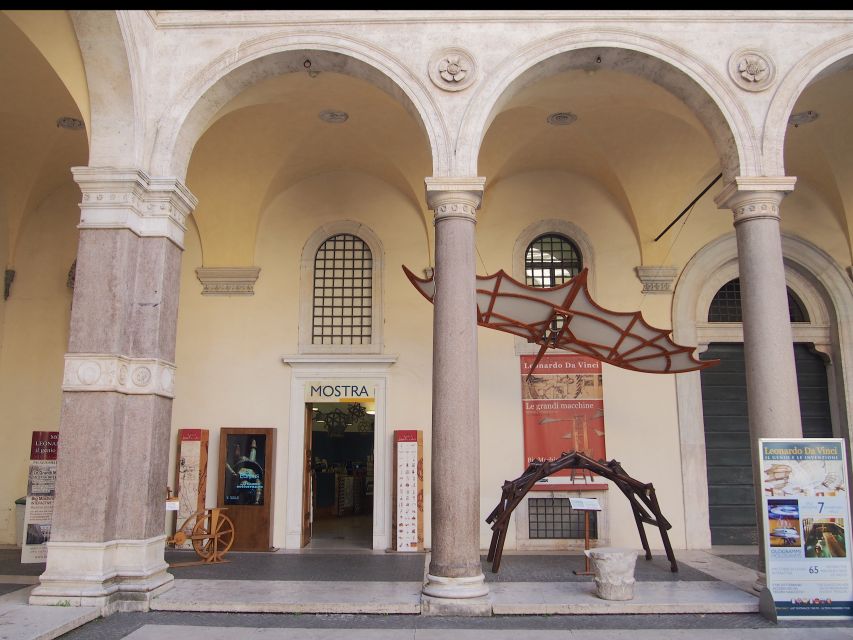
This tour is based in the Palazzo della Cancelleria, a palace tied to Vatican ownership. Even before the Leonardo content starts, I like using the building itself as a shortcut to understanding why Rome is so layered. You’re in a place that’s visually historical and institutionally powerful, which helps the Da Vinci material feel less like a random tech display and more like part of a long tradition of scholarship and craft.
The palace also connects to a church function: the upper floor hosts the Sacra Rota, where the church dissolves marriage. You won’t need to understand the details to enjoy the contrast, though it’s the kind of fact that makes you look up and notice surroundings while you wait for your session to begin.
If you’re someone who likes stopping to take in architecture for a few minutes, this location gives you that without turning the whole experience into a sightseeing detour.
Private tour feel: guide-led, question-friendly, and in your language
The biggest practical win here is the private guided format. You’re not just walking through a room with a headset. You get a live guide, available in Italian, French, Spanish, English, German, and Portuguese, plus art historians who can explain more when you want it.
That matters because Da Vinci’s work can feel scattered if you only see individual machines or isolated images. A good guide pulls it together into one brain: curiosity, observation, engineering, and creativity all feeding each other.
The reviews behind this tour consistently praise the guides for being engaging and patient, especially with kids. For example, names like Barbara and Julia come up as standouts for clear explanations and strong service. That’s a sign this isn’t a rushed performance; it’s more like someone helping you connect the dots.
One more practical note: the tour time is short—1.5 to 2 hours—so plan to show up ready to look closely. Arriving about 15 minutes early helps you start smoothly.
You can also read our reviews of more tours and experiences in Rome.



Entering the exhibition: four sections built around Leonardo’s thinking
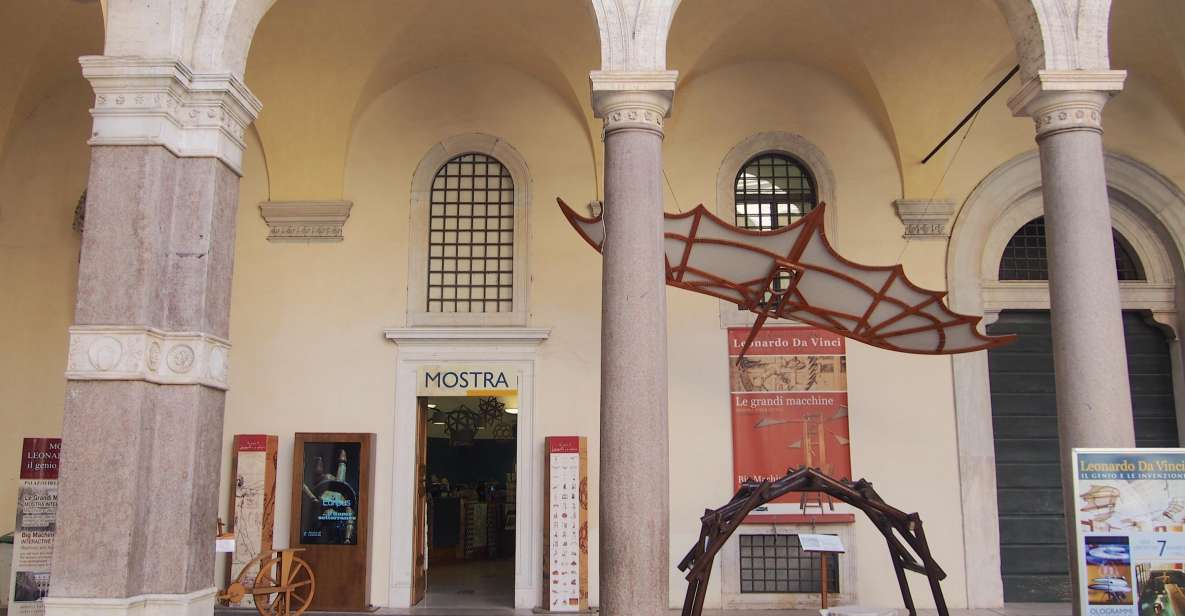
Once inside the exhibition, the show is organized into four sections. This structure is what makes the experience work in a limited time. Instead of bouncing between unrelated displays, you move through a guided sequence that builds a bigger picture of Leonardo as an engineer and observer.
In practice, you’ll shift gears as the content changes: from 3D visuals, to full-size reproductions, to themed studies around natural elements, and then into more focused science topics like anatomy. It keeps attention from drifting, especially because the guide’s explanations are designed to match what you’re seeing.
If you tend to get museum fatigue (too much reading, too little doing), this format helps because there are multiple modes: seeing, listening, and then using your hands.
The 3D holograms: seeing paintings and inventions behave differently
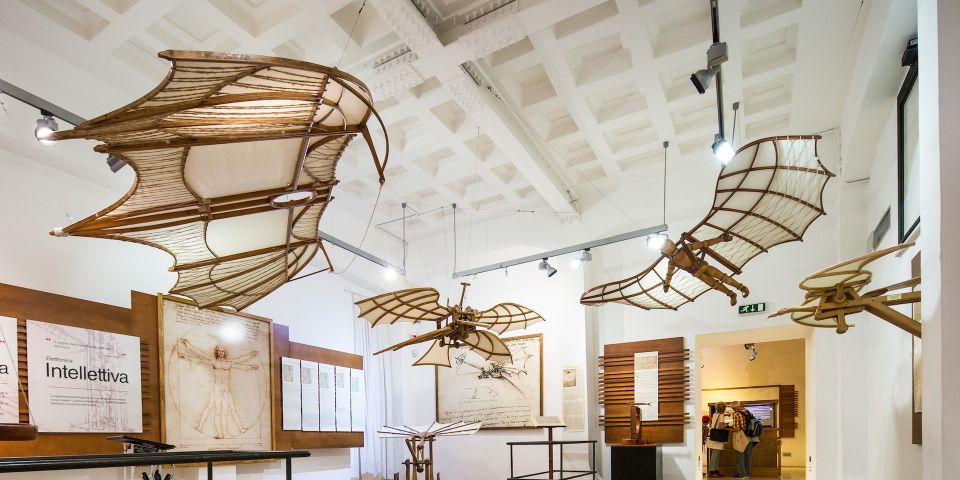
The headline visual is the set of nine holograms. These show Da Vinci’s paintings and inventions in 3D, which changes the whole feeling of his work. You’re not only looking at a still image. You’re watching ideas present themselves from angles your brain expects from real objects.
This is where Leonardo’s “how it works” mindset comes through. Many people know Da Vinci for art. Here, you’ll see why his notebooks and inventions belong in the same conversation. The holograms help you understand that he wasn’t copying images for decoration; he was studying structure, movement, and design.
Because the holograms are built into the flow of the tour, you’ll get timing and context instead of being dropped into a dark room with no explanation. If you’re a visual learner, this is one of the strongest reasons to book.
65 full-scale machines: the best part if you like to touch
Da Vinci didn’t just theorize. He designed. This exhibition leans into that with more than 65 full-scale machines made according to Leonardo’s designs.
What I love is the practical approach: you can touch and play with almost all of the machines on display. That’s rare for museum-style experiences. It also means the guide’s role becomes extra important, because manipulating a mechanism gives your questions a place to land. You can ask what the machine is trying to do, how it relates to the science theme of the room, or why Leonardo built it the way he did.
There’s also a build element. You may get the chance to build your own version of a bridge that Da Vinci invented. Even if you’re not an engineer, building something with your hands makes the design logic click.
One small consideration: if your idea of a perfect museum visit is quiet and strictly observational, the hands-on areas might feel a bit louder and more active. The trade-off is worth it if you like active learning.
Water, Air, Fire, and Earth: the science section that ties it together
The exhibition examines Leonardo’s studies through the lens of Water, Air, Fire, and Earth. This thematic approach is more than a curatorial trick. It mirrors how Leonardo thought: observation first, then experimentation, then engineering applications.
In this section, you’ll get a better sense of why his work mattered beyond one device. He was trying to understand systems: forces, behavior of elements, and how movement and materials behave. The guide helps you connect those studies to the machines you’ve already seen.
This part also tends to work well across ages. Kids often enjoy the cause-and-effect feel when you see how ideas about air or water connect to real mechanisms. Adults often like it because it organizes the chaos of Leonardo’s interests into a clear framework.



Video and anatomy study: why he wasn’t just an engineer
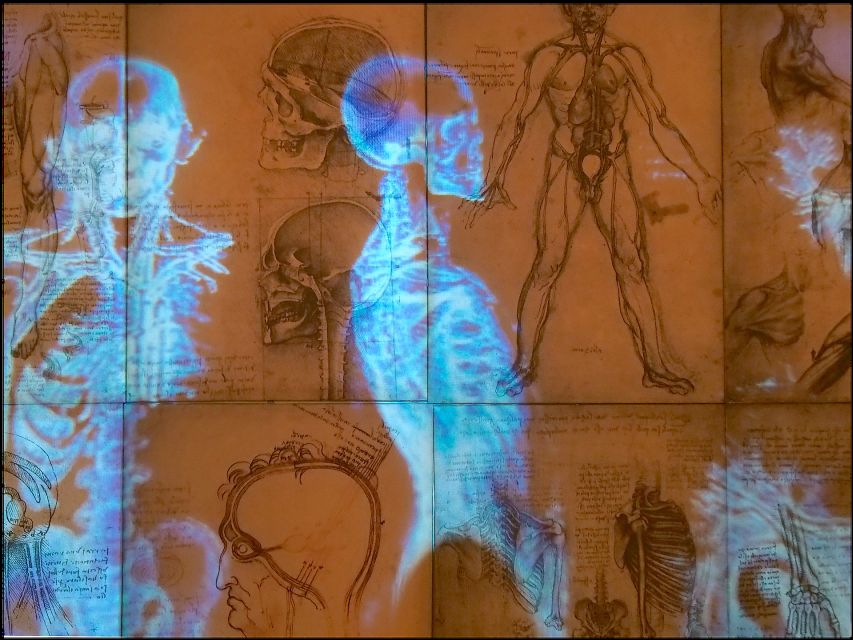
Beyond machines, the tour includes a video about Leonardo’s inventions and a study about anatomy. That’s a key balance point. Leonardo’s engineering wasn’t separate from the human body, and the anatomy focus underlines that.
If you’re wondering why Da Vinci’s curiosity spanned so many fields, this is your answer. He studied the world around him and also the body inside him, treating both like systems governed by structure and motion.
If you’re short on time, don’t skip these quieter stops. They’re often the sections that give the show emotional weight. Without them, Da Vinci can start to look like only a designer of objects. With them, you see a scientist-humanist at work.
The tomb in 43 B.C.: a surreal moment underground
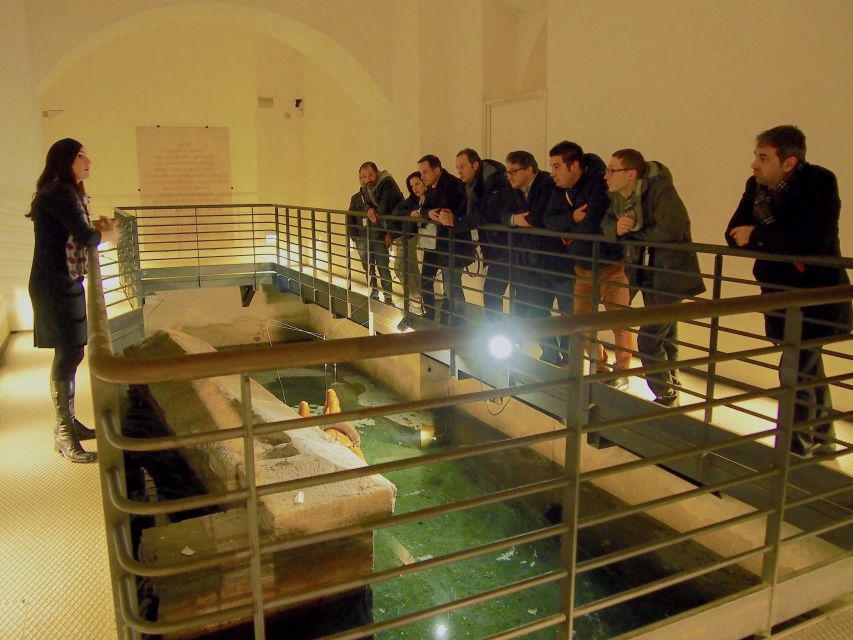
One of the most unique elements is the tomb from 43 B.C. You’ll see it immersed in an underground natural pond setting.
Even if you’re here for Leonardo, this is the moment that reminds you you’re in Rome, not just in a themed exhibition. The setting feels otherworldly because it’s a physical reminder that the past in this city isn’t gone—it’s layered under your feet.
As a guided stop, it’s also useful. It gives you a break from the tech visuals while still keeping the tour moving. The guide’s framing helps you connect the sense of depth (literally underground) to the way ideas and knowledge travel across centuries.
Price and value: $93 for a private Leonardo experience
At $93 per group up to 1, the pricing is clearly built for private quality. In other words: you’re paying for a guided experience that’s not shared with strangers in a big crowd.
Is it “worth it”? For most people, yes—if your goal is more than just browsing. The key value isn’t the holograms alone. It’s the combination of:
- Private guide time so you can ask questions
- Access to workshops, not just viewing rooms
- Hands-on interaction that makes the material stick
If you’re traveling solo, the price can feel like a splurge, but it also means you’re getting a learning session rather than a quick photo stop. If you’re traveling as a couple or small group, check how the up-to-1 group setup is handled for your booking, since the listed price is tied to group size.
One more value note: the tour includes exhibition entrance, a guided tour, and a gadget. That reduces the “extra costs” feeling you sometimes get with museum add-ons.
Who should book this tour?
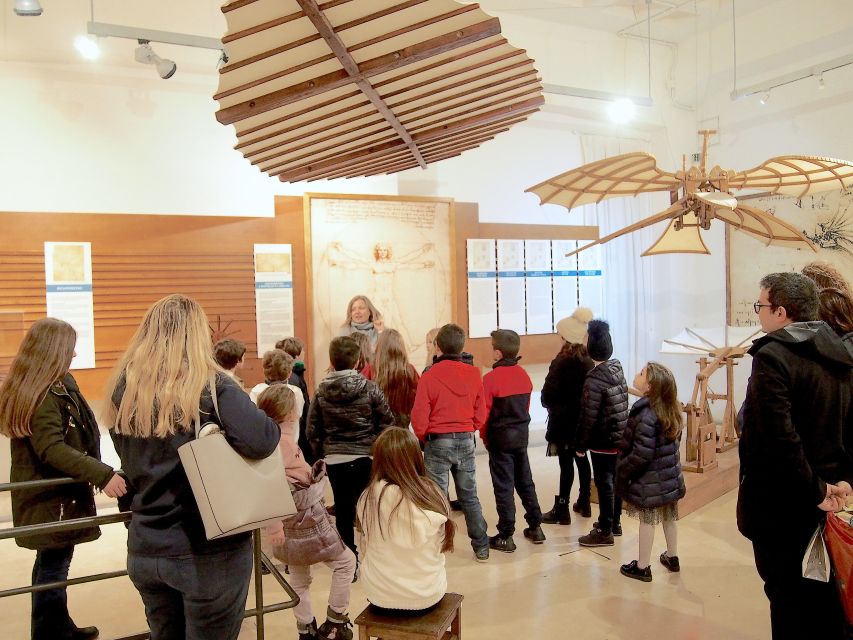
This is a great fit if you:
- Like interactive museums where you can touch and test ideas
- Enjoy engineering and science, not only art history
- Want an experience that’s friendly for families, since guides tend to be patient and kids often enjoy the activity-based sections
- Prefer learning with a live person who can explain and answer questions in your language
If you’re the type who wants hours of unbroken art viewing, this might not satisfy you on its own. Treat it like a concentrated Leonardo experience and then add classic Rome sights afterward, like the kind of stops that give you atmosphere and scale.
Tips to make the most of your 1.5 to 2 hours
I’d plan your priorities before you arrive. Here’s a simple way to think about it:
- If you love visuals, focus on the 9 holograms and ask your guide how the designs connect.
- If you love mechanics, spend time with the machines and especially the parts you can manipulate.
- If you want the “why,” linger in the Water/Air/Fire/Earth section and the anatomy stop.
Also, bring a camera if you’re the type who records details, but keep your expectations realistic. A hands-on exhibition can be a mix of looking closely and participating, so you’ll want to follow the guide’s pace rather than sprinting for the perfect shot.
Finally, if you’re traveling with kids, you’ll likely appreciate the guide’s patience. Still, if your family benefits from frequent activity breaks, set expectations with yourself that explanations and play may alternate rather than following a strict pattern.
Should you book this private Leonardo da Vinci guided tour?
I think you should book it if you want Leonardo in a way that’s more than reading labels. The holograms, the 65 full-scale machines, and the chance to touch and play make this feel like a learning experience, not a passive visit. The private guide format also raises the value because you get a smoother flow through the material in the language you prefer.
Skip it (or pair it differently) if you mainly want classic art galleries and slow wandering. This show is built for engineering curiosity, with a strong science core and a few unforgettable Roman-in-the-room moments like the 43 B.C. tomb.
FAQ
FAQ
How long is the private Leonardo da Vinci exhibition guided tour?
It lasts about 1.5 to 2 hours.
Where does the tour take place?
The tour is at the Palazzo della Cancelleria in Rome.
Is the tour private?
Yes, it’s described as a private guided tour.
What languages are available for the guide?
The live guide is available in Italian, French, Spanish, English, German, and Portuguese.
Will I be able to touch the machines?
You can touch and play with almost all of the machines on display.
What will I see in the exhibition?
You’ll see 3D holograms, more than 65 full-scale machines based on Da Vinci’s designs, studies related to Water, Air, Fire, and Earth, a video about his inventions, an anatomy study, and a tomb from 43 B.C. in an underground pond setting.
Is there an entrance fee included?
Yes, the exhibition entrance is included.
Do I skip the ticket line?
Yes, the tour includes skipping the ticket line.
What is the meeting time before the tour starts?
Please arrive at the meeting point 15 minutes before your tour departure.
Is free cancellation available?
Yes, you can cancel up to 24 hours in advance for a full refund.