Rome at night feels cinematic. This 3-hour Vespa sidecar ride gives you front-row views of Rome’s biggest monuments while your licensed guide talks through headsets so you don’t miss a thing. I love how the route mixes major sights with calmer moments in between, and I also love that it ends with a real food stop at Vico Pizza&Wine instead of a rushed snack.
There is one practical catch: it’s a scooter-style tour, so you’ll be climbing on and off a sidecar, and there are weight and height limits for safety. If you’re not comfortable with that, you might prefer a traditional walking or bus-based night tour.
In This Review
- Key highlights worth knowing before you go
- Why the 7:00 pm timing is such a smart choice
- How the Vespa sidecar tour works (and how to pick the right seat)
- Your route begins at Piazza della Repubblica for a big first impression
- Quirinale Hill and the palace views you can’t get from street level
- Altare della Patria and the Pantheon area: size, symbolism, and a timing note
- Trevi Fountain and the Spanish Steps after dark
- Piazza del Popolo to St. Peter’s Square: Rome’s gates and the Vatican scale
- Gianicolo Terrace for a breather: views + sculptures + fresh air
- Drive through bohemian Rome: alleys, trattorias, and the Jewish Ghetto
- Santa Maria Maggiore: a calm finish with a major basilica
- Gourmet pizza tasting at Vico Pizza&Wine (plus that pre-dinner mood)
- Price and value: what you’re really paying for
- Who this Vespa sidecar tour fits best (and who should skip it)
- Should you book this Rome evening Vespa sidecar tour?
- FAQ
- What time does the tour start?
- Where do I meet for the tour?
- Is the tour in English?
- What’s included besides the Vespa ride?
- Will we enter the Pantheon?
- Is there a gluten-free option for pizza?
- Can children ride on the sidecar?
- How many people are on the tour?
- What if it’s bad weather?
Key highlights worth knowing before you go
- Vespa sidecar views that feel close enough to touch the monuments’ scale
- Headsets + live guide narration so the stories land clearly while you’re moving
- A tight max group size of 12 people for a more personal evening
- Photo-friendly stop times to look up close at the landmarks
- Pizza and wine tasting at Vico Pizza&Wine to finish the night on a satisfying note
- Helmets with disposable head covers for peace of mind on cobblestones and turns
Why the 7:00 pm timing is such a smart choice
I like tours that use the time of day as part of the product. This one starts at 7:00 pm, when daylight is fading and Rome shifts into that softer nighttime mood. That matters because you’re not just looking at monuments; you’re seeing them with a different color and mood than you’d get in the afternoon.
You’ll also be moving through streets when traffic and crowds can feel more manageable than midday. That doesn’t mean you won’t spot crowds, but it does change the rhythm. The evening plan is built around quick stops for photos and close looks, and then the drive sections help you cover more ground without turning the whole night into a long slog on foot.
You can also read our reviews of more food & drink experiences in Rome
How the Vespa sidecar tour works (and how to pick the right seat)
This isn’t a tour where you steer the scooter. You sit on board while professional drivers handle the riding. Your job is basically to relax, listen, and enjoy. Still, it’s worth knowing how the seating setup works so you’re not surprised when you arrive.
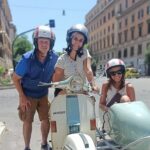
- Each Vespa can accommodate two passengers: one in the sidecar and one behind the driver.
- If you book one seat only, you’ll share the vehicle with another guest (and seat swapping is possible during stops).
- There are weight limits: the back seat has a maximum of 118 kg / 260 lb, and the sidecar has 110 kg / 242 lb.
- There’s also a height limit for the sidecar: 1.90 m maximum.
For families: children must be at least 5 years old and must be seated with an adult. Kids can sit behind the driver only if they’re taller than 150 cm; otherwise, they’ll need to sit in the sidecar. The tour is not permitted for pregnant travelers.
One more “good to know” detail: the company uses CE helmets and provides sterilized disposable head covers. That’s a small thing that makes a big difference when you’re getting on a scooter in the evening with other people in close proximity.
Your route begins at Piazza della Repubblica for a big first impression
Meeting at P.za della Repubblica, 41 is a strong start point because this area is built for wide views and quick orientation. Piazza della Repubblica is striking for a reason: it was shaped during the post–Rome-as-capital urban redevelopment, and it reads like a showpiece once you’re there.
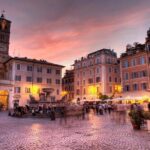
Your first stop is around Fontana delle Naiadi, in the middle of a large circular layout. It’s one of those places where the buildings frame the square so you feel the geometry immediately. It’s also a practical warm-up moment before you start riding—enough time to look up, snap a few pictures, and settle your brain before the route gets more intense.
Quirinale Hill and the palace views you can’t get from street level
Next you’ll move to the area of the Palazzo del Quirinale on Quirinal Hill. Even if you don’t go inside (and you won’t), the site has serious presence. It’s one of the official residences of the President of the Italian Republic, and it’s historically tied to multiple eras—popes, kings, and presidents.
This stop feels good because it gives you a sense of Rome as a seat of power, not just a museum. You get context for why the city’s hills matter, and why Rome’s neighborhoods don’t all look the same when you’re changing altitude.
Altare della Patria and the Pantheon area: size, symbolism, and a timing note
From there, you’ll reach Monumento Nazionale a Vittorio Emanuele II, also known as the Altare della Patria, in Piazza Venezia. This is the sort of landmark that makes you tilt your head back without meaning to. It was inaugurated in 1911 as a tribute to Victor Emmanuel II after unification, and since 1921 it includes the tomb of the unknown soldier with an eternal-flame setting guarded by soldiers.
Inside details are part of the story here too, since the building includes the Institute for the History of the Italian Risorgimento and a museum connected to the Risorgimento.
Then comes the Pantheon. The Pantheon is one of the best-preserved ancient Rome monuments, finished in 126 AD, and the famous oculus is the main source of natural light. Here’s the key practical point: the Pantheon will be closed during the tour, so you will not enter. The value, though, is still there. You’ll have time to view it and understand why it’s such a big deal without losing your evening to a dead-end.
You can also read our reviews of more evening experiences in Rome
Trevi Fountain and the Spanish Steps after dark
Trevi Fountain is one of those sights that feels different at night. You’ll have about 30 minutes at Trevi. Even at a standstill, it’s worth it because the scale of the fountain hits you fast: roughly 20 meters wide and 26 meters high, with a history tied to the Aqua Virgo aqueduct.
Trevi’s story is also fun because it’s not only about one moment in time. The origins date back to around 19 B.C., and the current appearance was finalized in 1762. The name comes from Tre Vie—three ways—because it sat at the meeting point of three streets. That’s the kind of detail your guide can connect to what you’re seeing in front of you.
Next is the Spanish Steps (Scalinata di Trinità dei Monti), built in the early 1700s to link Piazza di Spagna with the Trinità dei Monti church. This stop is ideal for a slow pause: people like sitting and watching the squares around them while the steps frame the view upward. At night, that whole area becomes more relaxed than it is during peak daylight crowds.
Piazza del Popolo to St. Peter’s Square: Rome’s gates and the Vatican scale
After the Spanish Steps area, you’ll head toward Piazza del Popolo, at the northern side of historic Rome near Porta Flaminia. It’s not just a pretty square. It’s where major streets branch out in three directions—Via del Babuino, Via di Ripetta, and Via del Corso—so it functions like a hub. You’ll feel the “entry to the city” vibe even though you’re already inside Rome.
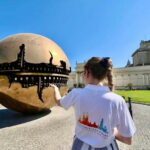
Then comes St. Peter’s Square (Piazza San Pietro) in Vatican City. The square is designed to handle enormous crowds—over 300,000 people—but at night it still feels awe-inducing because of the sheer scale. This is one of those places where the viewpoint matters, and a sidecar ride plus frequent small stops makes it easier to find angles.
Gianicolo Terrace for a breather: views + sculptures + fresh air
If you want one “reset button” in the route, it’s Terrazza del Gianicolo. Janiculum Hill is often described as Rome’s eighth hill, and it sits close to the center without feeling like the constant camera-and-crowd loop. The vibe here is more breathable.
The view from the top is the main reason to come. You also get history layered into the paths: Janiculum became tied to defense of the city, including the Garibaldi-era battle where he repelled an attack from French troops. As you walk up, the pathways include sculptures of historical figures, including Giuseppe Garibaldi.
This stop works well because it isn’t another “look and move on.” It gives you space to slow down, stretch your legs, and take in the city as a whole.
Drive through bohemian Rome: alleys, trattorias, and the Jewish Ghetto
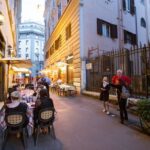
After Gianicolo, the route shifts from monument spotting to street-feel. You’ll ride through neighborhoods with a bohemian atmosphere and typical trattorias. The plan includes a passage by the Jewish Ghetto, so you’re not only seeing Rome’s famous showpieces—you’re also seeing parts of the city that feel lived-in.
This portion is valuable because it breaks the evening into two modes: landmark focus, then neighborhood rhythm. Guides who know the city can also help you notice details you’d otherwise miss while stuck behind a group tour.
Santa Maria Maggiore: a calm finish with a major basilica
Toward the end, you’ll reach Basilica di Santa Maria Maggiore, one of Rome’s four major basilicas and described as the largest Catholic church dedicated to the Virgin Mary in Rome. Even without going deep into interior details, this stop gives you a quieter, older-feeling close to the route.
It helps balance the evening because your earlier stops included big state and civic landmarks. This one brings you back to sacred architecture and a sense of Rome’s long timeline.
Gourmet pizza tasting at Vico Pizza&Wine (plus that pre-dinner mood)
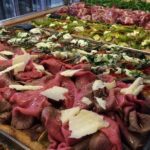
The tour includes dinner as a gourmet pizza tasting at Vico Pizza&Wine. For a night tour, food is usually where experiences either shine or feel like a rushed add-on. This one is set up as part of the evening, not a separate chore.
Wine is part of the stop as well, and the reviews highlight that the pizza and wine are a strong point. Many people also mention an aperitivo moment during the evening. Even if your pace differs from another person’s, it’s a good sign: it suggests the evening isn’t only about looking; it’s about enjoying Rome’s actual after-dark routine.
Diet note you should take seriously: the information says that for celiac disease, gluten-free pizza is not available, though there’s an afternoon tour that includes gelato from a completely gluten-free gelateria. So if gluten is a deal-breaker, plan ahead and ask what options can work for you.
Price and value: what you’re really paying for
At $181.41 per person for about 3 hours, it can feel steep until you break down what’s included. Here’s what matters for value:
- You’re paying for licensed guide narration plus headsets, so the information is designed to be heard clearly while riding.
- You’re paying for professional drivers—you don’t do the hard work of riding in traffic and dodging cobblestones.
- You’re paying for safety gear (helmets and disposable head covers).
- You’re paying for a sit-down food stop with pizza and wine at Vico Pizza&Wine.
Also, the tour caps at 12 travelers, which helps keep the experience from feeling like a giant herd. That matters because sidecar tours are naturally intimate: the ride is tight, the seats are limited, and the guide needs space to manage people during stops.
If you’re the type who values convenience—covering a lot of Rome in a short time without walking every step—this price starts to make more sense.
Who this Vespa sidecar tour fits best (and who should skip it)
This is a great match if you want Rome by night with a mix of big monuments and real street energy, and you like the idea of hearing stories through headsets while you’re moving. It’s also a good fit for couples and small groups who want an experience that feels fun and slightly different from the usual walking tours.
It may not fit as well if:
- You need a fully accessible walking route (this is scooter boarding with sidecar seating).
- You’re pregnant (not permitted).
- You don’t want to deal with safety limits like seat weight and child height rules.
- Gluten-free pizza is required for you (not available for celiac disease in this tour).
Should you book this Rome evening Vespa sidecar tour?
I’d book it if you want an evening that balances spectacle, storytelling, and a real meal, all in a short 3-hour window. The combination of monument stops, headset-guided commentary, and pizza-and-wine dinner makes it feel like a complete experience rather than a quick ride with a leftover snack at the end.
I’d think twice if you’re sensitive to riding comfort or if your dietary needs require gluten-free pizza. If either of those is you, it doesn’t make the tour “bad”—it just means you’d get more satisfaction from a different style of Rome night experience.
FAQ
What time does the tour start?
It starts at 7:00 pm and runs for about 3 hours (including travel time).
Where do I meet for the tour?
The meeting point is P.za della Repubblica, 41, 00185 Roma RM, Italy. The tour ends back at the same meeting point.
Is the tour in English?
Yes, it’s offered in English.
What’s included besides the Vespa ride?
You get a licensed guide with live narration through headsets, CE helmets with sterilized disposable head covers, and a dinner gourmet pizza tasting at Vico Pizza&Wine.
Will we enter the Pantheon?
No. The Pantheon will be closed during the tour, so you won’t enter the monument.
Is there a gluten-free option for pizza?
For celiac disease, gluten-free pizza is not available on this tour. The information notes an afternoon tour with gelato from a completely gluten-free gelateria.
Can children ride on the sidecar?
Children must be at least 5 years old and must be with an adult. They can sit behind the driver only if they are taller than 150 cm; otherwise they must sit in the sidecar.
How many people are on the tour?
The maximum group size is 12 travelers.
What if it’s bad weather?
This experience requires good weather. If it’s canceled due to poor weather, you’ll be offered a different date or a full refund.