REVIEW · PRIVATE
Rome Panoramic Private Tour: Highlights of Rome Driving and Walking Tour
Book on Viator →Operated by Rome Italy Explora · Bookable on Viator
Fast facts move you faster.
This Rome panoramic private tour is built for people who want the headline sights without spending the whole day stuck in lines or figuring out logistics. You get private chauffeur driving between major stops, plus live commentary from a guide as you roll through Rome’s famous backdrops. Even with a tight schedule, you’re set up to see a big slice of the city in a smooth route.
I love how the plan combines driving and short walks, which helps you cover more ground in about 4 hours. I also love that admission tickets are included for the big-ticket stops listed, like the Pantheon and the fountains-and-squares circuit. One possible drawback: it’s a packed hit-list, so your time at each place is brief, and there’s a small amount of walking.
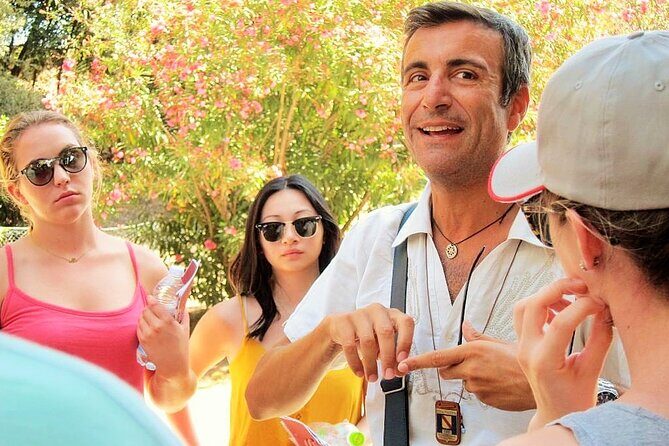
A lot of the magic here is the guide’s storytelling. In past experiences with this company, the name Giuseppe comes up for clear, simple explanations that make ancient Rome feel real instead of like a textbook.
In This Review
- Key things I’d clock before you go
- How this Rome panoramic private tour works in real life
- Trevi Fountain and the Spanish Steps: the “Rome checklist” start
- Piazza del Popolo: the big gateway square with an ancient obelisk
- Pantheon: the dome, the light, and the burials
- Piazza Navona and Bernini’s Four Rivers Fountain
- Colle del Gianicolo and il Fontanone: Rome at the viewpoint level
- Aventine Hill: leafy views and the Knights of Malta keyhole
- The driving loop: St. Peter’s Square, Castel Sant’Angelo, the Colosseum, and more
- Price and value: what $1,035.54 per person buys you
- Practical tips to make the short stops feel satisfying
- Should you book this Rome panoramic private tour?
- FAQ
- How long is the Rome panoramic private tour?
- Do you get pickup at your accommodation?
- Is this a private tour or shared group?
- Are admission tickets included?
- Is food included?
- Can I cancel and get a refund?
Key things I’d clock before you go
- Private chauffeur route keeps you moving through Rome without wrestling traffic or navigation.
- Ticket-included classics like the Pantheon, plus major squares right after.
- Janiculum sunset viewpoint at il Fontanone, with a view over twelve hills.
- Aventine Hill keyhole at the Knights of Malta Garden, a famously photogenic sight.
- Combo of ancient + baroque: Pantheon dome and oculus, then Bernini’s Four Rivers in Piazza Navona.
- Guide-led storytelling, with Giuseppe frequently singled out for making history click.
How this Rome panoramic private tour works in real life
This is a true private tour, meaning it’s just your group, not mixed into a larger crowd. The format is designed around time: pickup at your accommodation, a luxury vehicle with a private chauffeur, and a guide who adds live commentary while you travel.
The best part is the balance. You’re not just chauffeured past landmarks—you also get short, meaningful stops to actually look, walk a bit, and take photos. The small catch is that the schedule is tight by design. Expect short visits at many highlights, and use comfy shoes because there is some walking.
Also note that the experience can be booked by day or night. If you’re chasing different moods—golden-hour views versus bright city lights—this matters more than you’d think with a route this packed.
You can also read our reviews of more walking tours in Rome

Trevi Fountain and the Spanish Steps: the “Rome checklist” start
You begin with some of Rome’s most recognizable corners: the Trevi Fountain area, followed by the Spanish Steps. Even if you’ve seen these places on postcards, this kind of route makes them feel like the real thing fast, because you get context while you’re still fresh.
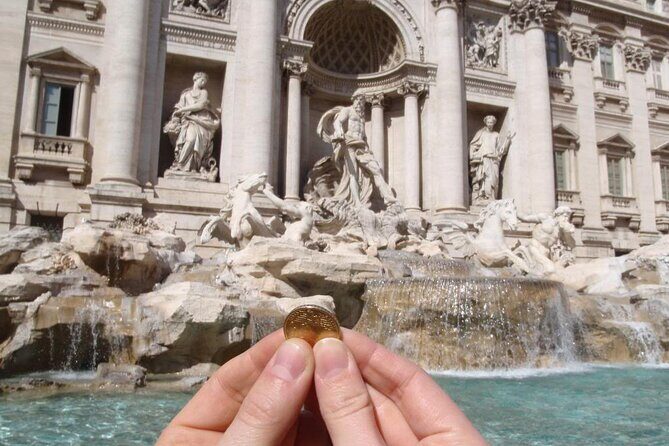
At Trevi Fountain, the focus is on the classic moment: tossing in a coin. You’ll also have time to absorb the surroundings right away—then you’re moving on, not lingering for an entire day. It’s a great opening stop because it sets the tone: Rome is performance, drama, and stonework all at once.
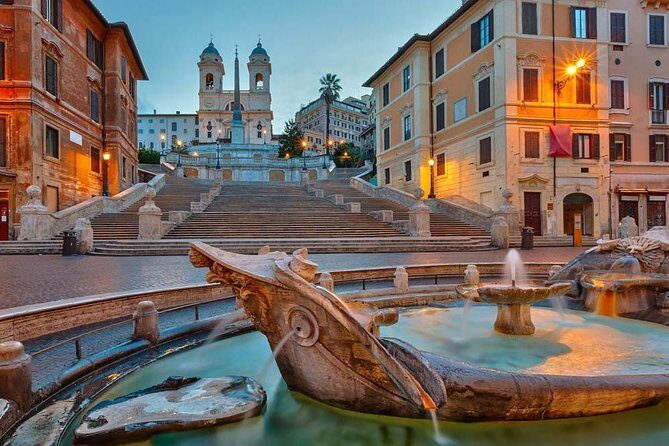
Next, you hit the Spanish Steps for about 15 minutes. The story here is practical: these steps were built to connect the church of Trinità dei Monti with the Spanish Square below, tied to French patronage. When a guide connects the geography to the politics and patronage, the steps stop being just stairs and become a city clue.
A small consideration: this opening stretch is the kind of place where you’ll notice crowds even when you’ve skipped some of the worst of them earlier. The value is that your route keeps you from getting stuck for hours.
Piazza del Popolo: the big gateway square with an ancient obelisk
After the Spanish Steps, you’ll spend time at Piazza del Popolo, about 10 minutes. This is Rome in grand scale. The square was laid out in 1538 as a major entrance for Rome’s northern gateway, then remodeled later, including work by Giuseppe Valadier in 1823.
The centerpiece is the tall obelisk, about 36 meters high. You’ll learn that it was brought by Augustus from ancient Egypt, and that it originally stood in the Circo Massimo. That kind of detail matters. Without it, you just see a tall monument. With it, you see Rome’s habit of recycling and reusing symbols across centuries.
Because this stop is short, keep your expectations realistic. Treat it like a quick orientation moment: look up, spot the obelisk, and enjoy the symmetry before you move on.
Pantheon: the dome, the light, and the burials
This is one of the highlights that earns its place in any Rome plan. At the Pantheon, you’ll get around 30 minutes, plus admission is included.
Here’s what the guide time can bring to the experience. The Pantheon is known as the best preserved ancient building in Rome. Originally dedicated to mythology divinities, it became a Christian church in the 7th century, so you get layers of meaning without changing buildings.
Inside, the real star is the dome and the oculus, the opening that creates unique lighting. Even if you’ve seen photos, seeing it in person is different because the light shifts as your eyes adjust. You’ll also have a chance to notice the tombs of Raphael and Victor Emmanuel II, which adds a surprising modern anchor to an ancient structure.
Practical note: because the Pantheon is a top attraction, it’s a good idea to keep your pace calm. Short stops work best when you focus on a few things—dome, oculus light, and key features—rather than trying to scan everything.
Piazza Navona and Bernini’s Four Rivers Fountain
Next is Piazza Navona, about 30 minutes. This square is famous for its elegance, but what makes it click on a guided panoramic route is the backstory tied to earlier Rome.
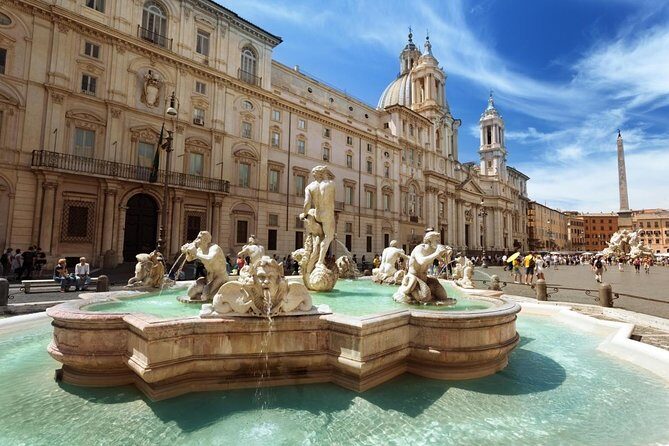
Piazza Navona sits on top of older structures—its setting connects to the ruins of an Emperor Domitian stadium, and later the square became a showpiece for later artists. In the center you’ll find Bernini’s Fountain of the Four Rivers, which is the kind of sculpture you can stare at for a long time once you know what you’re seeing.
The downside of a time-limited stop is that you may want more minutes. The upside is that you leave before you feel dragged down by crowds and long lines. You’ll get the main fountain moment, plus enough time to enjoy the square’s flow.
You can also read our reviews of more private tours in Rome



Colle del Gianicolo and il Fontanone: Rome at the viewpoint level
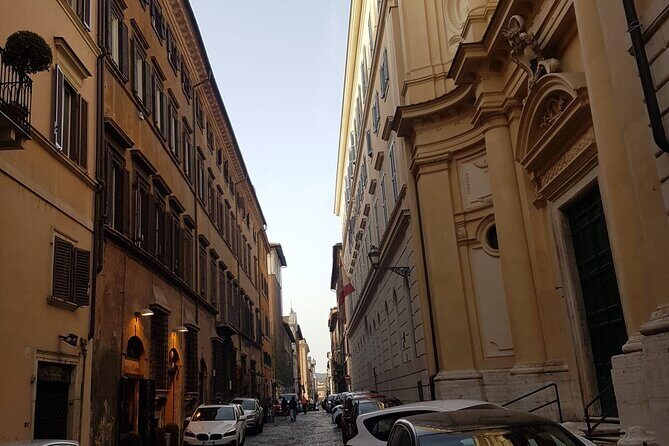
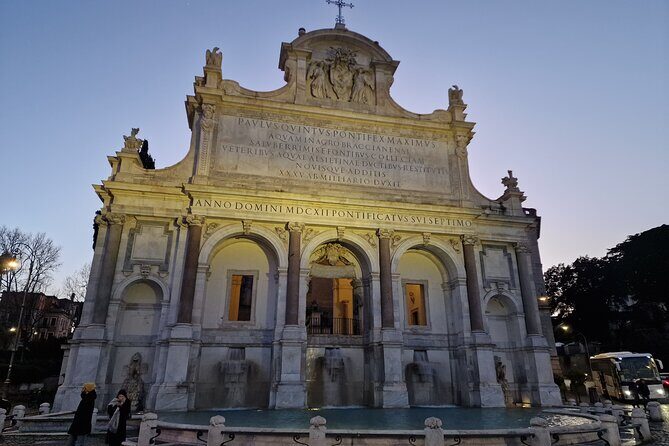
Then you move toward one of the most rewarding parts of this itinerary: Colle del Gianicolo, the Janiculum Hill area. You’ll spend about 20 minutes here, and admission is included.
This is where the tour slows down in the best way. The route includes a walk through the Janiculum park, which features marmor busts of fighters and heroes of the Italian Risorgimento. That detail adds meaning to a simple park stroll. You’re not just walking for views; you’re walking through a curated slice of Italian identity.
The big payoff is the panorama. In the main square with il Fontanone, you can enjoy a sweeping view that stretches across twelve hills. The listed best moment is sunset-time, so if your day offers that window, aim for the day/night booking that matches it.
Consideration: viewpoints can feel windy or cooler late in the day. If you’re booking a day session and hoping for sunset lighting, check the exact timing of your departure and the route pace with the operator after booking.
Aventine Hill: leafy views and the Knights of Malta keyhole
Aventine is one of Rome’s original seven hills, and it’s also one of the most visually satisfying. You’ll spend about 20 minutes on this stop, with the key focus on the Aventine keyhole at the Knights of Malta Garden.
This is the kind of sight that sounds silly until you see what people mean by it. The idea is simple: you look through a specific keyhole, and the viewpoint aligns with a special sightline. Your guide helps you find it and understand why this tiny framing trick became such a Rome thing.
You’ll also hear why Aventine works as a contrast to the heavier tourist cores. The hill is described as a wealthy, leafy residential area with churches, beautiful streets, and quieter corners. That matters on a panoramic tour because you’re not stuck in one style of Rome all day.
Practical note: this is a free admission stop in the itinerary details, so your time is about sightline and atmosphere rather than paying for entry.
The driving loop: St. Peter’s Square, Castel Sant’Angelo, the Colosseum, and more
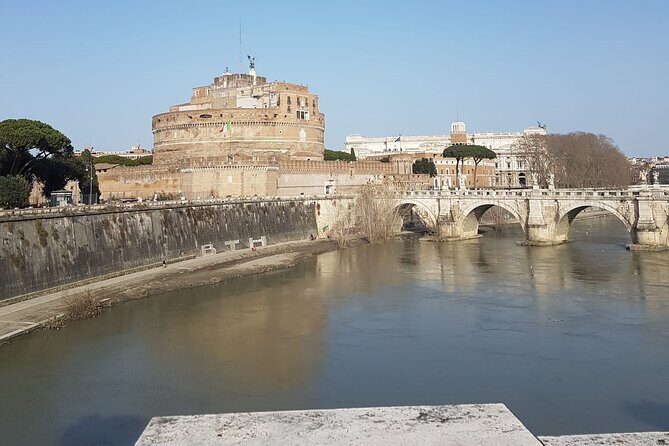
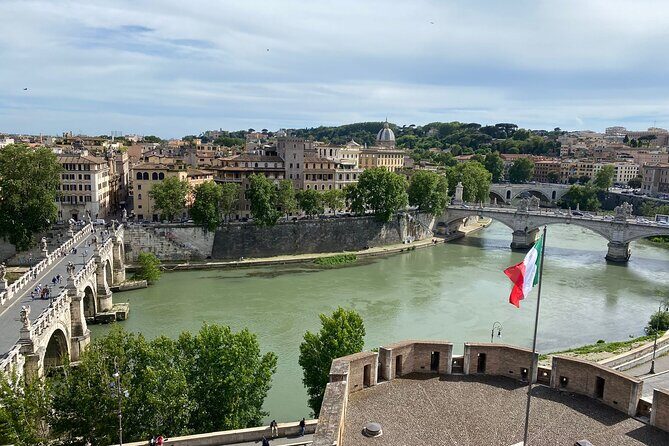
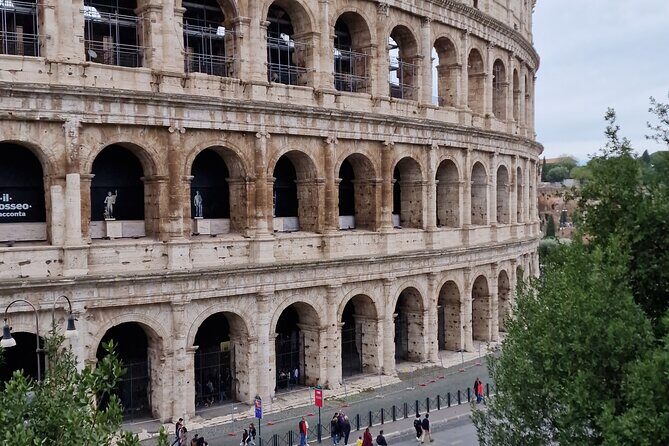
Not every stop gets a deep stop-by-stop breakdown, but the route is packed with major landmarks you’ll pass and/or stop near. The panorama tour includes stops at St. Peter’s Square, Castel Sant’Angelo, the Coliseum, and the Circus Maximus area with views toward the Palatine Hill.
You’ll also get time near the Mouth of Truth, plus a 2000 years old pyramid (a major Rome landmark in that category), and the tour route connects to other ancient spots tied to the days of emperors and legend.
Why the driving loop is worth it: Rome’s best sights are spread out, and public transportation plus walking can turn a 4-hour ambition into an all-day grind. Here, your driver takes care of navigation, so your brain is free to focus on what the guide is explaining.
Small reality check: with so many major sites on the radar, some places are more about exterior views or quick moments than long on-site time. That’s normal for a panoramic format. If you love slow museum time, you’ll still want separate half-day or full-day plans later.
Price and value: what $1,035.54 per person buys you
At $1,035.54 per person, this is not a budget tour. You’re paying for a private setup: luxury transportation with pickup and drop-off, a private professional guide, and live commentary during the drive.
You’re also paying for time-savings. Rome’s top sites are time sinks when you’re on your own. Here, the route stitches them together into a 4-hour block, with short scheduled stops at key points like the Pantheon and major squares. Admission tickets are included for the listed sights, which helps reduce extra costs that often pop up on day tours.
When it’s worth it: if you value a guided storyline, want hotel pickup, and prefer not to spend your limited time coordinating transport and queue logistics, the private format makes sense. If you’re traveling solo on a strict budget, it can feel steep—especially because some stops are brief.
A useful way to think about it: you’re not just buying tickets to monuments. You’re buying a plan that trades your effort for a driver-led route and a guide who explains what you’re looking at while you move.
Practical tips to make the short stops feel satisfying
This tour involves a small amount of walking, and it’s described as suitable for most travelers. Still, your comfort matters because you’ll be stepping out, looking, then back in the vehicle repeatedly.
Here’s how to get more from each stop without needing extra time:
- Prioritize what you’ll actually notice at Pantheon: dome, oculus light, and key tombs like Raphael and Victor Emmanuel II.
- At Piazza Navona, choose one focal moment: Bernini’s Four Rivers Fountain, then use the square’s space for photos and people-watching.
- For Janiculum at il Fontanone, wear layers and plan for late-day changes in temperature if you booked for that mood. Sunset-time is the listed best moment.
If you’re sensitive to crowds, the private format helps, but you’ll still be in Rome’s famous zones. Going in with a flexible mindset keeps the day smooth.
Also, if you’re bringing kids, the child rate applies only when shared with 2 paying adults, so plan your group setup accordingly. Service animals are allowed.
Should you book this Rome panoramic private tour?
Book it if you want a private chauffeur day that hits the biggest names—Pantheon, Trevi, Spanish Steps, Piazza Navona, Janiculum viewpoints, and Aventine keyhole—without turning your trip into a puzzle. It’s especially strong for first-timers who like clear guidance and short stops that still feel meaningful.
Skip it (or pair it with other plans) if you want long, unhurried time inside museums or if you hate moving quickly between stops. This is a fast, guided panorama route. Done well, it helps you see Rome’s main beats and leaves you with ideas for what to explore next.
FAQ
How long is the Rome panoramic private tour?
The tour is about 4 hours.
Do you get pickup at your accommodation?
Yes. Pickup is offered at your hotel, B&B, or apartment. You’ll need to confirm your pickup address.
Is this a private tour or shared group?
It’s a private tour/activity, so only your group participates.
Are admission tickets included?
Admission tickets are included for the stops listed with admission ticket included, including major sights such as the Trevi Fountain area, Spanish Steps, Piazza Navona, and the Pantheon (as shown in the schedule details). The Aventine keyhole stop is listed as free.
Is food included?
No. Food and beverages are not included.
Can I cancel and get a refund?
Yes. You can cancel for a full refund up to 24 hours in advance of the experience start time.