REVIEW · MUSEUMS
National Roman Museum and Diocletian Thermal Baths Walking Tour
Book on Viator →Operated by Raphael Tours & Events · Bookable on Viator
Rome’s best art lesson has skips.
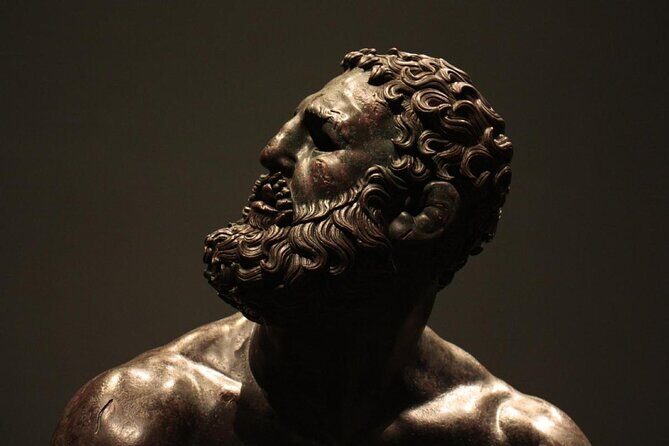
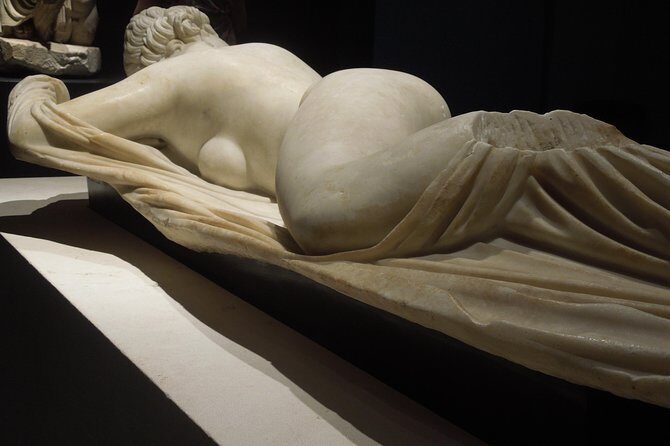
This National Roman Museum walk pairs skip-the-line entry with a focused, guided look at Rome’s most famous classics housed in Palazzo Massimo. I like that you get a real route through the collections instead of wandering room-to-room, and you get to home in on standout works like the Boxer at Rest, the Discus Thrower, and the Sleeping Hermaphrodite. The only watch-out: depending on your guide and timing, the museum time can feel tight if the start slips.
You’ll also love the option to upgrade to the Diocletian Baths area, where ancient Rome meets Renaissance genius. The Baths built in 298 AD were the city’s huge bathing complex, and Michelangelo later reworked parts of the site into the Basilica of St. Mary of the Angels in 1561. If you want Roman art plus a strong sense of how sites get reused over centuries, this tour hits the mark.
In This Review
- Key things I’d plan around
- Palazzo Massimo begins at the ticket office, not at the chaos
- What Palazzo Massimo is really good at
- The sculpture highlights you’ll want to see in person
- Those decorated rooms: where Roman status becomes visible
- Upgrading to Diocletian’s Baths: ancient scale meets a church facade
- What the guide adds (and what can go wrong)
- Timing and pacing: a tour that keeps you moving (on purpose)
- Price and value: is $323.21 worth it?
- Where this tour fits in your Rome plan
- Should you book this tour?
- FAQ
- FAQ
- How long is the tour?
- Where is the meeting point?
- Does it include skip-the-line entry?
- What’s included in the base tour versus the upgrade?
- Is the tour private?
- Is it offered in English?
Key things I’d plan around
- Guaranteed skip-the-line entry at the Palazzo Massimo ticket office near Republic Square
- 1 hour at Palazzo Massimo inside a serious collection spread over multiple floors
- A smart art highlights list built around sculptures, mosaics, coins, and Livia’s decorated spaces
- Upgrade to the Baths of Diocletian with the Basilica of St. Mary of the Angels built from bath structures
- Private tour format so your group stays together instead of getting lost in a crowd
Palazzo Massimo begins at the ticket office, not at the chaos
Your tour starts at the National Roman Museum–Palazzo Massimo ticket office, a few steps away from Republic Square. That matters more than it sounds. Big museum entrances in Rome can turn into slow-motion lines, and this one is designed so you can bypass the queue and go straight into the galleries.
Meeting here is convenient if you’re using public transport during your stay. And since the tour ends back at the meeting point, you’re not stuck figuring out a late-day ride across town.
This is also the kind of experience that works well if you don’t want to over-plan your whole day. It’s about 2 to 3 hours, so you can pair it with other nearby sights without building your itinerary around it.
You can also read our reviews of more walking tours in Rome

What Palazzo Massimo is really good at
Palazzo Massimo alle Terme is one of the top places in Rome for classical art, with collections covering roughly from the 2nd century BC to the 5th century AD. You’re not just looking at a few famous statues. You’re walking through a museum that spreads Roman visual culture across sculptures, frescoes, mosaics, coins, and goldsmith work.
What makes it a great guided stop is the museum’s internal logic. A guide can connect the dots between styles, craftsmanship, and what each object was likely used for or how it was valued. Without that structure, it’s easy to get stuck admiring single pieces while missing the bigger story.
One practical detail: the tour time at the museum is about 1 hour. That’s enough for a highlights-focused route, especially if you’re selective about where you linger. If you’re the type who could spend hours in front of every mosaic tile, you’ll probably wish you had more time—so choose this tour for focus, not for total museum coverage.
The sculpture highlights you’ll want to see in person
This tour is built around a set of sculptural works that are famous for a reason. The guide route is designed so you don’t have to hunt for them, and you’re guided to notice details you might miss if you’re speed-walking for photos.
Here are the big names you can expect to see:
- Boxer at Rest: a powerful example of Roman skill in capturing a body at pause
- Discus Thrower: the kind of work that makes you appreciate Roman sculpture as more than decoration
- Sleeping Hermaphrodite: a striking piece that often starts conversations about Roman artistic tastes and symbolism
In addition, expect an emphasis on decorative and everyday-life artifacts, not only the show-stoppers. The museum includes impressive ancient coins and jewels, and your guide is likely to point out how the objects fit together as a picture of Roman life and power.
A small but important note: some people aren’t sculpture-first fans, and the collection includes a lot of it. One reviewer rated the experience lower mainly because statues were the bulk of what they saw. If you’re more of a mosaic-and-fresco person, you’ll still get that—but it helps to know the museum will likely spend a big chunk of time on sculpture.
Those decorated rooms: where Roman status becomes visible
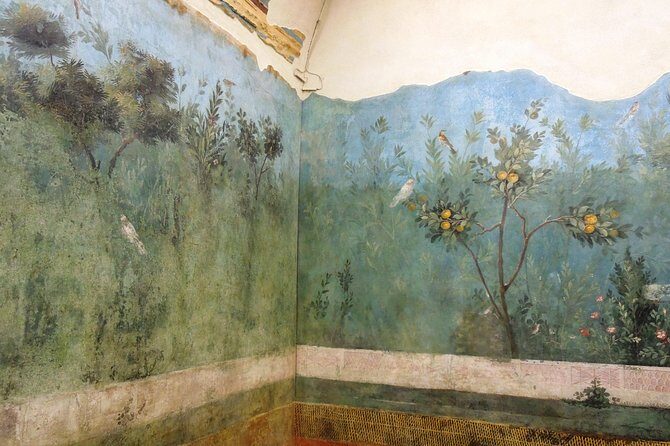
Palazzo Massimo doesn’t just show “pretty art.” You’ll also see spaces tied to elite life—especially the extravagantly decorated rooms associated with Empress Livia. That kind of interior display can make the art feel less abstract.
You get to view Rome as a society that displayed status through material and design. The walls, the details, the way rooms were made for display—these choices are part of the storytelling, not just background.
For me, this is one of the best reasons to take a guided format here. A good guide turns rooms like this into a practical lesson: why the decoration looks the way it does, who it was for, and what it would communicate in its time.
Upgrading to Diocletian’s Baths: ancient scale meets a church facade
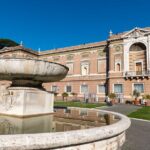
If you choose the upgrade, the second stop takes you into the Baths of Diocletian, built in 298 AD. This was, in its day, one of the largest thermal plants Rome ever built—designed to handle up to 3,000 people at a time and built with amenities like gyms, libraries, and swimming areas.
Even if you’re not a hardcore ancient-architecture person, the scale is what hits you. Baths weren’t just about cleanliness. They were about routine, conversation, exercise, and social life.
Michelangelo later reshaped part of this bath complex into the Basilica of St. Mary of the Angels, completed in 1561. That reuse is the other half of the story. You get to see how Renaissance builders worked with existing space, and how ancient structure could become a Christian setting without fully losing its identity.
If you like history that changes form instead of vanishing, this part is a highlight.
You can also read our reviews of more museum experiences in Rome




What the guide adds (and what can go wrong)
This tour lives or dies on the guide. And in the real world, guides vary.
In the positive feedback, names like Matteo/Matia, Serena, Damiano, and Giorgio came up again and again. The strongest praise wasn’t just about facts. It was about pacing, enthusiasm, and using the art to explain how Roman life worked. One guide was described as speaking excellent English and presenting with real energy, and another was said to work in art education with a university connection.
I’d also take the one critical note seriously: one group reported that the guide started late, and the tour felt short—especially for the museum portion. If timing matters a lot to you, show up a few minutes early at the meeting point and be ready for a highlights-style schedule.
Timing and pacing: a tour that keeps you moving (on purpose)
You’re looking at about 1 hour in the museum and about 1 hour at the baths if you upgrade. That totals well with the typical 2 to 3 hour window.
This pacing is ideal if:
- you want maximum impact without burning an entire half day
- you’re combining it with other major Rome stops
- you like being guided to priorities instead of choosing them yourself
But if you’re the type who reads every label and wants to compare multiple angles and viewpoints, you may crave more time. The museum is described as lightly visited by some people, which helps—but the time window is still fixed.
A good strategy: before you go, pick 2 or 3 works you care about most. During the tour, let the guide lead you to those first, then use the rest of the time for supporting favorites.
Price and value: is $323.21 worth it?
At $323.21 per person, this isn’t a budget museum stop. The value comes from what’s included, not from the sticker price.
Here’s what you’re paying for:
- Skip-the-line entry, which saves time and reduces the stress of museum bottlenecks
- A local guide who interprets art and architecture so you’re not just looking at objects
- A private tour setup where it’s only your group, not strangers filtering your attention
- Optional upgrade access to Diocletian’s Baths and the Michelangelo church connection
When the museum isn’t crowded, the guide’s role gets even more useful. You’re not getting shoved into a wall of people while trying to listen. You’re able to slow down at the works that matter to you.
So, for who it’s worth it: people who enjoy guided interpretation, want low-friction entry, and care about seeing a curated set of major artworks rather than trying to do it all alone.
For who might balk: if you’re comfortable wandering Palazzo Massimo on your own and you’re happy without expert context, the guide fee may feel steep. If you’re doing Rome on a tight schedule, the time saved by skipping lines can still make it feel fair.
Where this tour fits in your Rome plan
This tour is especially smart if you want a break from the “one big monument all day” rhythm. It’s a museum-and-sites combo that gives you:
- Roman art you can’t easily reproduce with a quick photo
- Architectural context for why ancient sites get reused
- A guided story that helps you read Rome as a living timeline
You’re also starting near Republic Square, so it can plug into a day that includes shopping streets, cafés, or other nearby landmarks.
If you’re visiting with someone who isn’t all-in on ancient Rome, this is still a solid match. The baths-plus-church reuse gives a theme even for non-specialists, and the guide usually makes the stories easier to follow.
Should you book this tour?
I’d book it if you want high-impact Roman art with minimal line stress and a real guide route that points you toward the works worth your attention. The option to add Diocletian’s Baths is a big win, because it turns your visit into a story about how Rome changes shape—without starting over from scratch.
I’d think twice if your priority is full museum time. With about 1 hour at Palazzo Massimo, you’re choosing highlights over total exploration. And if your expectations lean toward more fresco-and-mosaic time than sculpture time, you’ll want to be aware that the tour’s famous sculpture set is a core part of the experience.
FAQ
FAQ
How long is the tour?
The tour is listed as about 2 to 3 hours total.
Where is the meeting point?
You meet at the National Roman Museum–Palazzo Massimo ticket area at Largo di Villa Peretti, 2, 00185 Roma RM, Italy, near Republic Square.
Does it include skip-the-line entry?
Yes. It includes guaranteed skip-the-line entry.
What’s included in the base tour versus the upgrade?
The base experience includes a guided visit at the National Roman Museum–Palazzo Massimo. You can upgrade to also include the Baths of Diocletian, including the Basilica of St. Mary of the Angels.
Is the tour private?
This activity is described as a private tour, meaning only your group participates.
Is it offered in English?
Yes, the tour is offered in English.