REVIEW · HISTORICAL TOURS
Rome: Historical Highlights Walking Tour in German language
Book on GetYourGuide →Operated by Römerin · Bookable on GetYourGuide
Rome hides better stories in plain sight. This German-language walking tour strings together several less-obvious stops in central Rome, with clear explanations of how the city worked and why these places matter today. I like the way the route feels like a real walk through Rome, not a checklist of famous monuments.
Two things I really like: the Capitoline Hill angle, where you learn about the Marc Aurel statue and then get a view over the Forum Romanum and the Colosseum area, and the Caesar section that points you to the spot connected to Julius Caesar’s murder alongside Largo Argentina. As a bonus, the guide typically uses small, story-driven details along the way, like bringing the old cattle market area of the Forum Boarium to life.
One drawback to plan around: it is not suitable for wheelchair users, and it’s a full 3-hour walk on streets and uneven ground. If you have mobility limits, you’ll want to think carefully before committing.
In This Review
- Key highlights you’ll actually feel on the ground
- Capitoline Hill and the Marc Aurel viewpoint over Rome
- Forum Boarium: old cattle market stories in a live city street
- Marcellus Theatre to the Jewish Ghetto: small corners, big context
- Julius Caesar’s murder spot at Largo Argentina: the history question answered
- Campo de’ Fiori: your easy ending for food and shopping
- Meeting point and how to start smoothly with a German guide
- Pace, comfort, and what to bring for a 3-hour Rome walk
- Value check: why this route feels different from a basic highlights tour
- Who should book this Rome German walking tour?
- Should you book this tour?
- FAQ
- How long is the Rome Historical Highlights walking tour in German?
- What language is the guide speaking?
- Where do I meet the tour guide?
- What are the main places covered on the tour?
- What should I bring?
- Is this tour suitable for wheelchair users?
Key highlights you’ll actually feel on the ground
- Capitoline Hill with Marc Aurel plus a real viewpoint over Forum Romanum and the Colosseum area
- Forum Boarium stories that connect a former cattle market to everyday Roman life
- Jewish Ghetto corner stops, including the turtle fountain
- The Julius Caesar murder spot tied in with Largo Argentina and its ancient temples
- Campo de’ Fiori finish, handy for food, shopping, and a drink right after
Capitoline Hill and the Marc Aurel viewpoint over Rome
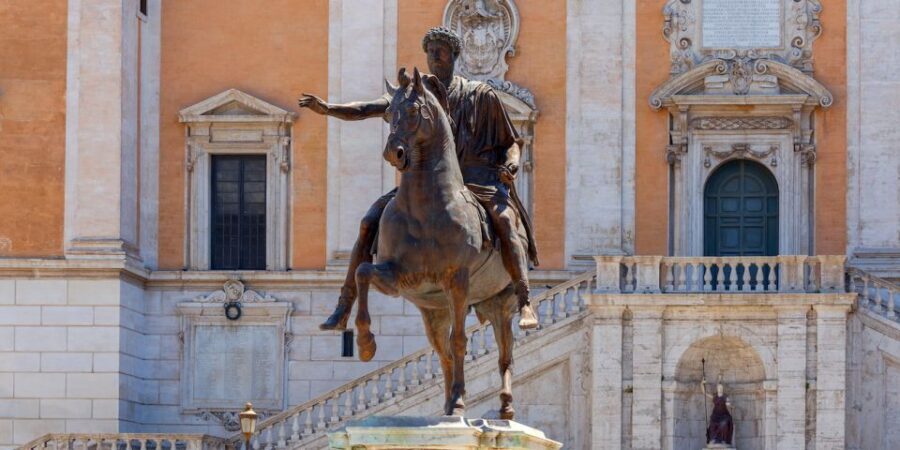
The tour starts with a smart positioning move: you begin on Capitoline Hill, then build outward from the idea of power, government, and public life. First up is the Marc Aurel statue. You’ll learn what to look for there, but more importantly, you’ll understand why this hill mattered in the Roman layout—Rome wasn’t one big museum. It was a working city.
Then comes the part that makes this tour instantly worth it: the view. From here, you get the kind of perspective that helps everything click, especially the Forum Romanum and the Colosseum area. Even if you’ve seen photos before, your brain works differently once you can connect viewpoints to streets below.
Practical note: views often mean you’ll pause more than you expect. So give yourself permission to slow down for a few minutes, take in the skyline, and let the guide’s explanations land. This is also a good moment to check your water and plan your shoes—comfort matters on a 3-hour walking route.
You can also read our reviews of more walking tours in Rome

Forum Boarium: old cattle market stories in a live city street
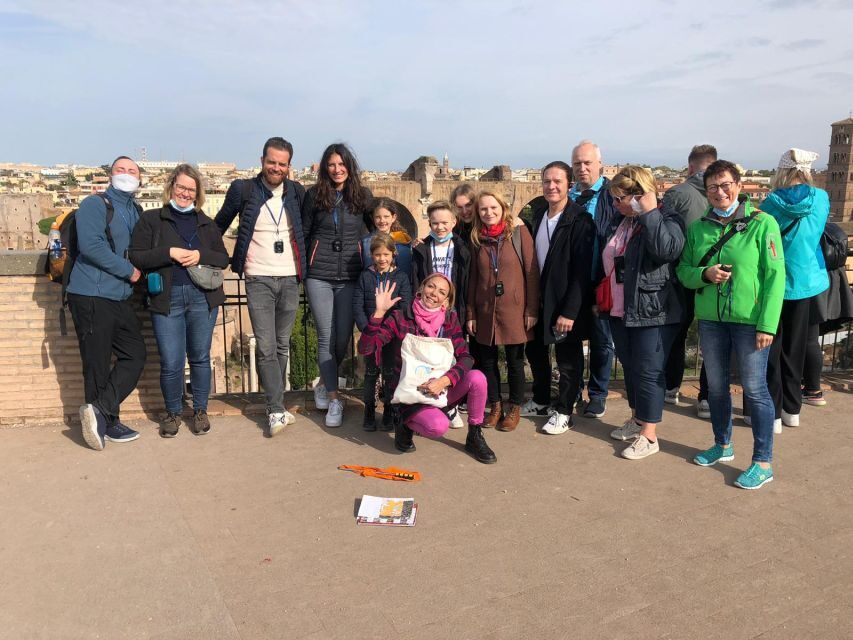
After Capitoline Hill, the route moves along a scenic panorama street toward the Forum Boarium, the area tied to the antique cattle market. This is one of those stops that can feel oddly specific until the guide frames it. Then it becomes a window into daily Roman life: where goods moved, where people gathered, and how practical trade sat close to political power.
What I like about this section is the tone. You’re not just looking at ruins. You’re being guided through how Rome functioned. When the guide talks about the Forum Boarium in story form, you start seeing the street as part of a supply chain, not just a place to take a photo.
There’s also a nice pacing rhythm here. You’ll get a viewpoint at the start of the walk, then a more human-scale stop. That balance keeps the tour from feeling like it’s racing through major sites. If you tend to get museum-fatigue, this “working city” angle helps keep things fresh.
Drawback to consider: because this section is story-based, you’ll get more out of it if you can stay present for the explanations. If you tune out easily when you’re walking, you may miss the connective tissue that makes Forum Boarium more interesting than it sounds on paper.
Marcellus Theatre to the Jewish Ghetto: small corners, big context
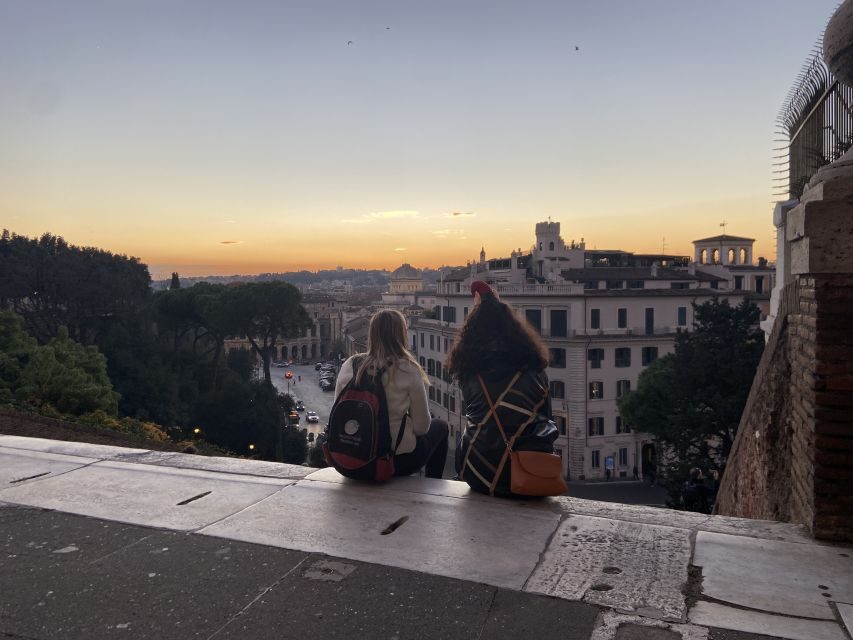
Next, you pass the Marcellus Theatre and head into the area commonly referred to as the Jewish Ghetto. The value of this stop is that it doesn’t treat the neighborhood like a single monument. Instead, you’re shown small, romantic-feeling details that help you understand the human scale of historic Rome.
One specific detail you’ll look for is the turtle fountain. It’s exactly the kind of object that’s easy to walk past without guidance. Here, the guide uses it as a starting point for explaining what you’re seeing and why it matters. You’ll also get direction through the area so you’re not just wandering around looking for highlights.
This part of the tour can be emotionally heavier than some other stops, because it’s tied to real community history. The guide’s role is important here. You’ll want to listen closely and ask yourself how this neighborhood fits into the broader Roman story you’re building across the route.
On the logistics side, note the route is a walking tour, so expect steady movement. If you’re hoping for lots of long seating breaks, this isn’t built for that. Still, the pauses you do get tend to be purposeful—enough time to absorb the context without dragging.
Julius Caesar’s murder spot at Largo Argentina: the history question answered
Then you reach the moment the tour name promises: where Julius Caesar was murdered. The guide doesn’t leave this as a dramatic headline. You’ll visit the spot connected to the event and you’ll connect it to Largo Argentina, where you’ll see the antique temples in the area.
This stop works well because it’s not isolated. Instead of just pointing to a location, the tour ties the assassination moment to the physical setting around Largo Argentina. That matters for your understanding. Events don’t happen in a vacuum, and Roman history often feels clearer when you can picture the surrounding space.
One reason I think this segment is a strong value for the time: by the time you get here, you’ve already learned how Rome’s geography shapes its story. You’ve built that mental map through Capitoline Hill, Forum Boarium, and the Jewish Ghetto section. So the Caesar stop doesn’t feel random—it feels like the culmination of the route.
If you prefer your history straight and practical, you’ll probably enjoy how the guide frames the topic: clear location focus, quick grounding, and then context that helps you interpret what you’re standing next to. It’s ideal for first-timers who want a deeper Rome without getting lost in academic detail.
Campo de’ Fiori: your easy ending for food and shopping
After the ancient-temple area, the walk finishes in Campo de’ Fiori. This is a smart ending point because it gives you immediate options. You can grab food, do some casual shopping, or simply have a drink right away without needing another transit plan.
Campo de’ Fiori also helps you transition from “guided history mode” to “walk it on your own.” You’re not stuck on a tight schedule at the end. You can keep exploring at your own pace, using the tour as your orientation tool for what comes next.
Practical tip: bring your water and keep your bottle handy. The tour recommends you fill it at drink fountains along the way. That’s especially helpful because Rome’s walking routes can dry you out faster than you think. Good shoes are the other non-negotiable—this kind of route is not a sneaker-on-a-flat-track situation.
You can also read our reviews of more historical tours in Rome


Meeting point and how to start smoothly with a German guide
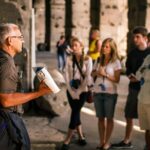
You’ll meet someone with a Deutsche Römerin sign, and you should be there about 5 minutes early. That small buffer matters because tours start on time, and Rome is busy. Get your bearings fast so you’re not arriving stressed.
The tour runs for 3 hours and is led by a live guide in German. If you’re comfortable in German or want to practice while you tour, this is a great way to learn place names and context naturally. If you’re not confident in the language, consider whether you’ll understand enough of the explanations to enjoy the route fully.
A nice detail from past experiences: guides have included people named Niels and Julia, and both were praised for being prepared and for putting real effort into the tour. That tells me you’re likely to get more than memorized facts—you’ll probably get a guided flow that connects stops instead of a stop-and-sprint approach.
Pace, comfort, and what to bring for a 3-hour Rome walk
This is a walking tour, so pace and comfort are everything. Plan for comfortable shoes and steady walking time. Even on a “historical highlights” route, the ground under your feet in Rome can be uneven, and you’ll want secure footing.
Bring water. You’ll be walking for about 3 hours, and the tour specifically recommends you bring your bottle to fill at drink fountains. That’s useful because it helps you avoid overpaying for bottled water and keeps you going through the afternoon stretch.
Also plan for short pauses. This tour includes viewpoint time on Capitoline Hill and stop-and-learn segments at Forum Boarium, the Jewish Ghetto area (including the turtle fountain), and the Caesar/Largo Argentina section. Those pauses aren’t random; they’re where the guide’s explanations do their best work.
Not for wheelchair users: this tour is not listed as suitable for wheelchair access. If that applies to you, you’ll need to look for a different format.
Value check: why this route feels different from a basic highlights tour
A big reason I like this kind of tour is that it focuses on Rome’s “in-between” places—sites and neighborhoods that make the city feel lived-in. Instead of treating everything as a single world-famous monument, you get a sequence that shows how Roman life, power, and community space connect.
You also get a thoughtful mix of:
- viewpoint (Capitoline Hill)
- daily-life economy (Forum Boarium)
- neighborhood identity and remembered details (Jewish Ghetto, turtle fountain)
- one of history’s biggest turning-point moments (Caesar’s murder spot, Largo Argentina)
That mix matters for your time. If you only have a day or two in Rome, this kind of route gives you more “how the city works” feeling than simply bouncing from landmark to landmark.
It’s also a strong fit if you like walking tours where the guide actually talks. The reviews for Niels and Julia highlight that the tour isn’t repetitive. That’s the real indicator of value: you feel like the guide is moving you forward, not reading the same script at every stop.
Who should book this Rome German walking tour?
You’ll likely love this tour if:
- you enjoy history that ties to geography, not just dates
- you want Roman sites beyond the obvious, with clear stop-by-stop explanations
- you can handle a 3-hour walking route and want a German guide
You might think twice if:
- you need wheelchair access
- you want mostly quiet looking time and fewer guided explanations
- you dislike walking in Rome’s uneven street environment
Should you book this tour?
Yes, if you’re looking for a 3-hour German guided walk that helps you understand Rome as a connected city—Capitoline Hill viewpoints, Forum Boarium’s everyday angle, the Jewish Ghetto details like the turtle fountain, and then the Caesar/Largo Argentina stop.
Book it especially if you want the “less obvious” side of Rome without sacrificing structure. You get a logical route, a clear ending in Campo de’ Fiori, and a guide who (based on real prior experiences) comes prepared and works to keep the walk interesting.
If you’re short on time and want your first Rome walk to feel like it actually teaches you something, this is a smart choice.
FAQ
How long is the Rome Historical Highlights walking tour in German?
The tour lasts 3 hours.
What language is the guide speaking?
The tour is guided in German.
Where do I meet the tour guide?
Meet at the spot where you can find someone with a Deutsche Römerin sign, and arrive 5 minutes early.
What are the main places covered on the tour?
The route includes Capitoline Hill, the area connected to Julius Caesar’s murder with Largo Argentina, the Jewish Ghetto area (including the turtle fountain), Forum Boarium, and the walk ends at Campo de’ Fiori.
What should I bring?
Bring water and wear comfortable shoes. The tour also recommends bringing your bottle to fill at drink fountains.
Is this tour suitable for wheelchair users?
No, it is not suitable for wheelchair users.