REVIEW · EVENING EXPERIENCES
Rome Evening Panoramic Walking Tour Including Trevi Fountain and Spanish Steps
Book on Viator →Operated by Your Way Tours · Bookable on Viator
Rome looks better after dark.
This evening walk links together Rome’s biggest postcard moments with real street-level stories, timed for sunset light from Pincio Terrace. You’ll also move through famous squares where the city’s history feels close, not museum-distant. The group stays small (up to 18), so the guide can actually pace the walk and answer questions.
Two things I like a lot: first, the route packs in major stops without wasting time, so you get a strong first-night overview of Rome. Second, you’re not just “looking,” you’re hearing what these places meant, from public punishment sites in the past to Bernini’s fountains and Roman engineering at the Pantheon area. Even if you only have one evening in town, this format helps you get your bearings fast.
One possible drawback: the stops are short—about 20 minutes each—so you’ll want a simple photo plan. If you expect long hangs, museum entry time, or lots of wandering on your own, you might feel a bit rushed.
In This Review
- Key Points Worth Booking for
- Why a 7pm Walk Is the Right Choice for Rome First-Timers
- Piazza del Popolo: Meeting in a Square with a Darker Past
- Terrazza del Pincio at Sunset: The View You’ll Actually Remember
- Spanish Steps and the Barcaccia Fountain: Bernini’s Drama in One Place
- Trevi Fountain at Night: Coin Toss with Context, Not Just Crowds
- The Pantheon Exterior (No Entry) and Piazza Navona’s Fountain Theater
- Campo de’ Fiori After Dark: Ending Where the City Keeps Living
- Pacing and Photo Strategy: How to Use Those 20 Minutes Well
- Guide Energy, Headsets, and Getting the Stories Right
- What You Pay (and What You Don’t): Value at $42.24
- Who This Tour Suits Best (and Who Should Skip It)
- Should You Book This Rome Evening Panoramic Walking Tour?
Key Points Worth Booking for
- Sunset view from Pincio Terrace with classic Rome rooftops and skyline angles
- Bernini connection twice at the Spanish Steps area and around Trevi’s Baroque grandeur
- A tight, efficient loop through major piazzas with a small group (max 18)
- Trevi Fountain coin-toss moment plus quick context so it means something, not just a photo
- Pantheon and Piazza Navona contrast from ancient engineering vibes to Baroque fountain theater
- An easy ending point at Campo de’ Fiori so you can keep the night going on foot
Why a 7pm Walk Is the Right Choice for Rome First-Timers
This tour is built for the Rome “golden hour” rhythm. It starts at 7:00 pm and finishes around 10:00 pm at Campo de’ Fiori. That timing matters because Rome’s classic sights change mood fast after sunset. The same stone façades that feel overpowering in midday start looking more human when the light turns warm and people thin out a bit.
It also helps you in the practical sense. If you’re arriving soon and you don’t yet know which neighborhoods you like, a guided loop gives you a map you can later explore on your own. You’re not stuck with a bunch of complicated logistics either—this is a walk between major landmarks, with a professional guide leading you.
And about that group size: with 18 people or fewer, it stays easier to follow in tight spaces. You’re not playing cat-and-mouse every time the group shifts direction. It’s still a walking tour, so you should plan on being on your feet, but the smaller group format makes the experience feel more personal.
You can also read our reviews of more walking tours in Rome

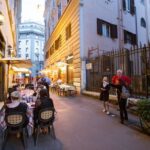
Piazza del Popolo: Meeting in a Square with a Darker Past
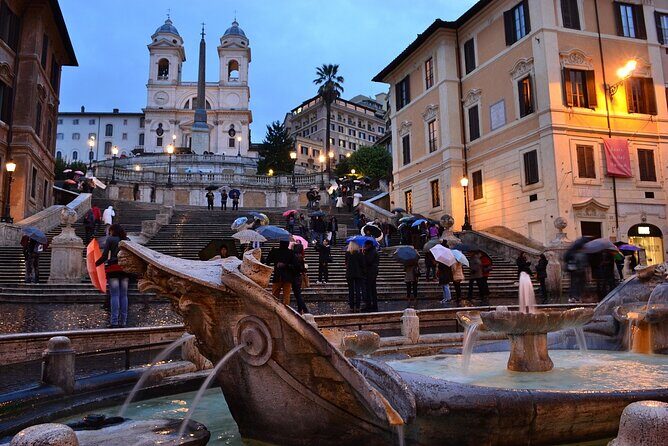
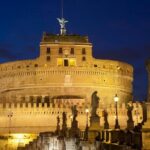
You begin in Piazza del Popolo, meeting at the Basilica Parrocchiale di Santa Maria del Popolo (Piazza del Popolo, 12). This is one of those Rome squares that looks cheerful now, but has a heavy backstory. The square was used for public executions in the past, and it later became a lively hub for events and concerts.
Why this stop is useful on night one: it gives you a grounding point. After the initial “here we go” moment, the guide can explain the area’s role and help you understand the street patterns you’ll be seeing all week. It’s also a good place to mentally reset before the walk starts climbing toward the best viewpoints.
Time here is about 20 minutes, so you won’t get a deep history lecture. You will, though, get the kind of context that makes the next stops click.
Terrazza del Pincio at Sunset: The View You’ll Actually Remember
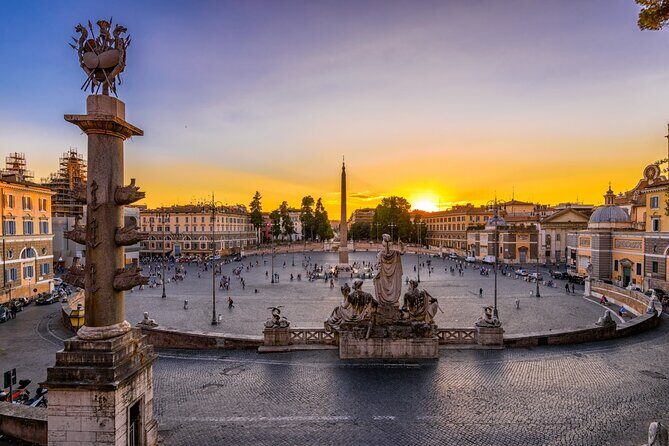
Next up is Terrazza del Pincio, often called the Pincio Terrace. This is where you slow down on purpose. The point of this stop is the sunset view: rooftops, domes, and that Rome feeling that’s hard to capture any other way.
Even if you’ve seen pictures of Rome from above, a real rooftop viewpoint changes how you perceive distances and city layers. You start recognizing landmarks you’ll see again later, and you understand how the city “spreads” rather than sitting as one isolated cluster.
This is also a smart pacing break. After moving through squares, you get a moment where the walk becomes optional for your brain. Take a few minutes to just look, not just photograph.
Again, you get about 20 minutes here, so come ready with a light jacket if the evening is cool. One clear tip from past guests: it can get chilly at night, so plan for it.
Spanish Steps and the Barcaccia Fountain: Bernini’s Drama in One Place
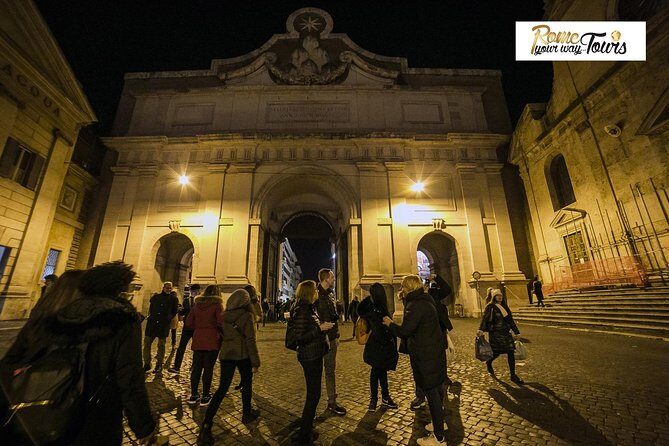
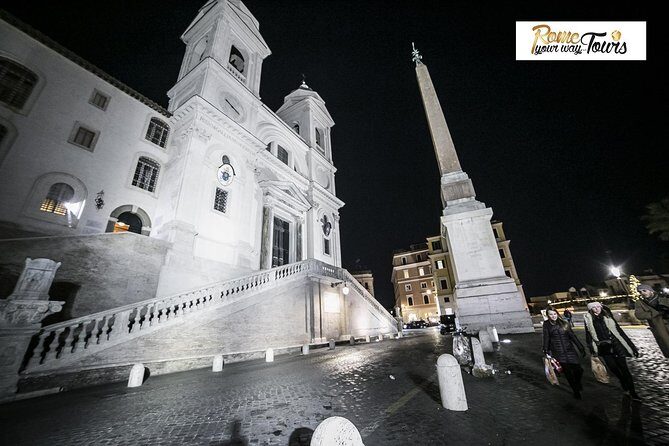
From the terrace, you head to Piazza di Spagna for the Spanish Steps and Bernini’s famous Barcaccia fountain. This is a classic Rome scene: people arriving from every direction, stone steps leading up and down like a natural stage, and the fountain adding that Baroque sense of motion.
What makes this stop more than just a photo stop is the way the guide frames it. When you understand the Barcaccia’s role and Bernini’s signature style, the area feels less like a tourist queue and more like a designed piece of city theater.
Practical thing to know: your time is about 20 minutes. That means you’ll want to decide early whether your priority is:
- pictures from the bottom of the steps, or
- walking up for your own angle
Some people end up with less time on the steps than they hoped, so I’d treat this as a quick “capture your favorite viewpoint” window, not a long stroll.
Trevi Fountain at Night: Coin Toss with Context, Not Just Crowds
Then you go to Trevi Fountain, the biggest Baroque fountain in Rome. This is where the night energy peaks for a lot of people. The fountain is so iconic that you’ll probably recognize it instantly, even before you’re fully close.
The fun part is the coin legend. The traditional story says that if you throw a coin into the fountain, you’ll be ensured a return to Rome. It’s cheesy in the best way. And when your guide explains the tradition along with the art, the moment feels personal rather than generic.
Trevi’s tricky because it can be crowded. One real advantage of coming in the evening is that the experience often feels more manageable than midday. You may also get a quick path to the fountain edges, which helps if you want photos without spending your whole time trying to squeeze.
Your stop is about 20 minutes, and that’s enough for:
- a coin toss
- a couple of angles
- and a few minutes of listening to what you’re looking at
It’s also long enough to catch the fountain lit in a way that feels theatrical, not flat.
You can also read our reviews of more evening experiences in Rome

The Pantheon Exterior (No Entry) and Piazza Navona’s Fountain Theater

After Trevi, the tour shifts to two very different Rome moods: ancient engineering and Baroque spectacle.
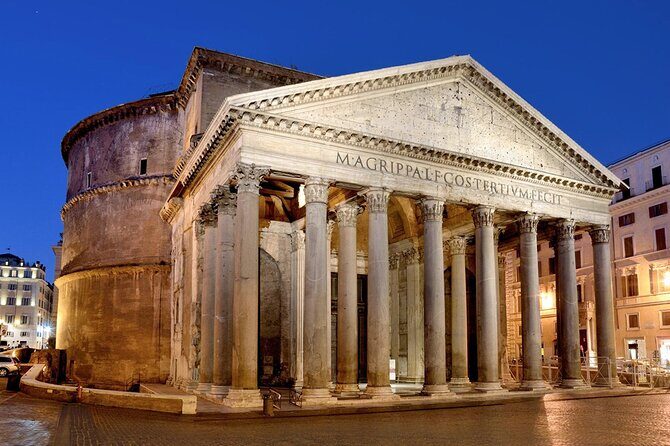
First is Piazza della Rotonda with the Pantheon from the exterior. The Pantheon is described as built in 27 BC and dedicated to all Roman gods. Even if you’re not going inside, just seeing the building’s presence in the square helps you connect what you’ve been hearing about Roman power and design.
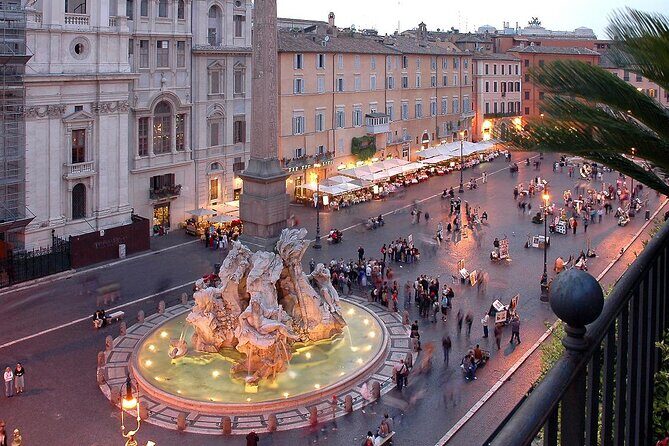
Then you head to Piazza Navona, known for its Baroque square look and multiple fountains. The centerpiece is Bernini’s Fountain of the Four Rivers. This is a very “designed for viewing” kind of place—people watch, fountains perform, and the architecture frames the scene.
A good guide helps you read the details fast. You’ll likely learn what each fountain area represents and how the square evolved into the kind of social space it is now. This stop is also about 20 minutes, so you won’t wander forever—but it’s enough to see why Navona is still one of Rome’s most photographed squares after dark.
Campo de’ Fiori After Dark: Ending Where the City Keeps Living
The final stop is Campo de’ Fiori. In the past, this square was known for races and executions. Today, it’s a busy marketplace in the morning and turns into a nightlife center after dark.
Ending here is a smart move because you’re dropped off in a lively area where it’s easy to keep going. You can grab a drink, look for dinner, or just wander streets without needing another plan. It’s also a good “last night in Rome” landing zone because the square gives you options.
The tour ends around 10:00 pm, so you’re not stuck finishing too early and feeling forced into an awkward dinner schedule.
Pacing and Photo Strategy: How to Use Those 20 Minutes Well
This tour is designed as a “see a lot, understand enough” evening. With roughly 20 minutes per stop, the pacing is tight on purpose. That’s not a flaw—it’s the math of fitting Rome’s biggest hits into 3 hours.
Here’s how I’d handle the photo moments:
- At Pincio Terrace, take in the view first, then shoot. Don’t rush.
- At the Spanish Steps, decide in advance if you want step-top photos or bottom-of-steps photos.
- At Trevi Fountain, toss the coin quickly and then spend your extra time on one angle you love.
If you want a long, unhurried “wandering” style, this isn’t that format. But if your goal is to tick off the major icons and get real context as you walk, the timing works.
Also, expect the group to move. If you lag, you may miss the next orientation point. The upside: with a small group, you can catch up fast if you keep your head up and stay aware of where the guide is standing.
Guide Energy, Headsets, and Getting the Stories Right
A walking tour lives or dies on the guide. In this case, you’ll see a range of styles, but several guides have earned strong praise for mixing clear explanations with real enthusiasm. Names that have come up include Gill, Francesca, and Carolina—all described as passionate and focused on making Roman history feel understandable, not lectured.
One important practical note: headsets are listed as included when needed. That means if you know you struggle to hear over crowd noise, bring it up early. Poor audio can ruin the experience fast, especially in squares full of chatter and footsteps.
You’ll also notice that some guides help you connect the dots between sites. For example, one memorable kind of story is about how Rome’s aqueducts feed the fountain system, with the idea that fountain water is safe to drink where indicated. Even if that’s a tip you don’t plan to use, it’s the kind of detail that makes the city feel less like a set and more like a living system.
What You Pay (and What You Don’t): Value at $42.24
At about $42.24 per person for roughly 3 hours, this tour is priced like an efficient “icon loop” with human guidance. You’re paying for:
- a professional guide
- a small group experience (max 18)
- included headsets when needed
- the benefit of not having to plan the sequence yourself
You’re not paying for:
- hotel pickup/drop-off
- food and drinks
That’s actually fine. Rome is full of excellent stops you’ll want to choose yourself. After the tour ends at Campo de’ Fiori, you can follow your appetite rather than accept what’s offered.
Is it worth it? If you’re the type who likes understanding what you’re seeing and wants an easy way to hit the big names in one evening, yes. If you already know your way around and only need photos, a self-guided night walk might cost less. But you wouldn’t get the same quick context layer without paying for the guide’s time.
Who This Tour Suits Best (and Who Should Skip It)
I’d recommend this tour if:
- you want a strong first-night Rome orientation
- you like the idea of sunset views plus major icons in one circuit
- you’re okay with short stops and moving on quickly
I’d consider skipping or changing expectations if:
- you need long time at the Spanish Steps or want to climb far and linger
- you’re expecting museum entry (this is mostly exterior/streets-and-squares)
- you’re very sensitive to audio and you might need help hearing the guide clearly
If you’re traveling solo, this can also work well. A small group evening walk can feel like a gentle introduction to a city you’re still learning.
Should You Book This Rome Evening Panoramic Walking Tour?
If your goal is to see Trevi Fountain, the Spanish Steps, the Pantheon area, and Piazza Navona all in one night, this tour is a practical choice. The sunset timing from Pincio Terrace is a real payoff, and the small-group format keeps it from feeling chaotic.
I’d book it if you’re flexible about pacing and you’re happy with about 20 minutes per stop. Bring a light jacket for cooler night air, plan your photo priorities before you get there, and you’ll get a lot out of the evening.
One last reality check: the tour depends on good weather and requires a minimum number of travelers, so keep a backup plan for your evening if you’re traveling during a rainy season or a tight schedule.