REVIEW · POMPEII
Private Awesome Pompeii Family Tour + Guide, Transport & Tickets
Book on Viator →Operated by Leisure Italy · Bookable on Viator
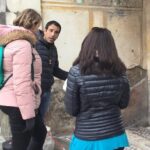
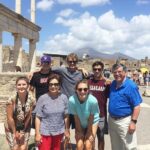
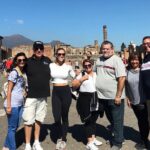
Pompeii is impressive, but it’s also easy to feel lost. This private family tour keeps things simple: you walk the main ruins with your own guide at a pace that works for kids and adults, and you get help spotting the details that most people miss. I especially like the family-friendly pace and the way the guide turns stones into real daily life.
My second favorite part is the “see it in your own way” flexibility. You’re not stuck in a big group line, and you can ask questions freely while you move from courts and temples to markets and baths. One thing to consider: Pompeii involves walking over uneven ground, so this works best if your family can handle a moderate amount of walking and sun.
Private guides who tailor the day
You get a true private setup, so your guide can slow down, repeat key points, and focus on what your children actually care about (not just what the clock says).
A Pompeii route that makes sense
The flow moves from major gates into civic life, then religion, markets, homes, and theater—so the ruins start adding up as a whole city.
Vesuvius views without the long climb
You’ll see the volcano from the bottom area for photos, without driving up to the top.
Tickets and transport included
Entry to the main archaeological area is handled, and pickup is flexible around Naples and Sorrento.
Time that feels right for families
The core site portion runs about two hours, with shorter stops that keep energy up.
In This Review
- Pompeii with a private family guide: the real advantage
- How long you’ll be walking (and why 4–5 hours feels right)
- Pickup around Naples and Sorrento: start the day relaxed
- Entry to the Archaeological Park of Pompeii: streets that actually make sense
- Vesuvius from the bottom: photos without the top
- Porta Marina and the city walls: get your bearings fast
- Basilica and Forum: where law, trade, and politics played out
- Apollo Temple and religious spaces: rituals you can picture
- Macellum market halls: understand what people ate and bought
- Forum Baths (Terme del Foro): daily wellness and social life
- Casa del Fauno and the Alexander Mosaic: elite living in one house
- Via dell’Abbondanza and Insula viewpoints: see daily hustle without the guesswork
- Teatro Grande and the Antiquarium di Pompei: culture and human evidence
- Price vs. value: what you’re really paying for
- Who should book this Pompeii family tour?
- Should you book Private Awesome Pompeii Family Tour + Guide, Transport & Tickets?
- FAQ
- How long is the Pompeii tour?
- What’s included in the price?
- Do you offer pickup?
- Is this tour private?
- What language is the guide?
- What should we wear or bring?
- Can I get a refund if plans change?
- Is there any fitness requirement?
Pompeii with a private family guide: the real advantage
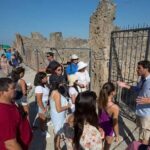
You can read guidebooks all day, but Pompeii is one of those places where you need a human to point, explain, and connect. This tour is designed for exactly that. You arrive with transport and tickets handled, then your guide leads your family through the ruins at a comfortable speed—no racing, no “watch your step” panic, and no feeling like you’re always chasing the group.
The big value here is not just comfort. It’s clarity. When you have someone explaining how Romans lived—where they shopped, where they argued cases, where they bathed, and how elite families organized their homes—Pompeii stops being a pile of ruins. It becomes a place with routines.
Family-friendly guides matter too. In the past, I’ve seen names like Fabrizio and Fabio associated with this kind of family-focused guiding, and the common thread is simple: they explain things so kids get it, without dumbing it down. If you’re traveling with children around that 8–12 range, that skill really pays off.
One more practical point: Pompeii is crowded at peak times. A private tour helps you avoid the worst pressure and keeps the day from feeling like a sprint.
How long you’ll be walking (and why 4–5 hours feels right)
Expect about 4 to 5 hours total. That time includes transportation and a steady rhythm once you’re in the park. The main stop—exploring the Archaeological Park of Pompeii—runs about 2 hours. After that, the tour keeps moving with short, focused stops around major landmarks.
This pacing can be a lifesaver if you’re traveling with kids. You don’t spend your entire day trudging from one far corner to another, and you’re not stuck only at the most famous spots. Instead, you get a guided “city tour” feel: big public buildings, daily life areas, and a look at different styles of living.
Wear walking shoes you trust on uneven ground. And if you’re traveling May through September, bring sun gear. Even if the day is cloudy, Pompeii still feels exposed. Shade comes and goes, and you’ll be glad you planned for it.
You can also read our reviews of more tours and experiences in Pompeii

Pickup around Naples and Sorrento: start the day relaxed
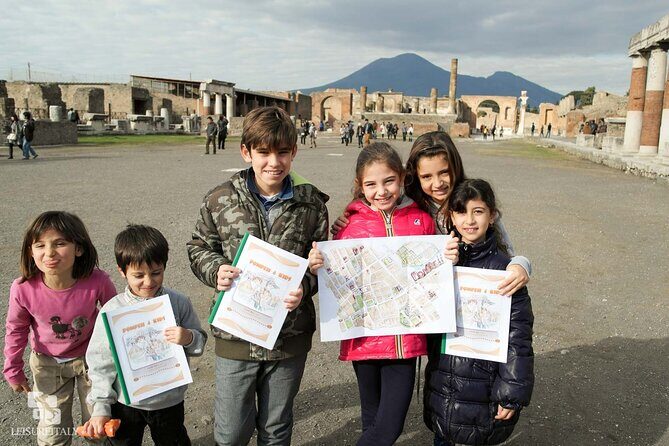
This tour offers pickup within the Naples and Sorrento area, and the meeting point is flexible. That matters more than it sounds. Pompeii isn’t just “a place you go”—it’s a day plan. If you’re staying on the coast, leaving your base smoothly can be the difference between a calm morning and a stressful scramble.
When you book, you’ll want to provide your pickup location so the provider can line it up. Also note that tickets require full participant names, which you’ll need to share up front. You’ll also receive a mobile ticket, which is convenient once you’re on site.
This is a private tour/activity, meaning only your group participates. That can help a lot with timing—especially when kids need bathroom breaks or you want to linger on a mosaic or a photo spot.
Entry to the Archaeological Park of Pompeii: streets that actually make sense
Your first big stop is the Archaeological Park of Pompeii, where you explore the city at a comfortable walking pace. The guide focuses on the parts that help you understand how the place worked: streets, homes, shops, bath houses, and public squares.
What’s especially useful is the way a private guide can adjust the conversation. Some families want more architecture and art. Others want daily life and “how did they do that?” Your guide can steer the story so the ruins feel relevant instead of random.
You’ll also get an explanation thread that helps connect everything: how Romans worked, ate, worshipped, and played before the eruption of AD 79. That kind of framing doesn’t just add interest—it makes the buildings easier to picture. Even if you’ve seen photos, Pompeii looks different when someone helps you map the function of each area.
This part is about two hours, and it sets the tone for the rest of the tour.
Vesuvius from the bottom: photos without the top
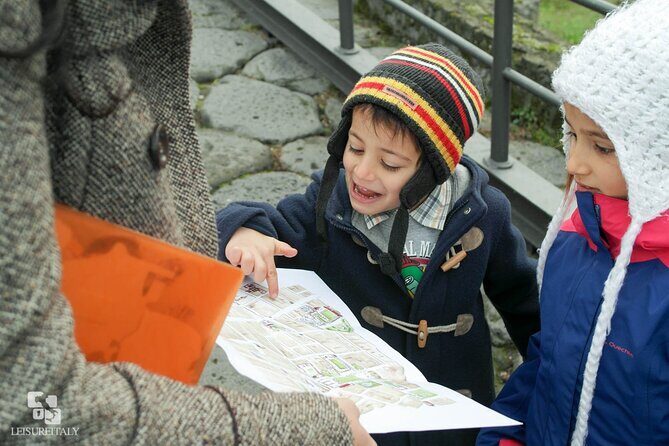
One of the tour’s special notes is that you’ll see the volcano from the bottom. You can take great pictures from Pompeii, but you’re not driving up to the top.
That’s a smart expectation to set. The “volcano viewpoint” is often where day trips either become too long or too tiring. Here, you get the payoff (views and photos) without turning the volcano into a hike.
If you’re traveling with kids, this is especially helpful. You can satisfy the curiosity about Vesuvius while keeping the rest of the day focused on Pompeii itself.
Porta Marina and the city walls: get your bearings fast
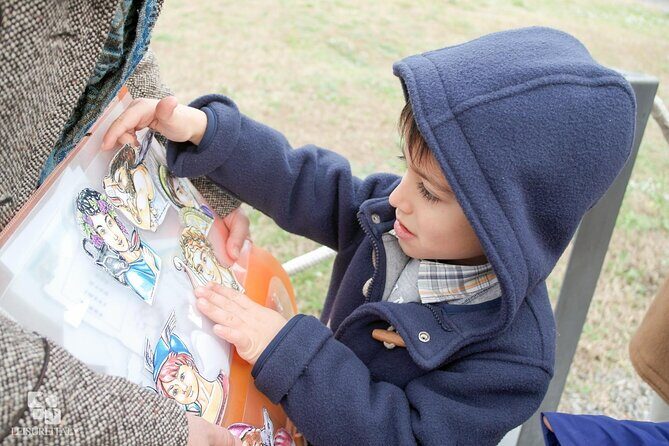
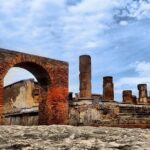
After entering the park area, you start to understand Pompeii’s layout at Porta Marina, one of the main ancient gates. Your guide explains how people would have entered the city two thousand years ago and how the gate connected with the wider port and trade world.
This is not just a history stop. It helps you orient yourself mentally. Once you know where entry points were and how the city’s defenses worked, the ruins start to feel organized instead of scattered.
You’ll also learn about the surrounding cinta muraria (the defensive walls). Even a quick explanation here matters because Pompeii’s walls are a visible clue about scale and security—how this was a city with protection, not an open village.
This stop is brief, but it’s a good “thinking anchor” for the rest of the day.
You can also read our reviews of more guided tours in Pompeii


Basilica and Forum: where law, trade, and politics played out

Next up is the civic heart of Pompeii: the Basilica and the Forum.
In the Basilica, your guide explains how this impressive hall functioned as the main center for law, business, and civic affairs. Think contracts, legal disputes, and official life taking shape in a grand interior with tall columns. Even if you’re not a “law and politics” person, this stop is valuable because it shows how social order worked.
Then you move to the Forum, described as the center where politics, religion, and commerce converged. The real benefit of a guided visit here is imagination. From a standing viewpoint, you’re guided to picture markets, public gatherings, and the constant traffic of people exchanging news and goods.
The Forum is also where the guide’s tone really matters. If you get a good family-focused guide, the explanation becomes story-like: this person would have walked here, discussed something there, and made decisions in a setting like this.
Short stops like these can still land well—because Pompeii’s major landmarks are concentrated. Your guide is using time efficiently.
Apollo Temple and religious spaces: rituals you can picture
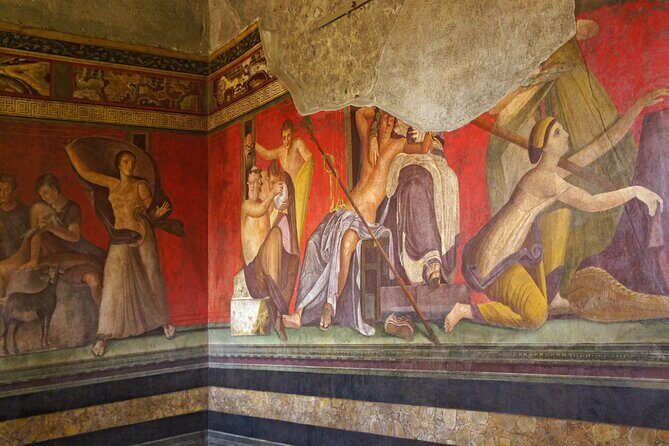
From civic life to religion, you’ll visit the Temple of Apollo. Your guide connects it to Pompeii’s sacred world and explains how religion, politics, and public rituals overlapped in Roman society.
The Temple of Apollo is a strong stop because it’s atmospheric. Your guide points out the elegant columns, altar area, and the bronze sculpture context that once helped define the complex. Even if you only see fragments, the explanation helps you picture ceremonies and processions—what it felt like to have a religious center that shaped public life.
This is another example of why a private guide is worth it. Religious sites can become “look and move on” if you’re on your own. Here, you learn what the building was for, so it becomes more meaningful than a photo backdrop.
Macellum market halls: understand what people ate and bought
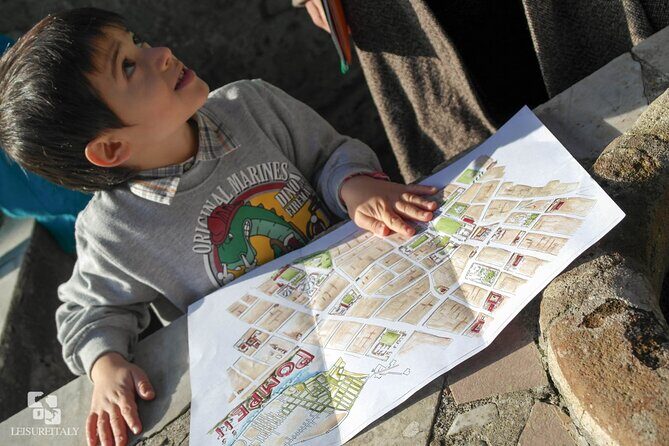
At the Macellum, you focus on Pompeii’s indoor market. Your guide explains how food and ingredients were purchased and traded—fish, meat, produce, grains, and spices. You’ll also hear about how the marketplace worked behind the scenes, including storage and counter areas.
This is one of my favorite types of stops in any ancient city: places where daily routine happened. Markets are where you learn what a community valued week to week, not just year to year.
Even if your family only spends a few minutes here, the explanation turns the room into a working space. It helps kids and adults visualize merchants, displays, and movement of goods.
If you’re the type who likes “small everyday life details,” you’ll probably get extra excited here.
Forum Baths (Terme del Foro): daily wellness and social life
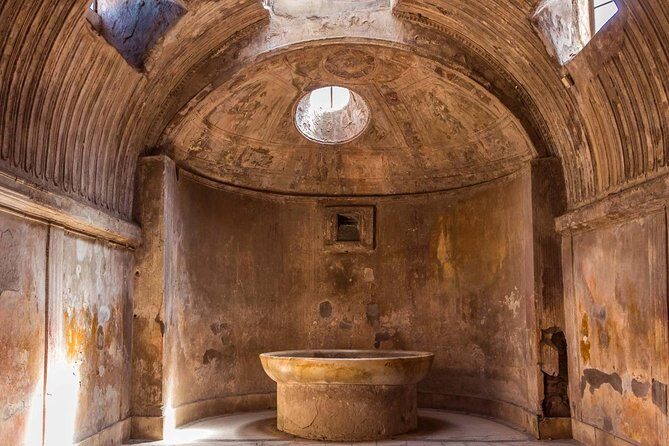
Then it’s time for the Forum Baths—one of Pompeii’s best-preserved thermal bath complexes. Your guide helps you move through heated rooms and points out intact frescoes and stucco decoration.
The key idea is that Roman bathing wasn’t only about cleanliness. It was social. This is where people gathered, discussed business, and caught up. Your guide also points out practical features like changing areas and marble basins, which makes the space feel real.
For families, baths are also easier to love than you’d expect. Kids often remember the big “this is where people used to hang out” concept. Adults tend to appreciate the detail and preservation.
Expect this stop to be guided and targeted rather than a long museum-style lecture. It’s meant to give you the feeling of what daily routines looked like.
Casa del Fauno and the Alexander Mosaic: elite living in one house
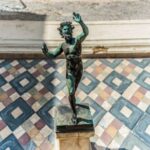
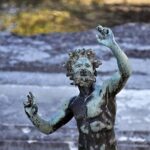
Next comes the House of the Faun—a lavish residence that highlights wealth and refined taste. Your guide introduces the home’s layout and helps you focus on features like courtyards and the famous Alexander Mosaic.
This stop is useful because it gives you a contrast. You’ve just seen the public spaces where everyone gathered. Now you shift to how elite families lived and hosted banquets. The guide connects art and architecture to status and lifestyle.
A private guide helps here by pointing out what you should notice. Pompeii homes can be overwhelming because they’re full of rooms. With a guide, you’re guided to the key places so you don’t just wander.
If your family likes art, mosaics, and “how rich people lived,” this is a must-not-miss stop.
Via dell’Abbondanza and Insula viewpoints: see daily hustle without the guesswork
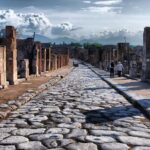
You then walk along Via dell’Abbondanza, Pompeii’s busiest commercial street. Your guide brings the avenue to life by explaining workshops, bakeries, taverns, and homes along the route. The point is to help you feel how goods moved and how people ran errands.
This street is also where infrastructure details matter. You’ll learn how Pompeii supported daily movement with things like water fountains and raised stepping stones. That kind of practical detail helps you picture the city as functional, not just scenic.
After that, you go to the Insula of the Chaste Lovers, which is a privileged viewpoint over a residential block. From above, you can see the layout of homes, courtyards, bakeries, and working spaces. It’s a different way of learning Pompeii—less about individual doorways, more about how whole neighborhoods fit together.
Views like this are especially helpful for families with mixed ages. Kids often like looking down and spotting patterns. Adults like seeing how dense and organized the city really was.
Teatro Grande and the Antiquarium di Pompei: culture and human evidence
Your tour wraps with two stops that give Pompeii its emotional and cultural weight.
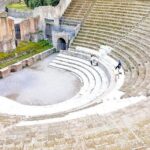
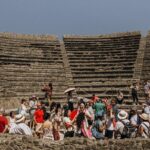
At the Grand Theatre (Teatro Grande), your guide leads you into an open-air space where comedies, tragedies, and political performances once entertained thousands. You can sit on the original stone tiers and imagine how actors’ voices traveled across the bowl of the theater. You also get views of the stage area and surrounding ruins, which helps you picture crowd scale.
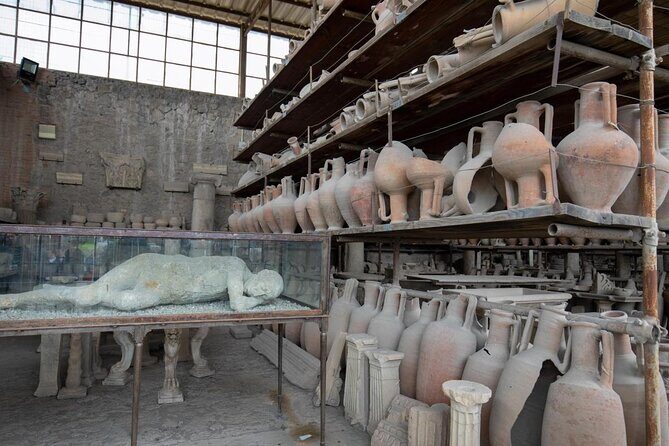
Then you head to the Antiquarium di Pompei, where the guide helps connect ruins to artifacts that once belonged to everyday spaces—statues, frescoes, daily objects, and powerful casts of victims. This exhibit is the bridge between “ruins you walk through” and “people who lived here.”
The benefit of the Antiquarium stop is emotional context. Pompeii can feel like a puzzle until you see artifacts and human evidence presented with care.
Short as it is in the day plan, it can shift how you remember the site once you’re back outside.
Price vs. value: what you’re really paying for
The price is $457.02 per person for a 4 to 5 hour private tour that includes a guide, transport, and Pompeii entry tickets. On paper, private tours in Italy can feel steep, especially if you compare them to a basic bus ticket.
But here’s the value logic: you’re paying for time, not just transportation. Pompeii is large, and doing it well takes guidance. A private family tour reduces decision fatigue (where to go, what to look at, how long to stop), and it helps you stay flexible. That matters with kids, too—interruptions happen, and your guide can respond.
The tour also includes admission for the main archaeological area, which removes a common “surprise cost” issue. Plus, you get structured coverage—civic buildings, religious sites, markets, baths, residences, street life, theater, and an artifact connection—so you’re not spending your day only on the most famous scraps.
If your family wants a smooth day with real interpretation (and not just walking through a site), this can feel like a fair deal.
Who should book this Pompeii family tour?
This is a strong fit if you want:
- A private guide who can explain Pompeii in a way kids understand
- A route that mixes major public landmarks with everyday-life locations like markets and baths
- Pickup flexibility from Naples or Sorrento
- A day plan designed around a moderate walking level and manageable timing
It may not be ideal if your group expects a high-speed “see everything” sprint. This is about comfort and clarity, not maximum quantity of ruins.
Should you book Private Awesome Pompeii Family Tour + Guide, Transport & Tickets?
Yes—if your priority is a guided, family-friendly Pompeii that feels coherent. The best part is how the guide’s storytelling connects one stop to the next: gates to walls, law and civic spaces, religion and rituals, markets and food, baths and social life, elite homes and mosaics, street commerce, and finally theater and artifacts.
I’d book it when you want the day to feel manageable for kids and adults without turning Pompeii into a stressful logistics puzzle. The included transport, tickets, and the private setup are the kind of practical comfort that actually pays off once you’re standing in the ruins.
If you’re the type who learns by listening, asking questions, and getting pointed to the details that matter, this tour is a very good match.
FAQ
How long is the Pompeii tour?
The experience lasts about 4 to 5 hours.
What’s included in the price?
The tour includes a private guide, transport, Pompeii admission tickets (for the Archaeological Park of Pompeii), and a mobile ticket.
Do you offer pickup?
Yes. Pickup is flexible anywhere within the Naples and Sorrento area. You’ll need to specify your pickup place.
Is this tour private?
Yes. It’s private, so only your group participates.
What language is the guide?
The tour is offered in English.
What should we wear or bring?
Wear walking shoes. From May to September, bring sun gear.
Can I get a refund if plans change?
Free cancellation is available. You can cancel up to 24 hours in advance for a full refund.
Is there any fitness requirement?
The tour recommends a moderate physical fitness level because you’ll be walking through the site.