REVIEW · TREVI FOUNTAIN TOURS
Piazza Navona and Trevi District Underground Pass with Audioguide
Book on Viator →Operated by TOURISTATION · Bookable on Viator
Rome’s second level is real.
This pass takes you under Piazza Navona and into the underground maze tied to the Trevi Fountain area, with audioguides that help you make sense of what you’re seeing. You get two separate underground sites, each timed, each designed so you can walk at your own pace while hearing the story behind the stones.
What I like most is the pairing: the Stadio di Domiziano beneath Navona and the Vicus Caprarius water complex are totally different kinds of Roman engineering. I also like that this is a mostly indoor plan, so it works well on hot days or rainy days when you still want something memorable.
One thing to consider: this is not a guided tour. If you need hand-holding, or if tight passages make you uncomfortable, you may want to think twice.
In This Review
- Key things to know before you go
- How the Trevi District Underground Pass Works (Reserved Entry + Audioguides)
- Stadio di Domiziano Under Piazza Navona: Masonry Stadium to Certamen Iovi
- Vicus Caprarius, the City of Water: The Aqueduct Find Beneath a Cinema
- Timing, Check-In Lines, and the Real-World Walk Between Halves
- Audioguides in English: How to Make the Audio Part Work
- Rain-Proof Rome: Why Underground Visits Are a Smart Plan
- Is It Worth $54.07? Value for Independent Explorers
- Who This Pass Suits Best (And Who Should Skip It)
- Should You Book the Piazza Navona and Trevi District Underground Pass?
- FAQ
- How long does the Piazza Navona and Trevi District Underground Pass take?
- What time does the tour start?
- Where do I redeem my voucher?
- Is this a guided tour?
- Are audioguides available in English?
- What entrances are included?
- Are food and drinks included?
- Is hotel pickup included?
- Can I cancel for a full refund?
- Is the experience suitable for most people?
Key things to know before you go
- Two reserved entrances with audioguides included, so you’re not hunting ticket lines while you’re in Rome.
- Stadio di Domiziano (85–86 AD): a masonry stadium under today’s Piazza Navona area.
- Vicus Caprarius aqueduct: an underground water tank connected to the Vergine aqueduct, discovered in 1999.
- Self-guided format: you’re on the clock, but you control your pace inside each site.
- Language support: audioguides are offered in six languages, with English available.
- Layout matters: some sections involve turning back in corridors, so comfy shoes and patience help.
How the Trevi District Underground Pass Works (Reserved Entry + Audioguides)
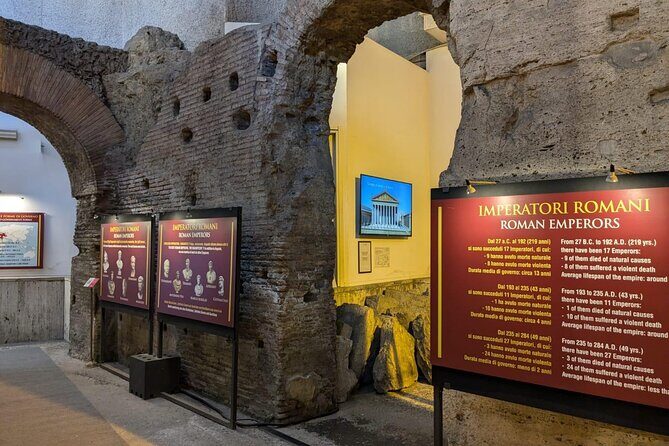
This is a timed, self-guided underground experience in Rome run by Touristation. You’re buying reserved entry tickets for two separate locations—Piazza Navona Underground and Trevi District Underground—and you’ll use an audioguide while you walk through the areas.
Your start time is 10:00 am, and the total time is listed at about 2 hours. In practice, that usually means you’ll spend roughly 40 minutes at each underground stop. The important part is that both halves are designed to be short enough to fit into a busy Rome day, but long enough that the story has time to land.
You’ll also need to redeem your voucher at the Touristation Navona office to get your tickets and audioguides set up. Since you’re not getting hotel pickup, it’s best to treat this like an appointment: get there a bit early so check-in doesn’t stress you out.
Worth knowing: the pass does not include a guided tour. That’s not a dealbreaker—Rome works great self-guided—but it does mean the audioguide is your “guide brain.” If the device works smoothly for you, you’ll love it. If you’re expecting a live guide, you’ll feel the difference.
You can also read our reviews of more tours and experiences in Rome.



Stadio di Domiziano Under Piazza Navona: Masonry Stadium to Certamen Iovi
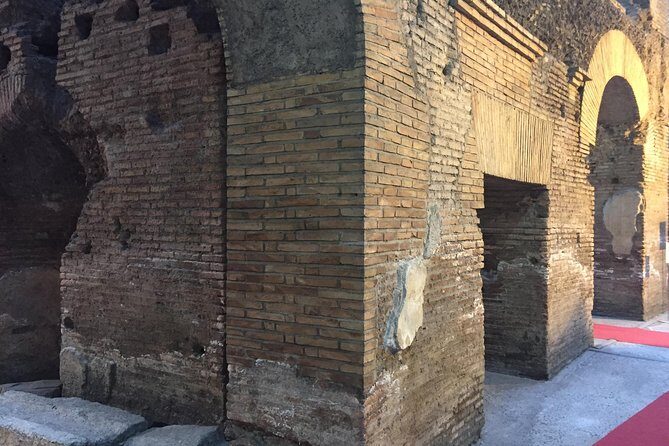
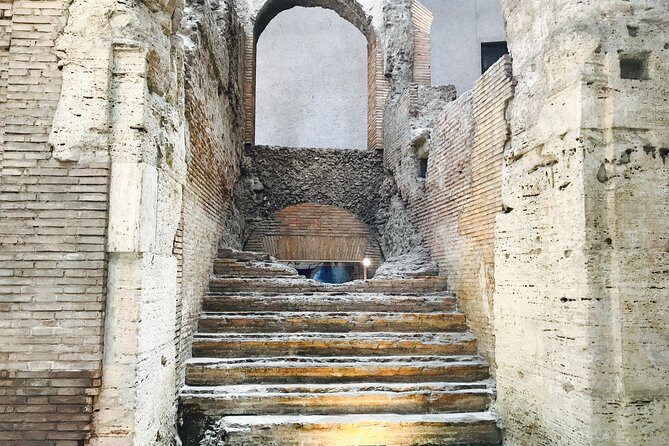
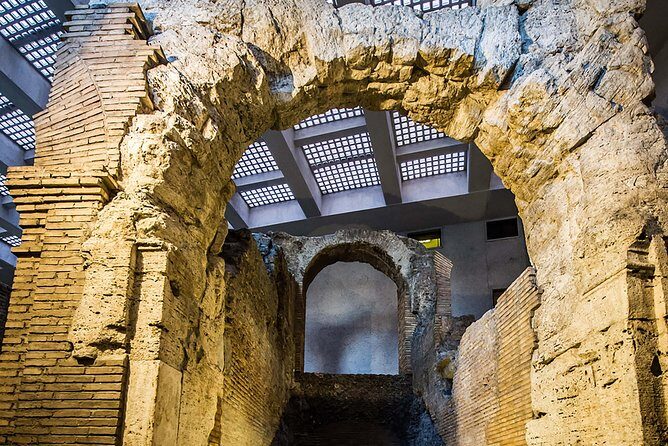
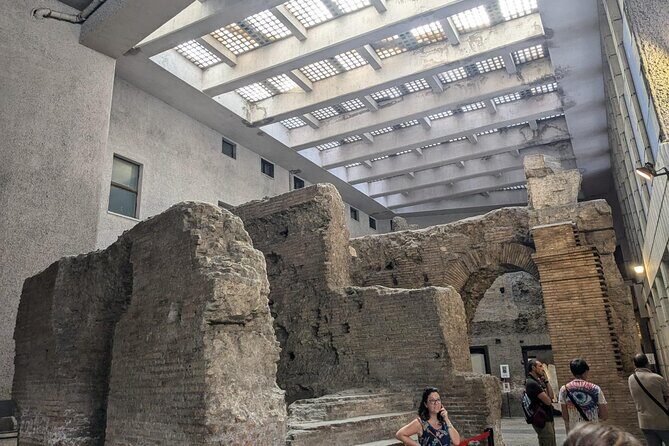
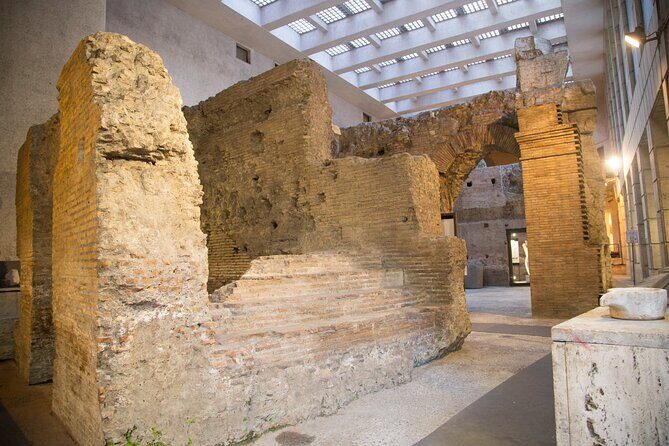
Your first stop is called Stadio di Domiziano – Navona Square Underground. It’s the kind of site that makes normal sightseeing feel thin: you’re looking at the remains of a Roman stadium structure that once occupied the Campo Marzio area.
The story here is specific and fun. This masonry stadium was built between 85 and 86 AD to celebrate a competition called the Certamen Capitolino Iovi. That contest was established to mark an inauguration in 86 AD, and the whole thing was meant to imitate the style of Olympic competitions. In other words, Romans weren’t just building buildings. They were building events to project power and prestige.
Why this stop is so good on the day: it explains why Piazza Navona sits on top of something more athletic and more institutional than a typical public square. You’ll be walking through the underground remains and hearing the context as you go, instead of trying to guess what a ruin might have been from a street-level view.
The stop lasts about 40 minutes, and the admission ticket is included. You can also expect a display-style experience: the information is built into the audioguide, and you’ll be able to linger enough to connect the visuals to the story.
Practical note: this is the part of the itinerary that tends to feel easier to follow because it’s conceptually clear—stadium, emperor-world, public competition. If you want the best odds of a smooth first impression, start strong and let the audioguide do its job from the beginning.
Vicus Caprarius, the City of Water: The Aqueduct Find Beneath a Cinema

The second stop is Vicus Caprarius – the City of Water. This one shifts from sports-meets-politics to the real Roman obsession: moving water.
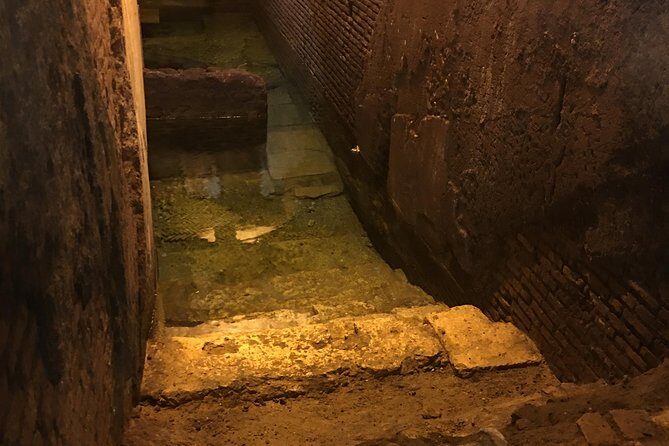
Here’s the key detail: an underground aqueduct connected to this water system was discovered in 1999 in the basement of a cinema. Inside the site, you can see a water tank linked to the Vergine aqueduct.
That’s the kind of information that makes you rethink everything you thought you knew about the area above. Rome’s streets can look like they’re just there for walking, but underneath, whole systems were engineered to keep cities functioning.
This stop is also about 40 minutes, and the admission ticket is listed as free for this section. You’ll still have the audioguide experience, but the focus is different: expect to pay attention to how the water system worked and what remains are still visible.
What to watch for: the underground paths and walkways can be a bit “choose your own route” in a physical way. You may hit dead ends and need to turn back to continue. That’s normal for older underground spaces, but it does mean this is not the best choice if you hate backtracking or if confined corridors make you uneasy.
If you’re claustrophobic, take that seriously. Underground Rome is cool, but it is still tight and enclosed.
Timing, Check-In Lines, and the Real-World Walk Between Halves
The schedule is split into two timed underground visits, and the start time is set (10:00 am). That means timing matters more than you might expect for something “just self-guided.”
You redeem your voucher at the Touristation Navona office. One thing that can catch people off guard is that check-in can involve a short queue. The good news is that once you’re inside each underground section, the experience becomes straightforward and paced by the site itself.
There’s also travel time between the two locations. One key detail: the second entrance is not beside the first. Plan for a walk of roughly 15–20 minutes between the halves. This matters if you show up late to check-in, because rain and crowds can stretch that walk.
So here’s my practical advice: treat the pass like a morning plan with one job—get to your starting point on time, then enjoy the two underground stops. Don’t stack it with a tight museum ticket right before without buffer.
And yes, crowds happen. During peak hours, that walk can feel longer than the minutes on a map.
Audioguides in English: How to Make the Audio Part Work
This pass includes audioguides and is offered in six languages, with English available. That’s a real benefit because Roman underground sites can be hard to interpret with just your eyes.
The audio does more than narrate. It tries to connect what you’re seeing—stadium design, imperial-era events, water systems—to why it mattered. For the Piazza Navona underground portion, the audio tends to feel clearer because the concept is easy to hold in your head: it was a stadium-like structure tied to major Roman competitions and public spectacle.
For the Trevi District Underground water stop, the audio experience can feel more dependent on the layout and how reliably your device plays. If the audio cuts in and out, you lose the thread. I’d rather be honest than overly optimistic here: the experience is only as good as the audio system for you on the day.
If you’re traveling with kids or anyone who needs audio at a specific volume or device type, I’d plan to double-check audio access for children when you pick up your voucher. In one case, the audioguide setup for adults didn’t automatically extend to a younger visitor, which caused a disappointment at the second stop.



Rain-Proof Rome: Why Underground Visits Are a Smart Plan
One underappreciated reason to book this kind of underground ticket is weather flexibility. Both underground stops are indoor, so they work even when street Rome is wet and miserable.
If you’re touring in shoulder season, or if you want a break from the sun after seeing the main sights near the center, this is a solid strategy. You still get something uniquely Roman—architecture you can’t see from the street—but you don’t need full outdoor endurance.
It also helps that each stop is timed and relatively short. You get a defined chunk of time to explore without turning your day into a marathon.
If you’re trying to avoid repeating the same kind of sightseeing (church, view, walk, repeat), this gives you a different sensory experience: cool air, enclosed spaces, and the feeling of being below the city’s surface layer.
Is It Worth $54.07? Value for Independent Explorers

At $54.07 per person, you’re not just buying “entry.” You’re buying reserved access to two underground sites plus audioguides.
That can be good value if:
- you want the flexibility of self-guided pacing
- you’d rather not deal with ticket friction on the day
- you like learning as you go, through a structured audio track
- you’re scheduling a short underground add-on that fits a tight itinerary
It can feel less like a bargain if:
- you were expecting a live guide explaining everything face-to-face
- you don’t care about audioguides and could just walk in independently
- you run into check-in delays and then have to rush between halves
So my rule of thumb is simple: if you’re comfortable doing Rome with audio and you’re ready to walk between entrances, the price can make sense. If you prefer a guided tour style, this is likely going to feel like an expensive bundle for what is essentially self-led entry.
Who This Pass Suits Best (And Who Should Skip It)
This pass is a good fit if you want a niche Rome experience without committing to a full-day underground program.
It suits:
- history-curious visitors who like specifics (stadiums, competitions, water engineering)
- people planning for bad weather
- families who know what they’re getting into with self-guided pacing, as long as audio access for kids is clear
- anyone who already saw the big street landmarks and wants something different
I’d be cautious if:
- you dislike enclosed spaces or you’re seriously claustrophobic
- you hate backtracking and turning around in corridor-like walkways
- you need a spoken guide to keep you oriented
- you’re arriving without time buffer, since the voucher pickup can involve a queue
Should You Book the Piazza Navona and Trevi District Underground Pass?
Book it if you want two distinct underground stories in a compact timeframe, and you’re excited by the idea of standing in the physical layers of Rome that most people never see. The Piazza Navona underground stop is especially strong for clarity and context, and the water complex is a memorable reminder that Rome was built to function, not just to impress.
Skip it if you’re expecting a guided tour, or if tight underground spaces will make you uncomfortable. Also think twice if you’re the type who gets frustrated by audio devices that don’t always behave perfectly.
If you do book it, give yourself a cushion for check-in, wear shoes you can move in, and treat the walk between halves as part of the experience plan, not an afterthought.
FAQ
How long does the Piazza Navona and Trevi District Underground Pass take?
It’s listed at about 2 hours total, with two underground stops of about 40 minutes each.
What time does the tour start?
The start time is 10:00 am.
Where do I redeem my voucher?
You should report to the Touristation Navona office to redeem your voucher.
Is this a guided tour?
No. It includes reserved entrance tickets and an audioguide, but not a guided tour.
Are audioguides available in English?
Yes. The experience is offered in English, and audioguides are available in six languages.
What entrances are included?
You get reserved entrance tickets for both Stadio di Domiziano–Navona Square Underground and Vicus Caprarius–the City of Water (Trevi District Underground).
Are food and drinks included?
No. Food and drinks are not included.
Is hotel pickup included?
No. Pick up and drop off from your hotel are not included.
Can I cancel for a full refund?
Yes. Free cancellation is available up to 24 hours in advance for a full refund.
Is the experience suitable for most people?
It’s listed as Most travelers can participate, but it is still an underground experience. If you’re sensitive to enclosed spaces, consider that carefully.