REVIEW · HISTORICAL TOURS
Golf Cart Tour Timelapse Through History
Book on Viator →Operated by Not boring tours · Bookable on Viator
Rome’s history, minus the walking.
This golf cart tour is a smart way to see a lot fast, with comfort while you move between major sites. I love that the group stays small (max 14), so the guide can actually keep things personal and answer questions, and I love the stop-and-story rhythm that turns viewpoints like the Colosseum overlook into quick, memorable lessons. One drawback: many moments are short photo stops and brief talks, so if you want long time inside churches and big museums, this is more of an overview than a deep dive.
The route strings together power, faith, and everyday life in Rome, from the area tied to Julius Caesar to a sweeping view from Terrazza del Pincio and the Pantheon’s presence. If you get a guide like Salvo, you’ll likely see the best version of this tour: lots of humor, clear explanations, and a pace that doesn’t drag. Expect to hop on and off several times and keep your eyes up for quick photo windows.
In This Review
- Key highlights
- Why a Rome golf cart “timelapse” beats walking
- From Via Santamaura to St. Peter’s street pass-by views
- Hadrian to the power of stone: mausoleum and fortress pass-bys
- Largo Argentina stop: the Julius Caesar assassination spot
- Colosseum overlook for photos and fast context
- San Pietro in Vincoli: chains, Moses, and Michelangelo
- Terrazza del Pincio: a photo view that feels like the movie trailer
- Santa Maria Sopra Minerva: St. Catherine’s grave and another Christ
- Pantheon front: a history talk in the shadow of one building
- Pass-by St. Peter’s brothers church, then Campo de’ Fiori change of scenes
- What “2 hours 50 minutes” really feels like
- Value check: $135.78 for cart comfort and a lot of narration
- Who should book this Rome history golf cart tour
- Should you book this tour?
- FAQ
- Is the tour offered in English?
- How long is the golf cart tour in Rome?
- What is the group size limit?
- Where does the tour start and end?
- What major sights do you stop at?
- Are tickets included for admissions?
- Do I get a mobile ticket?
- Can I cancel for free?
- Are service animals allowed?
- Is the meeting point near public transportation?
Key highlights
- Small-group ride (max 14) that feels guided, not crowded
- Golf cart comfort for covering real distance without the Rome stamina test
- Big landmark stops with short history talks, including Largo Argentina and the Pantheon area
- Top viewpoints for photos, like Terrazza del Pincio
- Art moments in churches, including Michelangelo’s work at San Pietro in Vincoli and Santa Maria Sopra Minerva
- A guide who can make history fun, with Salvo named by many satisfied guests
Why a Rome golf cart “timelapse” beats walking
Rome can be a feast for the eyes and a grind on your calves. A golf cart tour solves that. In under three hours, you cover ground you’d otherwise spend half a day trying to stitch together by foot or taxi, and you still get guided context instead of just staring at monuments.
The “timelapse” idea works because the route doesn’t treat Rome as one era. You pass from imperial Rome to ancient politics, then jump into Christian Rome, and end in a modern street-life setting. It’s a great fit if you’re visiting for the first time and want your bearings fast.
It also helps that this is offered in English, and the tour runs with a small group. That matters when the guide is keeping the story moving but still trying to connect it to what you’re seeing in front of you.
You can also read our reviews of more historical tours in Rome

From Via Santamaura to St. Peter’s street pass-by views
The tour starts at Via Santamaura, 12, 00192 Roma, and ends at Piazza Campo de’ Fiori. Starting near the center means you don’t waste time with long travel breaks before the city starts “talking.”
Early on, you’ll get a pass-by of the street that leads to St. Peter’s Basilica. Even if you’re not stopping right at the doors, this kind of orientation is useful. It helps you understand where the Vatican area sits relative to the rest of Rome’s layers.
This portion is mostly about momentum and context. The cart keeps you moving, and the guide can frame what you’ll see later: the shift from ancient Rome’s power structures to the massive religious presence that reshaped the city.
Hadrian to the power of stone: mausoleum and fortress pass-bys
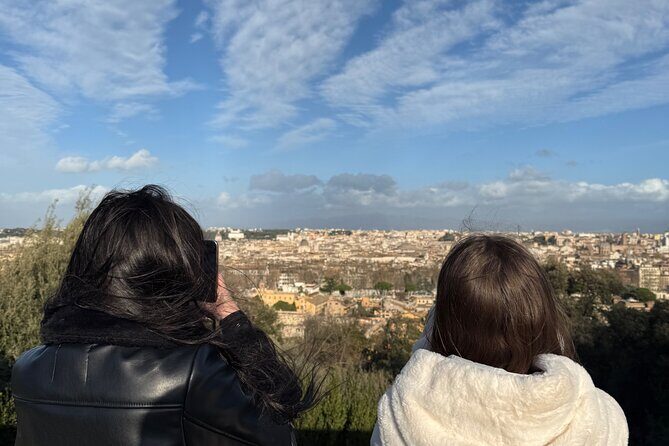
Next up, you’ll pass by Hadrian’s mausoleum and later the fortress of popes. This is one of those Roman stretches where the architecture tells a story even before the guide does.
Hadrian’s mausoleum connects Rome’s imperial era to later uses, and the fortress of popes shows how later rulers reused serious stone. The cart ride helps here, because you can look up and around instead of focusing only on foot traffic.
If you’re the kind of visitor who likes “why that building looks like that,” these pass-bys are where the tour starts clicking. You’re not just collecting photos; you’re seeing the city’s habit of reusing, repurposing, and rewriting.
Largo Argentina stop: the Julius Caesar assassination spot
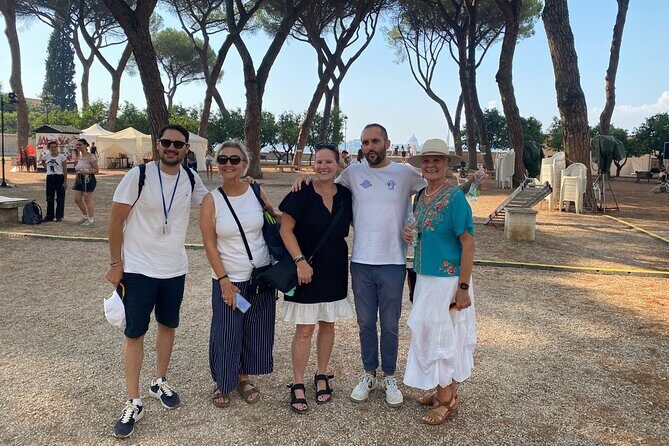
Stop 1 is at Area Sacra di Largo Argentina. You’ll see the area tied to Julius Caesar’s assassination, and the stop is short (about 5 minutes) with free admission.
This is a strong “anchor” stop because it gives you a high-stakes political moment right in the middle of modern Rome. You’re not just looking at ruins. You’re looking at a place that mattered in real history, where the outcome changed everything that followed.
A good guide will keep this quick but focused: who was involved, why this spot is remembered, and how Rome’s political drama fed into the empire’s later shape. With the cart pace, you won’t get stuck here all day, which is exactly the point of the tour.
Colosseum overlook for photos and fast context
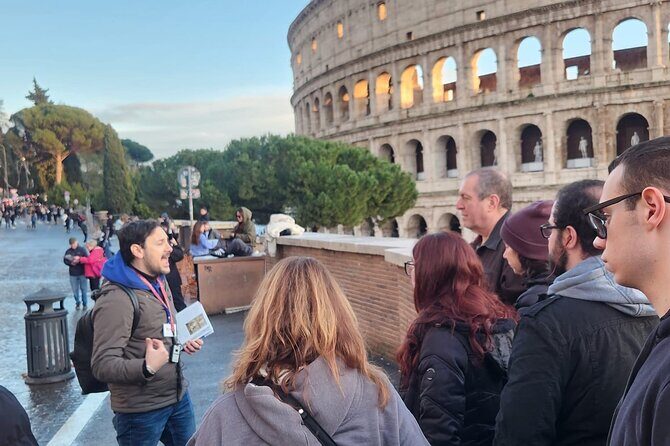
Stop 2 is the Colosseum, but not as a long entry-and-explore visit. You’ll overlook the Colosseum for photos and hear a quick history of the site. The stop is about 10 minutes, and admission is not included.
That means you should treat this as a viewpoint stop. You’ll get the big-picture story and a satisfying photo angle, but you’re not replacing a full Colosseum visit with tickets and timed entry.
There’s sometimes a coffee pause here too. That’s not something to plan around as a guarantee, but the option fits the rhythm of the tour: you move, you learn, you reset. If you’re visiting in busy months, having the cart manage the timing can feel like a stress reducer.






San Pietro in Vincoli: chains, Moses, and Michelangelo
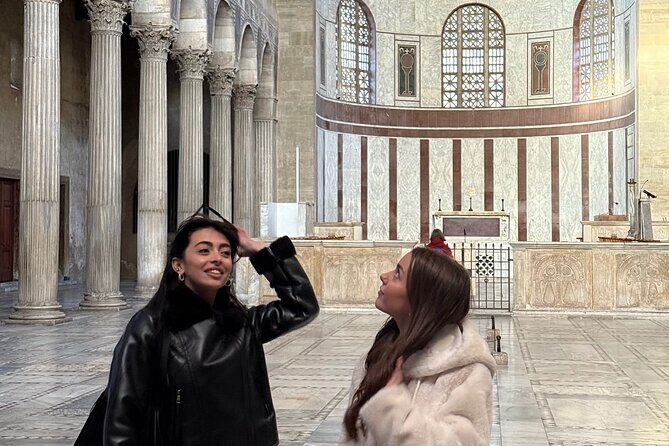
Stop 3 takes you to San Pietro in Vincoli. You’ll see Saint Peter’s chains and the Moses statue by Michaelangelo/Michelangelo, with free admission and about 10 minutes on site.
This stop is a favorite style of Rome highlight for people who like art and symbolism, not just monuments. Saint Peter’s chains point to deep religious tradition, while Michelangelo’s Moses brings a major Renaissance personality into the mix.
What makes this stop work on a short guided route is that it’s specific. You’re not wandering a huge space searching for meaning. You get two named focal points, and the guide connects them to why they matter.
Terrazza del Pincio: a photo view that feels like the movie trailer
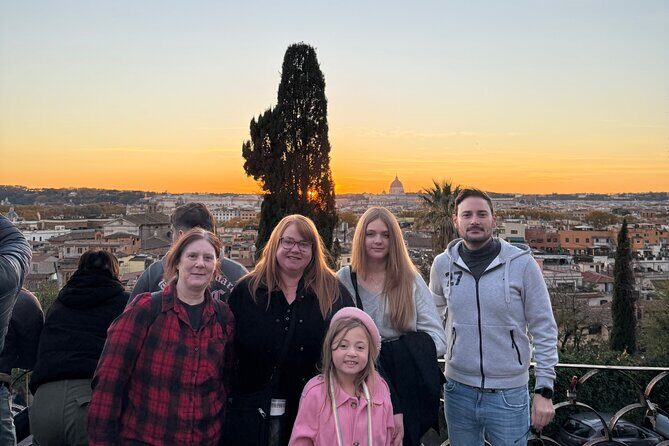
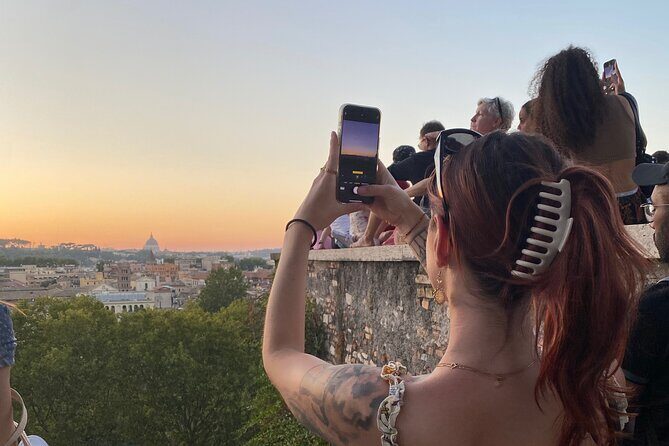
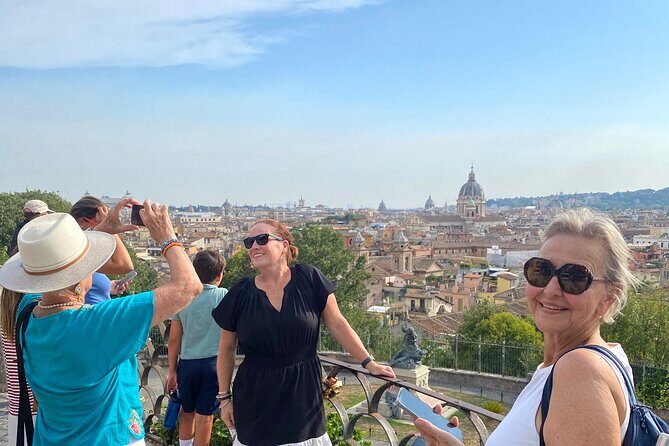
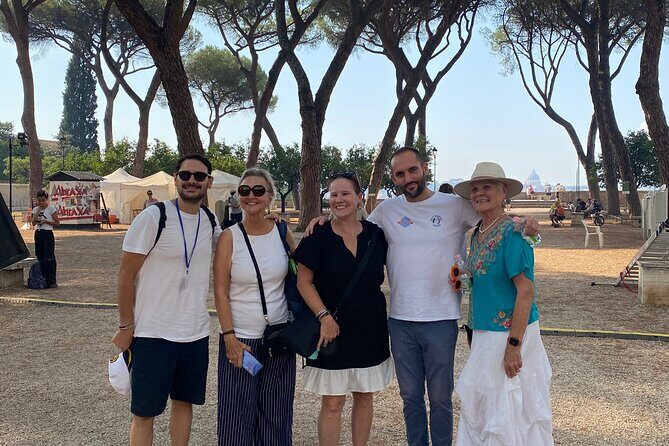
Stop 4 is Terrazza del Pincio. This is where the tour earns its “wow” moments, with about 10 minutes and free admission.
You’ll get a breathtaking view of Rome for photos. It’s the kind of panoramic pause that makes everything you’ve just seen feel real and connected. From this height, Rome stops looking like separate sights and starts looking like one long story.
If you like taking photos but hate rushing through the “best angles,” this stop hits the sweet spot. Ten minutes is enough to grab photos and breathe without chewing up time that’s needed for the next church-and-ruins moments.
Santa Maria Sopra Minerva: St. Catherine’s grave and another Christ
Stop 5 is Chiesa Di Santa Maria Sopra Minerva. You’ll see Saint Catherine’s grave and another Michelangelo statue of Christ. The stop is about 10 minutes with free admission.
This is one of those places where a short guided stop can be more satisfying than a long self-paced visit. The guide can point out what you should look for, and the “why” behind it tends to land fast when you’re given a couple clear anchors.
If you’re visiting churches and want more than just architecture, this stop delivers. It mixes devotion, famous names, and recognizable art style in a timeframe that keeps the day from feeling like a nonstop checklist.
Pantheon front: a history talk in the shadow of one building
Stop 6 is the Pantheon. You’ll get a history talk about the Pantheon standing in front of it, with about 10 minutes and free admission.
You’re not waiting in a line for a full museum-style experience here. Instead, you’re getting context while the building does the heavy lifting. The Pantheon’s scale and presence are hard to explain without seeing it, and the guide’s job is to turn what you see into a story you can remember.
This is also a practical stop in the tour flow. It’s quick, centered, and visually obvious, which makes it ideal for travelers who want big Rome moments without committing to a full-ticket agenda for every site.
Pass-by St. Peter’s brothers church, then Campo de’ Fiori change of scenes
You’ll have a pass-by of St. Peter’s brothers church, then you’ll reach Stop 7: Campo de’ Fiori. Campo de’ Fiori is about 10 minutes with free admission.
Here, you’ll see the modern fruit marketplace area that was once an execution site. That shift—daily market energy on top of brutal history—is exactly what makes Rome feel like Rome. You can’t fully process the contradiction until you’re standing where the city keeps layering new uses on top of old events.
The cart helps you get there smoothly, and the guide’s framing helps you read what you’re seeing. Even if you don’t linger, the stop gives the day an ending note: Rome is not just ruins and views. It’s lived-in history.
What “2 hours 50 minutes” really feels like
This tour moves. It’s built around quick stops: most are about 10 minutes, with Largo Argentina closer to 5. You get a lot of “see it and learn it” in a short window, but you’re not designed to spend long periods deep inside each site.
That can be a good thing. If you only have one day, a short guided overview can save you from wandering without a plan. It also gives you a sense of what you’ll want to revisit later with tickets and time.
The tradeoff is that you might finish the tour wanting more time at one or two stops, especially the ones tied to major art or major monuments. Plan for that: treat this as your fast first read of Rome, then return on your own to the places that hit hardest.
Value check: $135.78 for cart comfort and a lot of narration
The price is $135.78 per person for about 2 hours 50 minutes. On its face, that’s not cheap. But the value comes from the combination: golf cart transportation, a small group (max 14), English narration, and a route that strings together multiple top-tier sights.
A walking approach means you’d have to cover significant distance in heat, rain, or crowds, and you’d likely spend mental energy figuring out what order to do things in. A cart tour turns that effort into paid guidance, and that can be worth it, especially if you’re not trying to build a day around logistics.
You also get a “high density” itinerary. Instead of choosing one or two major sites, you get a broader sweep across ancient politics, imperial storytelling, Renaissance art, and iconic architecture.
Who should book this Rome history golf cart tour
This is a great choice if you:
- Want a history-forward route without planning every step
- Are a first-time Rome visitor who needs orientation fast
- Prefer less walking but still want guided context
- Like when a guide makes stories move, not just recites dates
It may not be ideal if you:
- Want long time inside the biggest sights (this is mostly viewpoint and short stop learning)
- Need deep, quiet museum pacing
- Are the type who doesn’t enjoy frequent short transitions
In the positive comments I’ve seen about this experience, one guide name comes up again and again: Salvo. The theme is humor plus lots of knowledge, delivered in a way that keeps you paying attention. If your guide brings that energy, the whole day feels lighter.
Should you book this tour?
If your goal is to get a guided “Rome timeline” with minimal stress, I think this is a strong yes. The route is packed with major landmarks, you get excellent photo opportunities, and the small group format makes the experience feel more like a guided stroll (just faster) than a cattle-car rush.
If your goal is deep entry tickets, long museum time, or a very slow pace, then you might pair this with separate visits to the sites that matter most to you. Use this tour as your compass, not your final destination.
FAQ
Is the tour offered in English?
Yes. The experience is offered in English.
How long is the golf cart tour in Rome?
It lasts about 2 hours 50 minutes.
What is the group size limit?
The tour has a maximum of 14 travelers.
Where does the tour start and end?
It starts at Via Santamaura, 12, 00192 Roma RM and ends at Piazza Campo de’ Fiori, 00186 Roma RM.
What major sights do you stop at?
You’ll stop at Area Sacra di Largo Argentina, Colosseum (overlook), San Pietro in Vincoli, Terrazza del Pincio, Chiesa Di Santa Maria Sopra Minerva, Pantheon, and Campo de’ Fiori. You’ll also pass by the street leading to St. Peter’s Basilica, Hadrian’s mausoleum, the fortress of popes, and St. Peter’s brothers church.
Are tickets included for admissions?
Admission is not included for the Colosseum. The other listed stops show free admission tickets.
Do I get a mobile ticket?
Yes. The tour includes a mobile ticket.
Can I cancel for free?
Yes. You can cancel for a full refund if you cancel at least 24 hours before the experience’s start time.
Are service animals allowed?
Yes. Service animals are allowed.
Is the meeting point near public transportation?
Yes. The meeting point is near public transportation.