REVIEW · POMPEI CAMPANIA
Pompeii: Virtual Museum ticket
Book on GetYourGuide →Operated by TOURISTATION · Bookable on GetYourGuide
Pompeii is one of those places you think you know. Then this 3D virtual museum puts you in the streets and key buildings just before the 79 AD eruption. What I like most is how it blends everyday life moments with animated reconstructions, and how you can follow a path that sets you up to understand what you’ll see later at the archaeological site.
Two standout wins: the animated Forum, baths, and amphitheater views (including from above), and the way the experience builds to the eruption sequence at the end. One thing to consider: it’s not a guided tour or an audio guide, so if you want someone narrating the story step-by-step, you may find you have to read at your own pace.
In This Review
- Key Highlights You’ll Notice Right Away
- Pompeii Before the Eruption: What the Virtual Museum Does Best
- Your Ticket Includes More Than a Screen (and It’s Practical)
- What You’ll See in 3D: Forum, Baths, Amphitheater, and Daily Life
- The Eruption Finale: How It Makes the Disaster Feel Real
- Adding the Pompeii Archaeological Site: Worth the Optional Entry?
- Practical Stuff You Should Know Before You Go
- Meeting point and start
- Timing and duration
- Rules inside
- Price and Value: Is the $14 Pompeii Virtual Museum Ticket a Good Deal?
- Who Should Book This (and Who Might Prefer Something Else)
- Should You Book the Pompeii Virtual Museum Ticket?
- FAQ
- How long does the Pompeii Virtual Museum experience take?
- Where do I meet for this activity?
- Is the Pompeii archaeological area ticket included?
- Do I get a guide or audio guide?
- Is photography allowed inside?
- Are food and drinks included?
- Are pets allowed?
Key Highlights You’ll Notice Right Away
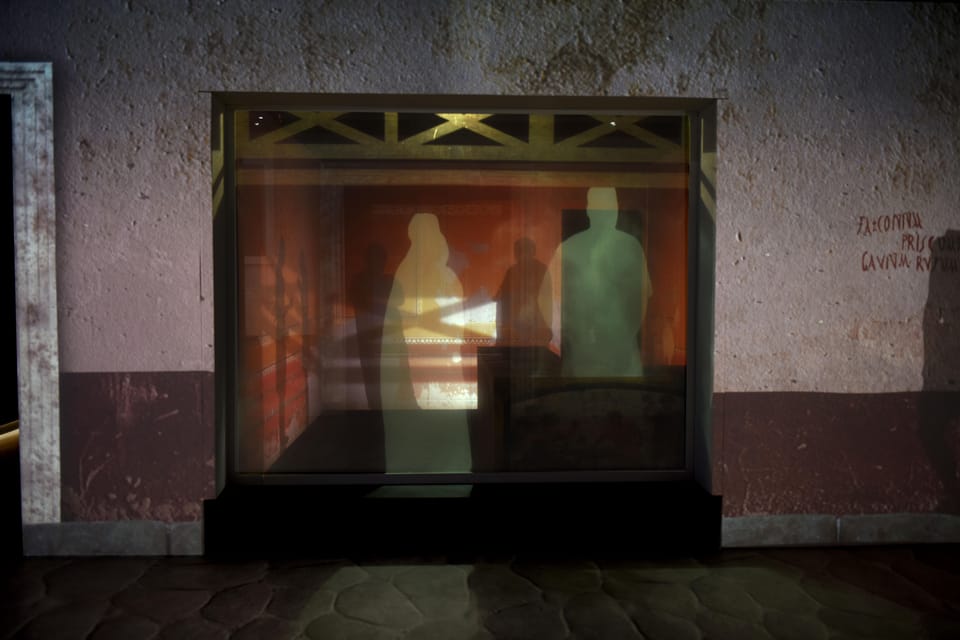
- Life in Pompeii as scenes, not just stone walls
- 3D reconstructions of major sites like the Forum, baths, and amphitheater
- Animated viewpoints from above, which makes layouts easier to understand
- A built-in eruption finale that connects the dots between city and catastrophe
- Optional add-on entry to the Pompeii archaeological area (skip the ticket line for that portion)
Pompeii Before the Eruption: What the Virtual Museum Does Best
This ticket is designed to make you feel the city right before it stops existing. You explore a reconstructed slice of Pompeii and then watch the story shift toward the eruption that ended the city—and turned it into an archaeological time capsule.
I like the pacing idea here: you start with the “everyday” Pompeii stuff—houses, daily routines, and public life—then the final section brings you to the eruption of Vesuvius. That order matters. It’s easier to understand the ruins later when your brain already has a Pompeii “map” of what used to be there.
The experience is also described as giving you a role in the scenes—almost like you’re walking through daily life. If you’re the type who enjoys visual, spatial learning, you’ll likely get more out of it than someone who only wants facts on a screen.
You can also read our reviews of more tours and experiences in Pompei Campania.



Your Ticket Includes More Than a Screen (and It’s Practical)
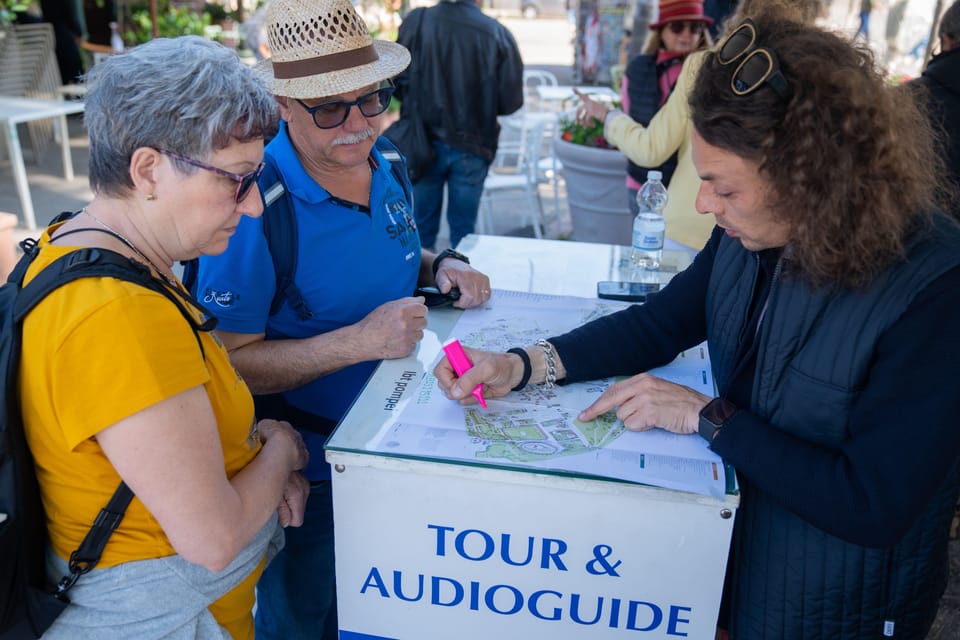
You’re not just paying for a one-off video. Your ticket includes a reserved entry plus a paper city map, which is useful if you plan to connect what you saw virtually with what you’ll see in the real ruins later. There’s also assistance at the Touristation Office, and free Wi‑Fi, which helps if you want to refresh details or check opening timing for the archaeological add-on.
The “skip the line” part is important too—but only if you select the optional entry to the Pompeii archaeological area. When you’re standing at the real site, shaving off time matters, because Pompeii can turn into a hurry-up-and-queue situation depending on the day.
And if you’re traveling with luggage chaos: the activity has rules about no luggage or large bags inside, so plan to travel light for the virtual portion.
What You’ll See in 3D: Forum, Baths, Amphitheater, and Daily Life

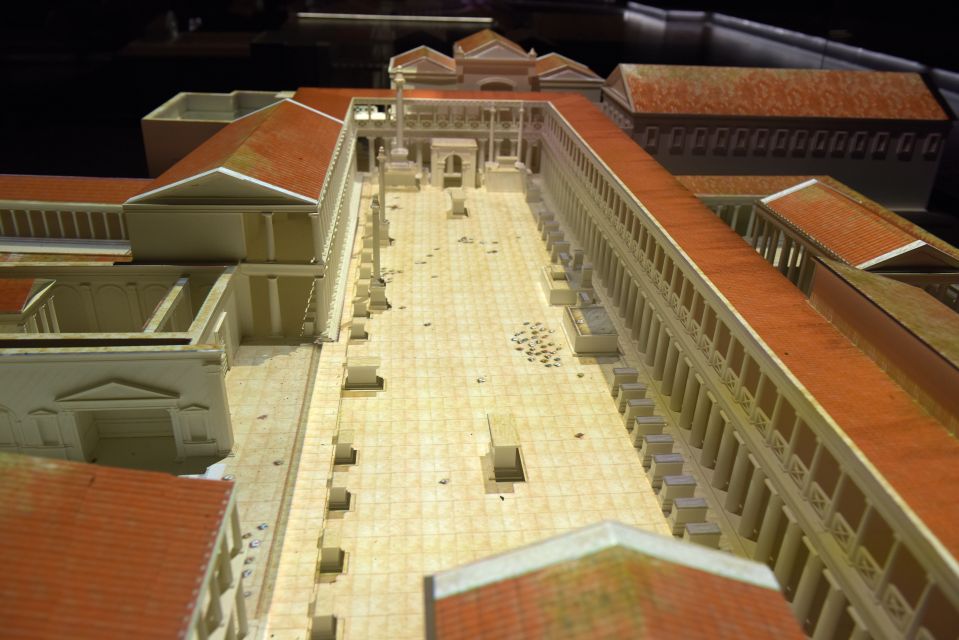
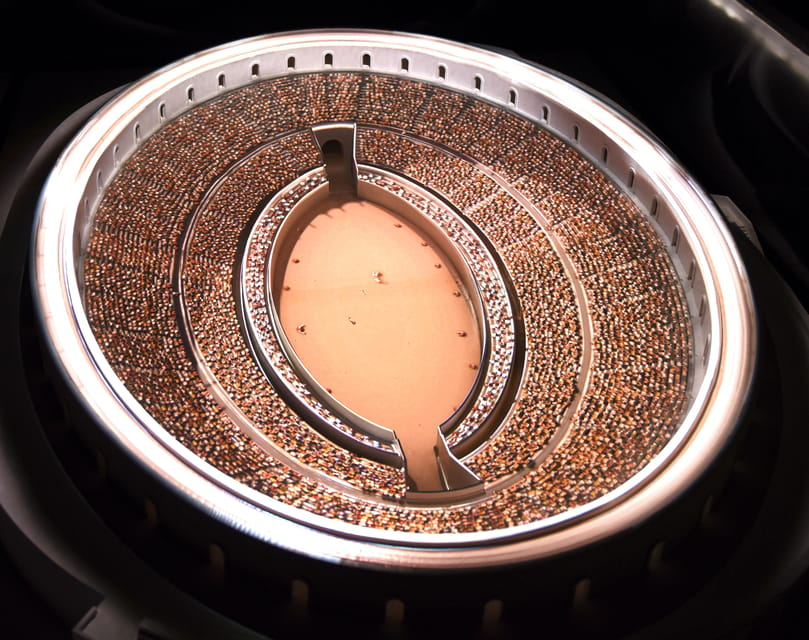
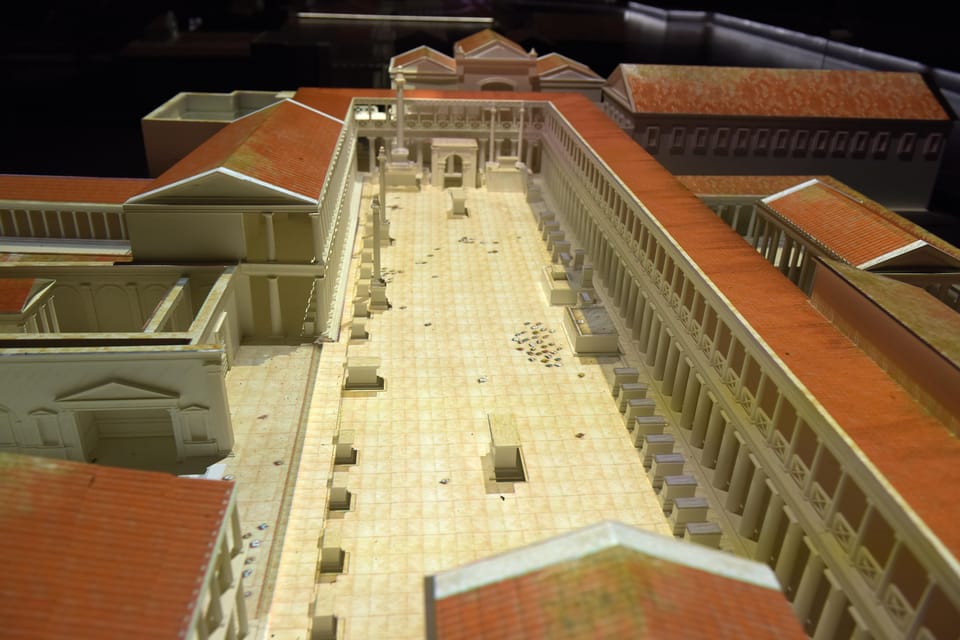
This is where the experience earns its keep. You’ll spend time in reconstructions of key parts of Pompeii, including the Forum, the baths, and the Amphitheater. The best part isn’t only that these structures are recognizable—it’s that they’re shown through animated reconstructions, with views that help you understand scale and layout.
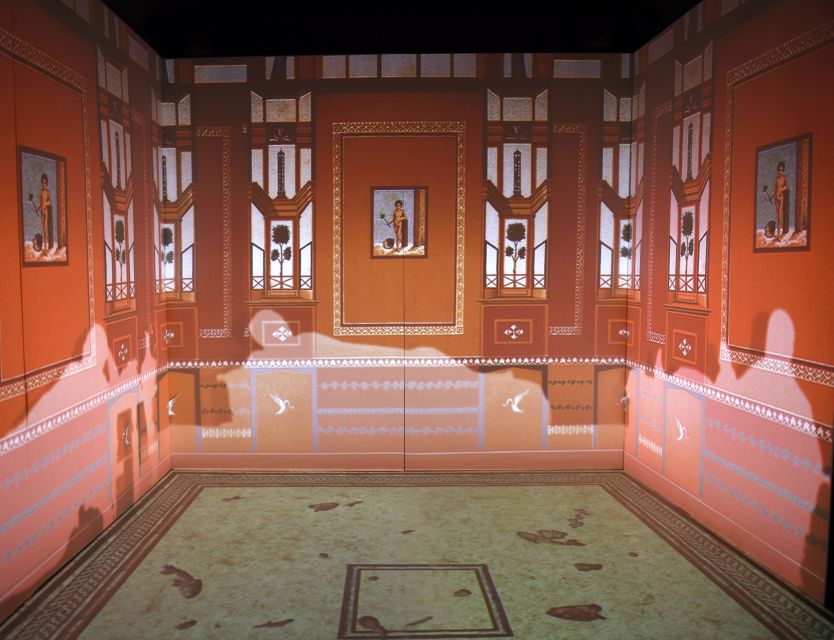
You also get the “people” angle. The experience is presented as a chance to see Pompeii as a city where people lived, loved, fought, and feasted. That may sound like marketing, but the practical meaning is clear: it helps you picture how spaces were used, not just what they looked like after the fact.
There are also scenes described in the experience narrative, including strolling through streets, stopping by a Roman banquet, and seeing the Lupanar (a notorious building in Pompeii). If you’re sensitive to mature or adult content themes, just note that the experience includes that subject matter as part of the reconstructed city life.
The Eruption Finale: How It Makes the Disaster Feel Real
Most people know Pompeii because of Vesuvius. The virtual museum’s job is to connect that headline to the city you just learned.
The experience ends with the spectacle of the terrible eruption of Vesuvius, framed as both the end of the city and the reason Pompeii is still around for you to visit centuries later. That approach is smart for first-timers. Instead of treating the eruption like a random “ending video,” it lands after you’ve mentally mapped parts of the city.
One of the most praised parts of the experience is exactly this “connection” effect: a French-language mediator described the eruption from the surrounding geography and helped make the sequence feel concrete and understandable. You don’t get the same clarity if you only jump straight to the ruins without any mental scaffolding.
Adding the Pompeii Archaeological Site: Worth the Optional Entry?
If you’re able to spare time, the best value move is pairing the virtual museum with the real Pompeii archaeological area. The virtual piece gives you a reconstruction of famous spaces in 3D, then the add-on gets you out among the actual remains so you can match shape to memory.
The key benefit here is recognition. When you’re standing at the real site, it’s easier to understand where you are when you already saw a reconstructed Forum or a baths layout. That’s how you avoid the common “I’m here, but I’m not sure what I’m looking at” feeling.
The drawback is also practical: if you’re expecting a guided tour at the archaeological site, this ticket doesn’t include that. You’re not getting an included guide or audio guide, so you’ll need to be comfortable exploring on your own and using what you learned in the virtual museum.
Also, one notable “not included” detail: Villa dei Misteri isn’t included with this add-on. That doesn’t mean you can’t find ways to see it separately, but it’s good to know what the included experience won’t cover.






Practical Stuff You Should Know Before You Go
Meeting point and start
You meet at the Office called IBT Center/Touristation, next to Chalet Donna Lucia. Plan to arrive with enough time to check in and settle before you start the virtual portion.
Timing and duration
The experience is listed as 30 minutes to 4 hours, depending on starting times and how you move through it. If you like to pause, read, and replay certain sections, you’ll naturally sit longer.
Rules inside
A few clear restrictions matter for comfort:
- No pets (note: small dogs are permitted inside the archaeological area add-on, but must be leashed and carried when inside buildings)
- No food or drinks
- No luggage or large bags
- No photography inside
If you rely on photos to learn later, this is a limitation. I’d treat the virtual museum as a memory-building experience instead of a “collect images” experience.
Price and Value: Is the $14 Pompeii Virtual Museum Ticket a Good Deal?
At about $14 per person, you’re buying a structured way to see major Pompeian spaces in reconstruction form. The value equation gets even better if you plan to add the real-site entry, because the virtual experience helps you interpret what you’ll later see in stone.
Here’s the balanced take: some people will expect a full guided storytelling experience. But your ticket doesn’t include a guided tour or an audio guide. That can be a deal-breaker if you want a lecturer-style walk-through. On the other hand, if you enjoy exploring on your own at your pace—and you like visual reconstructions—this price can feel quite reasonable.
One detail that supports the value: your ticket includes reserved entry, a paper map, and assistance at the Touristation Office. Those small supports reduce friction, which matters when you’re traveling.
Who Should Book This (and Who Might Prefer Something Else)
This works best for you if:
- You’re a Pompeii first-timer and want a clean starting point before you step into the ruins.
- You learn well through visuals and want reconstructions of the Forum, baths, and amphitheater.
- You like the idea of ending with a clear “Vesuvius moment” after seeing daily life spaces.
You might hesitate if:
- You’re specifically looking for a guided tour experience, because that’s not included.
- You strongly prefer guided audio narration to self-paced displays.
- You need lots of photo documentation during the activity, since photography inside isn’t allowed.
If you’re visiting with kids or a mixed-age group, the visual structure can help keep attention, especially when the layout is shown in a way that’s easier to grasp than ruins alone.
Should You Book the Pompeii Virtual Museum Ticket?
I’d book it if you want a smart, time-efficient entry into Pompeii—especially if you’re also considering the archaeological site add-on. The 3D reconstructions, animated reconstructions of major locations, and the way the story ends with the eruption sequence make it a solid primer.
I’d skip it (or pair it with a different guiding option) if you want a full narrative walkthrough with commentary at every step. Without a guide or audio guide included, you’ll get the most out of it when you’re comfortable reading and exploring at your own pace.
If your goal is value and understanding, this ticket is a practical choice. Pompeii is a big place, and anything that helps your brain “place” the ruins before you arrive is worth serious consideration.
FAQ
How long does the Pompeii Virtual Museum experience take?
It’s listed as 30 minutes to 4 hours, depending on the starting time you choose.
Where do I meet for this activity?
You should report to the IBT Center/Touristation office next to Chalet Donna Lucia.
Is the Pompeii archaeological area ticket included?
It’s included only if you select the option. Otherwise, you only get the reserved ticket for the virtual museum.
Do I get a guide or audio guide?
No. A guided tour and audio guide are not included.
Is photography allowed inside?
No. Photography inside is not allowed.
Are food and drinks included?
No. Food and drinks are not included, and you can’t bring them into the experience.
Are pets allowed?
Pets are not allowed. For the archaeological area add-on, small dogs are permitted, but they must be kept on a leash and carried when inside buildings.