REVIEW · HISTORICAL TOURS
Highlights of Rome: Historical Center Walking Tour
Book on GetYourGuide →Operated by Tour in the City - Travel Agency Rome - · Bookable on GetYourGuide
Rome hits you fast.
This private 3-hour walk strings together Baroque and Renaissance favorites with a stop-and-explain approach, so you spend less time wandering and more time understanding what you’re seeing. You start at the Spanish Steps area, then move through major icons like the Trevi Fountain and the Pantheon, with photo stops and guided context along the way.
Two things I really like about this tour are the pace and the guide style. The walk is planned to work for families (including youngsters), and the guidance is built around clear storytelling—punctual, specific, and full of confident knowledge, with explanations delivered in a very friendly way.
One possible drawback: it’s still a walking tour in central Rome, so you’ll want comfortable shoes and realistic expectations about getting in and out of crowded areas. If you’re hoping for lots of long museum time, this route is more about key sights and smart stops than slow wandering.
In This Review
- Key things to know before you go
- From Piazza della Trinità dei Monti to the Spanish Steps
- Trevi Fountain: the world-famous stop with real context
- Piazza Colonna and the Temple of Hadrian: quick stops, good payoff
- Pantheon: why the dome is a centerpiece
- Piazza Navona and the Fountain of the Four Rivers
- Adding the local-market and Caesar-related stop
- Ponte Sant’Angelo and Castel Sant’Angelo: scenic momentum toward St. Peter’s
- Vittoriano: a 19th-century ending point
- What’s included (and what you should plan for)
- Pace, group setup, and who this tour fits best
- Should you book this walking tour?
- FAQ
- What is the starting point for the tour?
- Where does the tour end?
- How long is the tour?
- Is it a private tour?
- Are entrance fees included?
- What language options are available?
Key things to know before you go
- Private, guided route through Rome’s most famous squares and fountains, plus places that feel less automatic
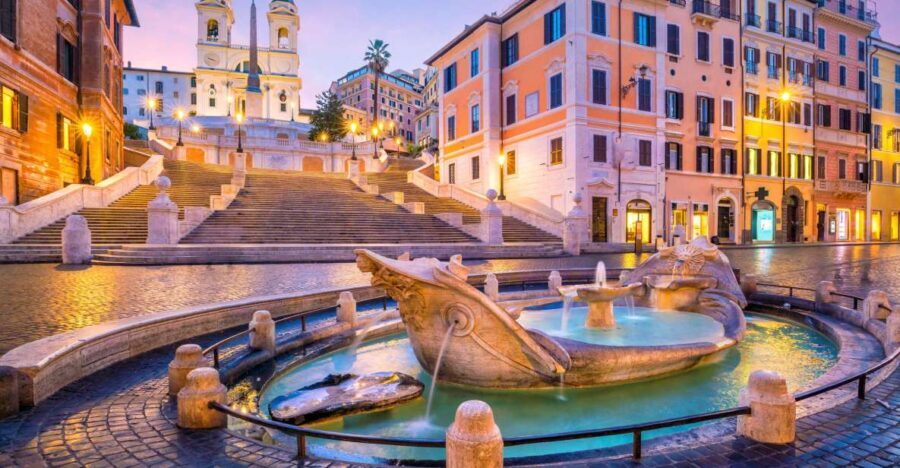
- Start at the Spanish Steps by the Barcaccia Fountain area, then progress through major landmarks
- Clear, detailed explanations from a guide described as punctual and very specific
- Headsets included for groups over 8, which helps when you’re surrounded by noise and photo huddles
- Entrance fees included, but you do not get Dome access or the Necropolis and Treasury Museum included
From Piazza della Trinità dei Monti to the Spanish Steps
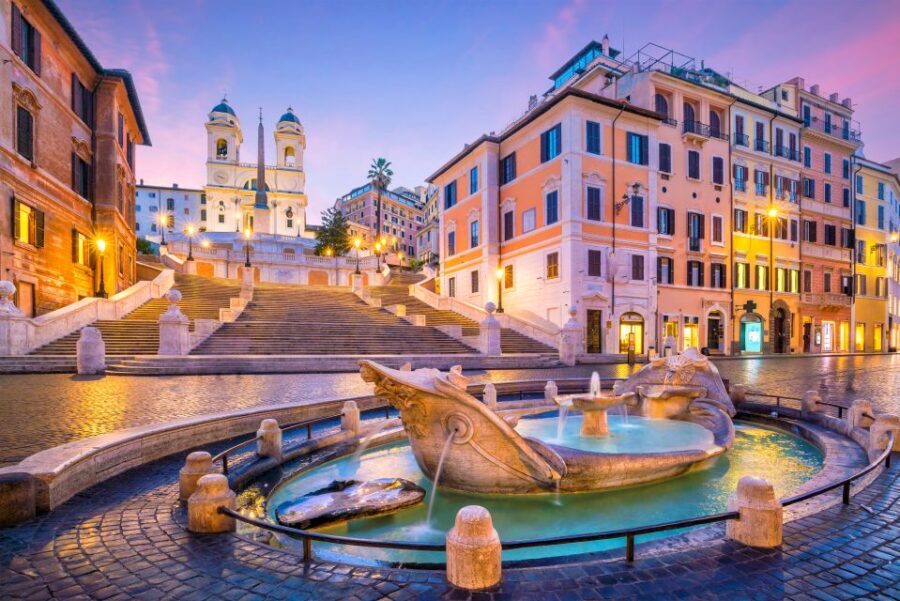
Your tour kicks off at Piazza della Trinità dei Monti, next to the obelisk in the middle of the square. Your guide has a signboard for Tour in the City, so you can spot them quickly and get moving without the early awkward shuffle.
This opening stretch matters more than you might think. You’re getting your bearings right away in the area around the Spanish Steps—then you’re set up for photos and orientation while the group is still fresh and calm. Expect a photo stop and a guided look at Santissima Trinità dei Monti, followed by time at the Spanish Steps.
If you’re traveling with kids, this is a strong first phase. The tour description emphasizes a pace that works for families, and starting with big open spaces makes it easier to keep everyone together.
You can also read our reviews of more walking tours in Rome

Trevi Fountain: the world-famous stop with real context
Next comes the Trevi Fountain, one of the most stunning fountains in the world (and yes, it earns its hype). Your guide doesn’t treat it like a quick snapshot; you’ll hear what’s behind the famous beauty as you get your photos.
Here’s where a guide earns their keep. Central Rome icons can blur together fast, but Trevi is one of those places where context changes how you see it—so you’re not just staring at water, you’re learning how the sight fits into Rome’s bigger story.
Practical tip: bring patience for crowds around Trevi. This is a photo moment, so you’ll want to time your shots during brief windows when the group shifts rather than fighting your way to the front.
Piazza Colonna and the Temple of Hadrian: quick stops, good payoff
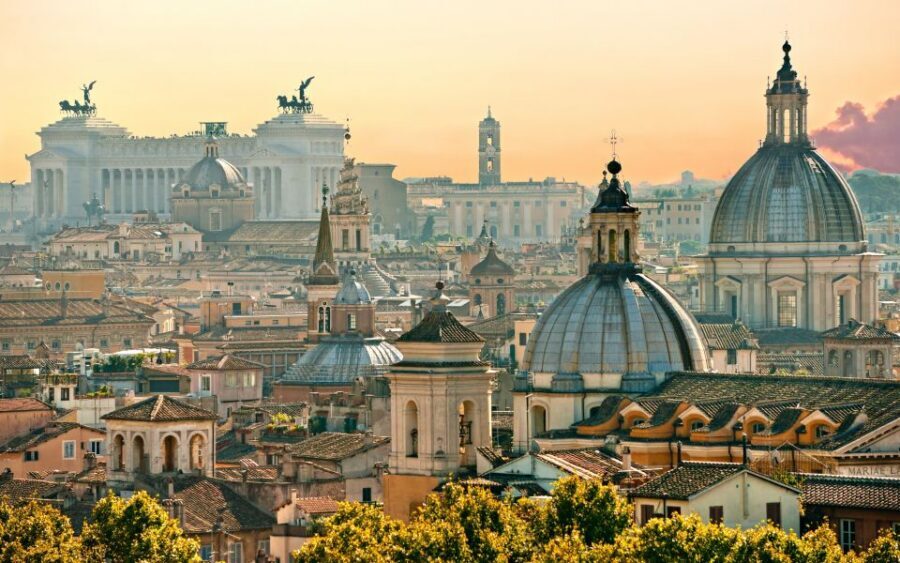
After Trevi, the route moves through Piazza Colonna, then to the Temple of Hadrian. These are structured as photo stop plus guided tour, which makes them ideal for a 3-hour format: you get a clear reason to pause, not just another street corner ticked off.
What I like here is the rhythm. The tour alternates big “wow” landmarks (Trevi, Pantheon) with smaller, very walkable pauses where your guide can point out what to notice—so your brain stays engaged instead of going into autopilot.
Because you’re not being rushed at each stop, you can still enjoy the walk between points. And if your group includes different ages, these intermediate sights help keep everyone interested without needing museum-style attention.
Pantheon: why the dome is a centerpiece
Then you reach the Pantheon, described as built as a temple to all the gods of Olympus. The guided stop focuses on the dome—constructed in ancient times and noted as the largest in the world.
This is the kind of fact that actually helps when you’re standing there. Instead of just thinking, That’s a big dome, you’re given a reason to look up and stay focused. It’s one of those moments where a good guide makes the architecture feel personal and readable.
A small practical note: the Pantheon area can feel busy, and people often stop in the same narrow spaces for photos. If your group wants better photos, keep your place in line and take your shots when your guide signals the move.
Piazza Navona and the Fountain of the Four Rivers
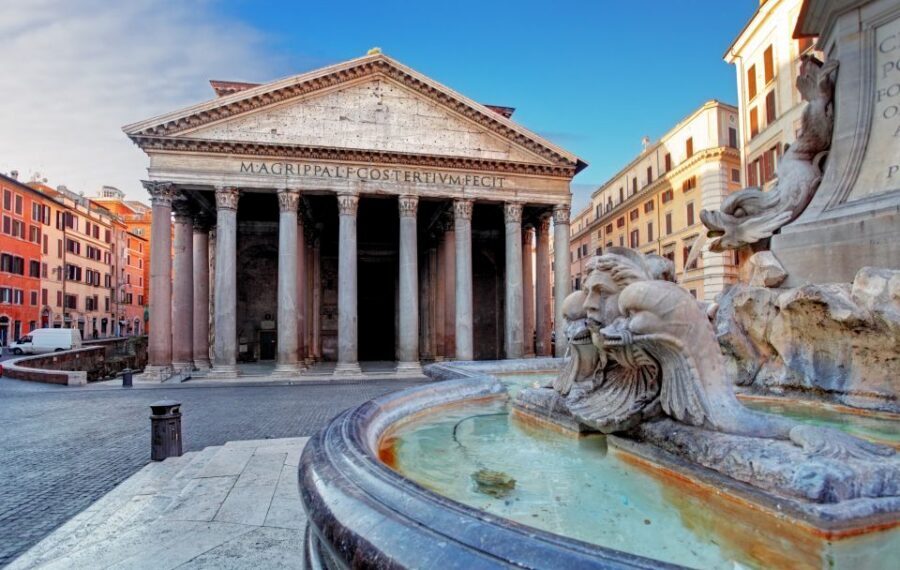
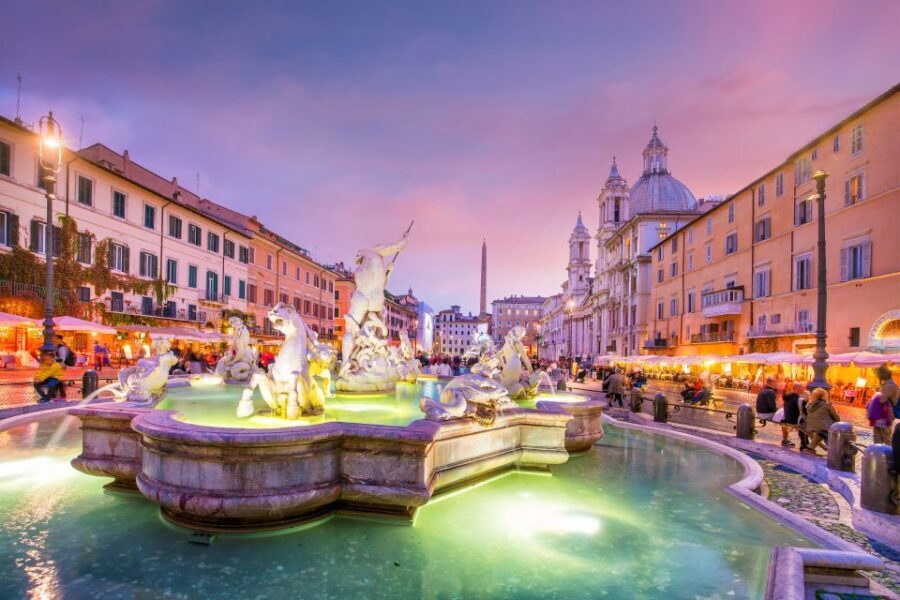
Your route continues to Piazza Navona, described as the delight of Baroque Rome. This stop is where the tour leans hard into art and sculpture connections, including names tied to major works you’ll see nearby.
Your guide points out architectural elements and sculptures by masters such as Bernini, Borromini, Rainaldi, and da Cortona. The Fountain of the 4 Rivers is specifically linked to Bernini, which gives you an easy anchor for what you’re observing.
Why this stop is valuable: piazzas in Rome are not just scenery—they’re stage sets. When someone connects what you see to the people who made it, your eyes start tracking details instead of just absorbing the scale.
Also, this is one of the better stops for families. Piazza Navona is open enough for kids to reposition, and the guide’s storytelling gives a reason to look carefully without needing a strict, indoor museum pace.
You can also read our reviews of more historical tours in Rome


Adding the local-market and Caesar-related stop
Depending on the exact run of the route, you may also pass through Campo de ‘Fiori, which has hosted a colorful local market since 1869. If that stop is included when you go, it adds a more everyday slice of Rome beyond the big formal landmarks.
You may also be shown the place of Julius Caesar’s assassination, known as Area Sacra di Largo di Torre Argentina. That’s a strong content pivot—Rome’s famous art stops, then history with a sharp edge that your guide can explain clearly.
For readers who like their history grounded in real geography, these added points tend to be the part you remember later. They break up the “greatest hits” feeling and replace it with a few moments that feel more lived-in.
Ponte Sant’Angelo and Castel Sant’Angelo: scenic momentum toward St. Peter’s
The itinerary can shift toward the river area, with photo and guided-tour stops at Ponte Sant’Angelo and Castel Sant’Angelo. These are listed as scenic-view moments, and they help the tour flow because you’re moving through Rome rather than staying fixed in one tight pocket.
This stretch is also useful if your group includes people who get tired of standing still. You can walk, look out, take photos, and keep momentum without feeling stuck.
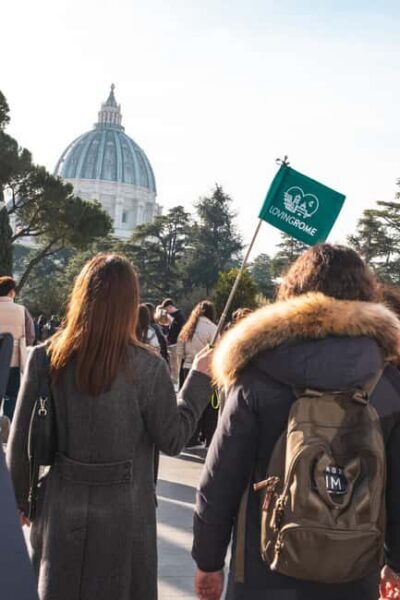
You’ll also get scenic views on the way to St. Peter’s Basilica. Even without long indoor time described here, the approach helps you connect the square-and-street sights to the bigger “you’re in the Vatican orbit now” feeling.
Vittoriano: a 19th-century ending point
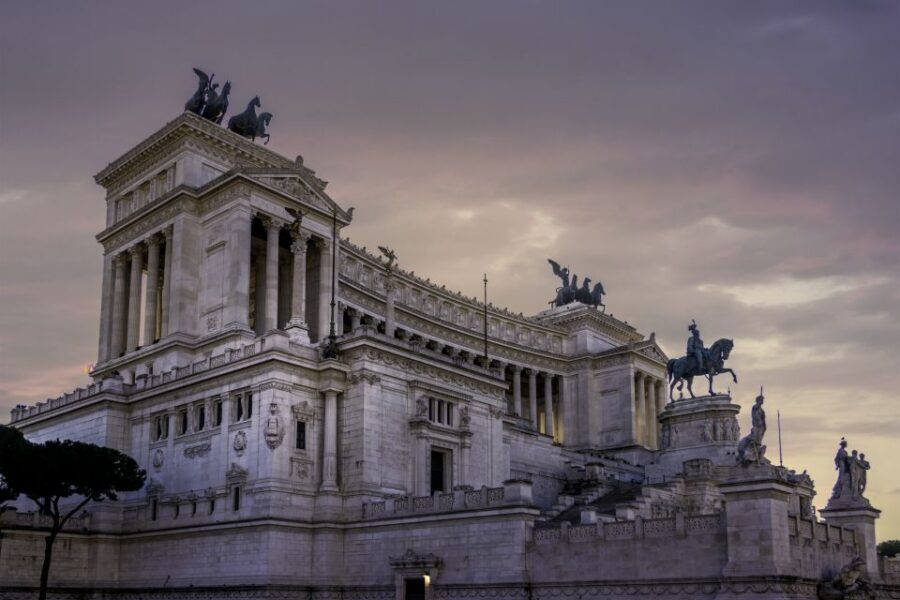
The tour concept also includes a final stop at the Vittoriano, commemorating the unification of Italy. Work began in 1885 and it was inaugurated in 1911 in honor of Victor Emmanuel II of Savoy, the first king of Italy.
This ending point is a nice contrast to the ancient and Baroque stops earlier in the walk. It’s not just another old building—it’s a statement monument, and it closes the tour with a “Rome is still changing” note, even in stone.
Small warning to plan your expectations: your actual ending area can depend on the route order. The tour is described as ending back at the meeting point as well, so don’t be surprised if your guide keeps things efficient and turns the walk into a loop.
What’s included (and what you should plan for)
This experience is priced at $141.61 per person for a private walking tour lasting about 3 hours (you’ll need to check starting times for your date). For the cost, you’re paying for a guide, a private route, and practical extras that matter in Rome: headsets, entrance fees, and audio support for St. Peter’s Basilica.
Included highlights:
- Private walking tour with a professional guide
- Headsets (more than 8 people)
- Entrance fees included
- St. Peter’s Basilica audio guide in Italian, English, Spanish, and French
- Paper map of St. Peter’s Basilica
Not included:
- Food and drinks
- Transportation to or from attractions
- Hotel pickup and drop-off
- Skip-the-line entrance
- Entrance to the Dome
- Entrance to the Necropolis and the Treasury Museum
My take on value: if you want the biggest sights—Trevi, Pantheon, Piazza Navona—plus clear guidance that helps you interpret them, this price makes sense. The headset and audio guide are also real value in noisy areas. If you’re the type who’d rather spend time independently in museums, you might not use every included element, and you may end up wishing you had more time on fewer stops.
Pace, group setup, and who this tour fits best
This tour is explicitly geared for a range of ages, with a walking pace suitable for youngsters. It’s also wheelchair accessible, which helps a lot for mixed-mobility groups—as long as your mobility needs can handle uneven sidewalks and busy areas.
It’s a private group, with a minimum of 2 persons per booking. That’s a good sign if you want flexibility and a guide who can adapt to your group’s questions rather than being stuck in a big, fixed crowd.
Rules to note: pets aren’t allowed, and walking frames aren’t allowed. If you rely on a frame, you’ll want to confirm what’s feasible for your setup before booking.
What to bring:
- Comfortable shoes
And keep your clothing casual. The tour calls for casual clothing and comfortable shoes, which fits Rome’s reality—heat, cobblestones, and standing for photos.
Should you book this walking tour?
Book it if you want a tight, guided hit list of Rome’s most iconic squares and fountains, with a guide who tells you what you’re looking at in a clear way. The pacing works well for families, and the extra tools—headsets and a St. Peter’s Basilica audio guide—make it easier to get quality information without stopping constantly.
Skip it (or consider a different format) if you’re expecting lots of indoor time at major sites like the Dome, or if you want your Rome day to be more about long museum browsing than guided sight-focused walking.
FAQ
What is the starting point for the tour?
The tour meets at Piazza della Trinità dei Monti, next to the obelisk in the middle of the square.
Where does the tour end?
The activity ends back at the meeting point.
How long is the tour?
The tour duration is 3 hours.
Is it a private tour?
Yes. It’s a private walking tour.
Are entrance fees included?
Yes. Entrance fees are included, but entrance to the Dome and to the Necropolis and Treasury Museum are not included.
What language options are available?
The live guide is available in English, Spanish, Italian, French, and Russian, and the St. Peter’s Basilica audio guide is in Italian, English, Spanish, and French.