REVIEW · POMPEI CAMPANIA
From Naples_Pompeii&Vesuvius
Book on GetYourGuide →Operated by VISITING CAMPANIA S.R.L. · Bookable on GetYourGuide
Two stops, one time capsule.
This day trip is interesting because it strings together Pompeii after AD 79 and an up-close ride to Vesuvius in the same 7.5-hour block. I like the comfortable Naples transfer and the fact that it’s built around real time on both sites, not just a quick photo stop. One drawback to plan for: the Pompeii portion can feel tight if you want to see a lot beyond the big highlights.
I also like the simple structure: minibus to Vesuvius, a walk to the crater area, then a set transfer to Pompeii with multilingual audio guides waiting once you arrive. Your best bet is to come ready with comfy shoes and an ID you can show for the audio-guide rental. If you have mobility limits, the tour is not suitable since it involves walking on uneven ground at Pompeii and on Vesuvius.
In This Review
- Key things to know before you go
- Naples pickup: where the day starts smoothly
- Ride to Vesuvius: minibus to 1,000 meters, then walking to the crater
- The Vesuvius views you actually came for
- Pompeii ruins: picking your route and using the audio guide
- How long is enough in Pompeii?
- Time management: balancing Vesuvius and Pompeii in 7.5 hours
- Skip-the-line tickets and what you’re really paying for
- What to bring: ID, shoes, and the no-big-bags rule
- Group size and pacing: who this works for best
- Food and breaks: what’s missing in the schedule
- Should you book the Naples Vesuvius + Pompeii combo?
- FAQ
- How long is the Vesuvius and Pompeii tour from Naples?
- Where does the tour pick up and drop off in Naples?
- How do you get from Naples to Vesuvius?
- How much time do you get at Vesuvius?
- Is Pompeii entrance included?
- Is an audio guide provided?
- Do I need ID for the audio guide?
- Is food included?
- Is the tour suitable for people with mobility impairments?
- Are large bags allowed?
Key things to know before you go
- Naples pickup is close to Naples Central Rail Station area, with buses organized under the Around Vesuvio logo.
- A crater visit is timed in: you get about 90 minutes of free time at Vesuvius, starting from the park and descending to reach the crater area.
- Pompeii is self-paced with guided audio, and the team helps you choose an itinerary type before you start walking.
- Tickets and skip-line access are included, including the Vesuvius National Park and Pompeii archaeological entry.
- No big luggage: you’ll need a small bag, and you must bring a valid ID for the audio guide.
Naples pickup: where the day starts smoothly
Your morning begins back in Naples at Via Galileo Ferraris, 40. The meeting spot is near the Garibaldi Square area and not far from Naples Central Rail Station, which is handy if you’re staying in the rail-station neighborhood.
In real life, mornings here can be a little chaotic in the pickup zone, because several tours cluster in a tight area. The good news is that the team focuses on getting people onto the correct minibus fast, so you’re not wandering around for long.
You’ll ride a comfortable minibus with a driver who speaks English. The group is kept small, and that matters on this route because you’re working with mountain roads and timed entries—small groups generally move more predictably.
You can also read our reviews of more tours and experiences in Pompei Campania.



Ride to Vesuvius: minibus to 1,000 meters, then walking to the crater
Vesuvius doesn’t start at the top. First, you take the bus ride (about 40 minutes) up the way, and then you’ll be dropped off around 1,000 meters above sea level.
From there, you descend and reach the crater on foot. This is the part where good shoes pay off. Even if you’re not a big hiker, you’ll want footwear with traction and socks you don’t mind getting warm—there’s a real climb at Vesuvius, and the path is part of the experience.
Once you’re at the crater side, you’re not stuck following a rigid schedule. You get free time (about 90 minutes) to visit the National Park area and make your way to the crater. That timing is one of the strongest parts of the day because it gives you enough flexibility to go at your own pace and still take in the views.
The Vesuvius views you actually came for
The top views are part of why people choose to do Vesuvius at all. From Vesuvius, you can take in the Gulf of Naples, the Sorrento Coast, plus distant islands including Capri and Ischia.
Here’s the practical tip: build in a moment to look first, then walk. It’s easy to charge straight to the crater and miss the panorama, but the scenery is one of the few chances you’ll get in one day to see the whole region from a single vantage point.
When the free time ends, you hop back onto the minibus (another 40 minutes) to head to Pompeii. Plan for a short mental shift: Vesuvius is about the cone and the views; Pompeii is about walking, reading, and slowing down.
Pompeii ruins: picking your route and using the audio guide
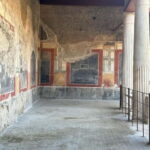
Pompeii is where the day becomes real. It’s a UNESCO World Heritage Site, buried under volcanic ash after the AD 79 eruption, and it’s preserved in a way that makes you feel like you’re walking through a frozen moment.
At the site, the team helps you choose an itinerary type before you start. This is a smart move for a self-paced tour, because Pompeii is huge and you can burn time trying to decide on the spot.
Then you use an audio guide to explore independently. The audio guide is included and available in many languages (Chinese, Dutch, English, French, German, Hebrew, Italian, Portuguese, Russian, Spanish). One practical detail: to rent and use the audio guide, you must show a valid passport or ID card, and you’ll need to keep track of it while you’re inside.
How long is enough in Pompeii?
This is the part to get honest with yourself. The tour structure gives you a limited block at Pompeii, and the exact timing can feel different depending on how the day runs.
From the way people experience it, you should plan on roughly two hours to about two-and-a-half hours of meaningful time. The archaeological park is large, and that means you’ll be happiest if you decide in advance what you want most—streets, major buildings, or key scenes.
If you go in expecting to see everything, Pompeii will win that argument. If you go in with a short list of what matters to you, you’ll feel like you made the day count.






Time management: balancing Vesuvius and Pompeii in 7.5 hours
This tour is built as a combined Vesuvius + Pompeii day, so the schedule has to make tradeoffs. That tradeoff shows up as a constant push-pull between the crater visit and time in Pompeii.
The Vesuvius side is generally long enough for the main payoff: the walk to the crater area plus room to take photos and enjoy the views. People often feel that the Vesuvius timing works, because it includes enough “breathing space” to move at your pace.
Pompeii is the tougher half of the deal. If Pompeii is your primary goal and you like lingering, two hours can feel short—especially if you stop often to read, sketch, or search for specific spots. If Pompeii is a top priority but you’re flexible, the audio guide and the pre-chosen route help you stay efficient.
My advice: treat this as a best-of day. If you want a deep, slow Pompeii experience, you’ll likely want a dedicated Pompeii half-day (or a longer guided program) later. For a one-day taste of both, this combo is a strong option.
Skip-the-line tickets and what you’re really paying for
On paper, the price is $108.75 per person, and the duration is about 7.5 hours. Prices can vary based on starting times and availability, but it’s worth looking at what’s included rather than just the headline number.
You get entrance tickets included for Vesuvius National Park and the archaeological site of Pompeii. You also get the Vesuvius skip-the-line ticket, listed as €11.68, plus the Pompeii entrance ticket, listed as €20.00. Food and beverages are not included, so budget for water and any snacks you want to carry.
So where does the value come from? Mostly from transportation plus the pre-arranged site entry. If you were to do this independently—especially on a tight schedule—you’d spend time figuring out logistics and ticket lines. Here, you’re buying convenience, and the day is structured so you’re not constantly coordinating.
Still, keep one caution in mind: entry rules for children and reduced-fare categories aren’t spelled out in the tour details you receive. In one real-world case, a family ended up purchasing extra child tickets on the spot and lost time at the counters. If you’re booking for kids, confirm ticket expectations during booking to avoid surprises.
What to bring: ID, shoes, and the no-big-bags rule
This tour has a few “small but important” requirements.
Bring:
- Passport or ID card (you need it to rent the audio guide)
- Comfortable shoes (you’ll walk on both Pompeii and Vesuvius)
- Sun hat and comfortable clothes
Don’t bring:
- Luggage or large bags (you can have only a small bag)
That audio-guide ID rule is easy to overlook when you’re traveling light, especially if your passport is back in your hotel. If you don’t have the right ID with you, you may end up without the audio guide at Pompeii, and that’s one of the main ways the self-paced format works.
Also, think about the sun. Vesuvius gets bright quickly, and Pompeii has open-air sections. A hat and sunglasses are low-cost insurance.
Group size and pacing: who this works for best
This is not a slow private tour. It’s a small-group, structured day that uses transfers and audio guides to keep you moving without feeling rushed the whole time.
If you like flexibility—wanting to decide how long to linger at each stop—you’ll like the audio format. The team helps you choose an itinerary type at Pompeii, which can be a lifesaver if you don’t want to stare at a map all day.
This tour is also a good match if you’re staying in Naples and want a full day without worrying about buses, schedules, or ticket coordination.
It’s not a fit for people with mobility impairments, since it involves walking at both locations. Even if you consider yourself “fine on flat ground,” Pompeii and Vesuvius involve uneven surfaces and slopes.
Food and breaks: what’s missing in the schedule
Food and beverages are not included. That means you should plan ahead for water, a small snack, and time to sit when you can.
Because the day has fixed transfers, you’ll feel it if you stop too often without a plan. A simple approach works best: eat before the pickup, carry a bottle of water, and treat breaks as short refreshes rather than long lunches.
Should you book the Naples Vesuvius + Pompeii combo?
I’d book this tour if you want a well-organized one-day sampler of two of Campania’s biggest icons. The combined setup is convenient from Naples, the transfers are smooth, and the Vesuvius portion gives you a real chance to reach the crater and enjoy big views.
I’d hesitate if Pompeii is your main obsession and you know you like to spend time reading every sign and stopping often. This day gives you enough to feel Pompeii, but not enough for everyone to feel they saw it all.
One smart decision point: if you’re traveling with kids or anyone who may qualify for different entry categories, verify ticket expectations before you go. That’s the one potential friction point that can mess with timing.
Bottom line: for most people, this is great value for a day that includes Vesuvius, Pompeii, tickets, audio guide, and Naples transfers—just go in with a priority list so the limited Pompeii time feels satisfying, not frustrating.
FAQ
How long is the Vesuvius and Pompeii tour from Naples?
The tour duration is about 7.5 hours.
Where does the tour pick up and drop off in Naples?
It starts and ends at Via Galileo Ferraris, 40.
How do you get from Naples to Vesuvius?
You take a minibus/coach from Naples, then transfer up to about 1,000 meters above sea level before walking to reach the crater area.
How much time do you get at Vesuvius?
You have free time for about 90 minutes to visit the National Park and reach the crater area.
Is Pompeii entrance included?
Yes. The Pompeii archaeological site entrance ticket is included.
Is an audio guide provided?
Yes. Audio guides are included for Pompeii, and they’re available in Chinese, Dutch, English, French, German, Hebrew, Italian, Portuguese, Russian, and Spanish.
Do I need ID for the audio guide?
Yes. You must bring a valid passport or ID card because the audio guide rental requires it.
Is food included?
No. Food and beverages are not included.
Is the tour suitable for people with mobility impairments?
No. It is not suitable for people with mobility impairments.
Are large bags allowed?
No. Luggage or large bags are not allowed; only a small bag is permitted.