REVIEW · COLOSSEUM TOURS
Colosseum and Roman Forum Sightseeing Area Night Walking Tour
Book on Viator →Operated by What About Tours · Bookable on Viator
Rome at night changes everything. This 2-hour guided walk turns Rome’s big ancient landmarks into an easy-to-follow story, with photo-worthy viewpoints and quick, memorable explanations that make the ruins feel less like stone piles and more like a lived-in city. I especially like how the route hits both the famous hits and the lesser-seen layers, so you get the Colosseum moment plus the political, everyday, and imperial context that makes it all click.
I also like that you’re not paying for entrance tickets just to get the best angles. It’s an exterior sightseeing tour with panoramic views of the Colosseum and Roman Forum, so you can keep costs down and still enjoy the magic of night lighting. One big consideration: it does not include entry inside the Colosseum or the Forum, so if you want to go in, you’ll need separate tickets and time.
In This Review
- Key things I’d plan around
- Why this Colosseum and Roman Forum night walk feels worth your time
- Your night-photo strategy: where the route helps your pictures
- Largo Argentina (Area Sacra di Largo Argentina): where Caesar’s story echoes
- Insula dell’Ara Coeli and the living-city angle
- Piazza del Campidoglio: Michelangelo’s square on Capitoline Hill
- The Marcus Aurelius replica: philosophy you can see
- Roman Forum (Foro Romano): best seen from the outside with the right story
- Forum of Augustus: the Republic turns into an empire
- Trajan’s Market: the world’s first shopping-mall idea
- Arch of Constantine to the Colosseum: the empire’s final image
- Price, tips, and tickets: what you’re really paying for
- Who should book this night tour (and who might not)
- Should you book the Colosseum and Roman Forum night walking tour?
- FAQ
- Does this tour include entrance tickets to the Colosseum and Roman Forum?
- How long is the Colosseum and Roman Forum night walking tour?
- What is the meeting point for the tour?
- Is the tour in English?
- Is it a tip-only tour?
- How big is the group?
- Is there free cancellation?
Key things I’d plan around
- Panoramic, outside-only views so you can save money and still get the night-sky photo angles
- Short stops with a clear story line, from Largo Argentina to the Colosseum exterior
- Capitoline Hill context that helps you understand why the Romans built where they did
- Empire-to-empire transitions shown through Augustus, Trajan-style commerce, and Constantine’s era
- Small group size (max 25) keeps the pace manageable and questions possible
- Tip-based model means the guide’s performance matters, so plan to tip well
Why this Colosseum and Roman Forum night walk feels worth your time
If you’ve only got a day or two in Rome, the Colosseum area can feel like sensory overload. This night tour helps you slow down without stopping your day cold. You’ll walk a short route that strings together the main sights plus the “why it mattered” details that connect them.
I like the rhythm: brief stops, then you move on. That keeps things light, and it also makes it easier to enjoy the evening air. Since the monuments are outside-only on this tour, the focus stays on seeing the spaces and understanding them, instead of waiting for timed-entry lines.
The guide experience is a major part of why people book again. You might encounter guides such as Simone, Jacob, Max, Jacopo, or Ivana (names that show up often in great experiences), and their style is usually about crisp explanations, humor, and answering questions as you go.
You can also read our reviews of more walking tours in Rome

Your night-photo strategy: where the route helps your pictures
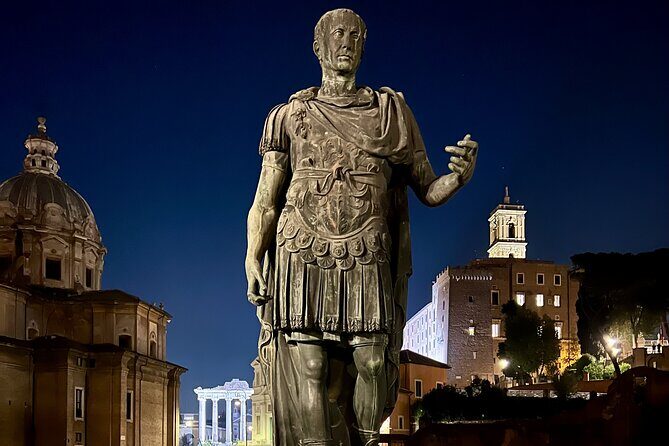
This tour is built around viewing from the right spots at the right time. Night changes how stone looks, and Rome’s ancient structures pick up a glow that’s harder to catch in daytime glare. You’ll get multiple moments aimed at the Colosseum and Forum area with the goal of better framing than you’d likely do on your own.
The practical win is that you’re not bouncing between far-flung neighborhoods. You’re concentrating in one tight zone, so you can spend more time looking and less time re-orienting. And because the stops are short, you can quickly adjust your stance, height, and phone angle when the guide points out the best line of sight.
A small warning: it’s still a two-hour walking and standing experience. Wear shoes you trust, and bring a light layer if the evening cool hits. Reviews mention it can be cold or rainy, but the group stays in motion, which is exactly what you want when the weather turns.
Largo Argentina (Area Sacra di Largo Argentina): where Caesar’s story echoes
Your walk starts in the Area Sacra di Largo Argentina, a spot famous for a messy period in Roman politics. Here you’ll see the ruins of ancient temples, and you’ll also hear about Pompey’s court and the assassination of Julius Caesar. The location matters because it’s not just an archaeological site—it’s a turning point.
At night, these ruins feel extra cinematic because the views are more atmospheric and you’re less distracted by daytime crowds. Even if you’re not an archaeology superfan, this stop gives you the political stakes that later ruins depend on.
Time is short—about 15 minutes—so don’t treat it like a museum visit. Use it as a foundation. Ask your guide one or two questions about how the Republic ended and why places like this mattered, because it will color how you read everything that follows.
Insula dell’Ara Coeli and the living-city angle
Next is the Insula dell’Ara Coeli, one of those places that quietly re-frames Rome. Instead of focusing on temples and emperors only, this stop points to how ancient Romans lived—specifically through multi-story apartments nearly 2,000 years old.
That “daily life” perspective is what I value most about this tour. The Colosseum is dramatic, but it’s also easy to treat as a stand-alone monument. When you see how people actually lived close to political and religious power, the ruins start feeling connected.
You’ll have about 10 minutes here. That’s enough time to grasp the idea and get the big takeaway, but not enough for a slow wander. If you like details, keep listening for the small comparisons—how living space and city planning shaped Roman life.
Piazza del Campidoglio: Michelangelo’s square on Capitoline Hill
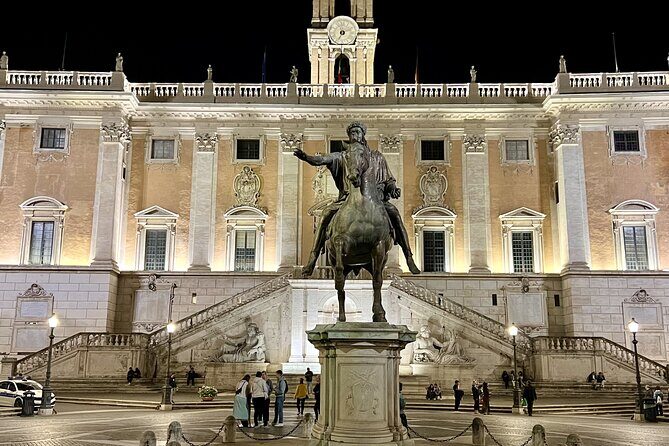
Then you’re on Piazza del Campidoglio, designed by Michelangelo and set on Capitoline Hill. The iconic feature is the oval design, plus the bronze statue of Marcus Aurelius in the center. This stop is where Renaissance design and Roman symbolism overlap.
At night, the square works well because it gives you a stable “pause point.” You can step back, absorb the geometry, and take photos without weaving around crowds. It’s also a good moment to ask your guide to connect how power is shown through public space—because Capitoline Hill was always political theater.
The stop is brief—around 5 minutes—so focus on composition. Get your shot, then listen for the meaning behind the design choices. That’s the difference between taking a photo and actually learning what you’re looking at.
You can also read our reviews of more evening experiences in Rome

The Marcus Aurelius replica: philosophy you can see
After the square, you’ll get a quick additional stop for the replica Statue Equestre di Marco Aurelio. Marcus Aurelius matters in Roman culture not just because he ruled, but because he’s remembered for Meditations, where he reflects on Stoic principles.
This might sound like it belongs in a book, but it works well on a night walk. Seeing the emperor-philosopher referenced right in the center of the city makes the ideas feel less abstract. And the way it’s placed helps you remember that Roman authority wasn’t only about force—it was also about image and values.
You’ll spend about 5 minutes here. Use that time to connect the dots between empire leadership and the monuments you’re about to see.
Roman Forum (Foro Romano): best seen from the outside with the right story
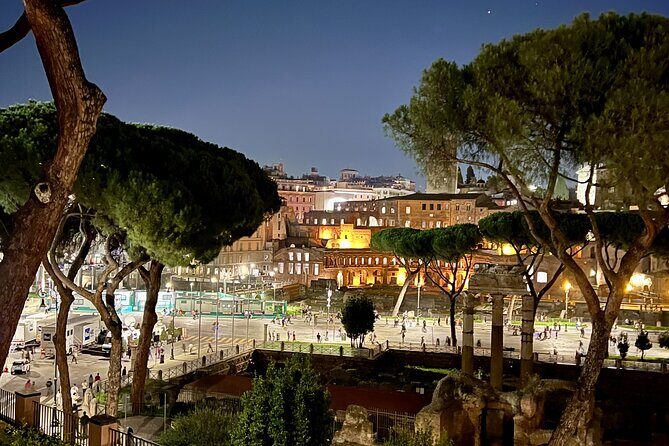
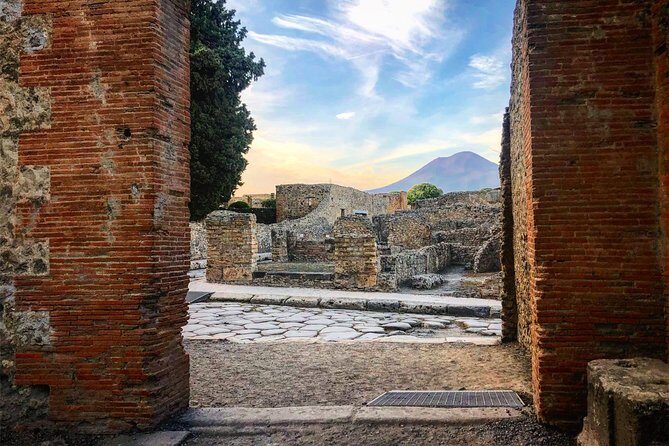
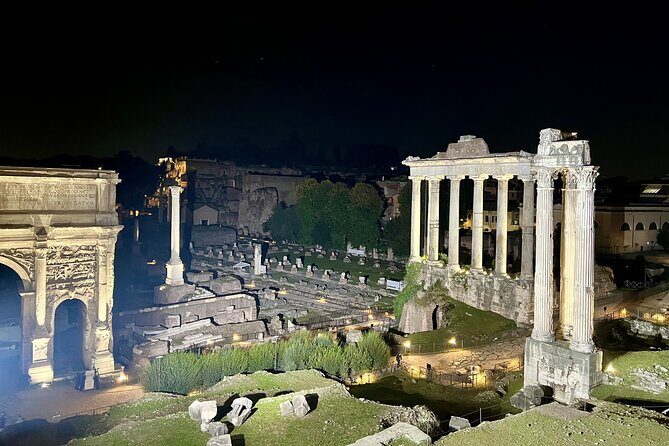
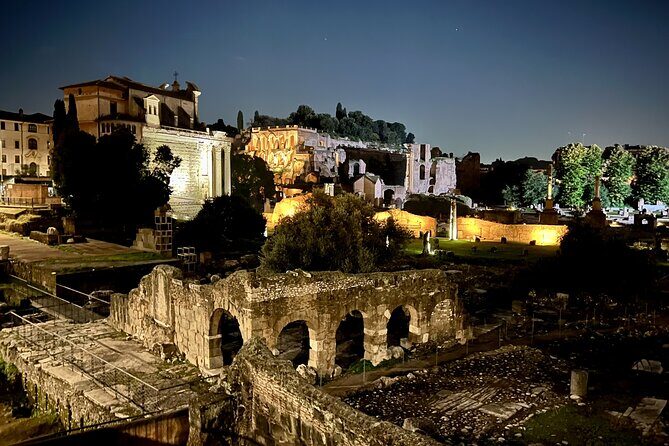
The Roman Forum is the heart of ancient Rome in every guidebook, but the Forum can also overwhelm you if you stand there without context. On this tour, you’ll see it from the outside as a window into the ruins of temples, arches, and former marketplaces where politics and everyday life mixed.
Because the tour doesn’t include entry, you’re not doing slow indoor exploration. You’re doing something more practical: learning what to notice while you’re looking. Your guide will help you interpret what you’re seeing—turning scattered ruins into a mental map.
You’ll have about 10 minutes here. If you want great photos, treat this stop like a photo assignment: aim for the angles that show the scale lines, not just a close-up of one arch. Night light is your friend for contrast, but only if you frame with care.
Forum of Augustus: the Republic turns into an empire
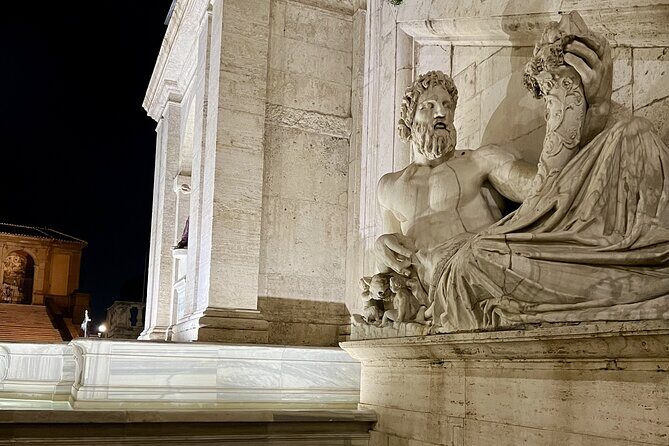
Next is the Forum of Augustus, one of the places where the Roman shift from Republic politics to imperial rule becomes visible in stone. Augustus is credited with transforming the Republic into an Empire and ushering in the Pax Romana, a long period often described as peace and stability.
This stop is short—about 5 minutes—but it gives you a powerful anchor. Augustus sets the tone for why so much building happened, why certain forms of power were favored, and why later emperors continued the pattern.
In practical terms, this is where your guide’s storytelling matters most. If Augustus is explained well, you’ll understand why the Colosseum and later imperial monuments feel like part of one long system.
Trajan’s Market: the world’s first shopping-mall idea
Then you’ll see Trajan’s Market, described as an ancient multi-level complex often considered a forerunner to the modern shopping-mall idea, with over 150 shops and offices. It’s associated with construction around 110 AD, and its arches and corridors show how busy Roman commerce really was.
This is a stop I think many people enjoy more than they expect. It breaks the pattern of emperors and arenas by highlighting economics and daily movement. At night, the architecture reads well in silhouette and rhythm, even without going inside.
The itinerary description doesn’t give a specific duration for this stop, so expect a brief look and then keep moving. If you like city history tied to real life, this is the moment where your understanding shifts from buildings as monuments to buildings as systems.
Arch of Constantine to the Colosseum: the empire’s final image
After Trajan’s Market, you’ll reach the Arch of Constantine. Constantine is noted here as Rome’s first Christian emperor, tied to the move of the capital to Constantinople and to Christianity gaining official support. The arch becomes a marker for a turning point: the empire’s identity was shifting.
You’ll spend about 5 minutes here. It’s enough to grasp the idea, snap a photo, and then walk on with that new context in mind.
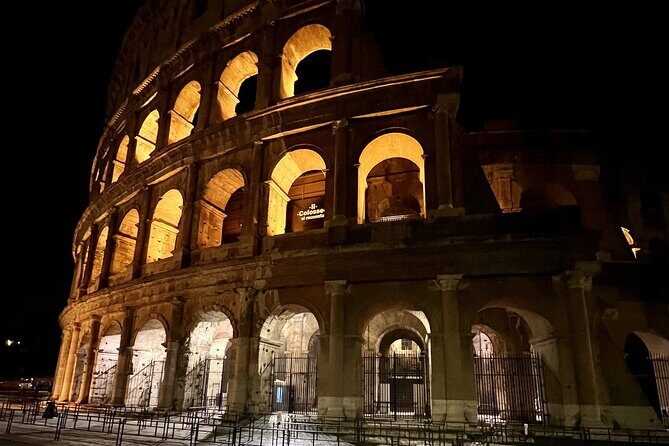
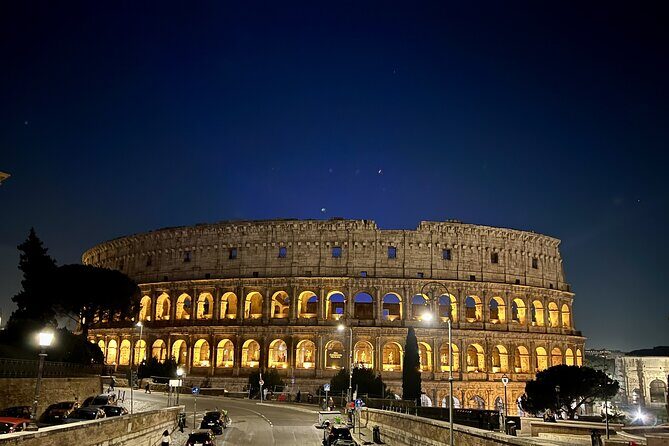
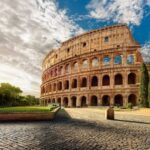
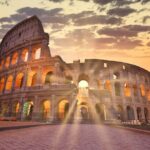
Finally, you end at the Colosseum. This is the moment everyone remembers, and in a night setting it can feel almost unreal: the scale is huge, the lighting makes edges crisp, and the arena becomes a stage again in your mind. The tour does not include entry inside, but you’ll still get a strong exterior look and panoramic viewing.
The guide keeps it moving and ends at a very connected area in front of the Colosseum, which is handy for your next step—metro and bus connections are close.
Price, tips, and tickets: what you’re really paying for
At $3.87 per person, this tour price looks almost too good to believe—until you realize what’s excluded. You’re not buying entrance tickets for the Colosseum or the Forum, and you’re not doing internal visits. You’re paying for a licensed guide and a guided, story-based route designed to produce better sightseeing than wandering solo.
So the value question is simple: do you want guided interpretation more than timed-entry access? If yes, this is a smart budget pick. You get a structured walk, panoramic photo moments, and the context that makes Rome’s ruins easier to read.
Because it’s tip-based, the real cost is what you decide to tip. If your guide is keeping a lively pace and answering questions well, tip accordingly. The experiences around guides like Simone and Jacob often highlight that kind of effort—staying engaging even if it’s cold or rainy, and keeping the group comfortable.
Also, remember: if you want the full Colosseum and Forum experience with interior access, plan for that separately. This tour is the “see it, understand it, photograph it” companion.
Who should book this night tour (and who might not)
This fits best if you want:
- A guided introduction to the Colosseum and Roman Forum area without paying entrance fees
- Night ambiance and fewer daytime distractions
- A route with multiple historical layers, from assassination politics to everyday apartment life
It might not fit if you:
- Only want inside access and timed-entry experiences
- Hate standing and walking for about 2 hours
- Expect a slow museum-style pace
For first-timers, this is a strong way to get your bearings fast. For repeat Rome visitors, it’s still useful because the Capitol Hill and everyday-life stops help you see the area differently than the typical straight-line Colosseum rush.
Should you book the Colosseum and Roman Forum night walking tour?
Yes—if you’re budget-minded and you want Rome explained while you’re standing in front of it. This tour is built for exterior viewing, and it does that well: short stops, clear connections, and photo angles that work at night. If you’re craving the inside experience too, book this as your storytelling primer, then add separate tickets for any interior visits you want.
One more practical tip: since it’s tip-based, have cash or a plan for tipping ready. Bring a small umbrella if rain shows up, dress for cool air, and give yourself time after the tour to enjoy the Colosseum area on your own.
FAQ
Does this tour include entrance tickets to the Colosseum and Roman Forum?
No. The tour does not include entrance tickets, and it does not include internal visits. You’ll see the monuments from outside.
How long is the Colosseum and Roman Forum night walking tour?
It runs for about 2 hours.
What is the meeting point for the tour?
The start is Piazza dei Calcarari, 00186 Roma RM, Italy. The tour ends at the Colosseum area in front of the Colosseum at Piazza del Colosseo, 1, 00184 Roma RM, Italy.
Is the tour in English?
Yes, the tour is offered in English.
Is it a tip-only tour?
Yes. The tour is tip-based, and guides work for tips alone.
How big is the group?
The tour has a maximum of 25 travelers.
Is there free cancellation?
Yes. You can cancel up to 24 hours in advance for a full refund. If you cancel less than 24 hours before the experience starts, the amount paid is not refunded.