REVIEW · ROME
Rome: Fresh Pasta-Making Class with Italian Chef and Wine
Book on GetYourGuide →Operated by Rome Cooking Club - Pasta Class and Sauces (by Riccardo Cooking Class) · Bookable on GetYourGuide
Hands-on pasta beats another museum day. This small-group Rome class (max 10) has you working with Chef Riccardo and team to make fresh pasta and real Italian sauces from scratch, using quality ingredients and selected wine at a 3-hour session starting at Circonvallazione Gianicolense 418.
I love the hands-on teaching style and the mix of skills, from long pasta to stuffed options, plus Roman specialties like Carbonara and Cacio e Pepe. One possible drawback: the pace is lively and the room is small, so depending on who you’re paired with, you may hear more Italian or local conversational flow than you expect.
In This Review
- Key highlights you’ll actually care about
- A Roman pasta class that feels like you’re in the kitchen, not in a show
- Where you meet in Rome: Circonvallazione Gianicolense 418
- What the 3-hour flow looks like (so you can plan your day)
- The chefs, the teaching style, and why the explanations feel usable
- Pasta shapes and techniques: long pasta, stuffed pasta, and spaghetti alla chitarra
- Roman specialties: Carbonara and Cacio e Pepe, explained the right way
- Your 3-course meal: you’re eating results, not just paying for instruction
- Vegetarian, allergies, and private-class customization you can plan around
- Value check: is $97 worth it in Rome?
- Logistics that matter: small group comfort and pacing
- Who should book this class (and who might not)
- Should you book this Rome fresh pasta-making class?
- FAQ
- How long is the Rome fresh pasta-making class?
- What is the meeting point address in Rome?
- How many people are in the class?
- Is the class wheelchair accessible?
- What’s included in the $97 price?
- Is there a vegetarian menu?
- What languages will the instructor speak?
Key highlights you’ll actually care about
- Small group of up to 10 means you’re not stuck watching while others cook
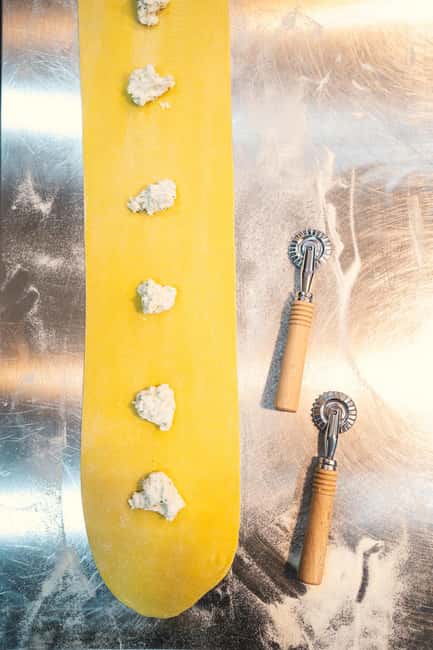
- Fresh pasta techniques span long pasta, stuffed pasta, and shapes like ravioli and more
- Roman sauces focus on Carbonara and Cacio e Pepe methods, not generic red sauce
- 3-course meal plus wine tasting turns your work into an actual dinner with pairing
- Diet-friendly options exist (vegetarian menu, plus private-class dietary customization)
A Roman pasta class that feels like you’re in the kitchen, not in a show
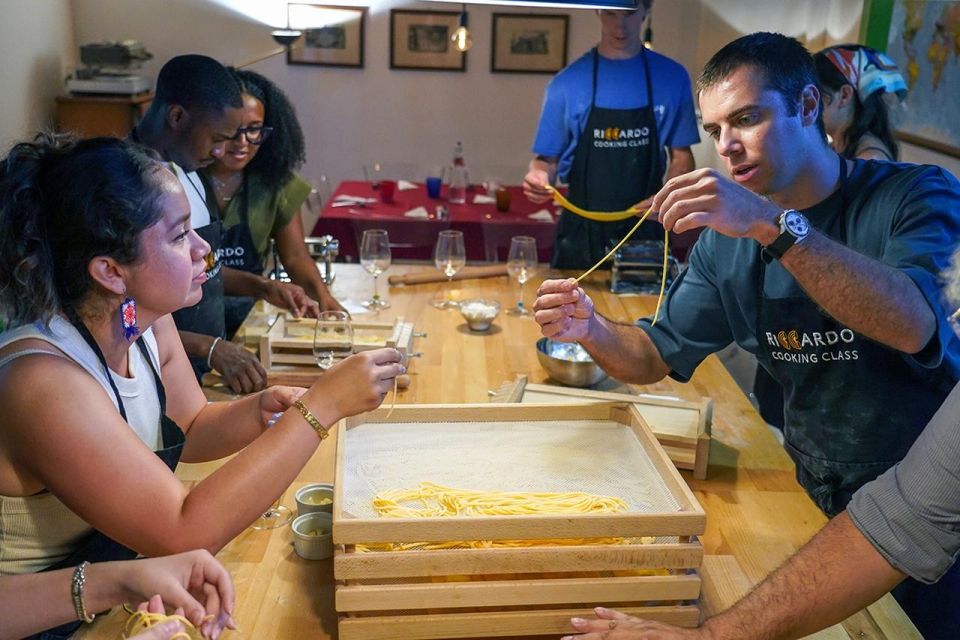
Rome has plenty of food tours. This one targets something better: the mechanics. You’ll learn what dough should feel like, how shapes change the cooking, and how Roman sauces behave when they hit hot pasta. That’s why it clicks for people who love eating out, but also for the ones who want to cook when they get home.
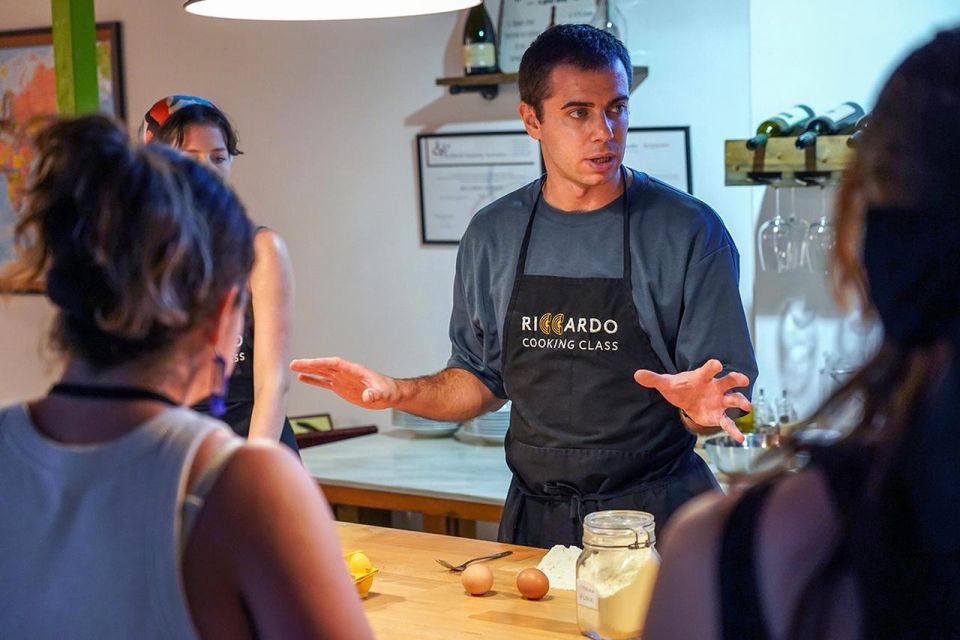
The structure is built around a home-style rhythm. You meet the chefs either at Chef Riccardo’s grandma’s house or at the Cooking Lab, then you get to work making pasta from scratch. The class is designed for small groups, so you’re active the whole time instead of taking photos and waiting for your turn.
And yes, you’ll eat what you make. That matters. The best part of pasta education isn’t the demo, it’s the tasting with the correct sauce texture and seasoning in place.
You can also read our reviews of more tours and experiences in Rome.



Where you meet in Rome: Circonvallazione Gianicolense 418
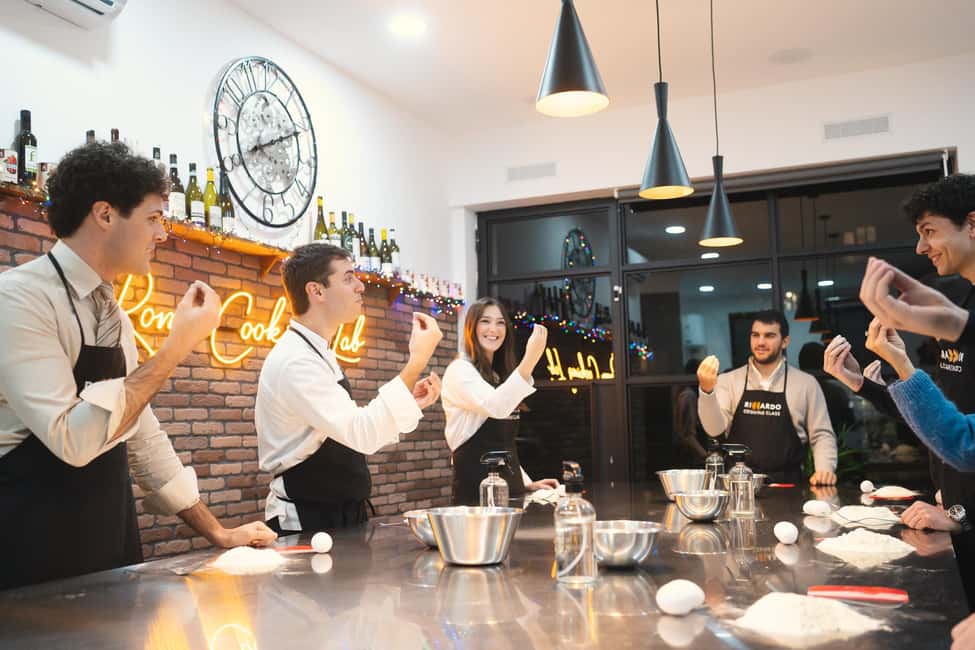
Your meeting point is the Cooking Lab on Circonvallazione Gianicolense 418, 00152, Roma, on a street near a café. That’s helpful because you’re not hunting through maze-like alleys with no obvious landmark.
If you’re staying in the city center, you should find it straightforward to reach by public transportation. The area isn’t about tourist views; it’s about getting into a working neighborhood and getting fed.
Also note the physical setup: it’s a studio-style class. That usually means you can expect a normal kitchen workflow and a spot to work without squeezing through a crowded dining room.
What the 3-hour flow looks like (so you can plan your day)
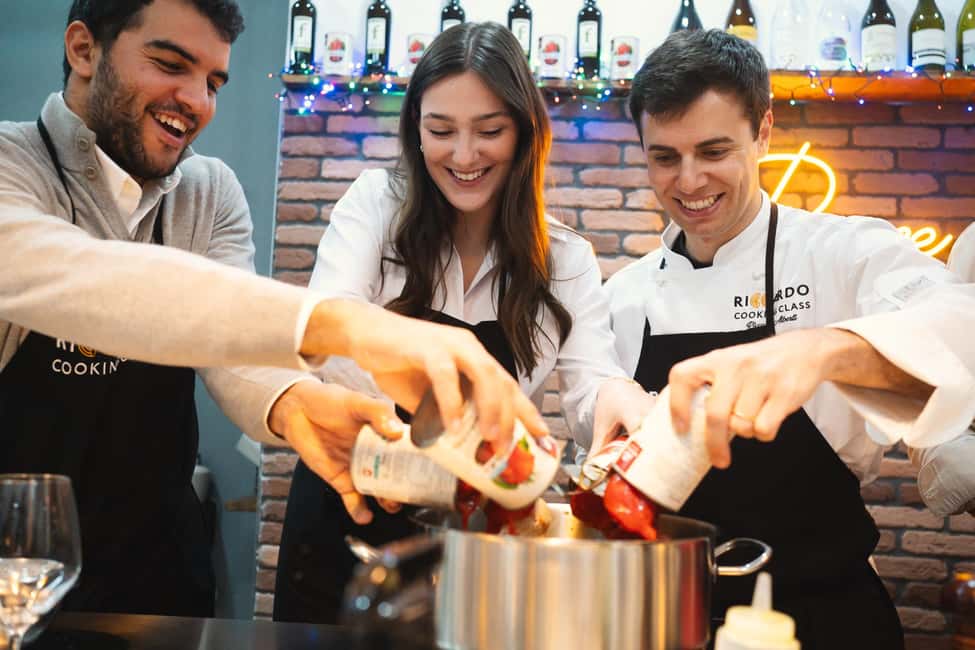
The class lasts 3 hours, and it moves fast in a good way. You’ll likely want to schedule it earlier in your trip, when you’re still collecting ideas for what to eat next.
Here’s the practical shape of the session, based on what you’ll do during the course:
- You arrive, meet the chef/team, and get oriented with ingredients and the pasta setup (including aprons provided for use during the class).
- You make fresh pasta by hand, working through dough and shaping steps for more than one type.
- You learn Italian sauce methods while your pasta work is happening, so the flavors land at the right time.
- You sit down for a 3-course meal that includes wine tasting, pairing what you cooked with what you learned.
You’ll likely end up with a lot of food. More than one person has said there’s enough to take leftovers home, which is a nice bonus when you’re trying to avoid wasting what you paid for.
The chefs, the teaching style, and why the explanations feel usable
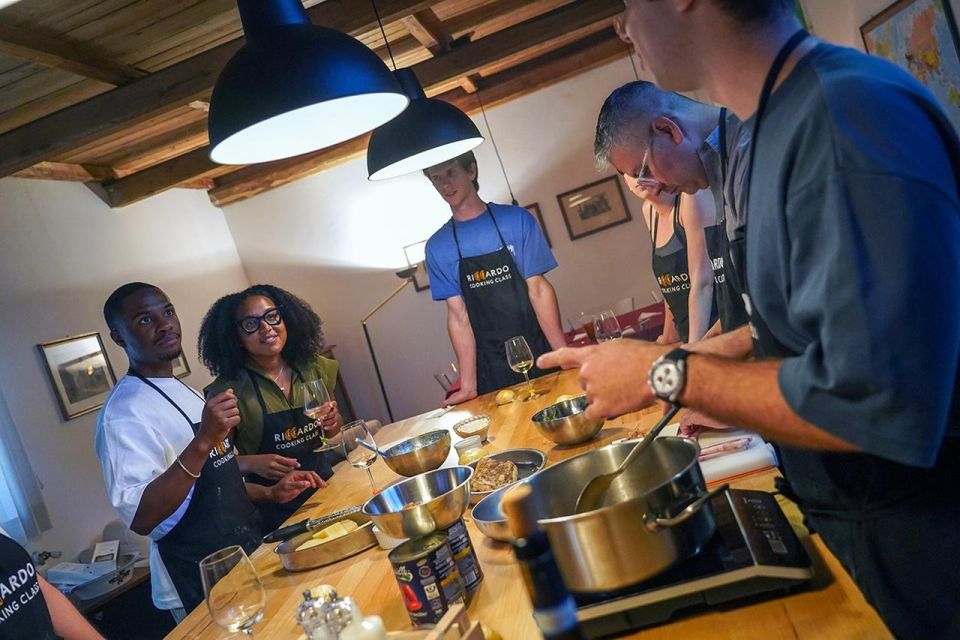
Chef Riccardo is the anchor here, and his team supports the class. In different sessions, you might work with chefs like Leo, William, Marco, Mattia, and Bruno. The important part isn’t the badge on the apron; it’s how they teach.
The teaching style is step-by-step, with adjustments as you go. People consistently mention that the instructors explain what to do, why you’re doing it, and how to fix common mistakes while you’re still in the process.
That’s the difference between learning a recipe and learning pasta. Pasta rewards feel. The more you understand how dough stretches, how stuffing changes thickness, and how sauce clings, the more you can repeat the results later.
Pasta shapes and techniques: long pasta, stuffed pasta, and spaghetti alla chitarra
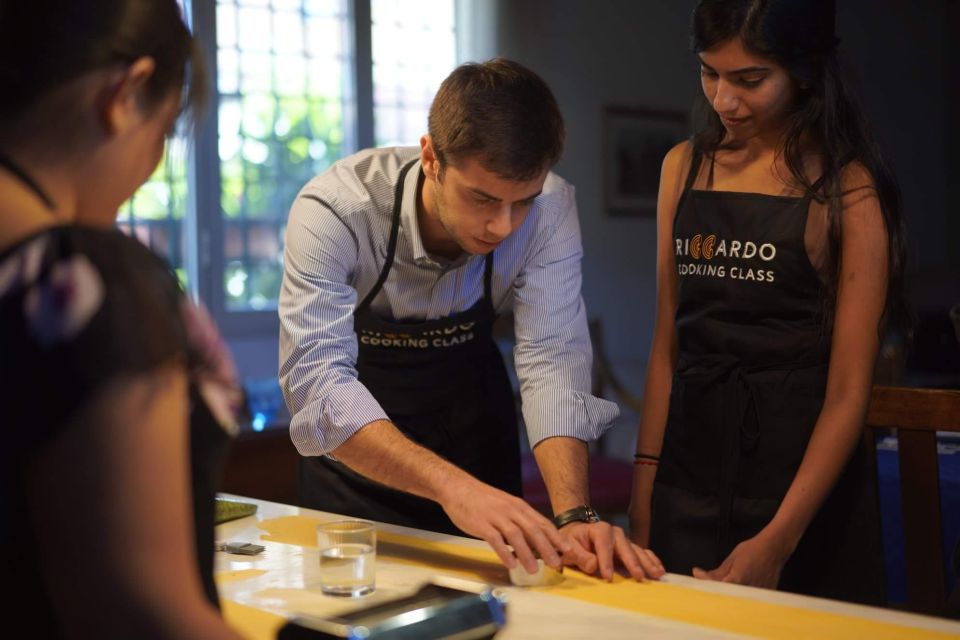
This is a real pasta-making class, not just rolling dough for a single sample. You’ll learn a variety of pasta skills, including:
- Long pastas (like fettuccine)
- Stuffed pastas (ravioli and other filled shapes such as tortellini and cappelletti)
- Spaghetti alla Chitarra, which uses a special technique for cutting and texture
The class description also signals you may cover options like tortellini, cappelletti, and more, and the format is designed so you’re not only watching someone else handle the dough. You’ll be hands-on with shaping and forming, then you’ll see how the sauces match each pasta type.
Here’s what you’ll gain that matters at home:
- Knowing how thin is thin enough for the dough you’re working with
- Understanding why stuffing should be sealed the right way (so it doesn’t burst)
- Realizing that texture changes with the shape and cut, not just the sauce



Roman specialties: Carbonara and Cacio e Pepe, explained the right way
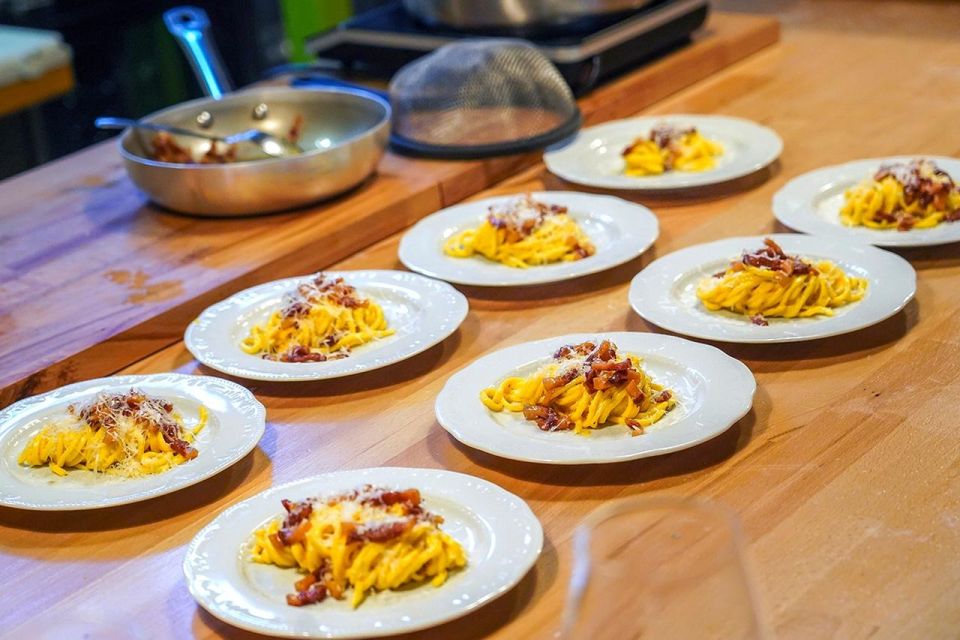
Rome’s comfort food reputations are easy to mess up abroad. The class focuses on Roman techniques for dishes like Carbonara and Cacio e Pepe. That means you’ll pay attention to timing, fat and cheese balance, and how the sauce coats pasta.
Carbonara in particular is where technique shows. One class mention includes guanciale, and that’s a clue you’re not getting a simplified version. Carbonara relies on the right kind of savory, plus the sauce temperature control so it becomes creamy without turning into a scrambled-egg mess.
Cacio e Pepe is another one where people often go wrong at home. This class format gives you the method context: how you build the sauce and how you treat the cheese so it melts into something smooth instead of grainy.
The big win here is not memorizing steps. It’s learning how the ingredients behave and what to do when the sauce looks slightly off.
Your 3-course meal: you’re eating results, not just paying for instruction
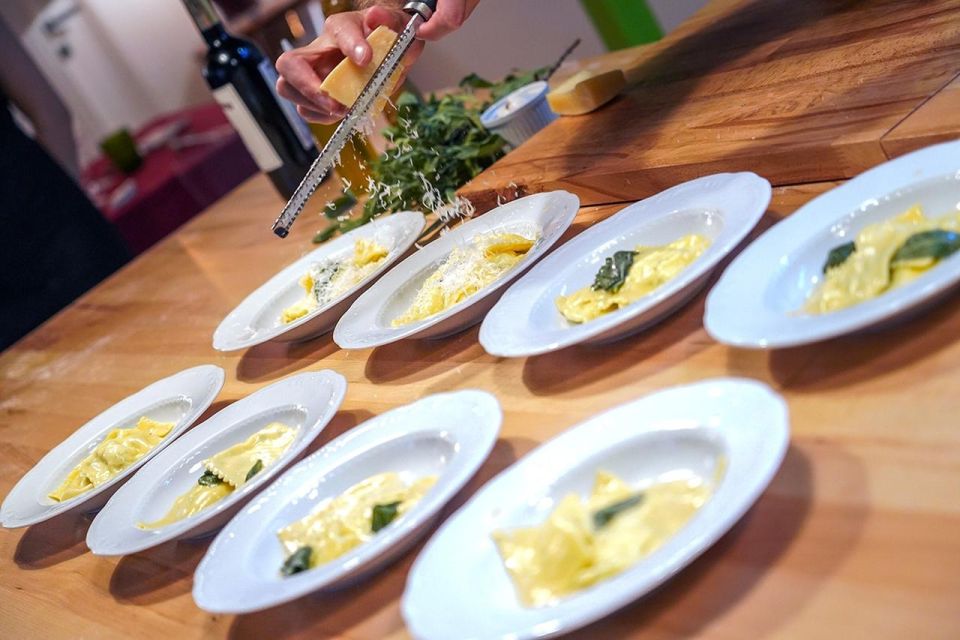
After you cook, you eat together. This isn’t a token bite. The class includes a 3-course meal and complimentary wine, with wine tasting included.
You’ll likely taste what you made in a proper order, so you can connect the sauce decisions you learned to what ends up on the plate. People describe the food as some of the best they had in Rome, and that makes sense: you’re getting taught by someone who actually cooks these dishes day after day, not someone reading from a script.
Wine matters here too. The description calls out selected wine, and the highlights mention local organic wine. Some sessions also mention prosecco appearing during the class, so don’t be shocked if the celebration ramps up a bit.
Vegetarian, allergies, and private-class customization you can plan around
If you’re vegetarian, you’re not stuck. The class includes a special vegetarian menu.
For allergies and dietary restrictions, you should inform the organizer ahead of time. The class notes ask you to share any allergies, intolerances, or ingredients you can’t eat.
If you want more control, the program also mentions the possibility of arranging a private class with special recipes and dietary restrictions, including gluten-free, dairy-free, or vegan options. You can even request different dishes like gnocchi, tiramisu, or risotto for private setups.
Practical advice: send your dietary needs clearly and early. Pasta dough and sauces can involve hidden ingredients, and the chef will do much better work with a precise list than with a vague note.
Value check: is $97 worth it in Rome?
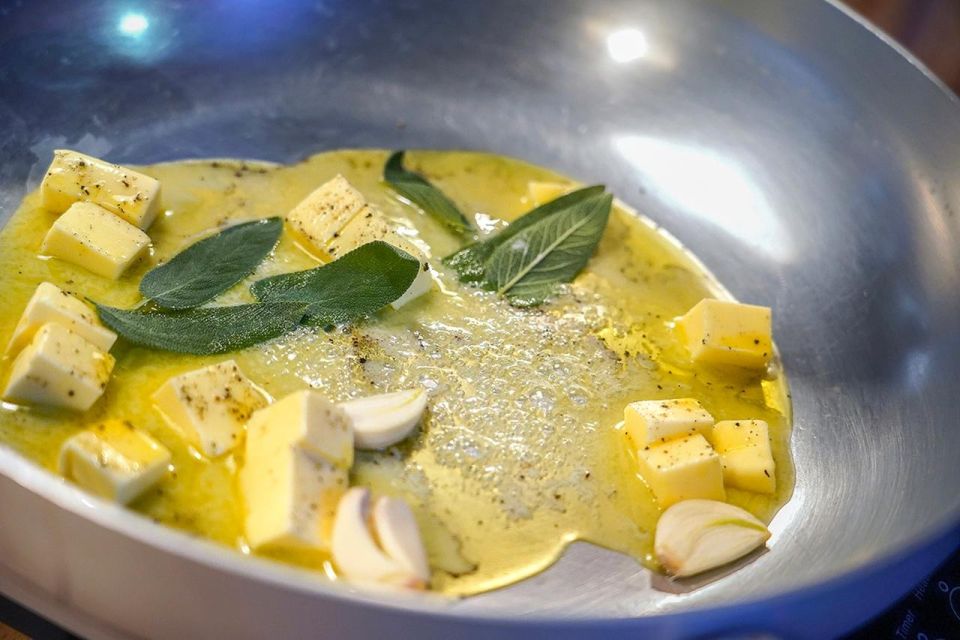
At $97 per person for a 3-hour session, the price might sound like a splurge—until you break down what you’re getting.
You’re not just buying dinner. You’re paying for:
- Hands-on instruction from a chef and team
- Top-quality organic ingredients
- Multiple pasta-making skills (more than one dough and shape)
- Roman sauce techniques tied to how the meal is served
- A 3-course meal
- Wine tasting plus selected wine
- Aprons provided for the class
In other words, you’re paying for the chef’s time and expertise plus the ingredients. That’s usually better value than spending the same amount on a restaurant where you only observe.
Also think about the “second meal” factor. Several people mention getting recipes or enough guidance to recreate pasta back home. If you’ll cook after the trip, this becomes an investment, not just an expense.
Logistics that matter: small group comfort and pacing
The class is limited to 10 participants, which is the sweet spot. You can ask questions, see corrections, and still keep your hands working instead of waiting around.
It’s also wheelchair accessible, which is good to know if you need step-free access and a kitchen setup that can accommodate mobility needs.
What you should plan for:
- You’re making food, so wear something you don’t mind getting flour or sauce on.
- The pace is active, and the cooking happens in real time, so arrive a few minutes early.
And about aprons: aprons are provided, and the note says they can be kept for an extra cost. If you like the souvenir idea (and you want to use it at home when you tackle pasta again), it’s nice to know it’s an option.
Who should book this class (and who might not)
This class is ideal for you if:
- You want a hands-on Rome food experience instead of a walking-and-tasting itinerary
- You care about learning technique, especially Carbonara and Cacio e Pepe
- You like eating what you make, with wine at the table
- You’re traveling with friends, family, or even solo and want a small-group vibe
You might think twice if:
- You hate cooking with lots of steps and prefer to watch instead of do
- You’re looking for a super-structured lecture with long pauses (this is a working kitchen class)
- You’re extremely short on time in your schedule (3 hours is the full block)
Should you book this Rome fresh pasta-making class?
If you like pasta enough to want the real method, I’d book it. The combination of hands-on teaching, Roman sauce focus, and a 3-course meal with wine tasting is the kind of value that turns into memories and skills, not just a one-time meal.
Book early in your trip if you want extra recommendations from the chef for where to eat and what wine to try next. And if you have dietary restrictions, message your needs before you go—this class is set up to handle vegetarian and other accommodations when you communicate clearly.
If that sounds like your kind of Rome day, this is a strong yes.
FAQ
How long is the Rome fresh pasta-making class?
The class lasts 3 hours.
What is the meeting point address in Rome?
The meeting point is the Cooking Lab at Circonvallazione Gianicolense 418, 00152 – Roma, located close to a café.
How many people are in the class?
It’s a small group limited to 10 participants.
Is the class wheelchair accessible?
Yes, the activity is wheelchair accessible.
What’s included in the $97 price?
Hands-on pasta-making class, top-quality ingredients, selected wine, the meal included, and aprons to use during the class.
Is there a vegetarian menu?
Yes. There is a special menu for vegetarian participants. You should also inform the organizers about any allergies or dietary restrictions.
What languages will the instructor speak?
The instructor speaks English and Italian.