REVIEW · AUDIO TOURS
Rome: Monuments Audio Guide with Pantheon, no entry ticket
Book on GetYourGuide →Operated by ITGUIDES · Bookable on GetYourGuide
The Pantheon is the one stop you feel.
This self-guided Rome monuments audio guide lets you explore the Pantheon and several nearby churches and squares at your own pace, with geo-located audio and an indoor map for when you’re inside. You get more than just facts, too: the guide includes architecture, tombs, and legends (including darker ones that come up in the Pantheon story).
Two things I really like: first, the smart, on-your-terms pacing—you can pause, look up, and come back to the story when your feet say so. Second, the nearby add-ons feel intentional, not random: Caravaggio and Michelangelo are built into the route along with Bernini at Piazza Navona and the Trevi Fountain. The main drawback to plan for is simple: it’s not a live tour. You’re responsible for having the app downloaded and working well, plus you still need to buy the Pantheon entry ticket separately.
In This Review
- Key points at a glance
- Pantheon dome stories, on your schedule
- Itguides on your smartphone: geo map, photos, and hypertext
- Inside the Pantheon: dome, tombs, and the legends you’ll remember
- Caravaggio churches near the Pantheon: Saint Luigi dei Francesi and S. Maria del Popolo
- Michelangelo at Santa Maria sopra Minerva: the Redentore
- Piazza Navona and Trevi Fountain: Bernini statuary and the Rome photo loop
- How the 5-hour flow feels on foot
- Price and what you still need to pay for
- Who this audio guide is best for (and who should skip it)
- Should you book this Pantheon audio guide?
- FAQ
- Do I need to meet someone at a specific time and place?
- Is the Pantheon entry ticket included?
- How long is the experience?
- What languages are available in the audio guide?
- Is this audio guide wheelchair accessible?
- Do I need Wi‑Fi or cellular data?
- Can I try the app before buying?
Key points at a glance
- Start anywhere, go at your speed with no meeting point required
- On-phone guide with geo map plus photos and hypertext links
- Pantheon indoor map and 10+ Pantheon audios covering dome, tombs, and legends
- Caravaggio and Michelangelo stops built in (San Luigi dei Francesi, Santa Maria sopra Minerva)
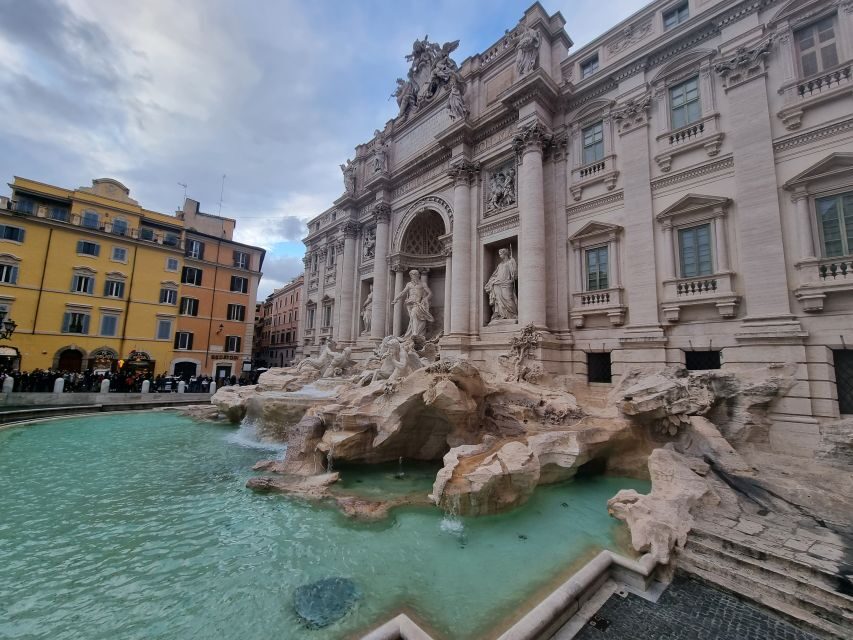
- Piazza Navona and Trevi Fountain included for a perfect Rome-walk combo
- Budget-friendly at $2.83, but remember the 5 euro Pantheon ticket isn’t included
Pantheon dome stories, on your schedule
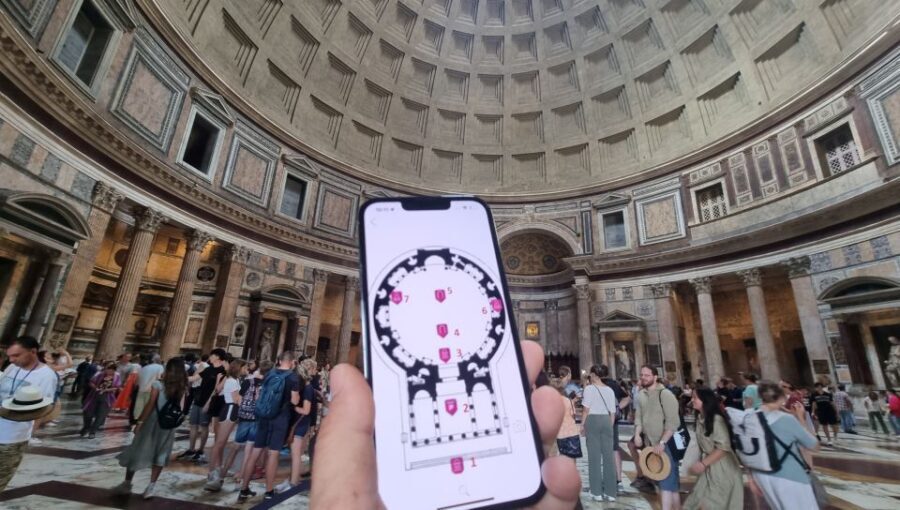
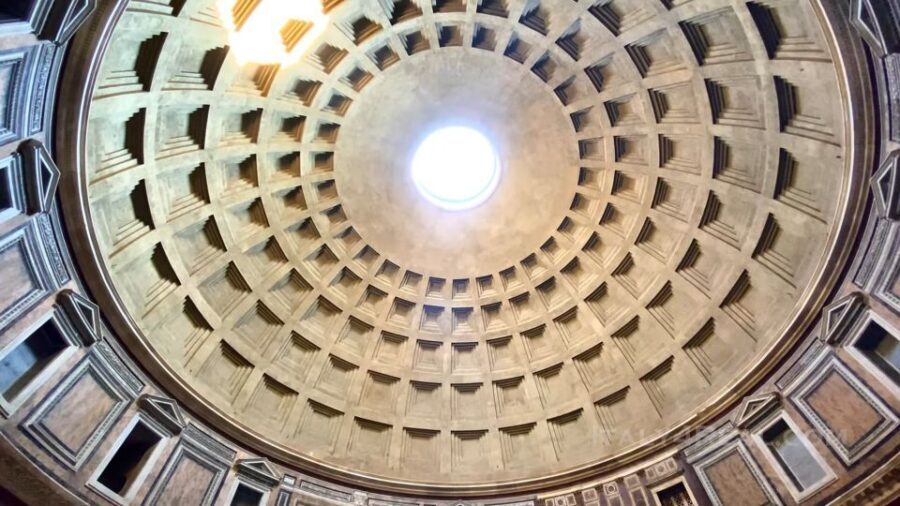
The Pantheon hits fast—even before you learn anything. That’s why I like doing it with audio rather than a rigid group plan. The building is visually loud: the dome, the light, the shape. Then the audio gives you a second layer that’s easier to absorb without rushing.
This guide is designed for a self-paced loop starting at the Pantheon. You listen to a first batch of Pantheon content (including what to look for with the dome and inside details), then you can keep walking and stay in story mode across the surrounding monuments and churches.
The big value here is control. Rome is crowded. Even with an early start, lines and people density can mess with timing. With this setup, you’re not stuck waiting for a guide to finish a sentence. You move when you want. You stop when you want. The audio stays with you.
One practical note: if you’re visiting on a weekend, expect the area around the Pantheon to be lively. I’d plan extra time for bottlenecks and slow-moving queues, so the audio doesn’t turn into a “just get through it” experience.
You can also read our reviews of more tours and experiences in Rome



Itguides on your smartphone: geo map, photos, and hypertext
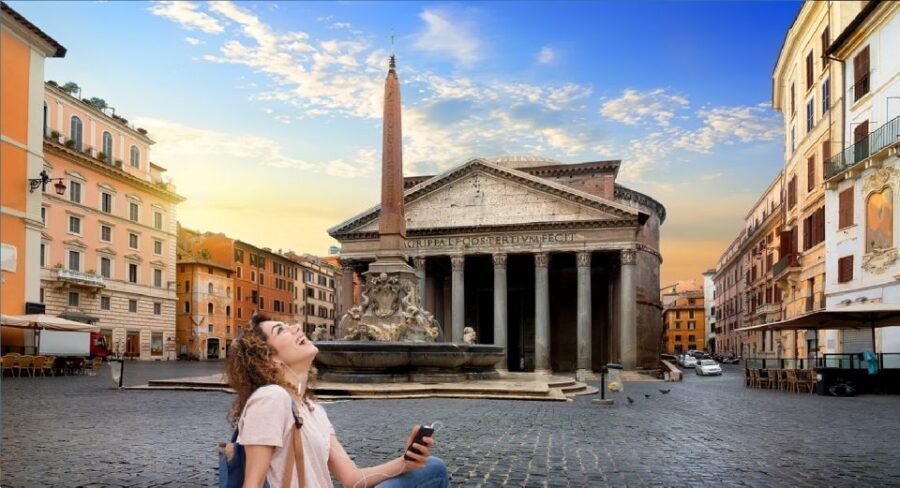
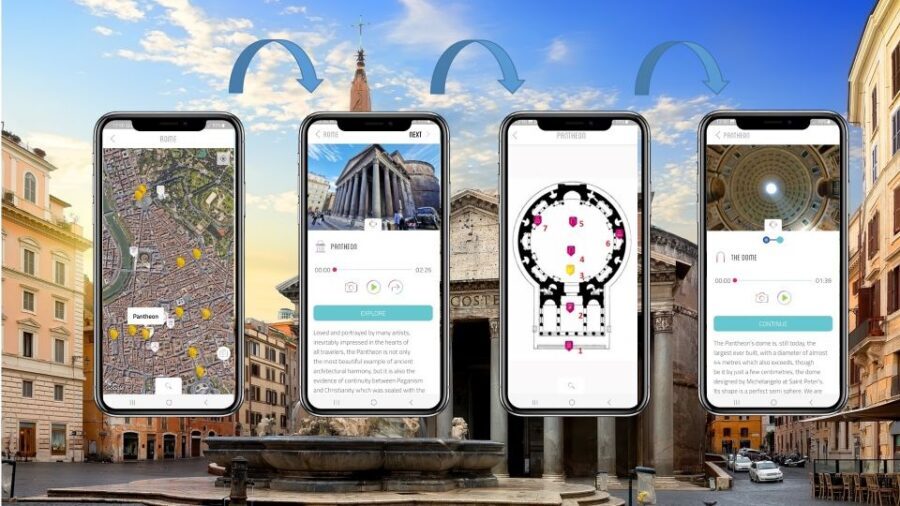
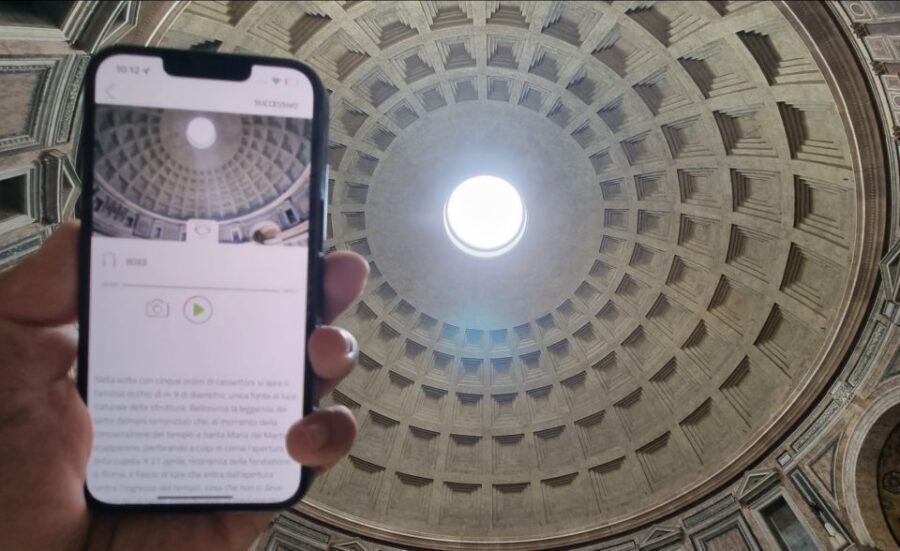
Everything runs through the Itguides app on your phone. That means you’re not carrying a paper handout, and you’re not dependent on a headset-less group tour style. The guide is also geo-located, which helps you find the next points of interest without constantly checking your position on a map.
Here’s what makes this work well in practice:
- You can follow a route on foot and get audio prompts for nearby stops.
- The content includes photos and hypertext, so you can jump to what you’re actually looking at.
- It’s available in multiple languages: Italian, English, French, German, and Spanish.
Before you go, do yourself a favor: get the app set up and the content downloaded when you have decent signal or Wi‑Fi. The instructions are pretty clear that you should download all the contents with a good cellular connection or Wi‑Fi. If your phone is struggling on-site, the geo features may feel less smooth.
Also, try the free demo first. The app lets you test the format, and that reduces the risk of arriving and realizing you dislike the interface. If you know you’ll want headphones, this guide is described as working well with them (including hands-free listening), which matters when you’re also taking photos and trying not to trip over ancient stones.
Inside the Pantheon: dome, tombs, and the legends you’ll remember
The Pantheon isn’t just old. It’s precise. The dome dominates your view, and the interior lighting makes you want to stare. This guide supports that by focusing on what’s visually happening as well as the story behind it.
You get 10 audio descriptions about Pantheon history and architecture, including:
- The dome and how to read its design
- Tombs (so you’re not just looking at names without context)
- Legends connected to the place, including darker material that gets mentioned in the storytelling
One of the most interesting parts of the Pantheon story in this guide is the bridge between eras. The audio frames the site as evidence of continuity between paganism and Christianity—including the moment in 608 when the sanctuary was yielded to Pope Boniface IV by the Byzantine Emperor Foca. That context makes the building feel less like a museum and more like a living “chapter” of Rome.
And yes, it includes an indoor map. When you’re inside and the crowd shuffles in multiple directions, a map helps you stop wandering and start making sense of where you are.
Caravaggio churches near the Pantheon: Saint Luigi dei Francesi and S. Maria del Popolo
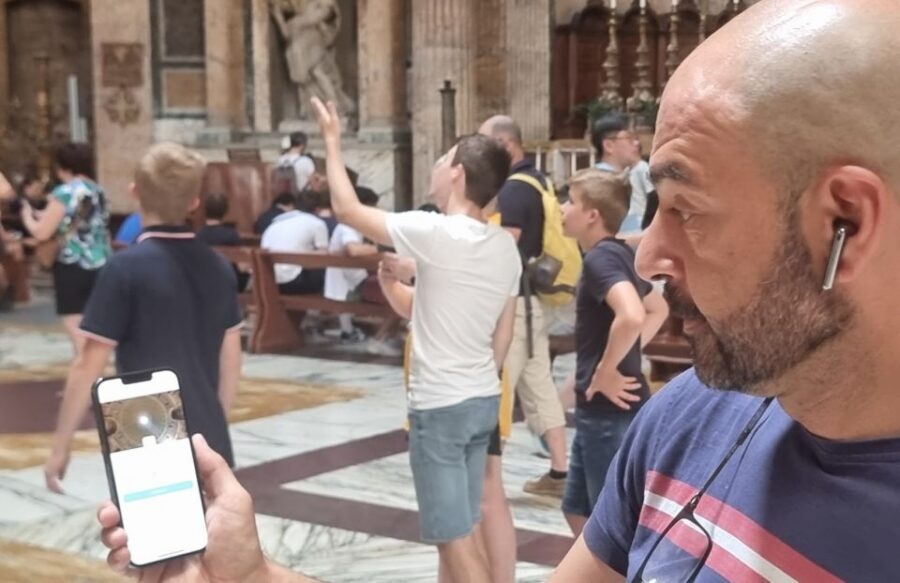
Once you step out of the Pantheon, the guide keeps the energy going by aiming you toward masterpieces in nearby churches. This is where audio guides can sometimes fall flat—many tours stop at “see a square, take a photo, move on.” Here, the art stops are built in, and they matter.
Your audio points you toward:
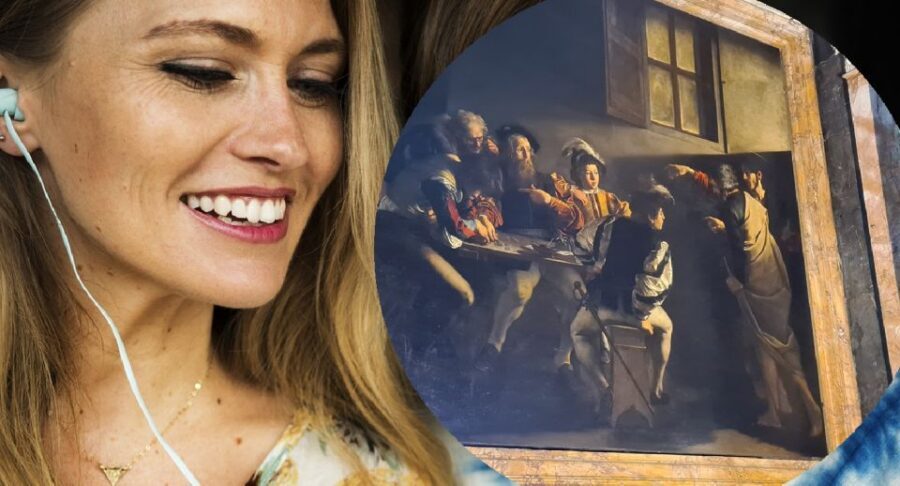
- Saint Luigi dei Francesi for three Caravaggio paintings
- S. Maria del Popolo for additional Caravaggio paintings
Caravaggio doesn’t read like generic museum art when you encounter it in a church setting. The lighting and the atmosphere change how you see the figures. The guide’s job here is to help you look slowly enough to notice details, not just rush toward the next stop.
A tip that helps: once you finish a Pantheon audio segment, don’t treat the next church like a sprint. Take a minute outside, locate the entrance, and then start listening. If you start the audio while you’re still walking, you’ll arrive without “losing” the story.
Michelangelo at Santa Maria sopra Minerva: the Redentore
If you want one stop that feels like Rome saying “yes, you’re in the right city,” make time for Santa Maria sopra Minerva and the Michelangelo sculpture called the Redentore.
This is another example of why this guide is more useful than a basic monument list. Michelangelo’s work is famous, but without context it can be easy to see it as just another impressive object. With the audio, you’re nudged to look with intention—what you’re seeing, why it’s significant, and how it fits into the bigger “arts of Rome” conversation happening around you.
This stop is also a good rhythm changer. After churches full of paintings, moving to a sculpture-centered moment can reset your eyes and your attention.
You can also read our reviews of more guided tours in Rome





Piazza Navona and Trevi Fountain: Bernini statuary and the Rome photo loop
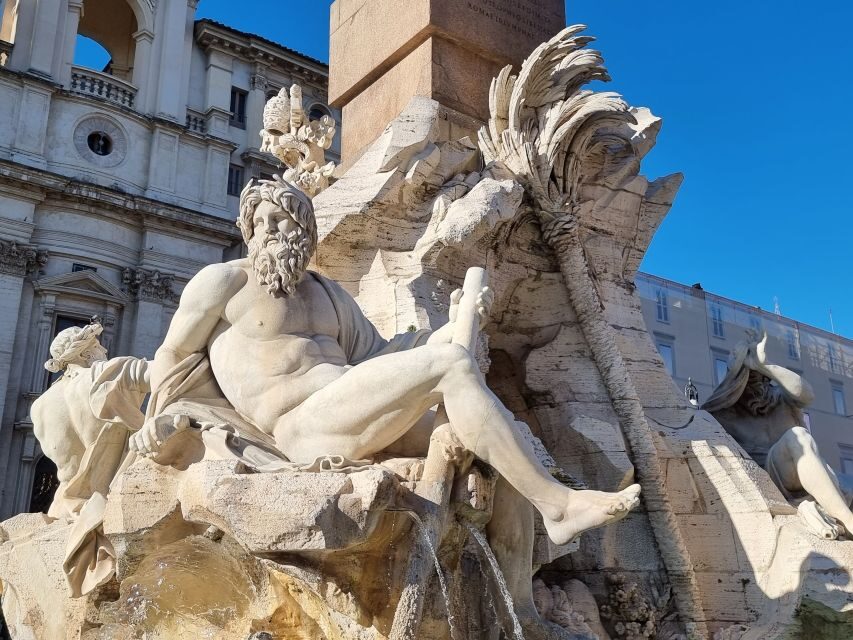
Now you’re in the part of Rome people talk about for a reason: streets widen into views, fountains dominate sightlines, and the city feels like it’s performing.
This guide includes:
- Piazza Navona, with the Bernini fountain (and nearby Bernini statuary content in the audio route)
- Trevi Fountain, with a classic storytelling detail about tossing a coin if you want to be sure of returning to the Eternal City
Piazza Navona can be busy, but the audio helps you focus on more than the crowd. You start noticing the shape of the space and the way the fountain becomes the center of the scene. It’s the kind of place where audio keeps you from going into automatic mode.
At Trevi, you’ll be surrounded by cameras. Your edge is to listen while you’re waiting for a clearer moment to shoot. You don’t need to fight the crowd to get something good. Just time your photo for when you can step slightly aside and give yourself angles that don’t include someone’s arm in every frame.
How the 5-hour flow feels on foot
The experience is set for 5 hours, but self-guided time doesn’t really mean “strict schedule.” It means you have a manageable half-day loop where you can hit the Pantheon first and then let the surrounding sights fill out the rest.
Here’s how I’d pace it:
- Plan on a solid block at the Pantheon (including time inside if you buy the ticket)
- Then move on to the church art stops, taking more time than you think you need
- Finish with Piazza Navona and Trevi Fountain, where you can naturally linger
The main time challenge isn’t travel distance—it’s crowd and entry pacing. Because the guide is self-paced, you can stretch or tighten the plan depending on what the day is doing.
If you feel rushed, the fix is easy: pick fewer moments to fully listen to. You don’t have to play every audio at full volume from start to end. Use the audio like a guided “spotlight.” Listen for the section that explains what you’re looking at, then spend the rest of the time actually looking.
Price and what you still need to pay for
The price shown is $2.83 per person for the digital audio guide. That’s low enough that it feels almost too good—until you realize you’re not paying for a person in a van. You’re paying for the app content.
Here’s the honest trade:
- You get a lot of audio content: 10 Pantheon descriptions plus more than 20 around the Pantheon area, all with geo guidance.
- You get included stops such as Saint Luigi dei Francesi, Piazza Navona, Trevi Fountain, and Santa Maria sopra Minerva.
- But the Pantheon ticket is not included (listed as 5 euro).
So the real value question becomes: do you want to spend money on a ticket anyway? If yes, then this guide is mostly about unlocking the meaning behind what you’re paying to see. If no, then you’ll still get stories, but your experience inside the Pantheon would be limited.
Also remember: you’re using your own phone and headphones (if you have them). That’s not a dealbreaker. It’s just part of the DIY experience.
Who this audio guide is best for (and who should skip it)
This works best if you like to travel with flexibility. You’ll probably enjoy it if:
- You prefer walking between places rather than sitting in a group
- You want to control timing at the Pantheon and around busy squares
- You like learning through short audio segments instead of a long lecture
- You’re confident handling a phone app on the street
It might be less ideal if:
- You hate technology on travel days
- You want a live human to answer questions on the spot
- You need a strict schedule with no room for pauses
One small advantage I like a lot: the app is described as simple, and customer support can help activate the guide on your phone after purchase. That matters when you’re arriving with limited patience for tech problems.
Should you book this Pantheon audio guide?
Yes, if your priority is a value-packed self-guided Rome plan anchored on the Pantheon, with serious art stops close by. At $2.83, you’re paying for meaningful context, not just “background noise.” Add the Pantheon ticket separately, and you still come out ahead compared with many guided options that cost far more for only a couple of hours.
Book it if you want to keep your day flexible and you’re okay managing your phone audio before you start. Skip it if you want a traditional tour guide walking beside you.
Either way, do this one smart thing: download the content ahead of time and keep your shoes comfortable. Rome is kind to slow travelers. The Pantheon makes you slow down on purpose.
FAQ
Do I need to meet someone at a specific time and place?
No. There is no meeting point necessary because it’s a self-guided tour. You can start where you prefer, and it ends back near the meeting point area.
Is the Pantheon entry ticket included?
No. The ticket is not included (it’s listed as 5 euro), so plan to buy it separately if you want to enter.
How long is the experience?
The duration is 5 hours. Starting times depend on availability.
What languages are available in the audio guide?
The audio guide is available in Italian, English, French, German, and Spanish.
Is this audio guide wheelchair accessible?
Yes, it is listed as wheelchair accessible.
Do I need Wi‑Fi or cellular data?
You’re advised to download all the contents with a good cellular signal or Wi‑Fi. That helps the experience work smoothly while you’re walking.
Can I try the app before buying?
Yes. You can download the Itguides app for free and try the free demo before purchasing.