REVIEW · CITY TOURS
City Walk with Architect: Private walking tour of Rome
Book on Viator →Bookable on Viator
Great cities teach you faster on foot.
This private Rome architecture walking tour is built for people who like to understand how landmarks work in the real street-life around them. I like that you get to ask questions and slow down for the details, not just check boxes. I also like the way the route mixes famous hits with quieter architectural moments, so you come away seeing Rome as a city of connected design choices. Your guide, Bado, comes across as patient and thorough, and that matters when you’re trying to get your bearings and actually learn while you walk.
One thing to plan for: this is still walking. It’s not recommended if you can’t manage about 1 hour of walking, even though there are small breaks along the way.
In This Review
- Key takeaways before you lace up
- A private Rome architecture walk that lets you ask why
- How the pacing works on a 2.5-hour route
- Your route: Minerva to Vittoriano in architect-friendly stops
- Piazza della Minerva, Trevi Fountain, and the Spanish Steps approach
- Piazza della Minerva (start)
- Trevi Fountain (Fontana di Trevi)
- Column of Immaculate Conception (La Colone)
- Spanish Steps (Scalinata di Trinità dei Monti)
- Piazza del Popolo, Piazza Colonna, and the art of reading piazzas
- Piazza del Popolo
- Piazza Colonna (Column of Marcus Aurelius)
- Tempio di Adriano, Piazza Navona, and the Pantheon stop you’ll want more time in
- Tempio di Adriano
- Piazza Navona
- Pantheon
- Piazza Venezia and the Vittoriano terrace payoff
- Why this tour feels like good value for Rome architecture lovers
- Who this tour suits best (and who might want something else)
- Should you book City Walk with Architect: Private walking tour of Rome?
- FAQ
- How long is the City Walk with Architect private walking tour?
- Where does the tour start and end?
- Is the tour private or shared with other groups?
- What’s included and what’s not included?
- Do I need to pay admission for the stops?
- What’s the walking requirement?
Key takeaways before you lace up

- Private, question-friendly pacing with only your group, so you can steer the walk with your interests.
- Architect-led insights that help you notice what most people miss when they rush past buildings.
- A flexible route rather than a fixed script, so you can adjust what you focus on.
- Major landmarks plus less-hyped architectural stops, from Piazza della Minerva to Piazza Navona.
- Vittoriano terrace access at the end, which adds a payoff view moment.
- Mostly exterior sight time, so if you dream of going inside a lot of sites, set expectations accordingly.
A private Rome architecture walk that lets you ask why
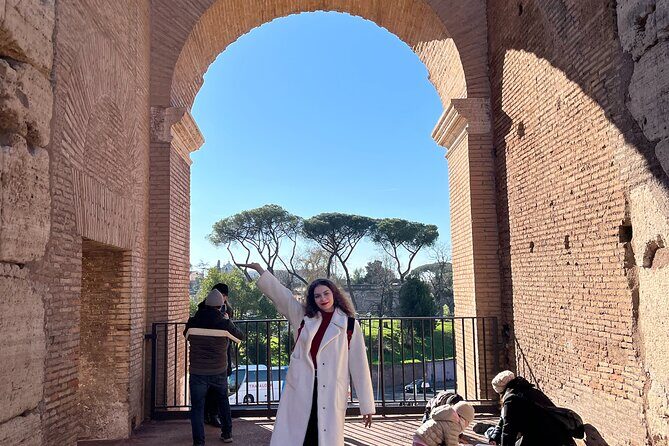
If you’ve ever stood in front of a famous Roman landmark and thought, Okay, but what am I actually looking at? this tour hits that exact need. It’s framed around architecture and design, not just history trivia. You move stop to stop, but the real value is how the guide helps you read the city: proportions, materials, and how monuments sit in their piazzas and streets.
Because it’s private, you’re not stuck with a crowd of strangers trying to compete for time. You can ask follow-up questions when something clicks—or when it doesn’t. In the best moments, you’ll realize you’re not just collecting sights. You’re learning how Rome puts meaning into stone, columns, and space.
The guide you’ll meet is English-speaking, and the tone from Bado is exactly what you want for a walking tour: patient, calm, and happy to help with practical stuff too, like getting good photos without rushing you.
You can also read our reviews of more walking tours in Rome


How the pacing works on a 2.5-hour route
This is about 2 hours 30 minutes of walking time, with small breaks in between. Most people can handle it, but the key condition is simple: you need to be comfortable walking for at least around an hour total.
Also, note the style of sightseeing here. You’re stopping and looking closely, so it feels more like a guided walk through neighborhoods and plazas than a long bus tour where you barely get off the vehicle.
And because the route is flexible, your timing can flex with your group. If you want more time to read details at a monument, you can ask. If you’d rather move briskly toward the next stop, you can do that too. That’s a big deal in Rome, where crowds and street chaos can push you into a hurry unless you have a plan.
Your route: Minerva to Vittoriano in architect-friendly stops
The walk runs from Piazza della Minerva to Piazza Venezia. Admissions listed for the stops are free, and the tour uses a mobile ticket. You’ll be mostly on foot through some of Rome’s most photo-heavy places, but the architecture lens keeps you from feeling like you’re only repeating the same Instagram loop.
Here’s how the stops work, and what you’ll likely get out of each one.
Piazza della Minerva, Trevi Fountain, and the Spanish Steps approach
Piazza della Minerva (start)
Your tour begins in Piazza della Minerva, which is a great choice because it’s central enough to orient you quickly, but not so overwhelming that you can’t take in details at the start. This is the moment to ask the first set of questions. When you get the guide’s framework early, you’ll see the rest of Rome with better focus.
You can also read our reviews of more city tours in Rome




Trevi Fountain (Fontana di Trevi)
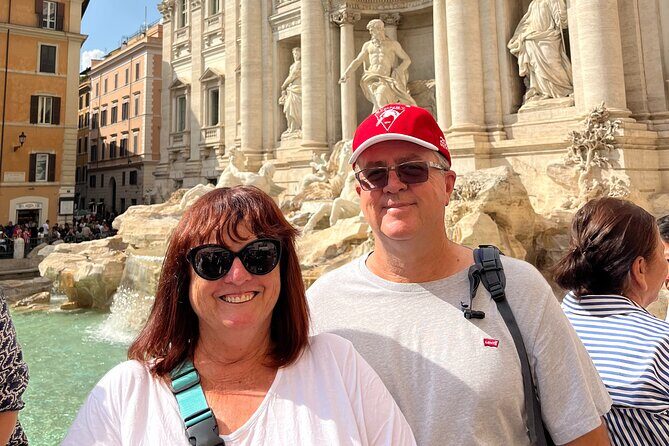
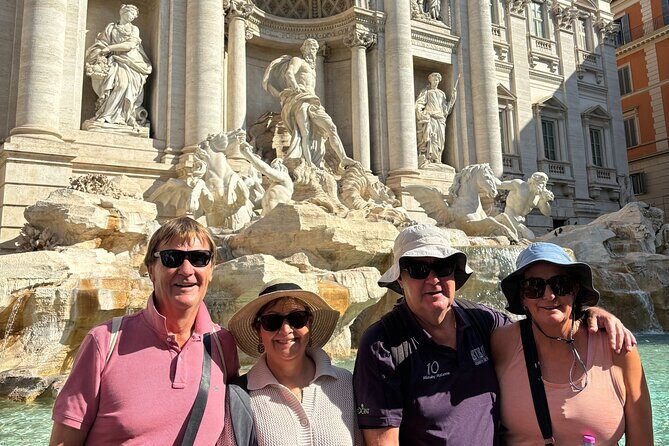
Next up is Fontana di Trevi. You’ll spend time here to view it properly, not just snap and sprint. The architecture perspective is what makes this stop feel different from a quick drive-by: you’ll be encouraged to look at how the fountain sits in its setting and how the design reads at different distances.
A good tip from the tour vibe: slow down and look from multiple angles. From one spot it reads like a single composition; from another, you start picking out how elements relate to each other.
Column of Immaculate Conception (La Colone)
Then you hit a striking vertical focal point: the Column of Immaculate Conception. Columns in Rome are more than decoration. They’re how the city signals importance, and this stop fits that theme perfectly. Take a moment to look up. Rome loves to reveal design choices the moment you stop staring at street-level.
Spanish Steps (Scalinata di Trinità dei Monti)
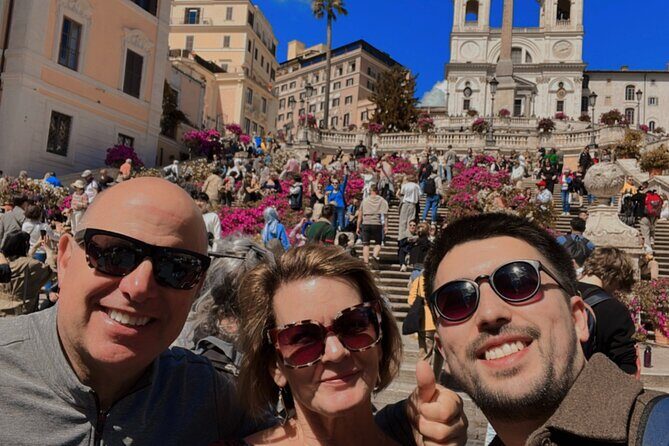
After that, it’s the Spanish Steps. This is where Rome’s architecture and everyday life overlap hard. You’ll get time to look at the steps and understand how monumental staircases shape movement through a city.
If you’re the type who likes to understand why spaces are built the way they are, this stop usually lands well. If you just want wide scenic views, you’ll still enjoy it, but go with the flow and watch how people use the space.
Piazza del Popolo, Piazza Colonna, and the art of reading piazzas
Piazza del Popolo
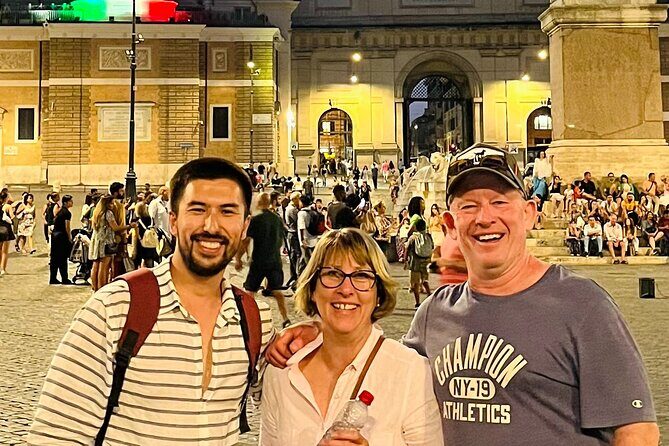
At Piazza del Popolo, you’ll get time to absorb a big open space with heavy visual structure around it. This is a good place for architecture context because piazzas are where Rome shows off how buildings and city planning interact.
A helpful mindset here: don’t just look at what’s in the middle. Look at the edges. The guide’s explanations should help you see how the design of surrounding structures affects how the piazza feels.
Piazza Colonna (Column of Marcus Aurelius)
Next comes Piazza Colonna and the Column of Marcus Aurelius. A column like this is ideal for close viewing. It rewards patience. You’ll be able to focus on how Roman monumental sculpture and storytelling are built into vertical form.
This is also a stop where questions pay off. If you’re the kind of traveler who likes to ask what you’re seeing and why it was made, this part of the walk tends to feel worth every minute.
Tempio di Adriano, Piazza Navona, and the Pantheon stop you’ll want more time in
Tempio di Adriano
You’ll visit the Tempio di Adriano next. Even if you don’t go deep into architectural terms, you’ll get plenty of visual cues just from standing close and comparing what the guide points out. The value is learning how classical elements create structure and rhythm in a modern city environment.
Piazza Navona
After the temple, it’s Piazza Navona, one of Rome’s most satisfying piazzas to stand in. You get a chance to look around with context, not just admire it from a distance.
Piazza Navona can be visually loud if you’re not ready for it. The architecture guide lens helps you pick out the underlying order beneath the busy scene.
Pantheon
Finally in this cluster: the Pantheon. You’ll have time to visit it as part of the walk and take it in closely. People often expect more than a quick look here, and you should know the tour experience may focus on viewing rather than extensive interior time. That’s actually why a guide-led exterior stop can still work well: you’ll learn what to look for on the outside instead of losing your time and energy hunting for options.
If you’re hoping to go inside multiple big sites, you may want to pair this walk with another tour that includes specific interior access. This one is best as your architecture orientation walk.
Piazza Venezia and the Vittoriano terrace payoff
You end at Piazza Venezia, with a highlight: access to the terrace at the Vittoriano. This is a smart finishing choice. After hours of looking closely at buildings, you get a view payoff that helps everything you just saw start to click in a bigger city context.
Finishing with a terrace also changes the pacing in a good way. You can pause, breathe, and reset while still feeling like you’re part of the architectural story.
Why this tour feels like good value for Rome architecture lovers
At $118.82 per person for about 2.5 hours, you’re paying for three things: a private English-speaking guide, stop-by-stop direction, and the architecture interpretation that turns sightseeing into understanding.
Rome has tons of tours that tell you where to stand. This one focuses on why those places matter visually and structurally. That’s the difference between a walk you remember and a walk that teaches you how to keep seeing well after the tour ends.
Also, the tour is built to be efficient. Admissions at the listed stops are free, so your money isn’t getting eaten by ticket fees at each location. Instead, the cost goes into the human guide time and the quality of the walking route.
Is it cheap? No. But if you care about architecture and you want a private format where you can ask questions, it can feel like a fair trade. You’re essentially buying time with a guide who can help you read Rome in real life.
Who this tour suits best (and who might want something else)
You’ll likely love this if:
- You’re an architecture lover or you just like noticing details in buildings.
- You want a guided walk that includes big-name sights plus less obvious architectural stops.
- You’d rather get a smart explanation than do another rigid checklist tour.
- You want time for questions and photos without being rushed by a large group.
You might want to choose a different style if:
- You need lots of interior access. This walk is designed for visiting and viewing the sights during a walking route, not a guaranteed heavy interior itinerary.
- Your walking limits are tight. If you can’t comfortably handle about 1 hour of walking, this one won’t feel good.
Should you book City Walk with Architect: Private walking tour of Rome?
If you’re the type of traveler who likes to understand what you’re seeing, I think this is an easy yes. The combination of a private format, an English-speaking guide, a flexible route, and an architecture-focused approach makes it more than a sightseeing walk. The ending terrace at the Vittoriano is a nice reward, and the stop choices cover both famous Rome and the kind of architectural moments people often skip.
Book it if your top goal is to come away with better eyes, not just more photos.
FAQ
How long is the City Walk with Architect private walking tour?
It runs for about 2 hours 30 minutes.
Where does the tour start and end?
The tour starts in Piazza della Minerva (00186 Roma RM, Italy) and ends in Piazza Venezia, Roma RM, Italy.
Is the tour private or shared with other groups?
It’s private. Only your group participates.
What’s included and what’s not included?
Included is an English speaking guide. Private transportation is not included.
Do I need to pay admission for the stops?
The tour lists admission as free for each of the included stops.
What’s the walking requirement?
Most travelers can participate, but it is not recommended for people who cannot walk for at least 1 hour, even though there are small breaks.